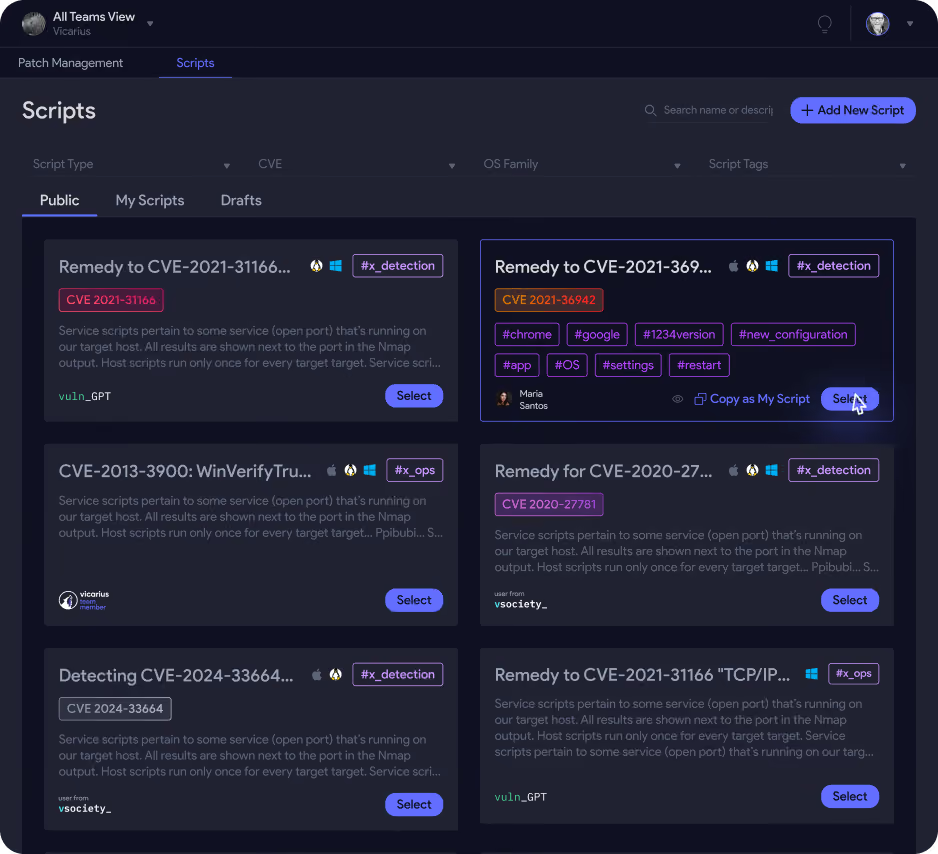


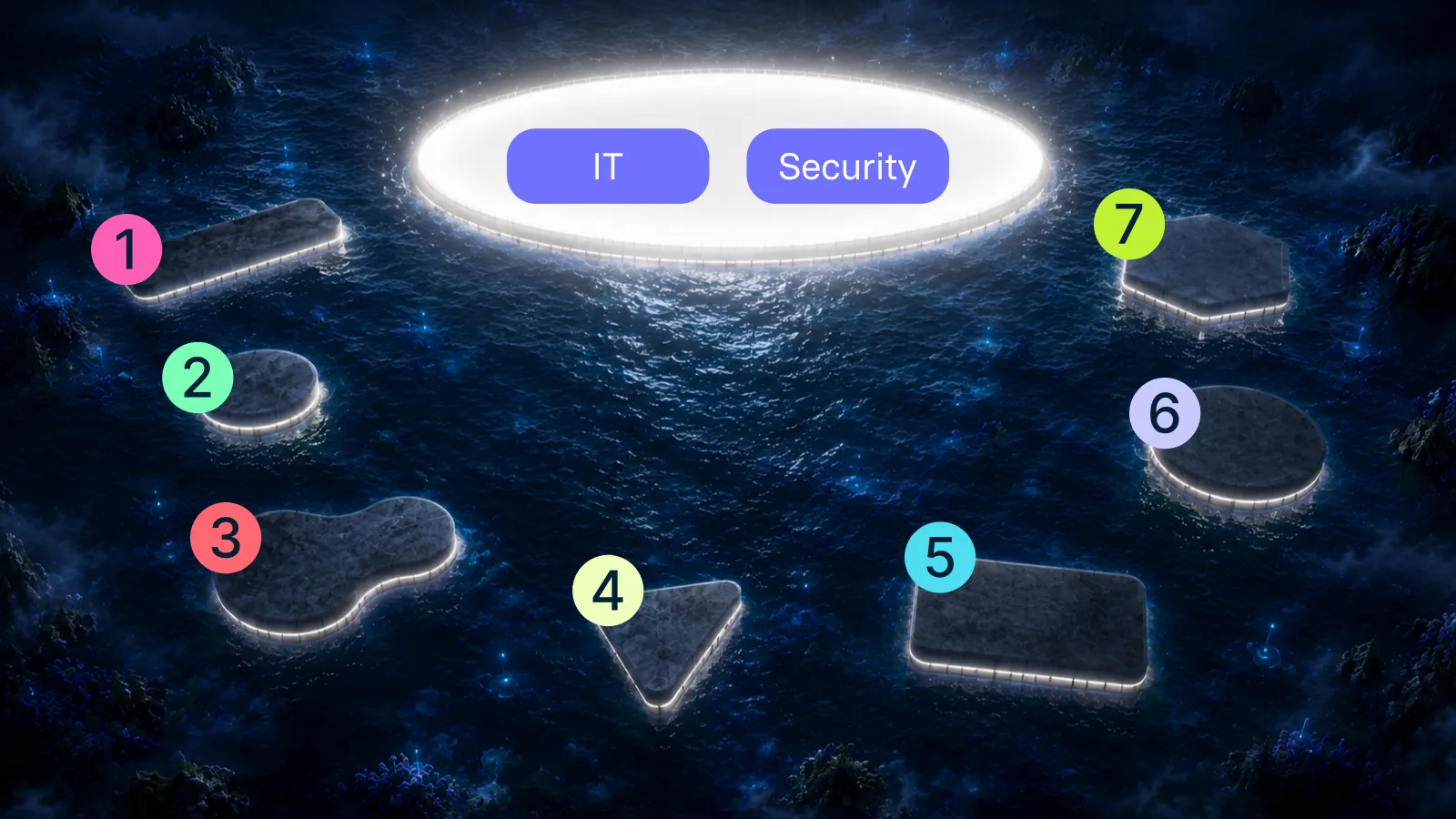
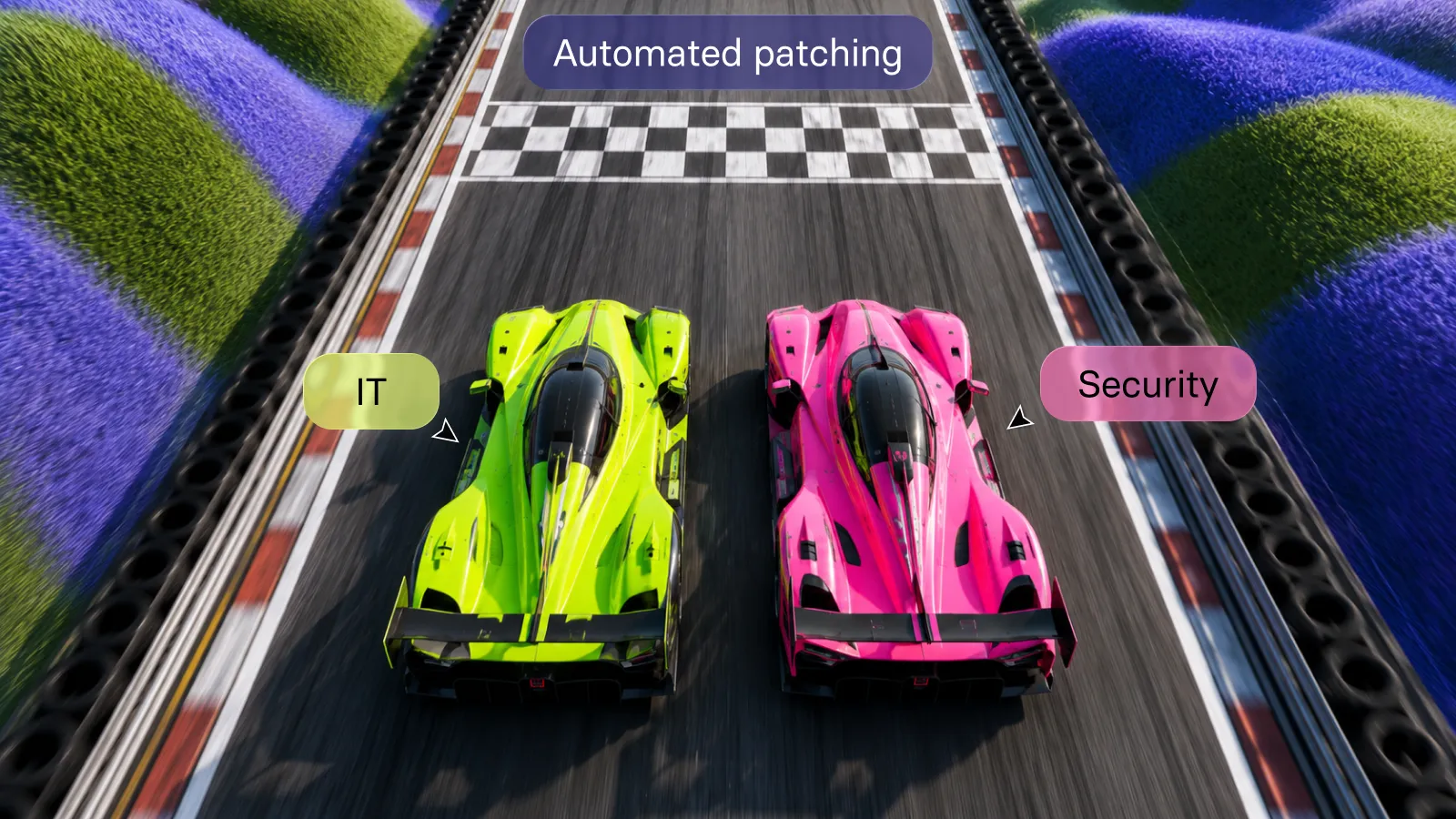
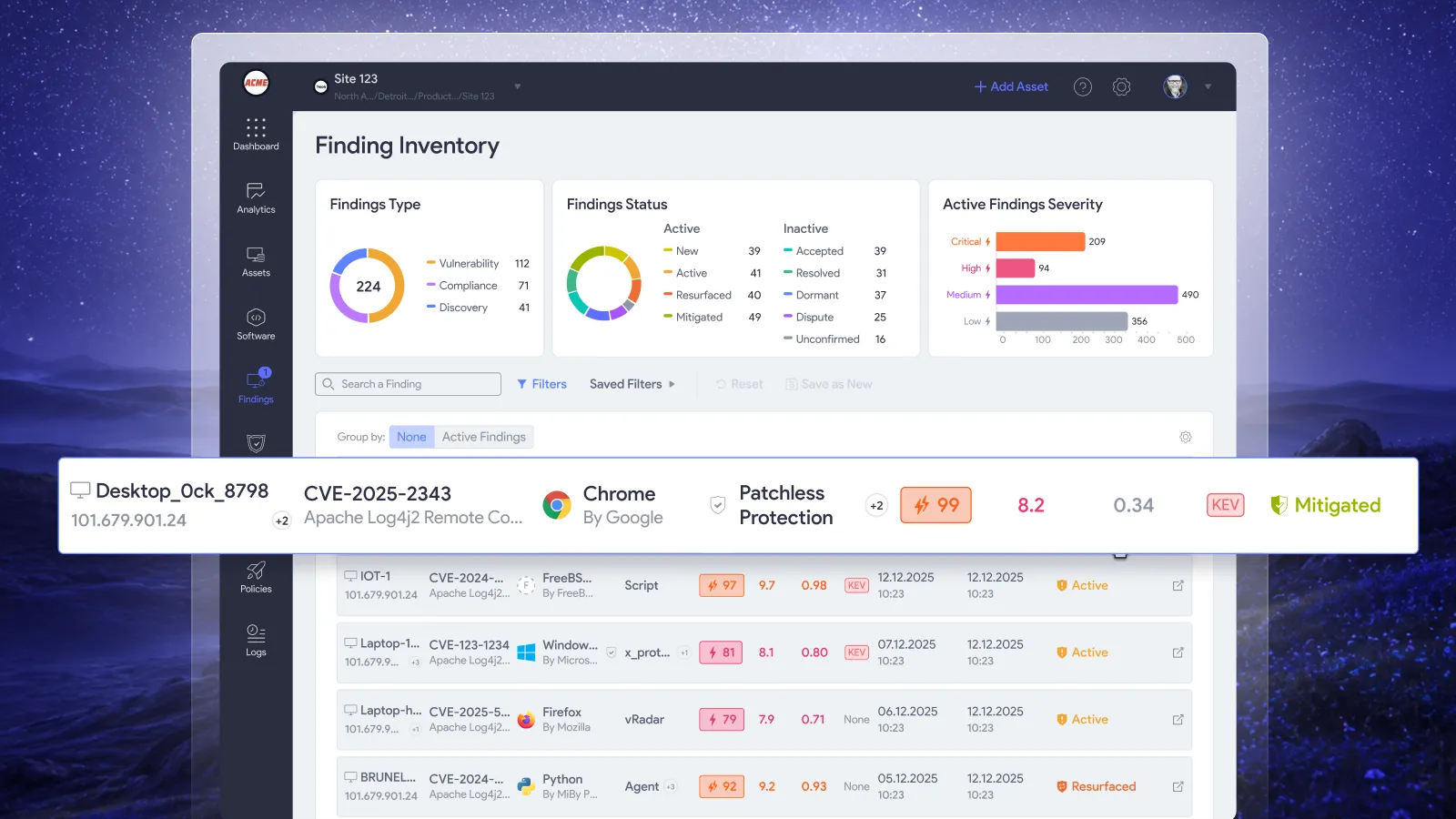
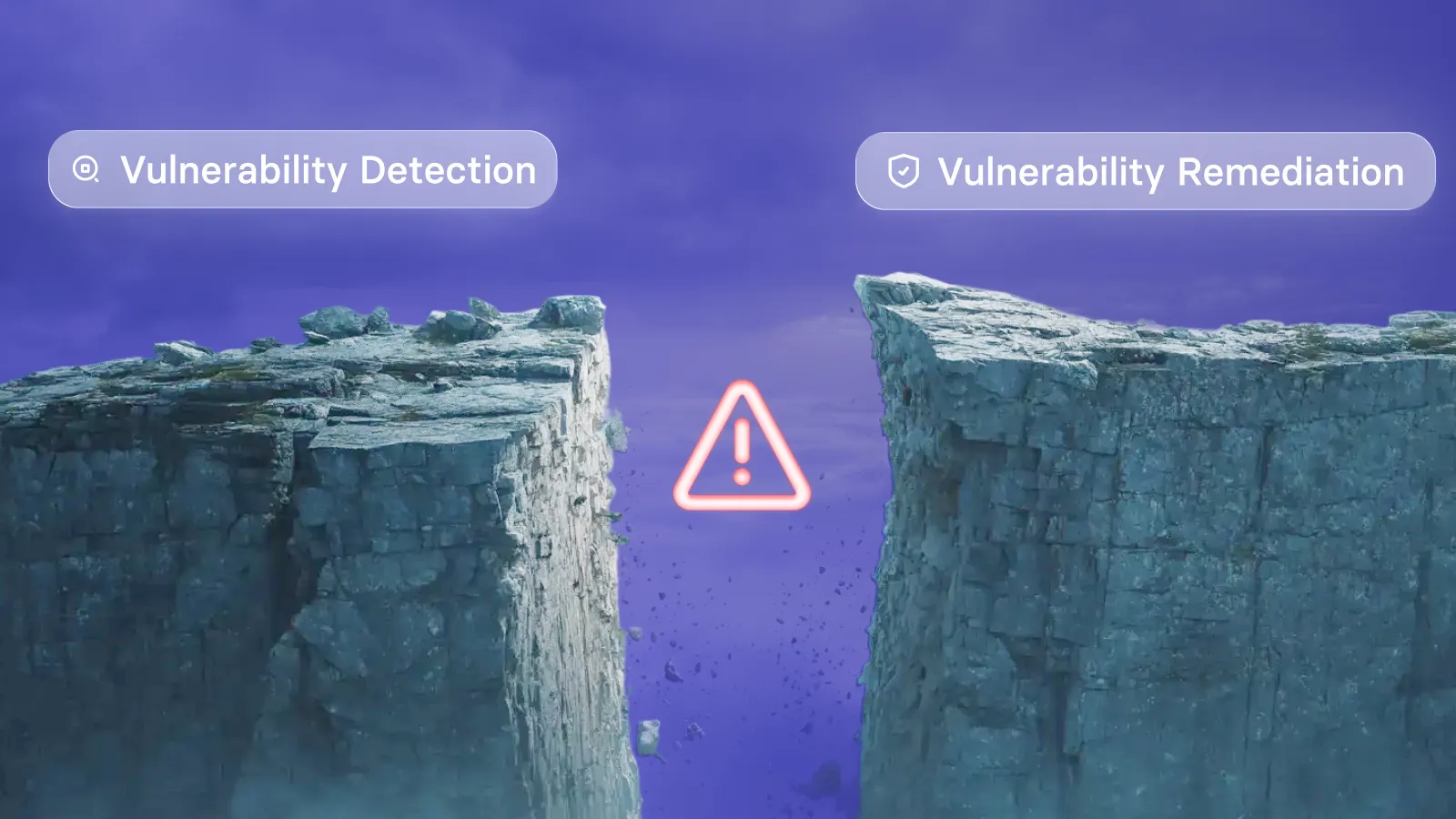
The current state of vulnerability management is defined by friction. The reliance on siloed workflows results in significant manual effort that acts both as a bottleneck for security operations and a significant source of human error. In the current cybersecurity climate, both of these are gifts to hostile hackers with uncensored LLMs. Security teams often rely on disjointed tools where detection capabilities and remediation execution exist in completely separate silos. A scanner identifies a vulnerability and generates a report, but the actual process of fixing that vulnerability requires switching contexts, logging into different platforms, and manually correlating the alert with the appropriate patch or script. This lack of integration forces skilled professionals to spend valuable time bridging the gap between tools rather than addressing the security risks themselves.
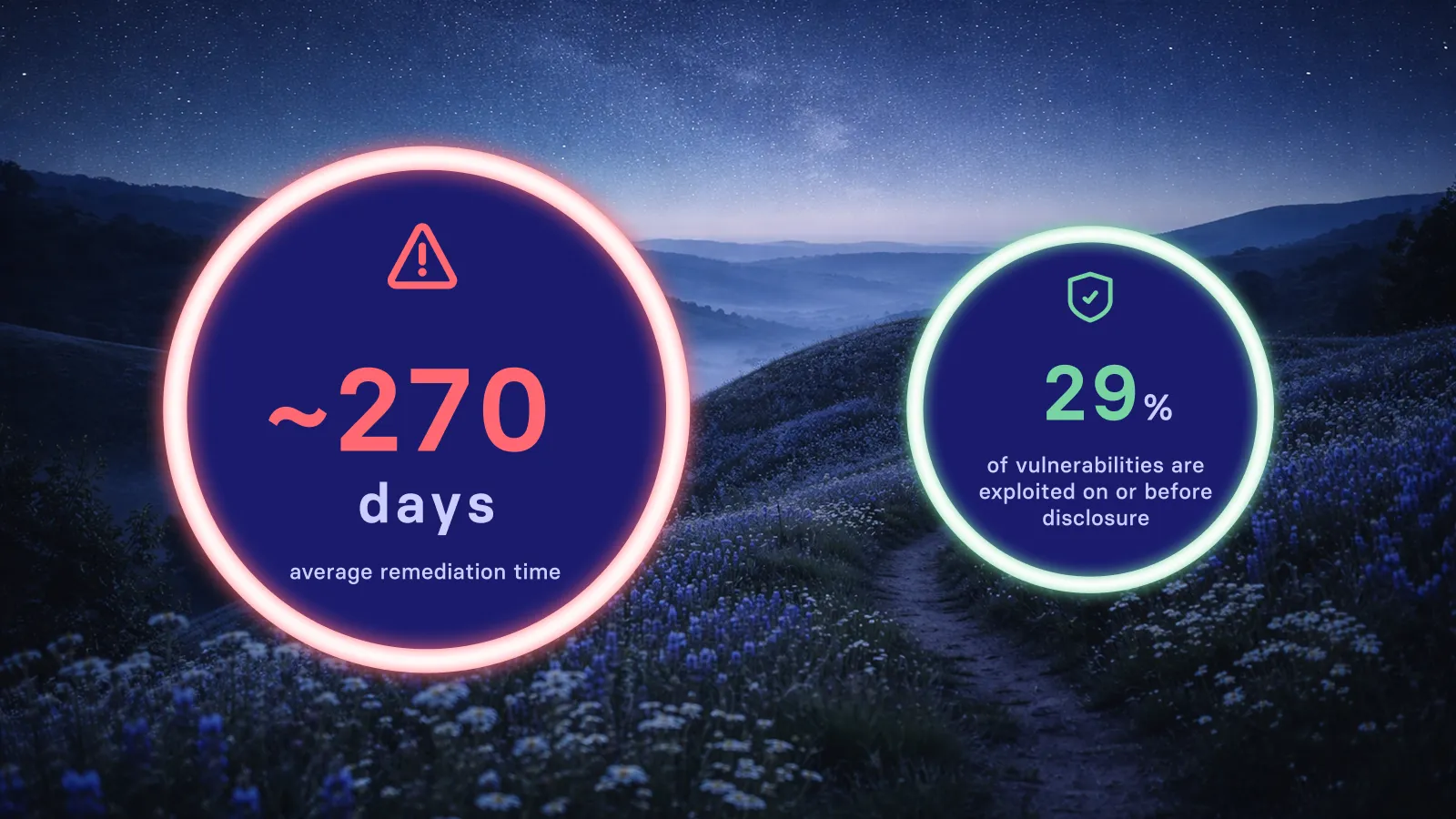
As modern scanners become more efficient at detecting exposures, the volume of alerts increases, but the capacity to fix them remains static due to the manual intervention required. This disparity means that teams can no longer rely on isolated tools; the time lost transferring data between systems extends the window of exposure, leaving organizations vulnerable to attacks that could have been prevented with a more streamlined approach.
Moving beyond exposure management
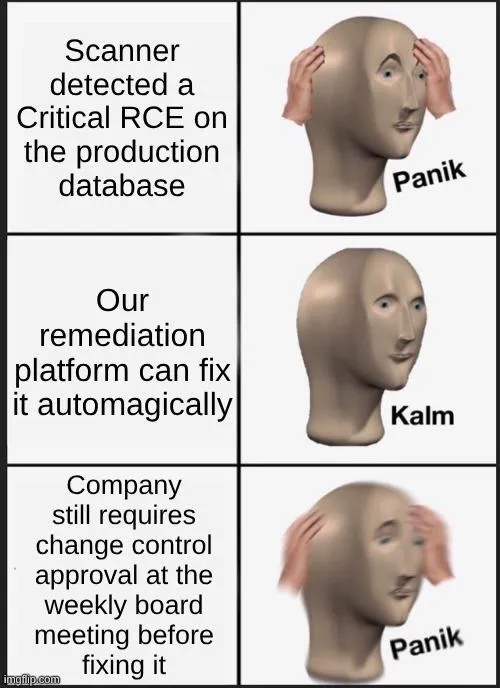
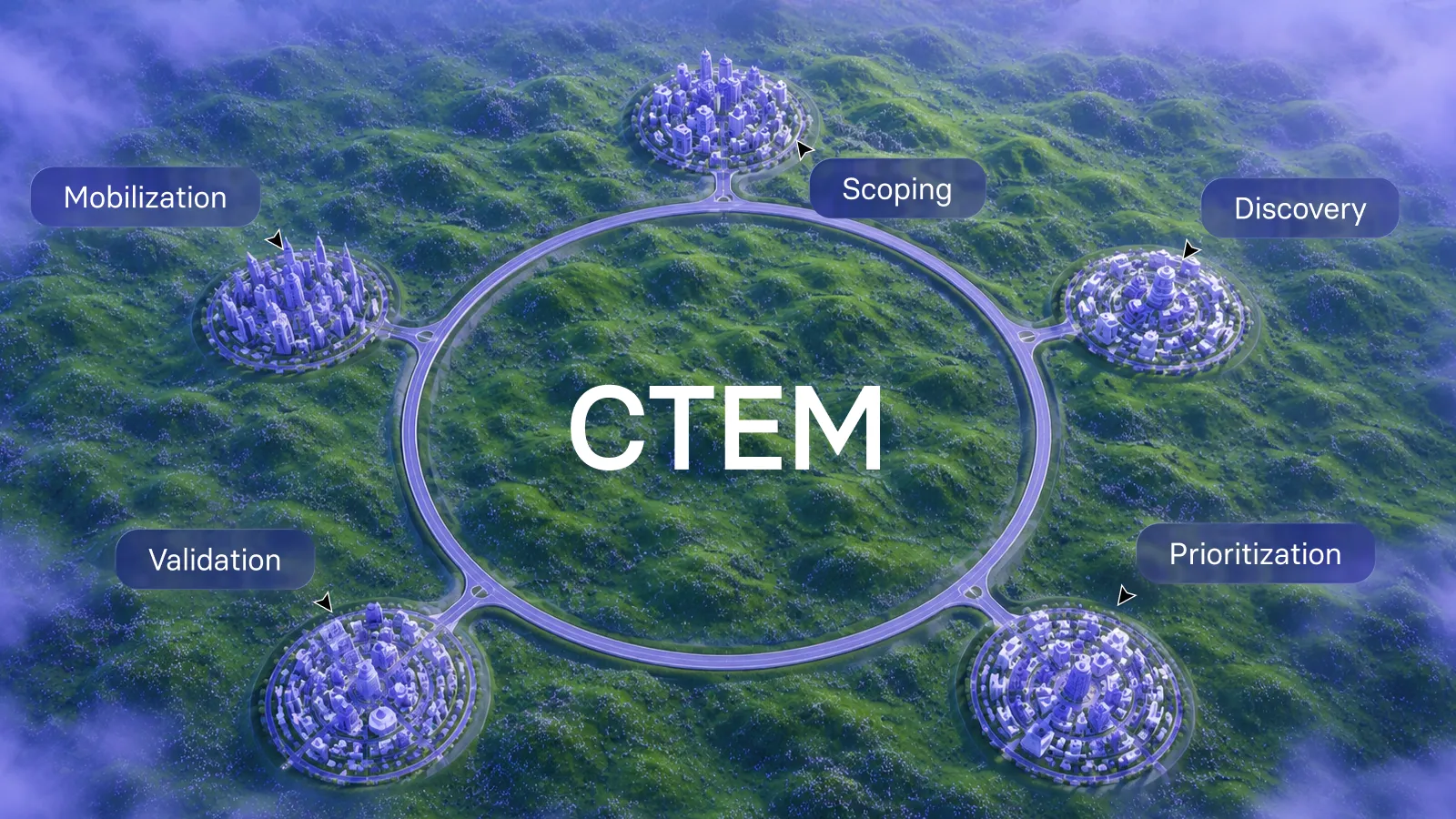
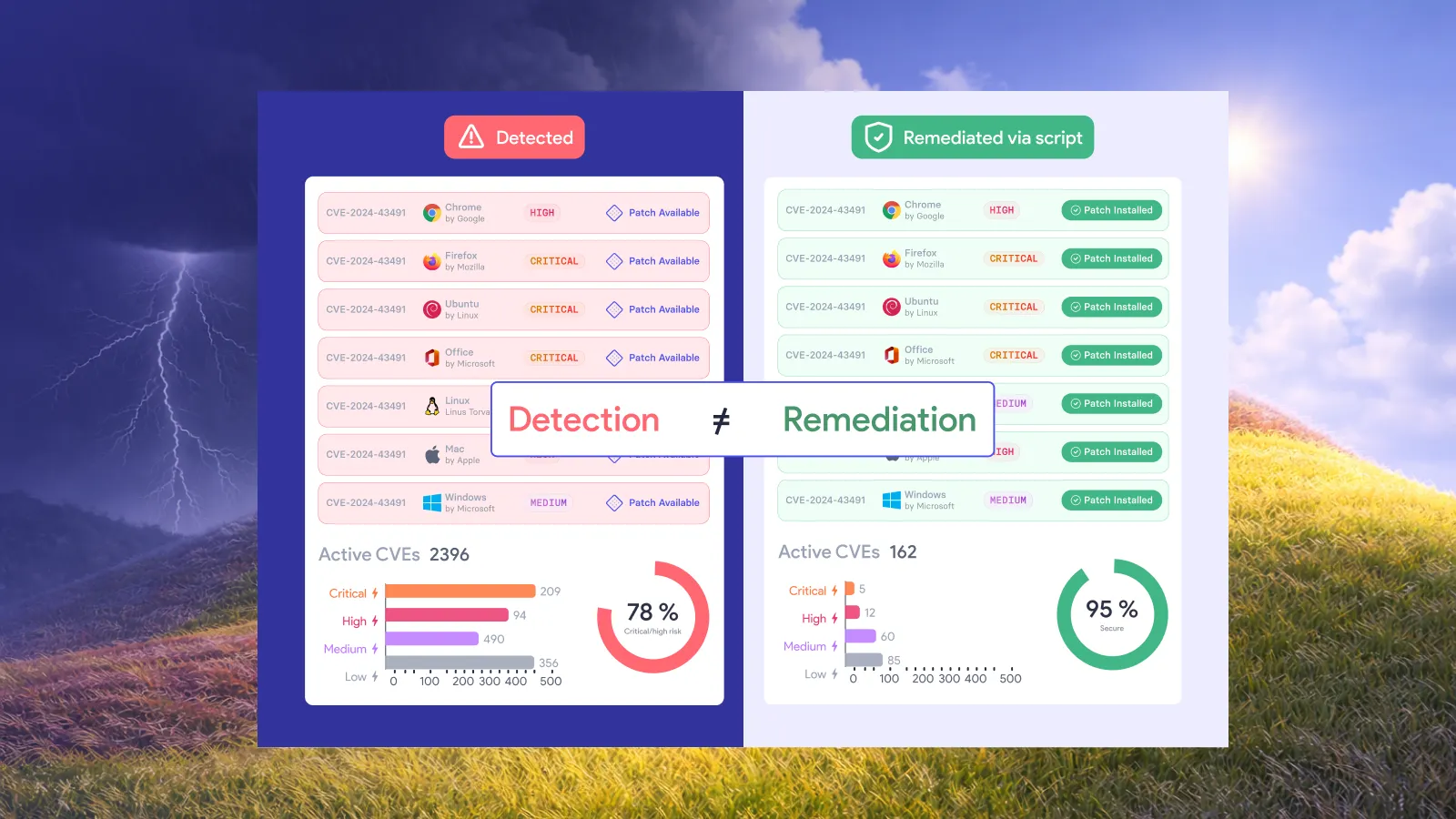
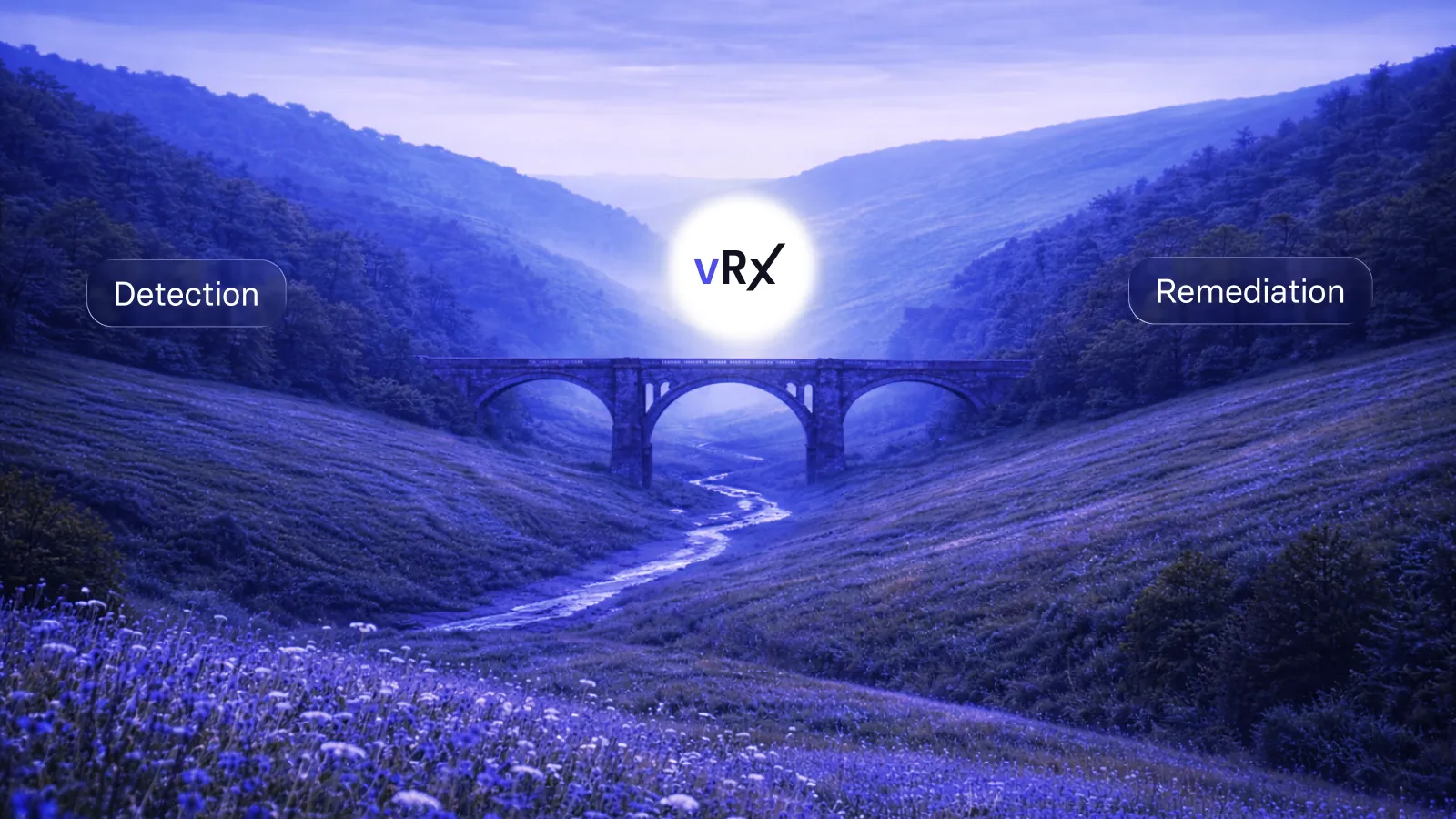
While many platforms in the industry focus heavily on detection, scanning, or prioritization, simply knowing about a problem is not enough to secure an environment. The current definition of “exposure management” often stops at the reporting phase, providing teams with a list of problems but no immediate means to solve them. However, in a rapidly changing landscape, the true measure of a security program’s maturity is shifting from how well it can identify exposures to how effectively it can mobilize the remediation of them. The critical missing link in most workflows is the ability to bridge the gap between detection and resolution, helping organizations transform their default state from “awareness” to “already protected”.
From identification to action
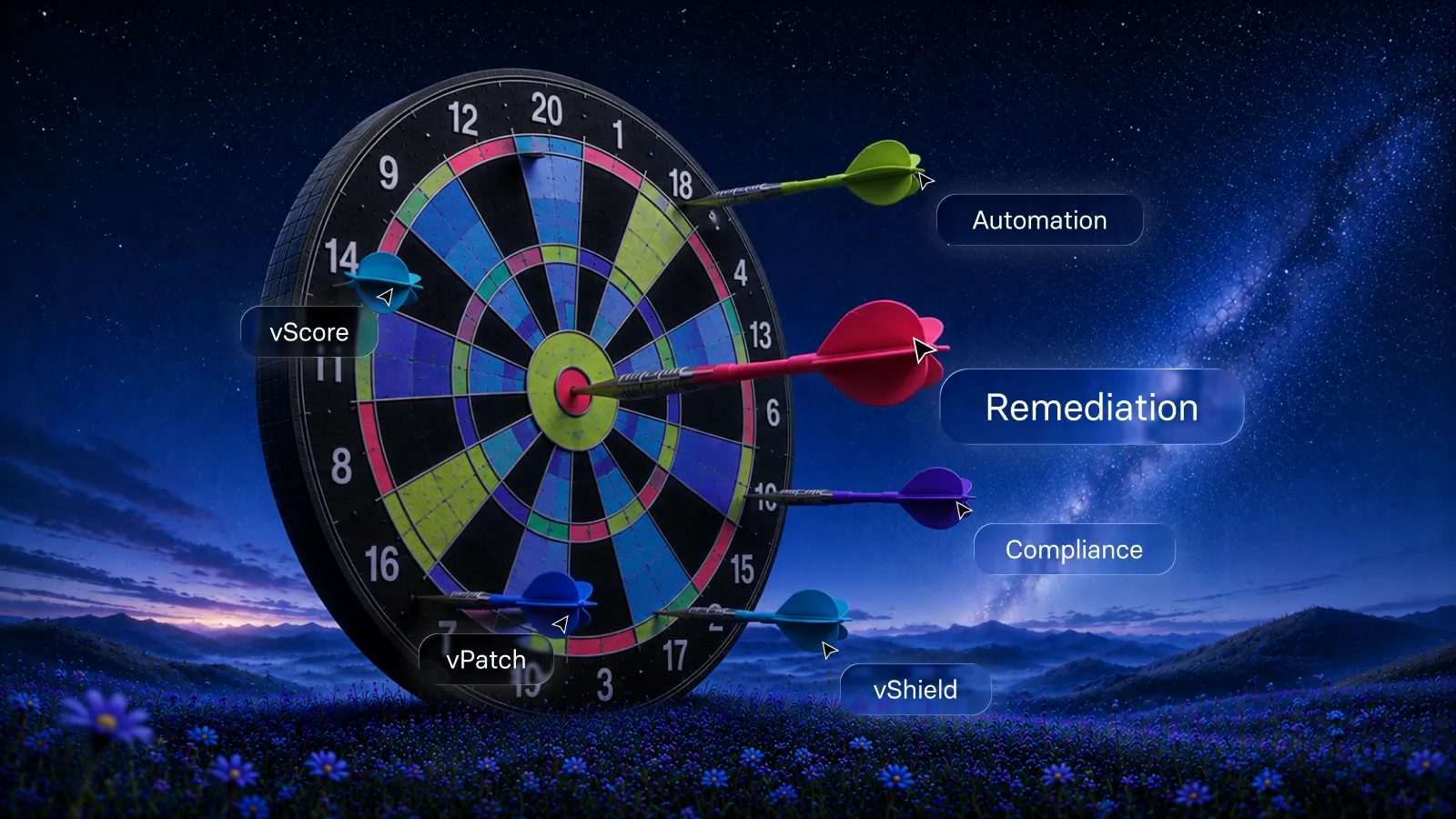
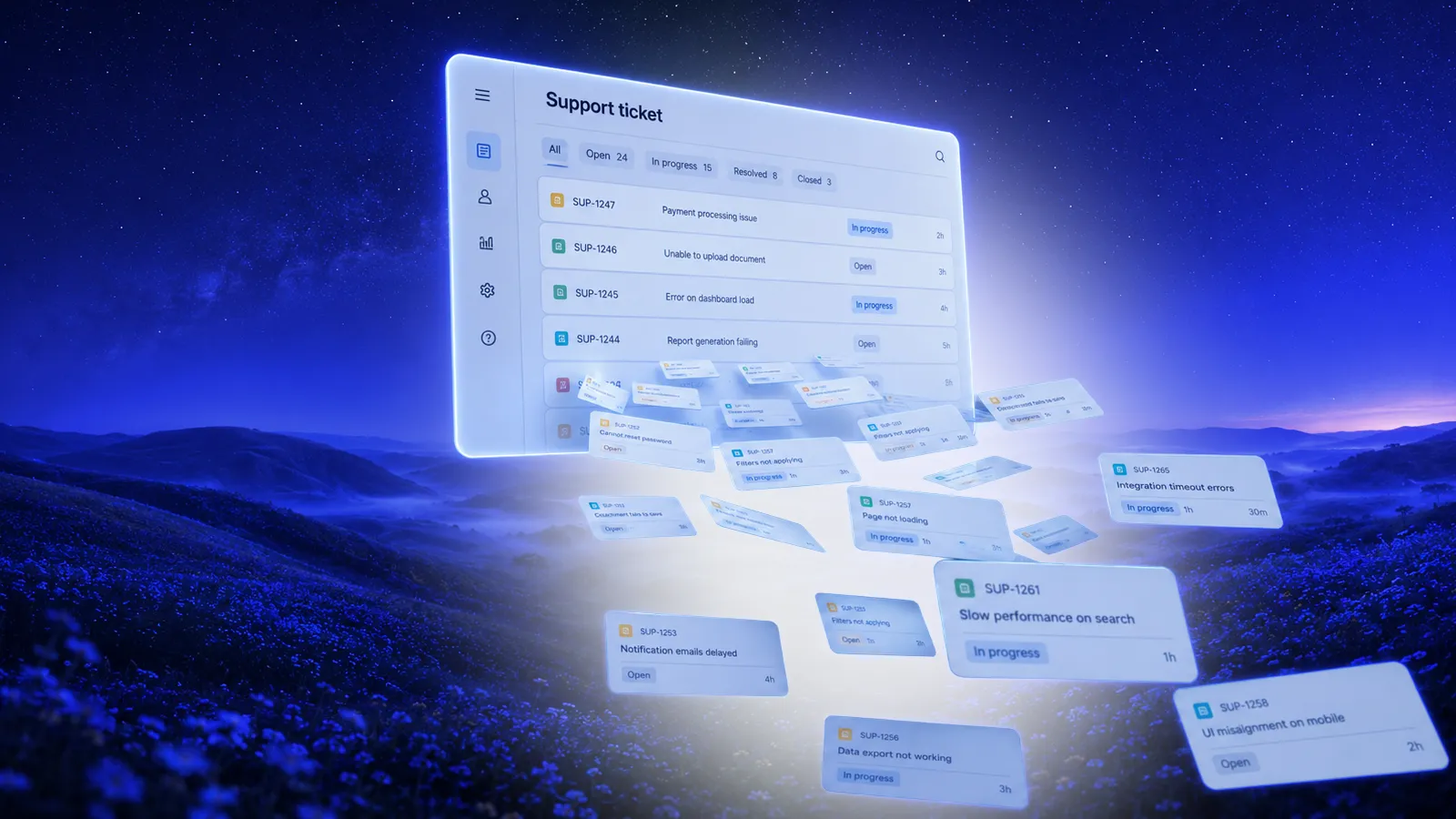
Success is no longer defined by the comprehensiveness of the vulnerability report or the depth of the analytics dashboard, but by the speed and efficacy of the fix. In this new paradigm, the value of a security tool is measured by its impact. By shifting focus from passive identification to active intervention, teams ensure that insights lead to immediate action, rather than just adding to a backlog of unaddressed tickets.
From accumulation to resolution
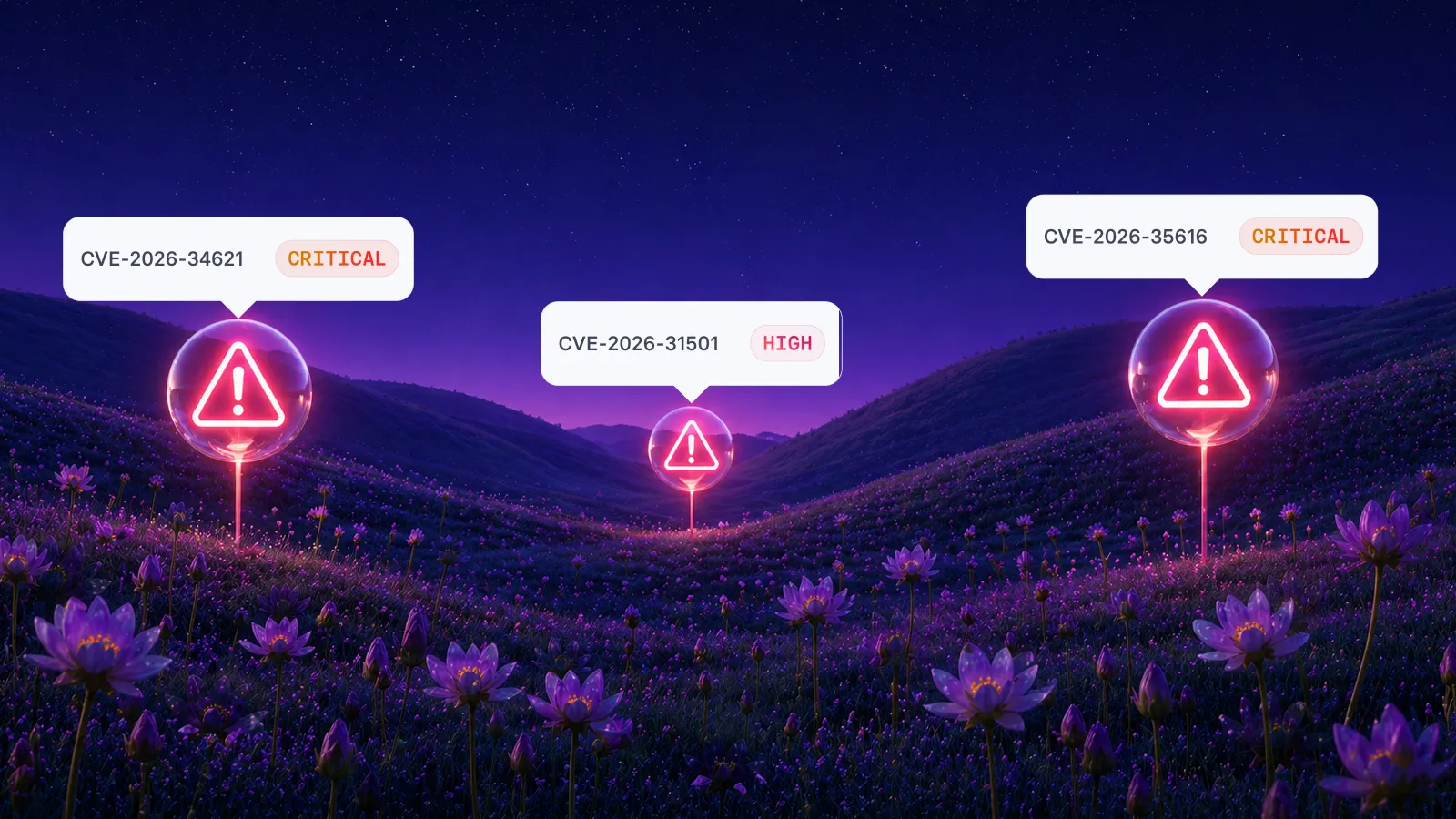
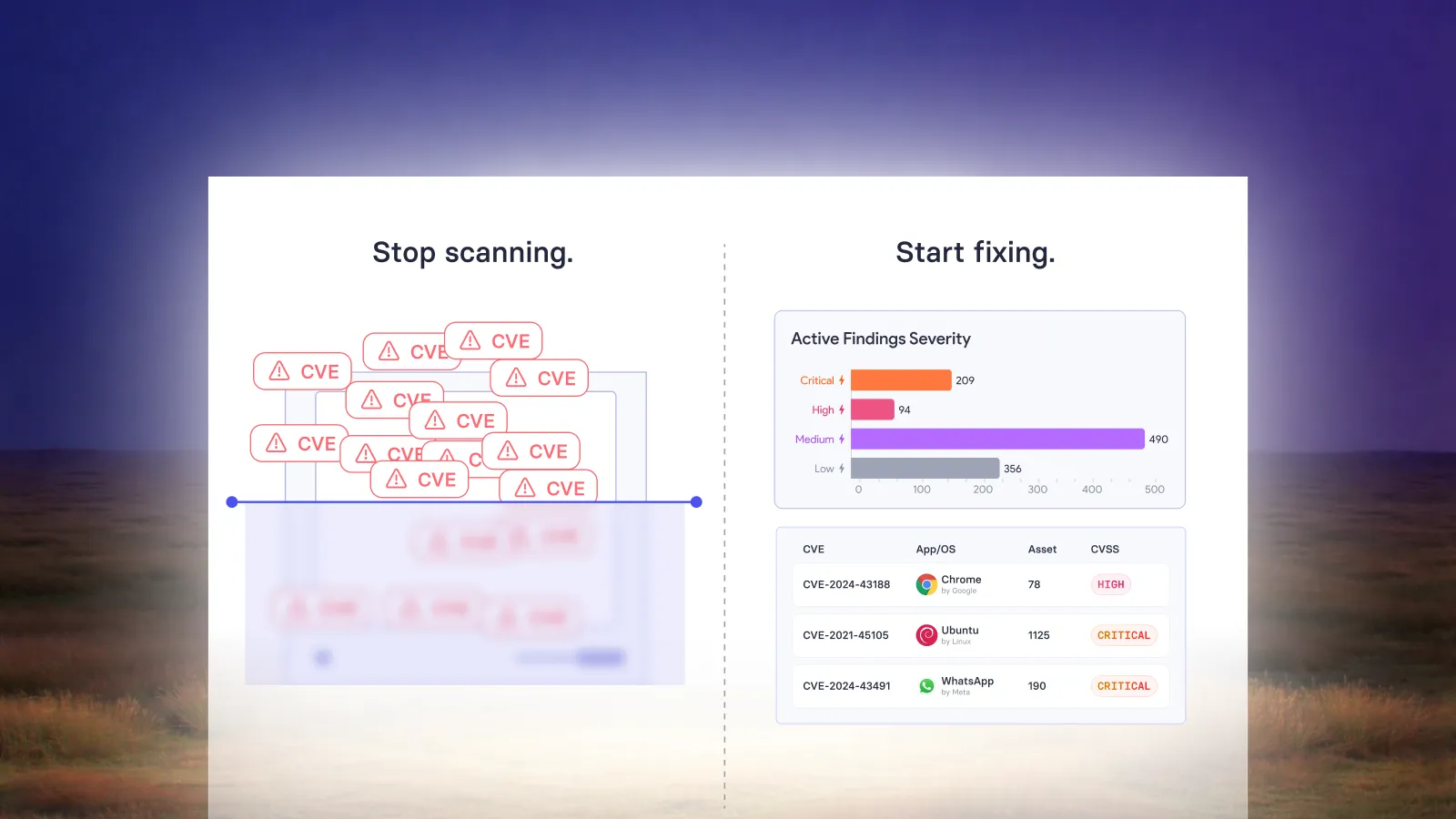
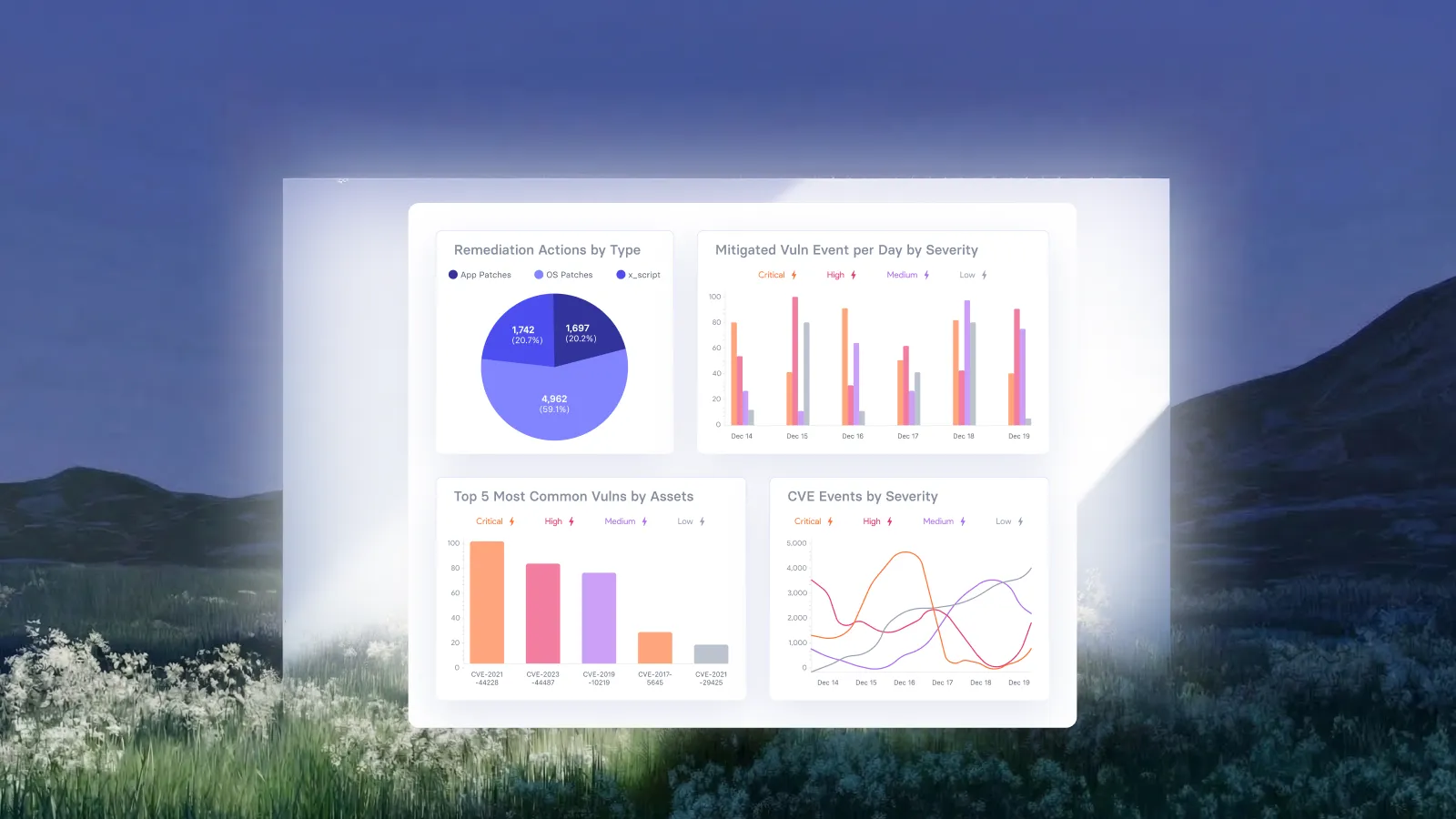
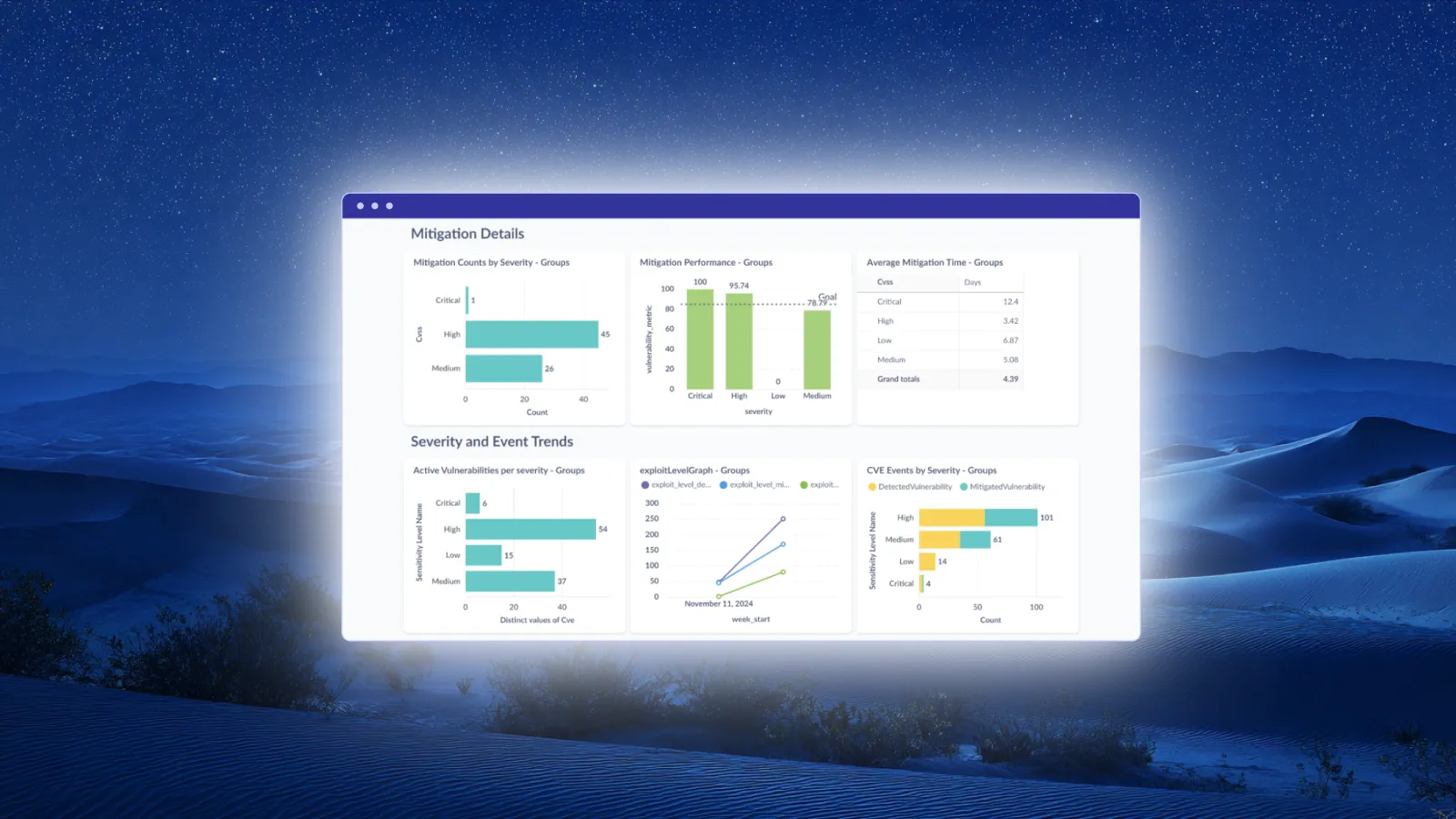
Rather than letting alerts pile up, the focus is on fixing what truly matters to reduce the attack surface. Traditional management often results in "alert fatigue," where contextually-sensitive critical issues are buried under a mountain of low-priority warnings. A resolution-centric approach prioritizes closing loops over merely opening tickets, ensuring that the metric for success is the reduction of risk exposure over time, rather than just piling up data points.
What unified remediation actually looks like
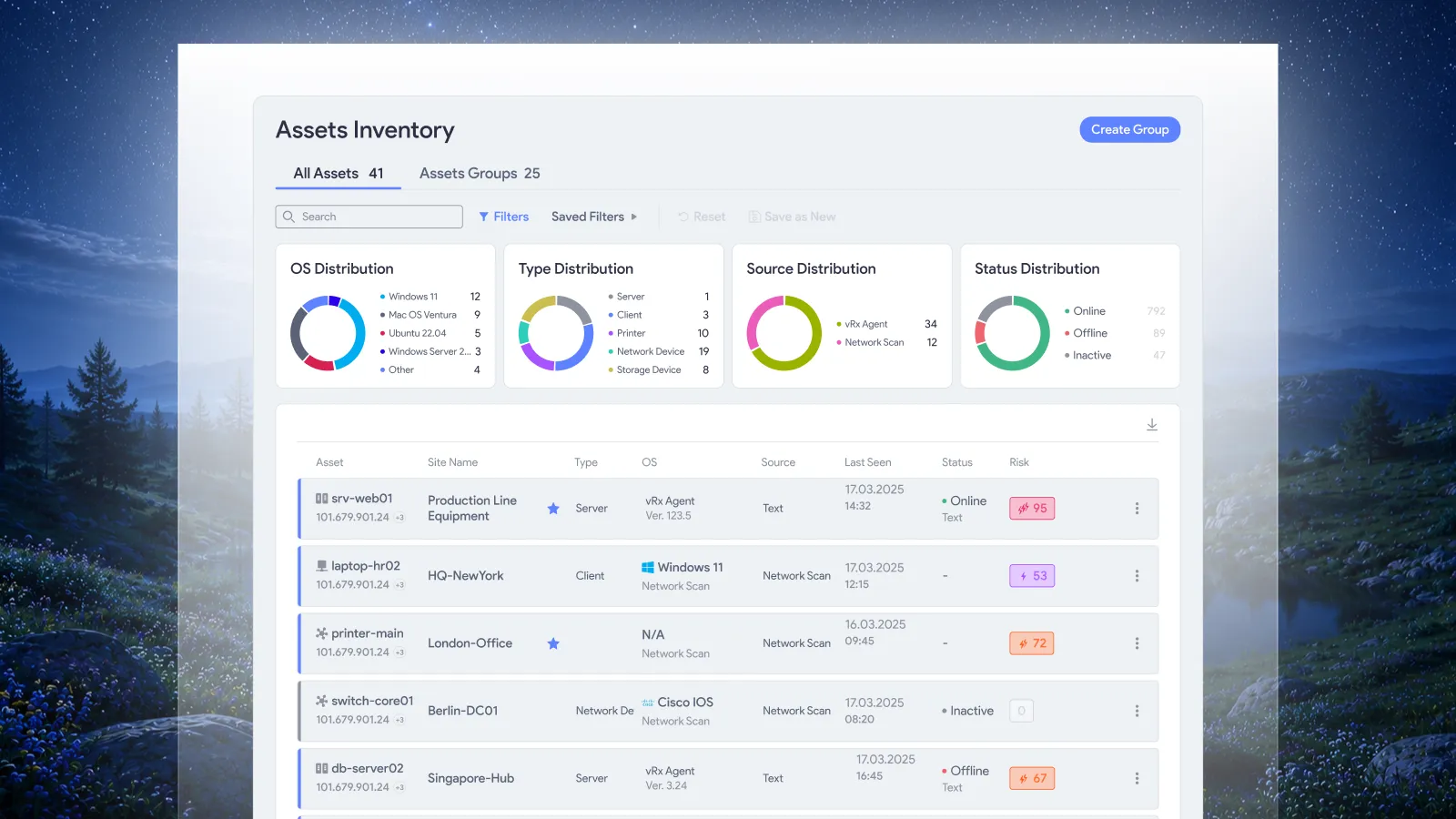
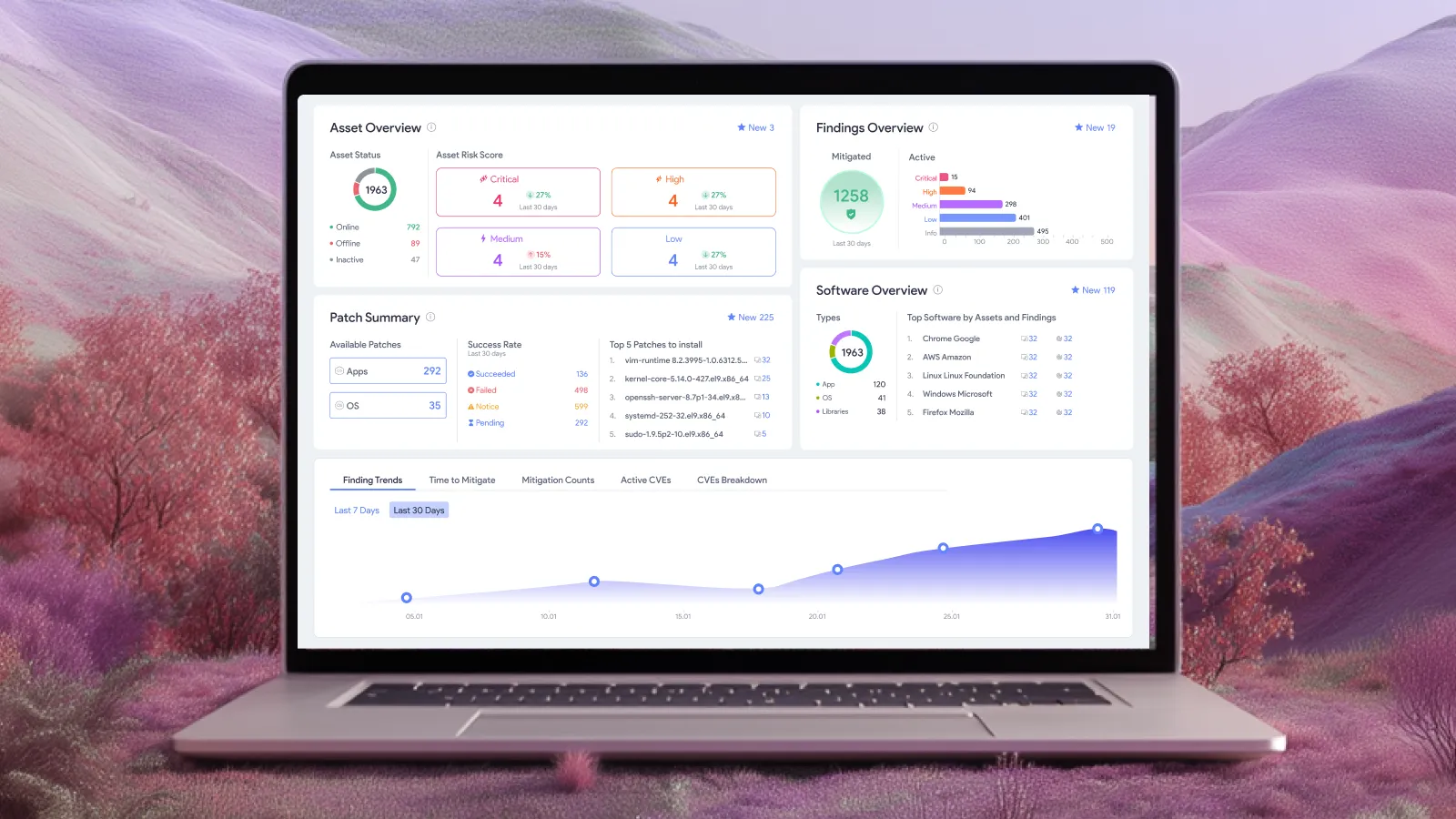
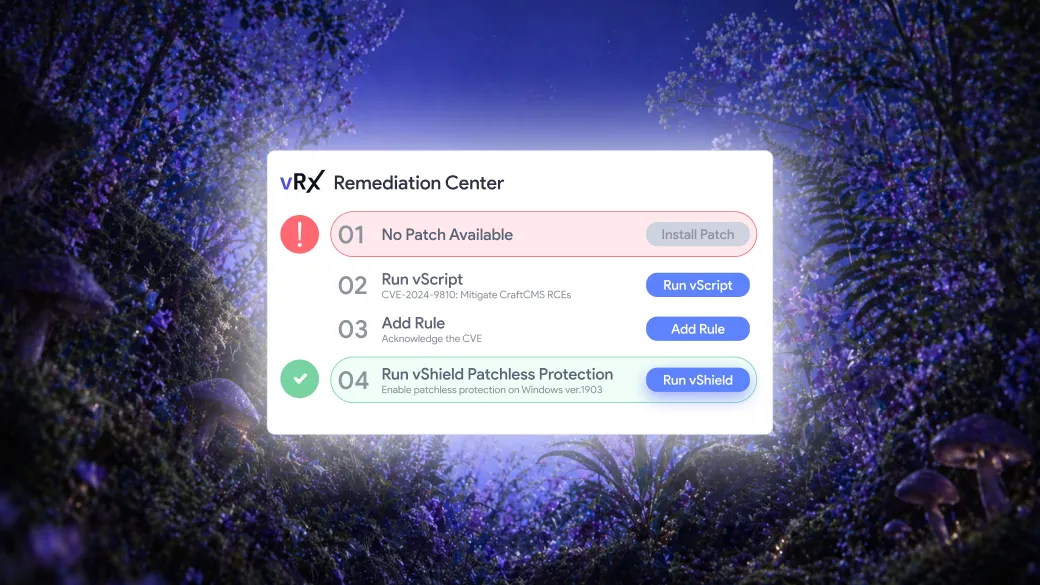
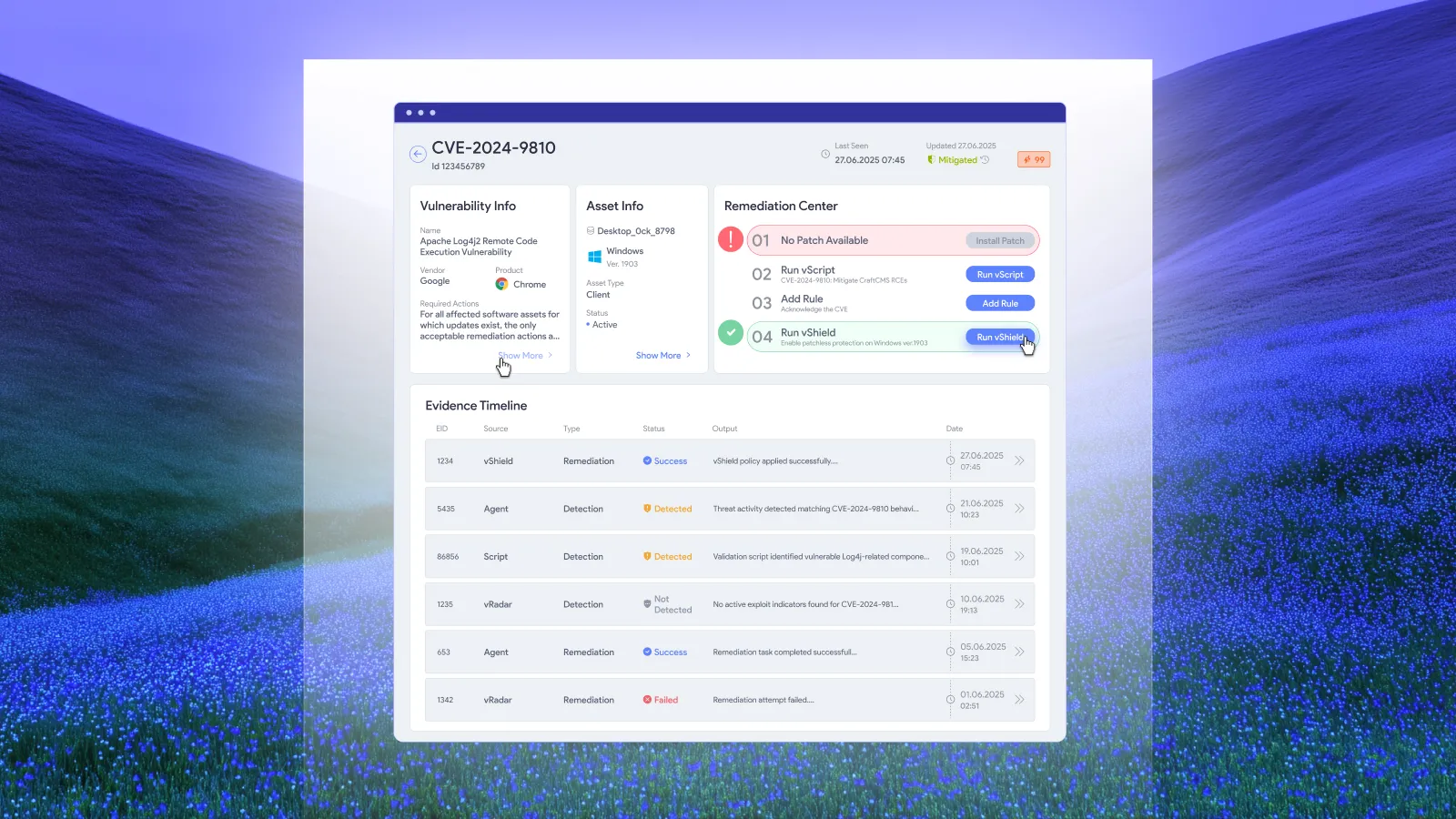
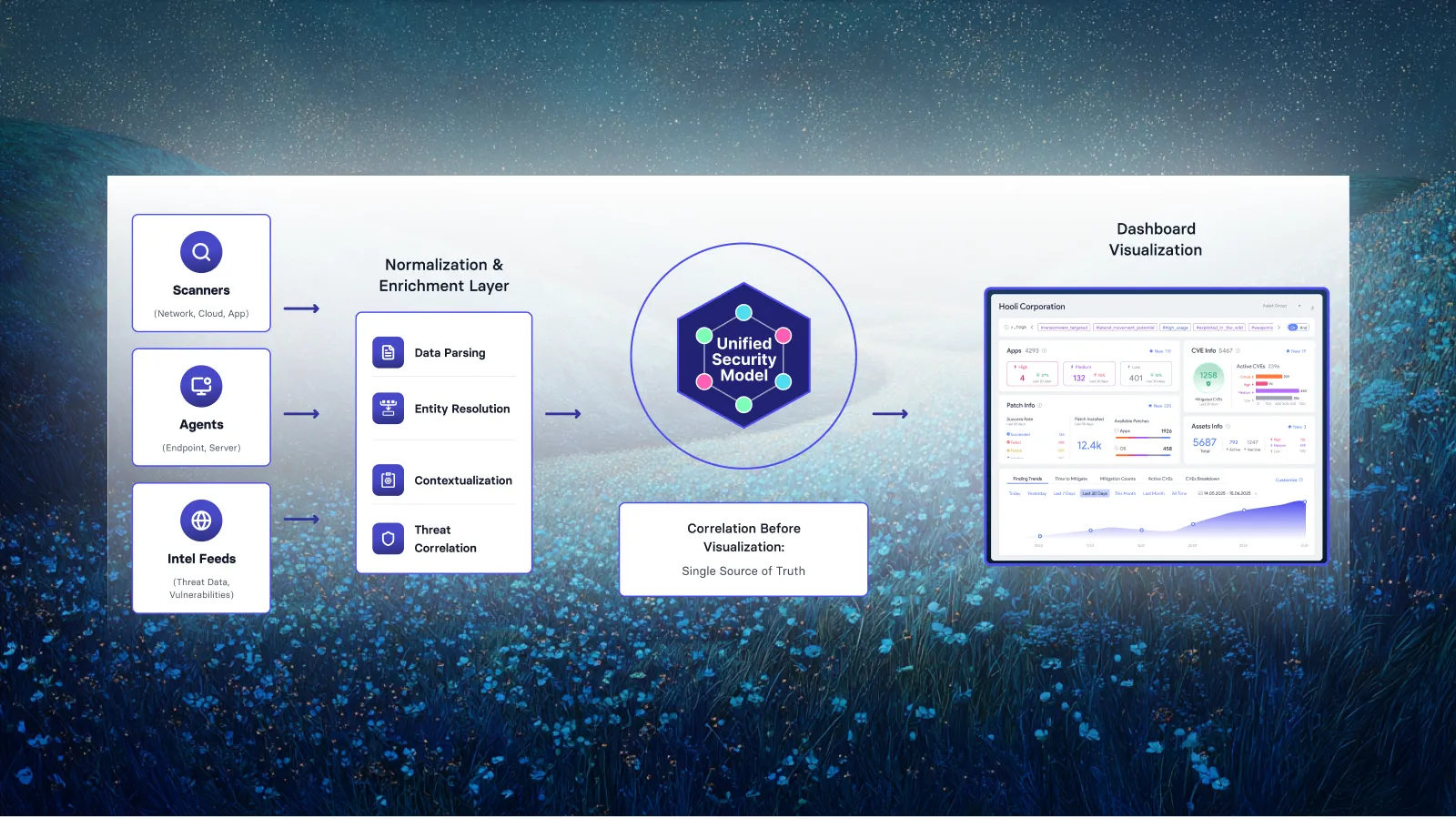
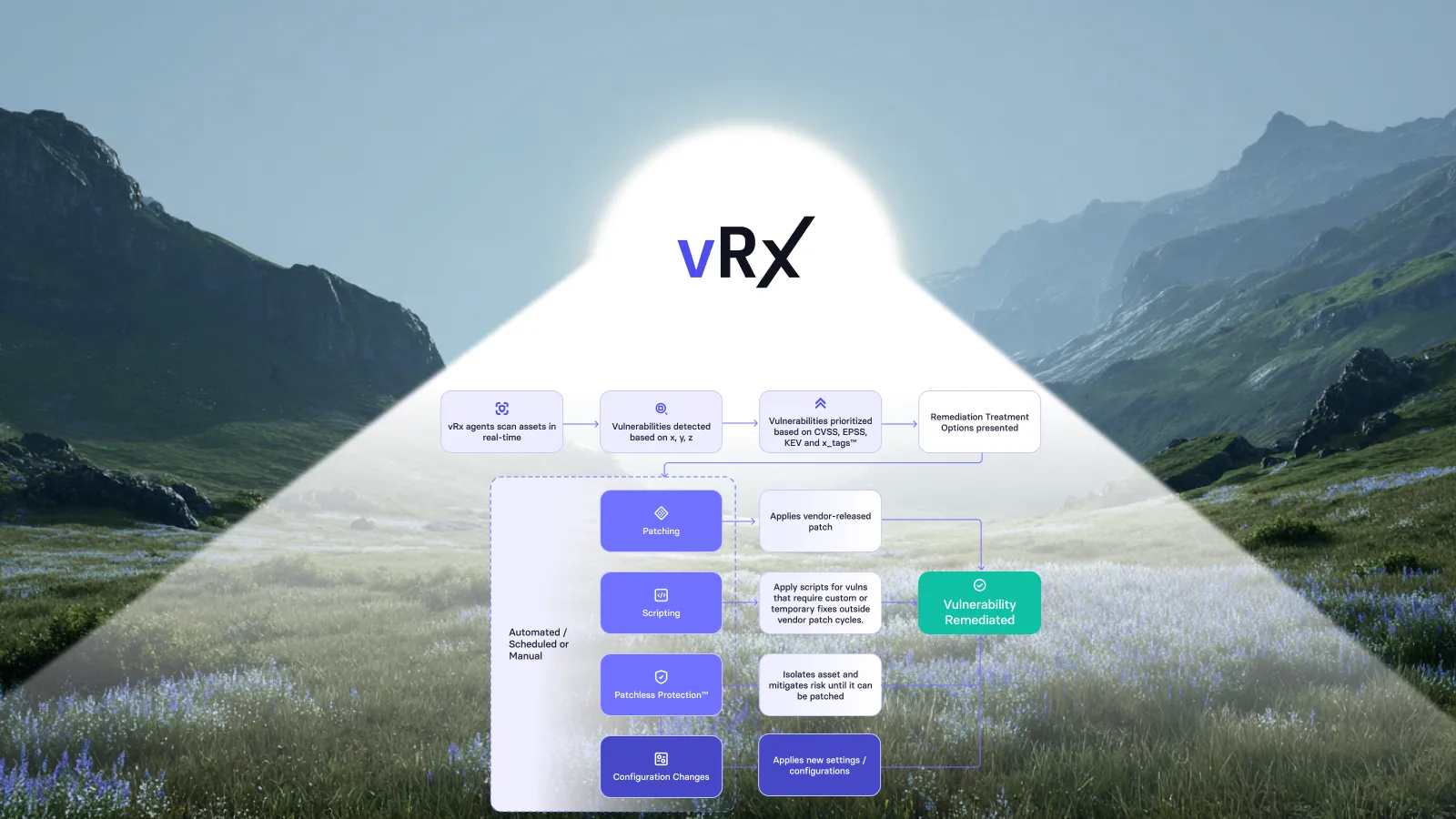
Unified remediation represents a move away from isolated tasks toward an orchestrated workflow that connects risk context directly to action. Instead of viewing remediation as a manual process at best and an afterthought at worst, this approach integrates threat intelligence and risk context with automated patch execution. By creating a cohesive pathway between the signal (the alert) and the response (the patch), IT teams can eliminate the friction that typically slows down security operations. This orchestration allows for a more responsive security posture that does not rely on a “single pane of glass” metaphor to simply view your (admittedly often beautifully formatted) vulnerability data, but rather the whole connected system to act on it. The real power of any tool, after all, lies in knowing how best to use it.
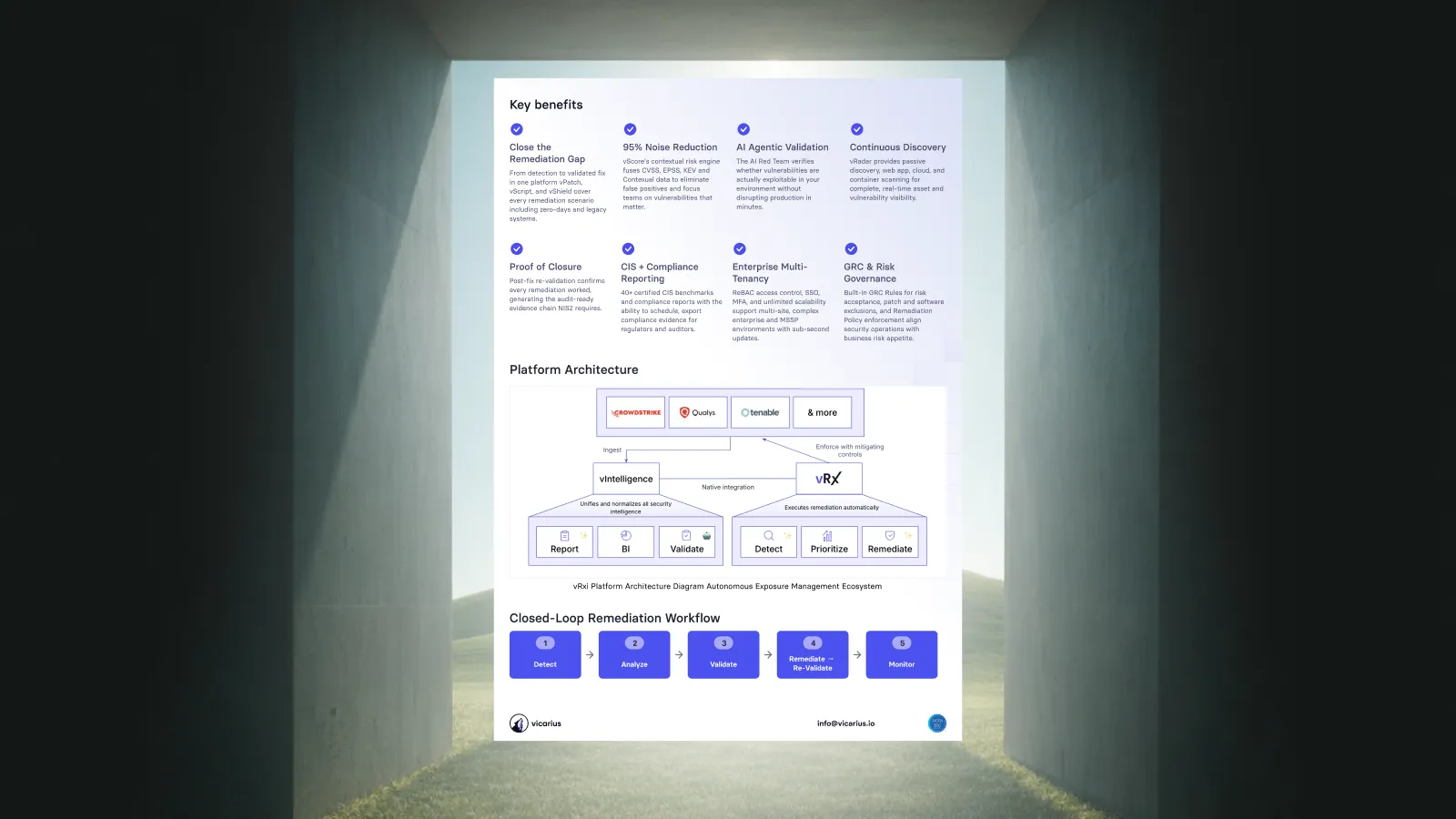
To explore this in greater depth, unified remediation is fundamentally about context-aware automation. In disjointed systems, a patch is just a file applied to a server. In a unified system, the application of that patch is informed by the asset's criticality, current threat intelligence, and compliance requirements, all happening in real-time. This eliminates the "swivel-chair" effect where an admin must check a scanner for severity, check an asset management tool for ownership, and then log into a patching tool to execute. By collapsing these steps into a singular (work)flow with sane, context-aware defaults, enterprises and MSPs achieve a closed-loop risk reduction where the time-to-fix is drastically shortened, and remediation efforts can be targeted at, and validated against, tangible business outcomes instead of general “best practice” IT checklists.
The “Better Together” approach
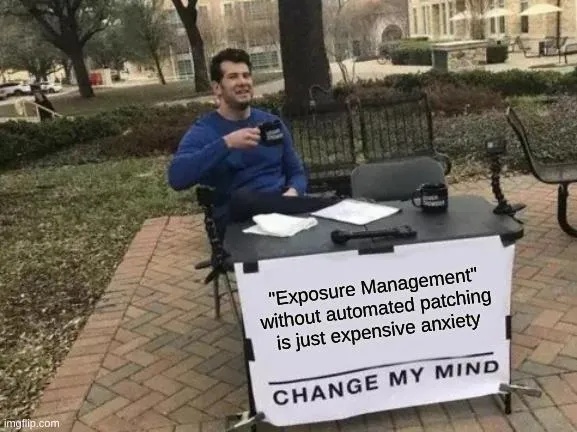
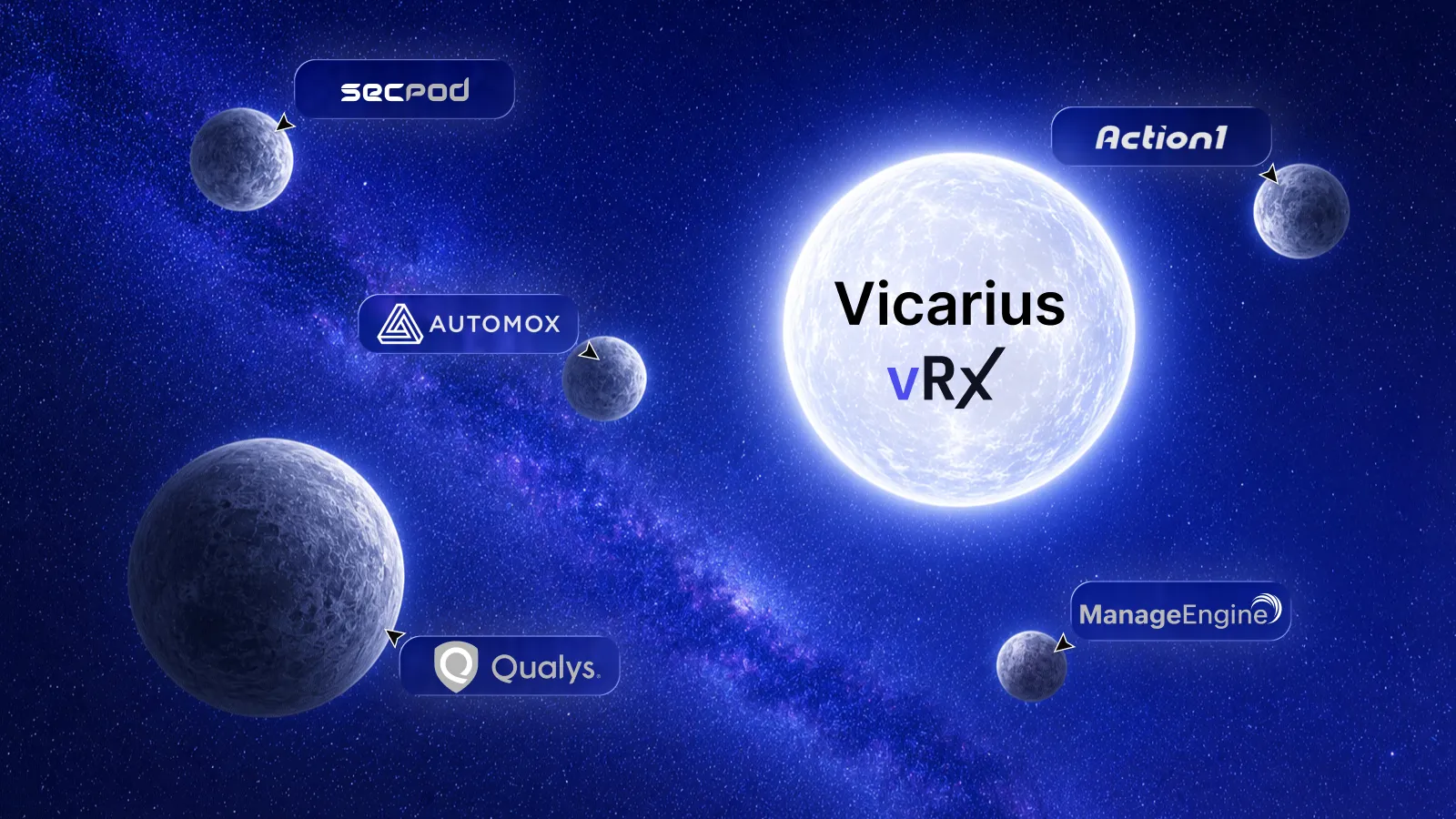
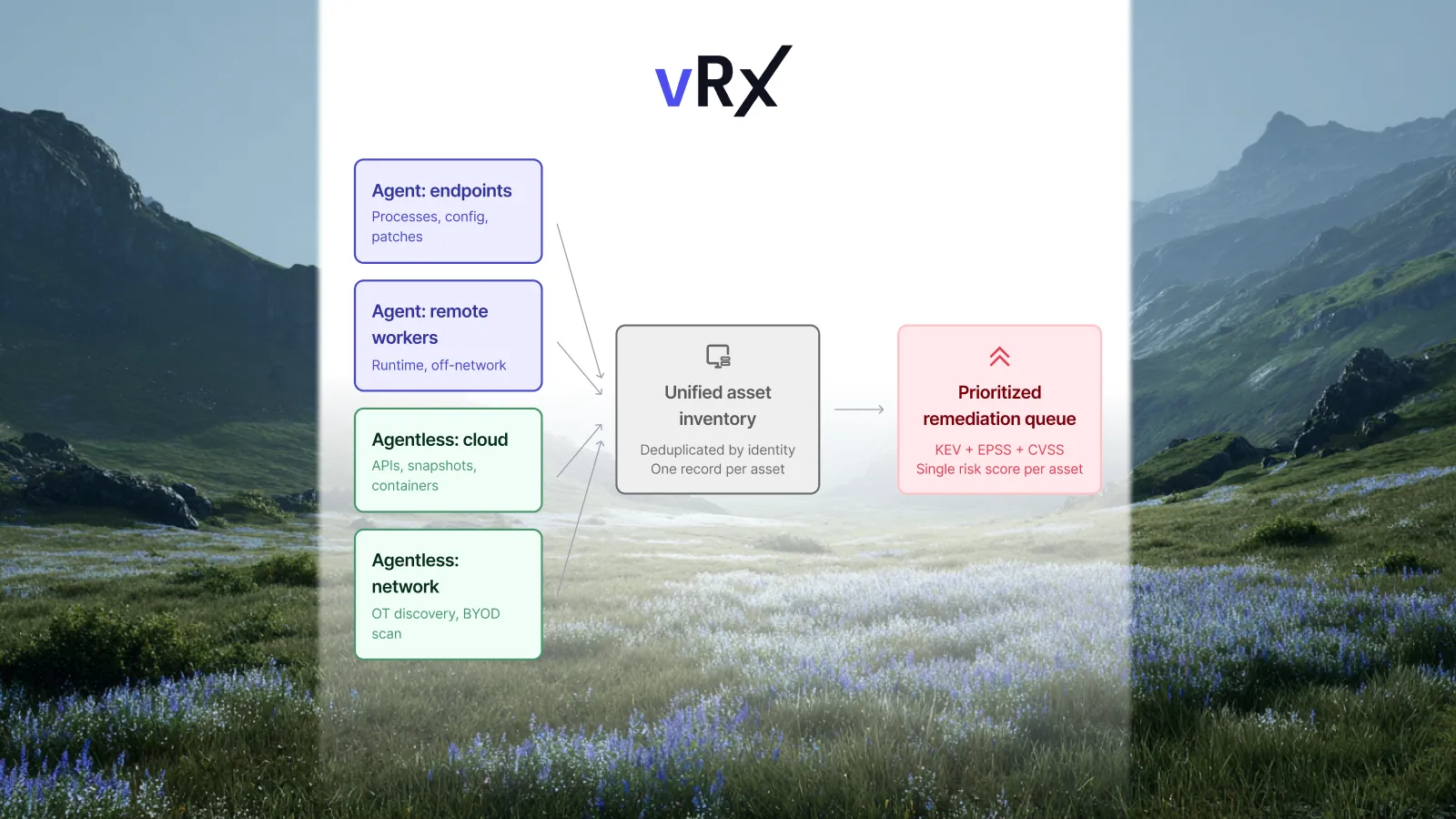
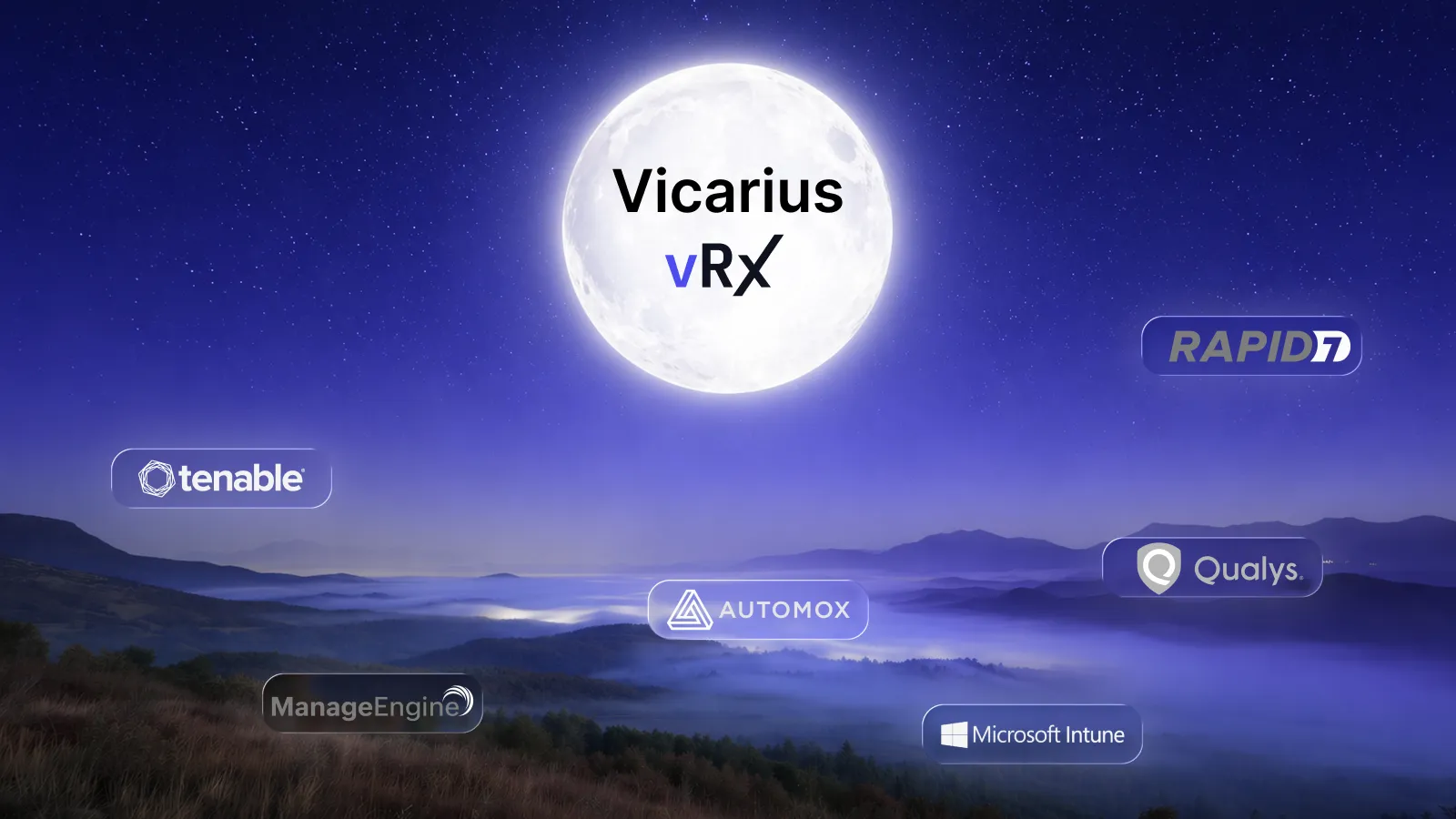
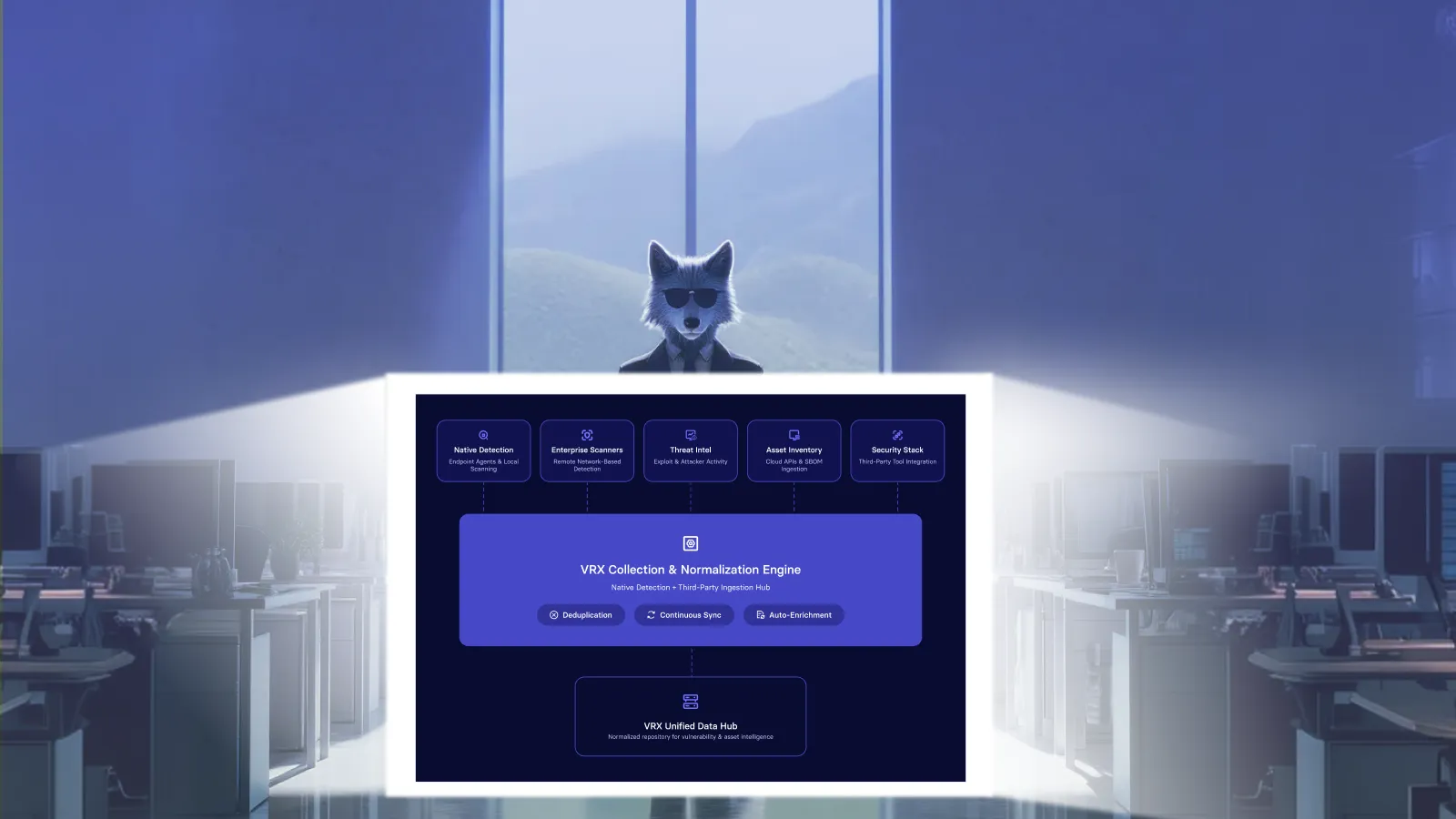
From the ground up, vRx by Vicarius was designed and built as it was because we recognized that most organizations already rely on a variety of scanners and security tools to monitor their environments. A practical remediation strategy should not require teams to rip out and replace their existing technology stack wholesale. Instead, the "Better Together" philosophy focuses on expanding integrations to plug into any detection or scanning tool currently in use. This approach respects the investments organizations have already made while enhancing their ability to act on the data those tools provide.
Agnostic remediation
If there is a vulnerability to fix, the platform should be able to help fix it, irrespective of which scanner found it. This platform-agnostic capability ensures that remediation is not held hostage by a specific vendor’s ecosystem. Whether the alert comes from a legacy scanner or a cutting-edge cloud detection tool, the remediation layer acts as a universal translator and “project manager”, talking to everyone and turning diverse data inputs into a standardized action plan.
Streamlined operations
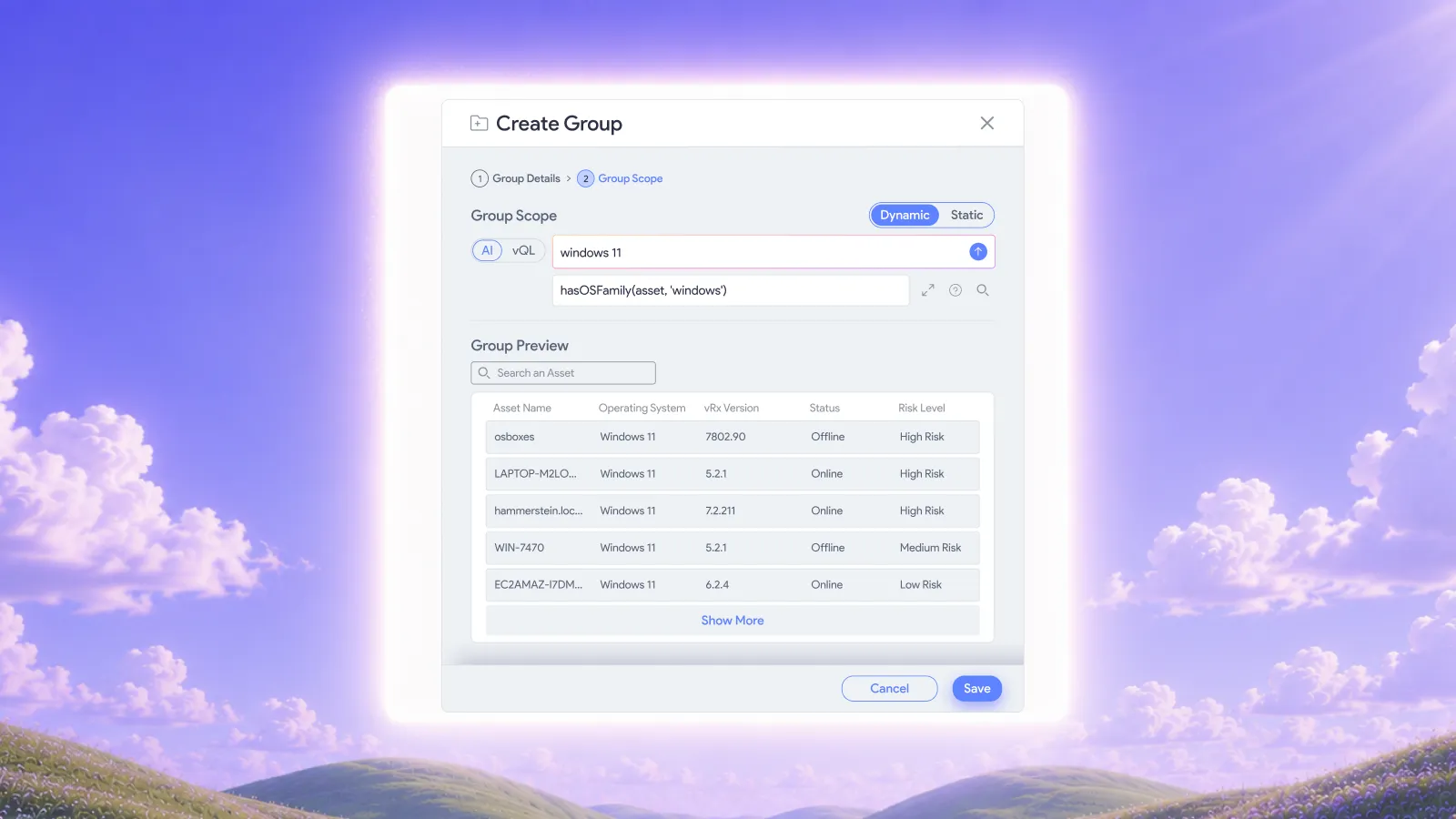
Teams can orchestrate fixes across multiple controls and platforms without being locked into a single vendor's detection ecosystem. This allows for the centralization of policy and execution. Instead of maintaining different patching schedules for different tools, IT managers can govern their entire estate through one logic stream, significantly reducing the cognitive load on staff and minimizing the margin for human error. Over time, the AI logic is further improved by use and your dataset, further refining your automated remediation processes and strengthening your default security stance before you even open up the dashboard - turning “workflow” into “flow state.”
Future-proofing the security stack
By decoupling the remediation capability from the detection source, organizations gain the flexibility to evolve their security stack without breaking their operational workflows. As threat landscapes change, a company might switch scanning vendors to get better visibility, but its remediation engine (the machinery that actually protects the business) remains constant and stable. This aggressively-open, “plays nicely with others” integration-first strategy maximizes the ROI of current tools while ensuring the organization is agile enough to adopt new detection technologies in the future.
How vRx automates the last mile
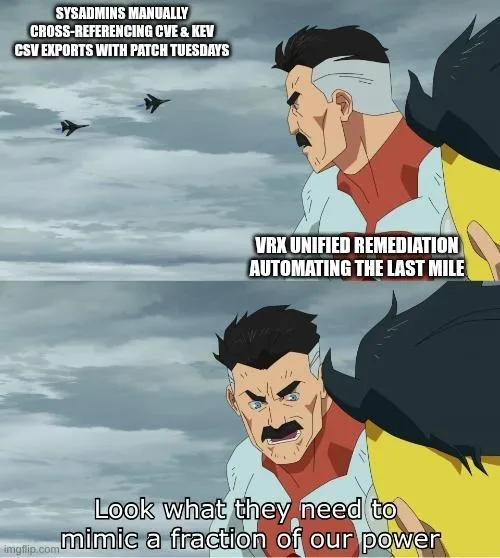
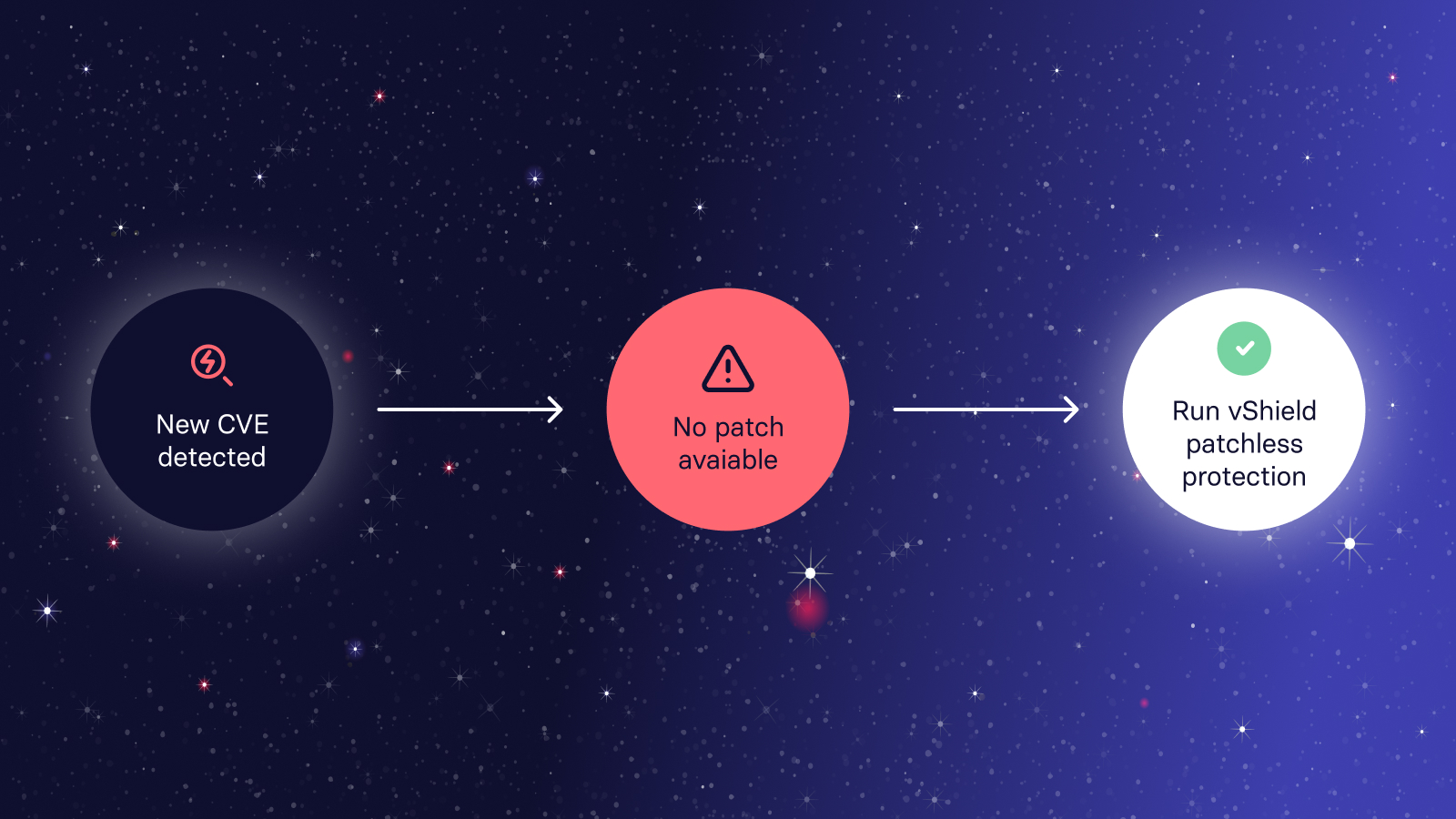
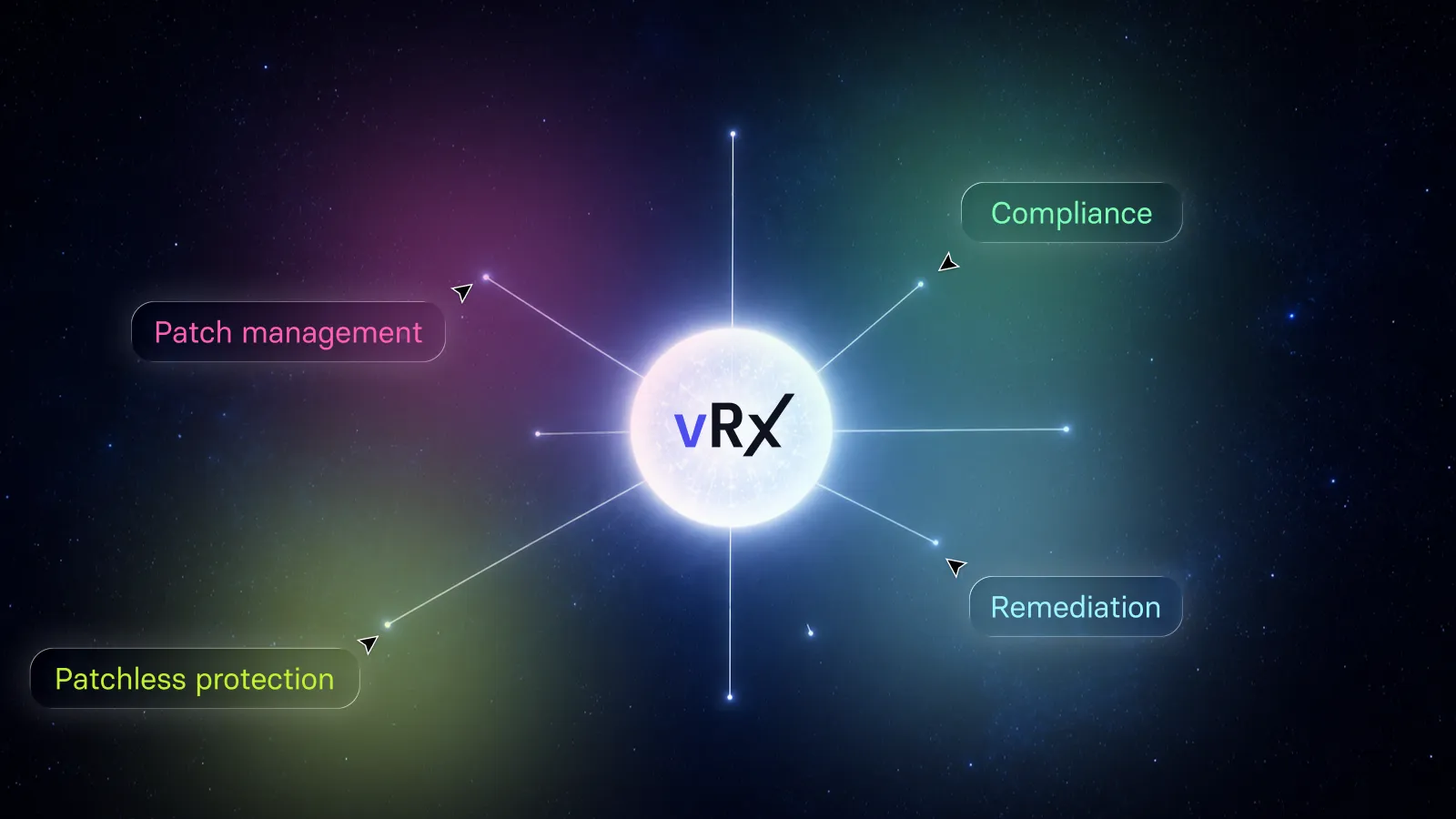
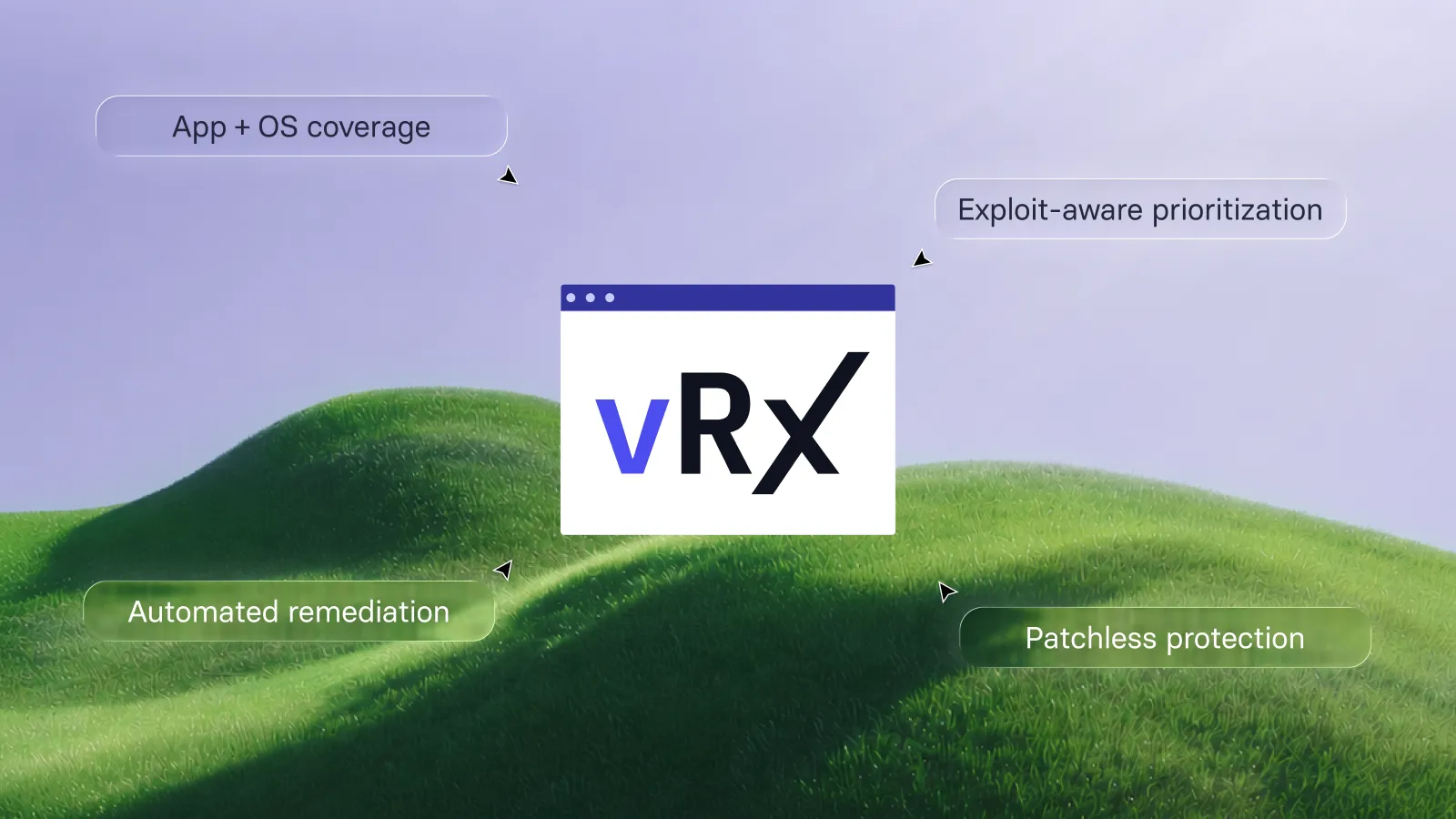
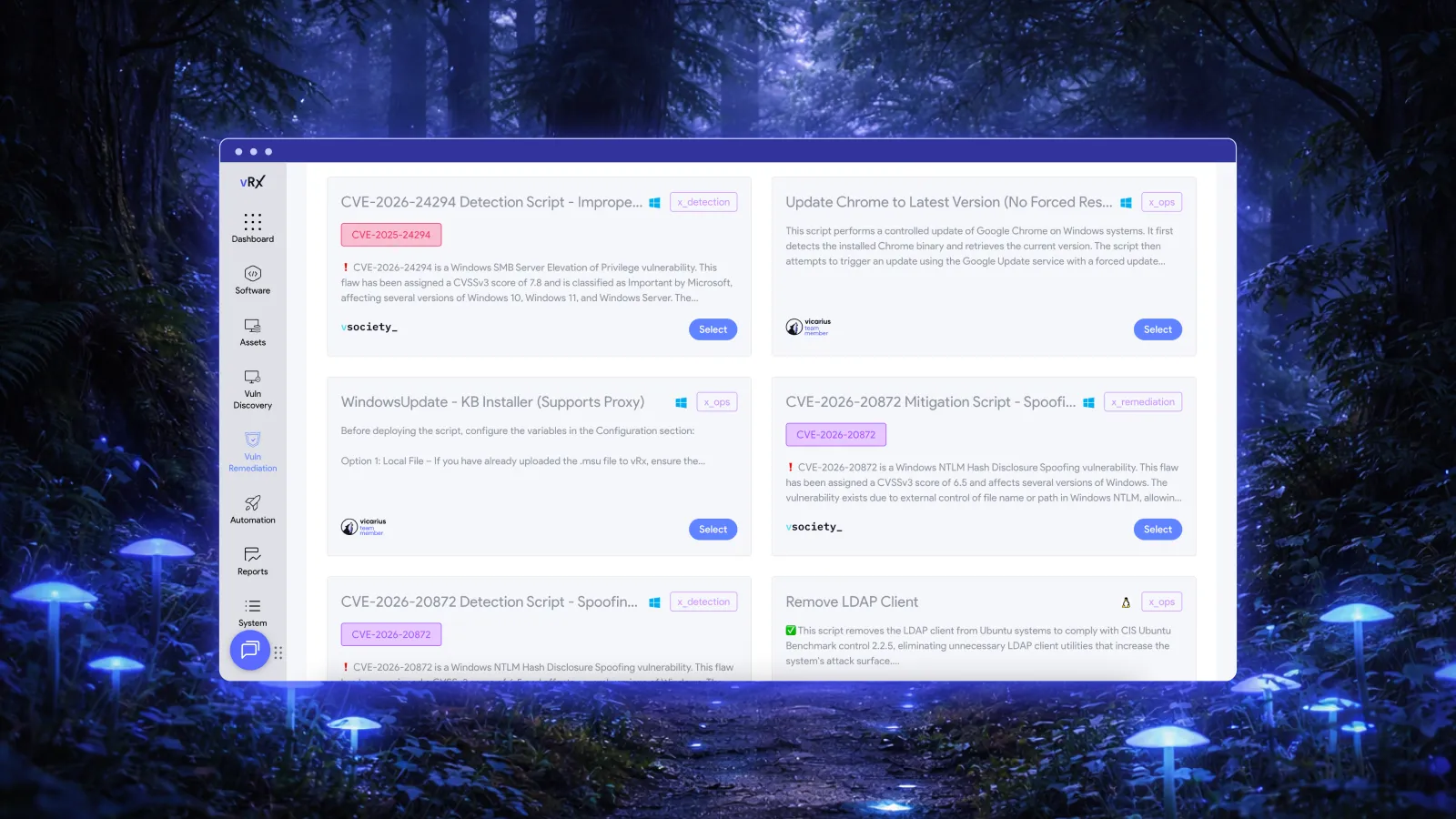
vRx is purpose-built to lead in vulnerability remediation, distinguishing it from generic vulnerability management providers that focus primarily on scanning. While it includes capabilities for scanning and prioritization, these features exist in service of the primary goal: helping teams fix what matters, fast. The platform is designed to address the “last mile” of the security lifecycle - the actual deployment of patches and scripts, in a consistent way across platforms - often the most resource-intensive phase for sysadmins.
This is a notoriously hard problem because it involves the tangible risk of downtime, compatibility issues, and the complexity of diverse operating systems. vRx navigates this by utilizing proprietary, automation-first technology developed over eight years. This tech acts as an intelligent execution layer that sits on top of existing detection tools, handling the nuances of binary deployment, script execution, and validation. By combining this proprietary core with broad collaborations, vRx doesn't just "deliver" a patch; it orchestrates the entire remediation event. This allows IT professionals to move from being reactive firefighters to strategic architects, automating the mobilization of fixes and ensuring that vulnerabilities are not just cataloged in a database, but actively resolved in the real world.
Operationalizing the future of cyber defense
Out of necessity, the security industry is evolving from alert-heavy workflows to automated, remediation-centric processes. As vulnerability management expands into exposure management, the ability to close the loop (moving swiftly from detection to remediation) has become a defining characteristic of a mature security operation. This transition is not merely about efficiency; it is a survival mechanism in an environment where adversaries move faster than manual processes can match. Teams that embrace unified remediation can finally turn workflows into flow states; by reducing burnout, they can focus their energy, expertise, and precious executive functioning on what truly matters in security: fixing the problem, hardening your infrastructure, and shrinking your attack surface.
Book a demo today to see how you can automate your remediation workflows and seamlessly integrate your existing tools with vRx.














.webp)












%20Signals%20a%20New%20Era%20of%20Supply%20Chain%20Risk.webp)





.webp)



















%20to%20Reduce%20Attack%20Surface.avif)