Patch management
vRx brings every patch type into one view: Windows KBs, macOS updates, application patches, and Linux packages. Decide when and how each deploys. Your environment, your schedule, your rules.

New vulnerabilities per day
reduction in manual patching
from Months to Hours



























































.png)













Patching that fits how you work
vRx gives your team a complete view of every patch needed across your estate. Work through the queue on demand, set scheduled deployments, or configure rules that keep your environment current. The choice is yours, not the platform's.


Everything, one place

Your call, always

Fix what matters

Groups, not spreadsheets

80% less effort

Always audit ready


Automate patching across your entire estate
vRx covers all patch types in one unified view and gives your team full control over how and when patches deploy. Patch groups, asset groups, and software groups let you organize the work the way your environment demands.
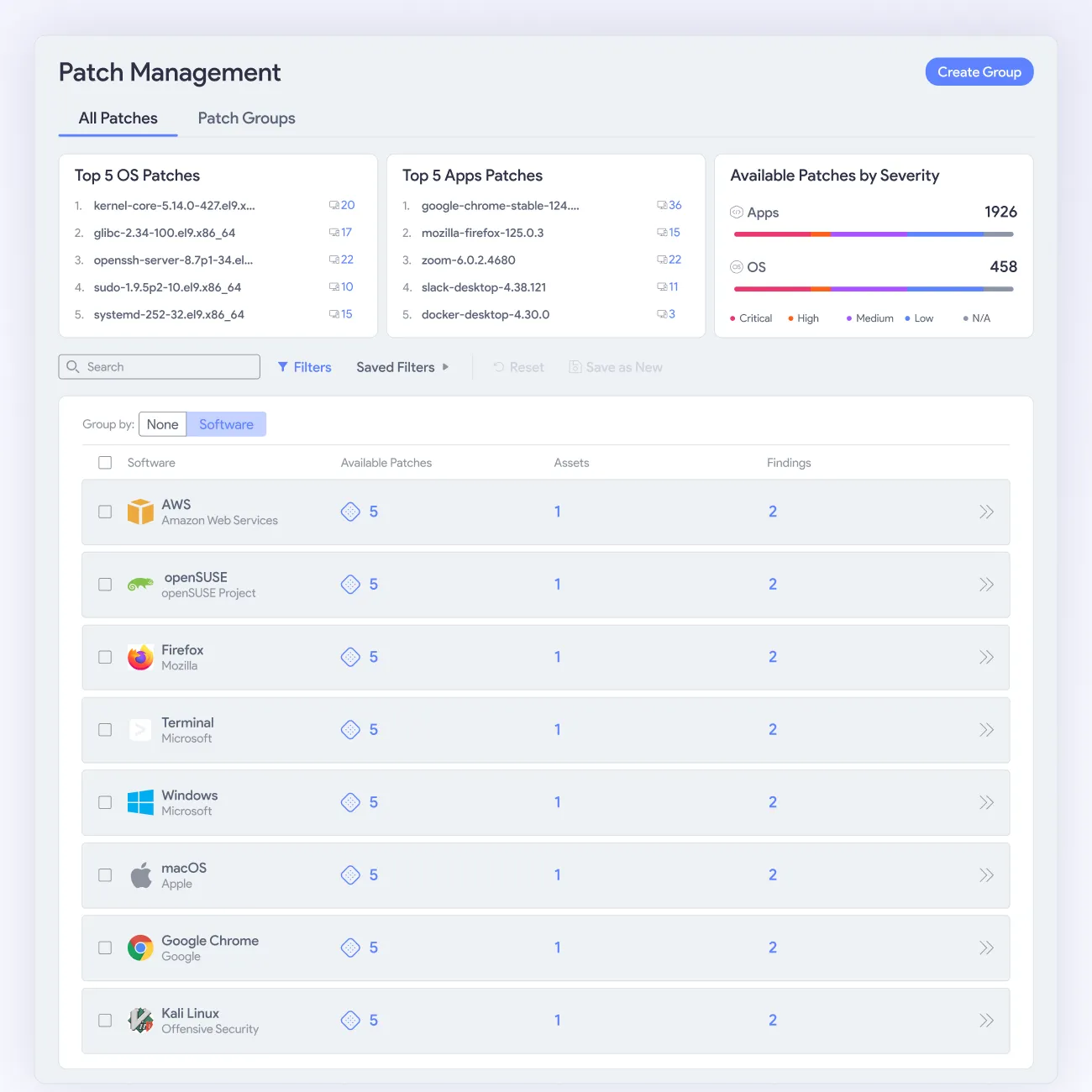
One view for all patch types: application patches, Windows KBs, macOS updates, and Linux packages, with consistent search and filtering across all.
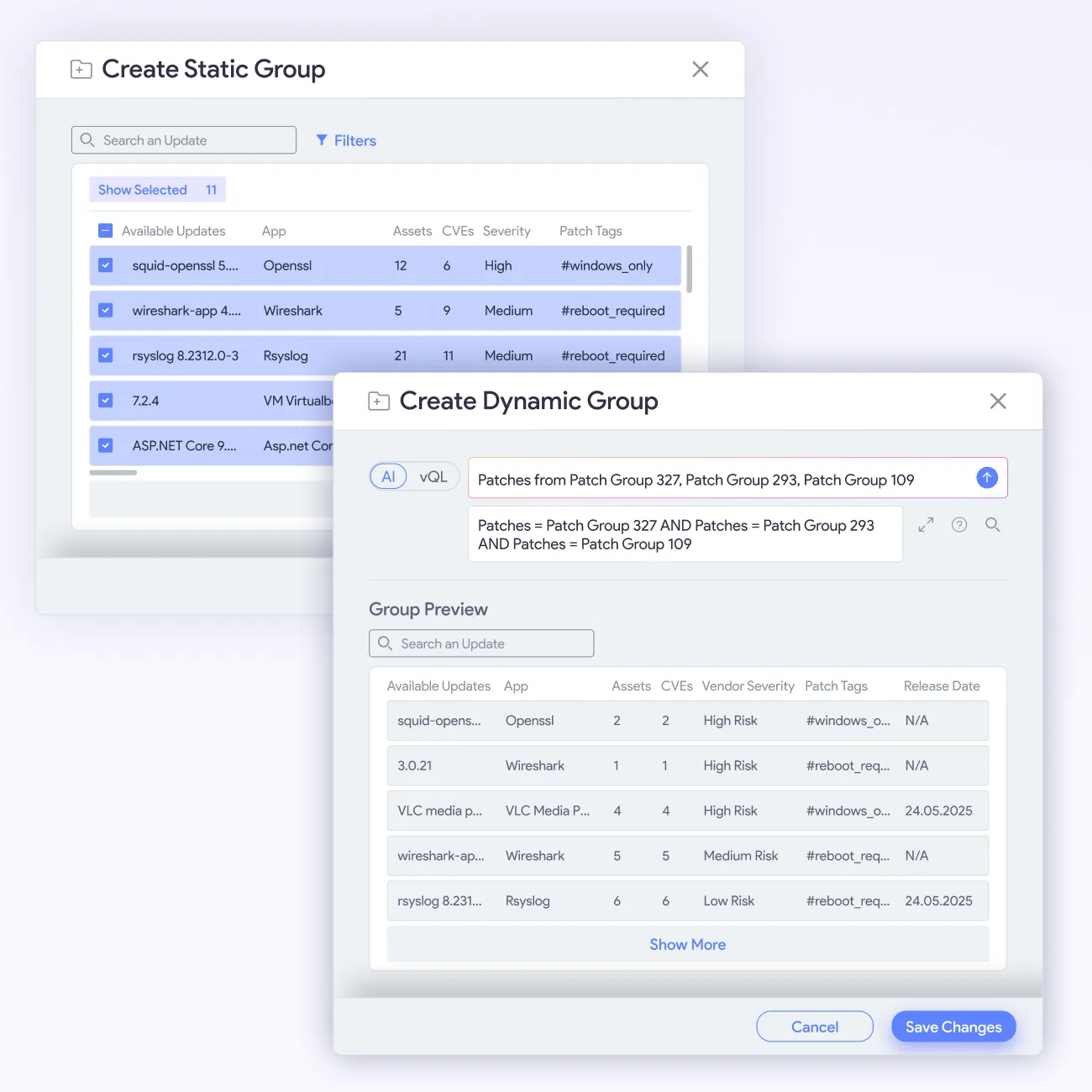
Hand-pick patches for static groups, or write a rule and let dynamic groups keep membership current as patch data changes. No manual maintenance.
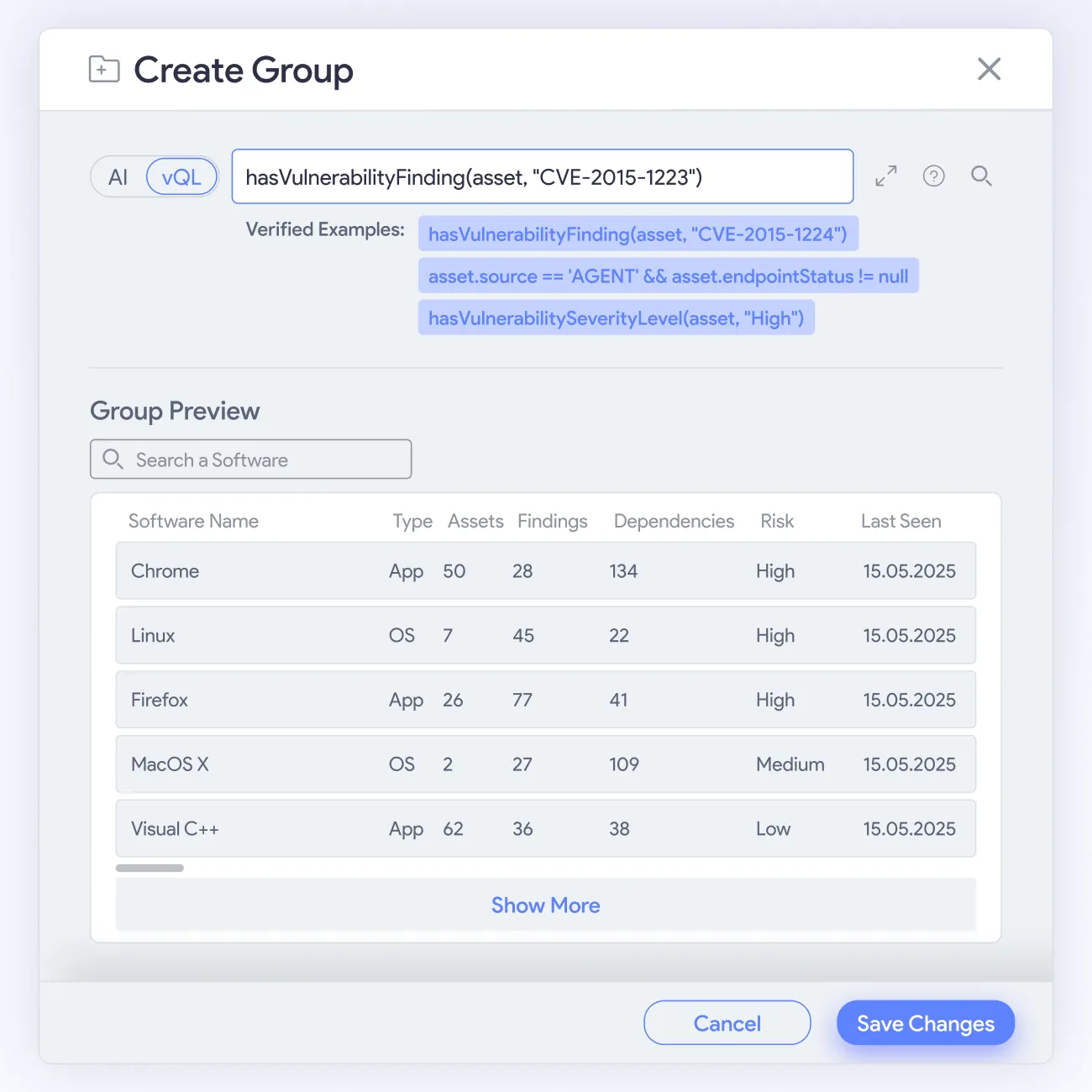
Group software by type, vendor, or custom rule, then apply patch policies and compliance checks to the whole collection at once.
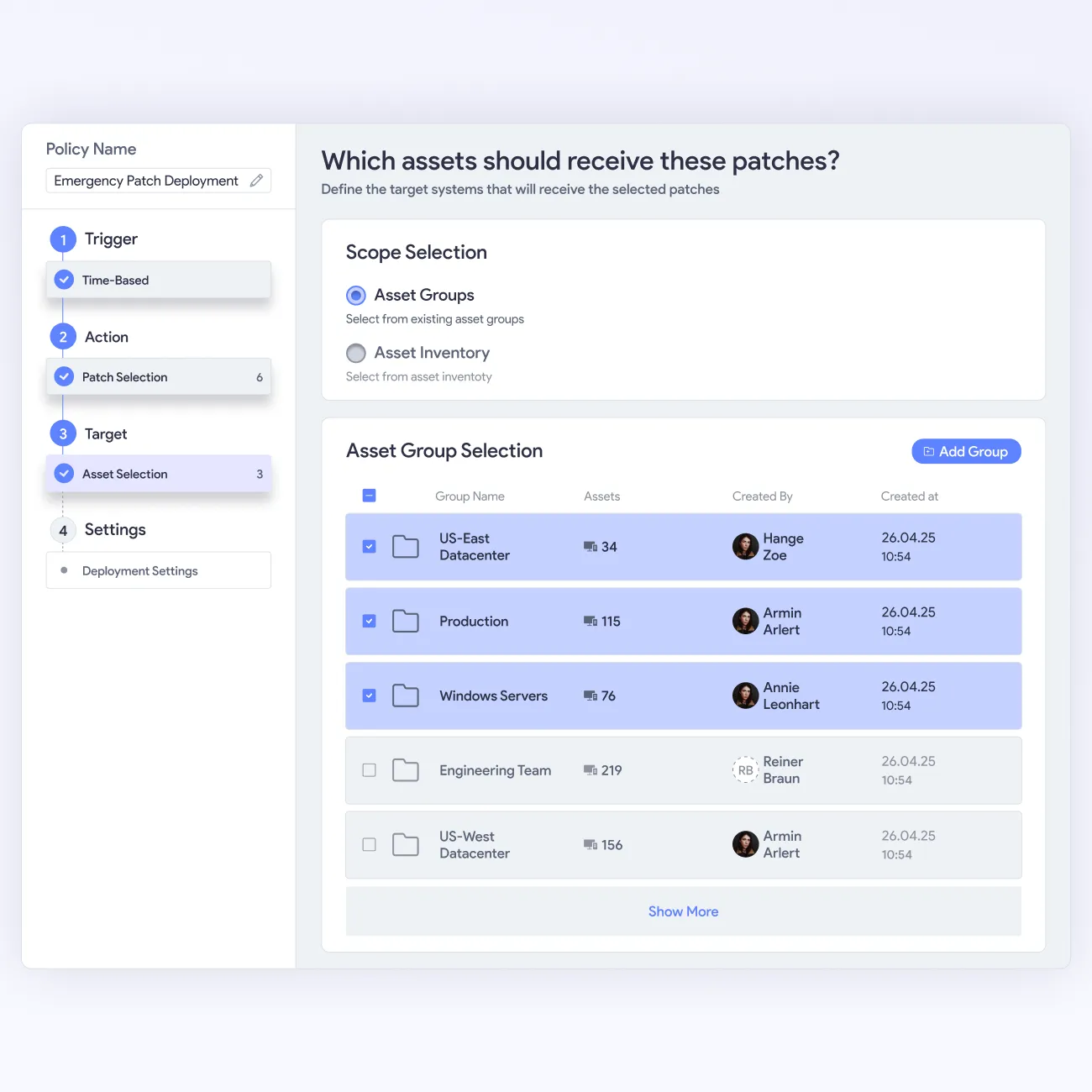
Group assets by location, team, type, or custom tag. Target specific groups for deployment, canary testing, or phased rollouts without touching the rest.
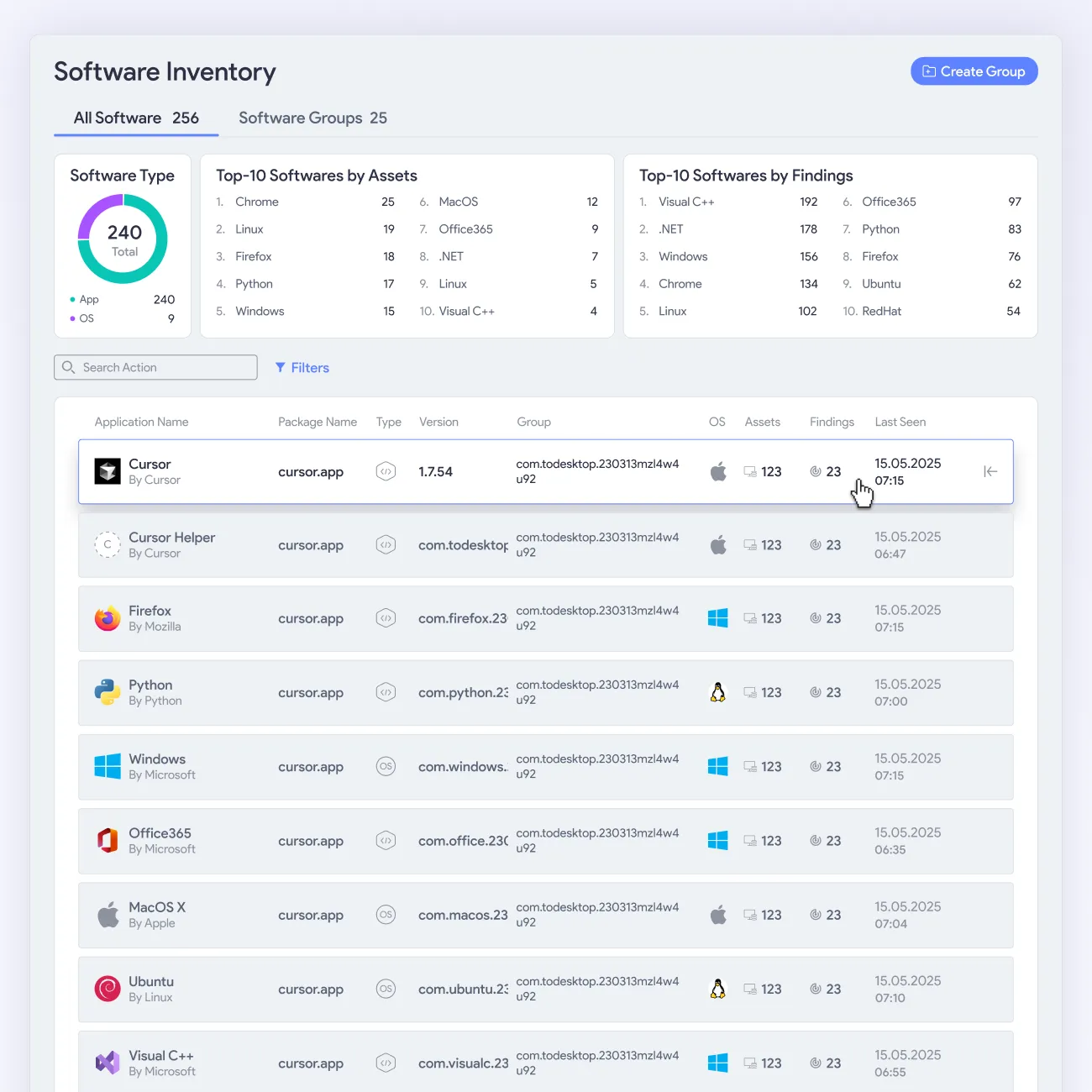
Windows, macOS, and Linux covered alongside over 20,000 third-party applications from a single queue, with no additional integrations required.
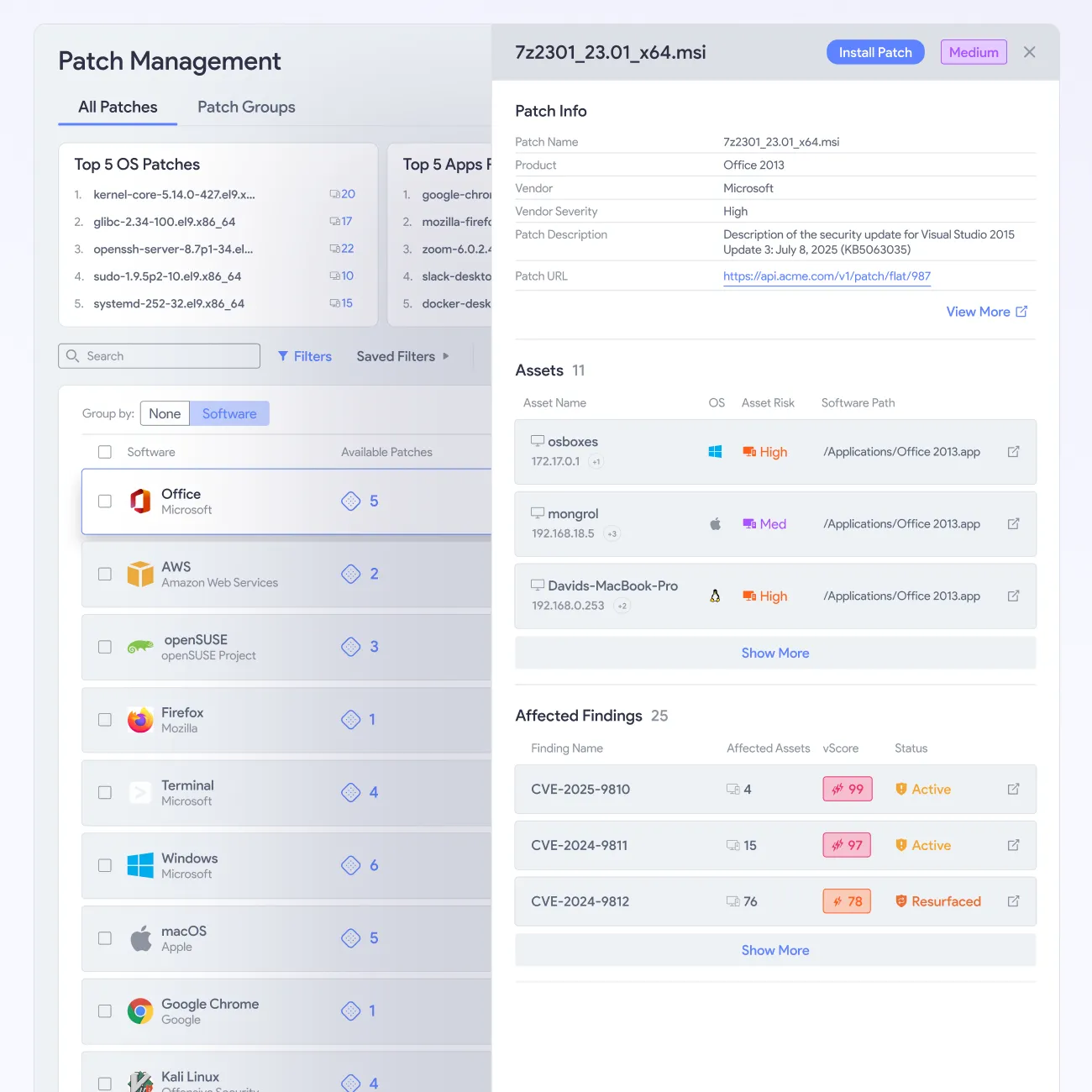
vRx computes CVE coverage per asset, not per patch, giving your team a precise view of what each upgrade closes on each machine.









What Our Customers Say About Us
See why enterprises trust our approach to AppSec to secure their business-critical applications
From urgency to strategy


60% faster remediation, many hours saved

Patchless Protection is an incredible technology!
Third-party software patching is the most valuable feature.
Complete Vulnerability Remediation Platform

My favorite feature is Patchless Protection

Great patching capabilities, helpful dashboard, and excellent support

Single source of truth, capable of handling any application in our fleet
Merge Security & IT to Remediate Threats

Unified vulnerability discovery, prioritization, and remediation

EL AL secures global Patch Compliance


Everything you need to know
What patch types does vRx cover?
vRx covers application patches, Windows cumulative updates and KBs, macOS point and major releases, and Linux package updates through APT, YUM, APK, and other package managers. All of them appear in one view, with consistent search and filtering across every patch type.
Does vRx patch automatically, or does my team control the schedule?
Your team controls it. vRx gives you three deployment options: patch on demand, set a scheduled maintenance window, or configure rule-based deployment for patches that match your criteria. The platform does not push patches without instruction. Your workflow determines when and what deploys.
What is the difference between static and dynamic patch groups?
Static groups contain a hand-picked list of patches that stays fixed until you change it. Dynamic groups use a rule, and membership updates whenever patch data changes. Use static groups for deliberate, auditable sets like pilot rollouts. Use dynamic groups for ongoing policies like "all Mozilla patches."
How does vRx compute CVE coverage for each patch?
CVE coverage in vRx is per asset, not per patch. Two assets upgrading to the same Firefox version can close different CVE sets if they are starting from different installed versions. vRx computes the delta between each asset's current version and the target, so your team sees the precise risk each patch closes on each machine.
Does vRx work in environments managed by WSUS?
Yes. vRx captures the management mode on each asset individually. A Windows KB can be flagged as WSUS-managed on one machine and Windows Update-managed on another within the same estate. Your team does not need to standardize patch management before deploying vRx. The platform adapts to how your environment is already set up.
What happens when there is no patch available for a vulnerability?
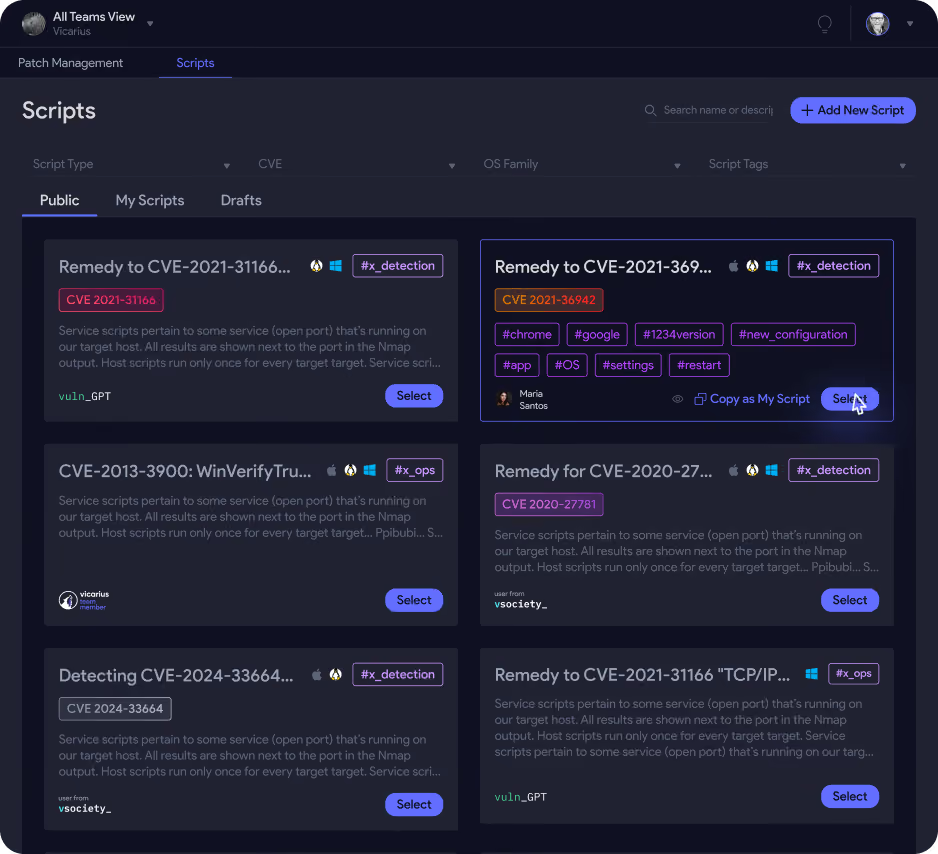
vRx offers two paths beyond patching. vShield Patchless Protection mitigates the vulnerability at the asset without applying a patch, blocking exploit paths until a validated patch is ready. vScript lets your team run community, custom, or AI-generated scripts for detection and remediation. All three paths read from the same discovery layer.
How does vRx decide which patches to prioritize?
vScore feeds directly into patch prioritization. It factors in exploitability, asset criticality, weaponization status, and business context alongside CVE severity. The result is a ranked queue where patches closing your highest-risk CVEs rank first, regardless of release date or generic severity score.