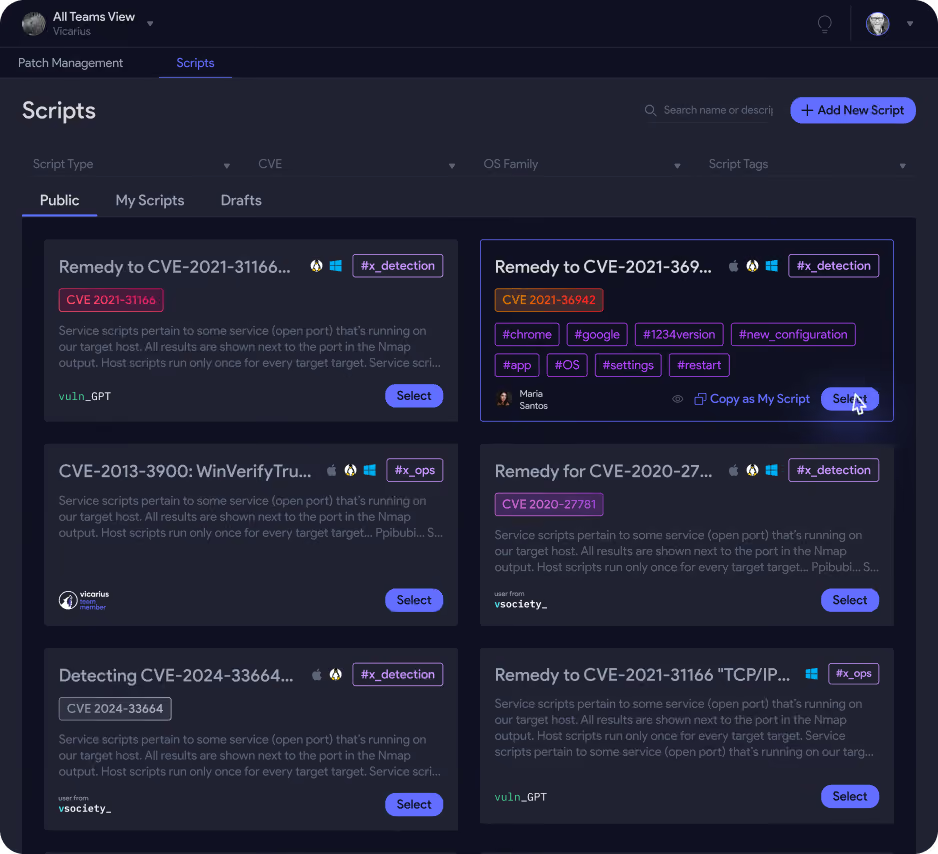


The future of effective vulnerability management relies on the ability to take action swiftly, moving beyond the cycle of identifying exposures merely to satisfy compliance checklists or prepare for security audits. Industry leaders at the recent AWS cloud computing conference re:Invent made it clear that visibility alone is no longer sufficient, emphasizing that as long as known vulnerabilities remain unpatched, they will continue to be the primary root cause of breaches.
Success should be measured by the speed and efficacy of remediation, ensuring that repeat findings are stopped before they can turn into incidents. Ultimately, teams must move away from a model focused on report generation and toward a model of continuous, automated security hygiene.
The current state of vulnerability management
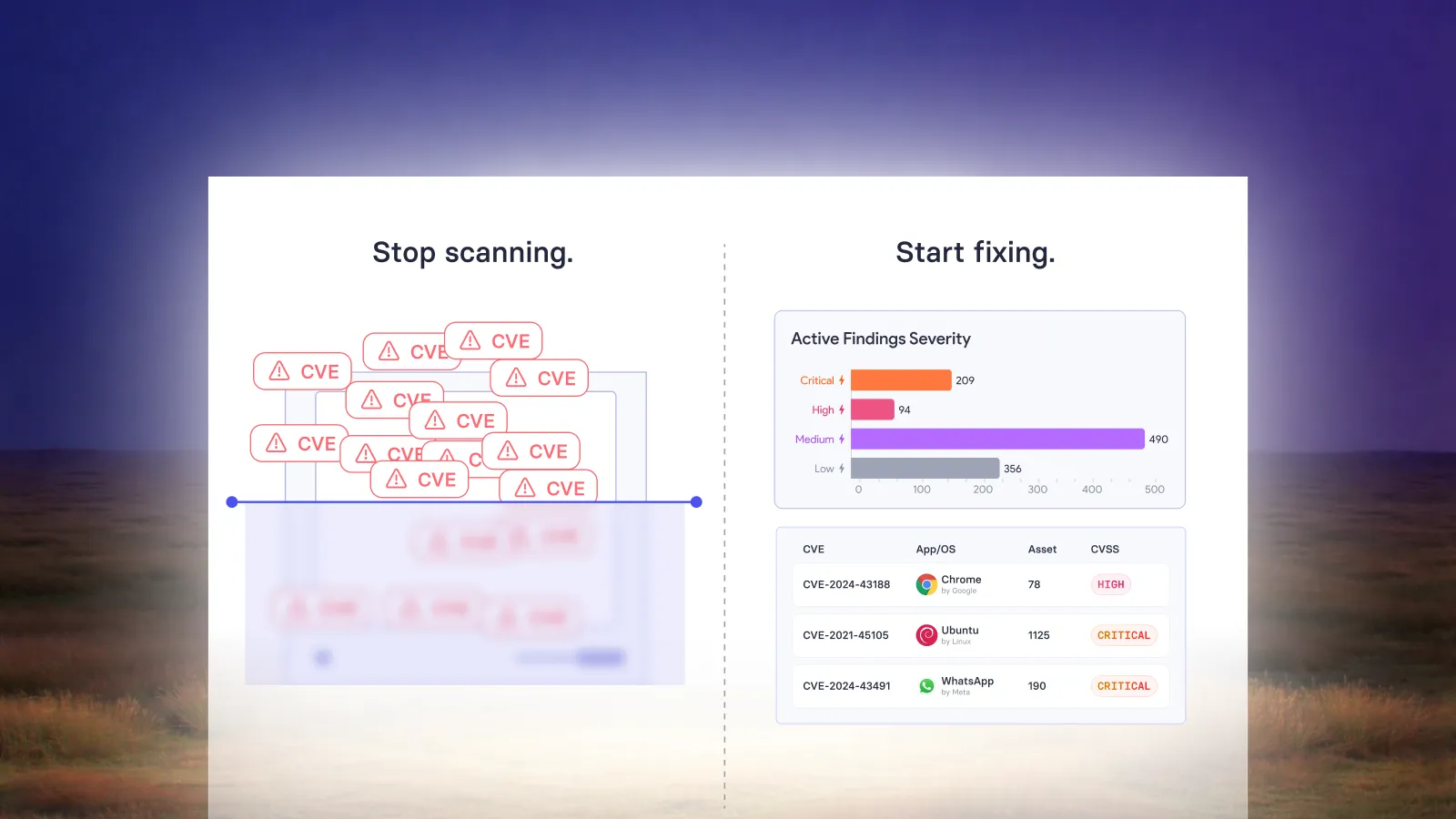
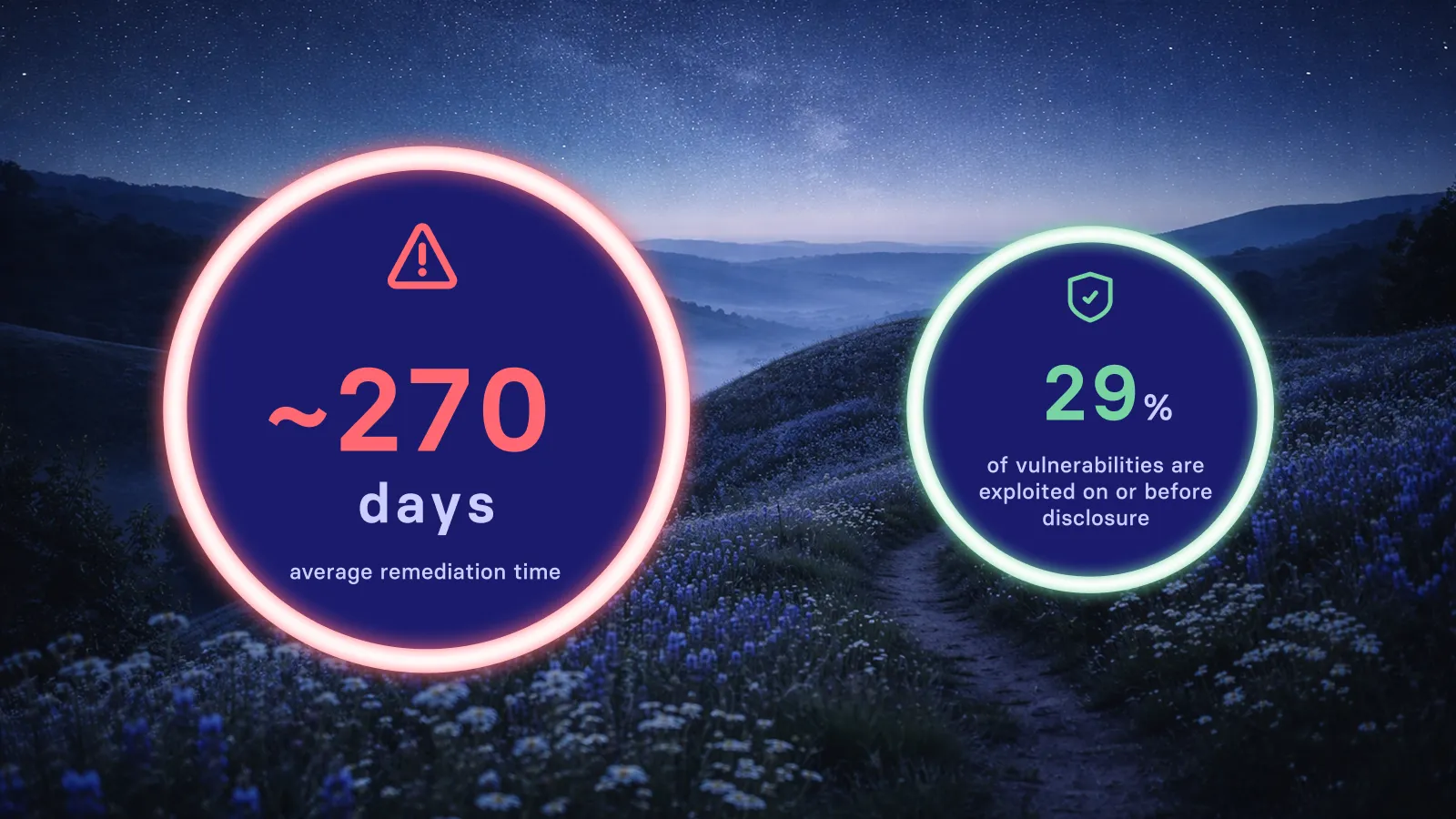
For seasoned cybersecurity professionals, the primary frustration is rarely a lack of visibility. Most enterprise programs are awash in data, yet the fundamental problem remains: simply seeing a vulnerability does not equate to resolving it. The industry is currently facing a significant asymmetry in the threat landscape where attackers are moving with increasing speed, exploiting new flaws faster than defensive teams can effectively close the loop on remediation. This speed gap is exacerbated by emerging technologies that lower the barrier to entry for adversaries; for instance, some large language models are now capable of generating functional exploit code based simply on a reading of a CVE description. This reality emphasizes that the traditional cadence of scanning and ticket generation is insufficient against adversaries who can weaponize vulnerabilities in near real-time.
The visibility trap: why scanning isn't enough
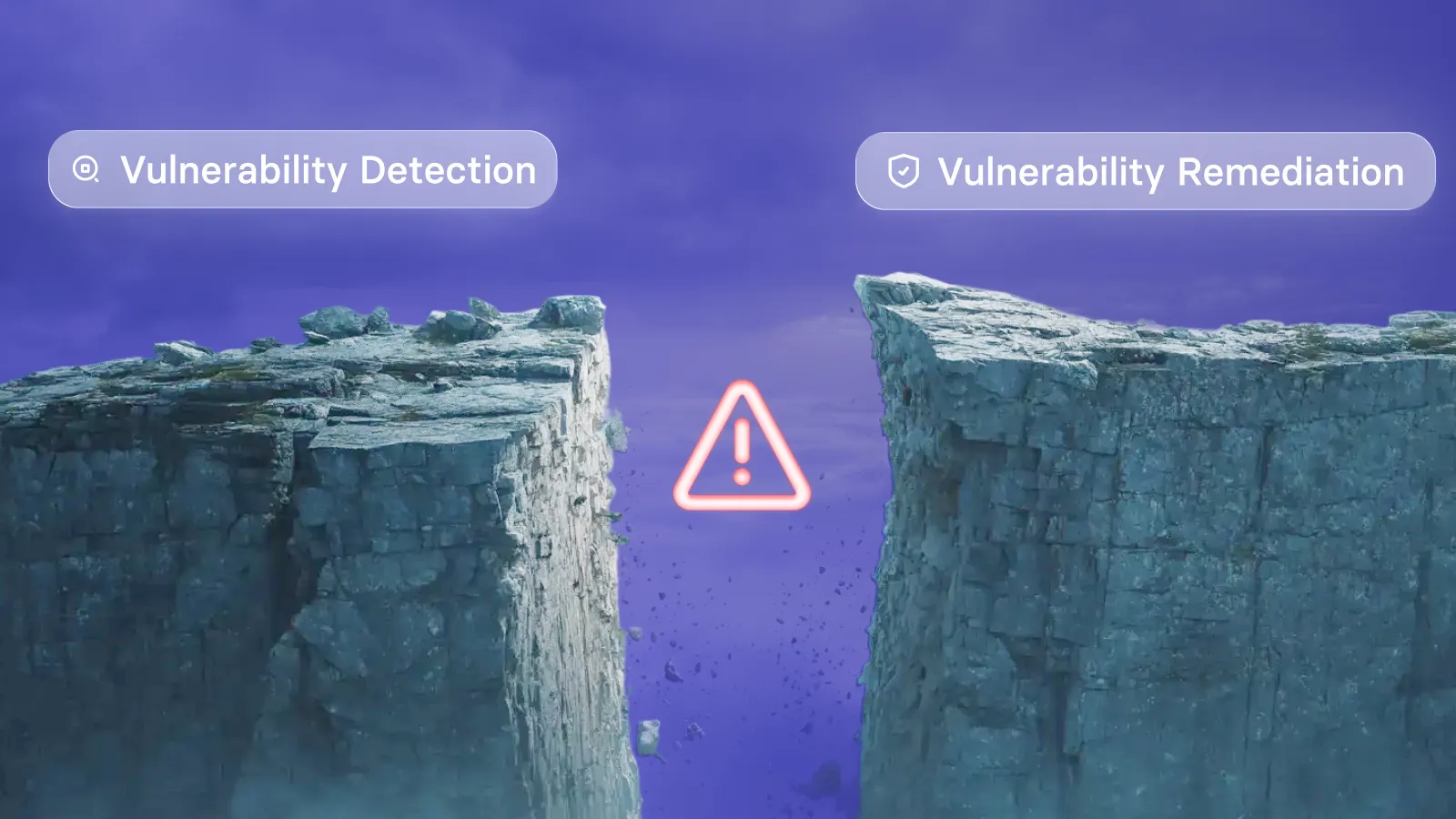
Many security programs have fallen into a “visibility trap” in which resources are heavily allocated to scanning and reporting, while the functionality to act on that data can often be lacking entirely. Recent industry discussions, including those at AWS re:Invent, have emphasized that visibility alone is insufficient; known vulnerabilities that remain unpatched continue to be the root cause of breaches. While detection tools are abundant, they often leave teams with a surplus of alerts and a deficit of both action and attention span. Consequently, enterprise security teams must restructure their programs to integrate remediation directly into their vulnerability workflows rather than treating it as an afterthought.
To escape this trap, the industry is shifting toward metrics that measure remediation effectiveness rather than just detection coverage. This requires addressing specific operational friction points that stall progress:
- Prioritization fatigue: Teams struggle to determine which exposures represent an immediate threat to their specific environment, increasing triage time per ticket.
- Patch orchestration complexity: The logistical challenge of deploying patches across a complex infrastructure often disconnects the finding from the fix, sapping remediation momentum.
- Compensating controls: An inability to swiftly apply controls can allow repeat findings to persist and turn into incidents, increasing friction and costing time and money when you can least afford it: when you’re already vulnerable, and you know it.
Redefining the objective: Remediation first
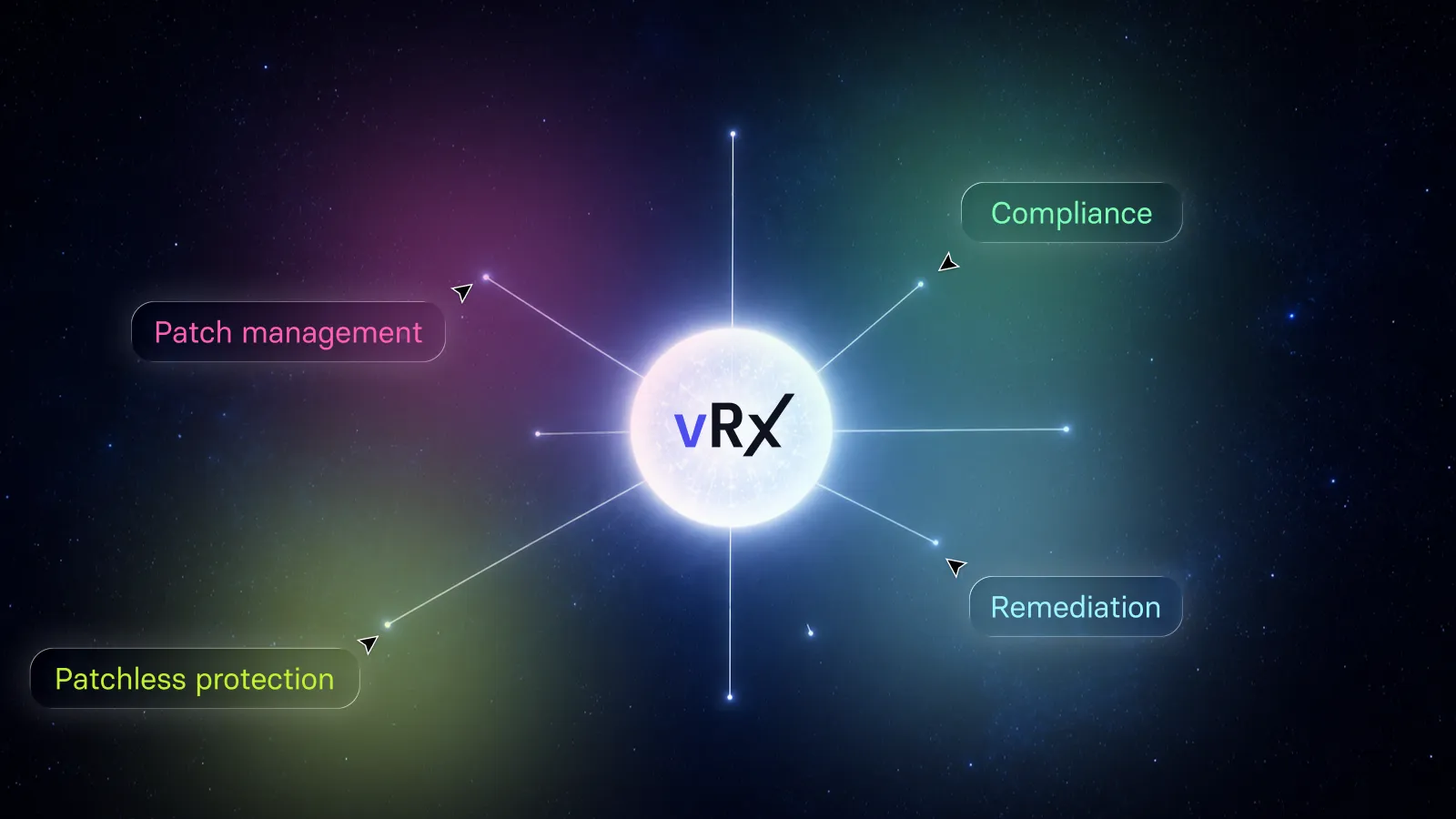
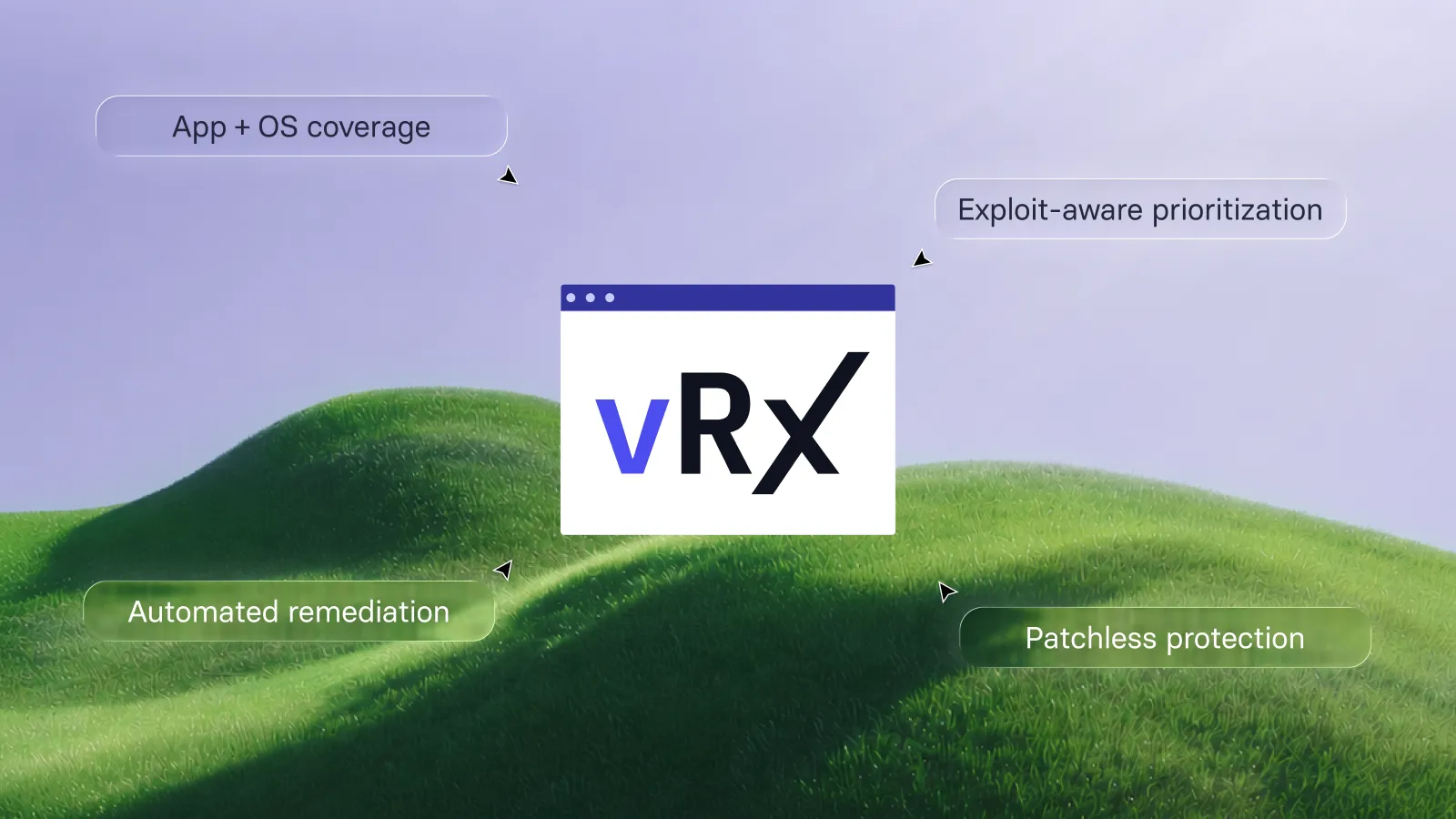
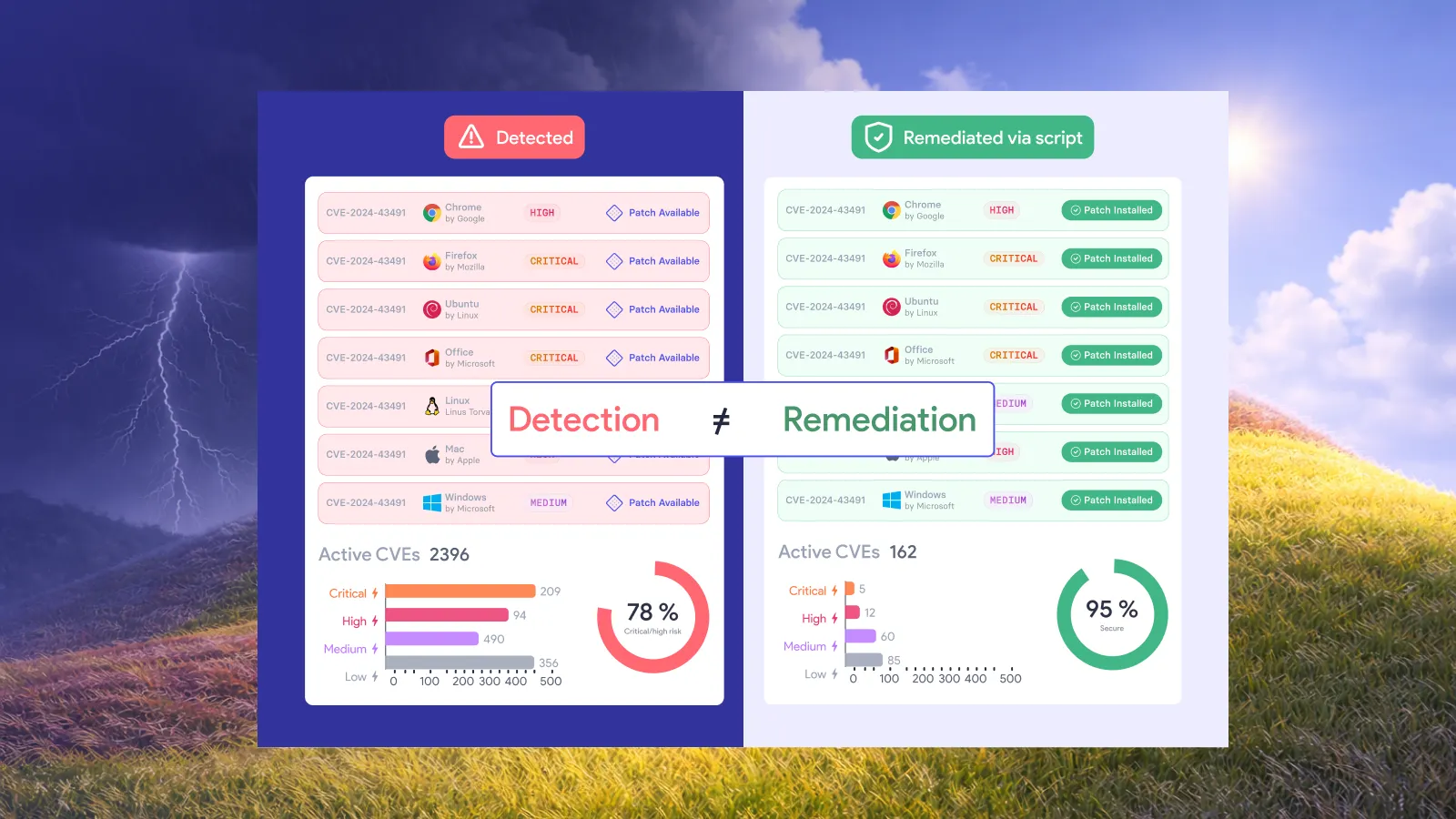
To bridge the gap between detection and resolution, organizations are turning to platforms like vRx by Vicarius, which is purpose-built to lead in vulnerability remediation. While the broader security category is expanding into “exposure management,” it is critical to distinguish between the management of data and the actual neutralization of threats. vRx is evolving with a focused mission: to own and accelerate the mobilization and remediation of vulnerabilities and exposures. The goal is to help organizations not only identify risks but to take decisive action, because knowing about a problem is not enough; fixing it before it is exploited is what truly matters.
Our approach is specific and grounded: we do not claim to solve every problem in cybersecurity, nor is vRx positioned as an "all-in-one" platform. Instead, its strength lies in helping teams fix what matters, fast. While vRx includes capabilities for scanning and prioritization, these features exist primarily to support the core objective of effective remediation. This focus allows vRx to complement the detection tools you already use, rather than attempting to replace them.
The “Better Together” integration model
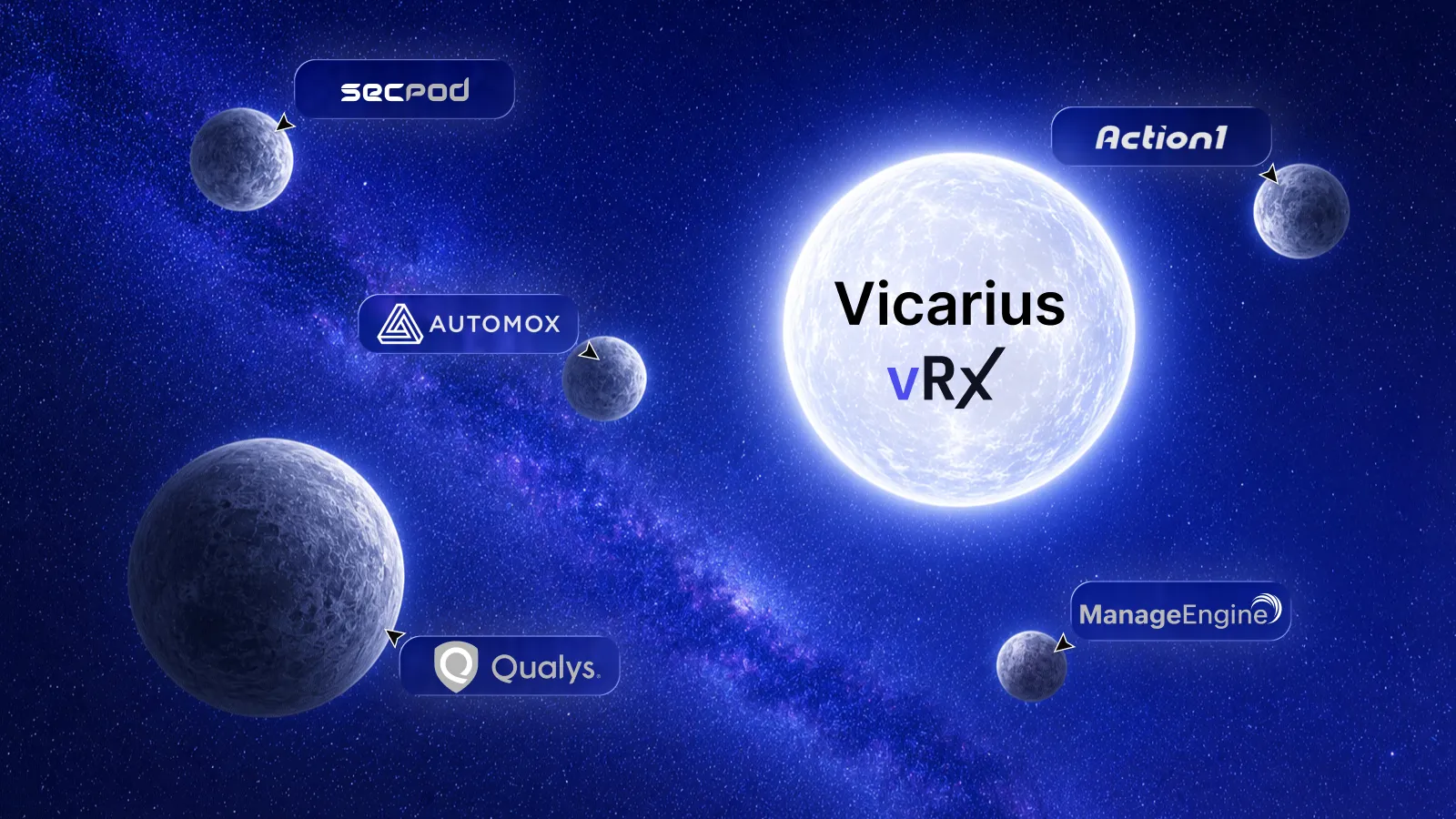
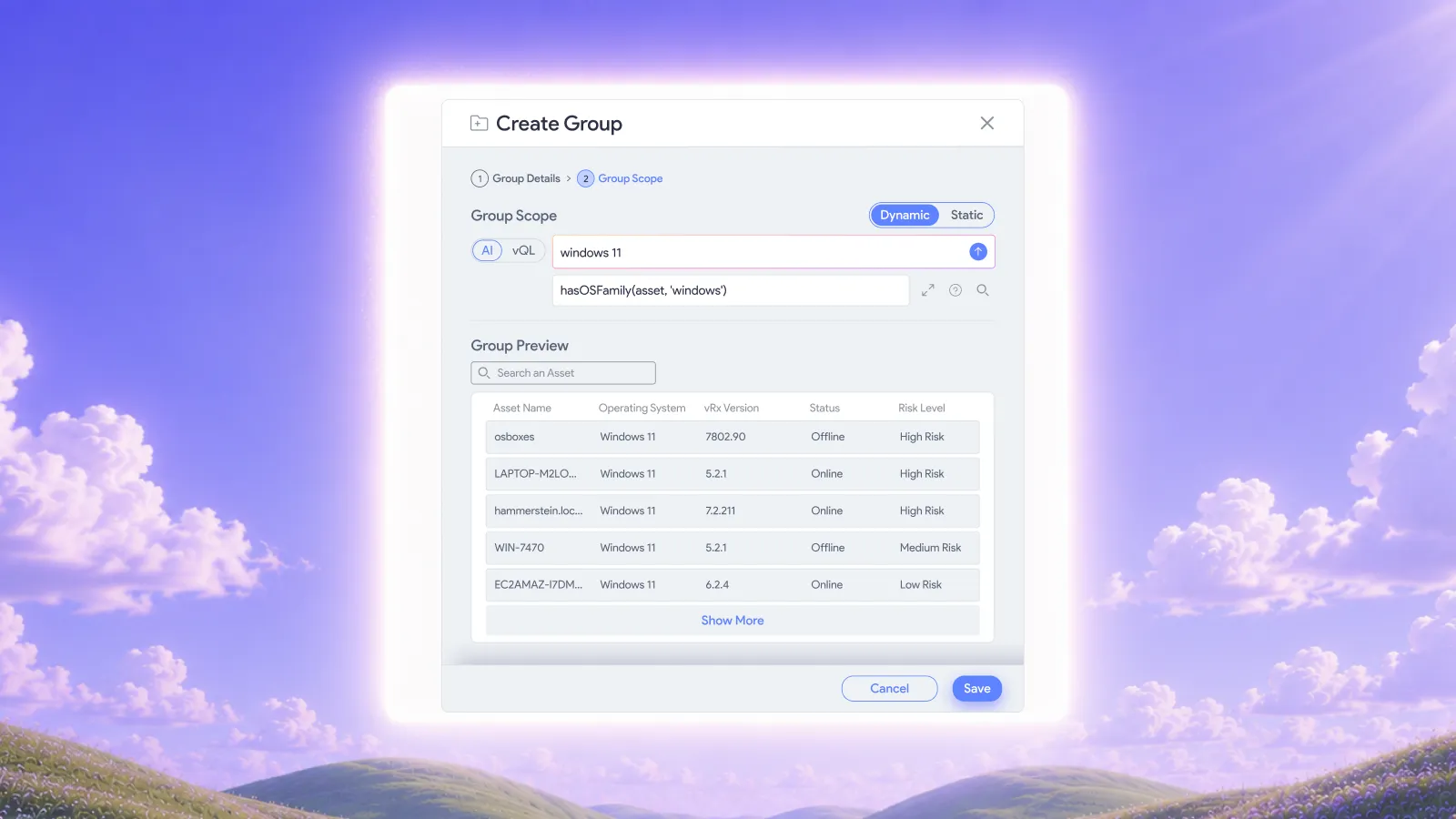
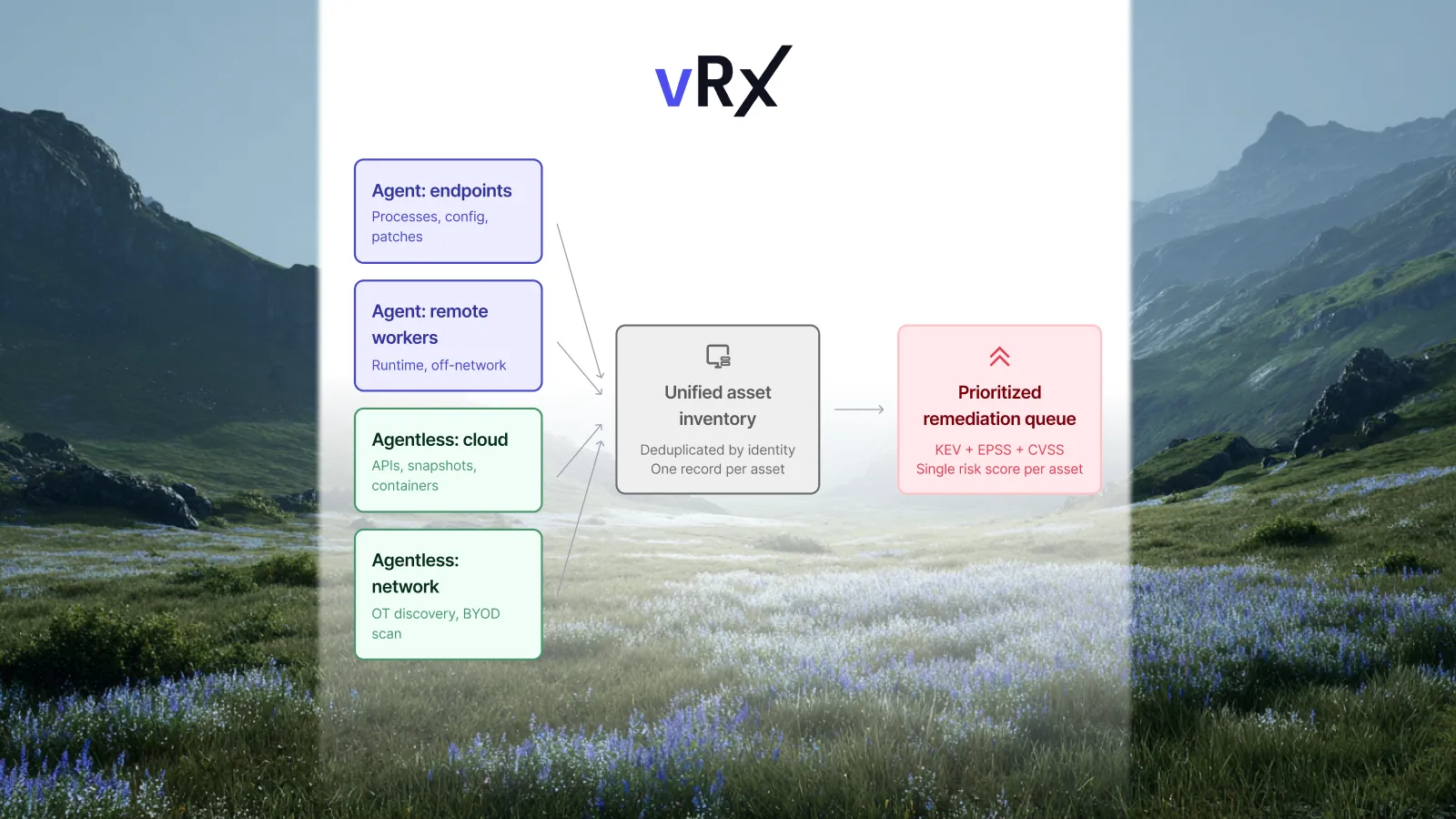
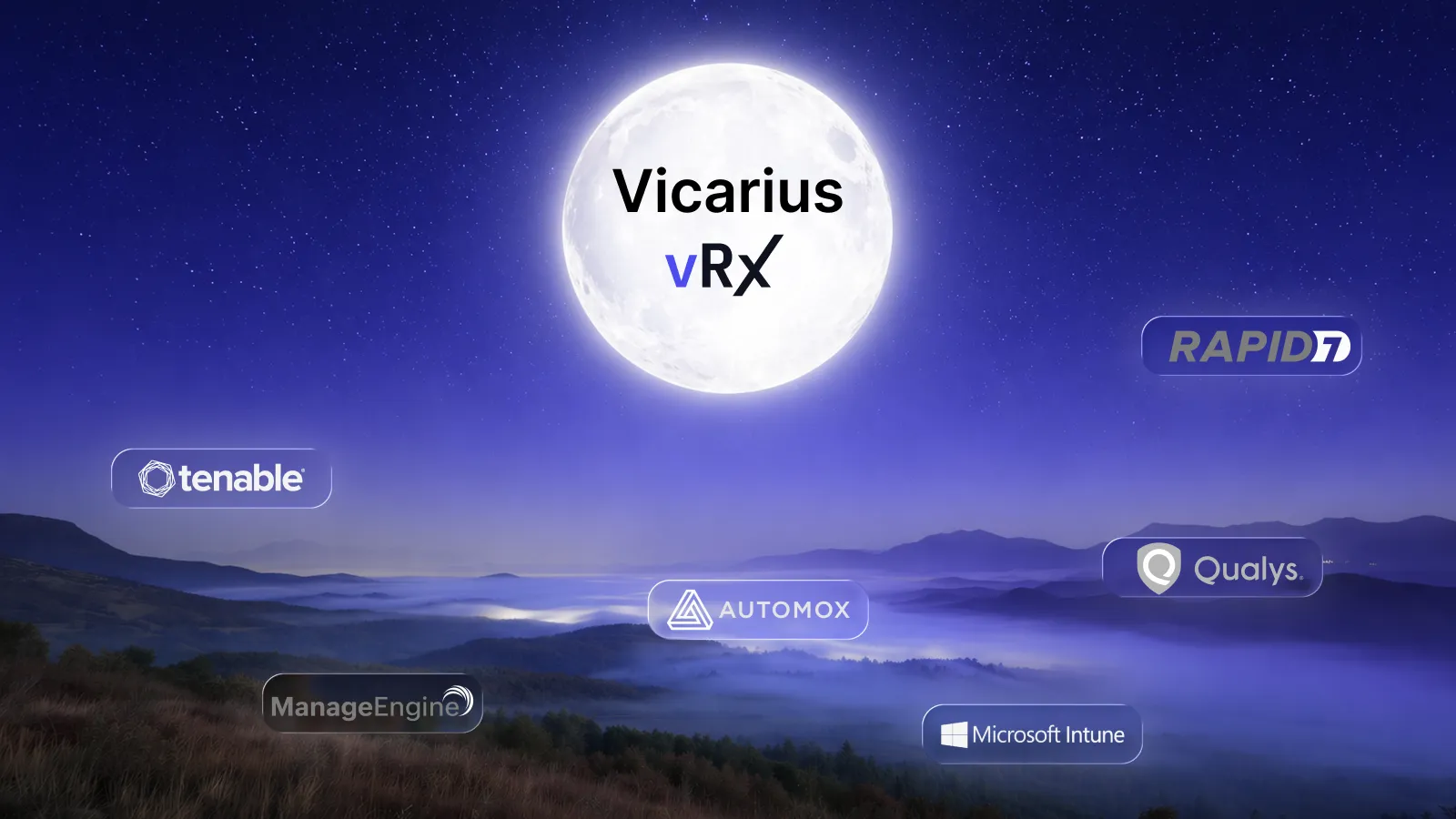
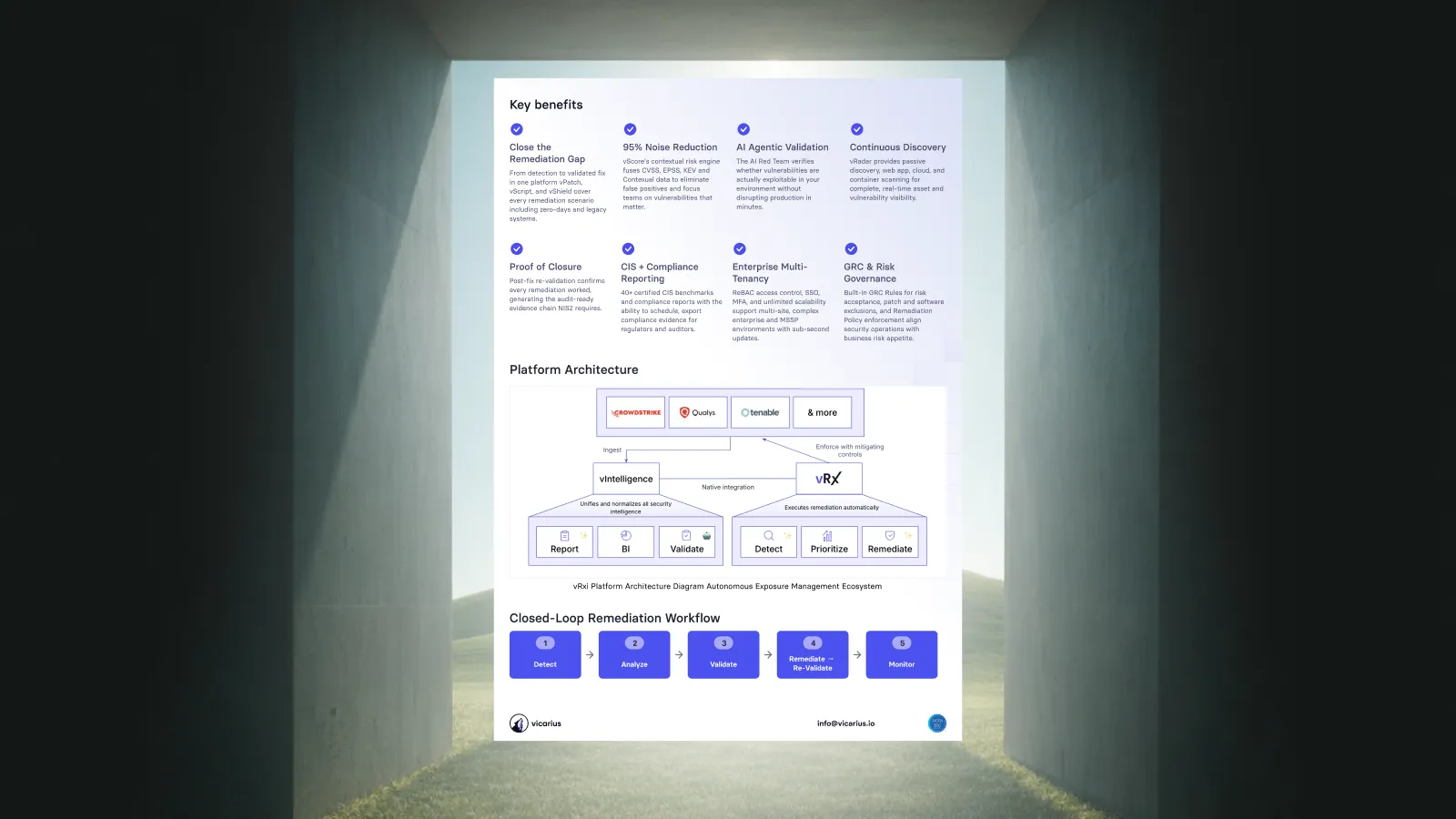
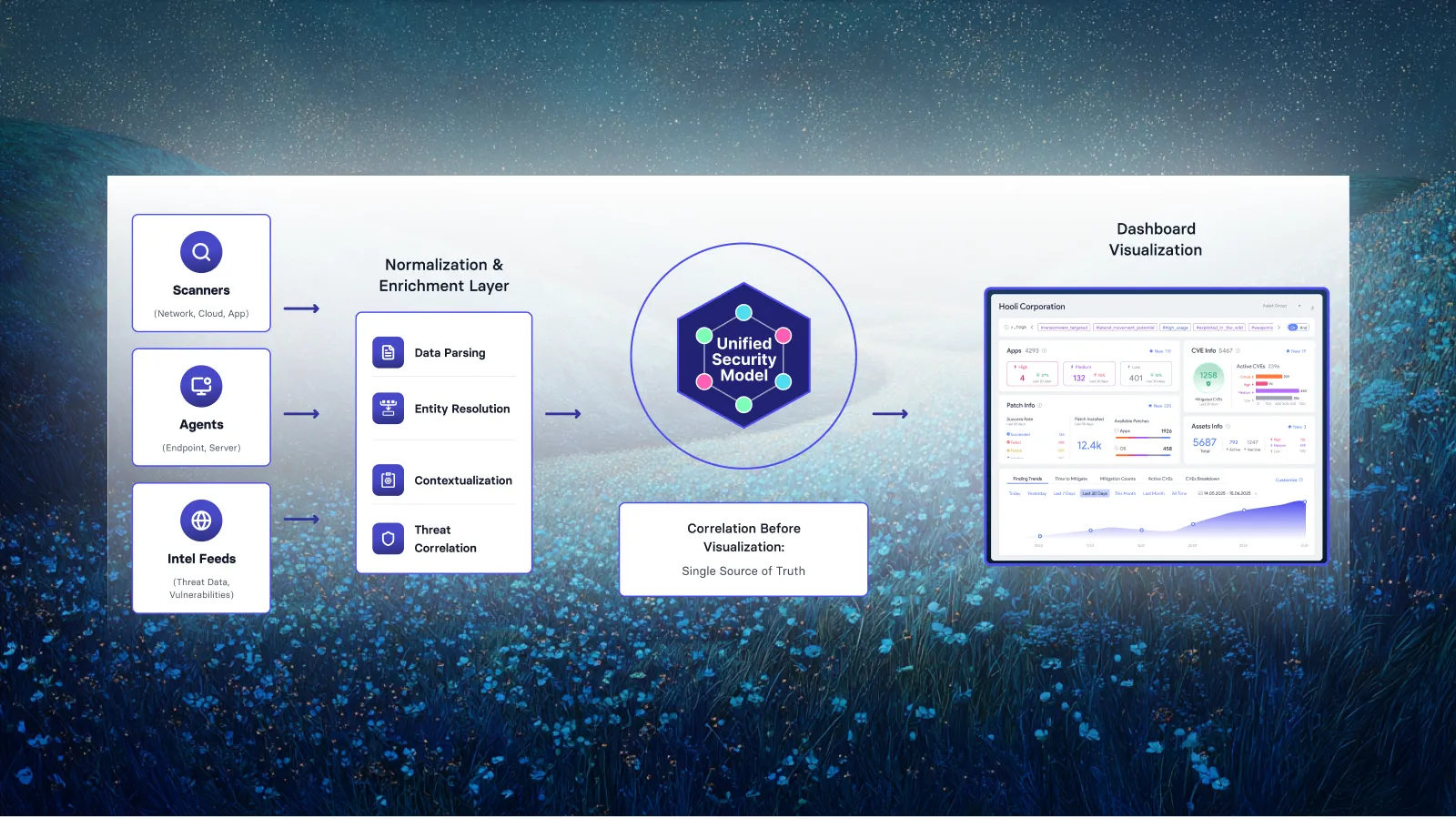
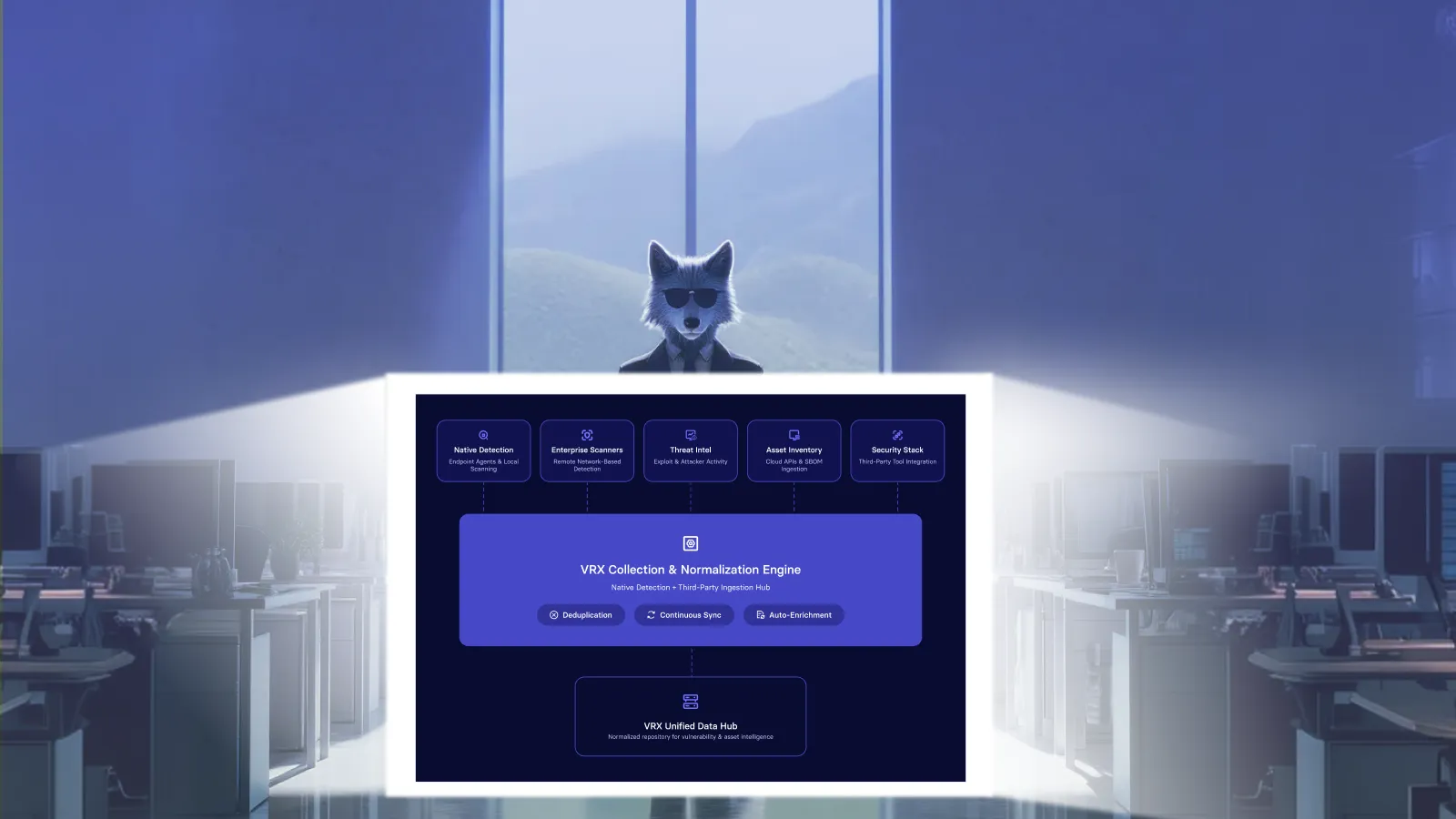
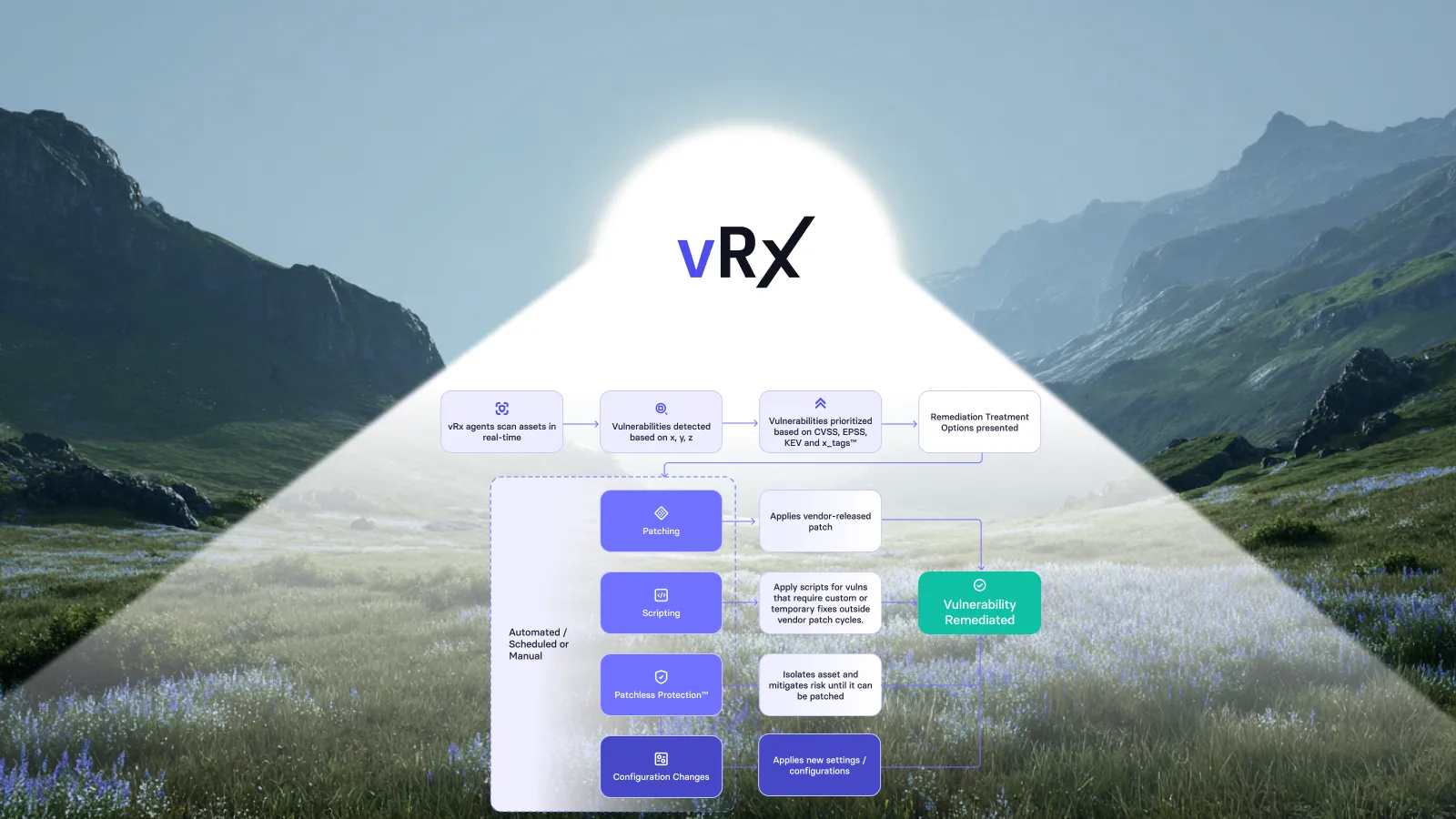
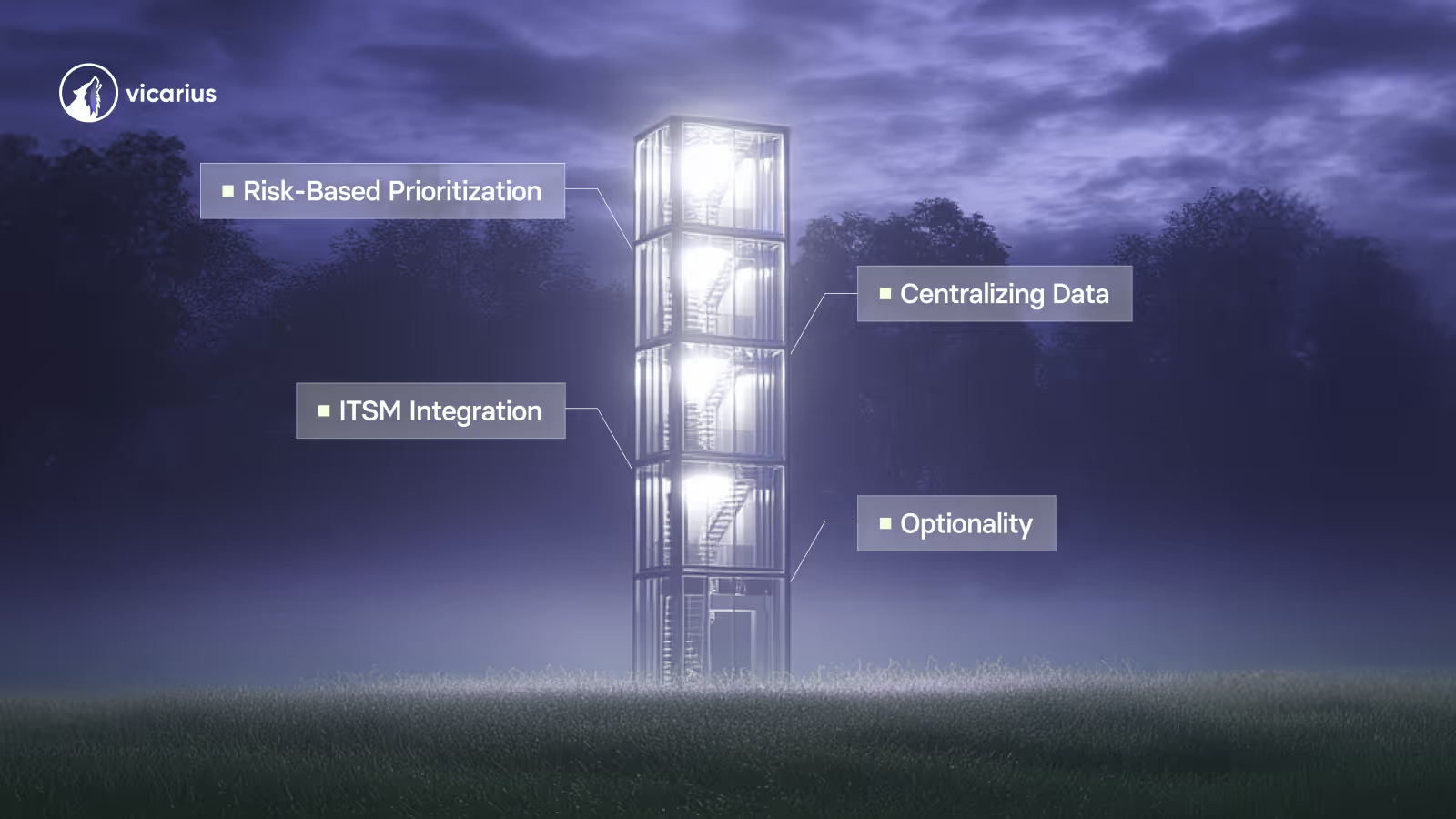
To this end, we built vRx to “play well with others,” as they say in the open source world. The “Better Together” initiative serves as the foundation for restructuring security programs by embedding remediation into every stage of the workflow. vRx begins with its own native scanners, agent of agentless based, combined with data deduplication, risk-based prioritization, and continuously updated threat intelligence feeds. It then can apply integrations to ingest and normalize findings from the broader ecosystem of scanners and security tools an organization already owns. The result is a unified remediation layer that sits above fragmented detection data, enabling teams to act on exposures regardless of where they were discovered and closing the gap between identification and secure resolution.
Remediation-led prioritization
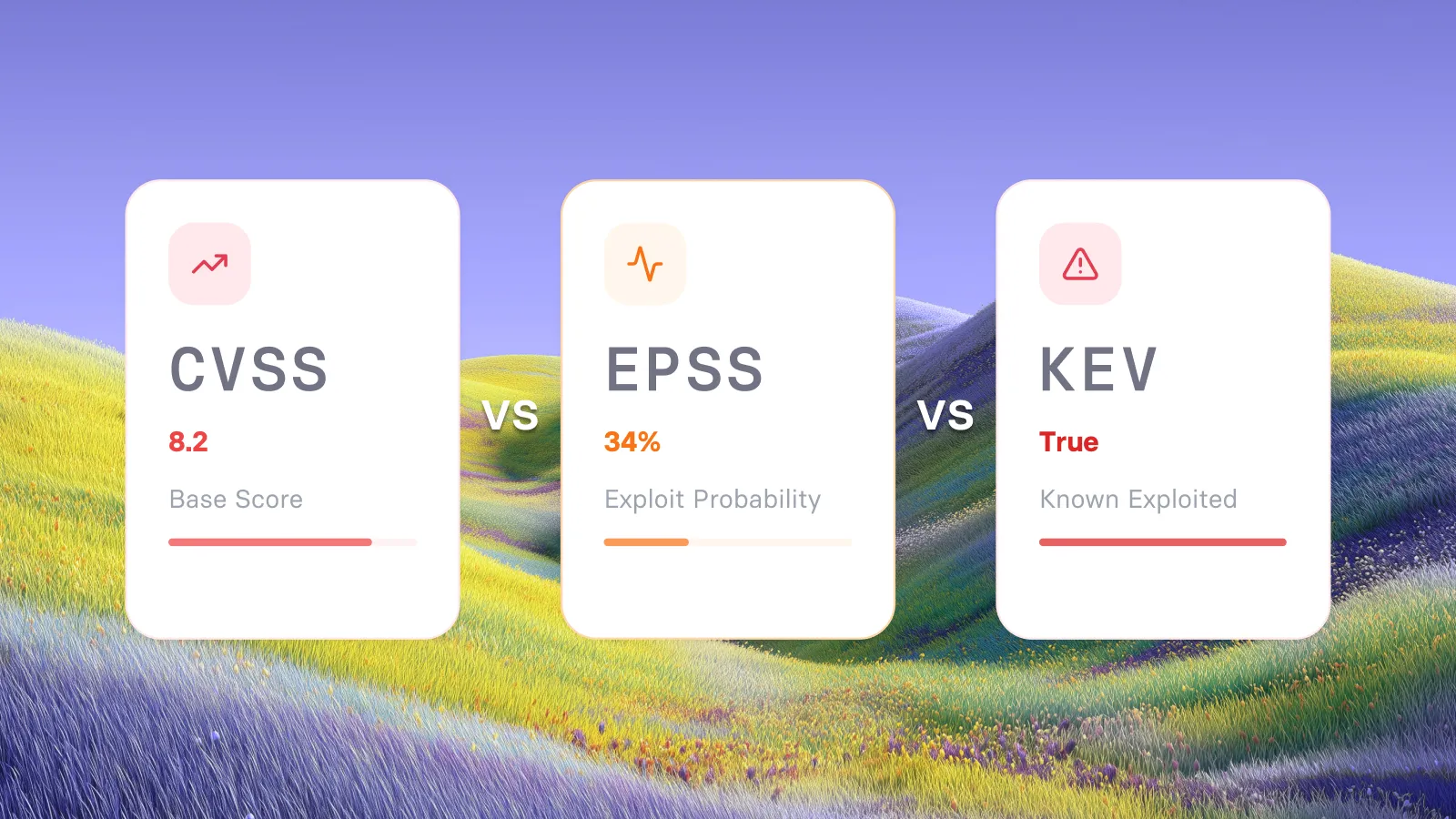
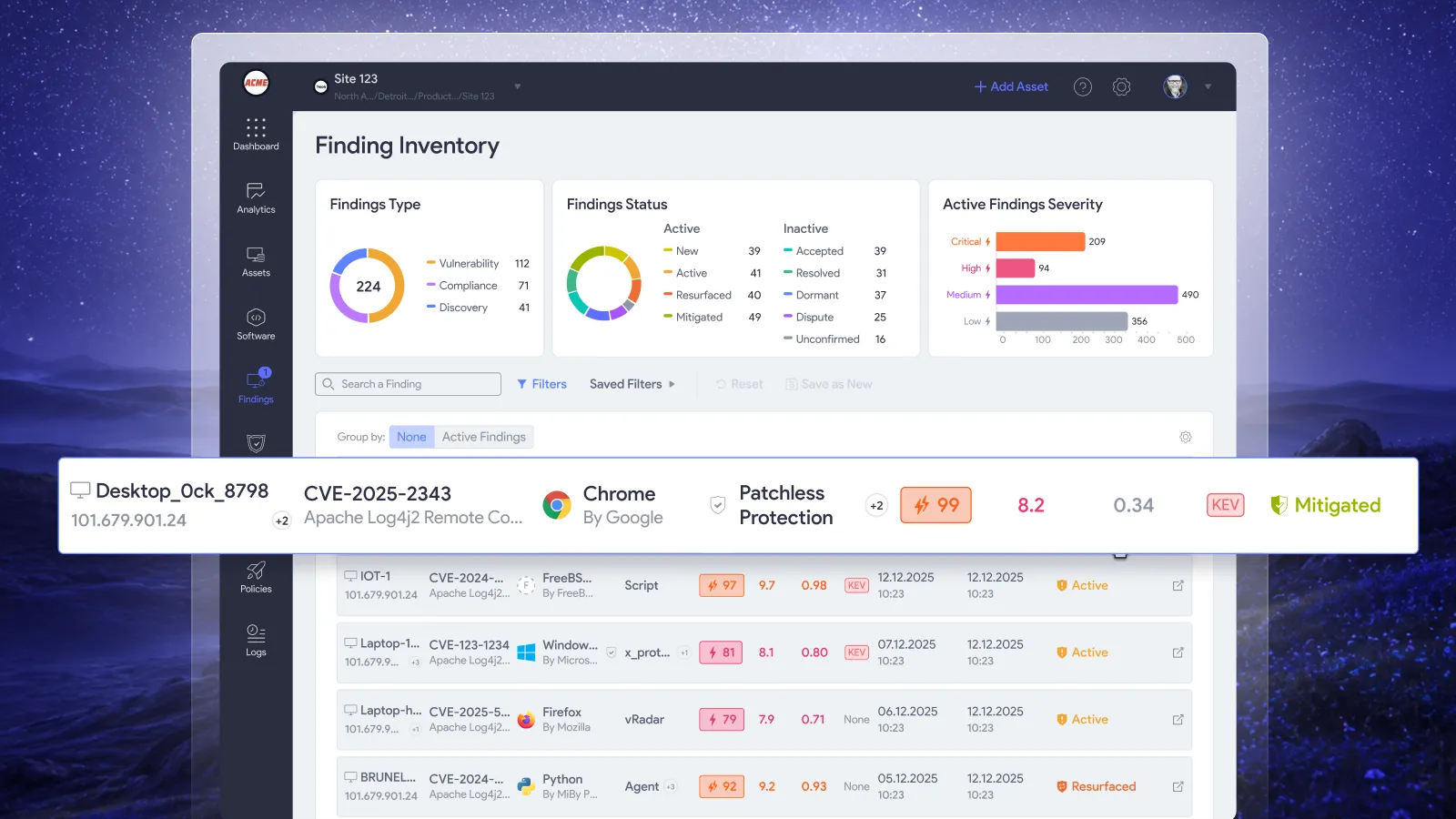
Integrating remediation capabilities directly into the workflow fundamentally changes how teams approach prioritization. Instead of relying solely on raw severity scores, vRx prioritization is driven by a combination of CVSS, known exploited vulnerability indicators, EPSS likelihood scores, asset criticality, environmental context, and operational variables such as exposure, ownership, and business impact. On top of this, prioritization is further refined by “fixability”: identifying which high-risk vulnerabilities can be auto-remediated immediately versus those that require complex manual intervention. This approach allows teams to rapidly clear low-friction fixes at scale while reserving human expertise for the most complex cases, including remediation failures or scenarios where automation must be adjusted or re-enabled..
Automated patch orchestration
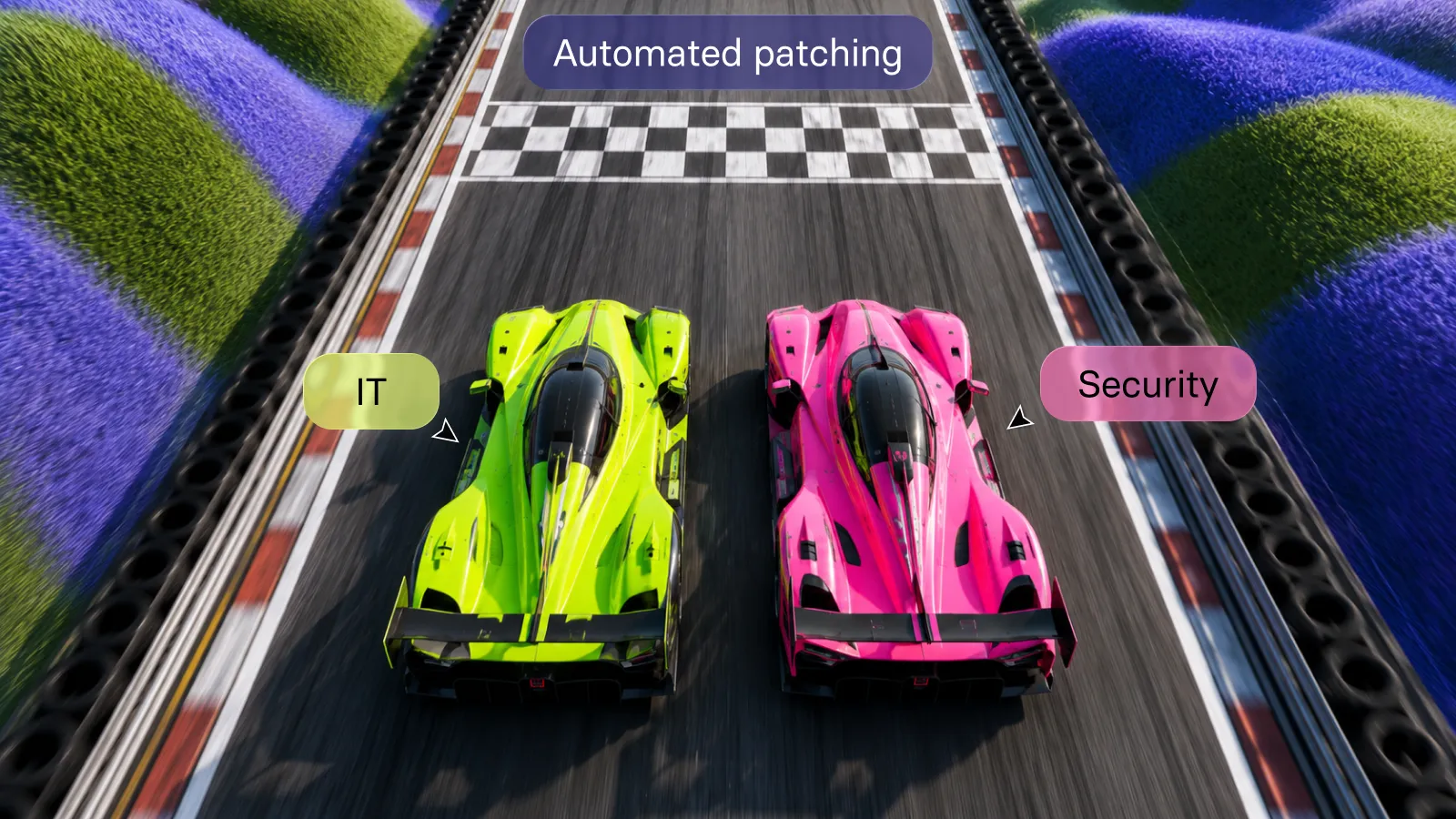
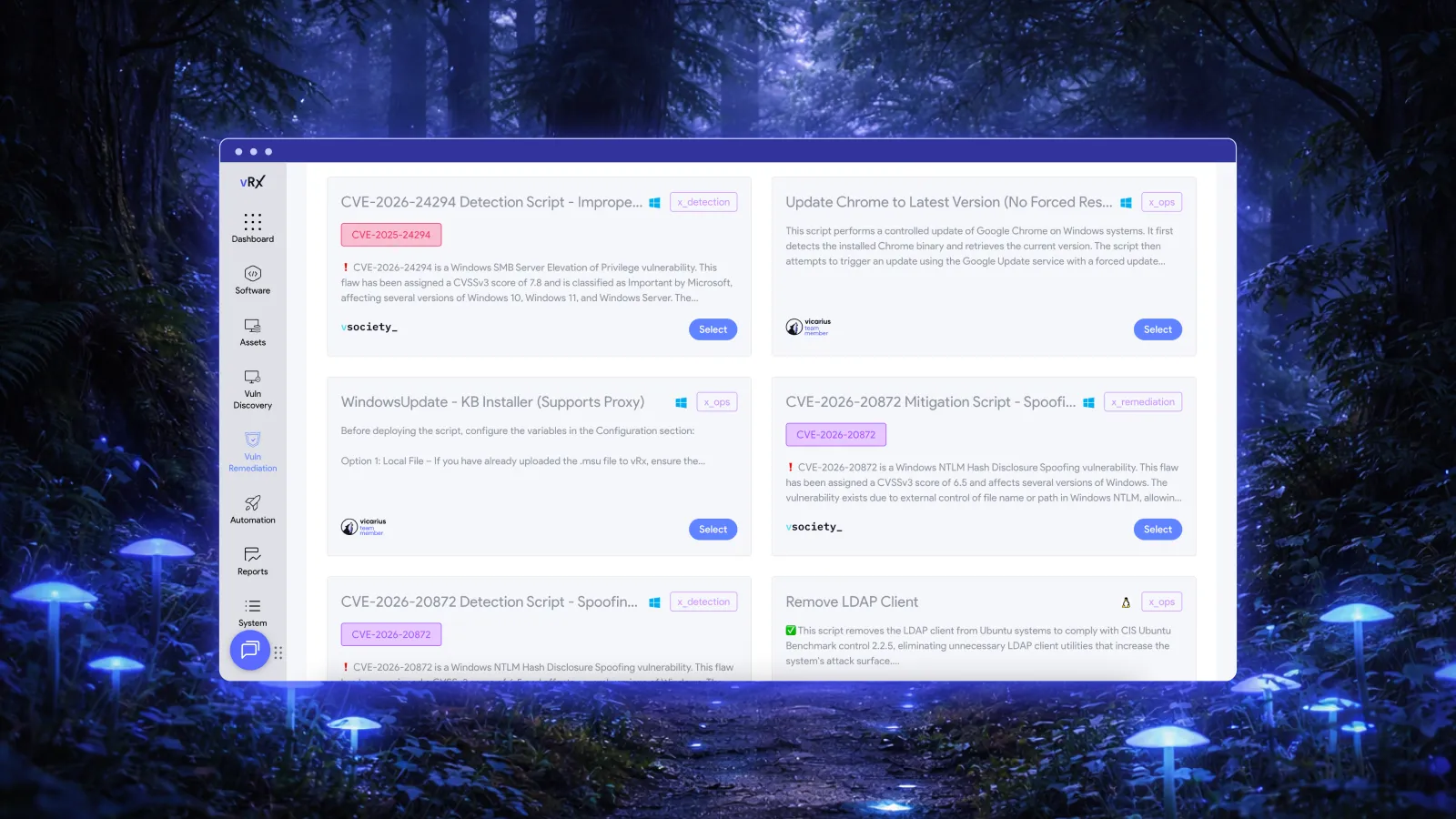
vRx can acts as the execution arm for third-party scanners, addressing the critical requirement for patch orchestration. Through standardizing the automation of the “last mile” of patch deployment across heterogeneous environments, including a variety of operating systems and multifarious third-party applications, vRx ensures that a detection signal leads directly to a deployed patch. This capability removes the manual ticketing friction that so often delays critical updates, helping teams move seamlessly from “now we know” to “now it's fixed”.
Compensating controls for the “unpatchable”
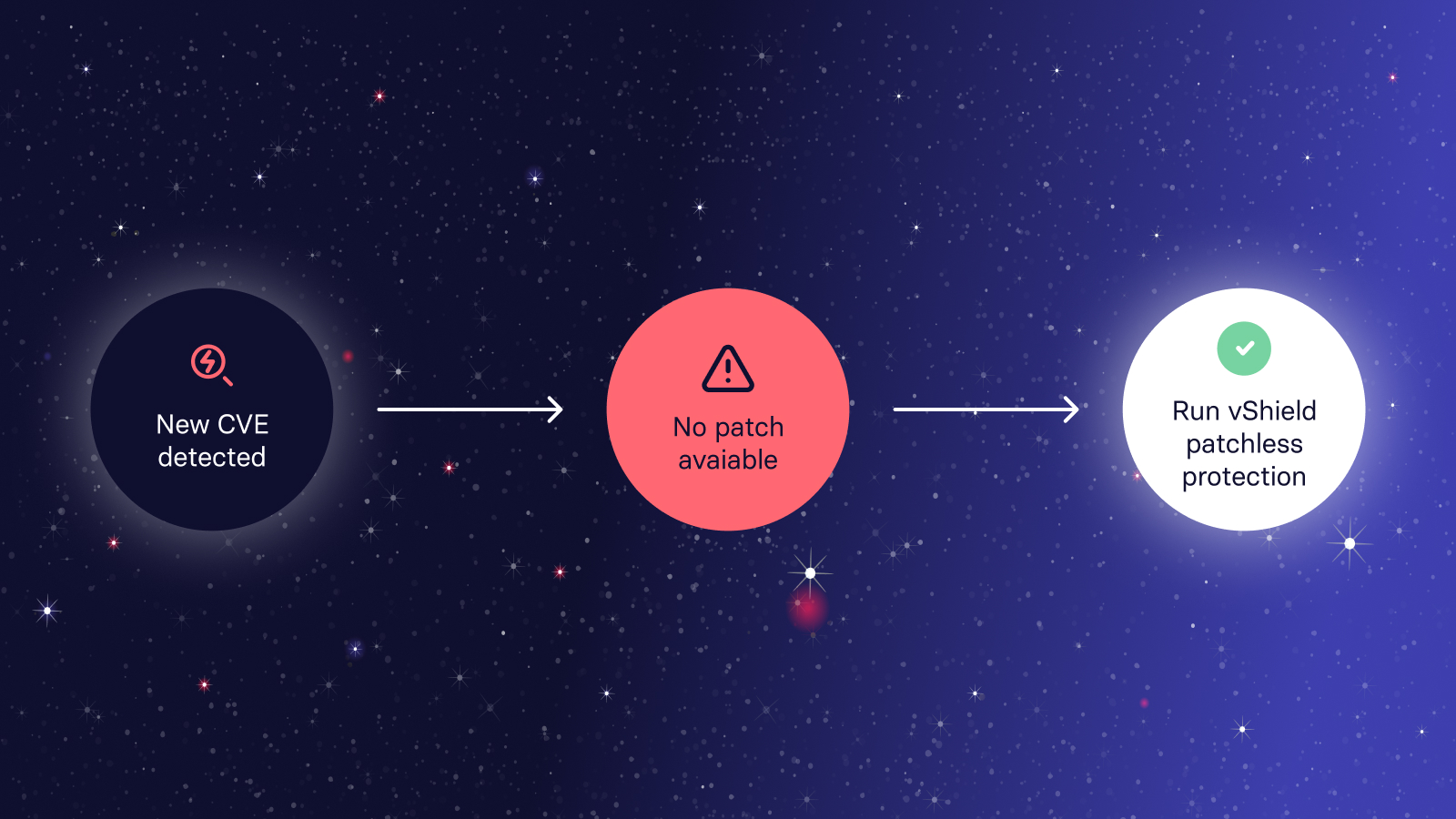
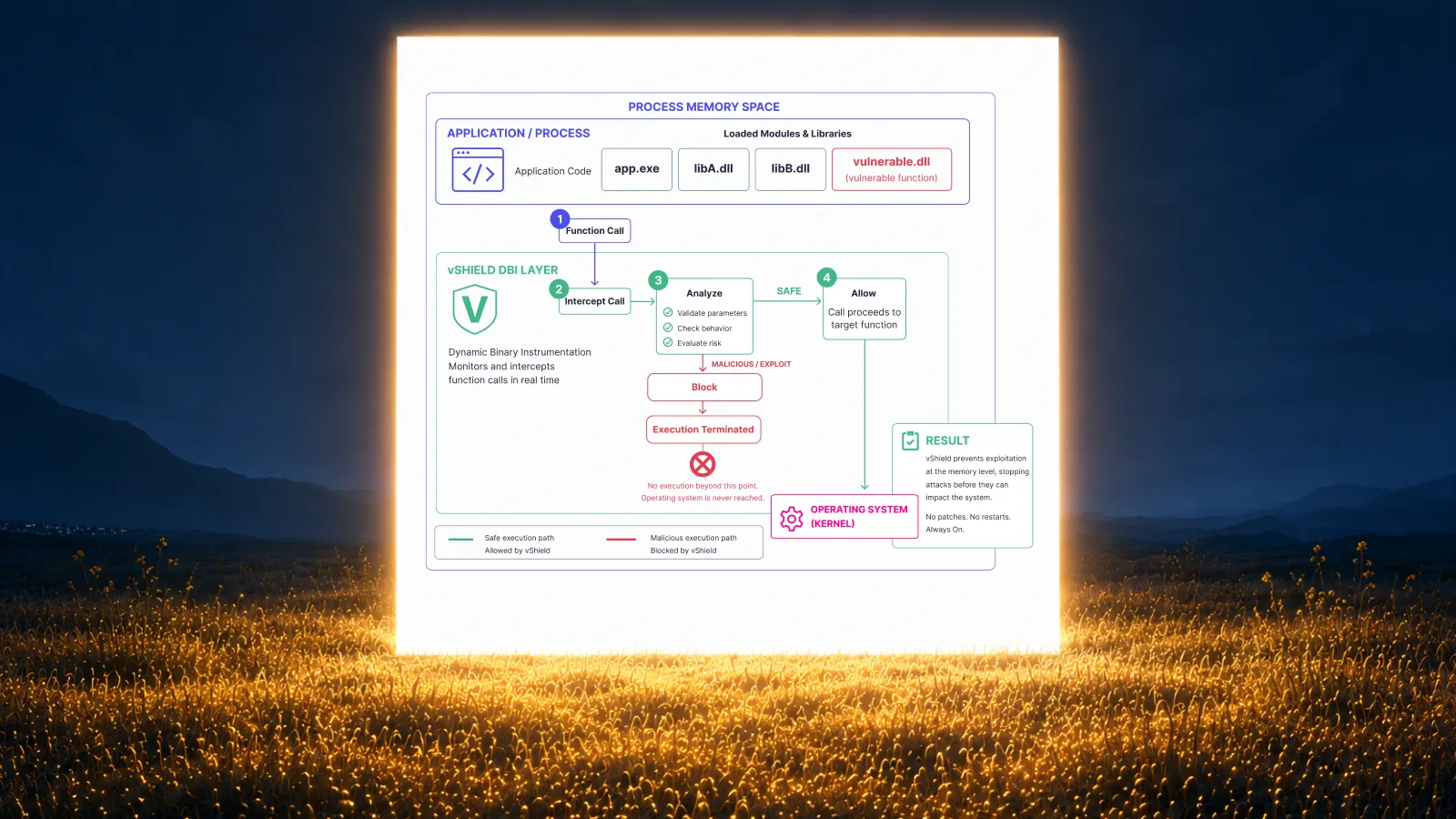
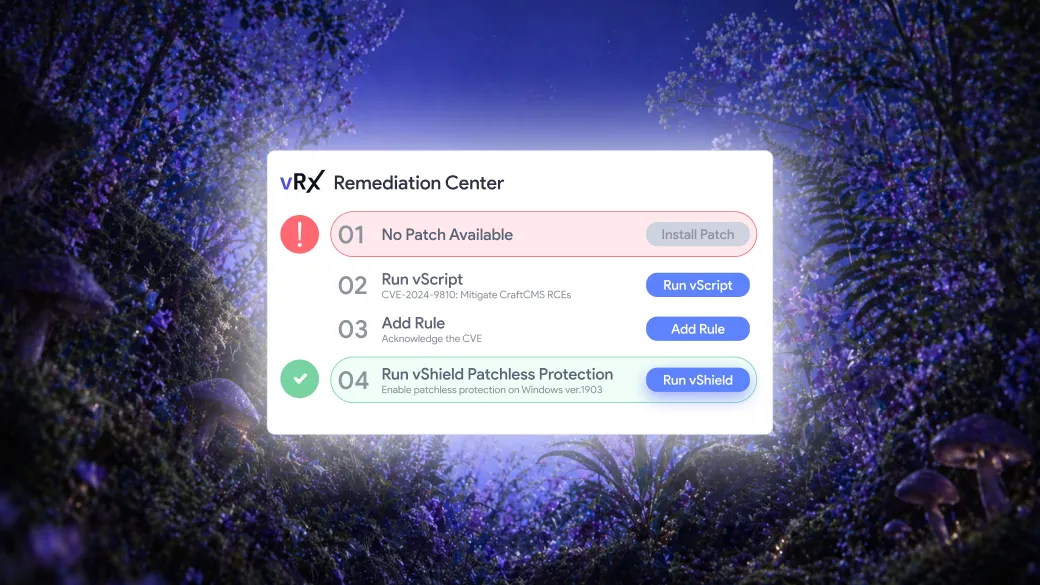
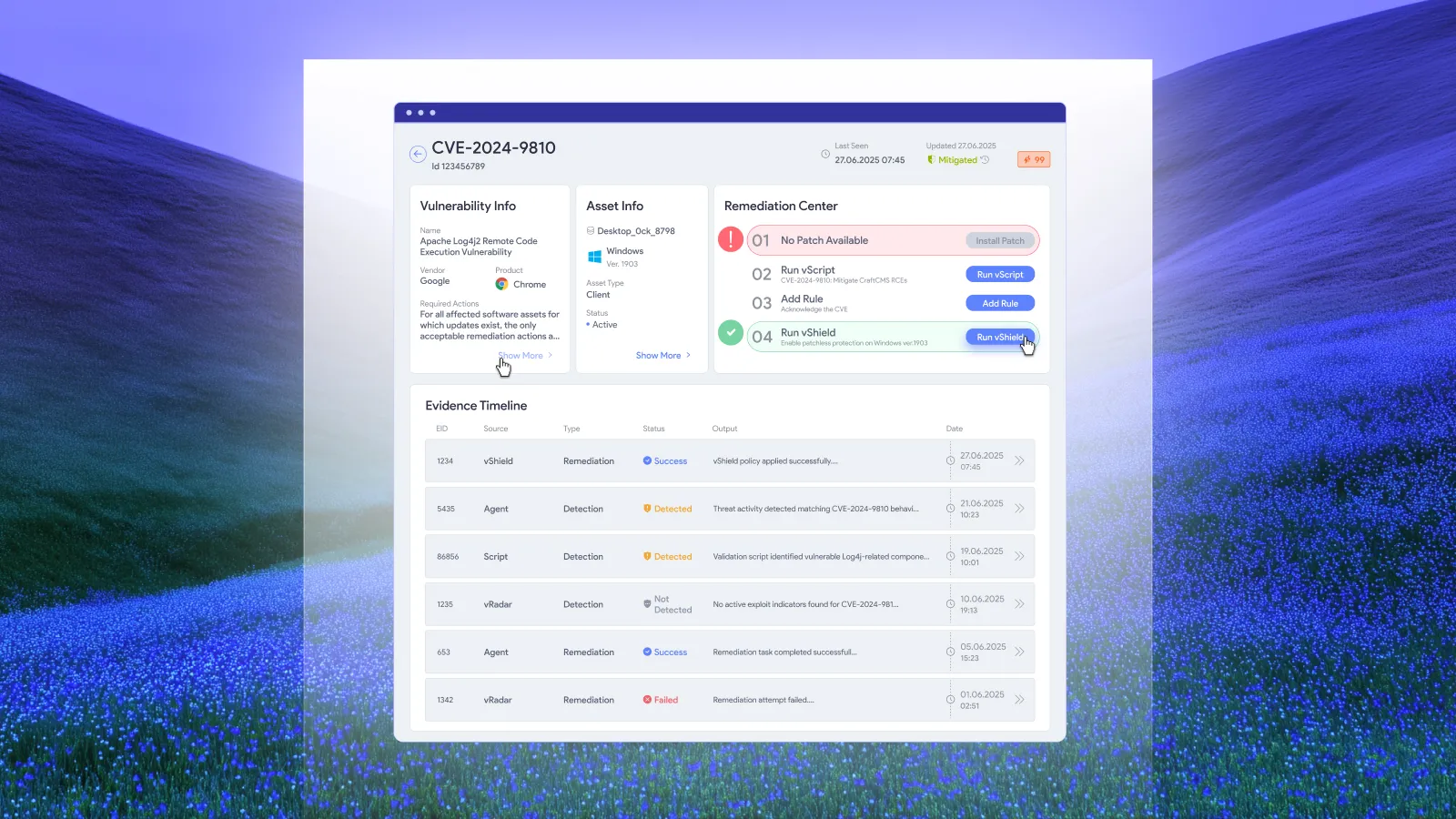
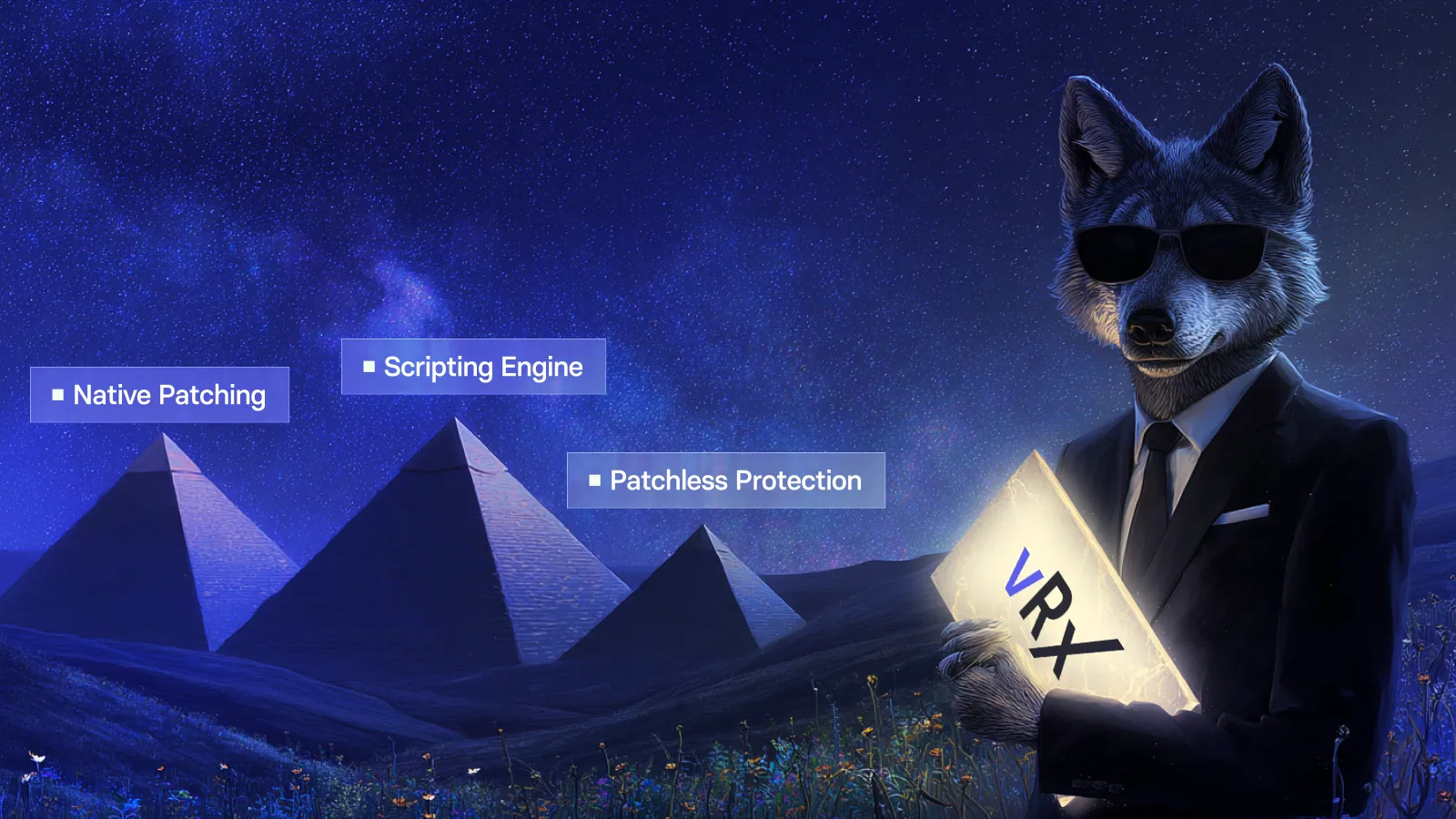
Effective remediation workflows must account for scenarios where a vendor patch is unavailable or cannot be deployed immediately. vRx addresses this by enabling the application of compensating controls (such as Virtual Patching or scripting) to stop repeat findings from turning into incident reports. This provides immediate protection against exploits, ensuring that the gap between detection and a final patch does not leave the organization exposed.
Closing the loop on repeat findings
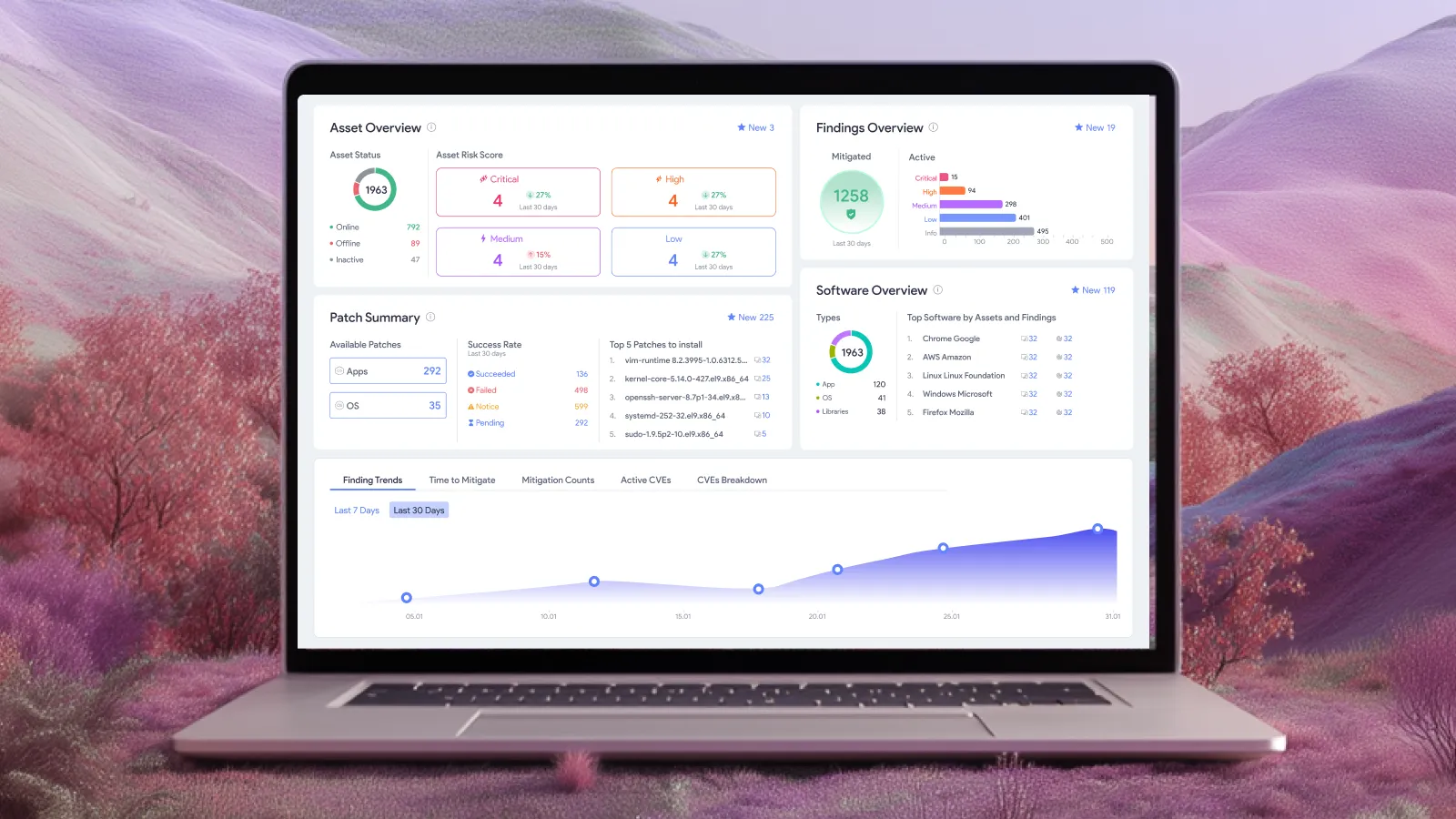
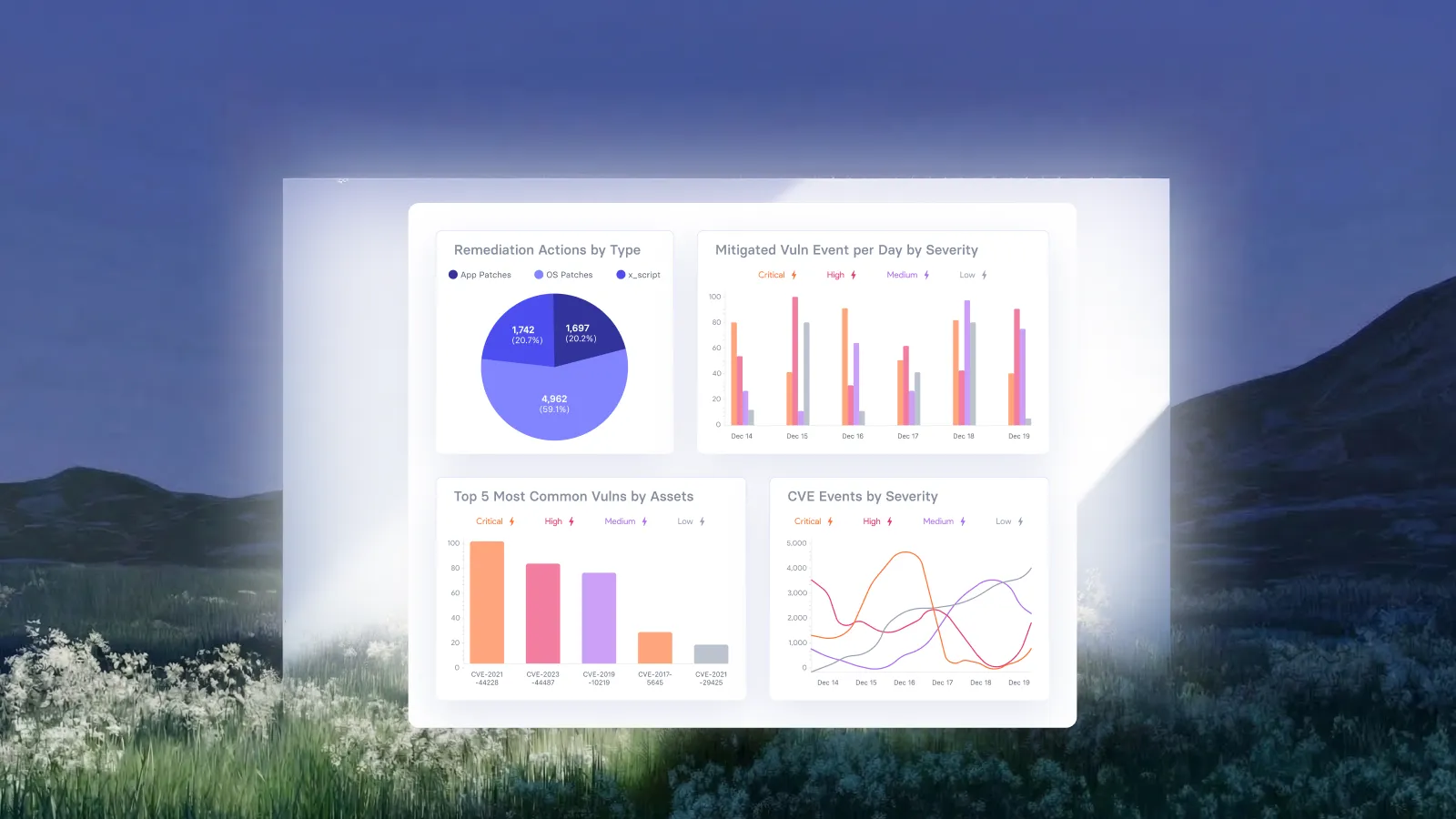
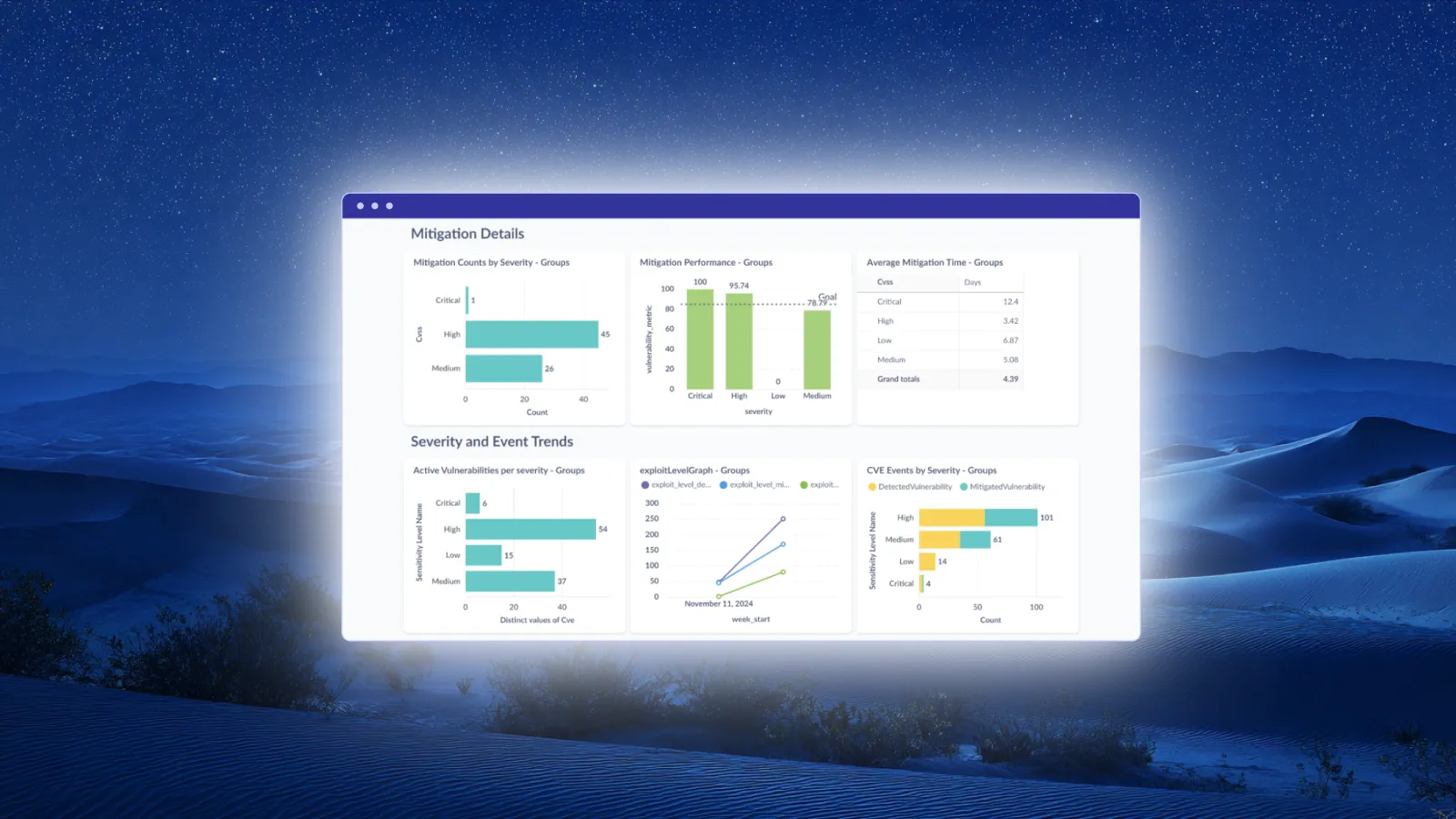
Ultimately, a mature vulnerability workflow must include a verification step that feeds back into the scanning loop. By ensuring that fixed vulnerabilities do not reappear on subsequent reports, vRx helps one to get off of the never-ending anxiety hamster wheel of alert fatigue and executive dysfunction caused by persistent, unresolved issues. This capability allows security teams to demonstrate measurable progress and ensures that the focus remains on remediation effectiveness rather than just the volume of findings.
Moving from awareness to action
A critical disconnect persists in the industry: while scanning provides necessary visibility, the accumulation of unpatched findings creates a false sense of security while leaving the organization exposed to known vulnerabilities. The next phase of maturity for enterprise security requires a definitive shift in focus and metrics; a move away from detection volume and toward the speed and effectiveness of your remediation. Don't let your backlog become your biggest attack surface; the only true metric of security is a vulnerability resolved. Book a demo today to see how vRx integrates with your existing stack to turn static lists of CVEs into executed patches.
Related resources:
















.webp)















%20Signals%20a%20New%20Era%20of%20Supply%20Chain%20Risk.webp)






.webp)



















%20to%20Reduce%20Attack%20Surface.avif)