




















































.png)











Stop flying blind on posture
A snapshot only tells you where you stand right now. vIntelligence tracks posture continuously, so you catch a slipping score before it becomes an incident, not after.


No hidden exposure

Catch it early

Speak in one number

Cut through noise

No status updates

Come with proof


Built from live, continuous data
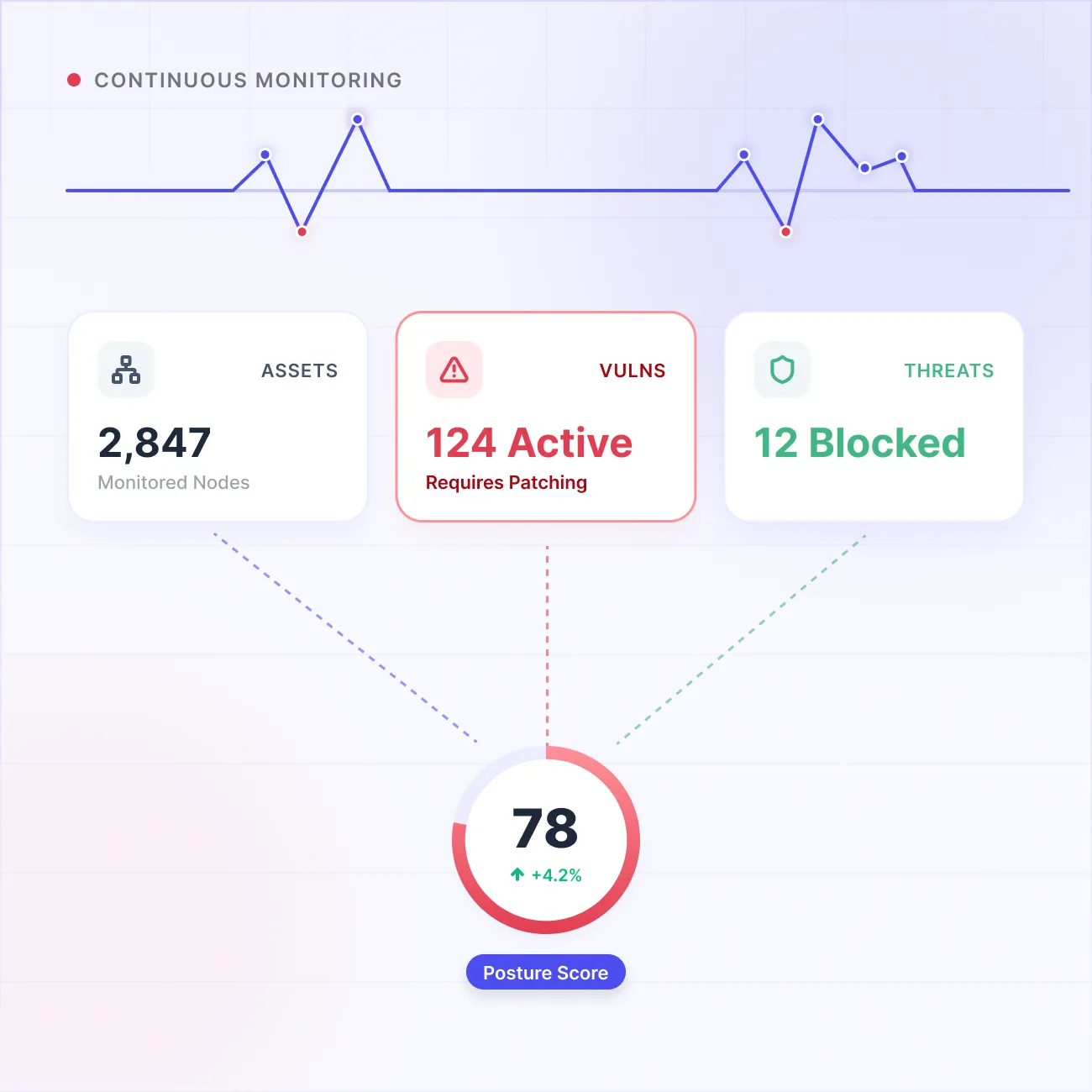
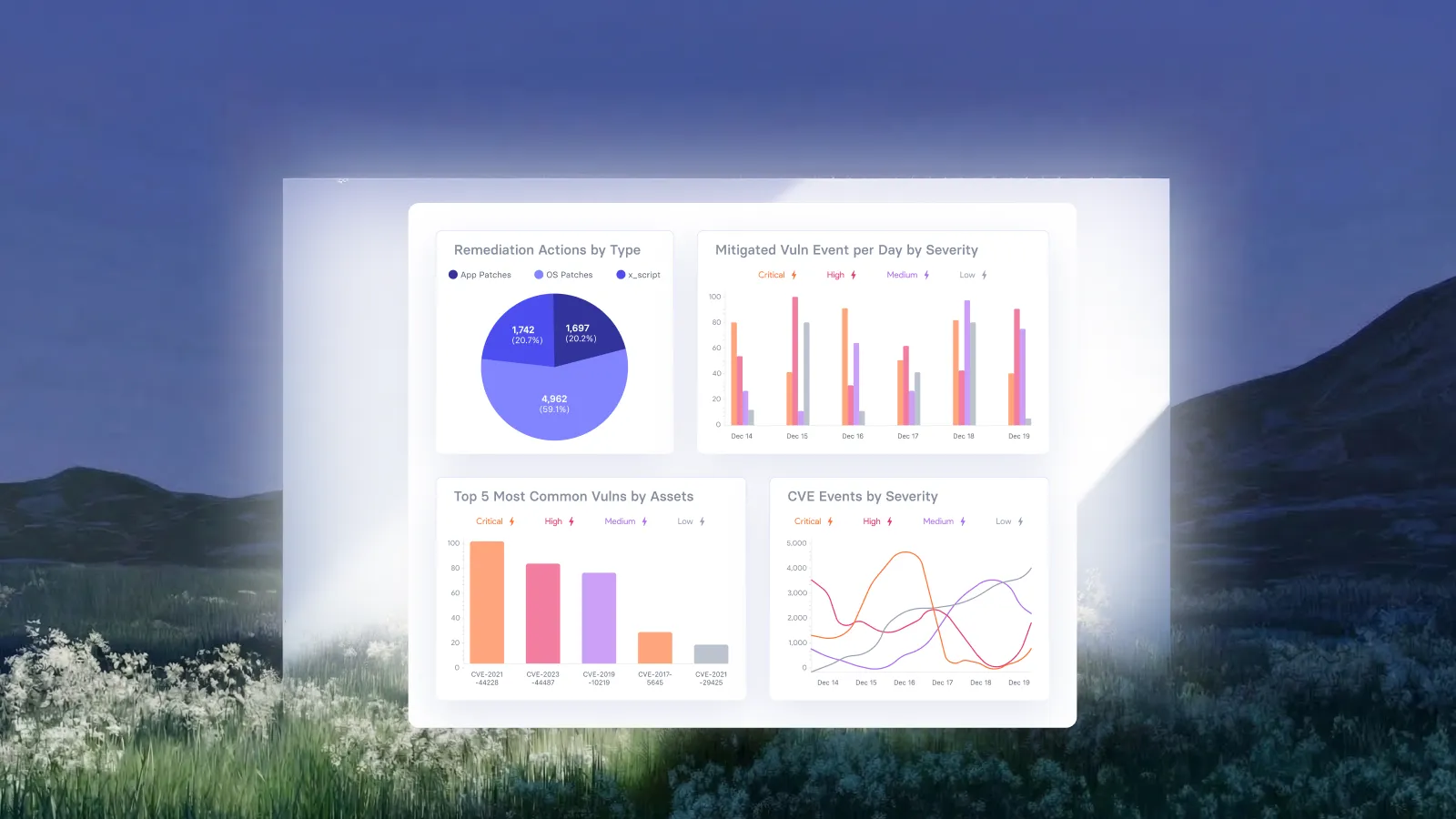
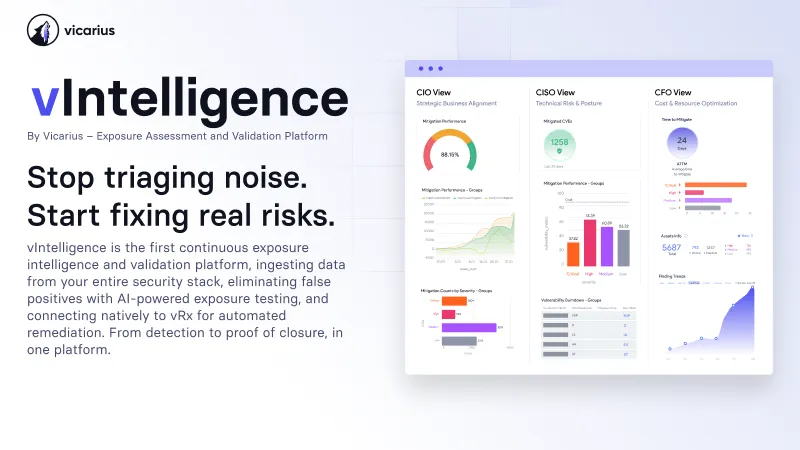
vIntelligence continuously ingests and normalizes data across your stack into one Executive Risk Dashboard, combining severity breakdown, exploited-vulnerability count, a composite score, and trend, always current, never a static snapshot.
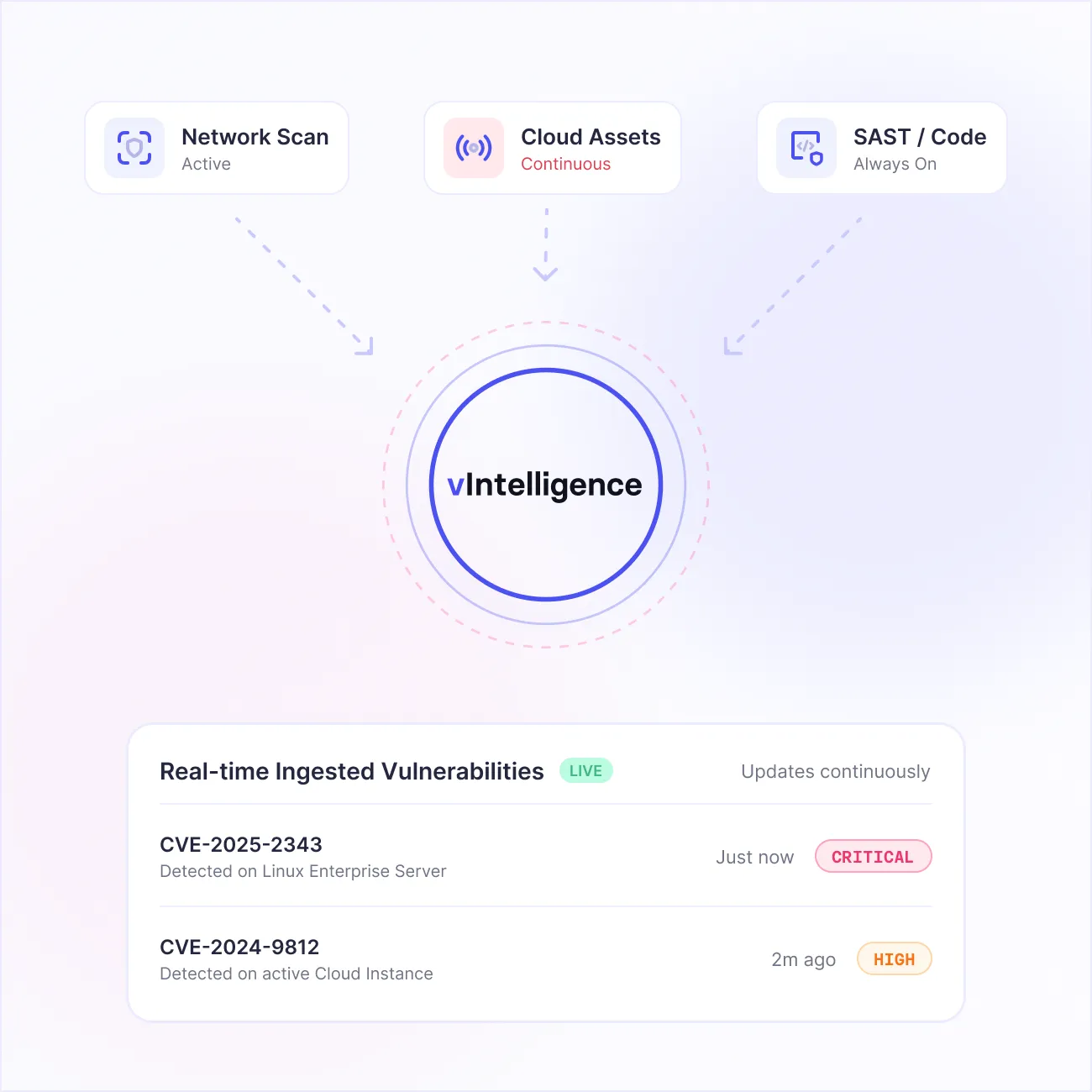
Pulls vulnerability data from every connected tool continuously, not on a scan cycle, keeping posture always current.
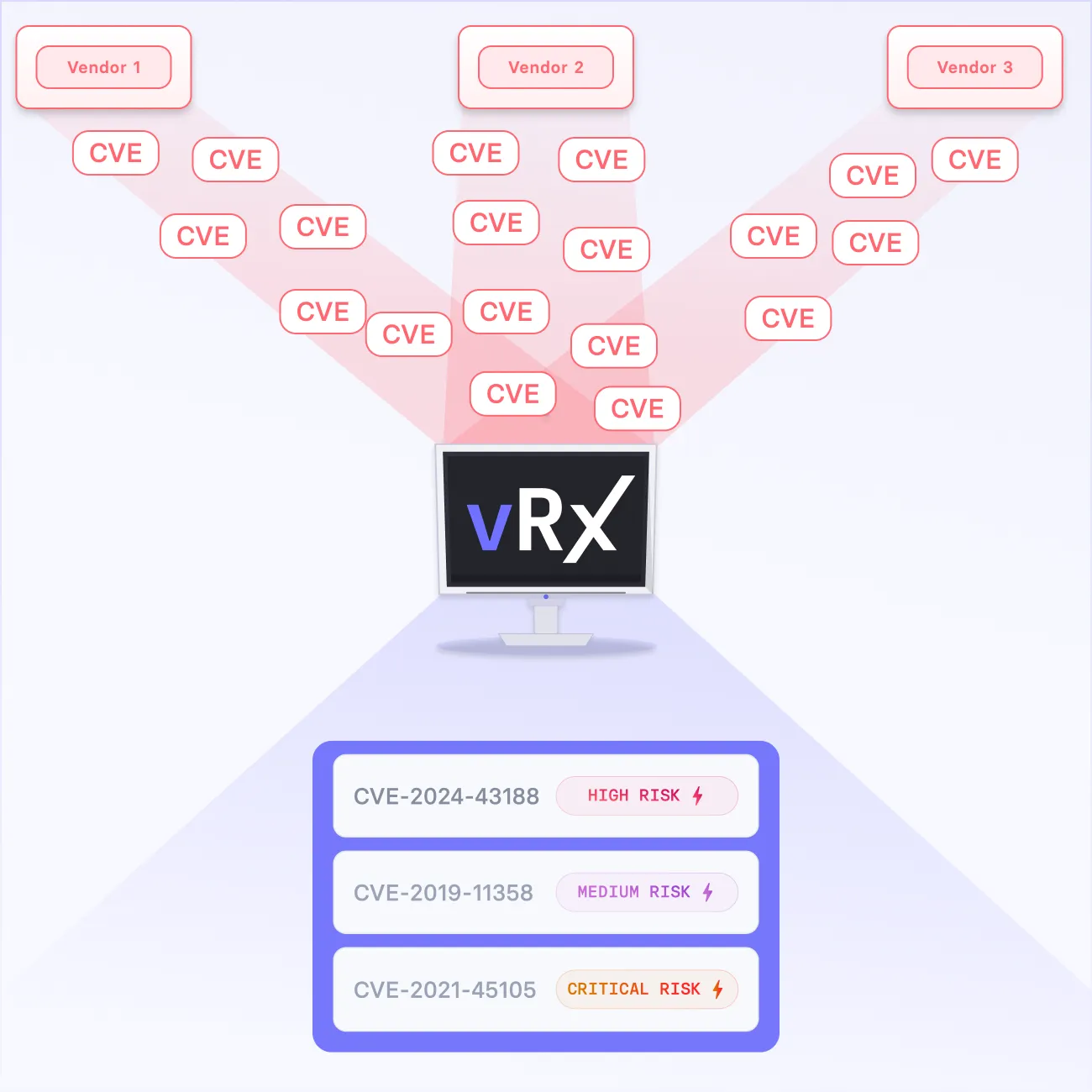
Normalizes data from every vendor into one accurate, consistent risk view instead of reconciling conflicting reports.
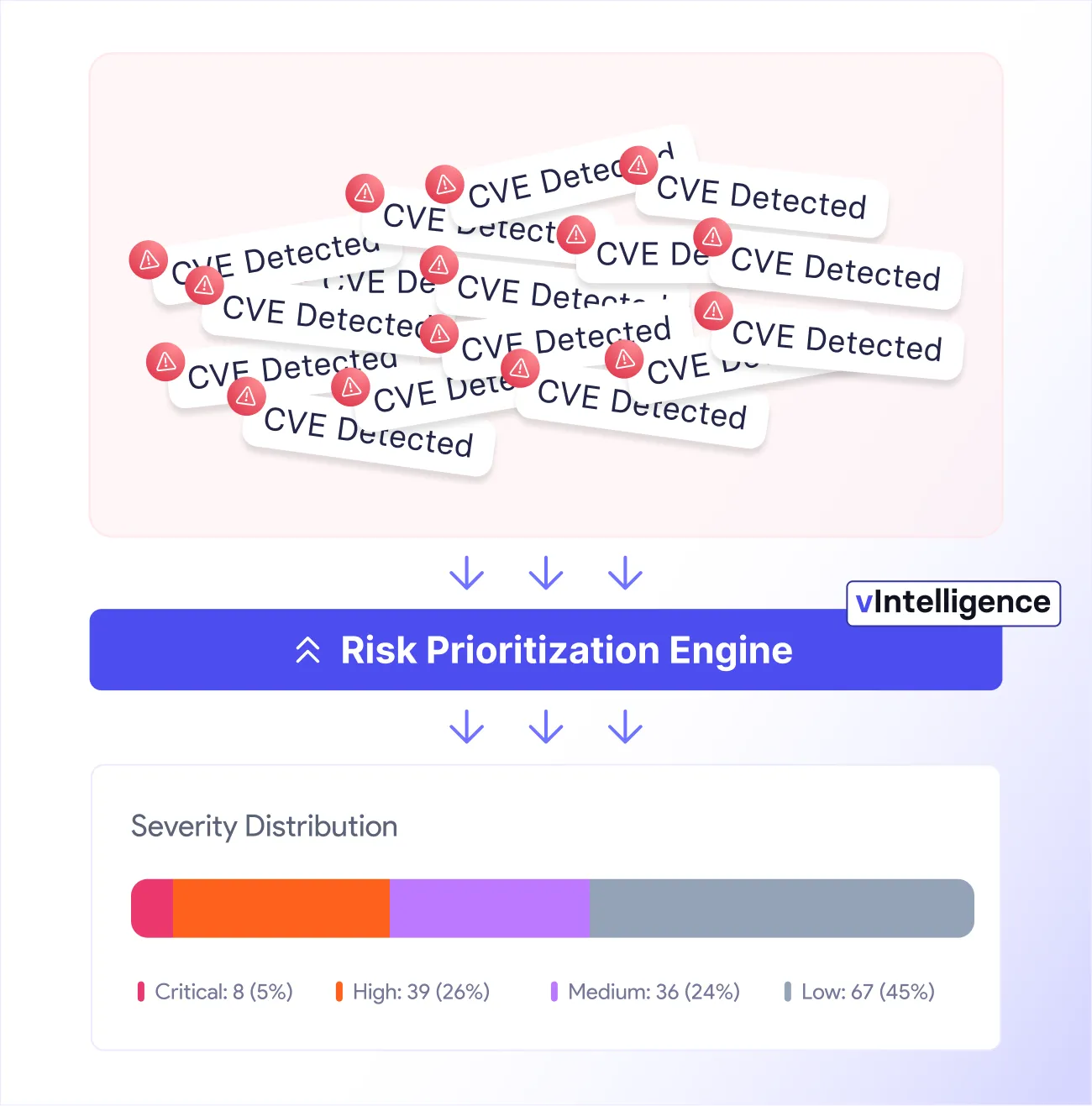
Groups your vulnerability population by severity, giving an immediate read on overall exposure distribution.
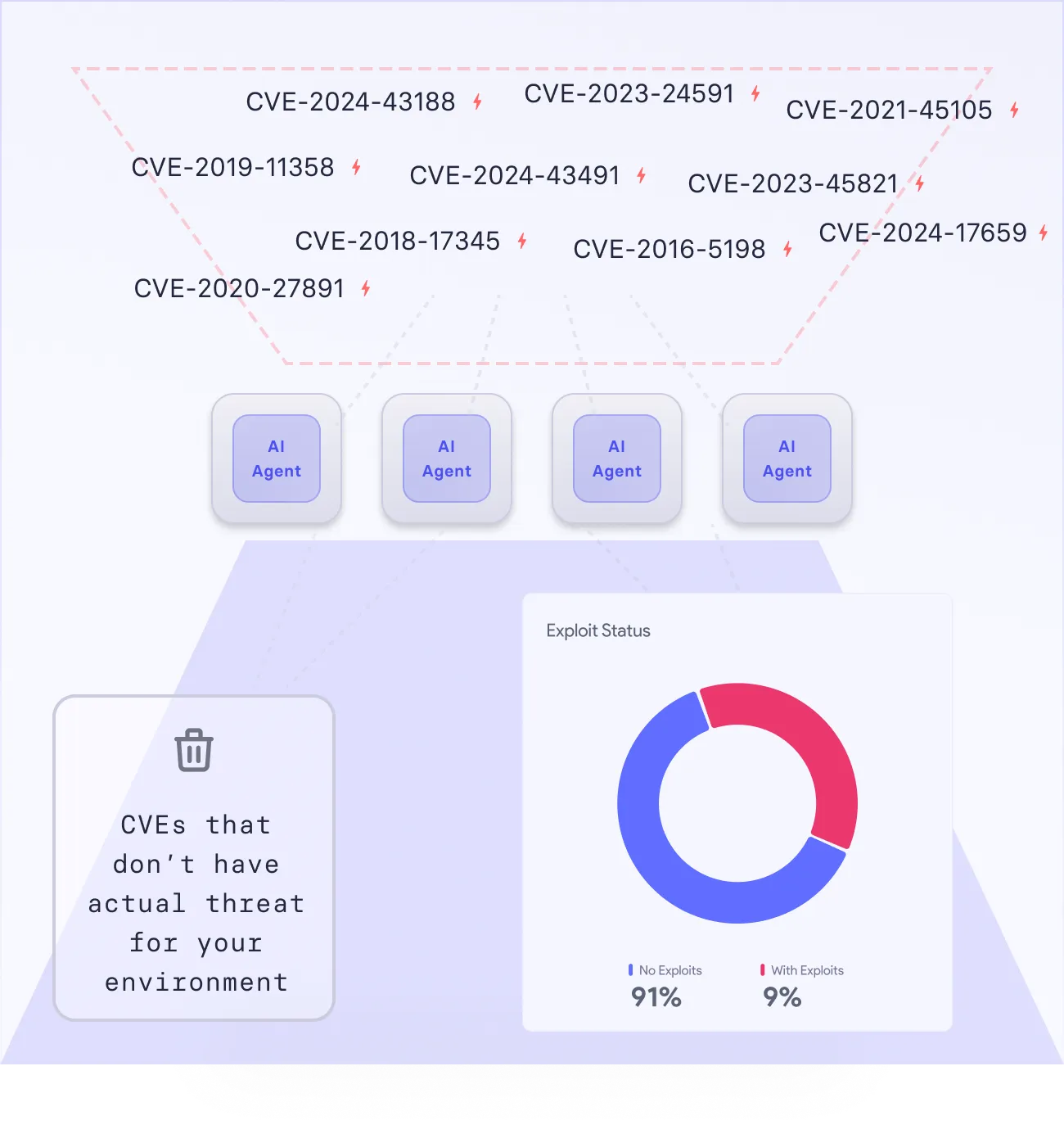
Isolates vulnerabilities under confirmed active exploitation, distinct from general high-severity findings.
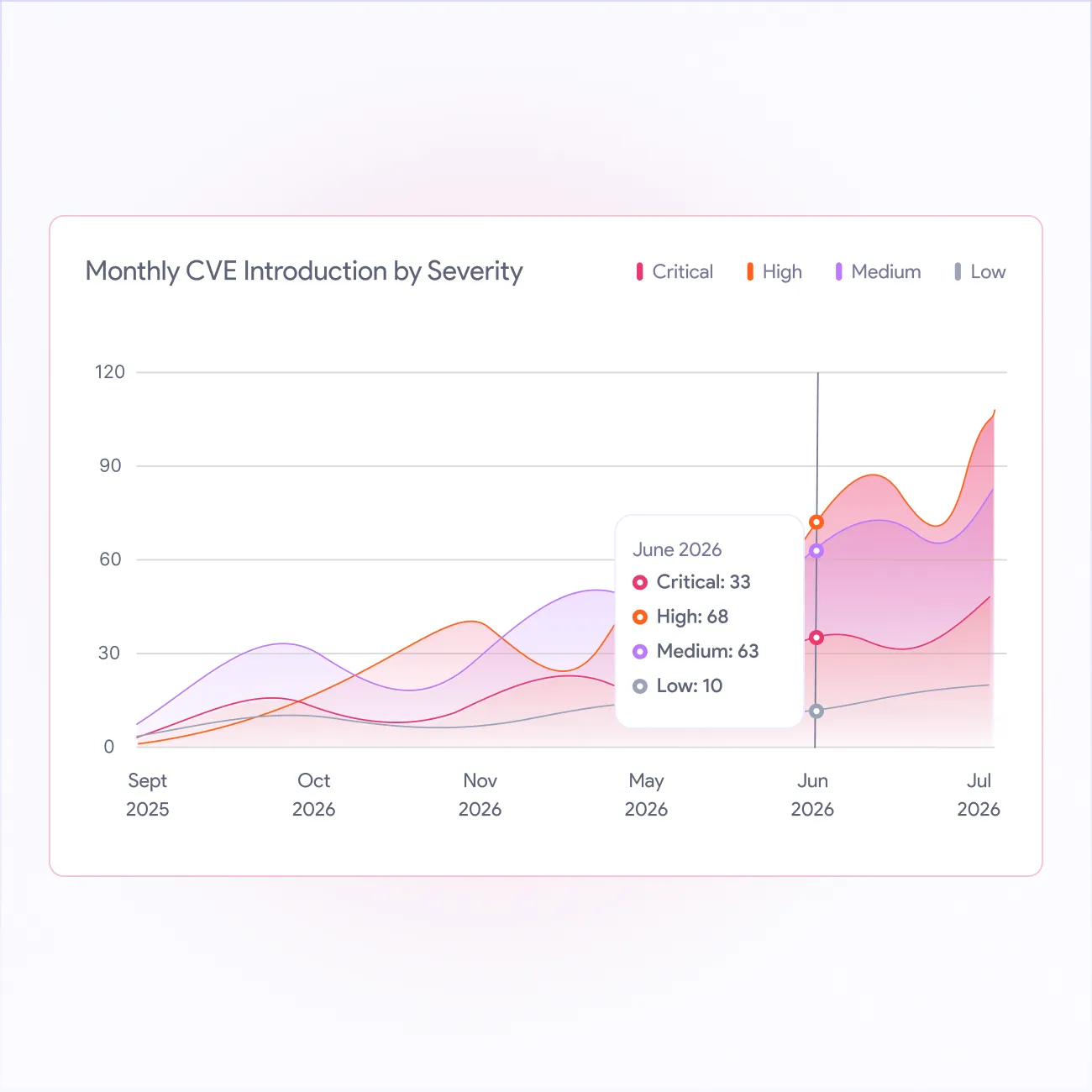
Plots posture over time, so you see whether your score is improving, flat, or worsening.







What Our Customers Say About Us
See why enterprises trust our approach to AppSec to secure their business-critical applications
Patchless Protection is an incredible technology!

Third-party software patching is the most valuable feature.
Complete Vulnerability Remediation Platform

My favorite feature is Patchless Protection

Great patching capabilities, helpful dashboard, and excellent support


Merge Security & IT to Remediate Threats

Single source of truth, capable of handling any application in our fleet
EL AL secures global Patch Compliance


Unified vulnerability discovery, prioritization, and remediation

From urgency to strategy

60% faster remediation, many hours saved
Everything you need to know
What does exposure posture mean in vIntelligence?
Exposure posture is your organization's overall security standing, shown through severity breakdown, exploited-vulnerability count, a composite risk score, and trend over time. vIntelligence continuously ingests and normalizes data across your stack, so this view updates in real time instead of refreshing only when a scan runs.
How is this different from a traditional vulnerability scan report?
A scan report is a snapshot, accurate the moment it runs, then aging until the next cycle. vIntelligence continuously ingests and normalizes data from every connected tool, so posture reflects your environment right now, and trend over time shows whether that posture is improving or slipping.
How is the composite risk score calculated?
The composite risk score combines severity, exploit probability, and exploit maturity into one reproducible number, rather than an opinion or a single-factor rating. This gives your team one figure to track over time instead of interpreting several separate metrics independently.
Can I see whether posture is getting better or worse?
Yes. The Executive Risk Dashboard includes trend over time alongside the current snapshot, so you see direction, not just a single point-in-time score. This makes it possible to catch a slipping posture early, before it becomes a larger exposure problem.
Does exposure posture separate exploited risk from general severity?
Yes. The exploited-vulnerability count tracks vulnerabilities under confirmed active exploitation separately from overall severity breakdown. This distinction matters because a high-severity finding with no known exploitation carries different urgency than one being actively used in attacks right now.
Does posture data update on a schedule, or is it live?
Posture data updates continuously as vIntelligence ingests and normalizes data from your connected tools. There's no scheduled sync to wait on and no manual export or spreadsheet assembly involved, the dashboard reflects your live environment automatically.
Who can view exposure posture data?
Access follows role-based control tied to single sign-on across the platform. This lets you share posture visibility broadly, including with viewer-only stakeholders like leadership, without granting access to remediation actions or administrative settings.