

The stakes for MSP client retention have never been higher. Competitive pressure is increasing from all sides, with newcomers undercutting price, big-box providers automating aggressively, and clients questioning the ROI of every contract line item. At the same time, the threat landscape continues to escalate, raising client expectations in ways many MSPs feel daily but rarely articulate. Clients who once tolerated minor issues or slow updates now view any perceived gap as potential jeopardy. When they sense their MSP is not fully aligned with their operational risks or business direction, they start looking elsewhere. This creates a climate where even small lapses can spark churn, and where the providers that endure are the ones who shift decisively into high-value, risk-aware partnerships.
MSPs are navigating a marketplace where traditional offerings no longer guarantee loyalty. Core support services are increasingly viewed as interchangeable, and many businesses treat monitoring and basic maintenance as expected utilities, not differentiators. As a result, the burden on MSPs is to demonstrate ongoing strategic relevance, not just technical competence. Clients’ expectations are also rising because they are absorbing more security news, receiving more vendor outreach, and facing expanding regulatory pressure. This creates growing anxiety about risk exposure; when clients feel that their MSP is not proactively addressing this anxiety, retention becomes fragile.
In this context, MSPs must evolve from reactive service models into deeply engaged relationships that continually reaffirm value.

Understanding the root causes behind client churn
A durable client relationship depends on visible care, strategic clarity, and predictable attention. Churn does not occur in a vacuum; it forms slowly through repeated moments where the client feels unseen, unmanaged, or unprotected. MSPs often underestimate how significantly clients interpret small misses, silent stretches, or unaddressed drift. A more deliberate understanding of the root causes gives teams a way to intervene early, long before dissatisfaction turns into an RFP.
Clients feel un(der)served or under-engaged
One of the most common churn triggers is the perception of neglect. Clients may not complain, but they quietly notice slow follow-ups, unclear ownership of recurring issues, or a lack of proactive insight. Even if operations appear stable, the absence of visible engagement weakens the relationship. Clients want confirmation that their MSP is actively thinking about their environment, not just reacting to tickets. When they do not see or hear this, they assume the MSP has deprioritized their business.
Technology drift accumulates unnoticed
Modern environments change constantly, often faster than MSP reviews can keep up with. New SaaS platforms, added endpoints, staff turnover, and ad hoc process changes all introduce drift. Over time, small changes compound into real risk if the MSP is not regularly re-mapping the environment. Clients associate drift with vulnerability, instability, and an unmanaged attack surface. When an MSP misses these changes or fails to highlight them, clients begin to question the provider’s grip on their operational reality.
Lack of strategic input makes the MSP feel replaceable
The absence of strategic guidance is another critical churn factor. Clients expect more than technical fixes; they want direction on planning, lifecycle management, and risk mitigation. When MSPs do not contribute to these conversations, the relationship feels tactical and transactional. This is especially dangerous in competitive markets where rival MSPs will position themselves as more strategic, more security-aware, and more aligned with the client’s business goals. Once the client begins viewing the existing MSP as a purely operational vendor, the relationship becomes fragile.
Building proactive client engagement models
Proactive engagement is the most reliable antidote to churn because it transforms the client relationship from episodic support into ongoing partnership. When an MSP demonstrates that it has a structured approach to guiding clients, the client feels accompanied rather than adrift in a fast-changing risk landscape. This begins with routine conversations designed to surface operational themes, anticipate issues, and map how the client’s environment is evolving.
Engagement models work best when they integrate predictable rhythm, clear deliverables, and shared expectations. Scheduled quarterly or biannual reviews, security posture updates, and service roadmap check-ins give clients confidence that the MSP understands their environment and is planning ahead on their behalf. These meetings also provide a dedicated space to discuss future needs, lifecycle considerations, and risk tolerance rather than relying on ticket-driven interactions.
A proactive model benefits from having visible structures clients can rely on. These may include periodic artefacts, recurring review cycles, and consistent checkpoints that reinforce the MSP’s active stewardship. A short list of components that strengthen these models includes the following:
- Regular security posture reviews: Providing recurring insight into vulnerabilities, misconfigurations, and areas of operational concern, framed in business-ready language.
- Documented service roadmaps: Outlining planned improvements or system lifecycle changes so clients see foresight, not reaction.
- Environmental change checks: Tracking drift and clarifying the client’s evolving environment so the MSP always appears current, attentive, and informed.
- Cybersecurity field updates: Sharing relevant threat developments, industry advisories, or emerging attack patterns so clients stay aware of external pressures and understand how the MSP is adapting protections on their behalf.
These frameworks help the MSP demonstrate attentiveness, reduce perceived risk, and establish a cadence that makes the relationship feel consistently guided.
Using metrics and reporting to demonstrate real value
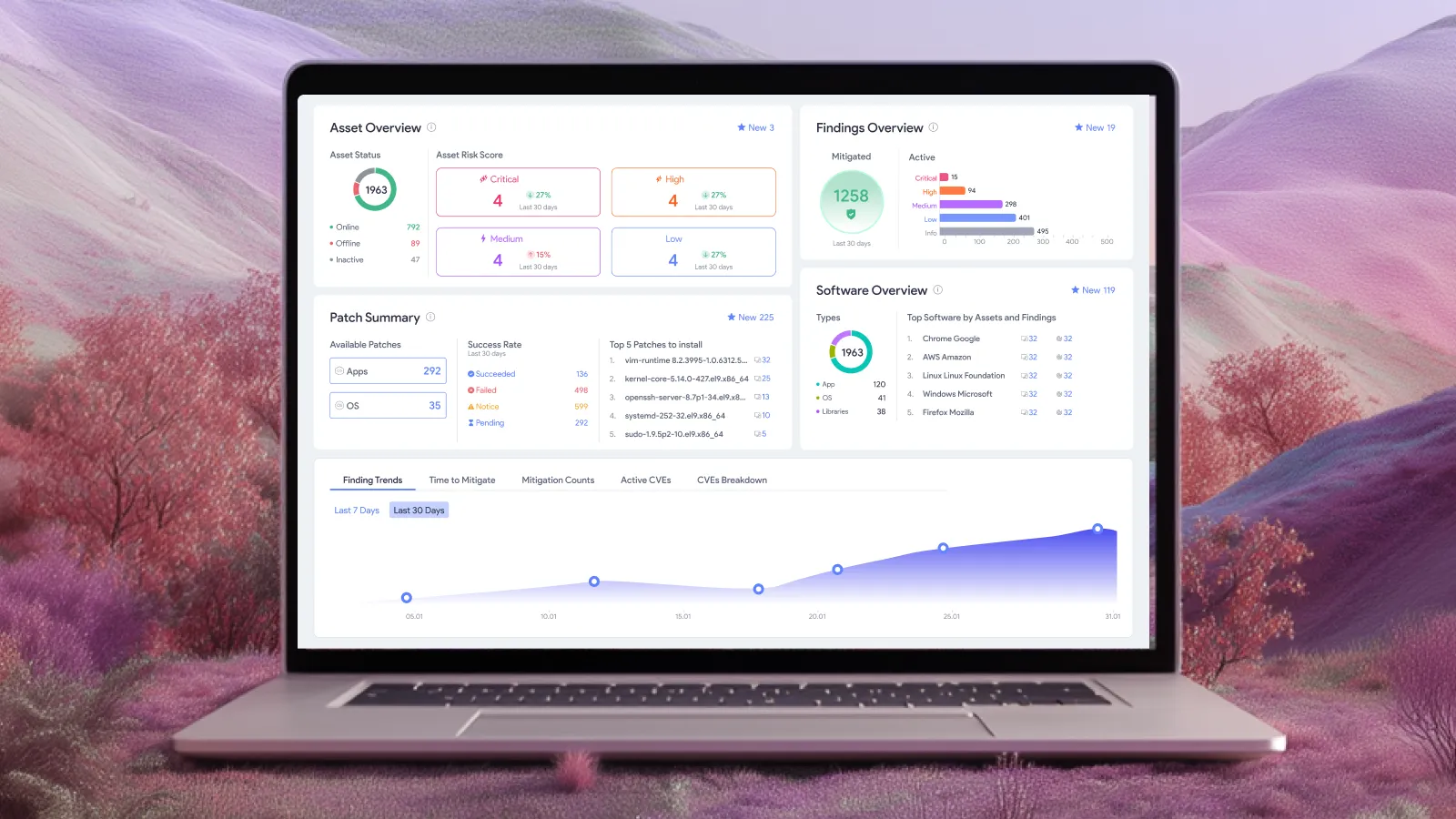
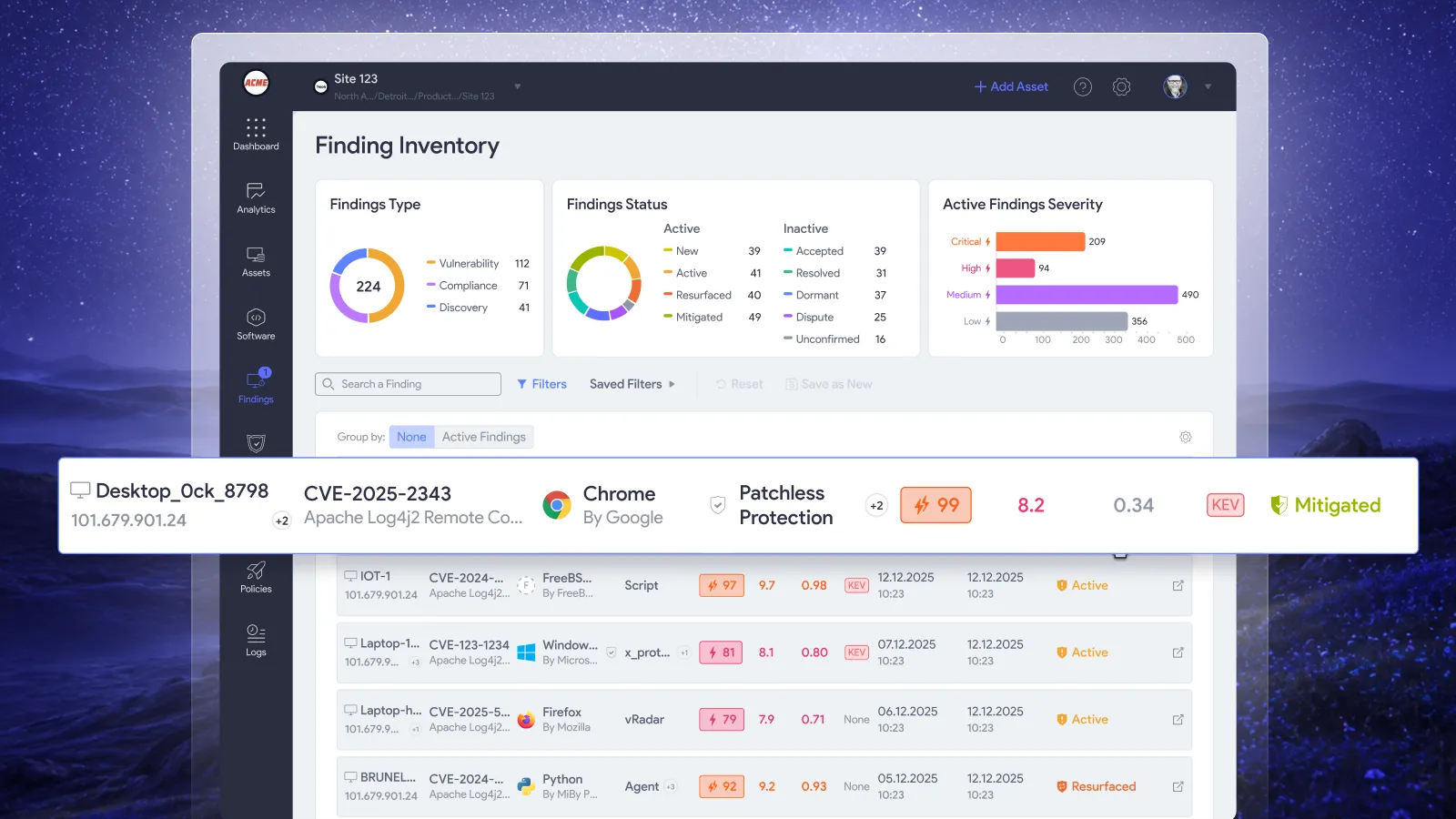
Metrics and reporting work best when they connect the MSP’s operational work to outcomes that matter to the client’s business. Clients rarely measure value by the number of tickets closed; they care about reduced risk, improved stability, and predictable performance. Clear, outcome-oriented reporting helps them see progress, understand vulnerabilities in context, and recognize how the MSP is strengthening their environment over time. This turns routine service into a visible partnership and transforms quiet behind-the-scenes work into tangible proof of improvement.
Risk exposure trend
Risk exposure trends illustrate whether the client’s environment is becoming more secure or more vulnerable as months pass. By showing declines in exploitable issues, misconfigurations, or unpatched workloads, the MSP provides reassurance that action is being taken with measurable effect. Clients often find comfort in seeing this trajectory expressed visually or through short narrative summaries that tie remediation work directly to meaningful reductions in exposure.
Remediation velocity
Remediation velocity highlights how quickly issues are addressed once discovered. This helps clients understand not only the scale of their risks but the responsiveness of the MSP’s processes. When fix velocity improves over time, especially when backed by automation or better workflow integration, it signals that the client’s environment is becoming more resilient. This narrative shifts the conversation from “how many vulnerabilities we can find” to “how effectively they’re neutralized.”
Operational stability
Operational stability represents the client’s daily experience of uptime, performance, and recurring issue reduction. Stability metrics help reinforce that a well-managed environment is not merely secure but also dependable. When MSPs surface stability trends and correlate them with maintenance, patching, or infrastructure improvements, clients gain a deeper appreciation of the foundational work keeping their operations smooth.
Reducing vendor sprawl while creating supportive, non-pushy upsell paths
Many MSP clients struggle with tool fatigue: too many portals, overlapping systems, redundant notifications, and unclear value. Clients increasingly reward MSPs who simplify their operational footprint and introduce enhancements only when linked to real, observable needs. Upsell paths must therefore feel like improvements to the client’s experience rather than expansions of the MSP’s invoice. This requires positioning new tiers or capabilities in a way that reduces complexity, addresses specific risks, and offers clearer outcomes.
To achieve this, MSPs can streamline their stack while elevating their service offering. The goal is a smaller, better-integrated set of tools that produce stronger security and operational results with less friction. When the upsell is framed as consolidation plus enhancement (with a side order of simplification) rather than “one more thing to buy and pay attention to,” clients understand it as support rather than sales pressure.
A table is an effective way to illustrate this alignment:
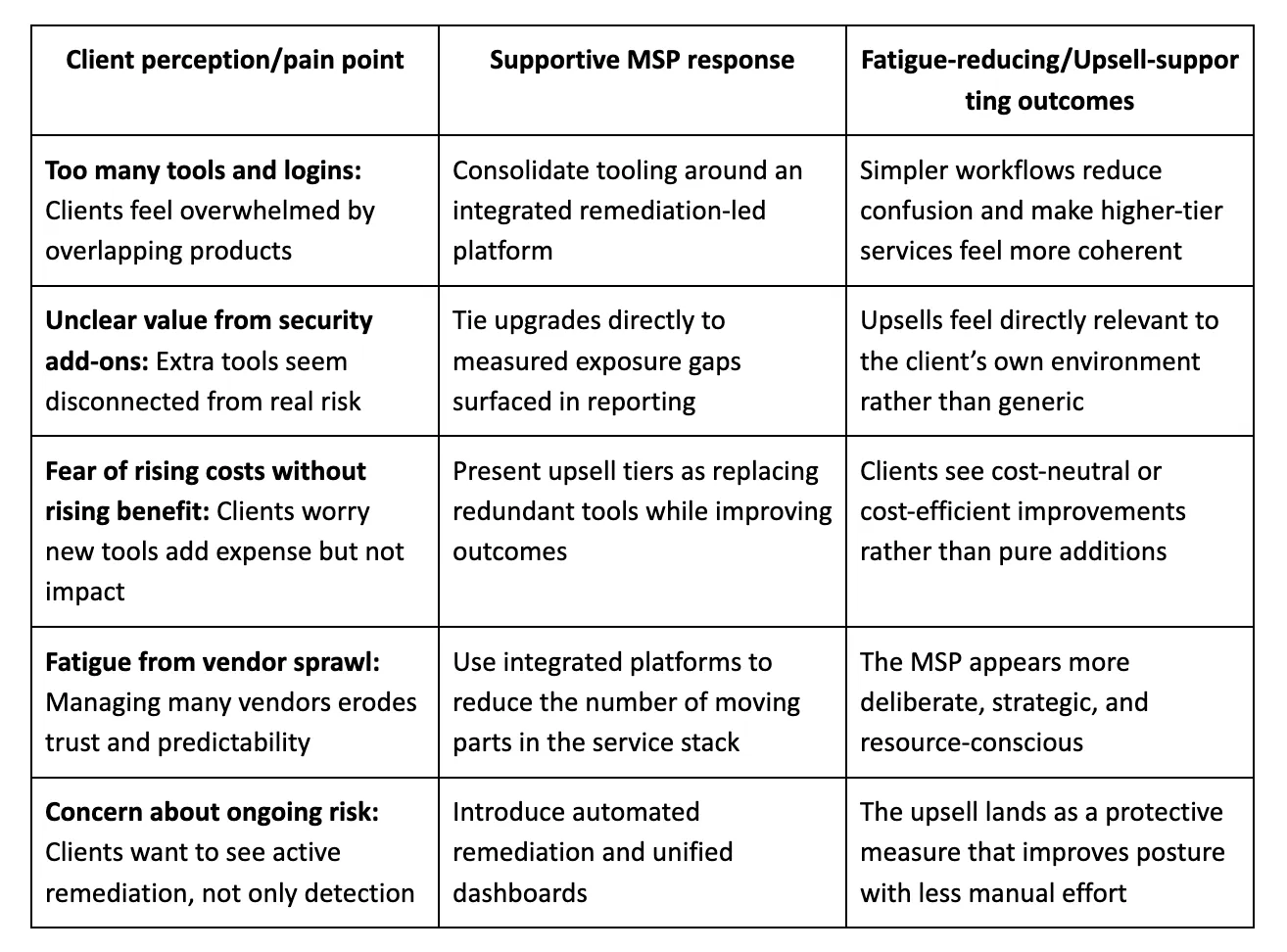
When MSPs frame their service evolution around simplification, consolidation, and clearly demonstrated improvement, clients interpret upsell paths as stabilizing rather than burdensome. This approach strengthens trust, aligns with real needs, and creates a smoother path toward higher-value service tiers.
Becoming an indispensable partner rather than a replaceable service
MSPs secure long-term retention by positioning themselves as essential partners who guide clients through operational uncertainty and escalating risk. A provider who offers stability, foresight, and remediation capability becomes deeply embedded in the client’s business continuity and risk strategy. Clients trust providers who anticipate issues, explain trade-offs with clarity, and present actionable options rather than reactive fixes.
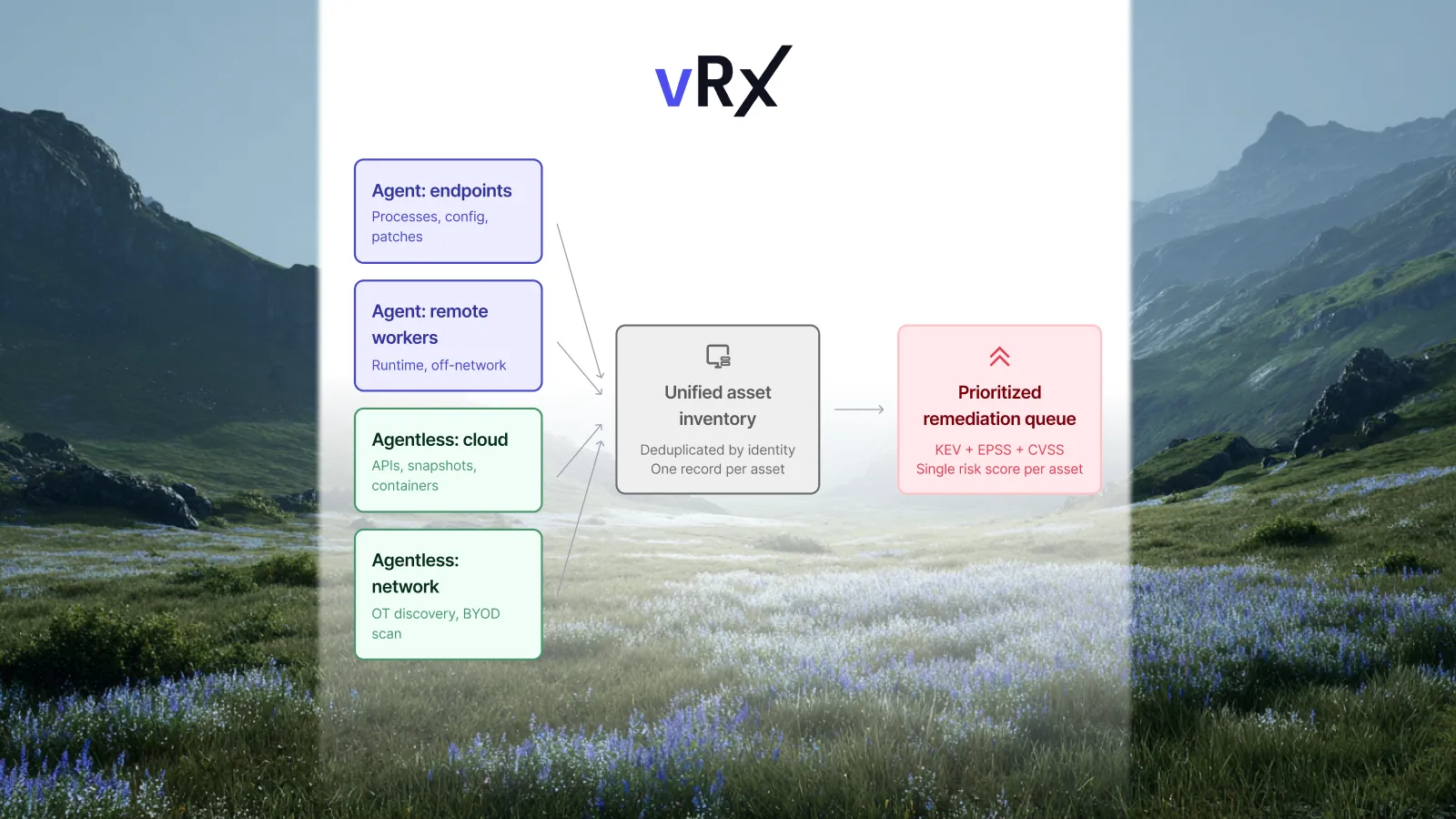
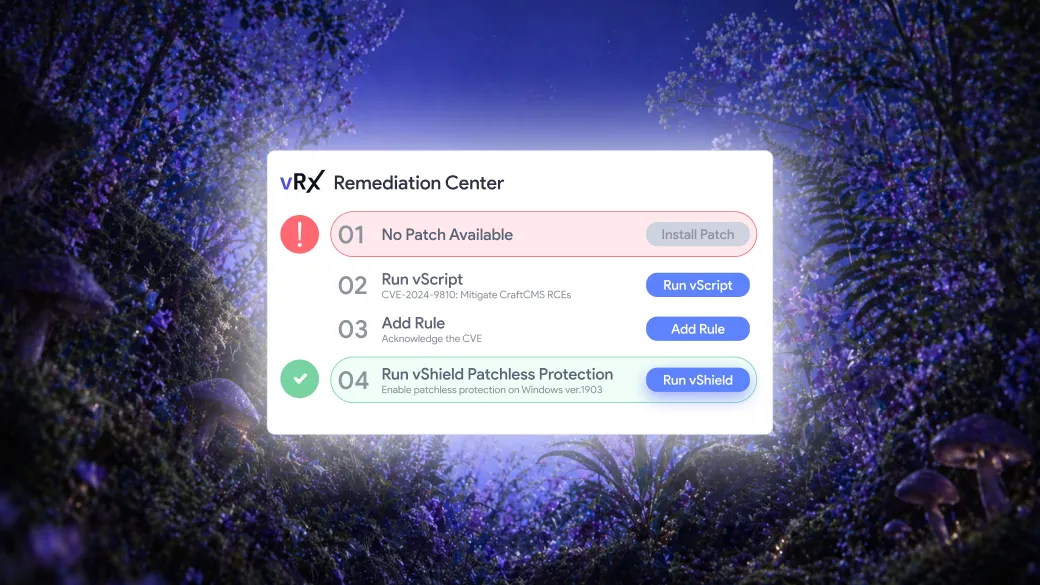
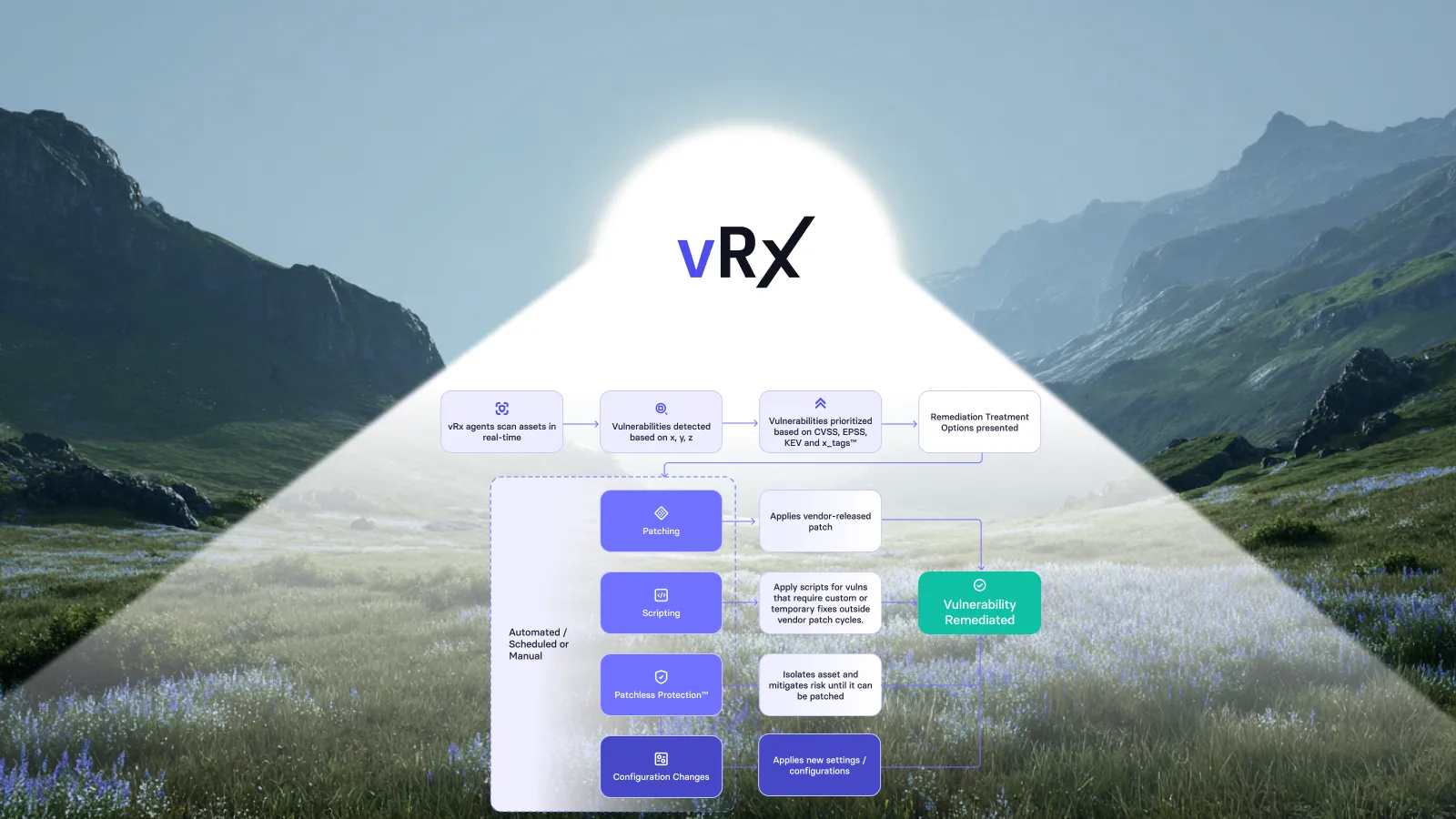
Embedding consistent reporting, remediation workflows, and security planning into the core offering helps elevate the MSP’s role beyond day-to-day support. vRx by Vicarius reframes the relationship as a strategic pillar rather than a cost center. MSPs who maintain open communication, produce measurable results, and demonstrate mastery of the client’s environment naturally become the kind of partners clients rarely consider replacing. To see how a remediation-led approach can strengthen your client relationships and reduce churn, book a demo session today and experience the vRx difference for yourself.
Related resources:


















.webp)

















%20Signals%20a%20New%20Era%20of%20Supply%20Chain%20Risk.webp)






.webp)






















%20to%20Reduce%20Attack%20Surface.avif)