

At the heart of today’s cyberthreat ecosystem sit managed service providers (MSPs). Attackers are increasingly treating them as efficient gateways into multiple downstream networks, effectively using MSPs as one-stop attack hubs. That shift turns security from mere added-value into the defining responsibility of a modern provider. When one compromise can cascade across an entire client portfolio, the question is no longer whether or where security belongs in the service stack; rather, the question has become how long MSPs can still remain viable unless they deliver security at every step in a structured and outcome-driven way.
With attackers deliberately targeting MSPs, any potential weakness in the provider’s own environment can quickly turn a single attack surface into a major force multiplier. Breaches tend not to stay contained, only affecting one client; they can potentially radiate throughout your entire network, affecting the trust clients place in their MSP as well as the MSP’s operational continuity and the defensibility of its contracts. Even small oversights or lapses in patching or internal hardening can ripple outward into legal claims, reputational damage, and the perception that the MSP has not met the duty of care reasonably expected by paying clients.
What clients expect now, and what they actually mean
Clients increasingly judge their MSPs by outcomes they can see rather than by static reports or technical artefacts they do not fully understand. A quarterly compliance snapshot or a list of outstanding patches no longer reassures anyone.
What matters instead is whether exposures are actually being reduced over time and whether the MSP can demonstrate real improvement in the client’s security posture. This creates a challenge, because SMB and mid-market clients often use terms such as visibility, protection, or monitoring in ways that differ substantially from how MSPs interpret them. One client may assume that vulnerability remediation is included as part of basic monitoring. Another may believe that compliance alignment is inherent to any managed service. These assumptions tend to vary with maturity, regulatory pressure, and prior negative experiences with other providers, producing expectations that need to be carefully managed.
Due to badly (or un-)managed expectations, a lack of alignment between what MSPs believe they are delivering and what clients think they are paying for is one of the most common sources of client dissatisfaction. Clients tend to assume coverage where none exists, especially when boundaries are unclear and/or when there’s a mismatch in technical expertise levels. MSPs tend to assume that clients understand the limitations of their current package, not always recognizing that their technical experience level is often partly why their clients approached them in the first place. Resolving that disconnect is essential for maintaining trust and for preventing operational disputes and other avoidable incidents.
Designing, pricing, and positioning a modular security offering
Modular tier systems allow MSPs to meet clients where they are without overextending themselves. A core tier can focus on essential functions such as vulnerability handling, basic monitoring, and foundational hardening. An advanced tier can introduce broader coverage, richer visibility, and stronger proactive controls. A premium tier can incorporate advisory elements, incident readiness, and compliance guidance. When properly aligned to maturity, these tiers give clients a clear path for growth while giving MSPs a predictable model for delivery.
Tier structures as a maturity model
A core tier can focus on essential functions such as vulnerability handling, basic monitoring, and foundational hardening. An advanced tier can introduce broader coverage, richer visibility, and stronger proactive controls. A premium tier can incorporate advisory elements, incident readiness, and compliance guidance.
Pricing and packaging aligned to effort and sustainability
Pricing and packaging must reflect the realities of labor, tooling, and risk. If a security tier includes active remediation, continuous monitoring, or advisory services, the pricing must account for the required effort and expertise. The alternative is a service that becomes unprofitable or unsustainable. Aligning costs to tiers helps avoid a scenario where the MSP sells an ambitious security package but cannot resource it effectively, creating vulnerability for both the provider and the client.
Support models mapped to tier expectations
Support models would also need to align with such a tier structure. Clients in advanced or premium tiers require different SLAs, escalation paths, and technician time than those on basic packages. Without a clear mapping between tier expectations and internal workload management, the MSP risks inconsistent delivery. Standardizing those expectations keeps operations predictable and avoids overcommitting resources.
Alignment as a competitive differentiator
When modular service design, pricing, and delivery expectations are aligned as one system, MSPs gain an advantage in a crowded market. They can demonstrate structured maturity progression, clear value boundaries, and sustainable protection for their clients in an environment that continues to evolve quickly. This alignment becomes part of the differentiation: a transparent, credible, and scalable approach to modernized security.
Why vulnerability remediation must be the anchor layer
Automated vulnerability remediation cannot be treated as a premium add-on anymore. It has become the baseline expectation. MSPs that still see automation as a value-added option risk underestimating the stakes. Failure to automate exposes the MSP’s own infrastructure, increases the volume of tickets generated by preventable issues, and amplifies the impact of any compromise. Automated remediation reduces labor demands, protects the MSP’s own network, and lowers support costs by shrinking the attack surface before it becomes a problem.
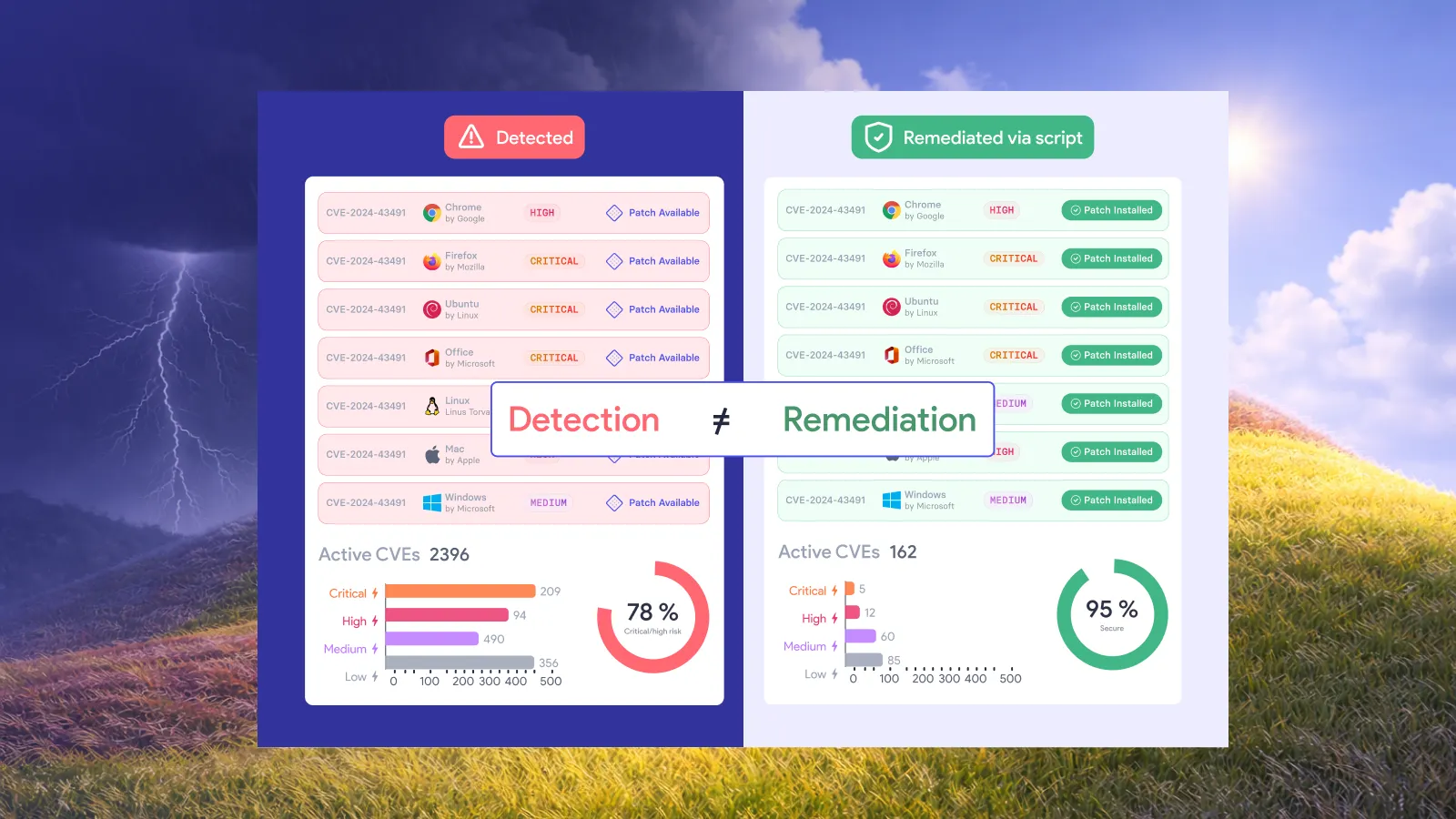
Remediation is the most defensible form of security improvement that an MSP can deliver. Clients do not benefit from simply knowing that vulnerabilities exist; they benefit from those vulnerabilities being fixed. Remediation shortens exposure windows, reduces attack surface, and provides concrete proof that the MSP is actively reducing risk across the client estate. Because it produces measurable outcomes, remediation naturally becomes the backbone of any effective security tier.
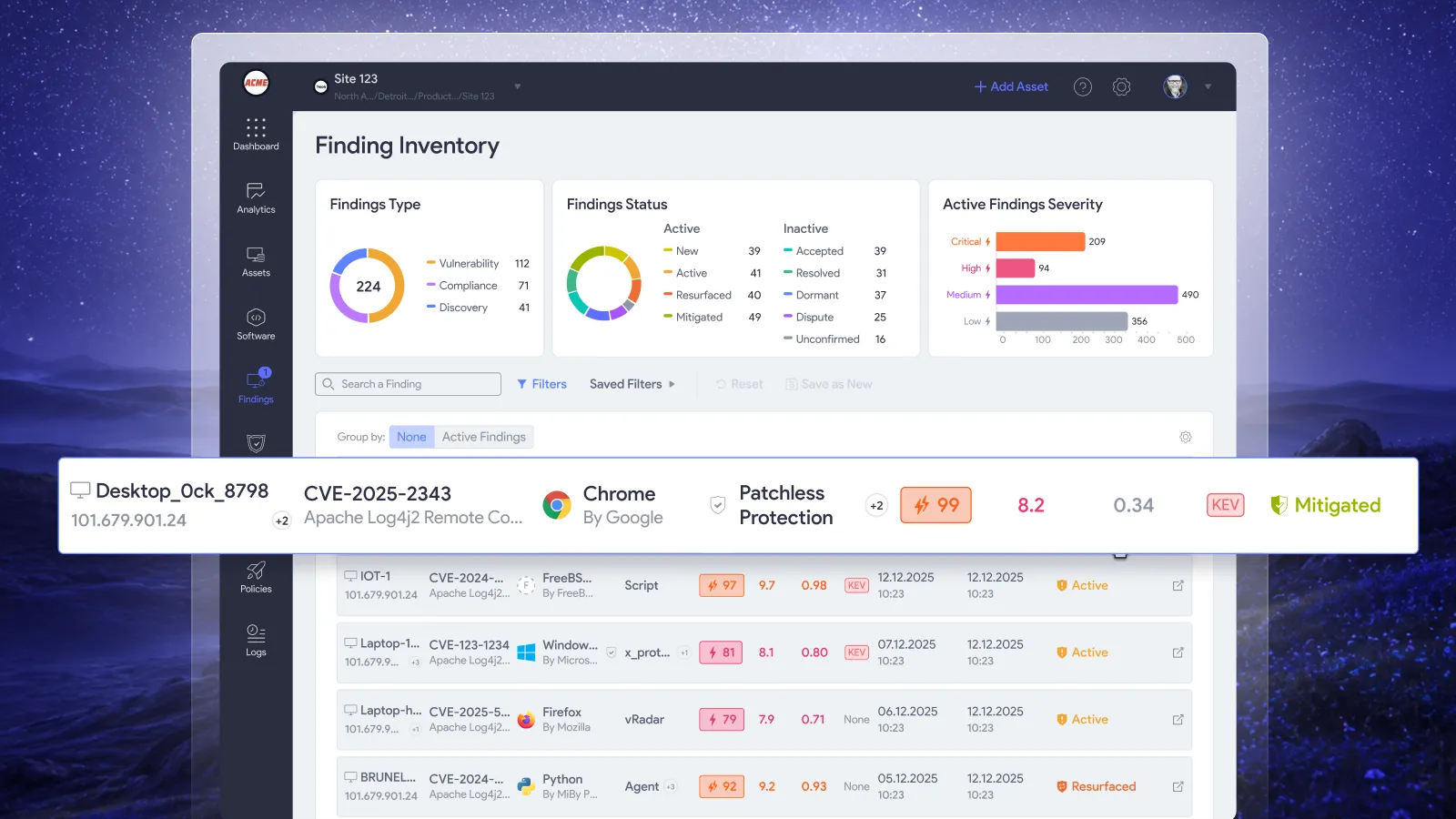
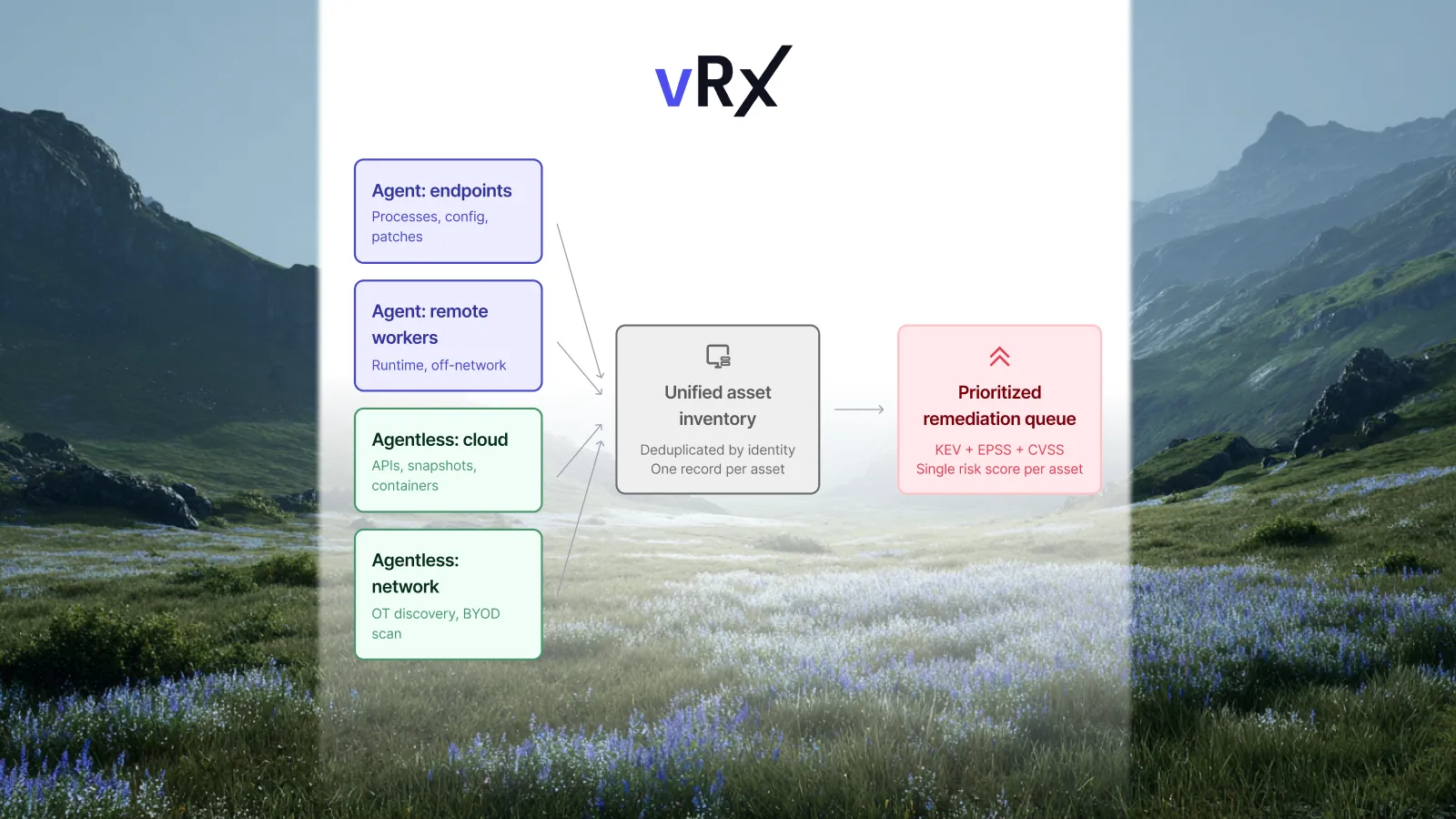
The combination of continuous detection, triage, and fix workflows creates a virtuous cycle of improvement. Continuous discovery feeds prioritization. Prioritization feeds targeted remediation. Remediation feeds reporting that clearly shows the client where progress has been made. This cycle is especially valuable for MSPs managing diverse environments, where consistency is difficult and visibility varies from client to client.
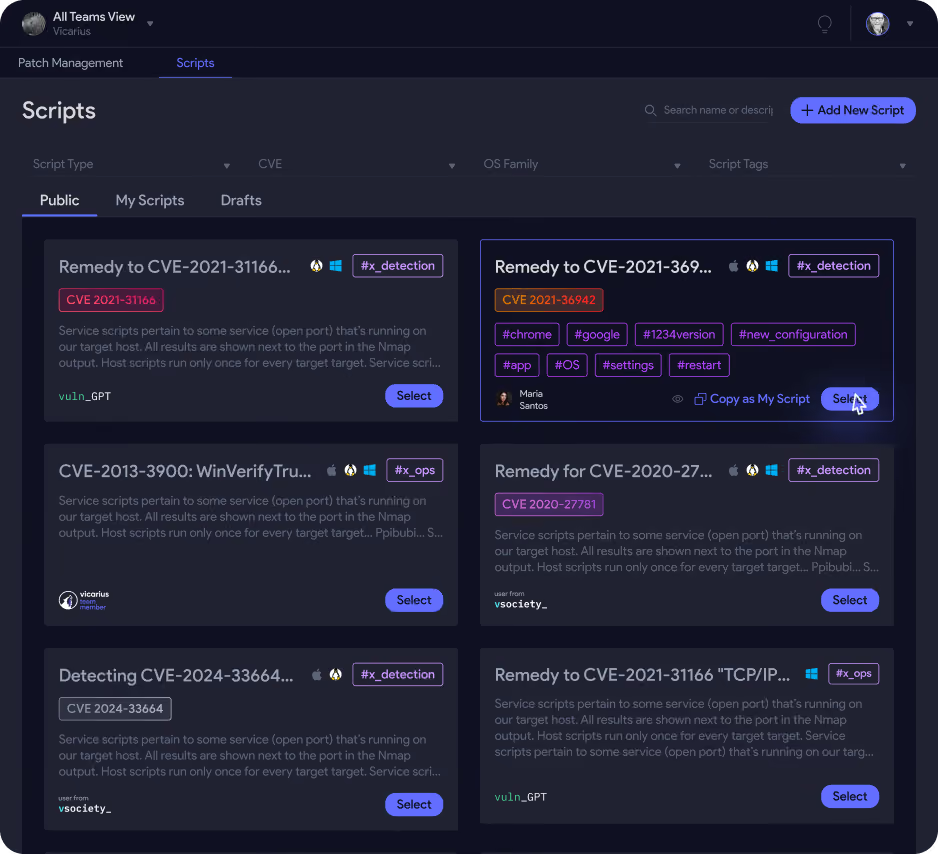
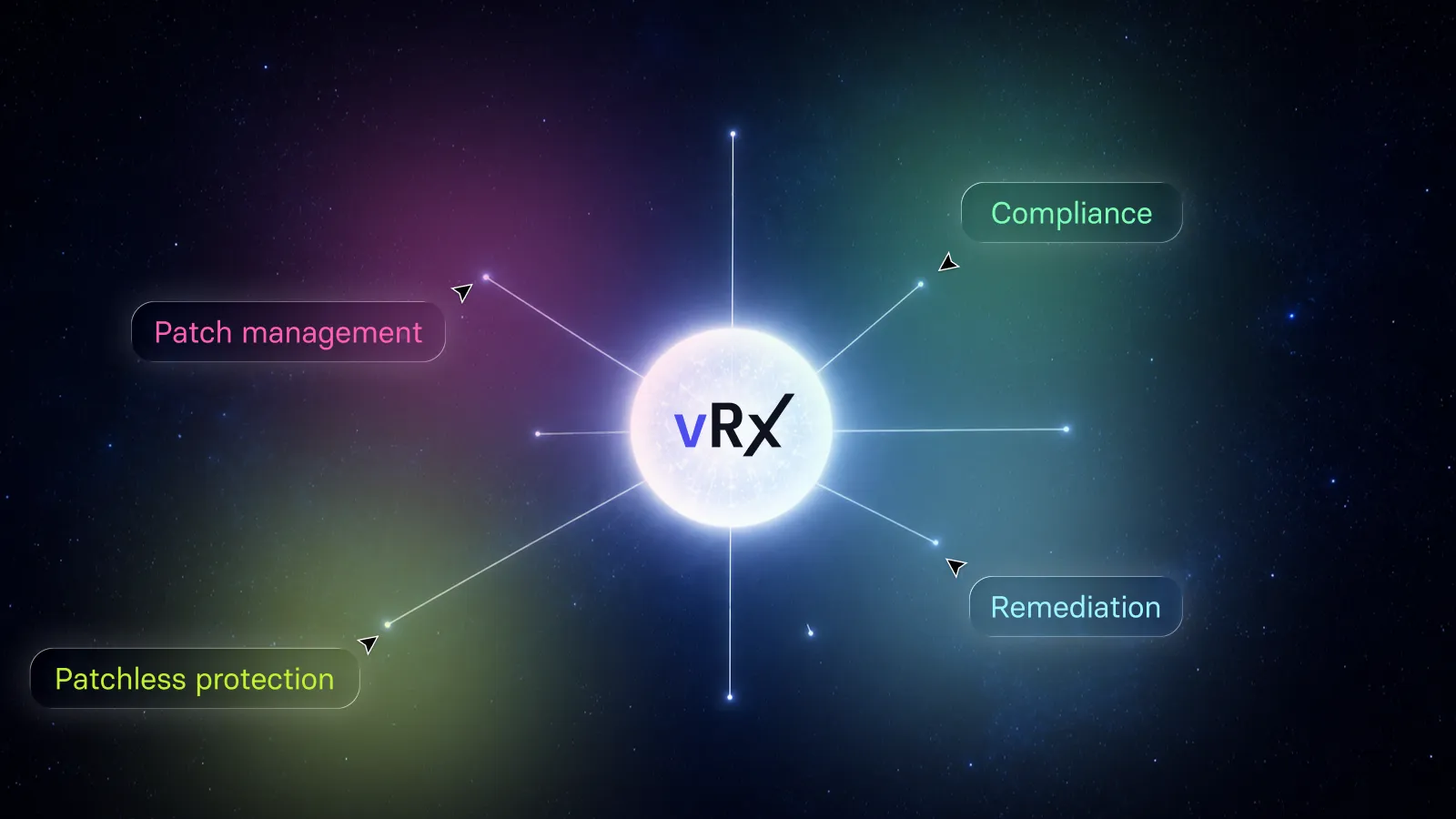
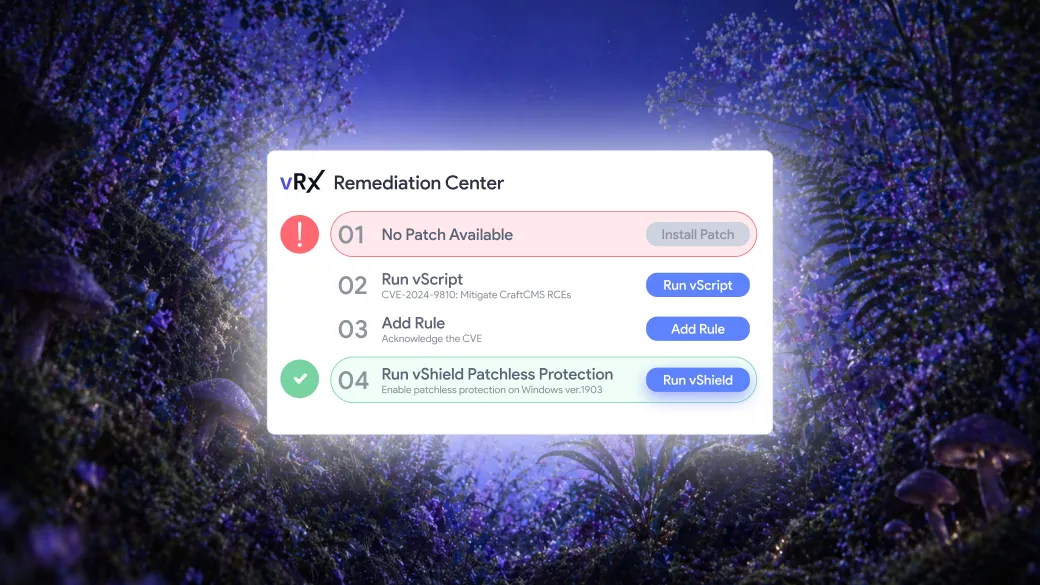
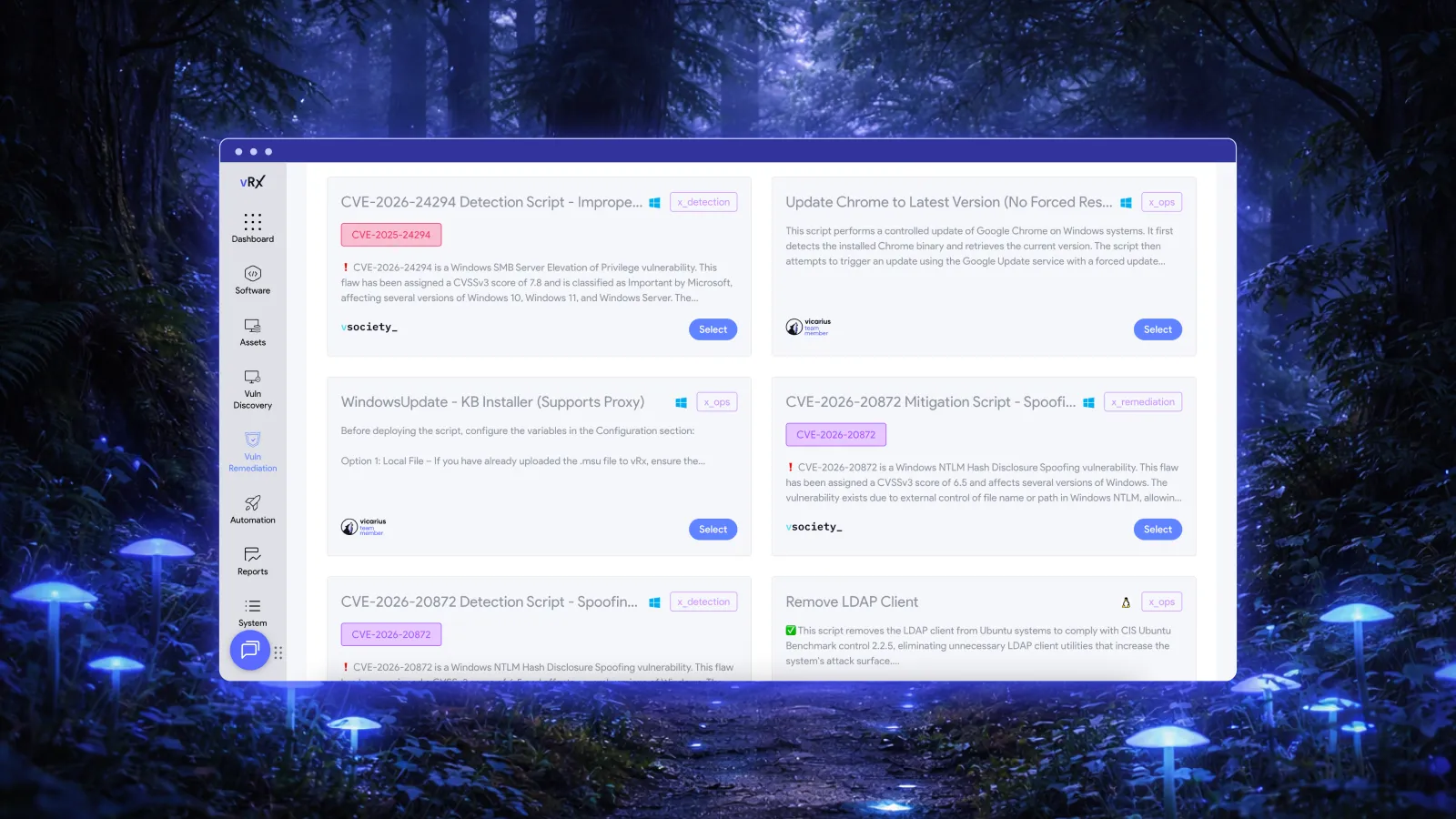
vRx by Vicarius strengthens the anchor layer by enabling MSPs to focus on remediation at scale rather than scattering effort across detection tools. Its design supports automated, targeted fixes that keep workloads manageable while delivering consistent security improvements. This keeps remediation aligned with the broader modular offering rather than becoming an isolated or siloed activity.
Operationalizing security inside the MSP
Integrating a security stack into existing PSA and RMM workflows requires attention to noise and technician load. Security is not effective when it floods teams with alerts they cannot action, or when it disrupts established processes. Successful operationalization relies on mapping the security components directly into the daily flow of ticketing, documentation, escalation, and client communication. This ensures technicians can handle increased security tasks without sacrificing response times or quality.
Key operational practices that strengthen consistency include the following:
- Standardized prioritization rules: Consistent criteria keep technicians focused on exposures that matter most.
- Automated remediation where possible: Reduces manual work and accelerates patch cycles across client environments.
- Shared playbooks and procedures: Ensures technicians follow uniform steps, decreasing variation in service quality.
- Clear escalation boundaries: Prevents workload bottlenecks by defining when and how issues are handed off to senior staff.
- Routine reporting cadences: Provides predictable communication and helps maintain transparent client relationships.
A comparison of operational processes before and after implementing a more integrated and structured security stack is helpful for illustrating the shifts in responsibility and workload:
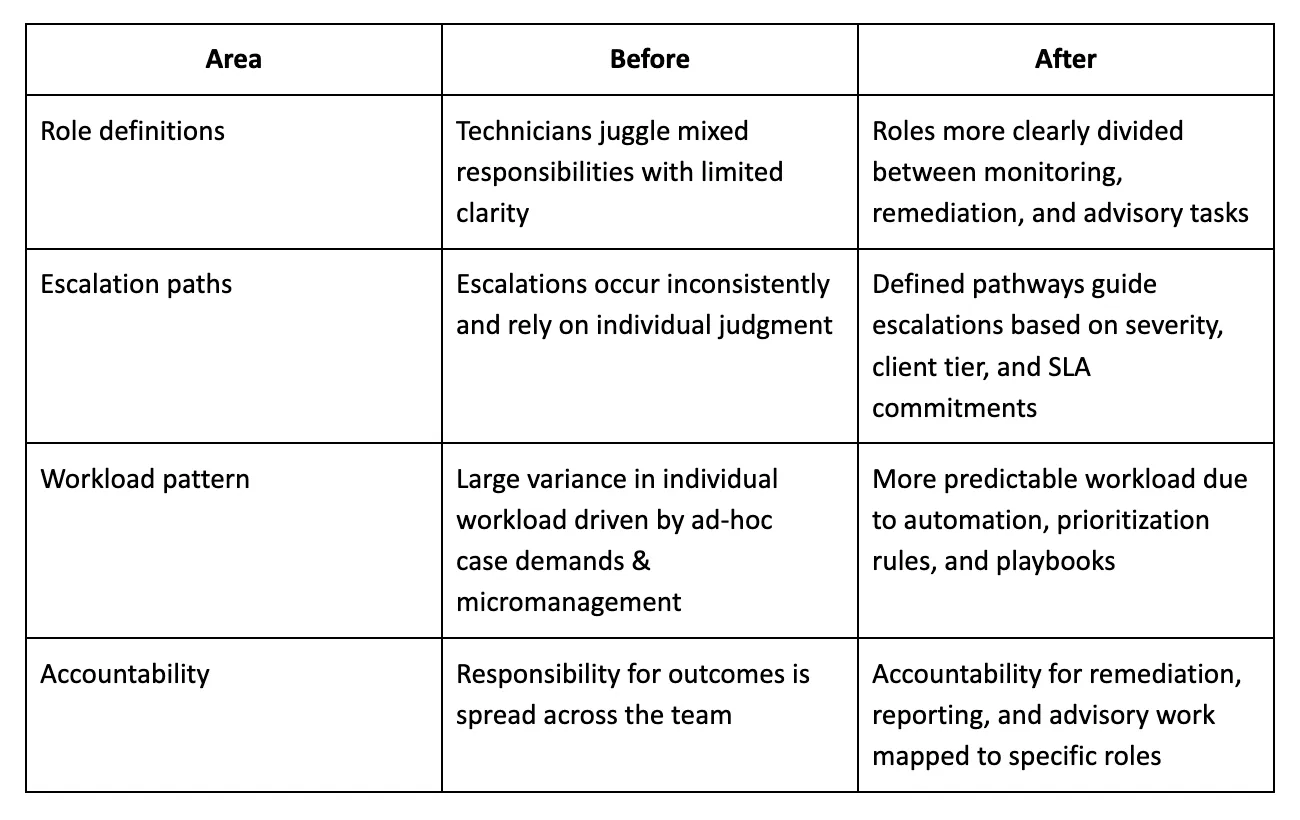
vRx strengthens these operational shifts by reducing manual remediation, prioritizing vulnerabilities with clarity, and helping MSPs maintain consistent remediation velocity. Its automated remediation and intelligent detection intrusion features help to maintain trust while lowering technician burden while supporting repeatable processes that sustainably scale across growing client portfolios. vRx’s automated deployment and intelligent node discovery features combined with its integrated automated vulnerability remediation pipeline truly means that no forgotten attack surface is left uncovered and no server gets left behind.
Proving real value through outcomes
To demonstrate not only progress but ongoing trustworthiness, MSPs must focus on metrics that reflect genuine security improvements rather than activity volume. Remediation velocity, patch success rates, SLA adherence, and reductions in exploitable exposures offer a clearer picture of the security posture than raw alert counts or report frequency. These metrics can be framed in ways that matter to non-technical stakeholders, such as reduced risk of downtime, diminished incident probability, or fewer high-severity tickets over time.
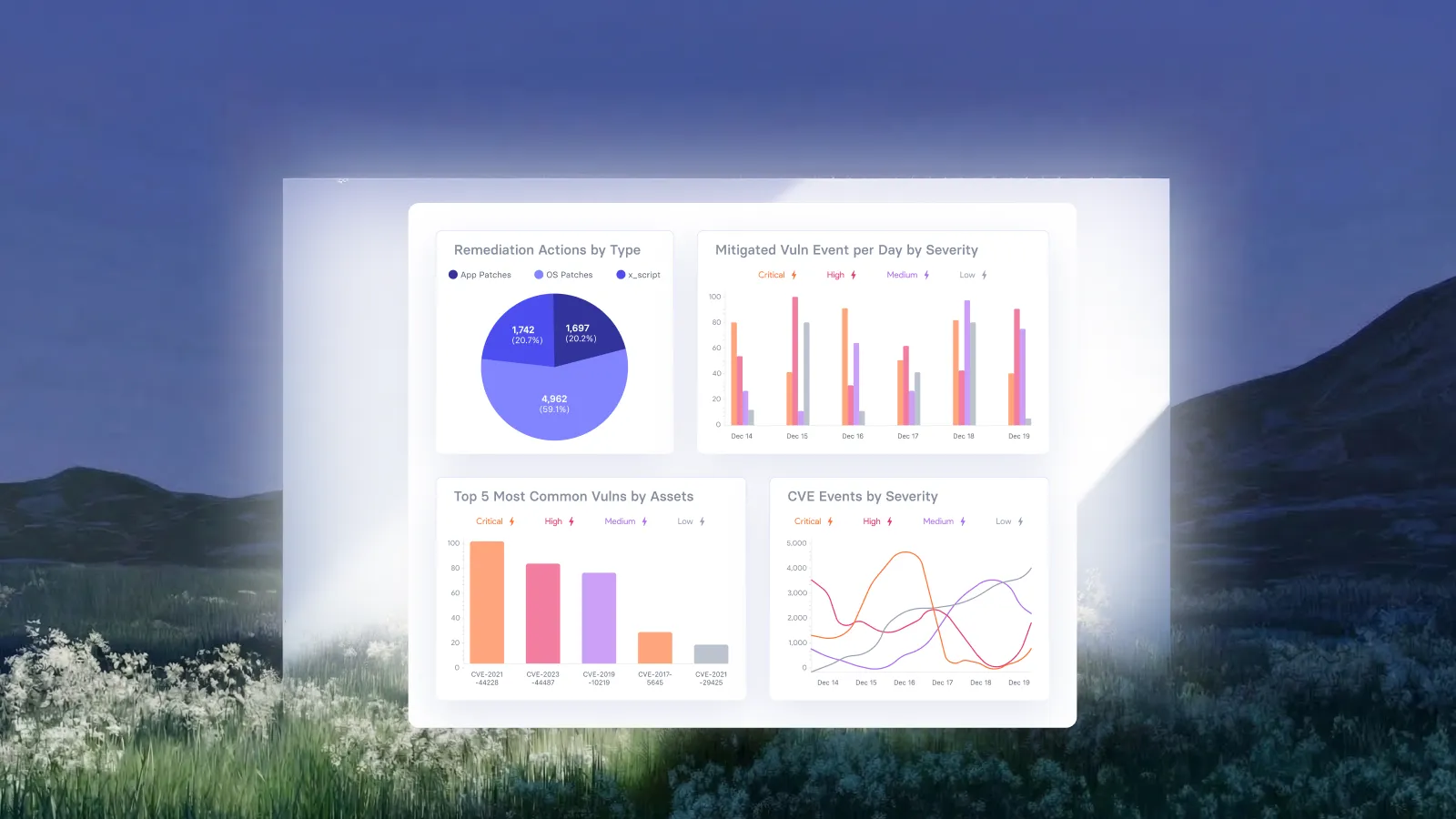
vRx helps MSPs present demonstrable and ongoing improvement by accelerating remediation, improving prioritization accuracy, and providing clear visibility into outcomes. MSPs can show not only that vulnerabilities were found but that they were fixed quickly and consistently across the estate. For providers who want to strengthen their security offering, we recommend exploring how we can support you through scalable remediation. Book a demo session today to get a practical idea of how vRx can fit into your workflow, ease your security burdens, and help you deliver stronger results together.
Related resources:



















.webp)


















%20Signals%20a%20New%20Era%20of%20Supply%20Chain%20Risk.webp)






.webp)





















%20to%20Reduce%20Attack%20Surface.avif)