Vicarius vRx competitors & alternatives
Use the comparisons below to see how Vicarius vRx differs from vulnerability management, patch management, and exposure management platforms including Tenable, Rapid7, Qualys, ManageEngine, and others.








Why organizations consider Vicarius as an alternative

Remediation is part of the platform
vRx is designed around what happens after a vulnerability is discovered. Security and IT teams can prioritize vulnerabilities and move directly into remediation without treating every finding as another ticket that must be passed into a separate process.The goal is to shorten the gap between knowing that an exposure exists and actually removing or reducing that exposure.
More than one way to remediate
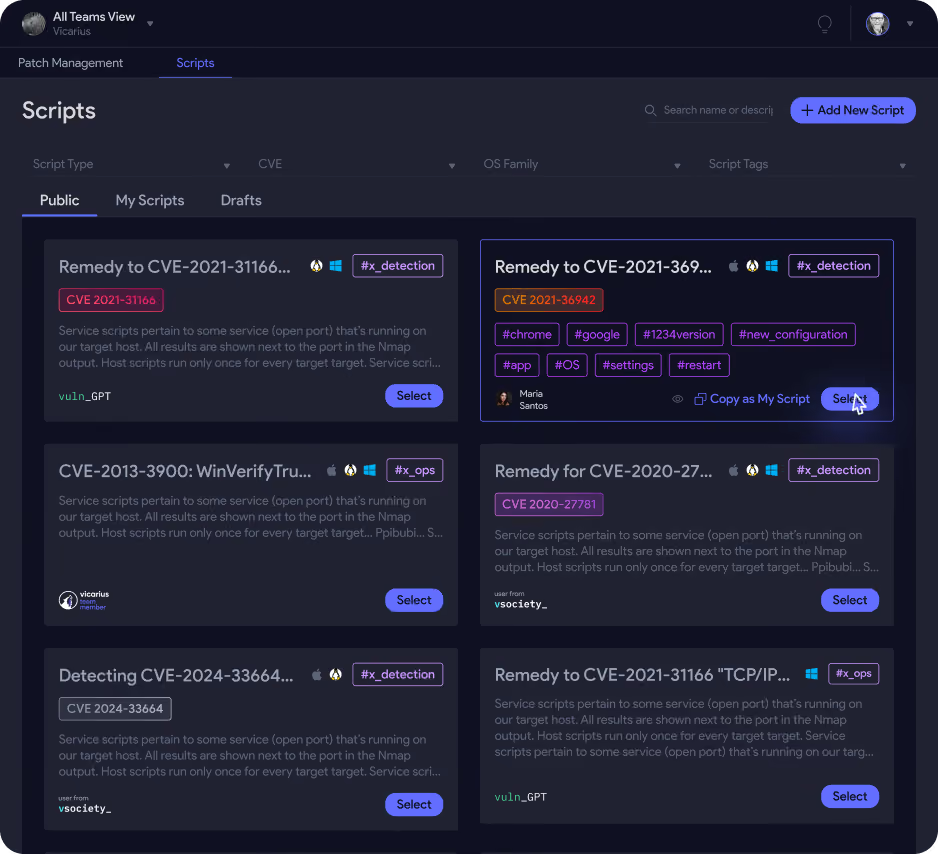
Not every vulnerability can be solved by immediately installing a vendor patch. A patch may not yet exist, the application may be operationally sensitive, or a traditional update may need to wait for a maintenance window.vRx supports multiple remediation paths, including patching, remediation scripts, and patchless protection. This allows teams to choose an appropriate response based on the vulnerability and the affected environment rather than assuming that patching is always the only answer.
Remediation includes verification
vRx does not treat a completed installation alone as proof that a vulnerability has been remediated. For patching, the platform records the expected target version and checks the version detected on the endpoint after installation.When the actual installed version matches the expected version, the remediation is confirmed as successful. This gives teams evidence of the remediation outcome rather than relying only on the execution status of the patching action.
One workflow from discovery to remediation
The intended vRx workflow is: Discover → prioritize → remediate → verify. This connects vulnerability identification with the action required to reduce the exposure and the verification required to confirm the intended result.
Everything you need to know

What are the main alternatives to Vicarius vRx?
Organizations evaluating Vicarius vRx may also consider platforms such as Tenable, Rapid7, Qualys, ManageEngine, Automox, BigFix, Microsoft Defender, PDQ, NinjaOne, and other vulnerability or patch management platforms. The best fit depends on whether the organization's primary requirement is vulnerability discovery, prioritization, patch management, exposure management, or end-to-end vulnerability remediation.
How is Vicarius different from traditional vulnerability management tools?
Traditional vulnerability management has historically focused heavily on discovering, assessing, and prioritizing vulnerabilities. Vicarius takes a remediation-first approach that connects discovery and prioritization with the actions required to reduce the exposure, including patching, scripting, and patchless protection, followed by verification of the remediation outcome.
Does Vicarius only remediate vulnerabilities through patching?
No. Patching is one remediation method, but not every vulnerability can be patched immediately. vRx also supports remediation scripts and patchless protection, allowing organizations to reduce exposure when a patch does not exist or cannot yet be deployed.
How does Vicarius verify that a patch was successfully installed?
After patch deployment, vRx checks the software version detected on the endpoint and compares it with the expected target version. When the actual installed version matches the expected version, the remediation is confirmed as successful.