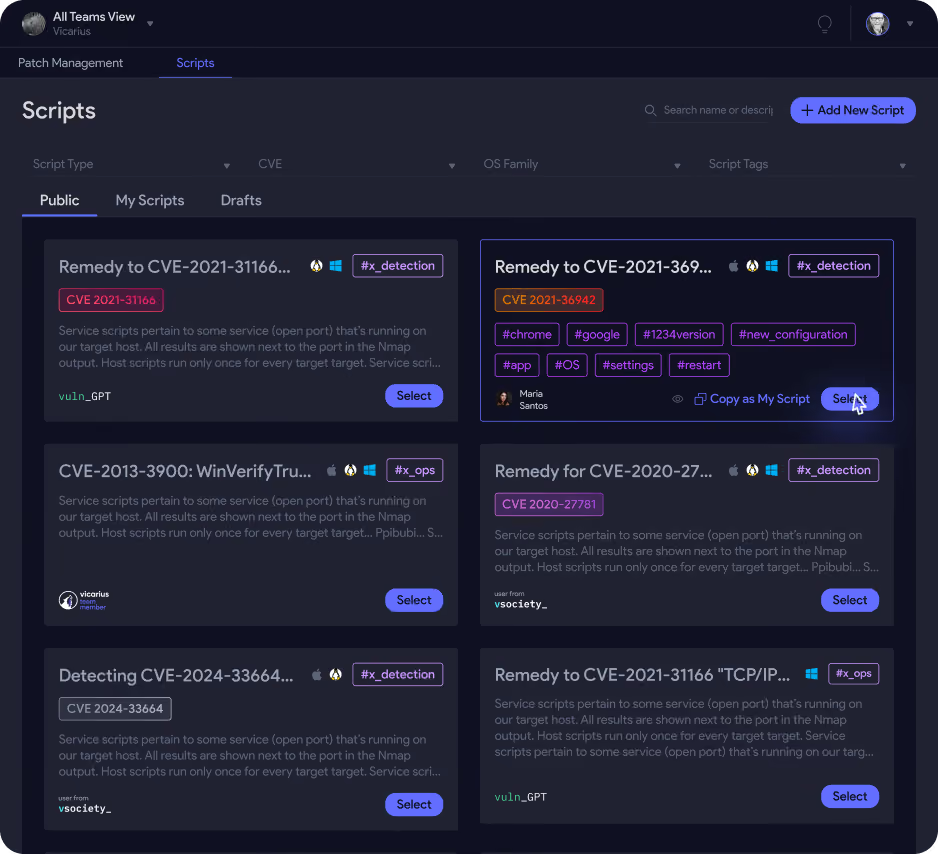
AI grouping, built your way
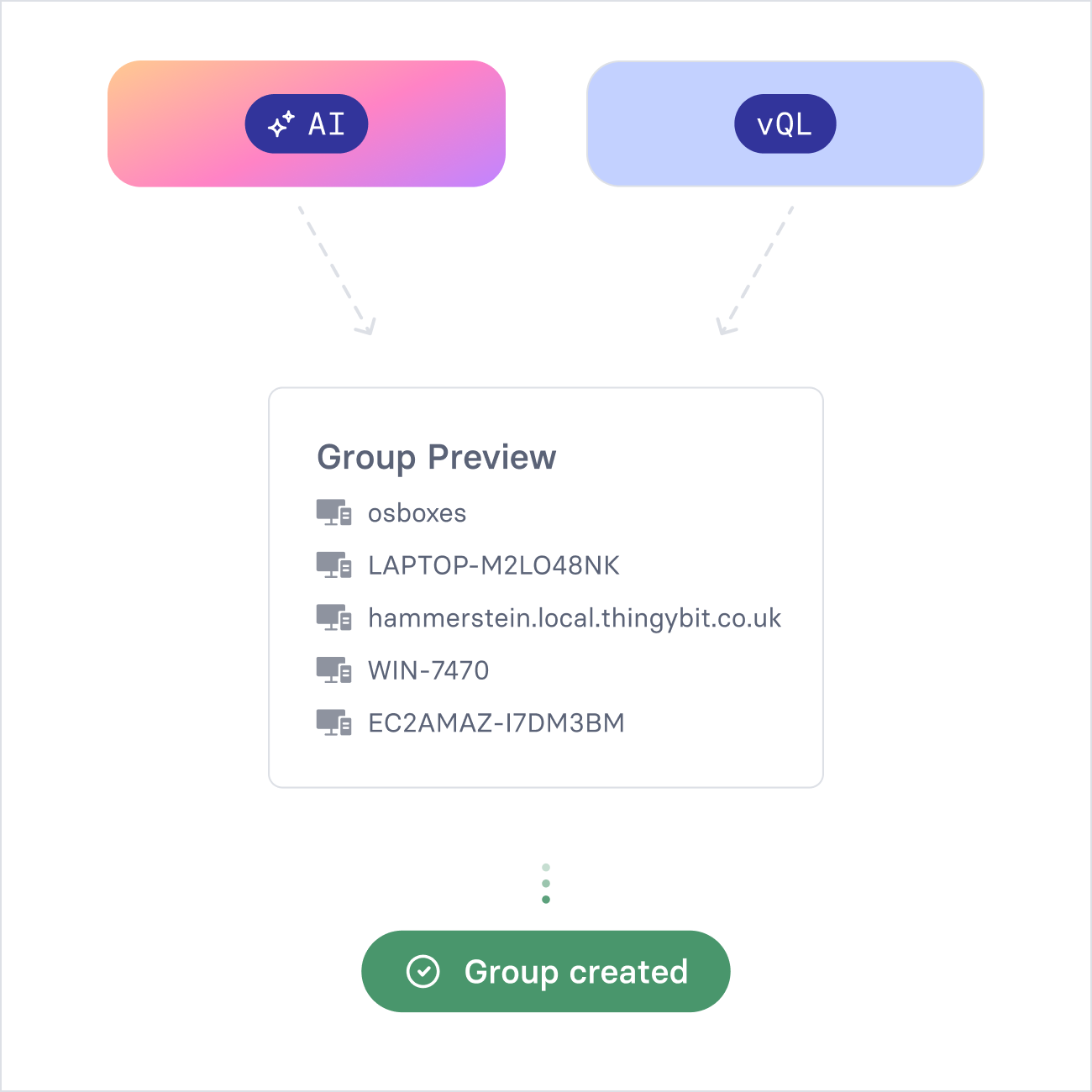
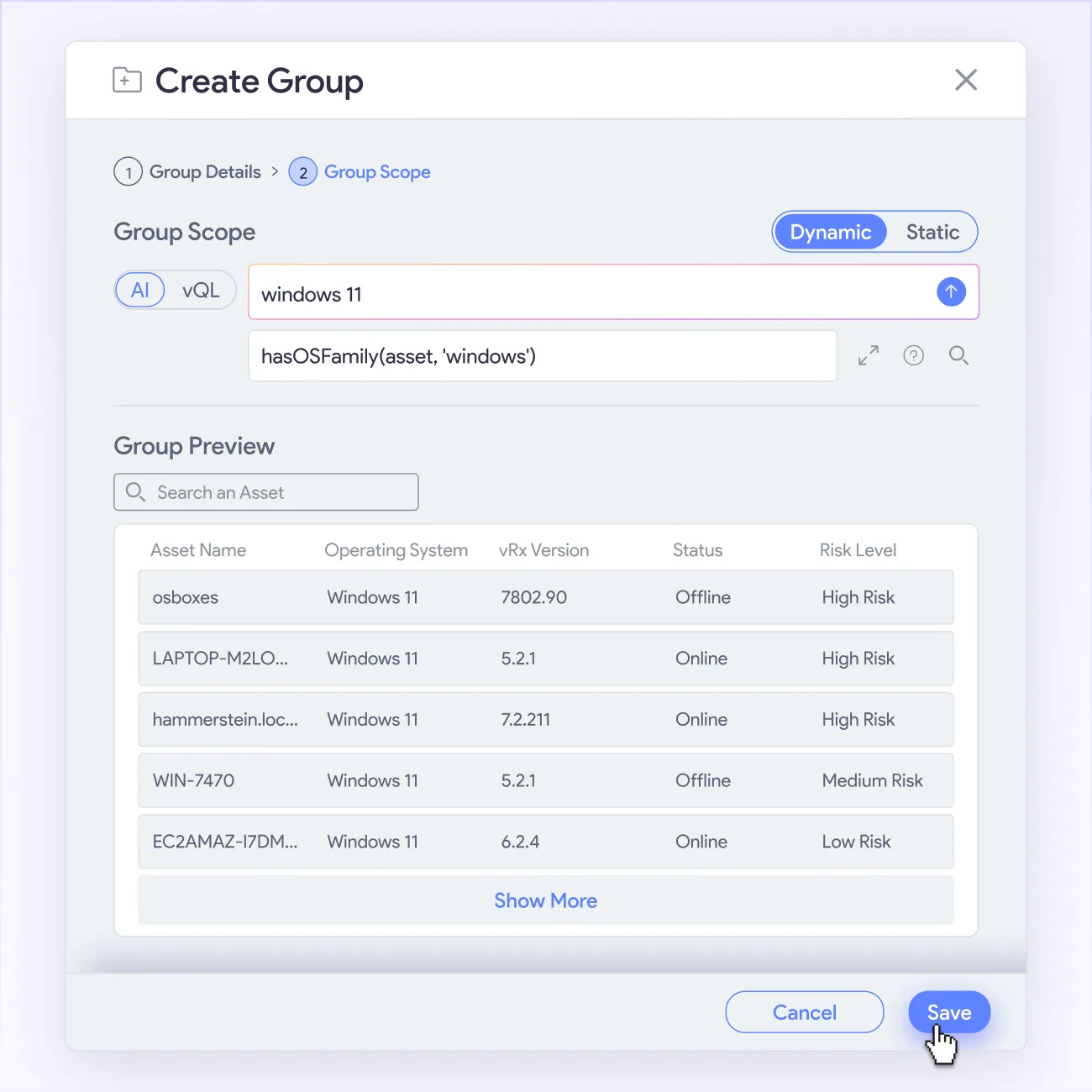
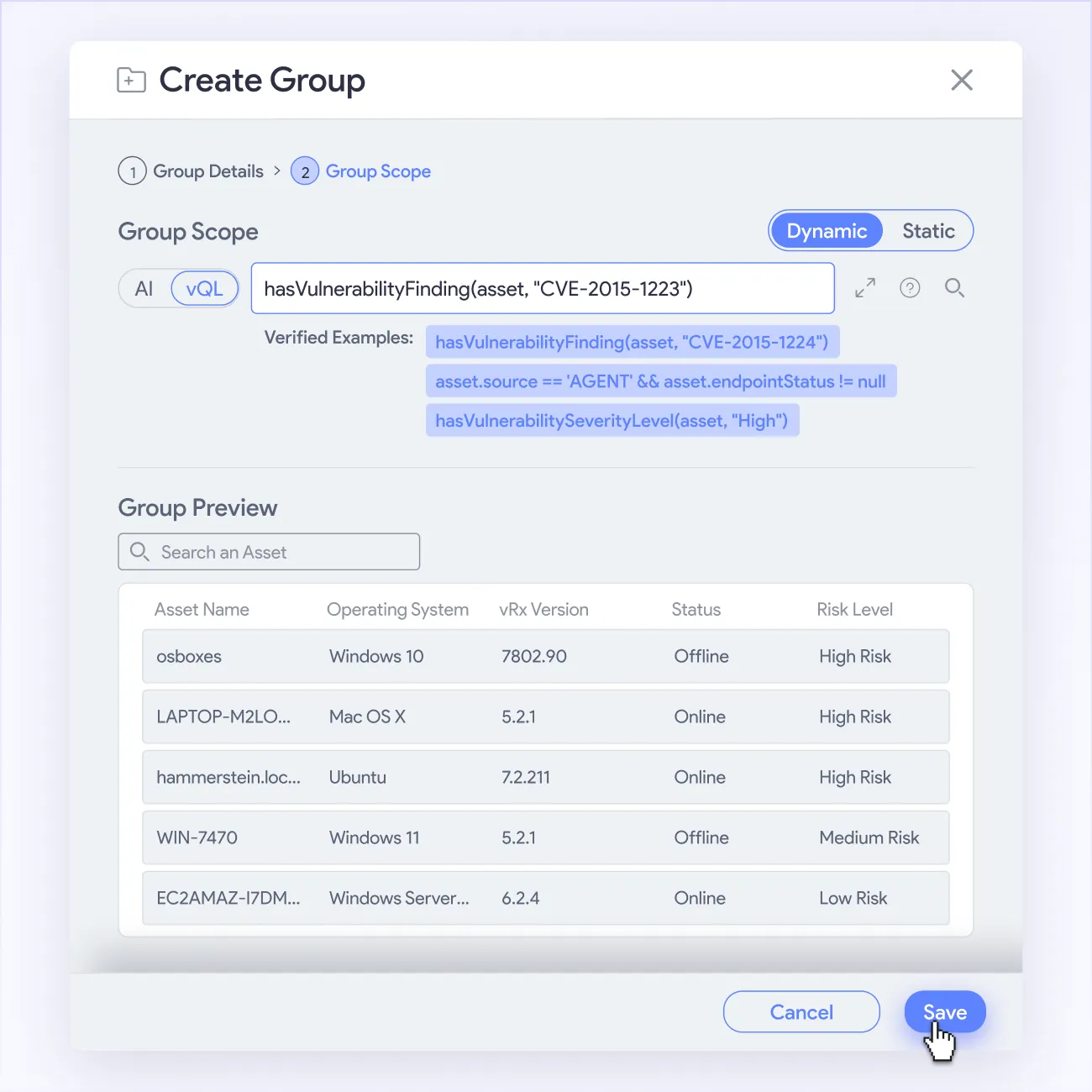
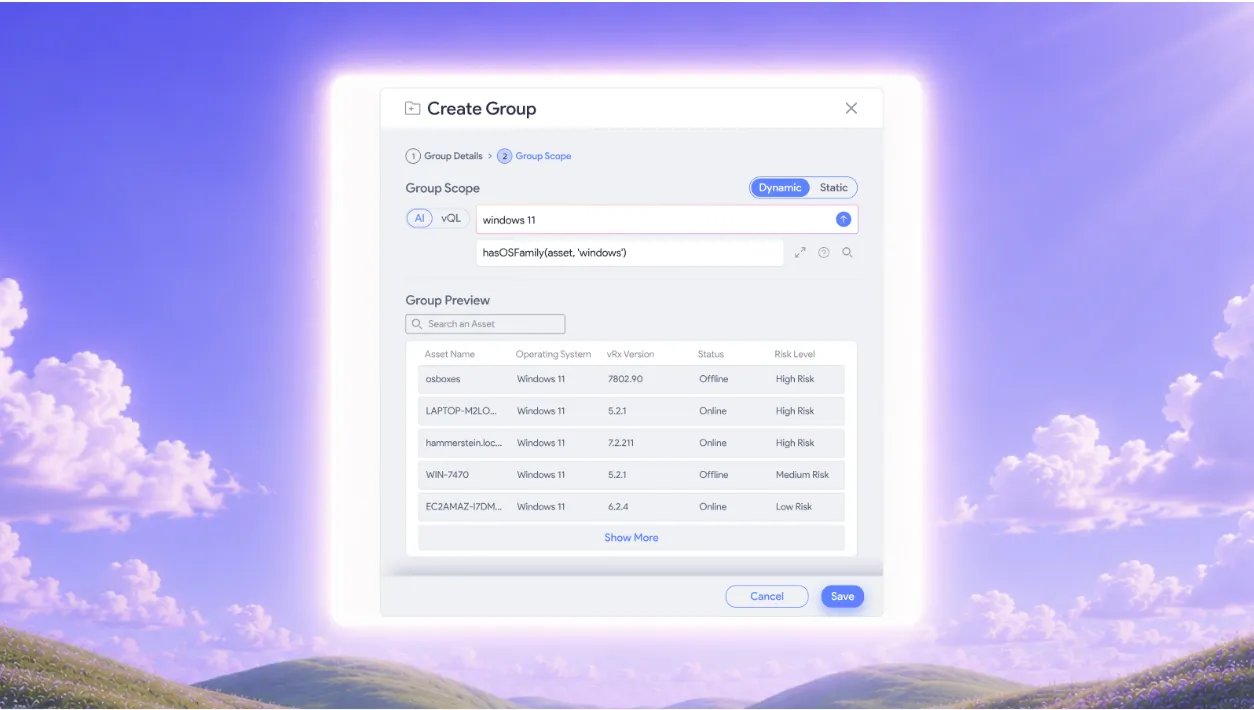
Natural language and vQL let you define asset and software groups the way you think about them. vRx's AI interprets your intent, builds the group, and keeps it current as your environment evolves.

new vulnerabilities per day
of attacks start with an asset you forgot
from months to hours


































































.png)














Smart groups that work while you don't
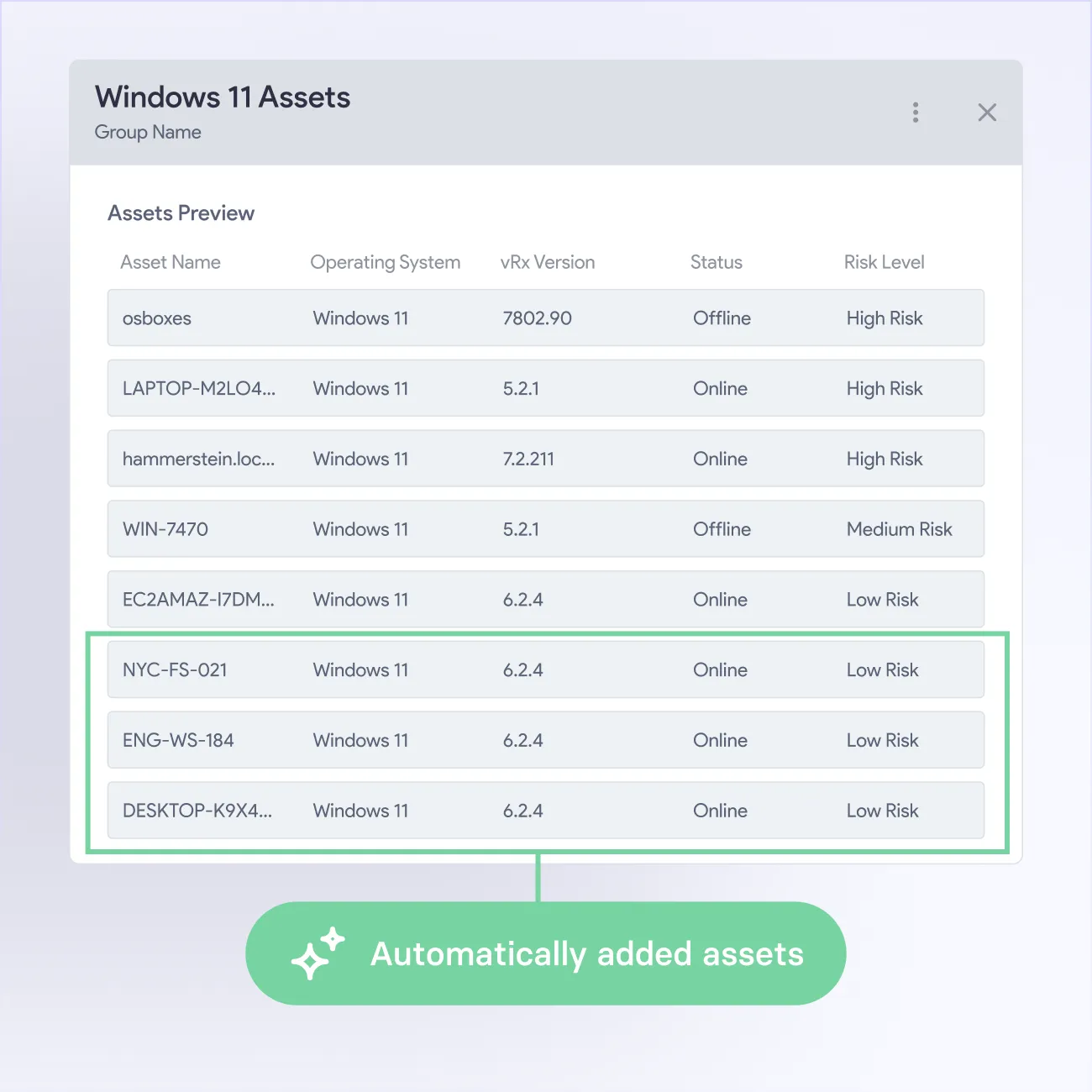
Your environment never stops changing. Assets come online, software gets updated, configurations shift. AI-driven groups track every change automatically, so your policies always hit the right targets and nothing falls through the cracks between manual updates.


Stop chasing your own environment

Remediation reaches every target, every time

No analyst tax on routine maintenance

New assets get covered before anyone notices

Your software exposure is always current

Speak the question. Get the group


Built for how you work
Define asset and software groups in plain language or precise query language. vRx handles the rest, keeping every group current as your environment changes, so your policies always run against the right targets.








What Our Customers Say About Us
See why enterprises trust our approach to AppSec to secure their business-critical applications
All in one platform



From urgency to strategy

EL AL secures global Patch Compliance


Complete Vulnerability Remediation Platform



Excelente capacidad de parcheo, un panel útil y soporte excepcional

Hervorragende Patch-Fähigkeiten, ein hilfreiches Dashboard und exzellenter Support
Excellentes capacités de mise à jour, tableau de bord pratique et support exceptionnel
Valuable resources saved
Third-party software patching is the most valuable feature.

Single source of truth, capable of handling any application in our fleet
60% faster remediation, many hours saved
Great patching capabilities, helpful dashboard, and excellent support
My favorite feature is Patchless Protection


Unified vulnerability discovery, prioritization, and remediation

Patchless Protection is an incredible technology!
Merge Security & IT to Remediate Threats

Everything you need to know
What is the difference between a dynamic and a static asset group in vRx?
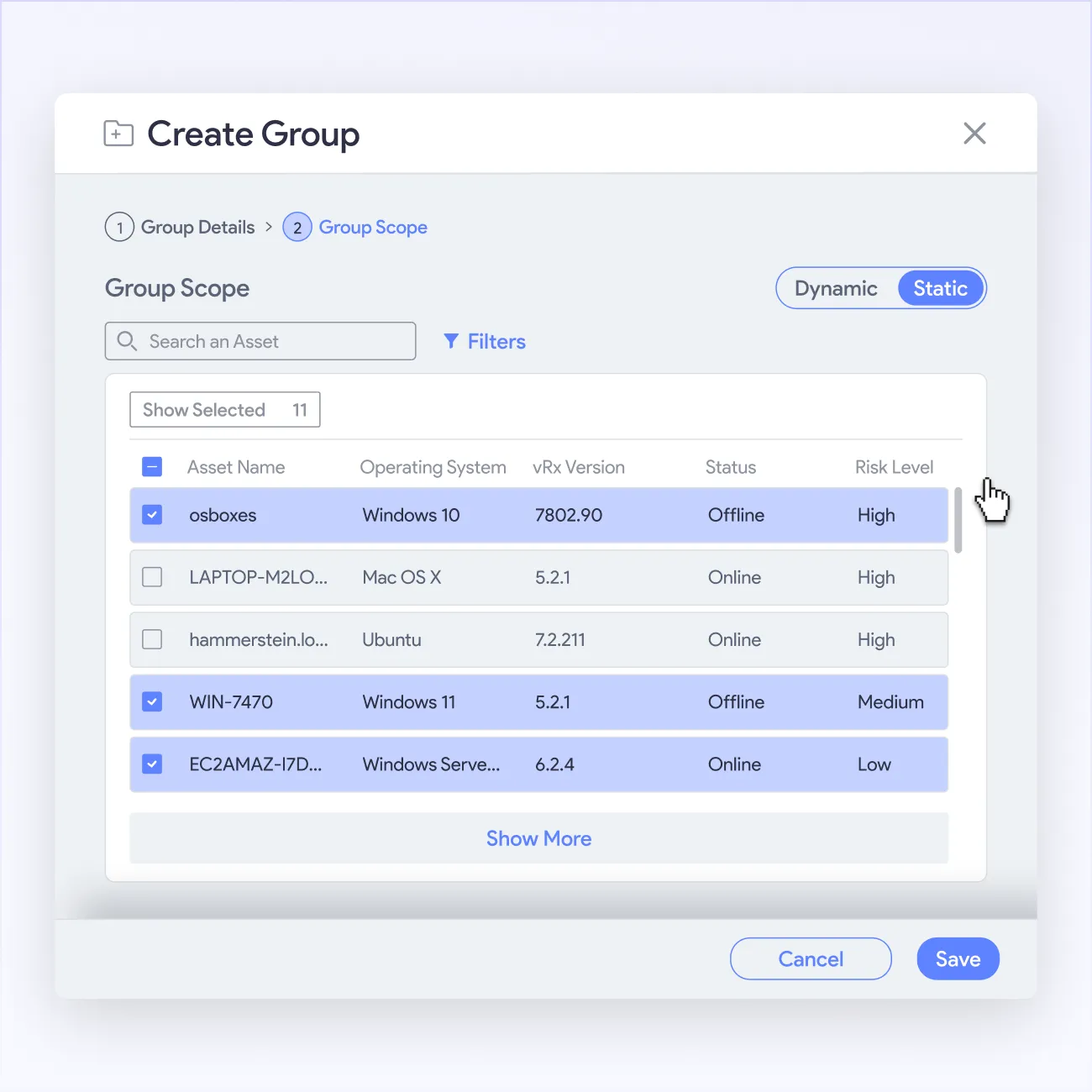
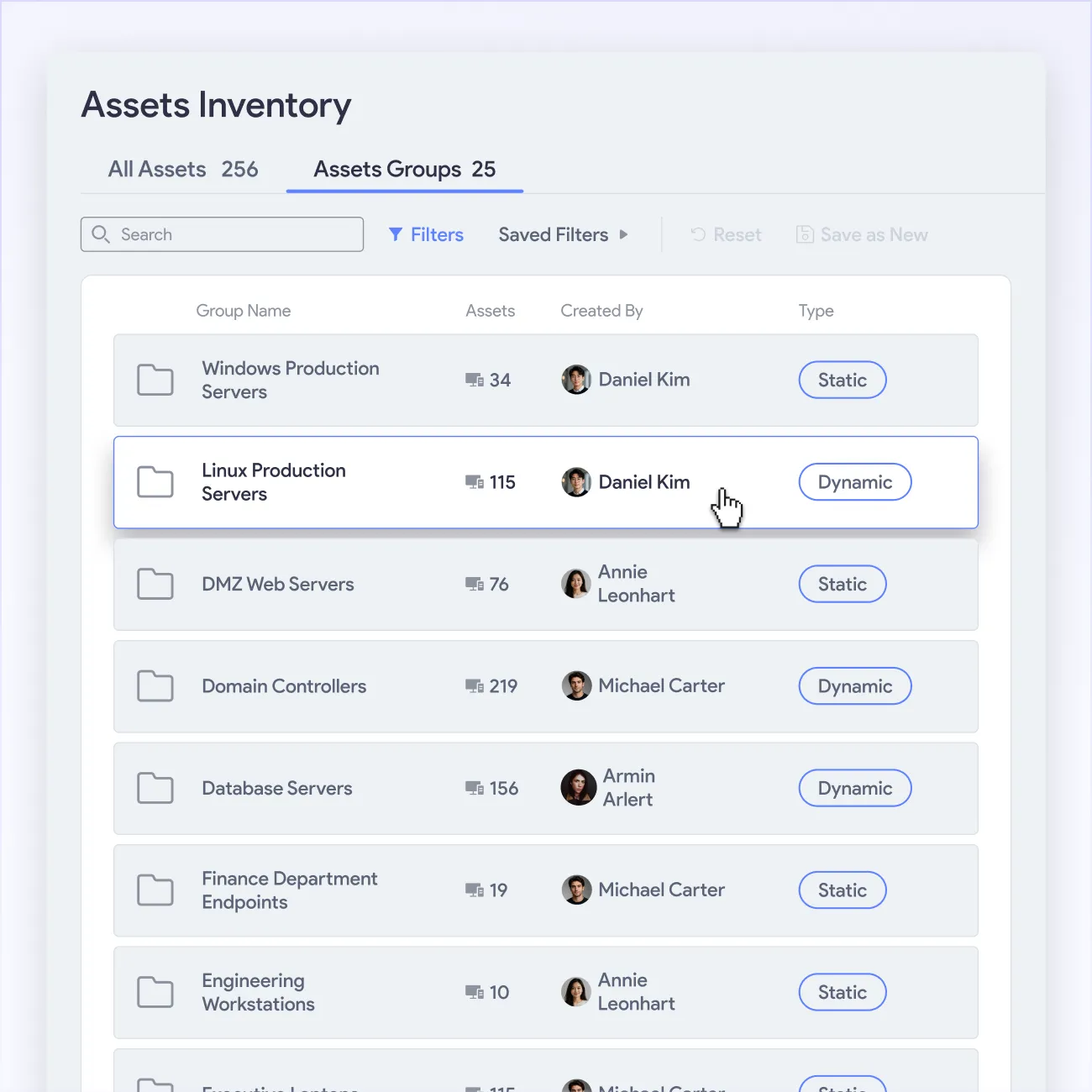
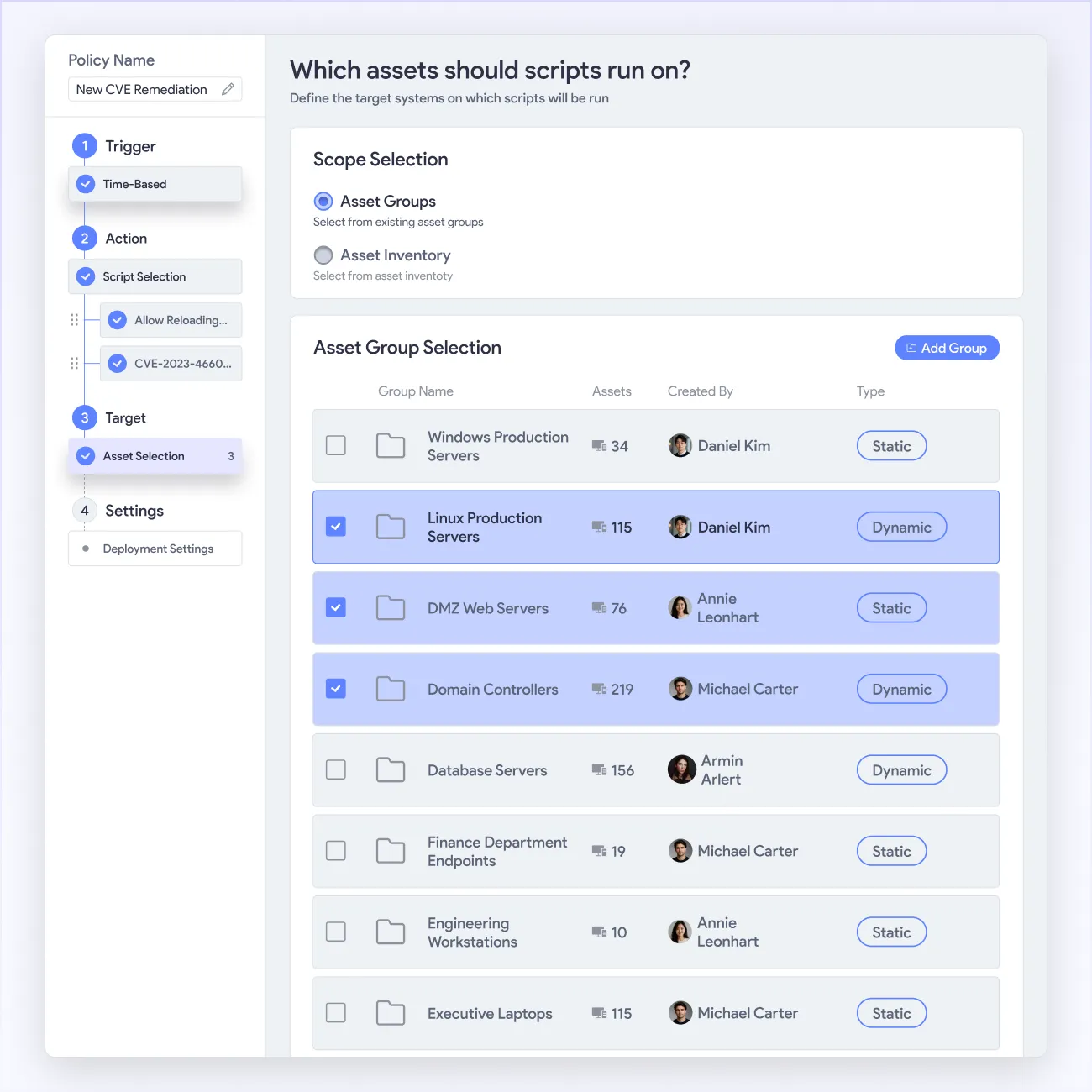
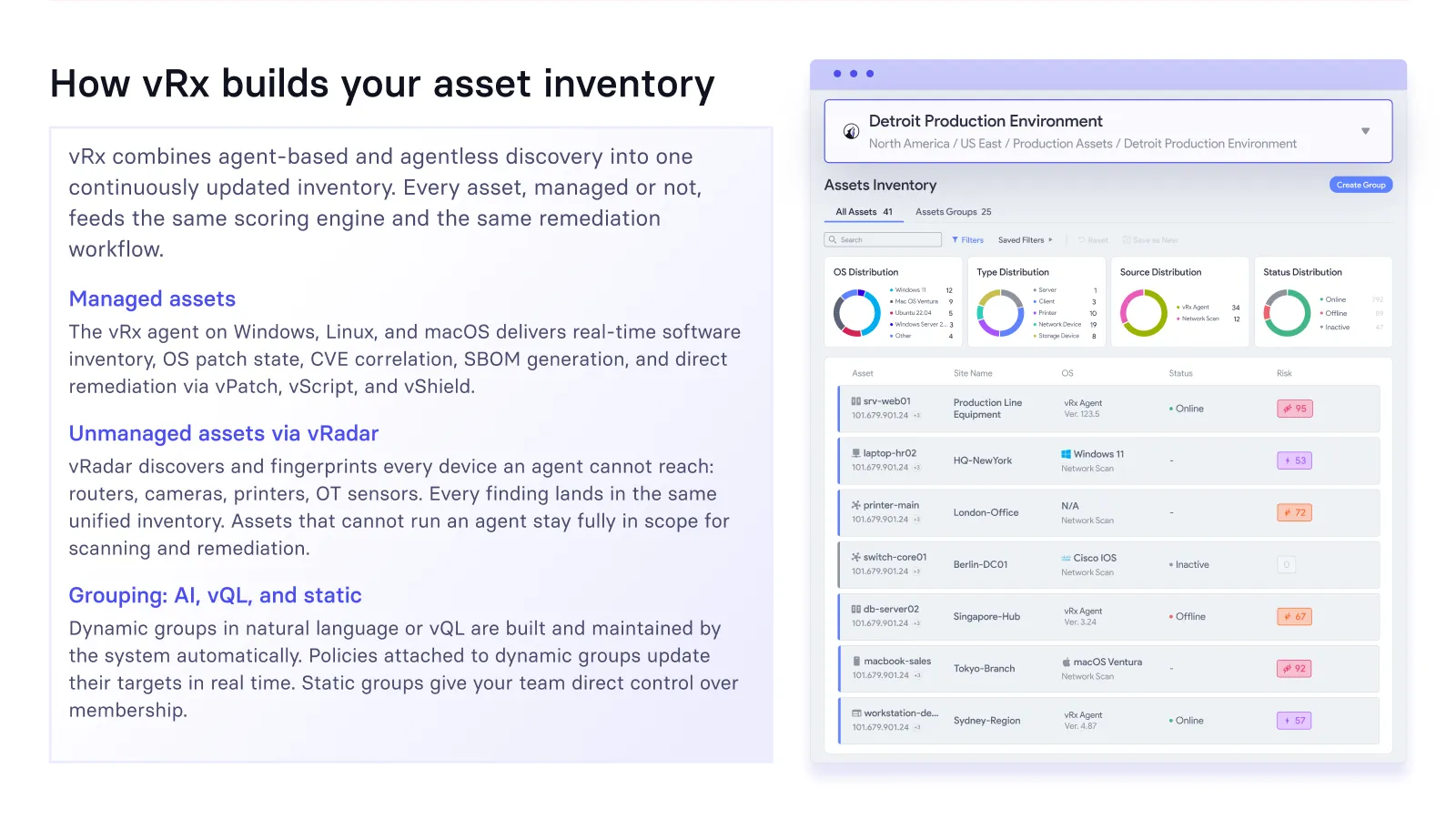
A dynamic group updates automatically based on a query you define, either in plain language or vQL. Any asset that matches the criteria gets added or removed as your environment changes. A static group is a manually curated list that stays fixed until you change it yourself.
How does AI-powered natural language grouping work in vRx?
You describe the assets or software you want in plain language, such as "all Windows servers with critical findings." vRx translates that description into a vQL expression behind the scenes and builds the group automatically, no query syntax required.
Do dynamic groups update in real time?
Yes. vRx continuously evaluates your group criteria against the current asset inventory. When a new asset is discovered or an existing one changes, it is immediately evaluated against all dynamic groups and added to any it matches.
Can I use dynamic groups for software as well as assets?
Yes. Dynamic groups work across both asset and software inventory. You can define groups by software version, vendor, installation status, or any combination of criteria, and vRx keeps those groups current as software changes across your environment.
When should I use a static group instead of a dynamic one?
Static groups are best when you need a precise, controlled scope that should not change automatically, such as a one-time policy run, a specific audit scope, or a small set of assets that require exact manual selection.
What is vQL and do I need to learn it to use asset groups?
vQL is Vicarius Query Language, a domain-specific language for writing precise group membership criteria. You do not need to use it. Natural language input handles most use cases. vQL is available when you need finer control than plain language allows.
What happens to a dynamic group when an asset no longer matches the criteria?
It is removed from the group automatically. Dynamic group membership reflects the current state of your environment at all times, so assets that no longer match the defined criteria are dropped without any manual action required.