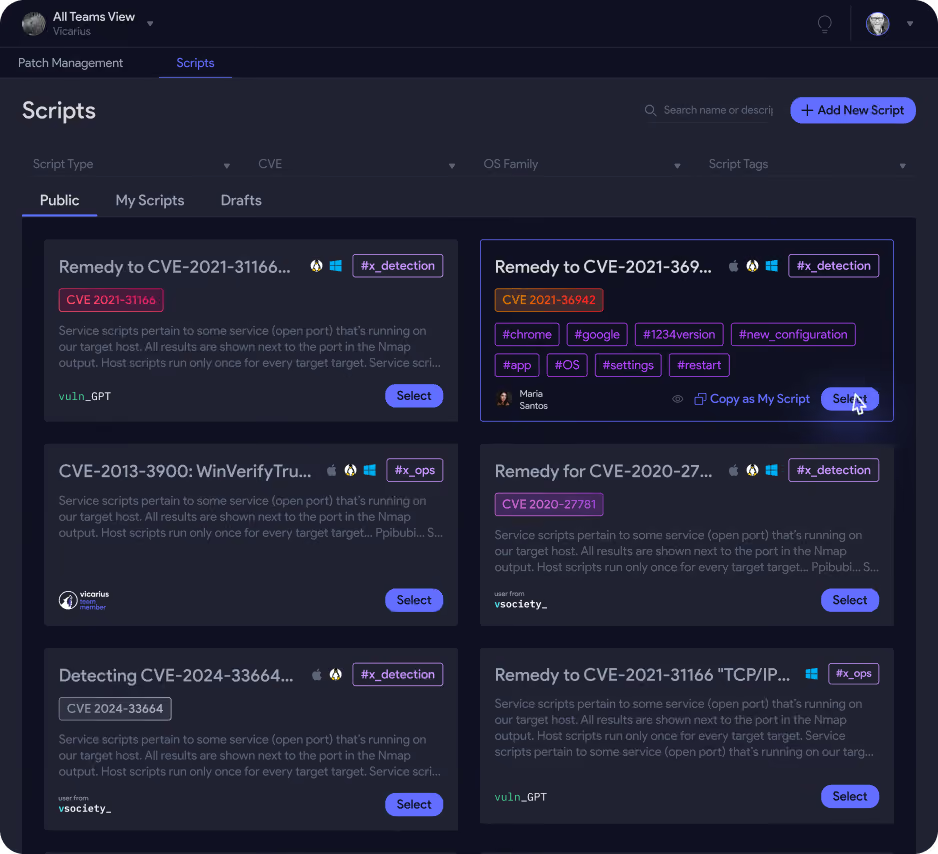
Audit-ready, every day
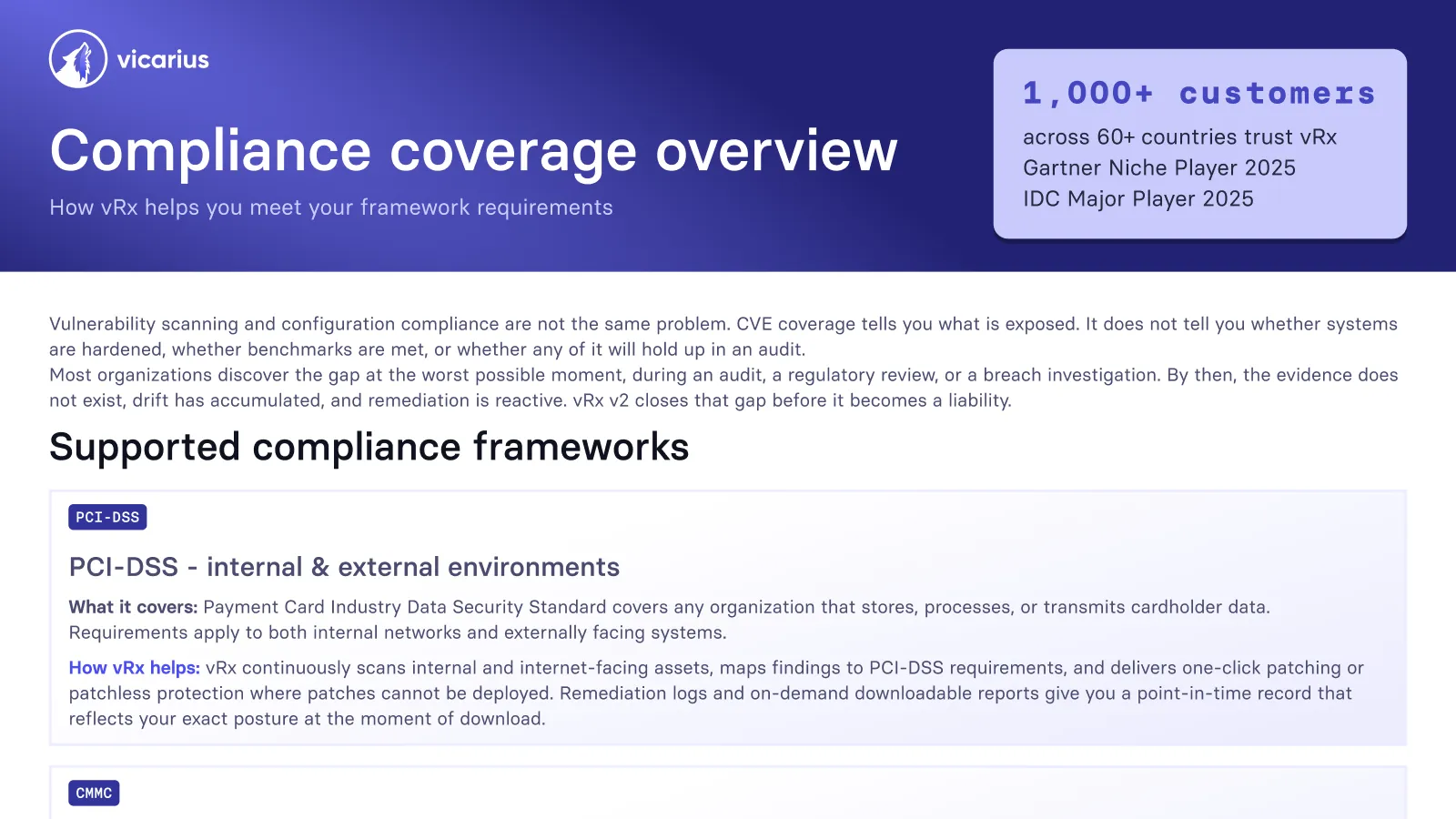
GRC officers spend weeks chasing remediation evidence before every audit. vRx tracks vulnerability fixes continuously against CIS, HIPAA, PCI DSS, CMMC, Cyber Essentials, and more so the evidence is already there when auditors arrive.

reduction in audit prep
maximum HIPAA penalty per violation category, per year
audit-ready remediation proof from day one





















































.png)










Challenges

Audit prep eats your calendar

Findings without proof of fix

Posture reporting is always out of date

Compliance frameworks multiply, tools don't
Benefits & capabilities


Evidence on demand
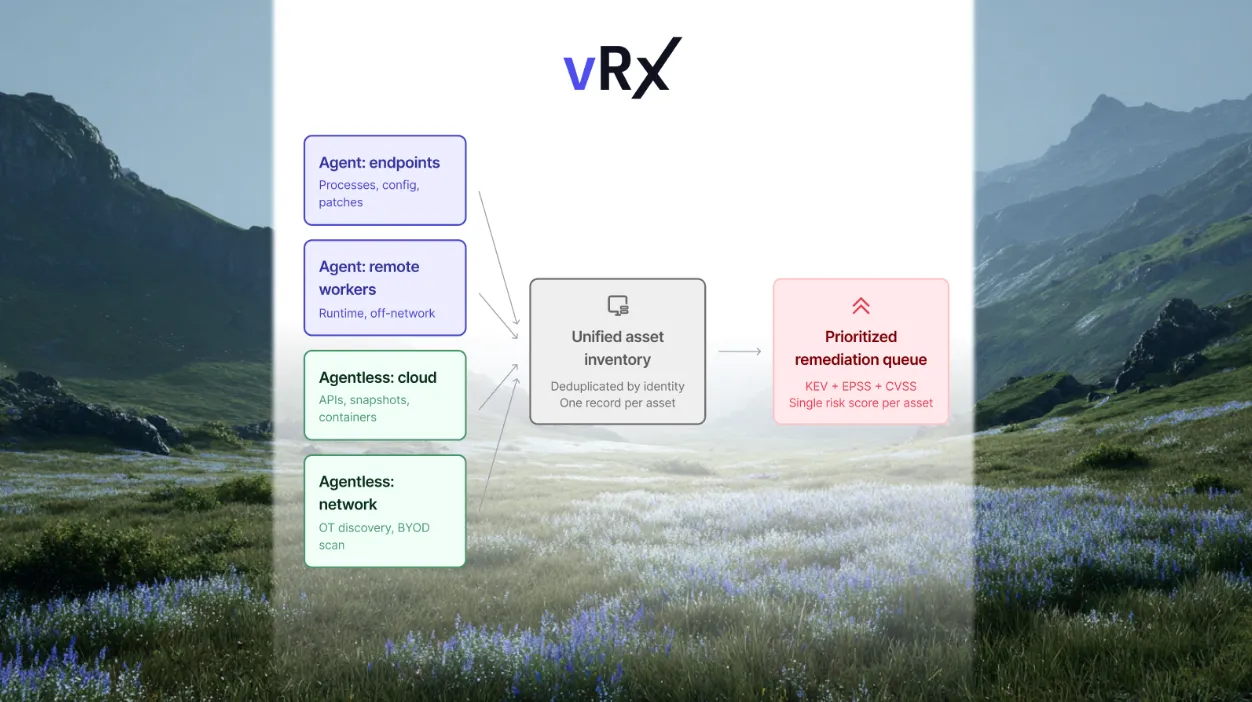
vRx logs every remediation across six data points: CVE reference, asset ID, operator, method, timestamp, and before/after state. All of it captured automatically, against every framework in scope.
.svg)
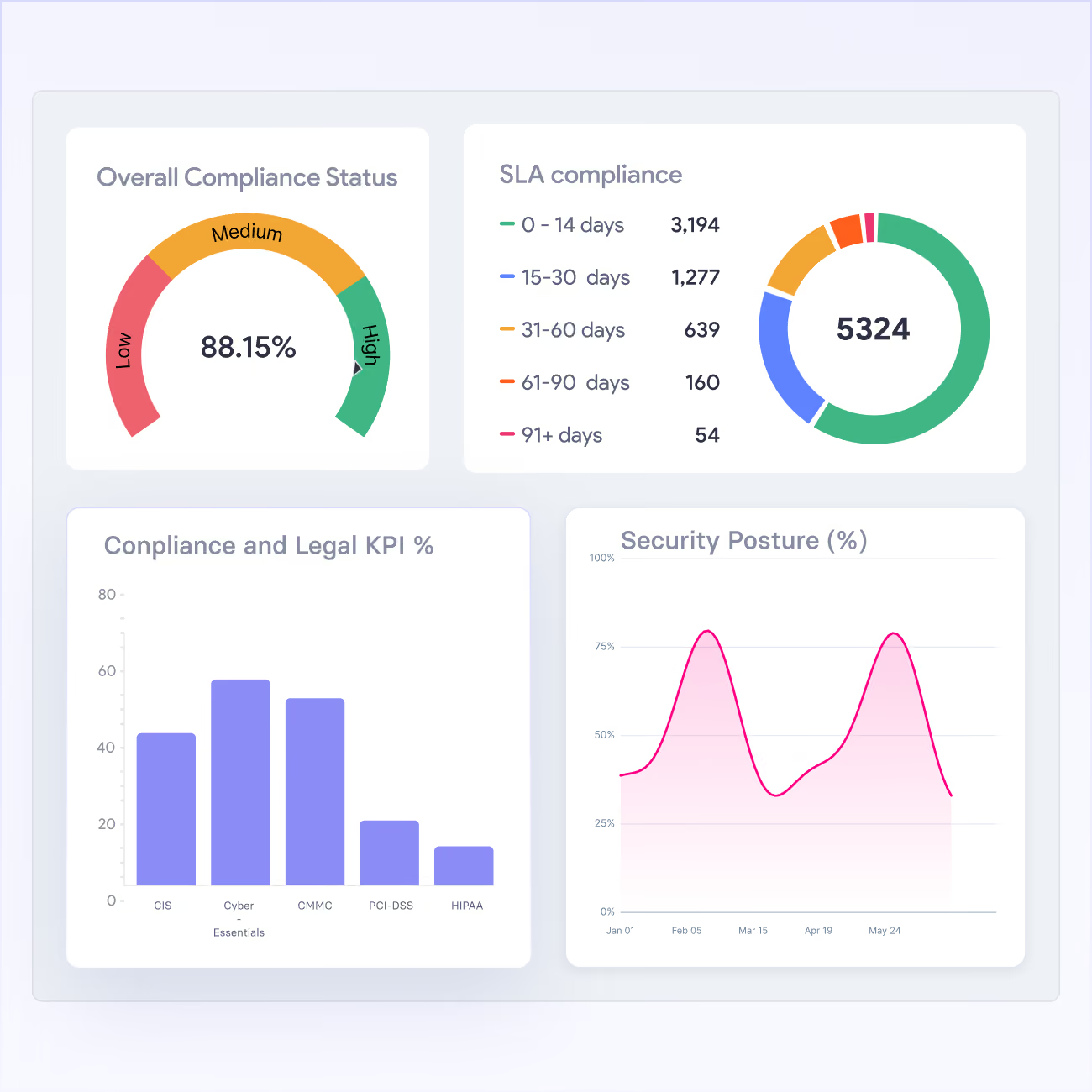
Posture, not snapshots
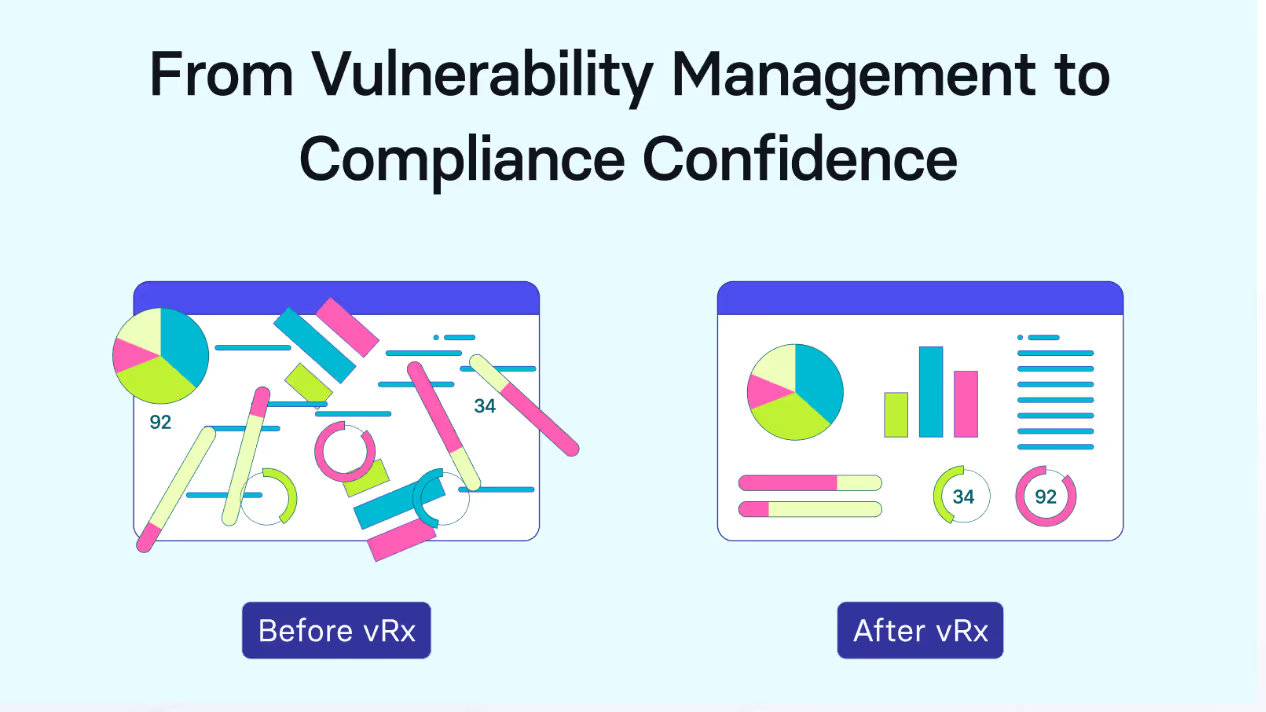
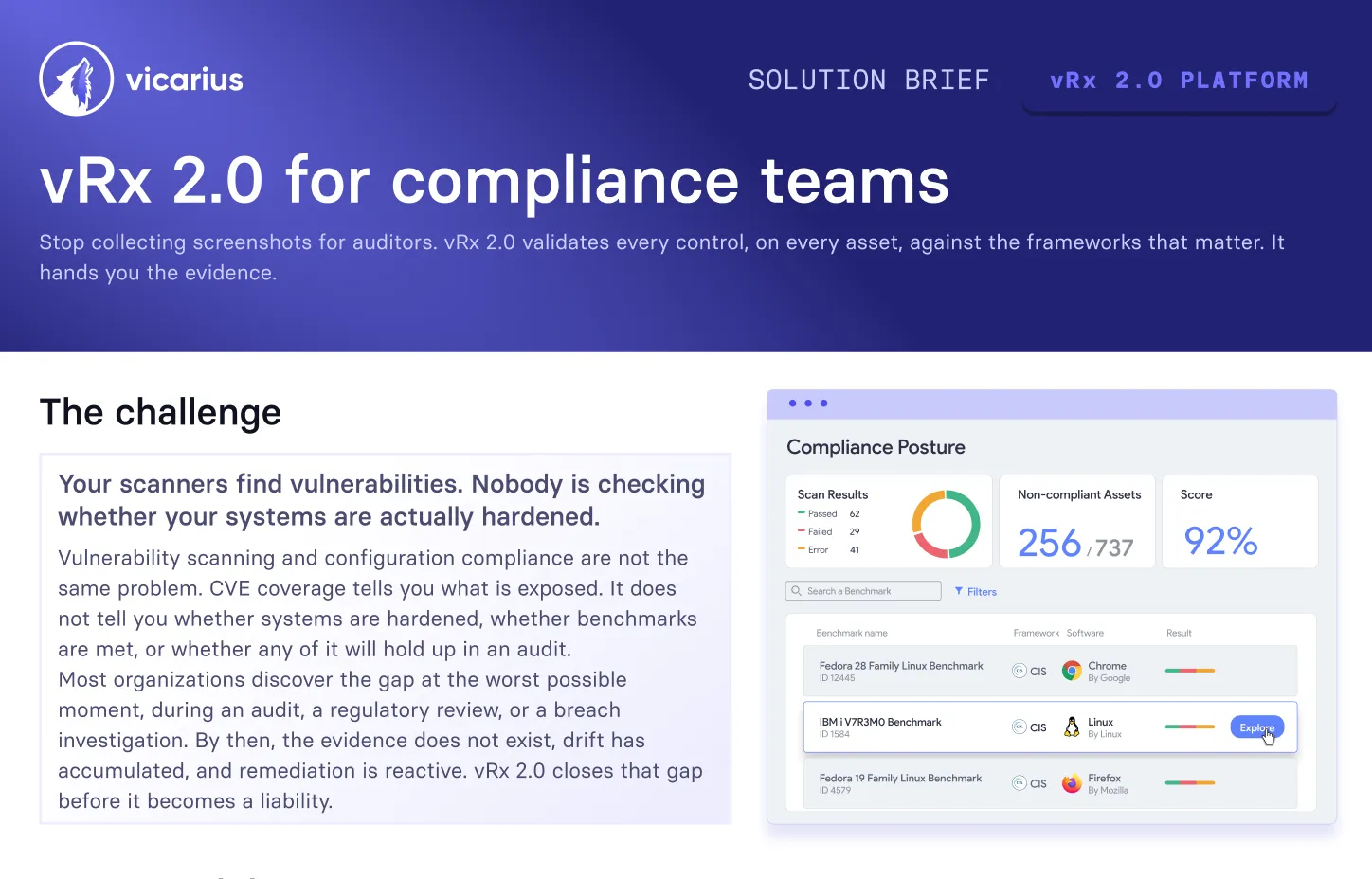
vRx tracks your compliance posture against CIS Benchmarks, HIPAA, PCI DSS, CMMC, and Cyber Essentials continuously. Not in intervals. Right now.
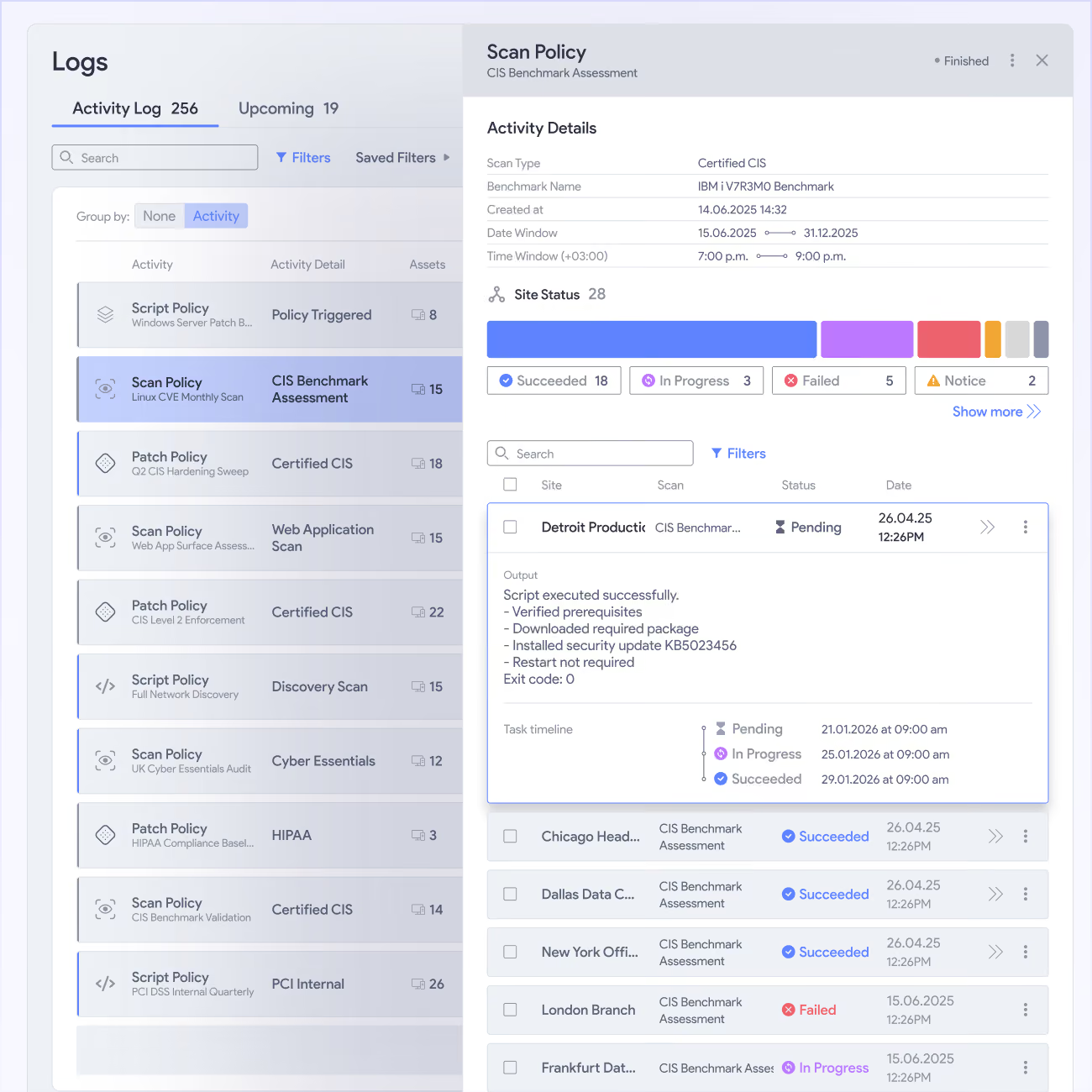
One audit trail, many frameworks
The same remediation log that satisfies your PCI DSS auditor maps directly to your HIPAA, CMMC and other frameworks. You pull one export, vRx handles which controls it satisfies across each framework.

Proof, not promises
Every open vulnerability in vRx maps to the specific controls it puts at risk across your active frameworks. You see your compliance exposure in plain terms, before an auditor does.






Hear from our Customers
All in one platform


From urgency to strategy

EL AL secures global Patch Compliance


Complete Vulnerability Remediation Platform

Valuable resources saved

Third-party software patching is the most valuable feature.
Single source of truth, capable of handling any application in our fleet
60% faster remediation, many hours saved
Great patching capabilities, helpful dashboard, and excellent support

My favorite feature is Patchless Protection

Unified vulnerability discovery, prioritization, and remediation
Patchless Protection is an incredible technology!
Merge Security & IT to Remediate Threats


Got Questions?
Which compliance frameworks does vRx support out of the box?
CIS Benchmarks, HIPAA, PCI DSS, CMMC, Cyber Essentials and more.. Vulnerability findings map to relevant controls in each framework automatically. When a CVE is open on an asset in scope for PCI DSS, vRx flags the specific control it puts at risk, not just the severity score.
What does the audit evidence package include?
For every remediation action vRx executes or triggers, the log captures the CVE reference, the asset ID, the operator who ran it, the remediation method used (vPatch, vShield patchless protection, or vScript), the timestamp, and the before and after state of the asset. You can export that as a PDF per control, pull it from the dashboard directly, or feed it to your GRC platform via API.
Do we need to rebuild evidence packages for each framework separately?
No. The same underlying remediation data maps to multiple frameworks. If your environment is in scope for both PCI DSS and HIPAA, the same fix that closes a PCI control also satisfies the corresponding HIPAA requirement where they overlap. You run one export filtered by framework, vRx handles the mapping.
How current is the compliance posture data?
Continuous. vRx doesn't wait for a scheduled scan window to update your posture view. When a vulnerability gets remediated, the compliance dashboard reflects it immediately. When a new CVE drops that affects an in-scope asset, your posture score updates before you even open your email.
Our auditors want evidence from a specific date range. Can vRx pull that?
Yes. The audit trail is filterable by date range, asset group, framework, and control. If your PCI DSS assessment covers the previous 12 months and your auditor wants evidence for a specific control during Q3, you filter to that scope and export. The record is immutable, nothing gets backdated or quietly removed.
Can vRx connect to our existing GRC platform?
vRx integrates with GRC platforms via its integration layer. If your team runs ServiceNow, Drata, Vanta, or another GRC tool, connect with your Vicarius account team to confirm the specific integration available for your platform. The export options (PDF, dashboard, API) cover most workflows in the meantime.
What happens to our compliance posture when a zero-day drops with no patch?
vShield activates. It blocks the exploit path at runtime using dynamic binary instrumentation, which vRx logs as a remediation action against the relevant CVE and maps to the affected controls. Your posture score reflects the protection immediately. When auditors ask whether the zero-day affected your compliance standing, the answer is no, and the record shows exactly why.

Start your free demo!