

Introduction
In most security platforms, dashboards are an afterthought. They visualize whatever data the system happens to collect. The result is predictable: executives see more numbers but understand less, and budget conversations become defensive.
Vicarius vRx treats the executive dashboard as a first-class product surface.
It is built on a remediation-first data model, not a detection-first one, and that architectural decision changes what information is shown, how it is grouped, and what decisions it enables.
1. The Data Model Behind the Dashboard
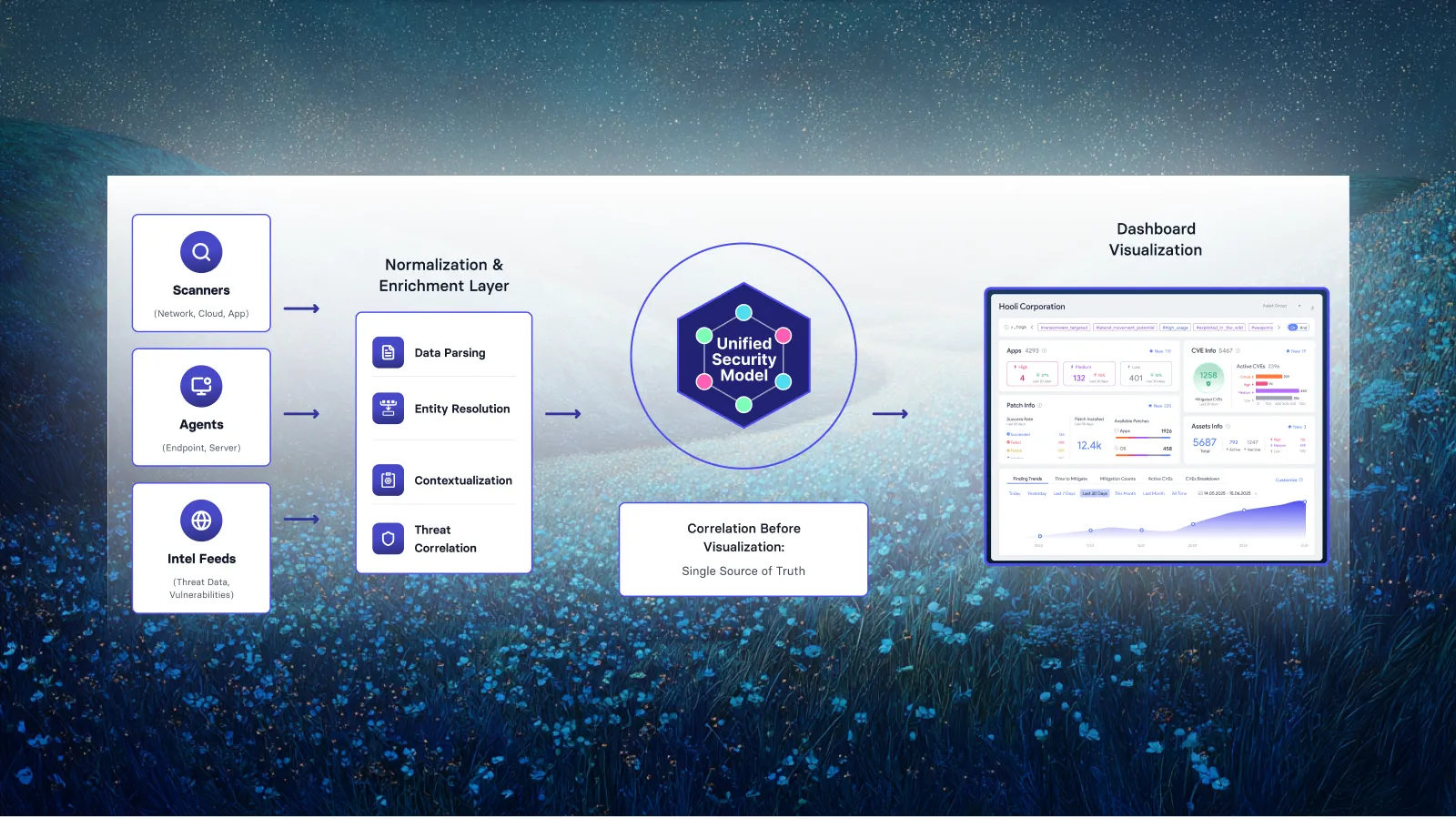
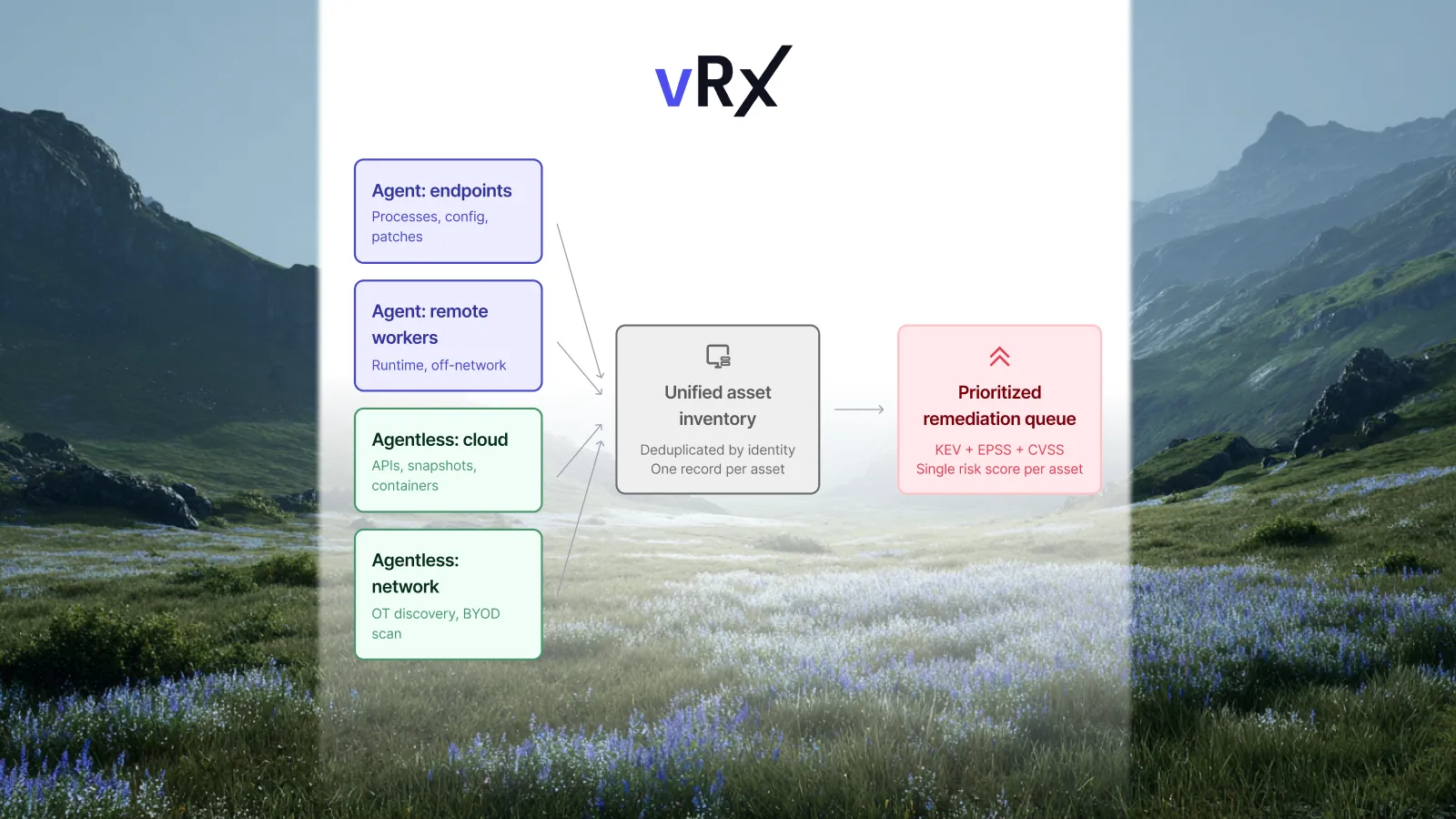
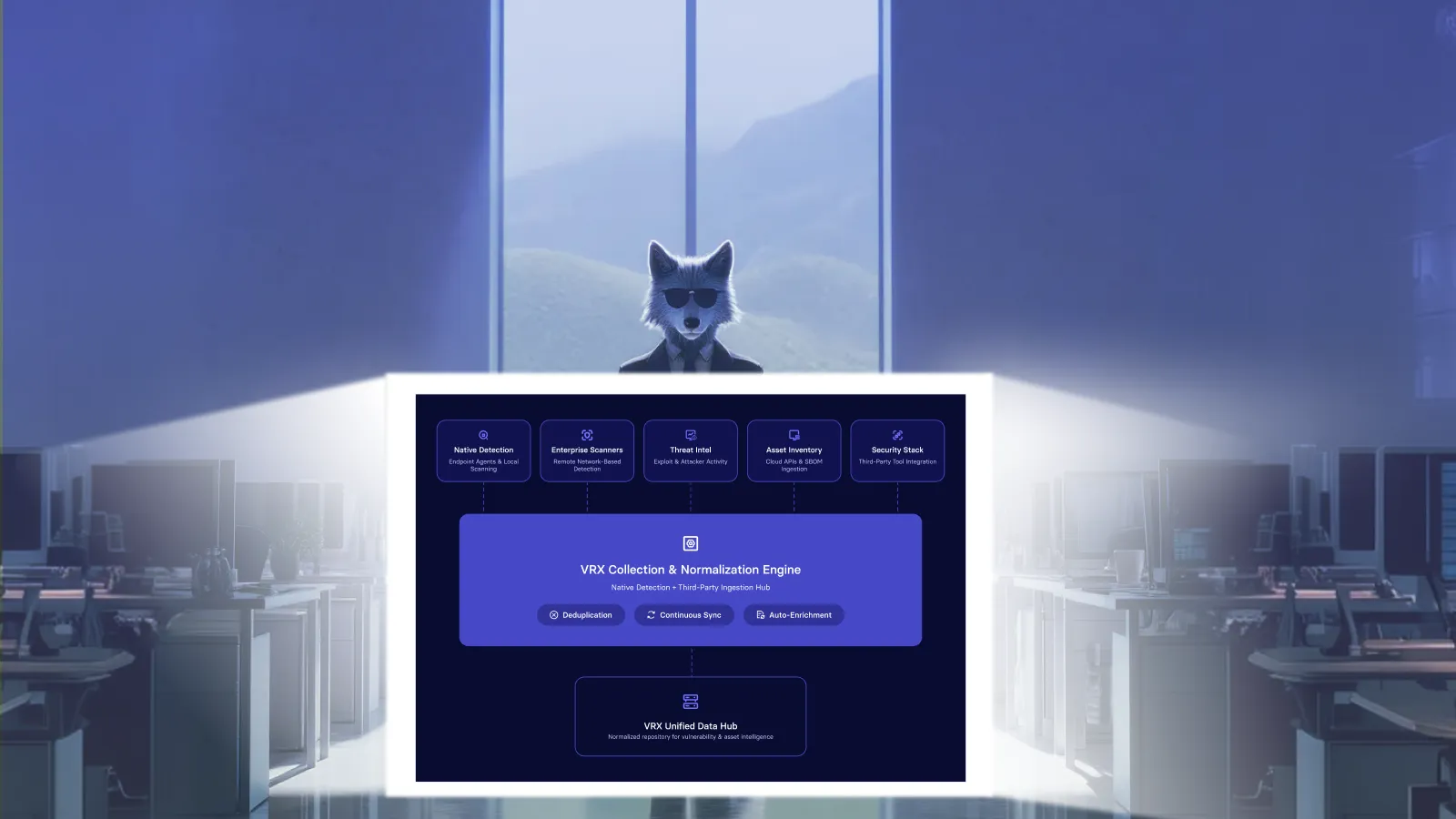
Most dashboards fail because the underlying data model was never designed for executive use. Scanner-centric platforms inherit raw findings, duplicate signals, and conflicting severity scores.
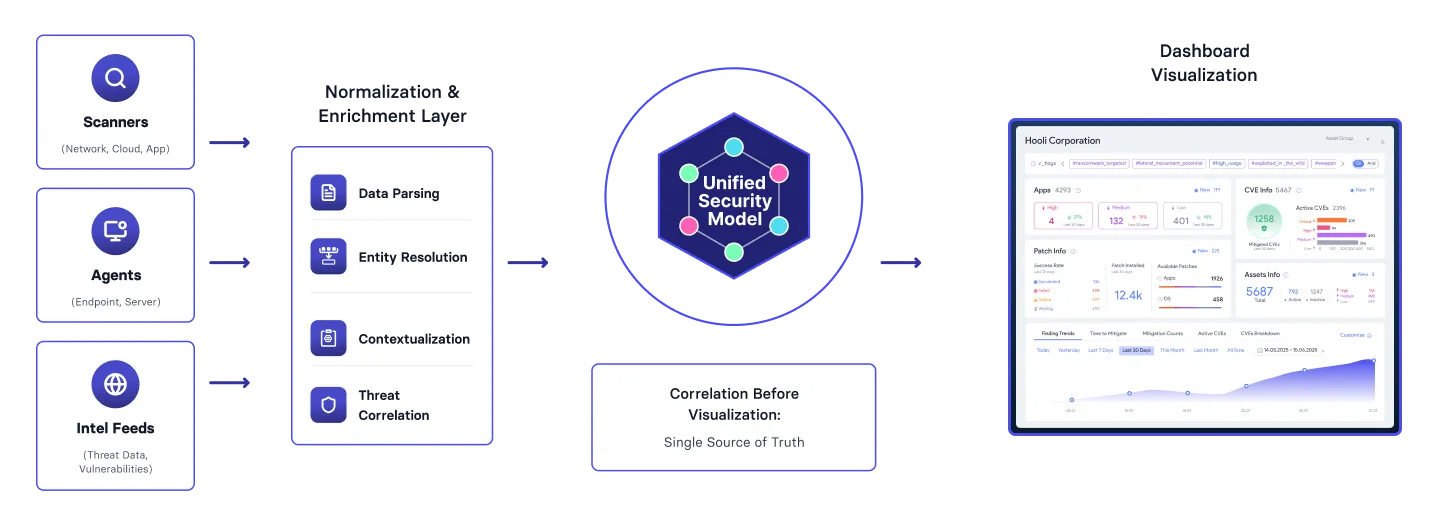
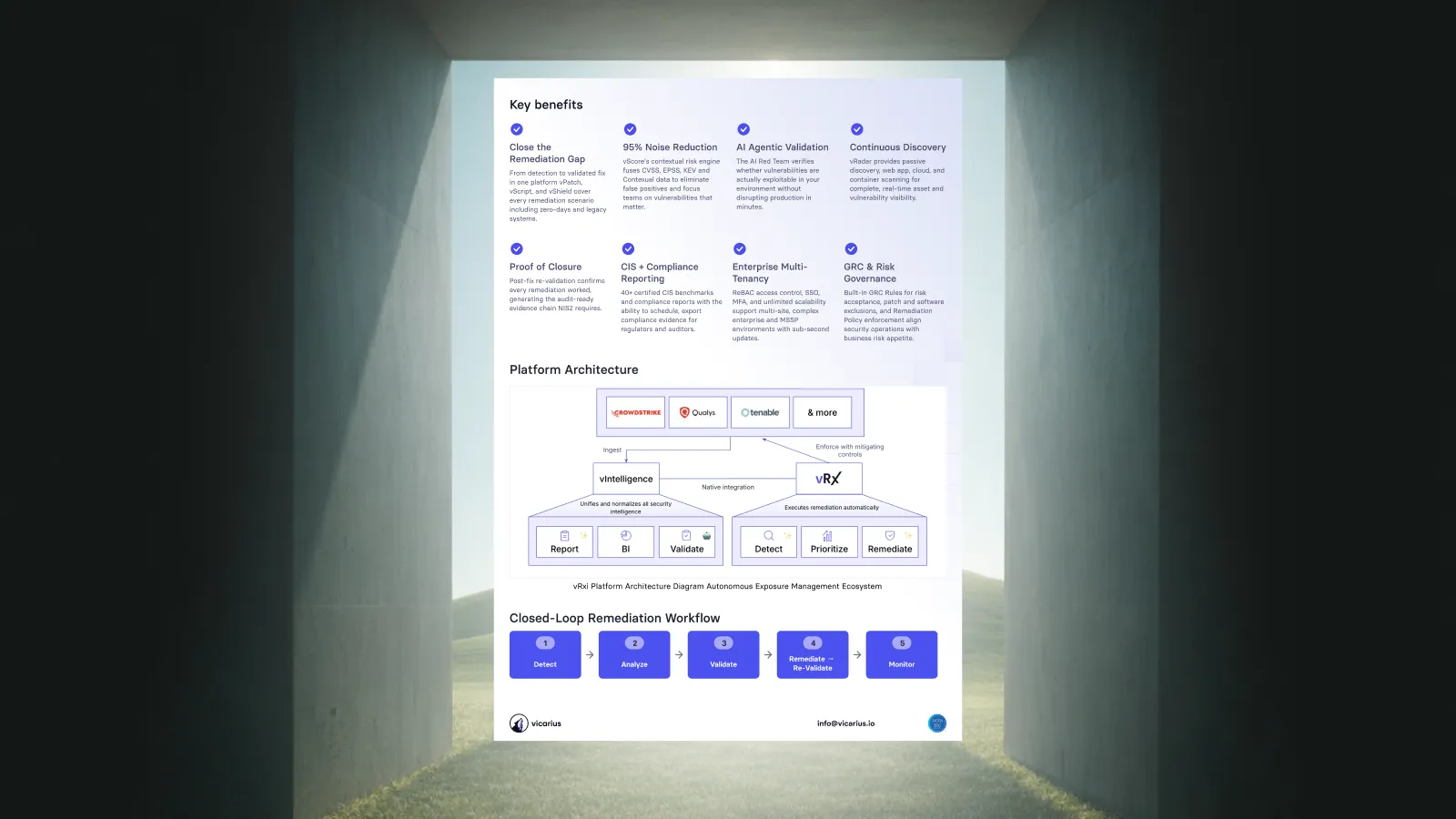
Vicarius vRx normalizes all findings into a single remediation model before they ever reach the dashboard.
Every vulnerability is enriched with:
- Exploitability signals
- Asset criticality
- Remediation method availability
- Operational constraints
- Automation readiness
This means the dashboard never shows theoretical risk.
It shows actionable risk.
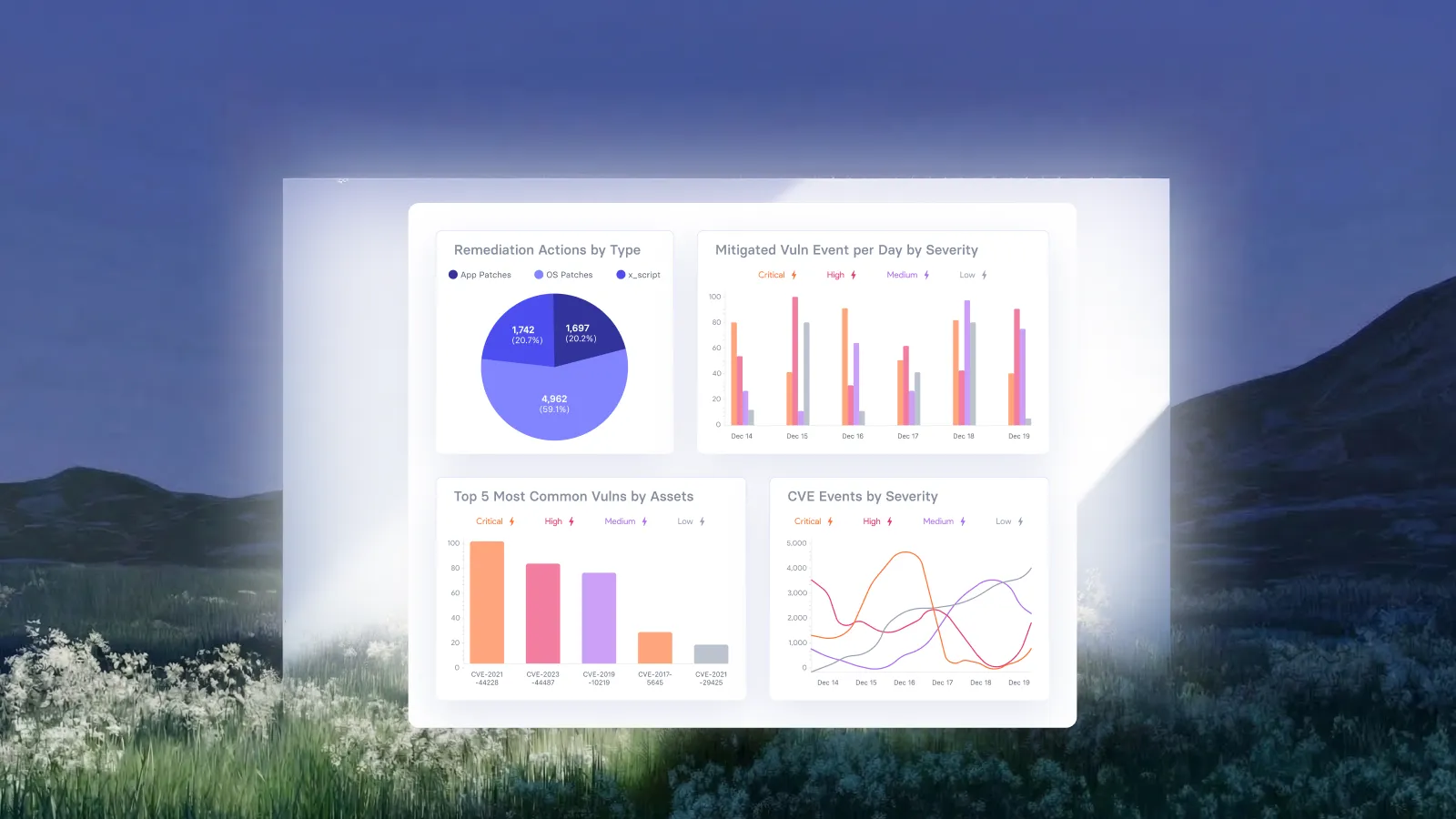
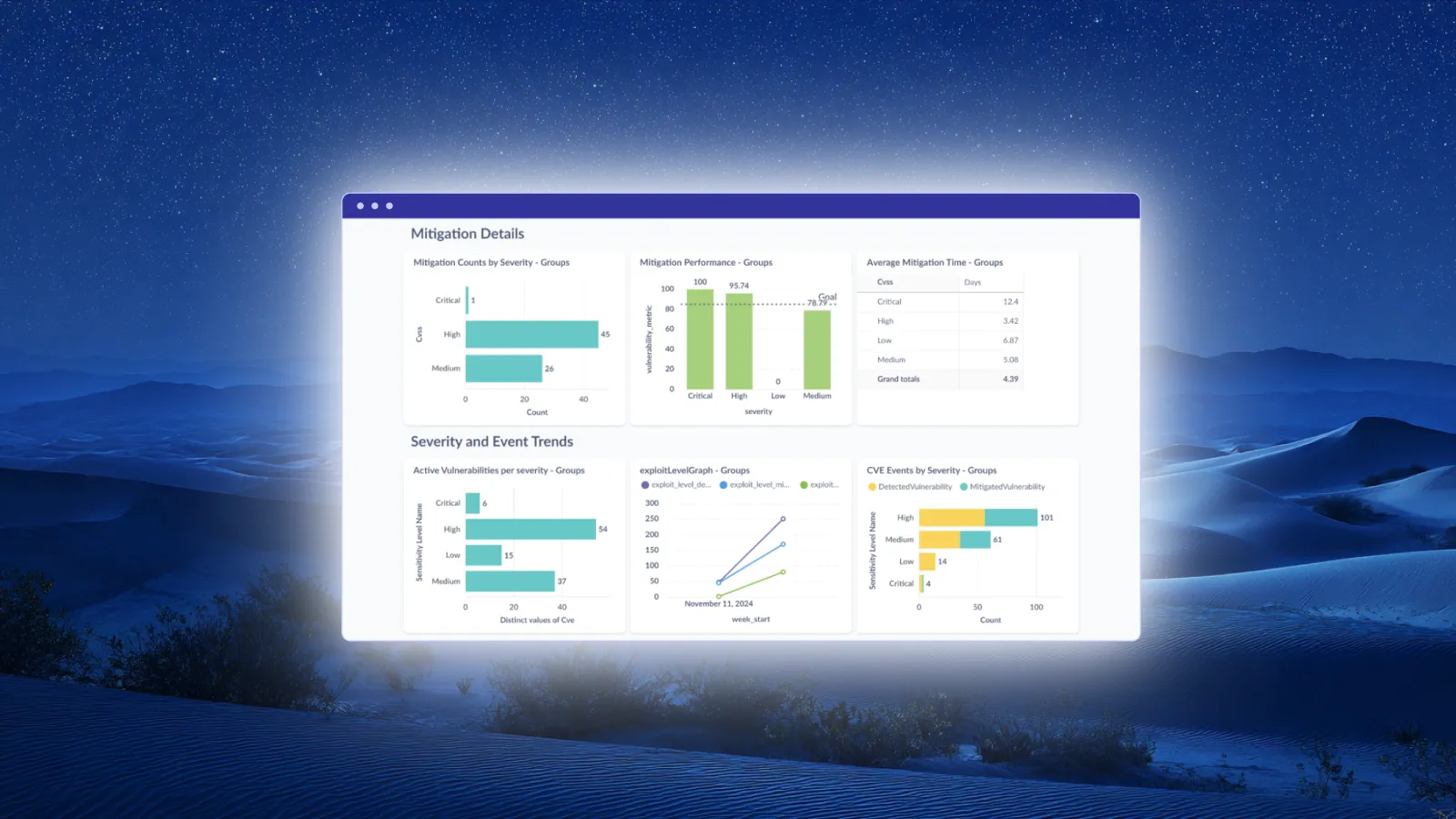
2. Remediation Performance Is the Primary KPI
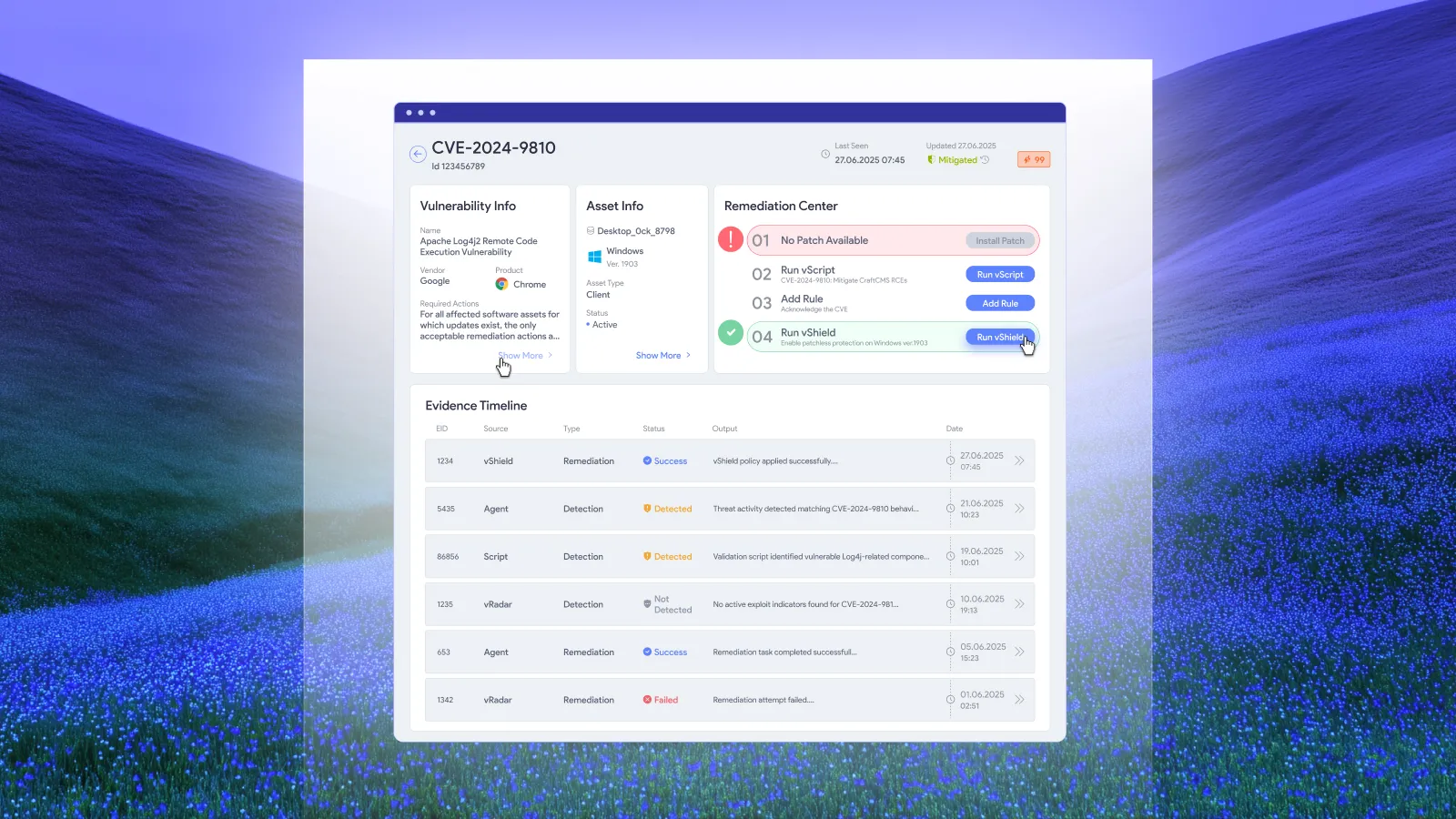
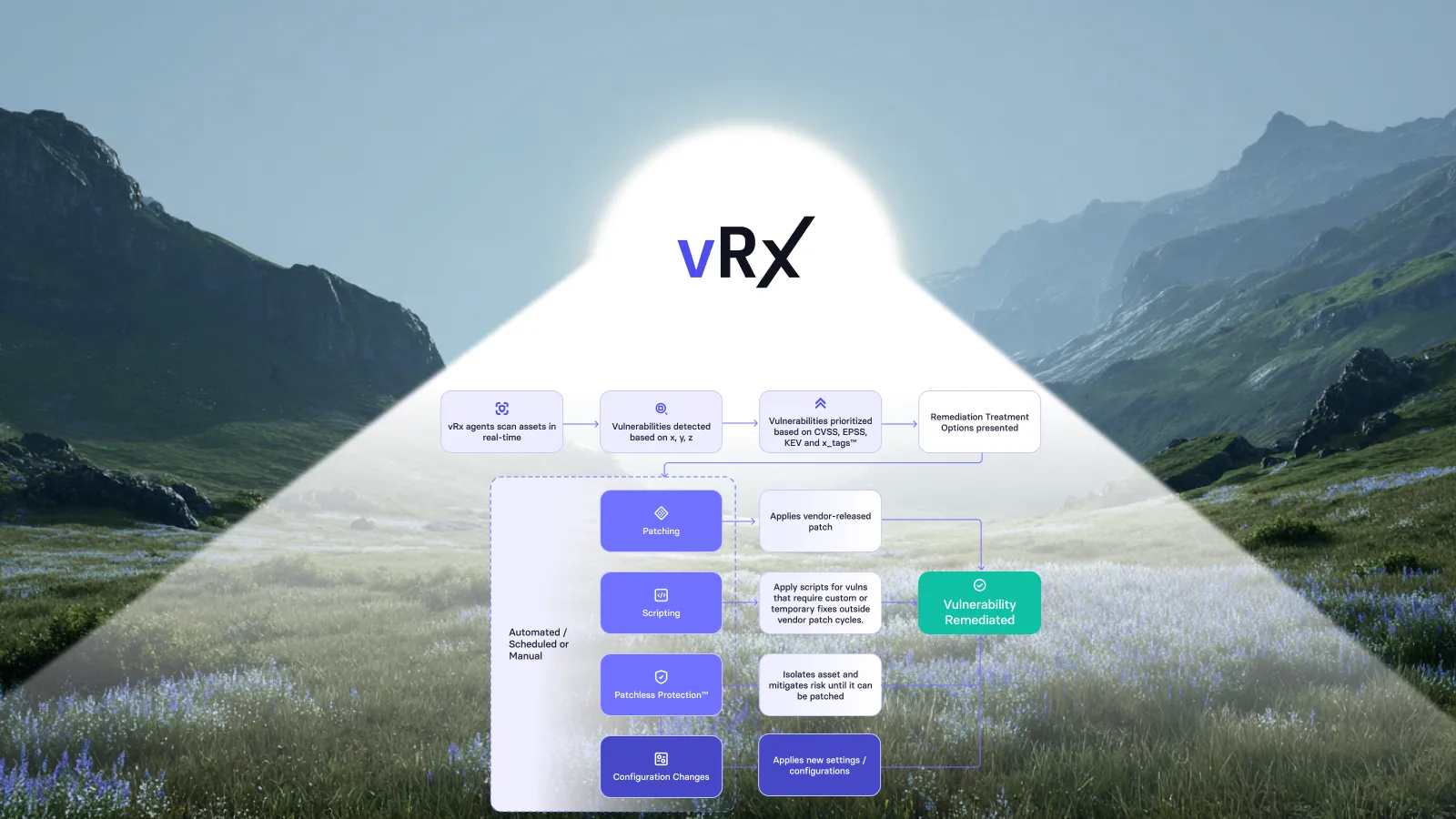
In vRx, remediation is not a downstream activity. It is the central metric.
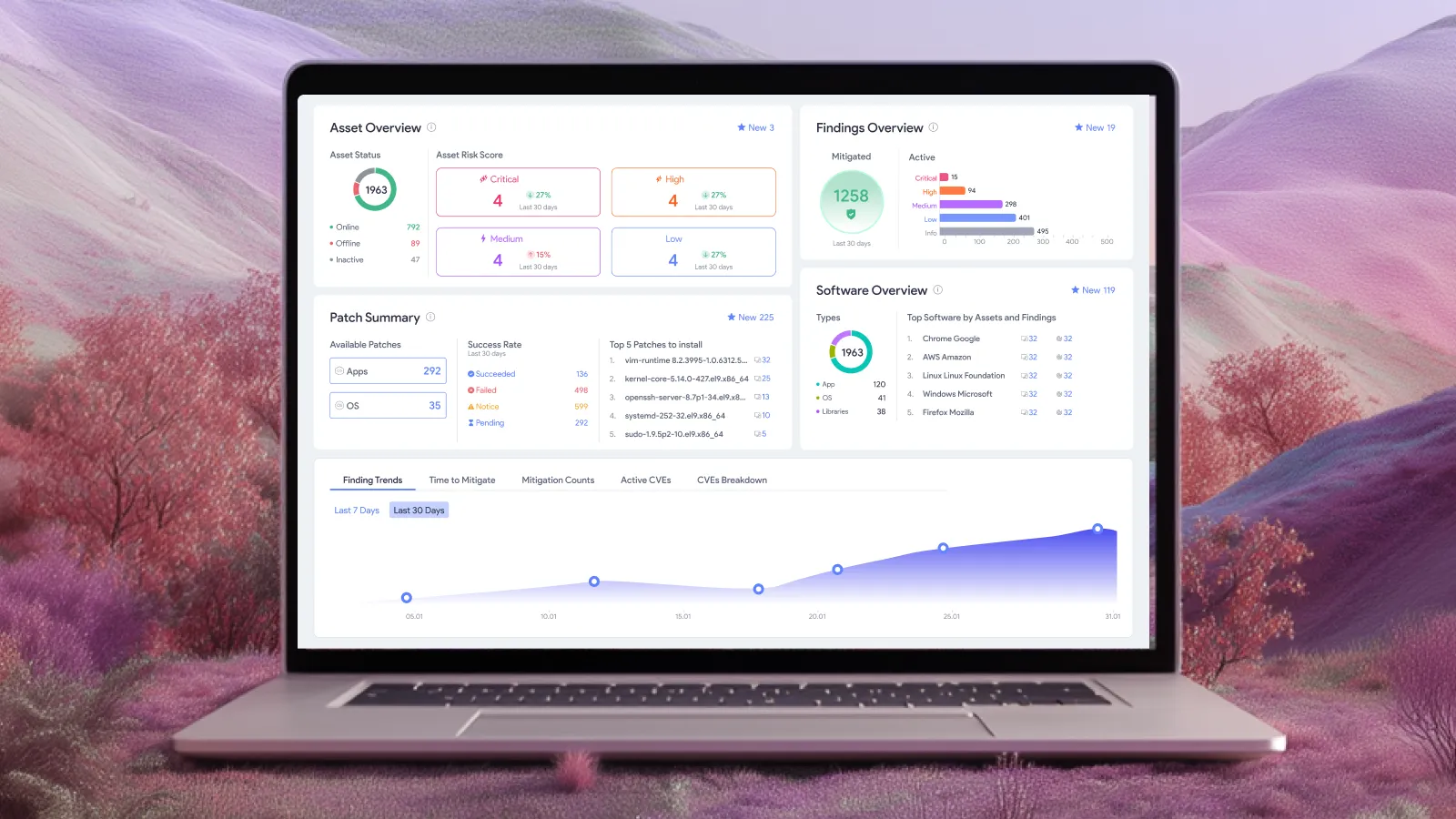
Executives see:
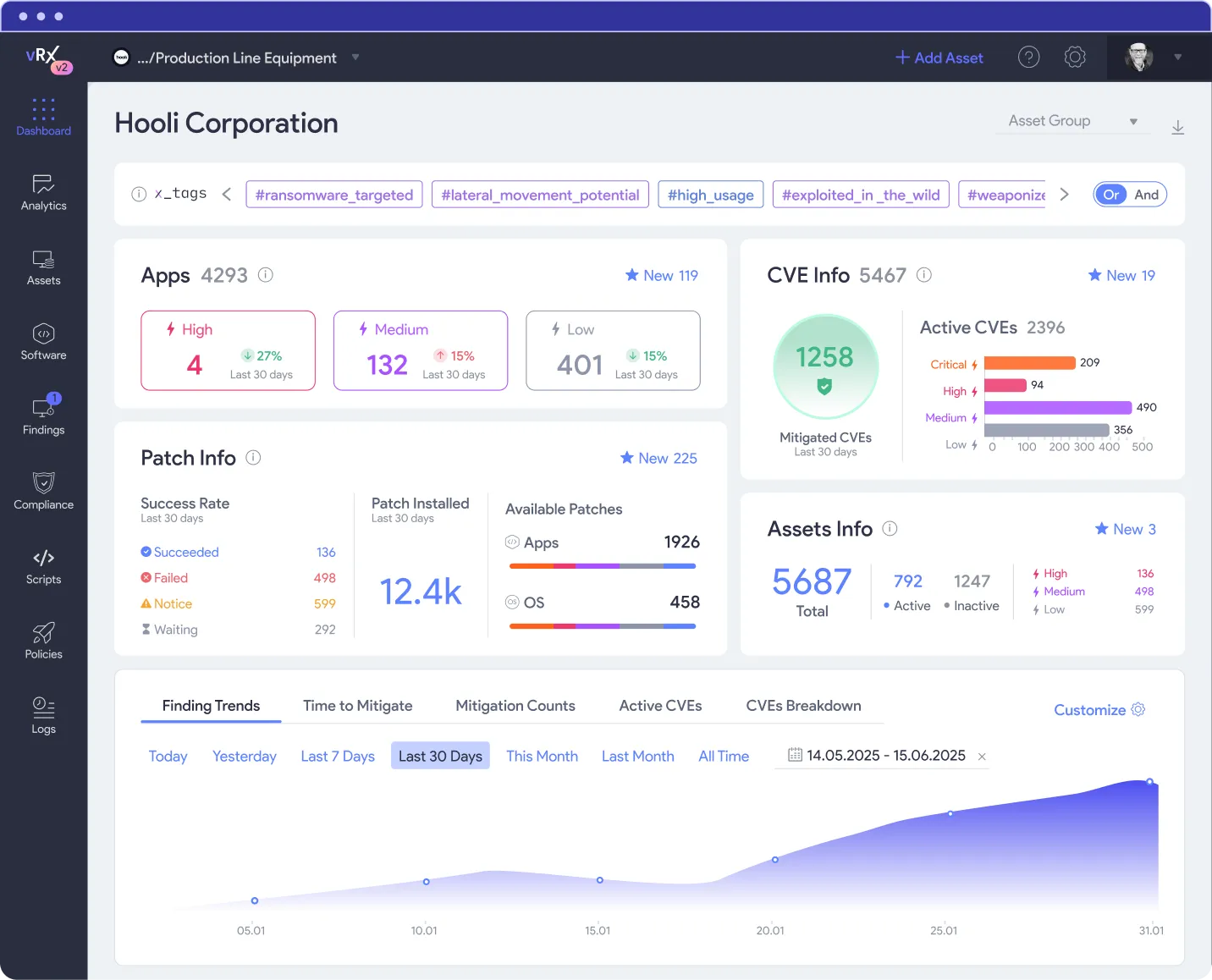
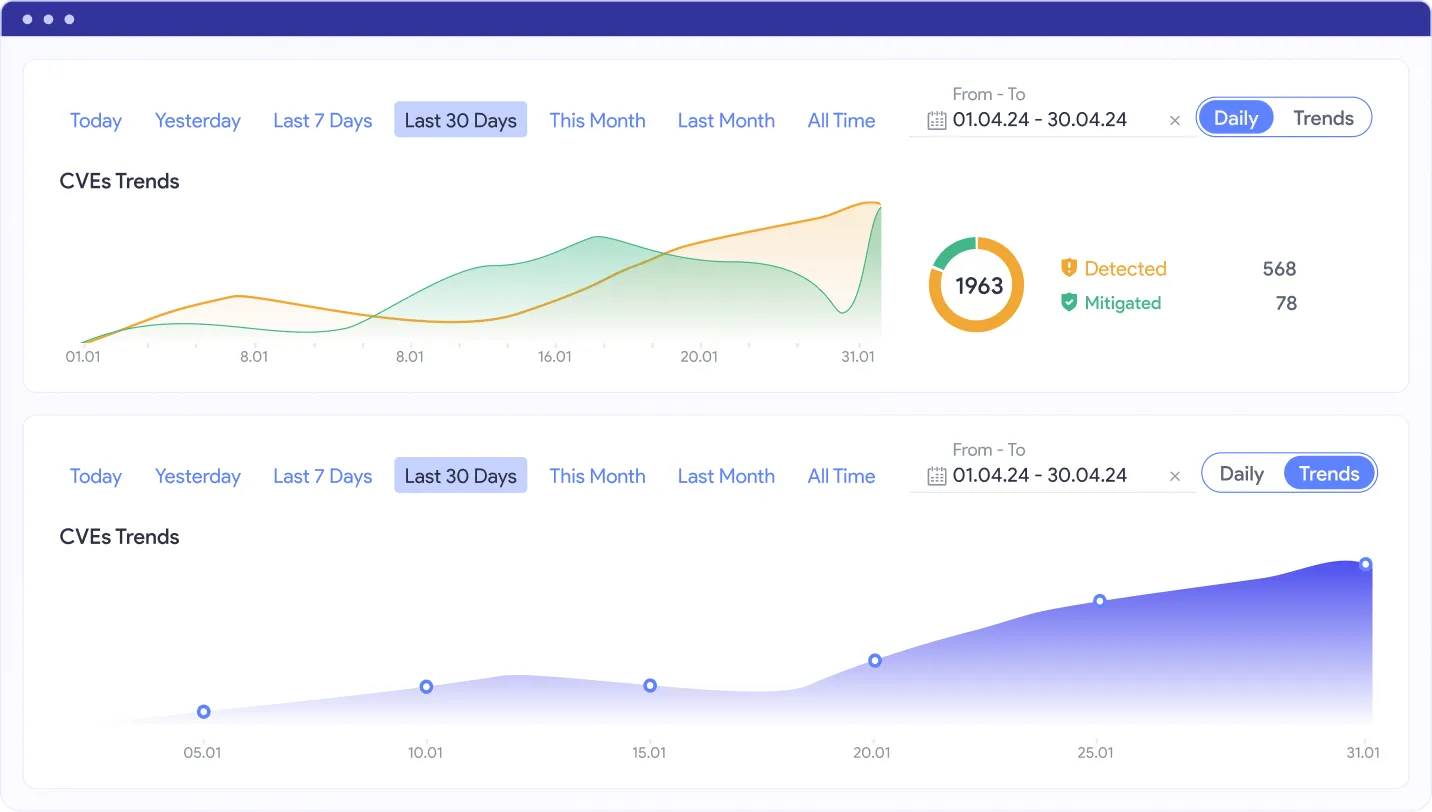
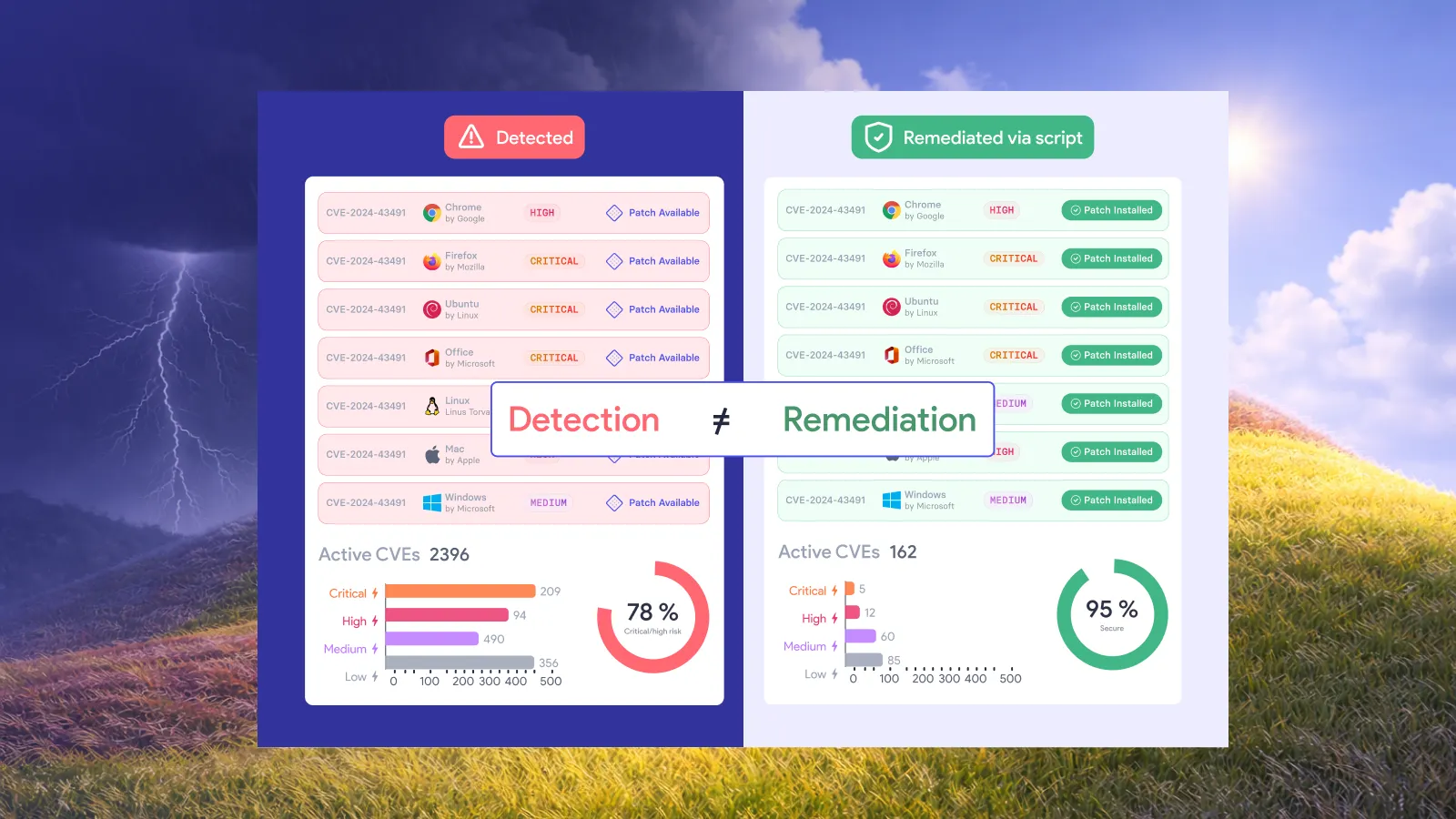
- Detected vs mitigated events
- Mitigation performance percentage
- Backlog trends over time
- Severity-weighted closure rates
This changes the executive question from:
Why do we still have vulnerabilities
to:
Are we closing risk at the rate the business requires
Budget discussions become about throughput, not blame.
3. Velocity and Capacity Are Visible by Design
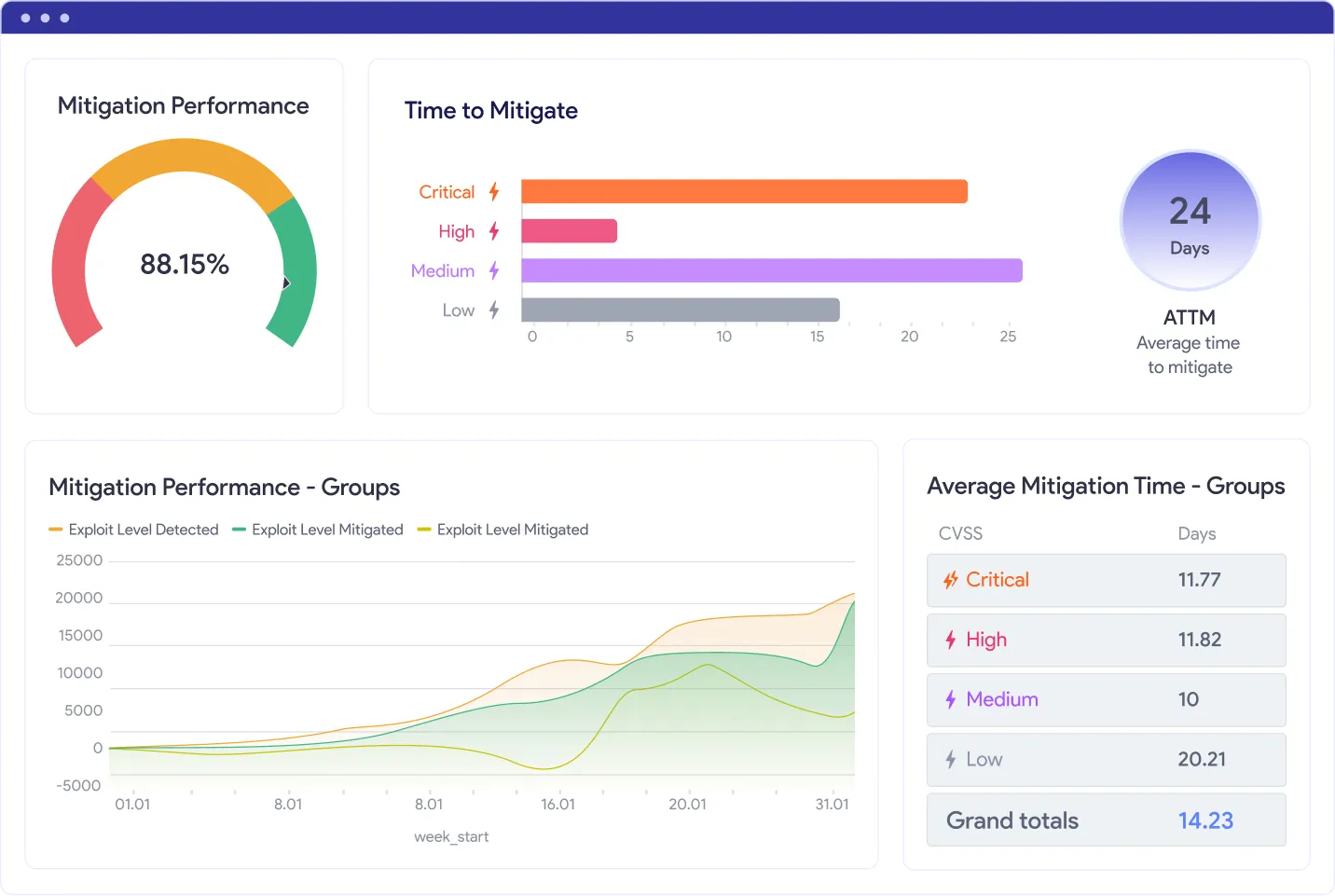
vRx exposes time and capacity as first-class metrics.
The dashboard shows:
- Mean time to remediate by severity
- Remediation throughput per period
- Backlog growth or reduction
- SLA compliance trends
Because these metrics are native to the platform, executives can see exactly where investment increases velocity and where it does not. This turns budget into a capacity planning exercise instead of a negotiation.
4. Blocked Risk Is Explicit, Not Hidden
Most platforms hide blocked remediation in notes. vRx surfaces it as executive data.
Executives see:
- What is blocked by maintenance windows
- What is blocked by ownership
- What is blocked by legacy systems
- What is blocked by policy
This is critical. It moves security from a technical problem to an organizational one. Budget is now discussed in terms of removing constraints, not just buying tools.
5. Compliance and Governance Are Built Into the Dashboard
vRx does not treat compliance as a separate reporting function. It is a live view of operational reality.
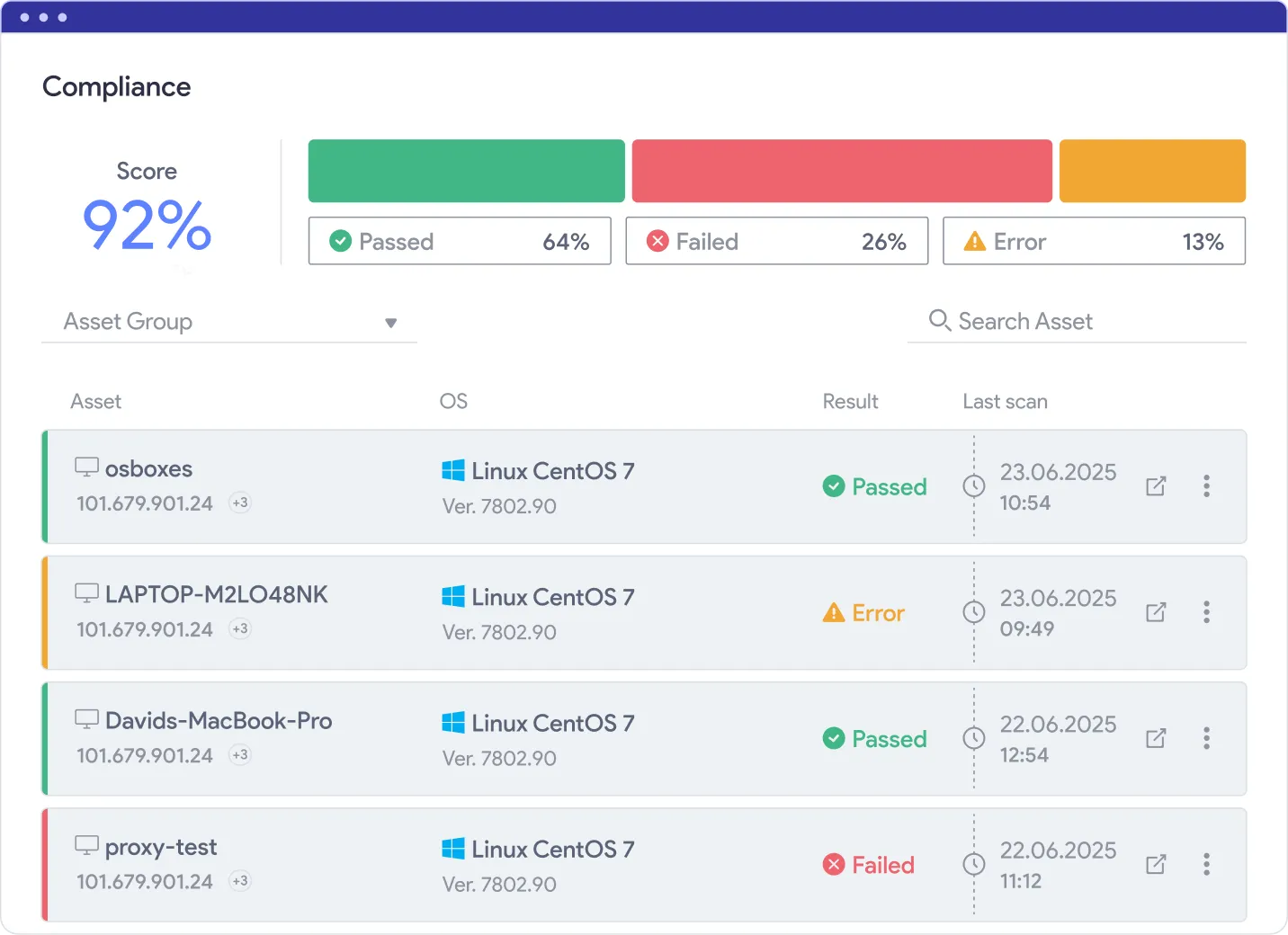
The executive dashboard shows:
- Framework alignment (PCI, NIST, CMMC, NIS2)
- Control gaps tied to real remediation work
- Evidence of patching timelines
- Risk exceptions and their owners
This allows boards to answer one question clearly:
Are we compliant because we are secure, not just because we report well.
6. ROI Is Modeled Into the Dashboard
Security ROI is usually guessed. vRx makes it observable.
Executives can see:
- Cost to remediate vs estimated cost of exploitation
- Risk reduction per remediation effort
- Automation impact on labor hours
- Time saved through patchless protection
This reframes spend as investment. When executives see that small investments eliminate large exposure, budget approval becomes straightforward.
7. Resource Efficiency and Automation Are Measured
vRx dashboards show:
- Patch success rates
- Automated vs manual remediation ratios
- Failed remediation retries
- Team output over time
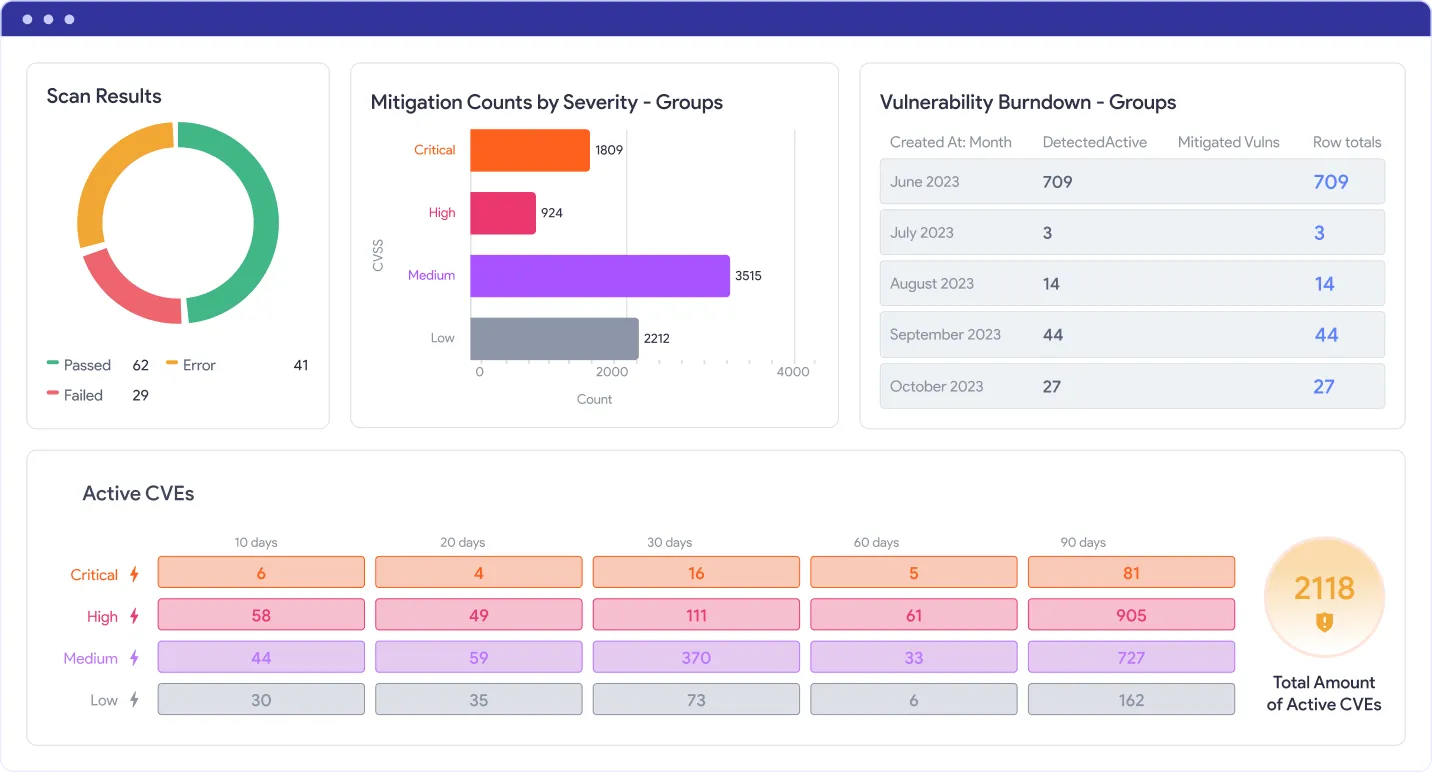
This proves efficiency before asking for more resources. Executives see that the team is already operating at high efficiency, and that additional budget increases scale, not waste.
8. The Dashboard Is Built for Board Consumption
The vRx dashboard is designed to be exported, shared, and reused in executive workflows.
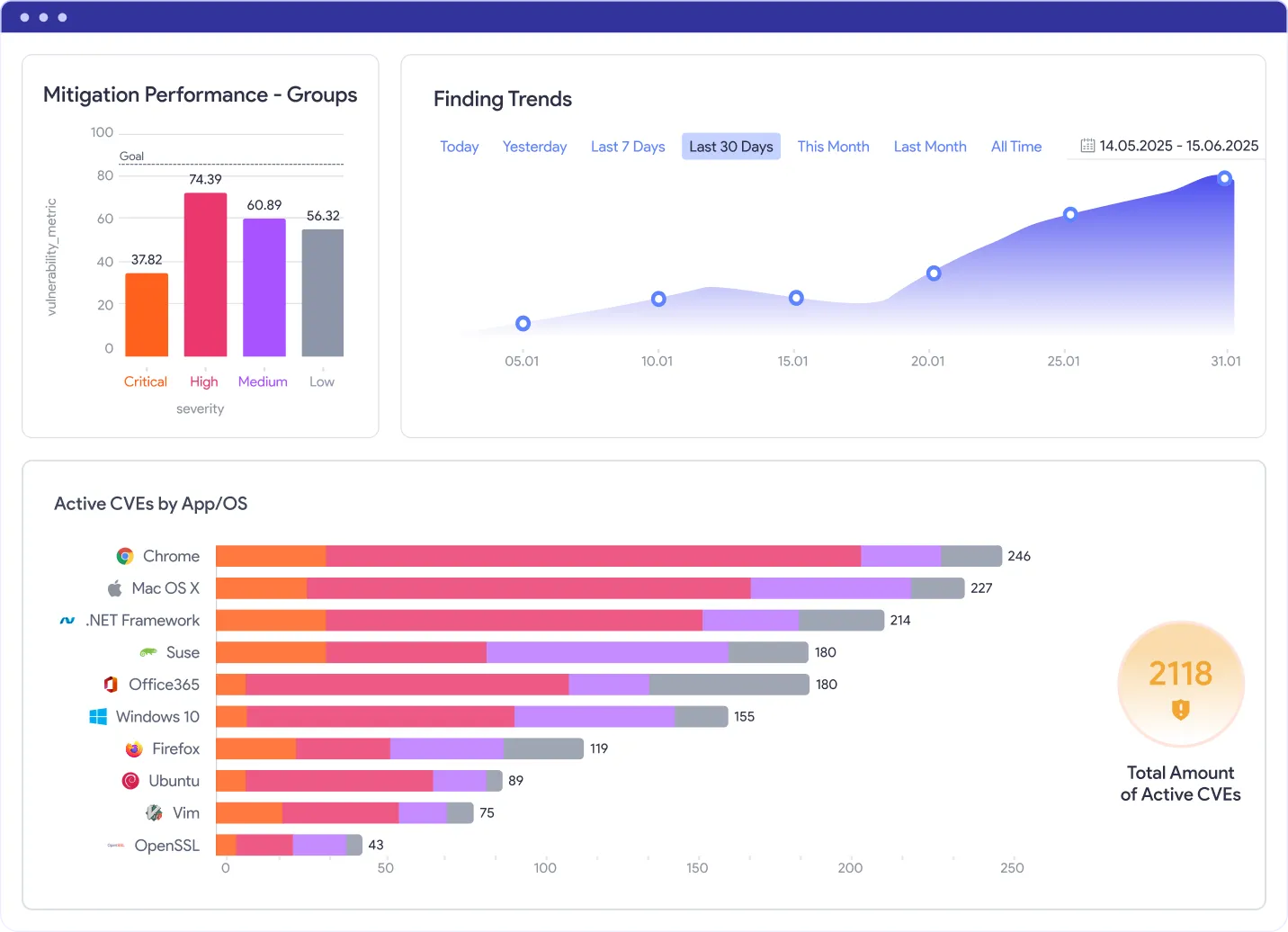
- One-page executive summaries
- Board-ready visuals
- Trend slides for quarterly reviews
- Evidence packs for audit meetings
The dashboard is not just viewed. It is used.
9. Custom Executive Views Are a Product Feature
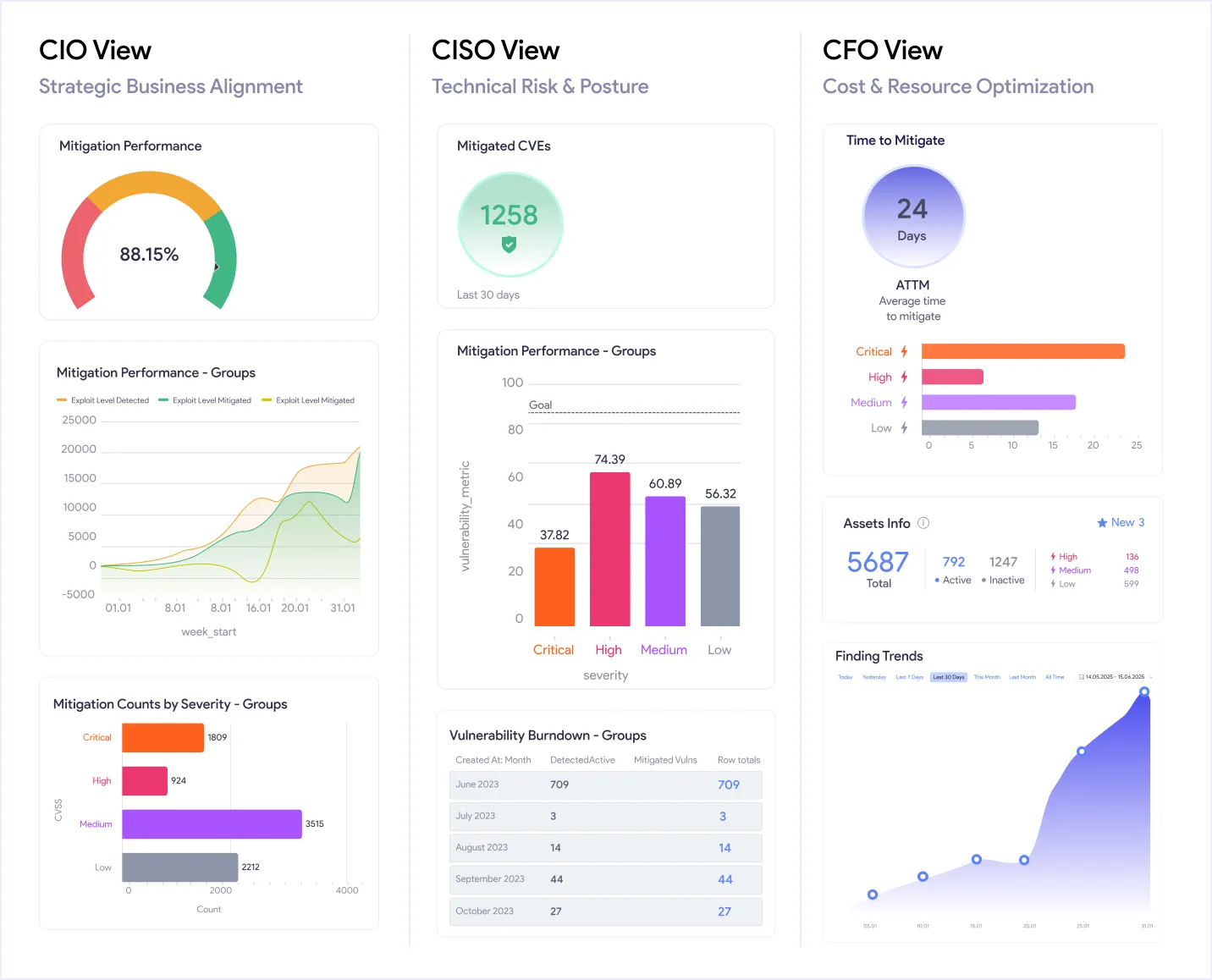
vRx allows different executive views for different stakeholders.
- CIO sees velocity and backlog
- CISO sees risk and exposure
- Board sees compliance and trends
- CFO sees ROI and efficiency
Each view is built from the same normalized data model, which keeps conversations aligned even when priorities differ.
The executive dashboard in Vicarius vRx is not a reporting layer. It is a decision system built on remediation reality.
By showing performance, velocity, constraints, compliance, and ROI in one coherent surface, vRx changes how executives understand security and how they fund it.
When leaders see progress instead of volume, constraints instead of noise, and ROI instead of fear, the conversation shifts. Budget stops being debated. It gets planned.

















.webp)















%20Signals%20a%20New%20Era%20of%20Supply%20Chain%20Risk.webp)







.webp)