

Key takeaways: Vulnerability management platform selection
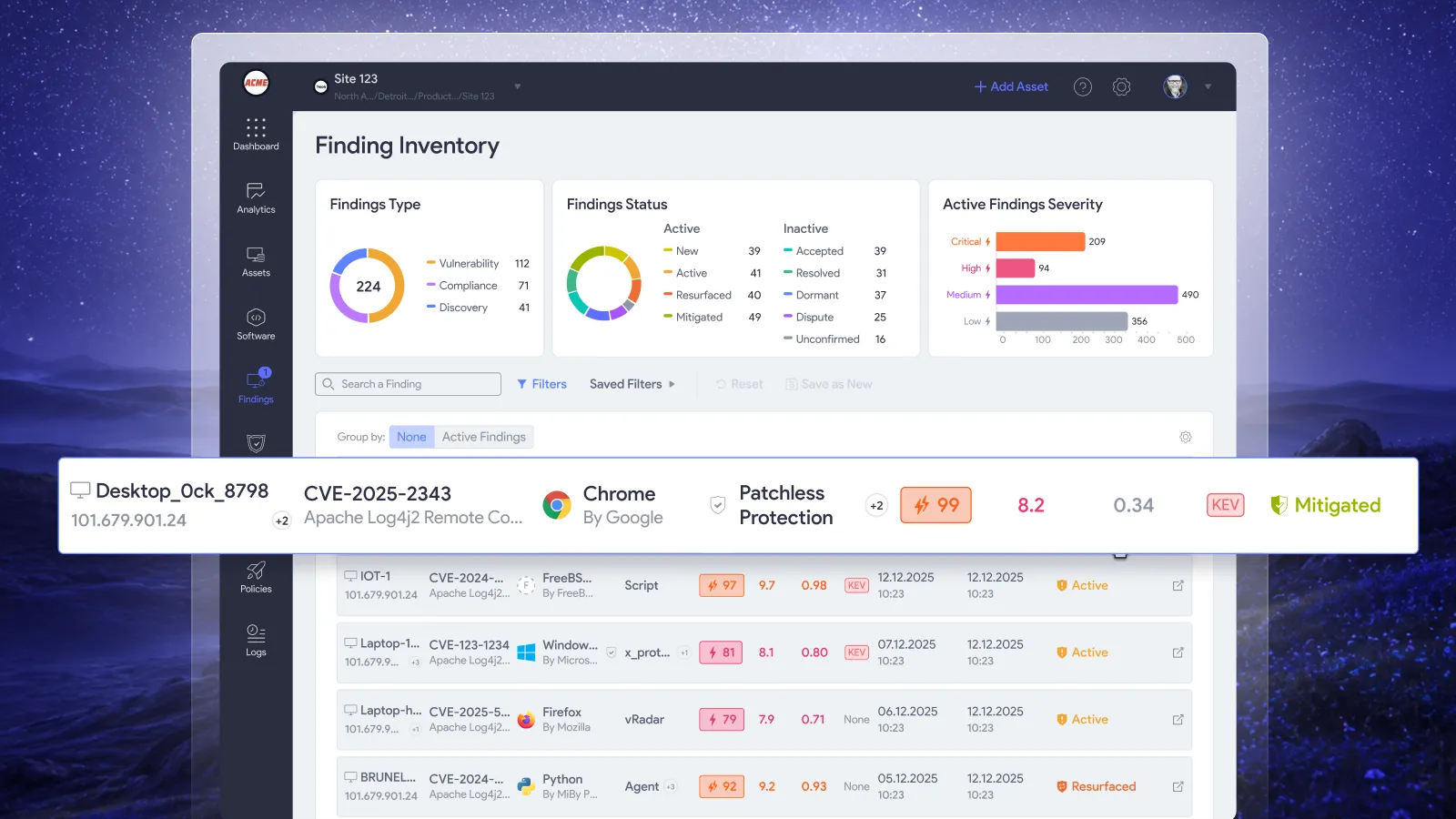
- A unified vulnerability management platform should combine discovery, prioritization, and remediation in one console to reduce tool sprawl.
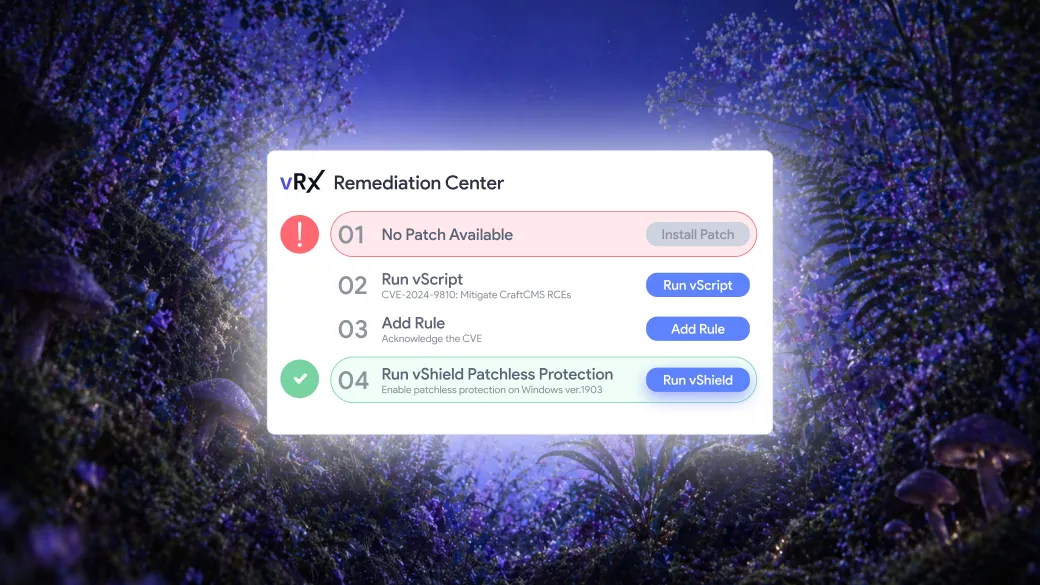
- Zero-day mitigation requires patchless protection capabilities that shield applications at memory level when no patch exists.
- Vicarius vRx delivers automated remediation across over 20,000 third-party applications, reducing mean time to remediate by 60-70%.
- Business risk alignment means prioritizing vulnerabilities by exploitability and asset criticality, not just CVSS scores.
- Compliance reporting should map every remediation action to frameworks like HIPAA, PCI DSS, and CIS Benchmarks automatically.
Why vulnerability management platforms matter more than ever
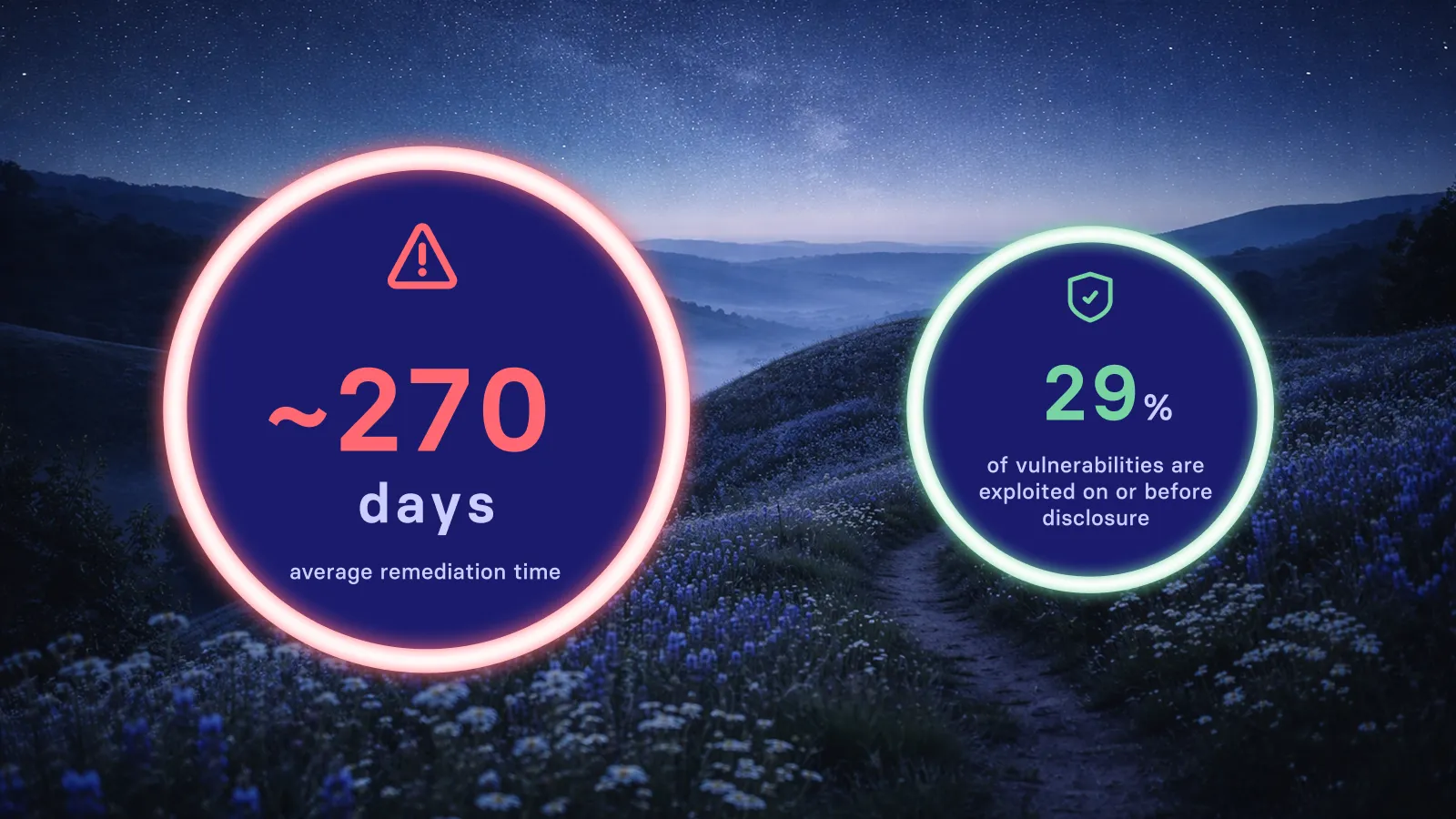
The vulnerability management platform landscape has shifted dramatically. According to Google Threat Intelligence Group research, 90 zero-day vulnerabilities were exploited in the wild during 2025 alone. That number represents a steady upward trend over the past several years.
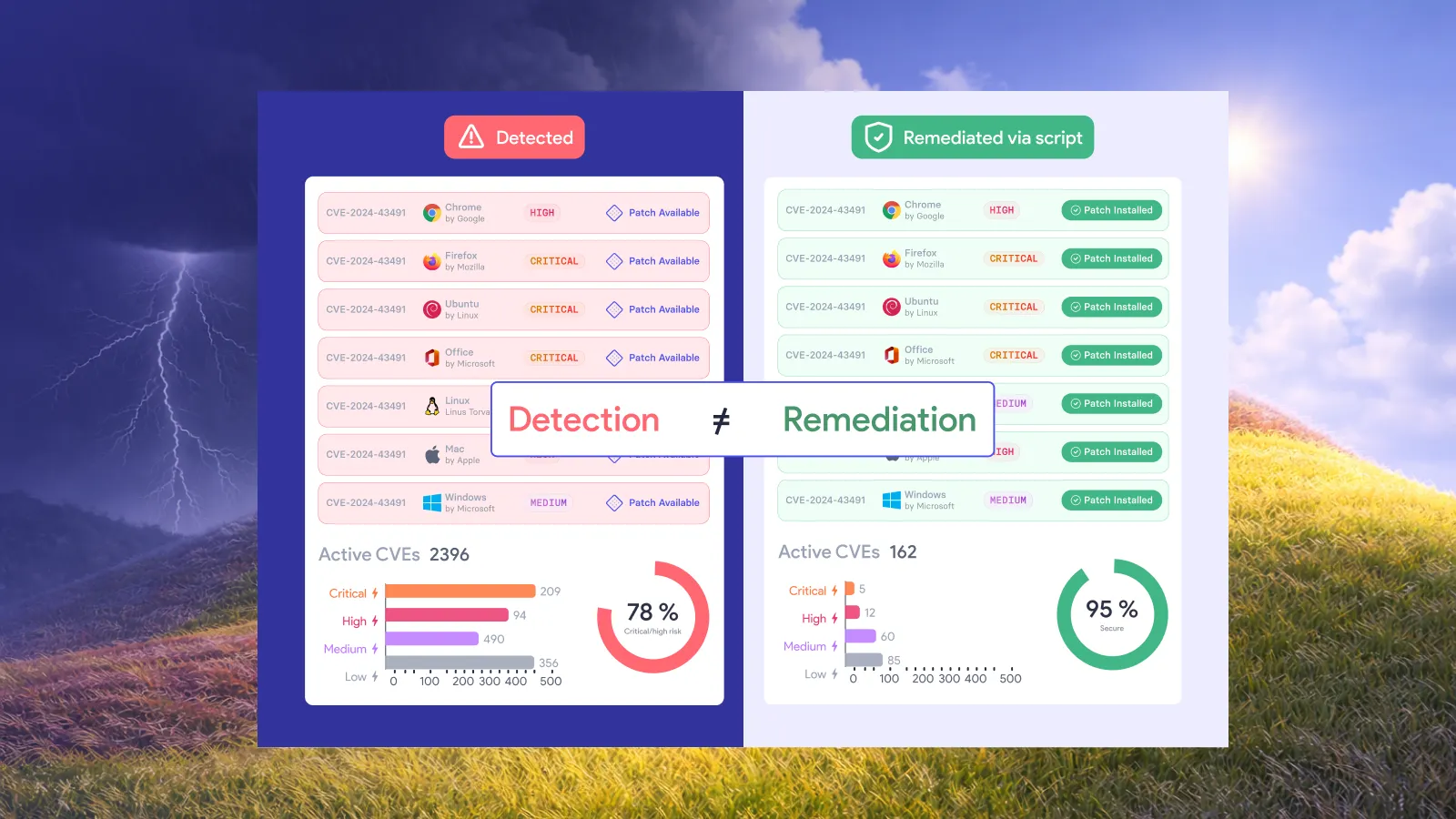
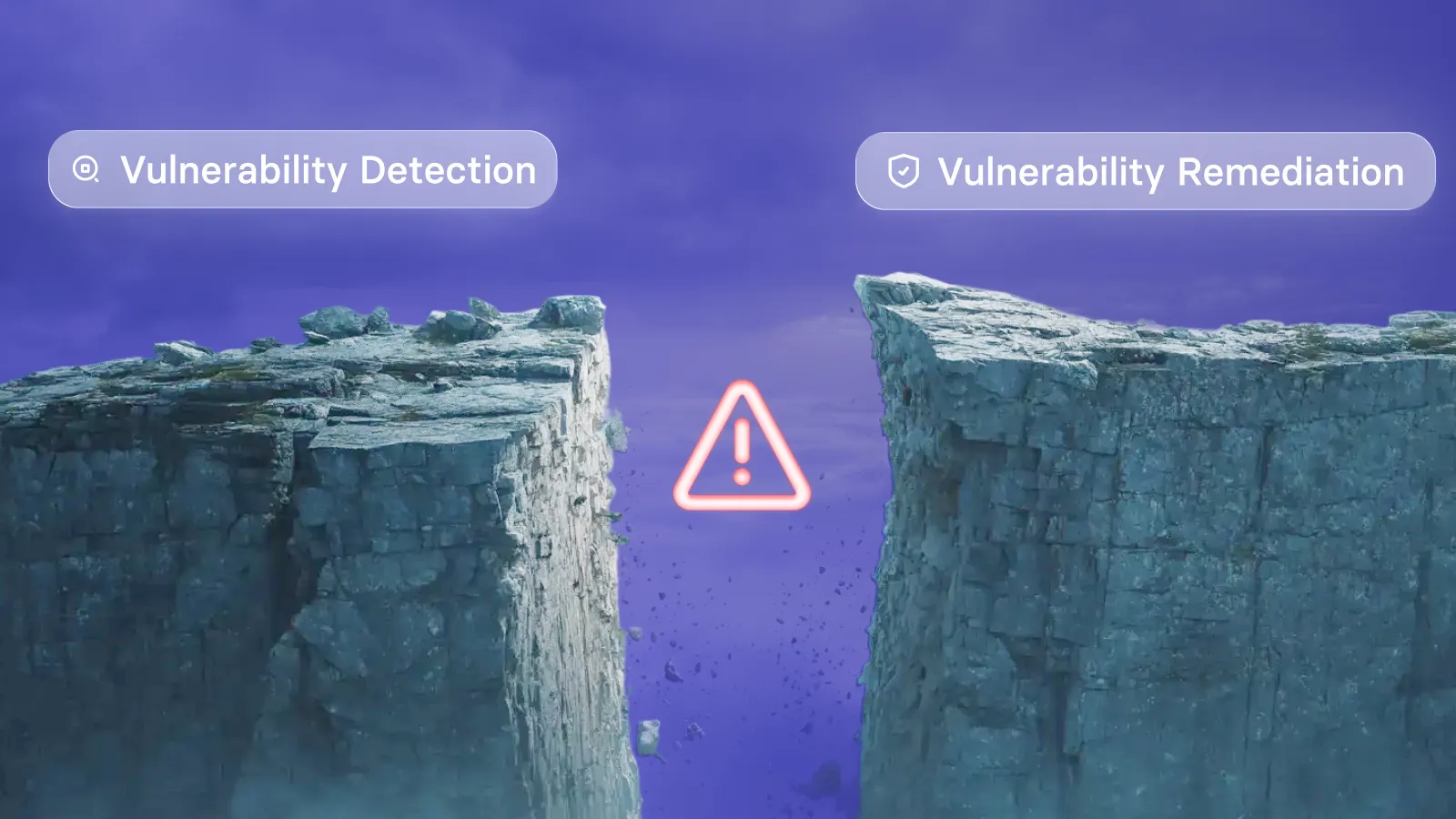
For security and IT teams, this means your scanning tools alone are no longer enough. You need a platform that moves from detection all the way through verified remediation. Otherwise, you're left with spreadsheets full of flagged vulnerabilities and no clear path to fixing them.
What is a vulnerability management platform?
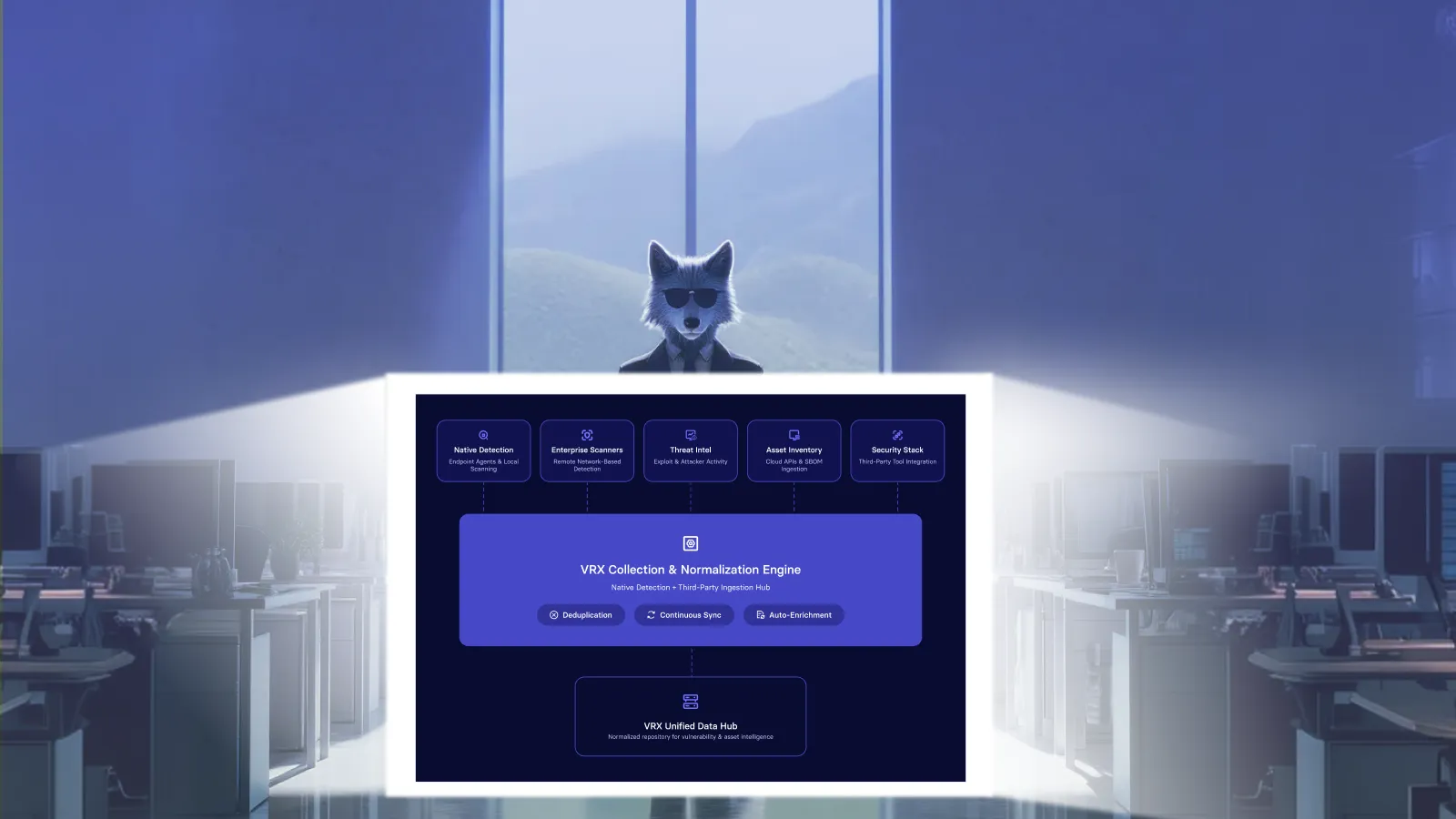
A vulnerability management platform is software that identifies, prioritizes, and helps you fix security weaknesses across your applications, operating systems, and network devices. The goal is straightforward: find your exposures before attackers do, and close them before they become breaches.
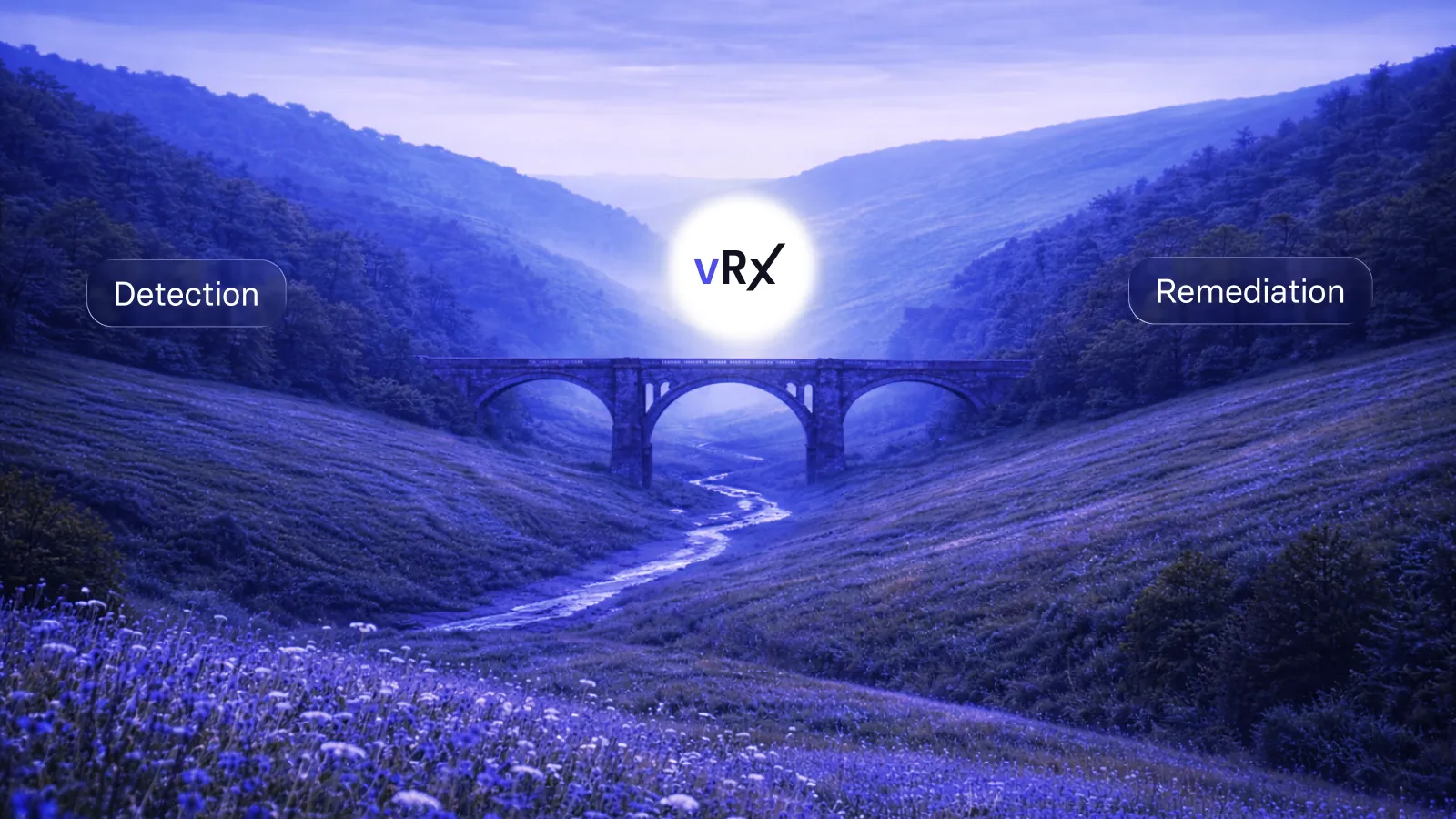
Traditional scanners stop at detection. They hand you a report and leave the rest to your team. Modern platforms go further by connecting discovery directly to remediation workflows, whether that means automated patching, script-based fixes, or protection measures when no patch exists yet.
How do you evaluate vulnerability management platforms?
Choosing the right platform comes down to matching capabilities to your specific environment and goals. Here are the criteria that matter most when you're comparing options.
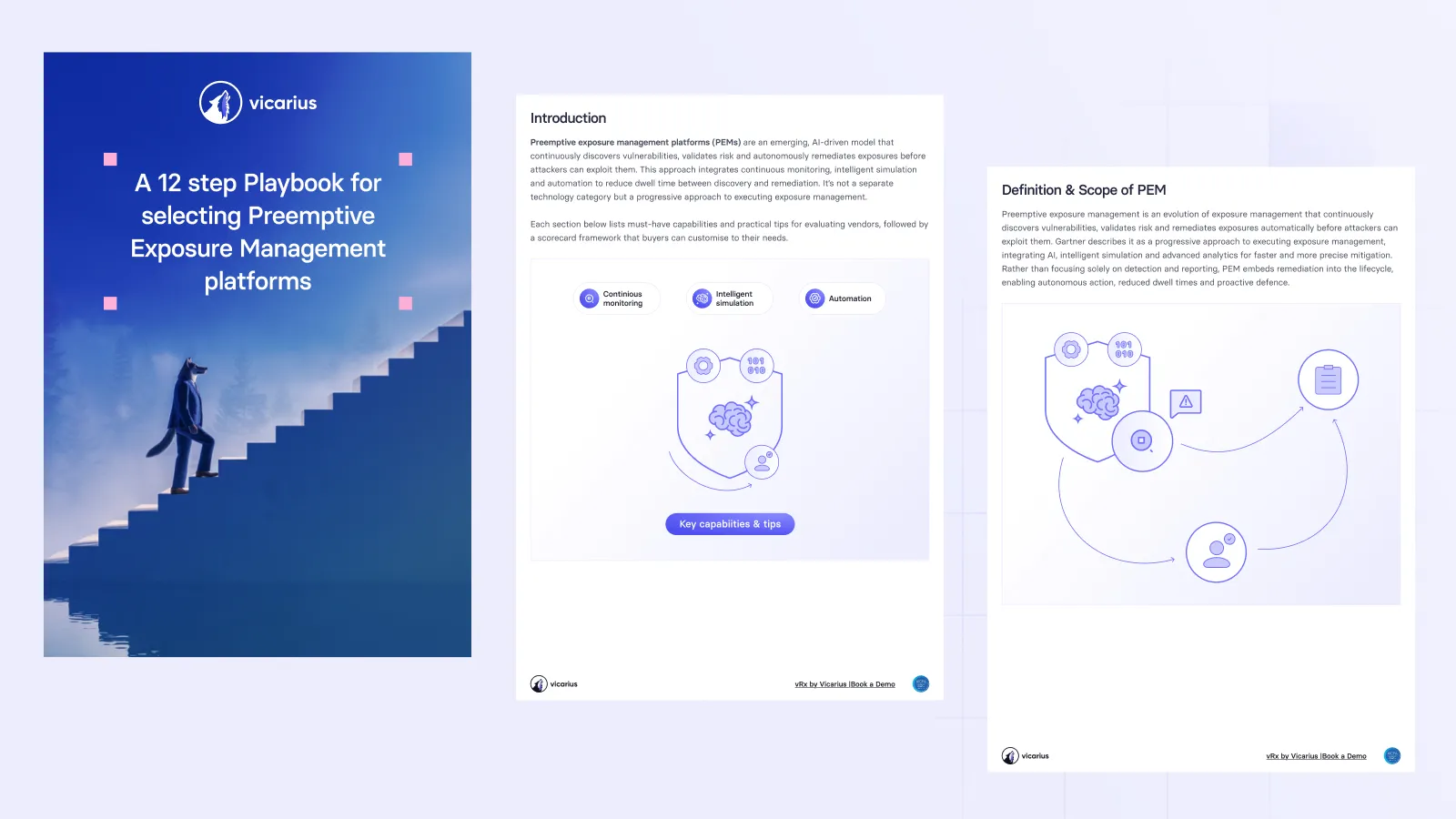
Want to score a platform against these exact criteria as you go?
Download the free vulnerability management platform readiness checklist and check off each capability as you evaluate vendors.
Discovery coverage: What can the platform actually see?
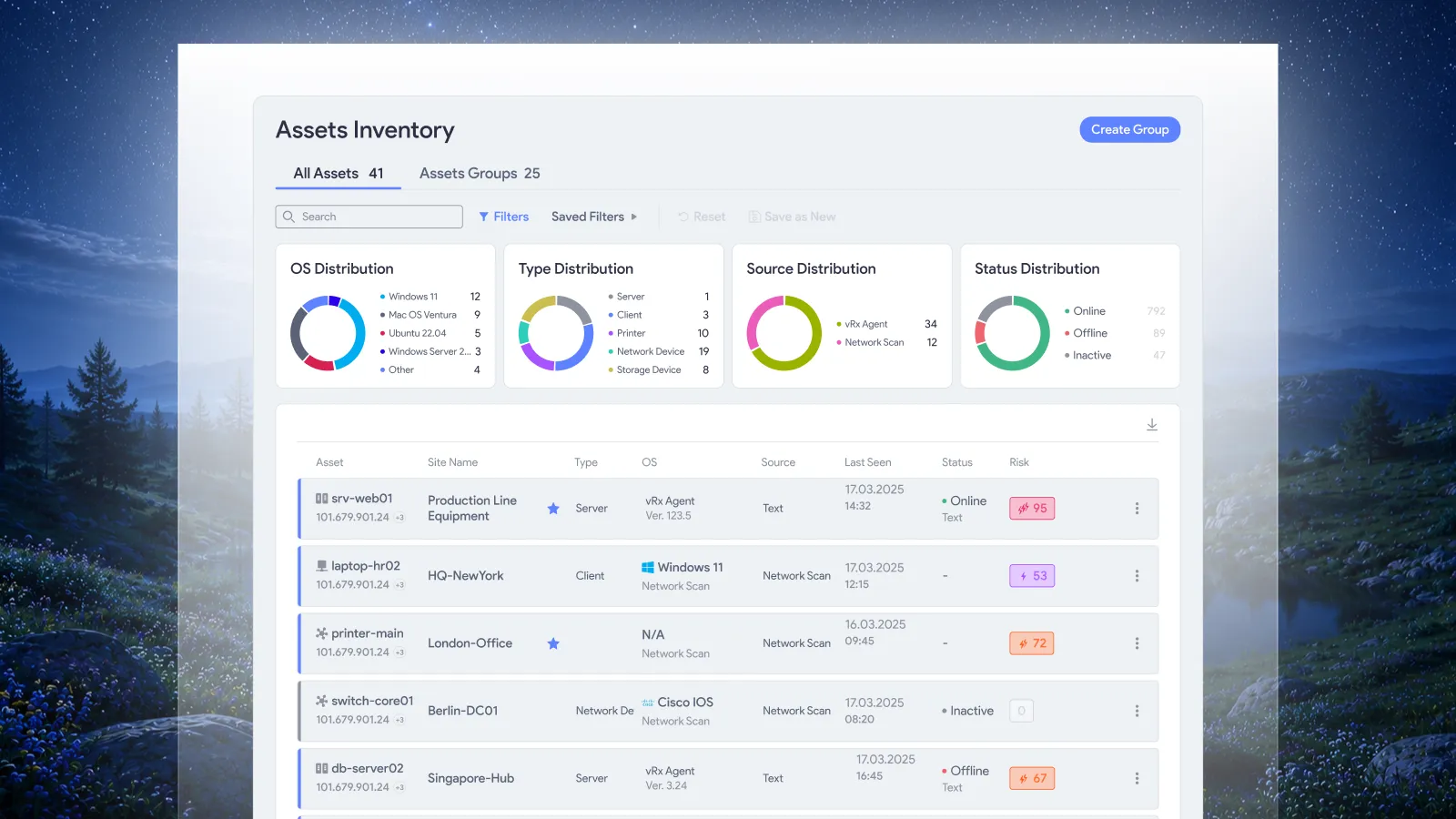
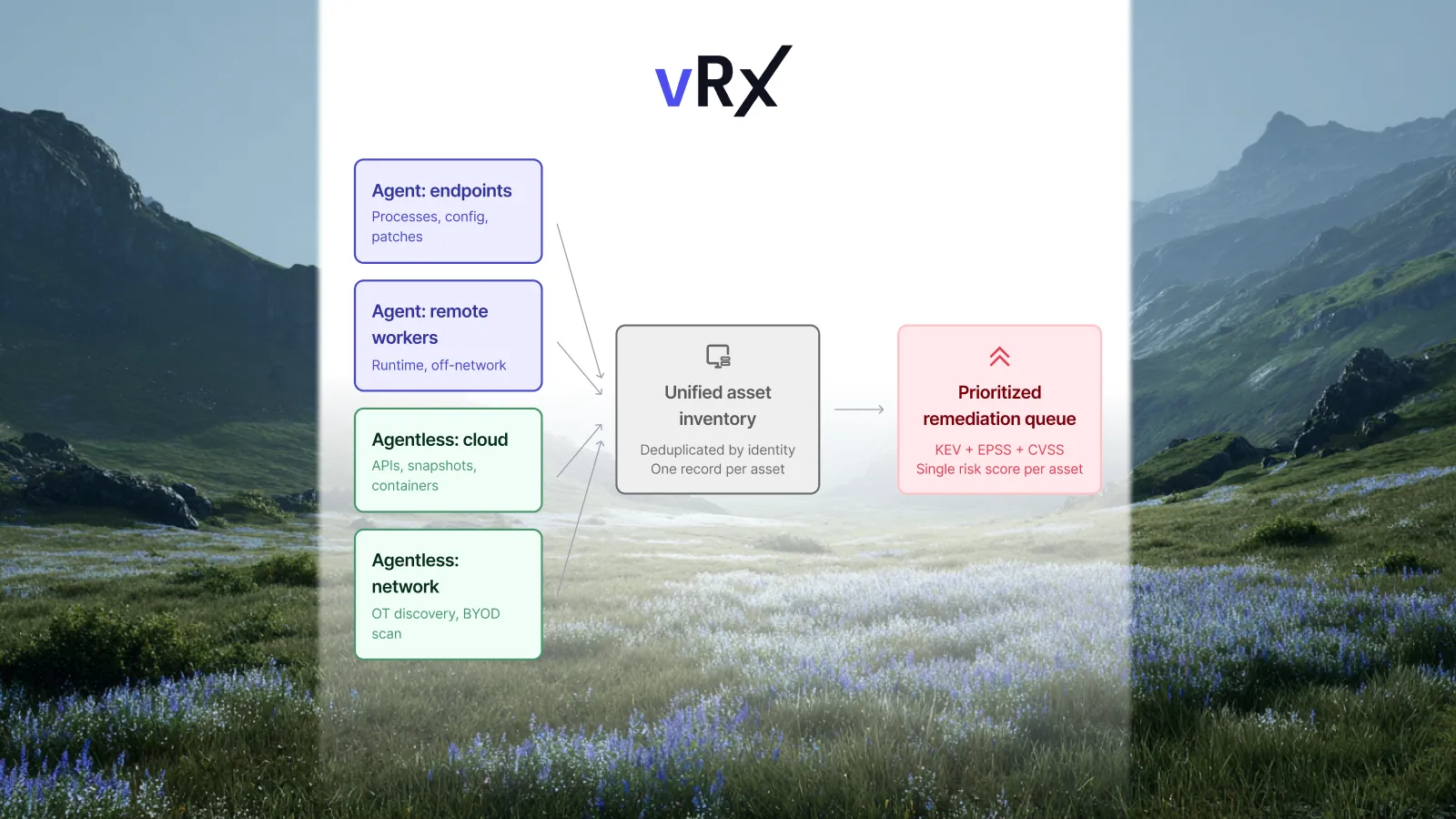
Your platform needs visibility across your entire attack surface. That means endpoints, servers, cloud workloads, IoT devices, and third-party applications. If you're running a mixed environment with Windows, macOS, and Linux systems, confirm the platform supports all of them.
Look for both agent-based and agentless scanning options. Agentless scanning works well for cloud-native environments and short-lived workloads. Agent-based approaches offer deeper visibility for persistent infrastructure. The best platforms give you both.
Risk-based prioritization: Which vulnerabilities matter?
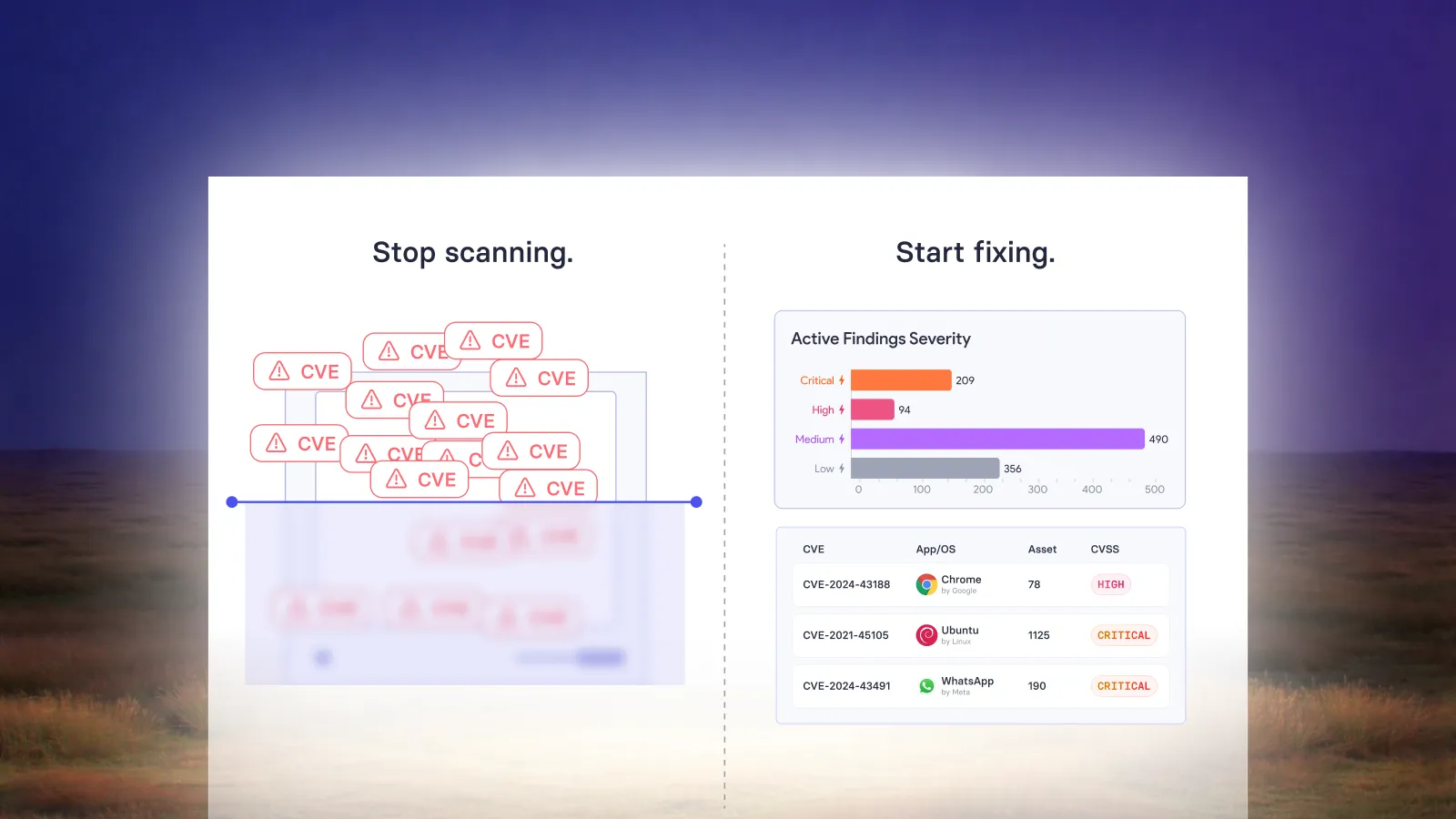
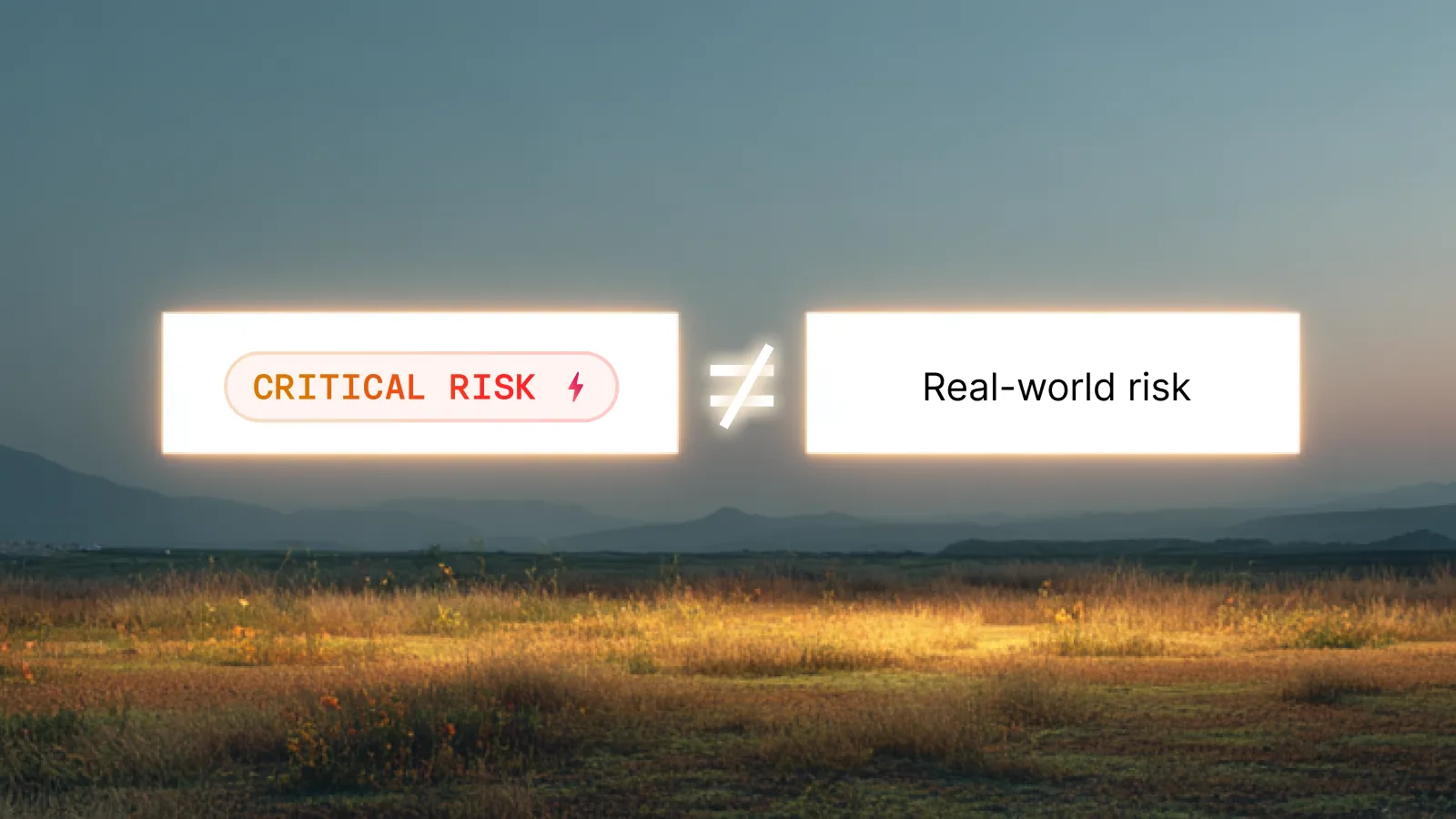
Not every CVE deserves equal attention. A critical vulnerability on an air-gapped development machine poses far less risk than a medium-severity flaw on your internet-facing payment server. Your platform should factor in exploitability, asset criticality, and real-world threat intelligence when ranking what to fix first.
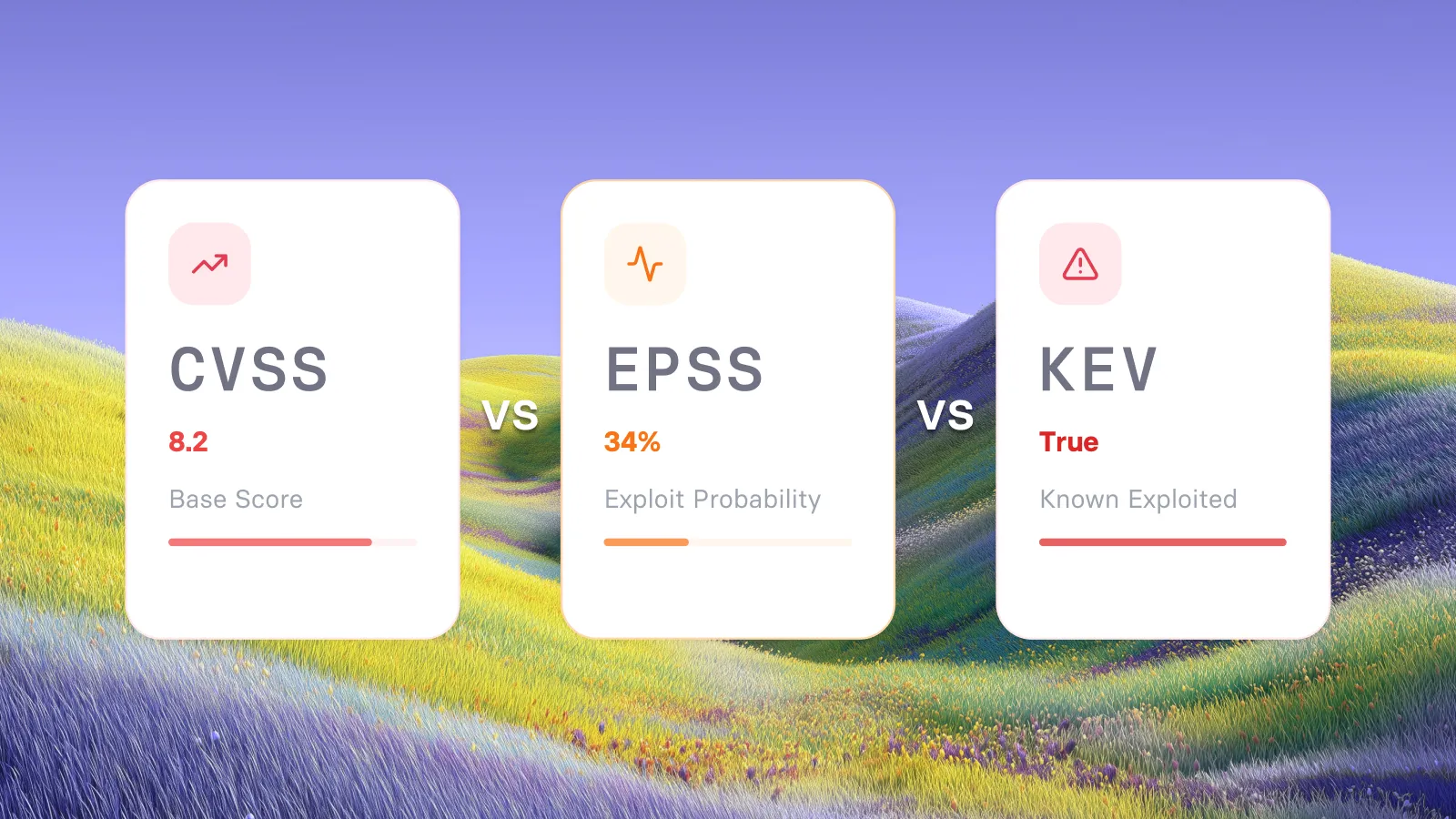
Platforms that rely solely on CVSS scores will bury you in noise. Look for risk scoring that incorporates Known Exploited Vulnerabilities (KEV) data, EPSS predictions, and context about how each asset connects to your broader network.
Remediation capabilities: Simple question, does it fix things?
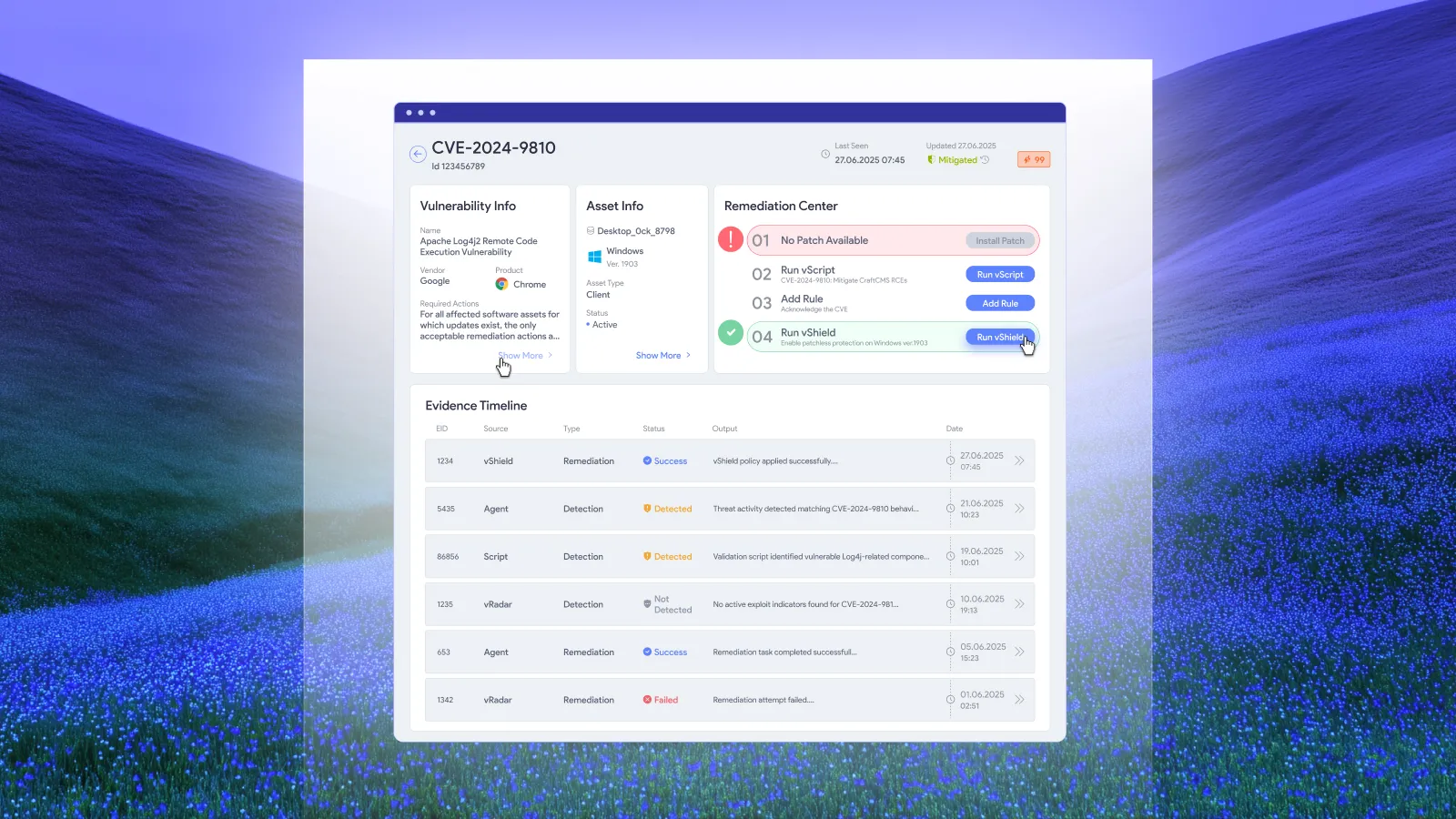
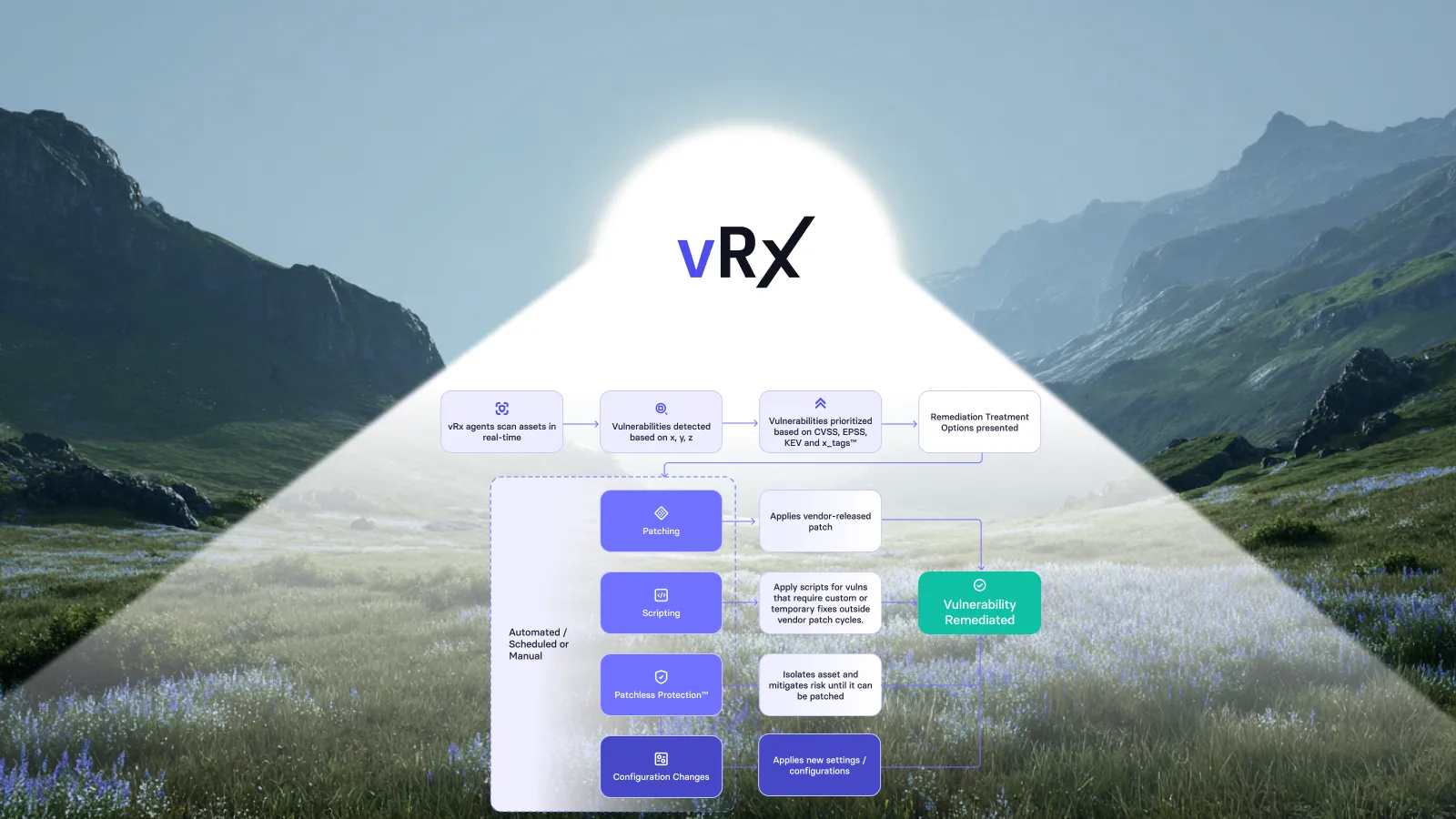
Detection without remediation creates backlogs. Your platform should close the loop by executing fixes, not just flagging problems. Evaluate whether the platform offers automated patching for operating systems and third-party applications.
Vicarius vRx covers patching for over 20,000 third-party applications alongside Windows, macOS, and Linux updates. That coverage matters because third-party software often represents your biggest exposure gap. Microsoft patching alone leaves thousands of applications unaddressed.
Zero-day mitigation: What happens when no patch exists?
The Google Threat Intelligence Group's 2025 report found that security and networking products accounted for 21 of the 90 zero-day vulnerabilities exploited that year. Enterprise technology overall was targeted by 43 of those 90, and security and networking products made up roughly half of that enterprise total. When attackers find a vulnerability before a patch is available, your standard patching workflow fails.
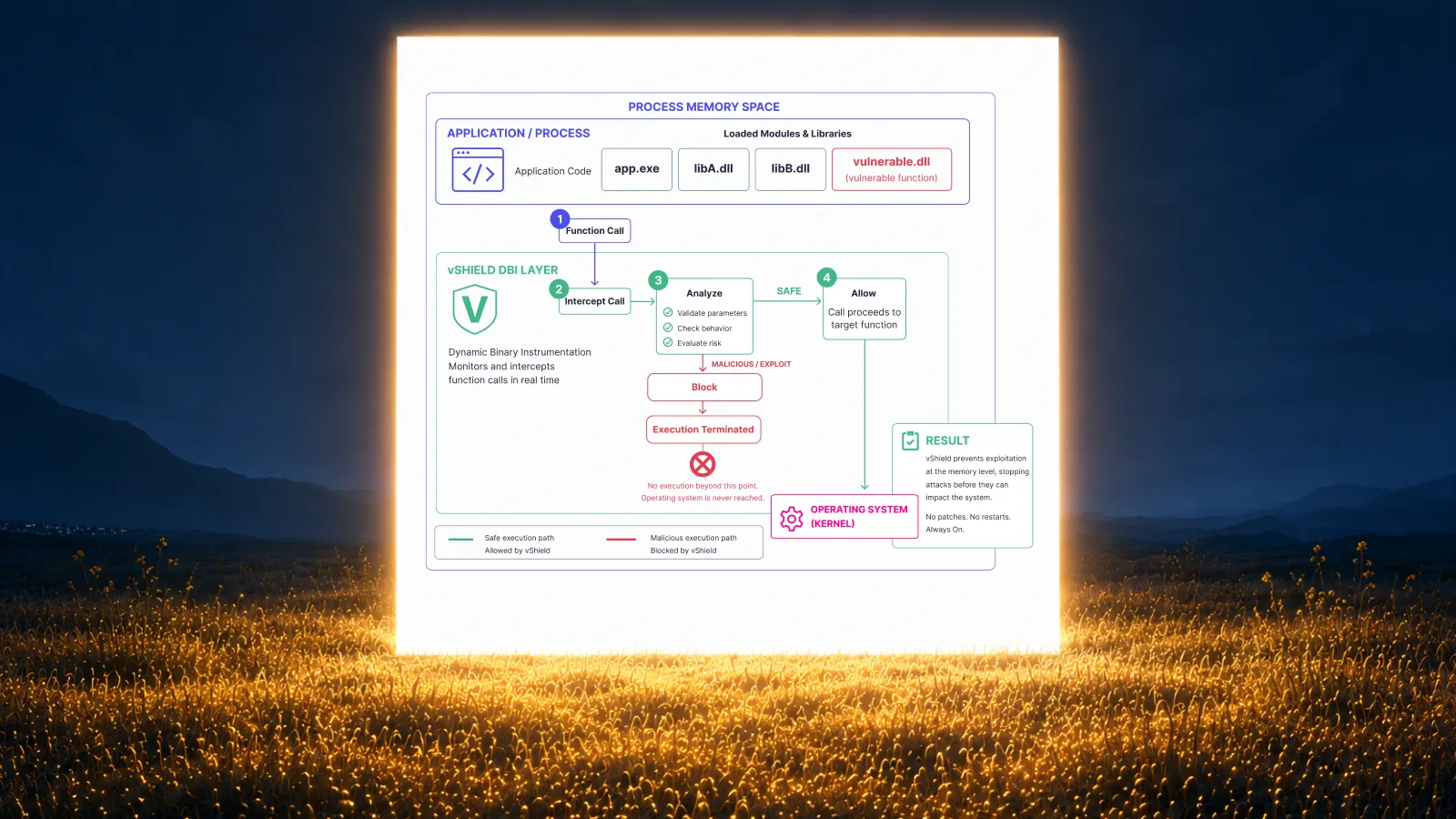
Patchless protection addresses this gap. Vicarius vRx shields vulnerable applications at memory level, blocking exploit paths without requiring an applied patch. This capability keeps legacy systems and critical infrastructure protected during the window between disclosure and patch availability.
Compliance reporting: Can you prove your security posture?
Auditors want evidence, not promises. Your platform should generate reports that map directly to compliance frameworks like HIPAA, PCI DSS, CMMC, Cyber Essentials, and over 100 CIS Benchmarks.
Manual evidence collection drains time from your security team. Look for platforms that automatically document every remediation action with timestamps and verification. When audit season arrives, you'll have proof that vulnerabilities were closed, not just identified.
What features reduce tool sprawl in vulnerability management?
Many organizations run separate tools for vulnerability scanning, patch management, and compliance reporting. That fragmentation creates gaps where vulnerabilities slip through and duplicates work across teams.
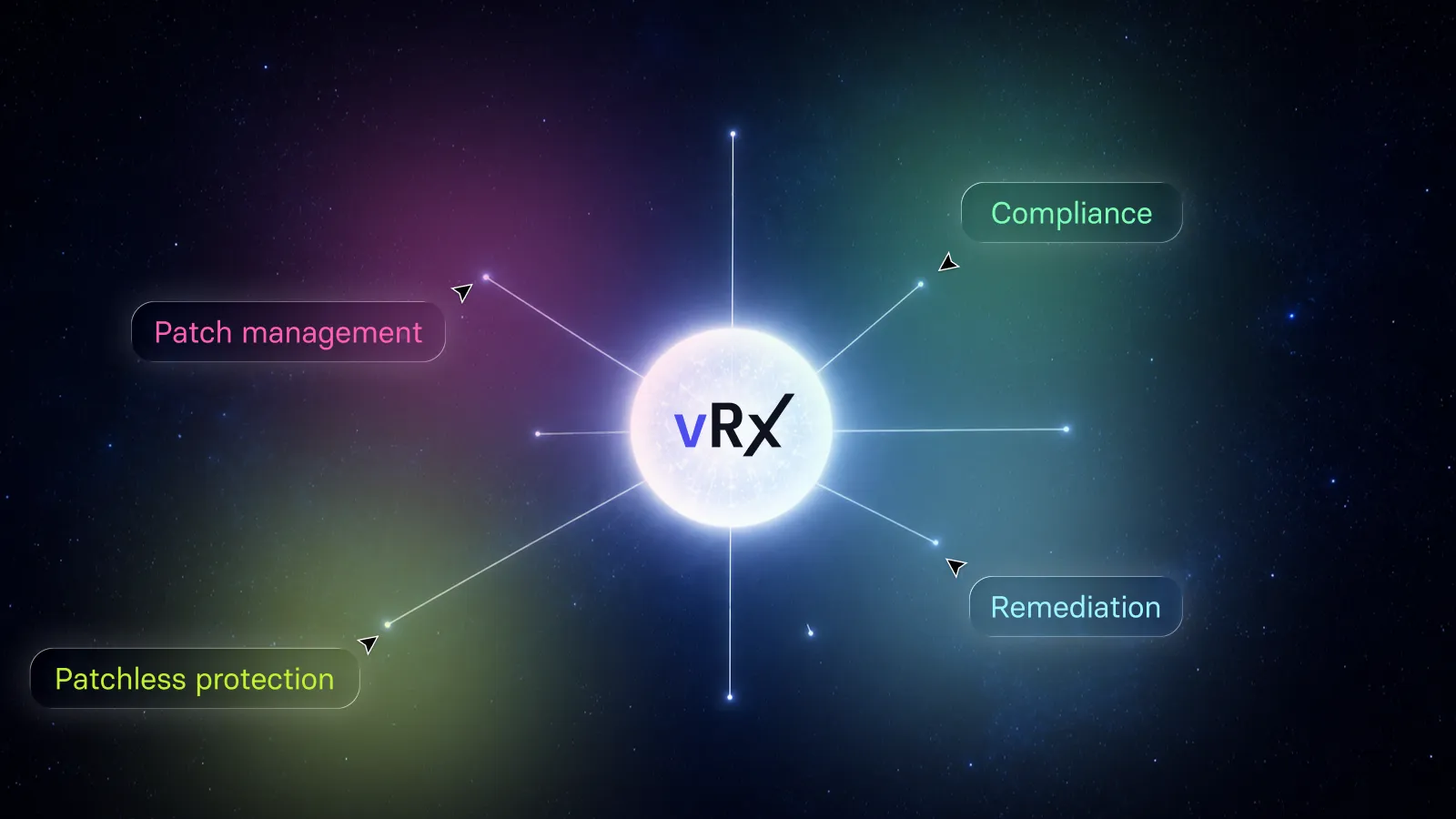
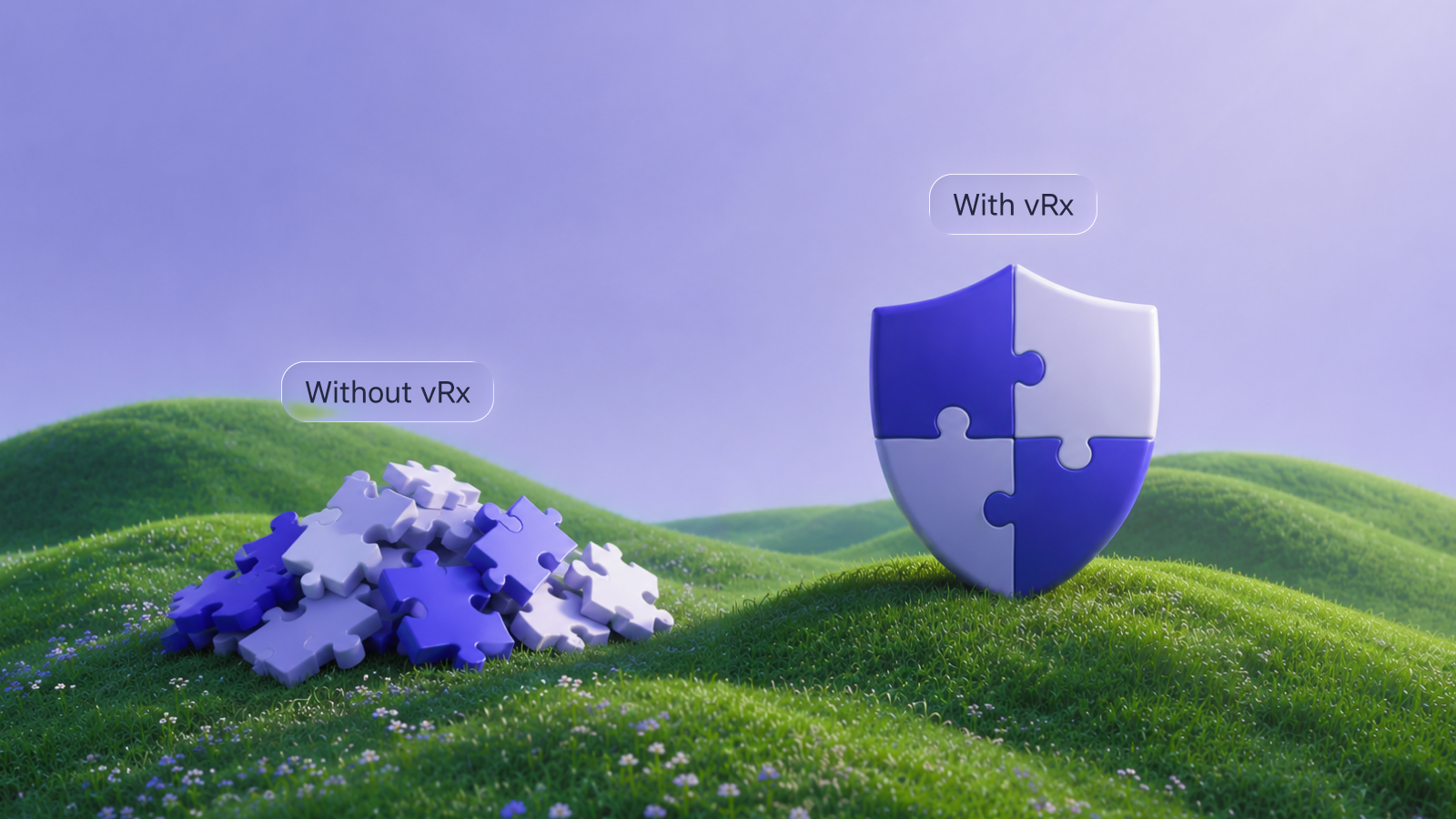
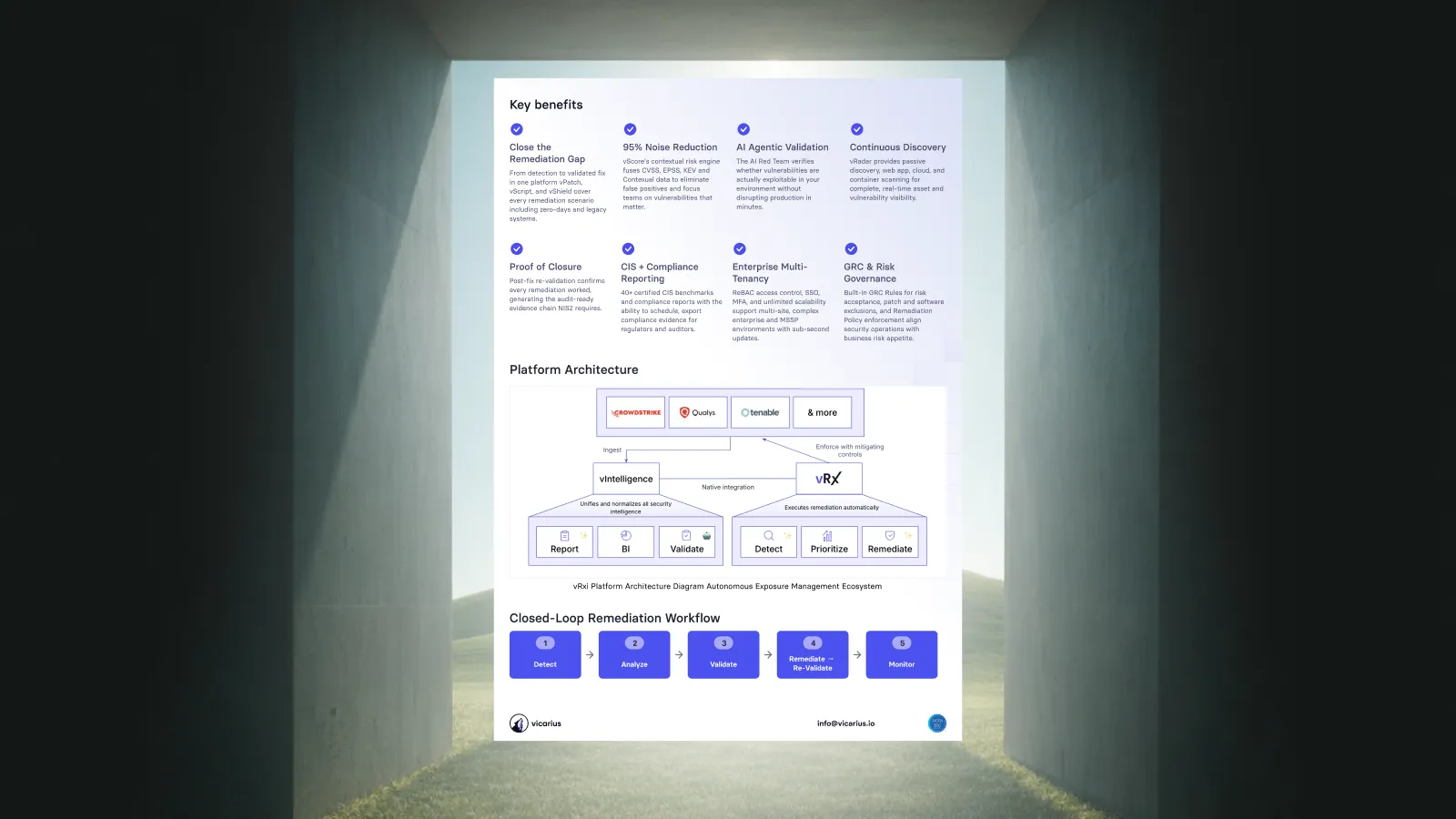
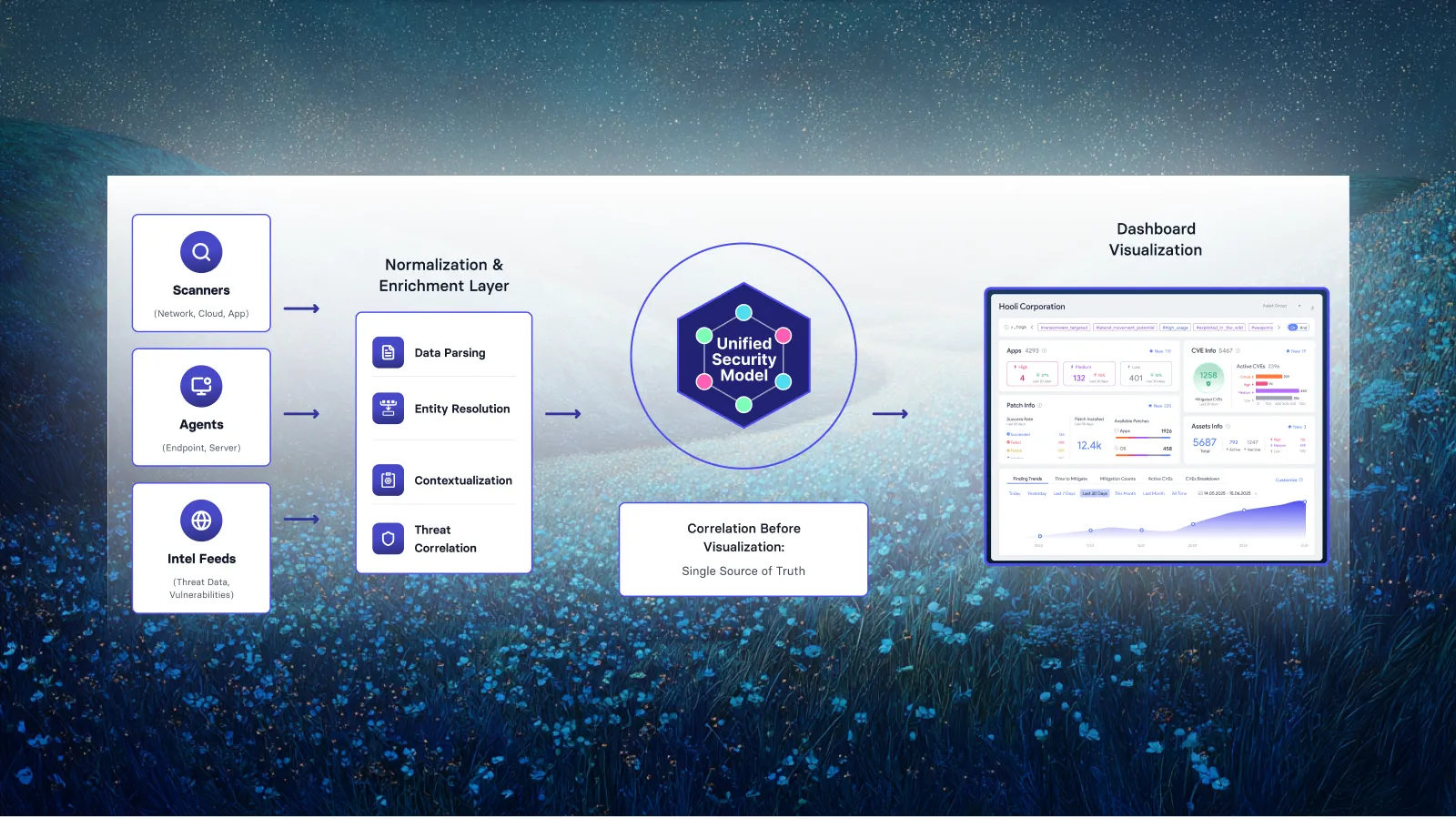
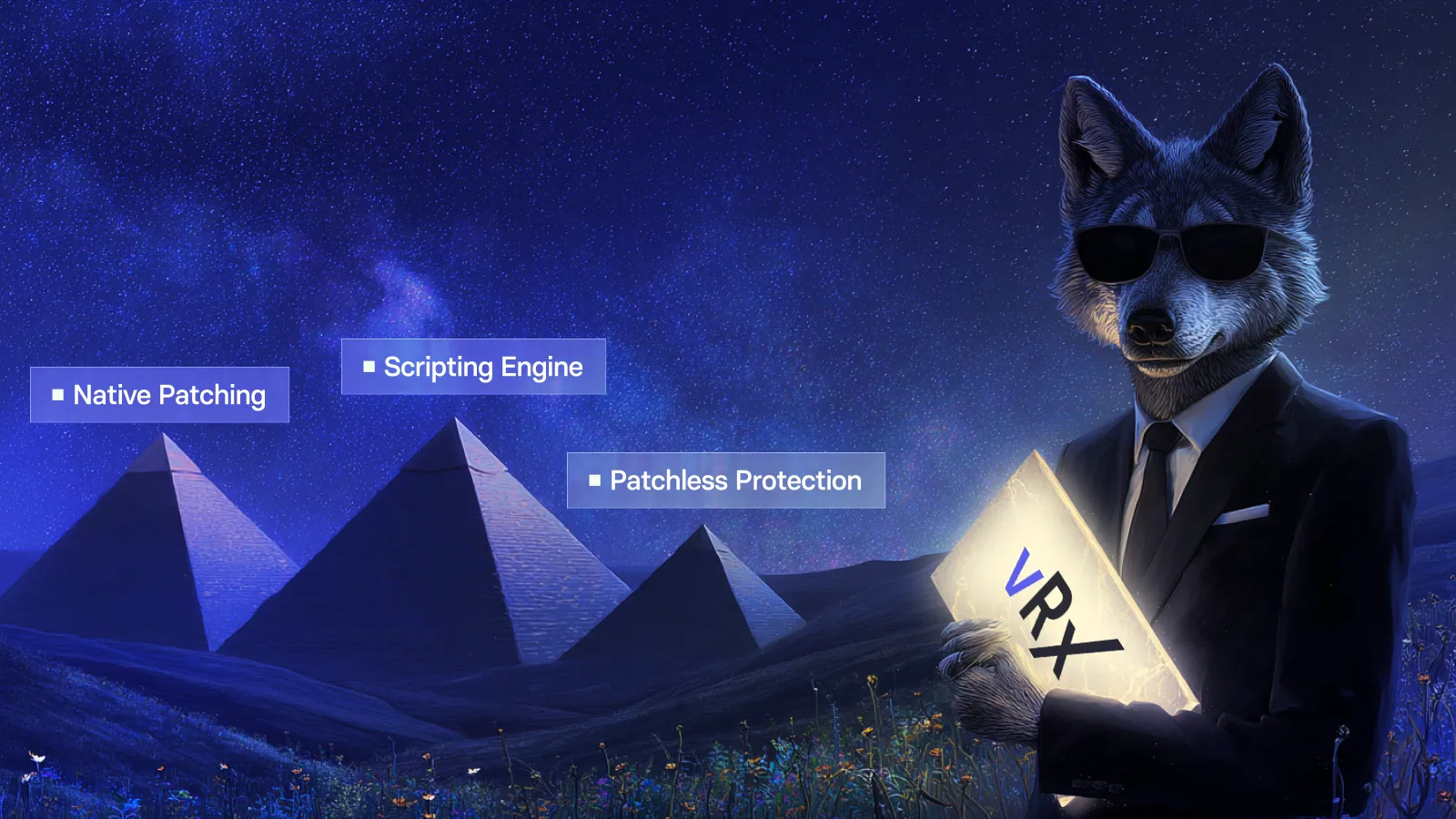
A unified platform consolidates these functions into a single console. You get one view of your vulnerabilities, one workflow for remediation, and one source of truth for compliance. Vicarius vRx combines discovery, prioritization, automated patching, scripting capabilities, and patchless protection in one platform.
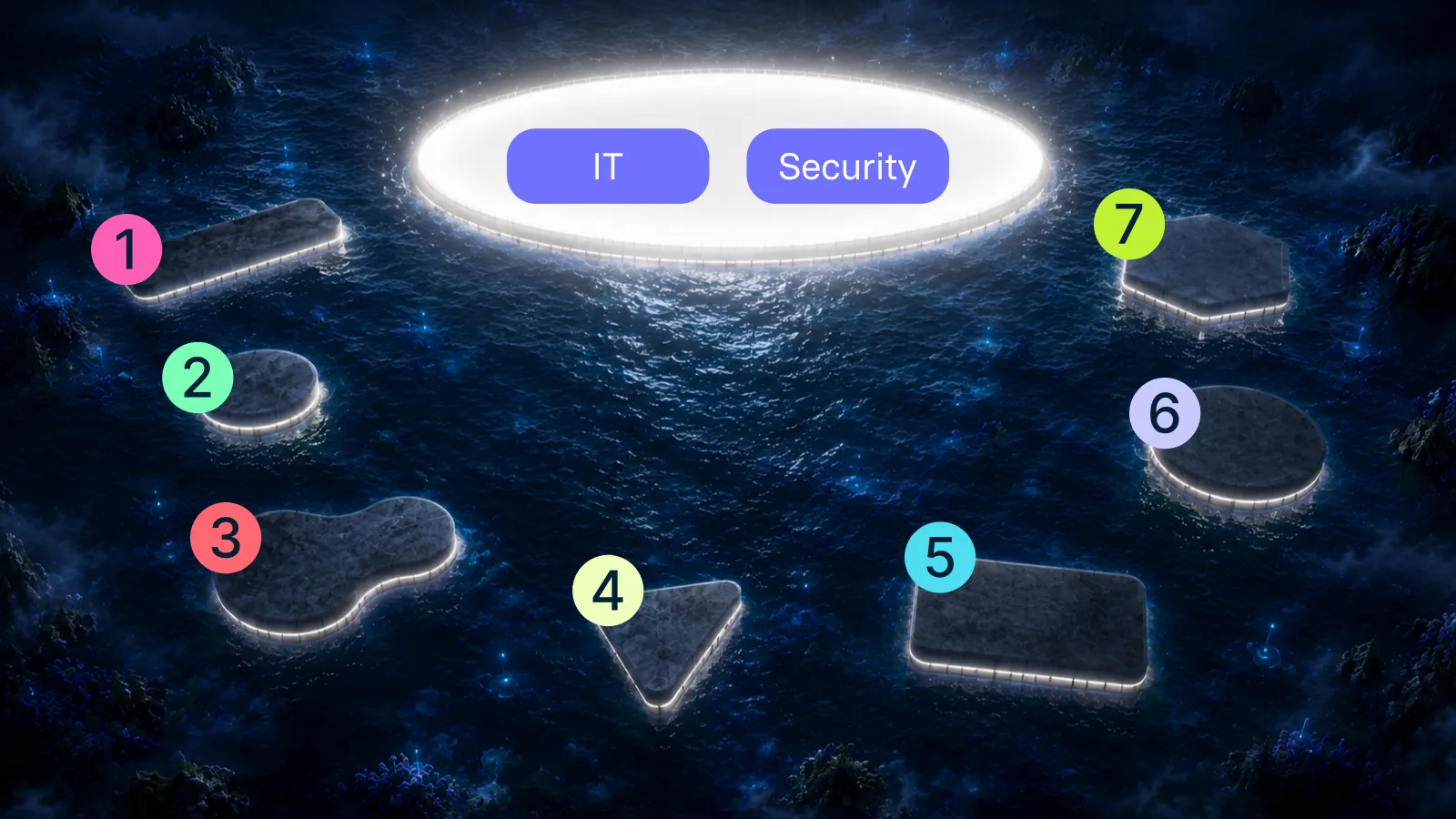
The benefits extend beyond convenience. When your IT and security teams work from the same system, handoffs disappear. The vulnerability flagged by your security analyst gets remediated by your IT operations team without tickets bouncing between tools.
How does automated remediation work in practice?
Automation transforms vulnerability management from a firefighting exercise into a controlled program. Here's what that looks like in practice.
Policy-driven patching
You define the rules: which patches deploy automatically, which require approval, and when maintenance windows occur. The platform handles execution according to your policies. Critical security patches might deploy immediately to workstations while server patches wait for scheduled windows.
Vicarius customers report reducing patching time by up to 80% through automation. A major airline, for example, transformed patch scheduling from a full-time job into a one-day task.
Script-based remediation
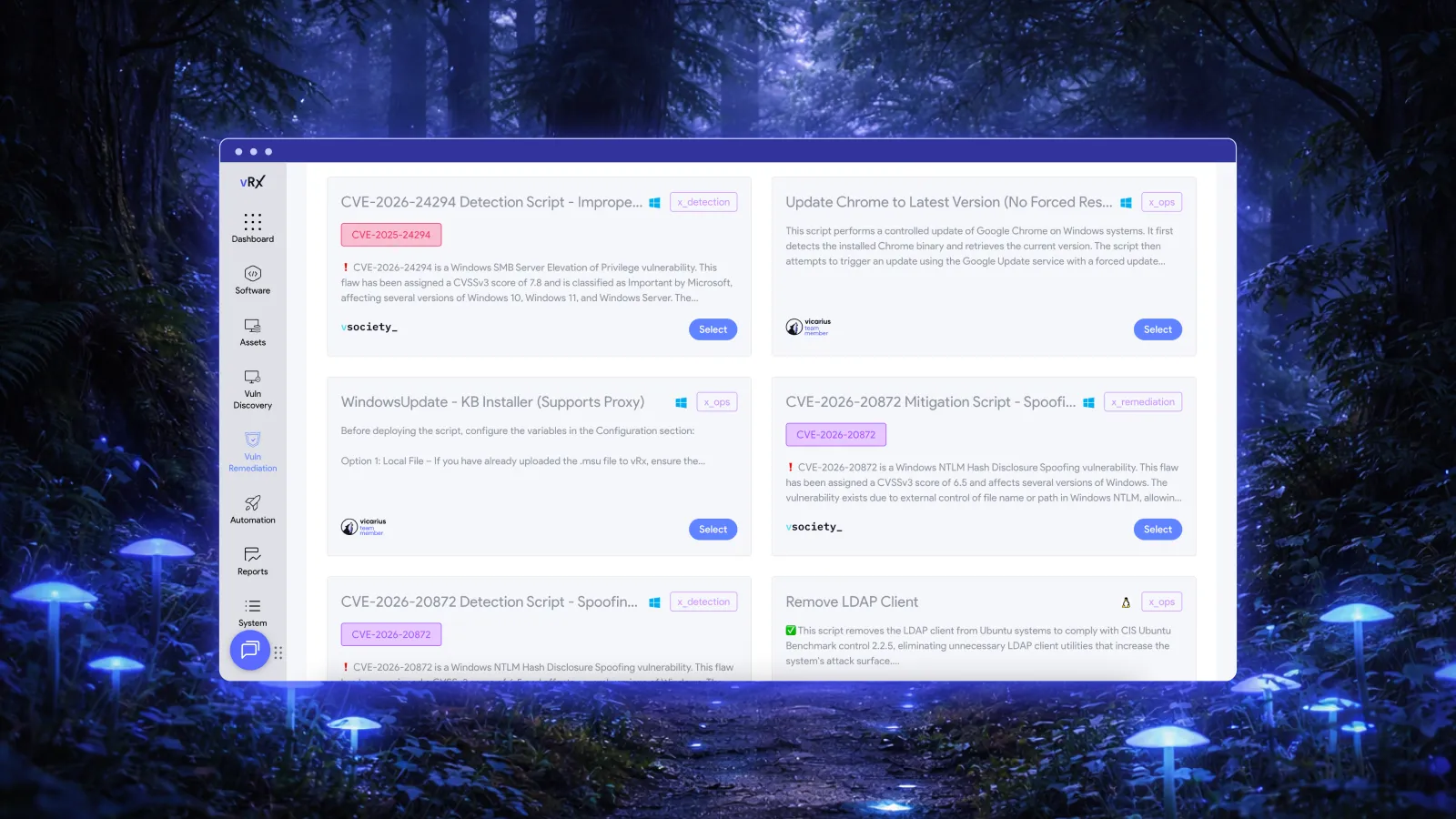
Some vulnerabilities require configuration changes rather than patches. A scripting engine lets your team deploy registry fixes, hardening configurations, and custom remediation across your environment without manual intervention on each endpoint.
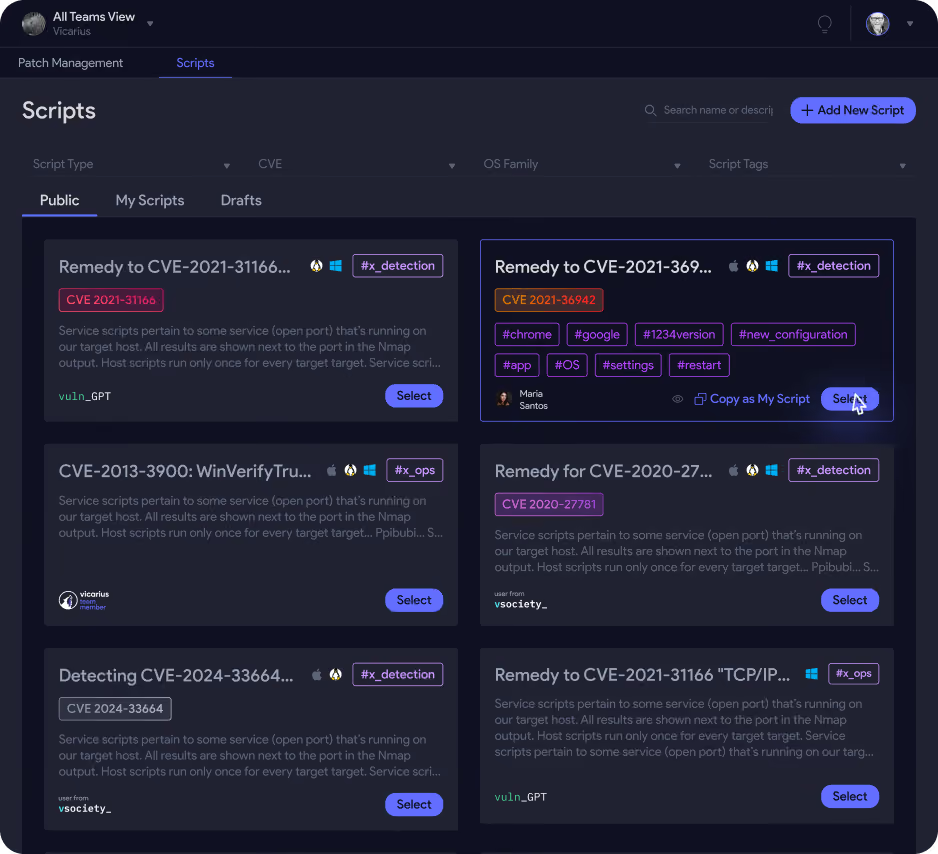
Vicarius vRx includes a library of pre-built scripts alongside community-contributed options from vSociety. For unique situations, ScriptAI generates custom remediation scripts based on your specific requirements.
Closed-Loop verification
Remediation isn't complete until you verify the fix worked. Platforms should re-scan after deployment to confirm vulnerabilities are closed, not just addressed. This verification turns remediation from hopeful to proven.
What role does business risk alignment play in vulnerability prioritization?
Your business context shapes which vulnerabilities pose actual risk. A flaw in your customer-facing payment application matters more than the same flaw in an internal documentation tool. Your platform should incorporate that context.
Business risk alignment means connecting vulnerability data to asset criticality, data sensitivity, and exposure. When your payment system has an exploitable vulnerability that's actively being targeted in the wild, that combination should surface at the top of your remediation queue regardless of CVSS score alone.
Vicarius vRx uses vScore to factor in exploitability, weaponization status, and business context alongside severity. Your team acts on vulnerabilities that represent actual risk rather than theoretical severity ratings.
How do you handle legacy and end-of-life systems?
Every organization has systems that can't be patched: legacy applications critical to operations, end-of-life software waiting for migration, or specialized equipment with frozen configurations. These systems remain vulnerable unless you protect them differently.
Patchless protection wraps these applications at memory level, preventing exploitation without modifying the underlying software. Your legacy systems stay operational while remaining protected against known attack paths.
This capability proves especially valuable for manufacturing environments with industrial control systems, healthcare organizations with medical devices, and financial institutions with mainframe applications that can't be easily updated.
What should you look for in third-party application coverage?
Microsoft patches get attention because Windows Update handles them automatically. But your environment likely includes hundreds of additional applications that need patching: browsers, productivity tools, development frameworks, and specialized software.
Many vulnerability management platforms focus primarily on operating systems and major software vendors. That leaves gaps in your coverage. Evaluate platforms based on the breadth of their third-party application support.
Vicarius vRx supports automated patching for over 10,000 third-party applications. That coverage includes browsers like Chrome and Firefox, productivity software, development tools, and common enterprise applications. The platform also generates Software Bills of Materials (SBOMs) for supply chain visibility.
How do vulnerability platforms support multi-tenant environments?
Managed service providers (MSPs) and enterprises with distributed operations need platforms that scale across multiple environments while maintaining separation and centralized control.
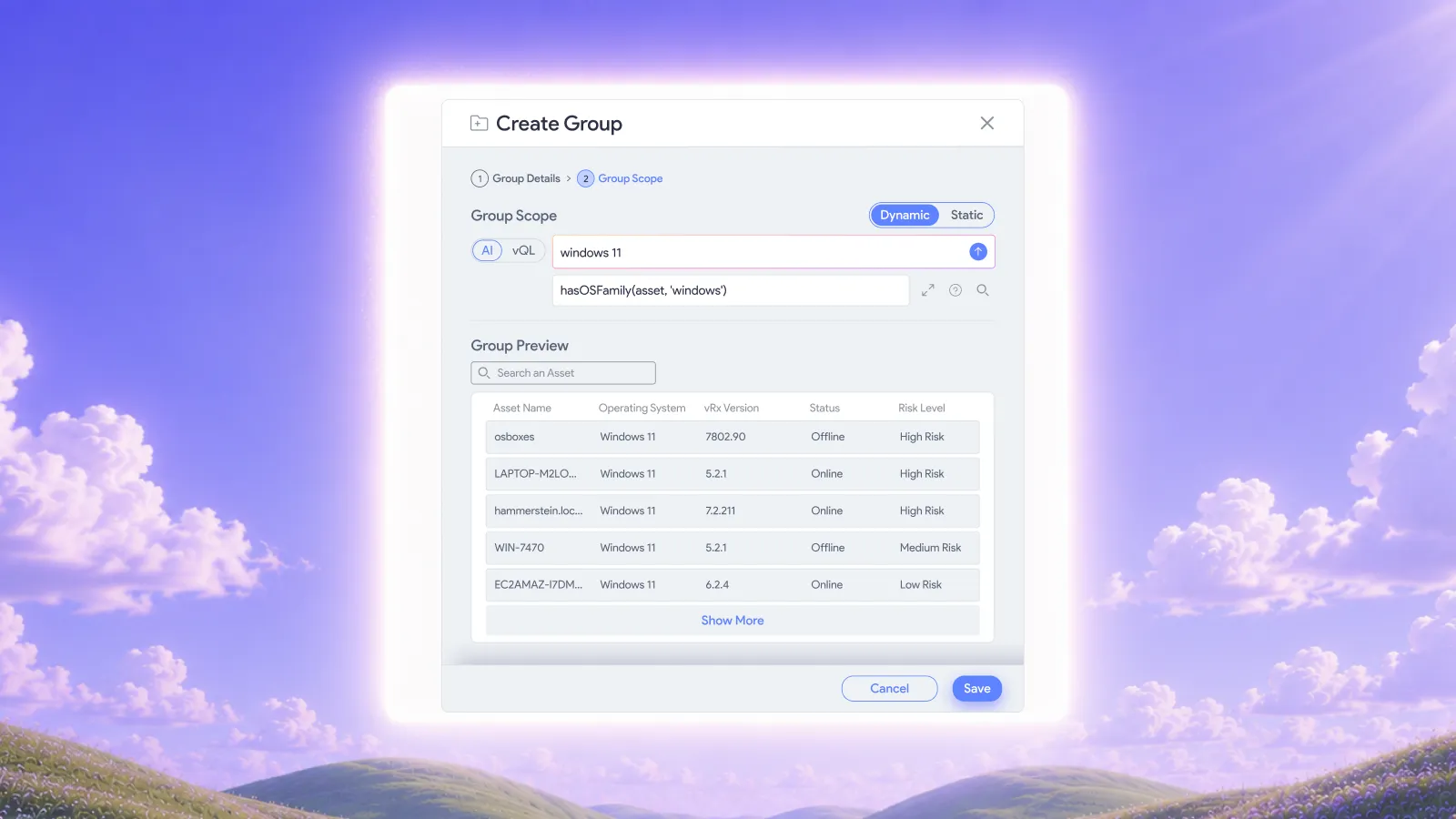
Multi-tenant architecture lets you manage vulnerabilities across client environments or business units from a single console while keeping data isolated. Each tenant gets their own view, policies, and reporting while you maintain oversight across the entire portfolio.
Vicarius vRx includes MSP-friendly multi-tenancy with tenant isolation and centralized visibility. Service delivery managers can deploy consistent security policies across clients while generating separate compliance reports for each organization.
What integration capabilities matter for vulnerability management?
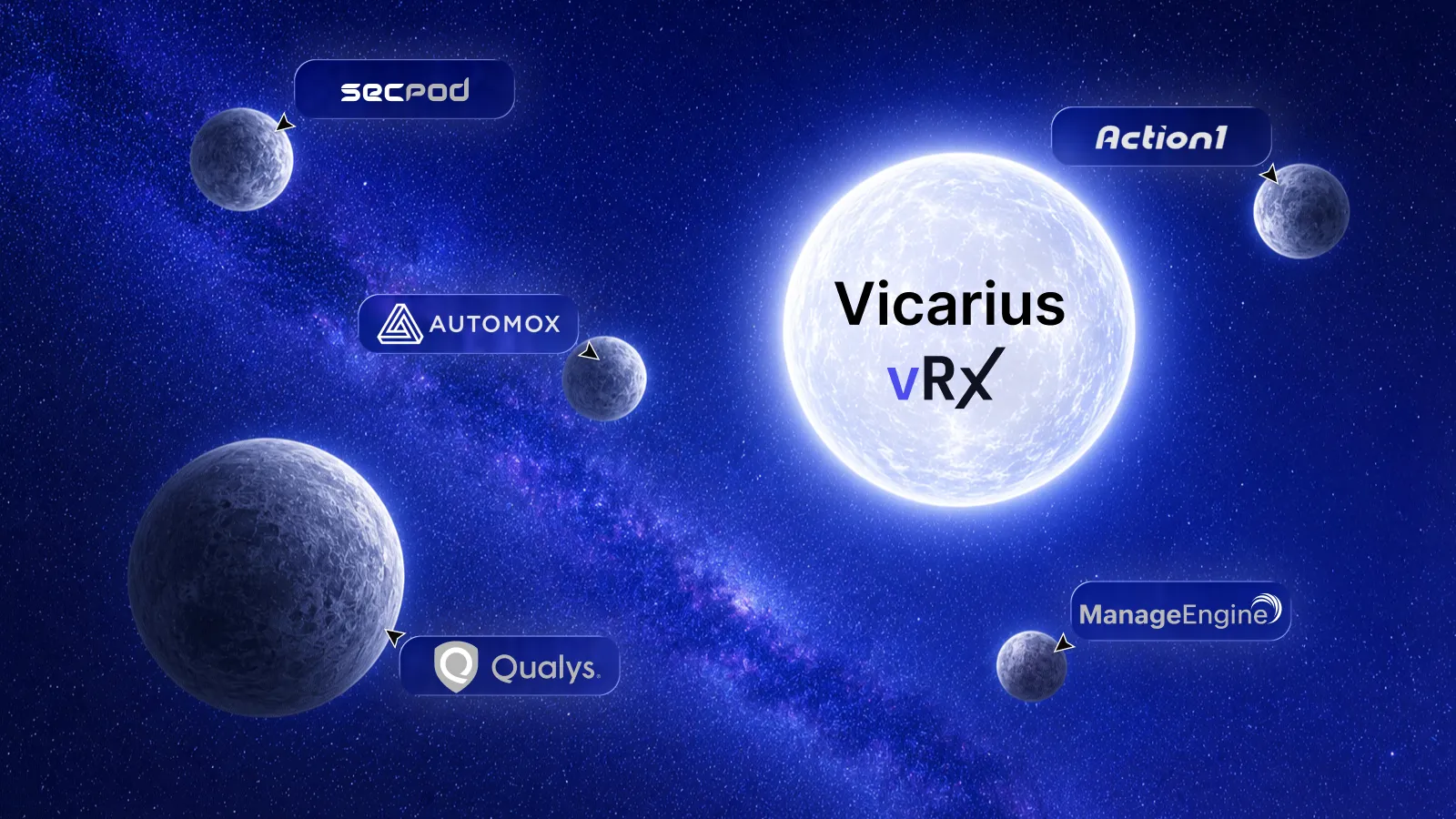
Your vulnerability management platform doesn't operate in isolation. It needs to connect with your existing security stack, IT service management tools, and collaboration platforms.
Look for integrations with SIEM platforms for centralized security monitoring, ITSM tools like ServiceNow for ticket workflows, and SSO providers for identity management. API access enables custom integrations with your specific toolchain.
The goal is streamlined workflows where vulnerability data flows automatically to the right teams and systems. When a critical vulnerability appears, it should create tickets, trigger alerts, and initiate remediation without requiring someone to manually copy information between tools.
How do you measure success in vulnerability management?
Metrics drive improvement. Track these indicators to measure whether your platform delivers results.
Mean time to remediate (MTTR)
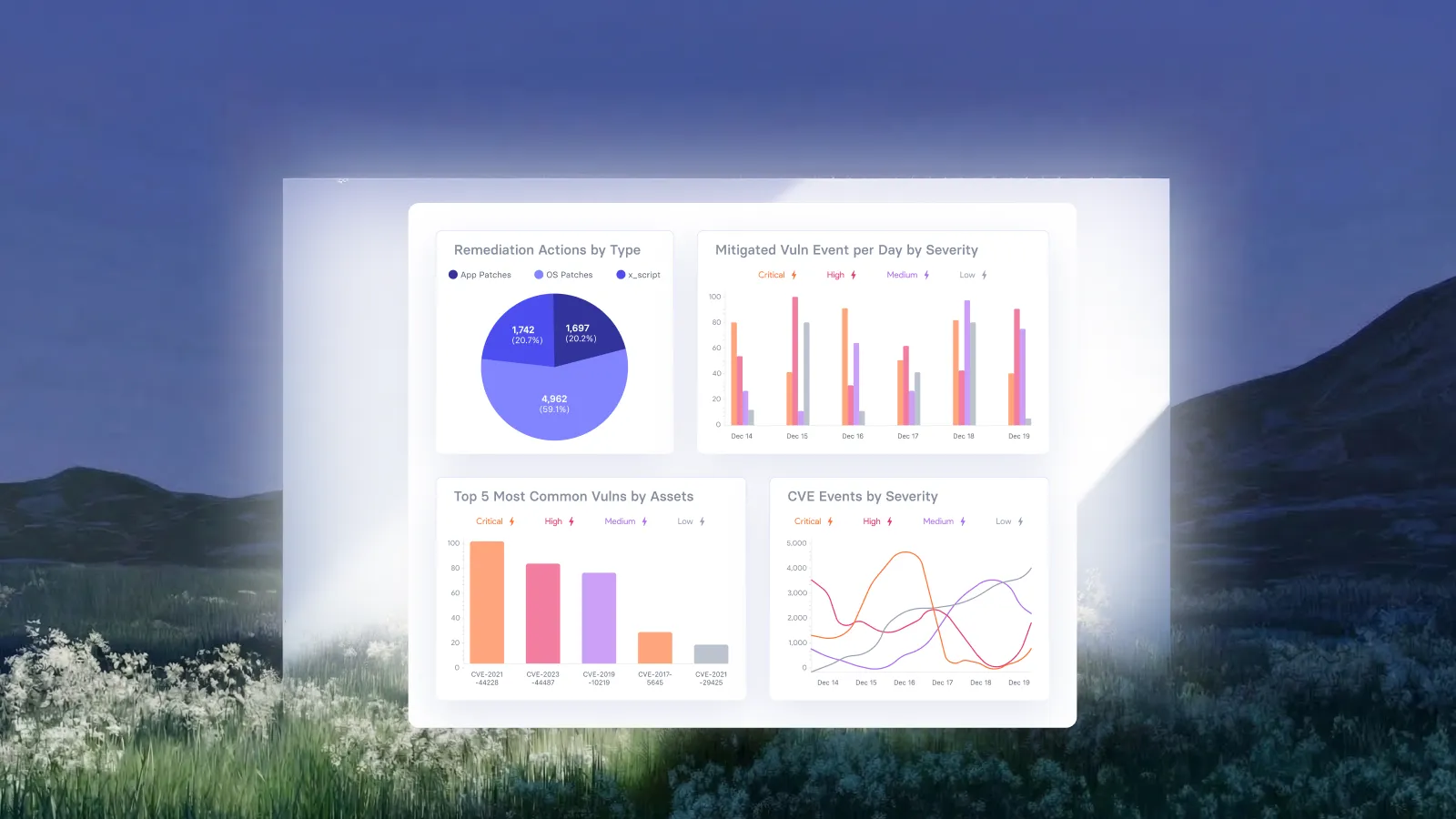
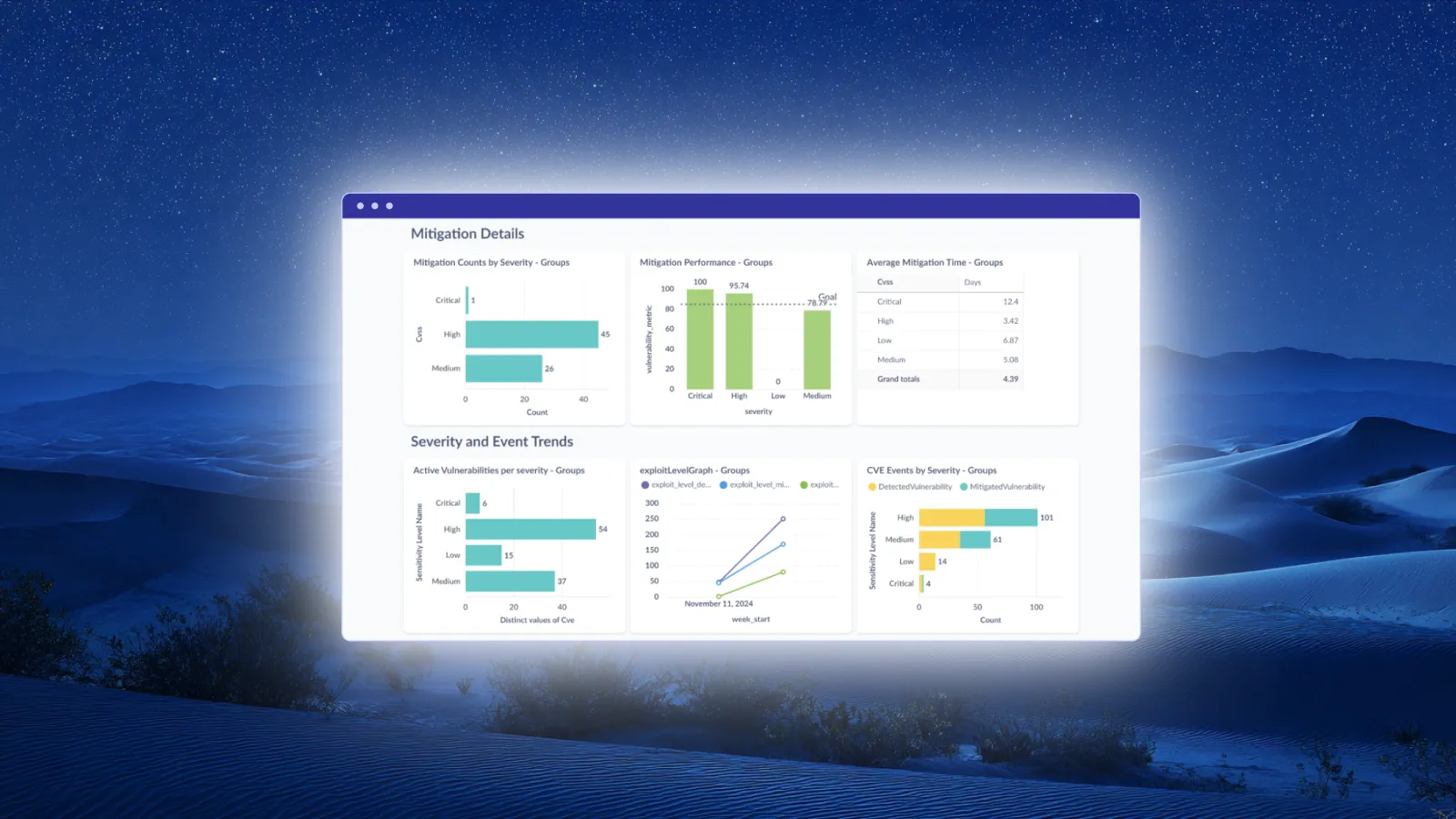
How long does it take from vulnerability discovery to verified remediation? This metric captures your actual security posture improvement. Vicarius customers report reducing MTTR by 60-70% through automated workflows.
Vulnerability backlog trend
Is your list of open vulnerabilities growing or shrinking? A platform that accelerates remediation should show a declining backlog over time, not an ever-growing list of unfixed issues.
Compliance coverage
What percentage of your systems meet your compliance requirements at any given time? Automated monitoring and reporting give you real-time visibility into compliance status rather than point-in-time snapshots.
Automation rate
What proportion of your remediations happen automatically versus requiring manual intervention? Higher automation means your team focuses on exceptions rather than routine patching.
What questions should you ask vendors during evaluation?
When you're comparing vulnerability management platforms, these questions help reveal real capabilities versus marketing claims.
Ask how the platform handles vulnerabilities when no patch is available. The answer reveals whether you'll have protection during zero-day windows or just notifications about problems you can't fix.
Request specifics on third-party application coverage. Get a list of supported applications and compare it against your actual software inventory. Broad claims should be backed by detailed catalogs.
Understand the deployment model and timeline. Some platforms require weeks or months for full deployment. Cloud-native options like Vicarius vRx can be operational in hours with lightweight agents that don't burden your endpoints.
Clarify what "automated remediation" means for each vendor. Some platforms automate detection and reporting while stopping short of execution. True automation closes the loop from discovery through verified fix.
Selecting your vulnerability management platform
Choosing a vulnerability management platform shapes how effectively you can protect your organization against threats that continue to grow in volume and sophistication. The right platform combines broad discovery, intelligent prioritization, and automated remediation to turn vulnerability data into measurable risk reduction.
Focus your evaluation on platforms that address the full vulnerability lifecycle. Detection alone leaves you with lists of problems. Remediation capabilities turn those lists into action. Zero-day protection covers the gaps between discovery and patch availability.
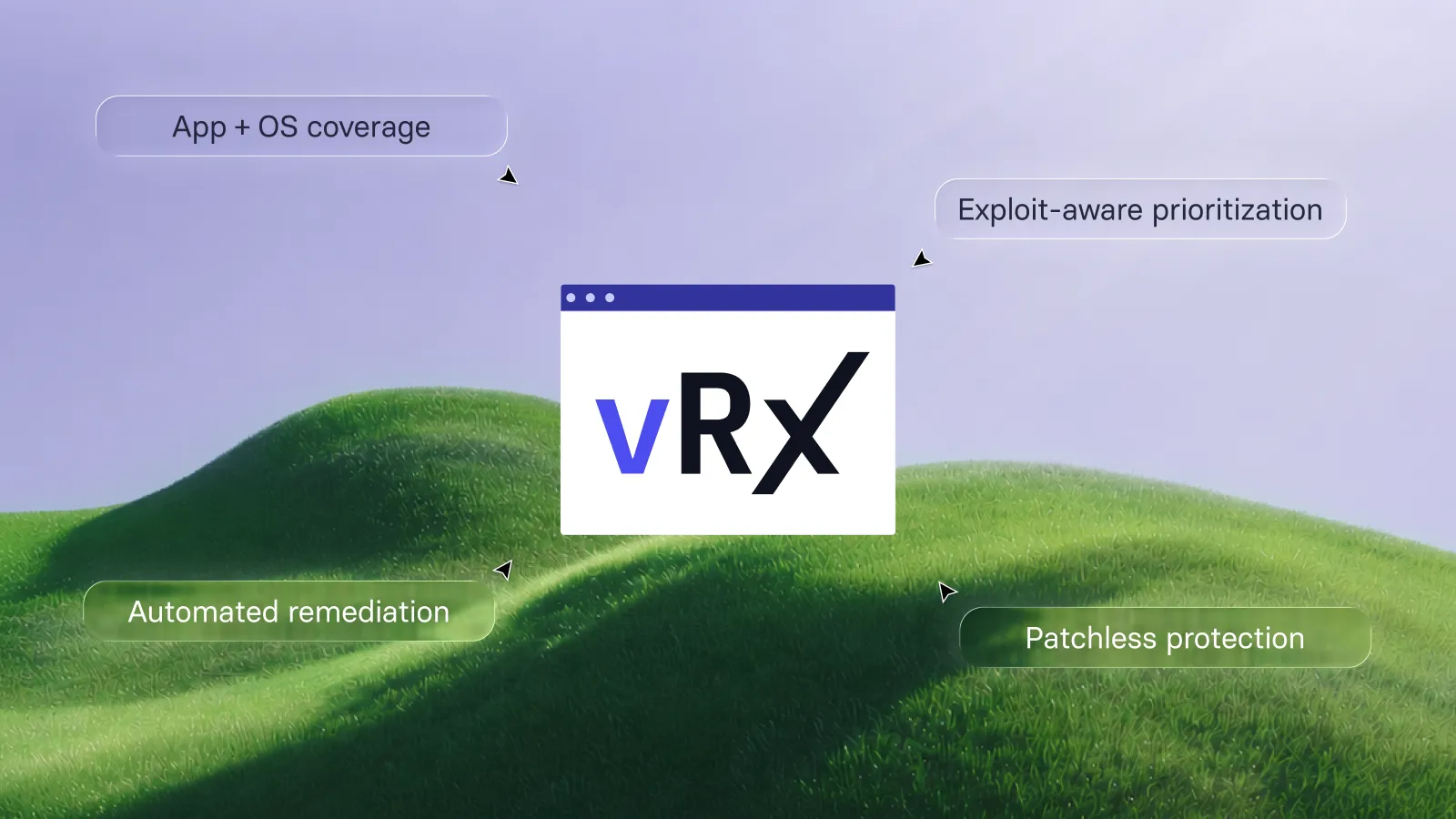
Vicarius vRx exemplifies the unified approach that modern security teams need. By combining vulnerability discovery, risk-based prioritization, automated patching, scripting capabilities, and patchless protection in a single platform, it gives your team the tools to close vulnerabilities rather than just catalog them.
Download the platform readiness checklist
FAQs
What is the difference between vulnerability scanning and vulnerability management?
Vulnerability scanning identifies security weaknesses in your systems. Vulnerability management encompasses the entire process of identifying, prioritizing, remediating, and verifying fixes. Scanners tell you what's wrong. A vulnerability management platform like Vicarius vRx helps you fix what's wrong and prove you fixed it.
How does patchless protection differ from traditional patching?
Traditional patching applies vendor-provided updates to fix vulnerabilities in code. Patchless protection shields applications at memory level without modifying the software itself. Vicarius vRx uses this approach to protect systems when patches don't exist, haven't been tested, or can't be applied due to operational constraints.
What is risk-based vulnerability prioritization?
Risk-based prioritization ranks vulnerabilities by their actual threat to your organization rather than generic severity scores. It factors in exploitability, asset criticality, network exposure, and threat intelligence. Vicarius vRx uses vScore to surface vulnerabilities representing real risk, helping your team fix what matters first.
How long does it take to deploy a vulnerability management platform?
Deployment timelines vary significantly between platforms. Some require weeks of configuration and agent deployment. Cloud-native platforms with lightweight agents can be operational in hours. Vicarius vRx offers rapid deployment, with customers reporting full visibility in hours rather than months.
Can vulnerability management platforms help with compliance audits?
Yes. Modern platforms automatically map remediation actions to compliance frameworks and generate audit-ready reports. Vicarius vRx documents every fix with timestamps and verification, giving you evidence that vulnerabilities were closed rather than just identified. This automation eliminates the scramble of manual evidence collection before audits.
What should MSPs look for in vulnerability management platforms?
MSPs need multi-tenant architecture that maintains client separation while enabling centralized management. Look for platforms with tenant isolation, consolidated dashboards, and per-client reporting. Vicarius vRx includes MSP-friendly multi-tenancy, letting service providers manage vulnerabilities across client environments efficiently.











.webp)













%20Signals%20a%20New%20Era%20of%20Supply%20Chain%20Risk.webp)





.webp)

















%20to%20Reduce%20Attack%20Surface.avif)