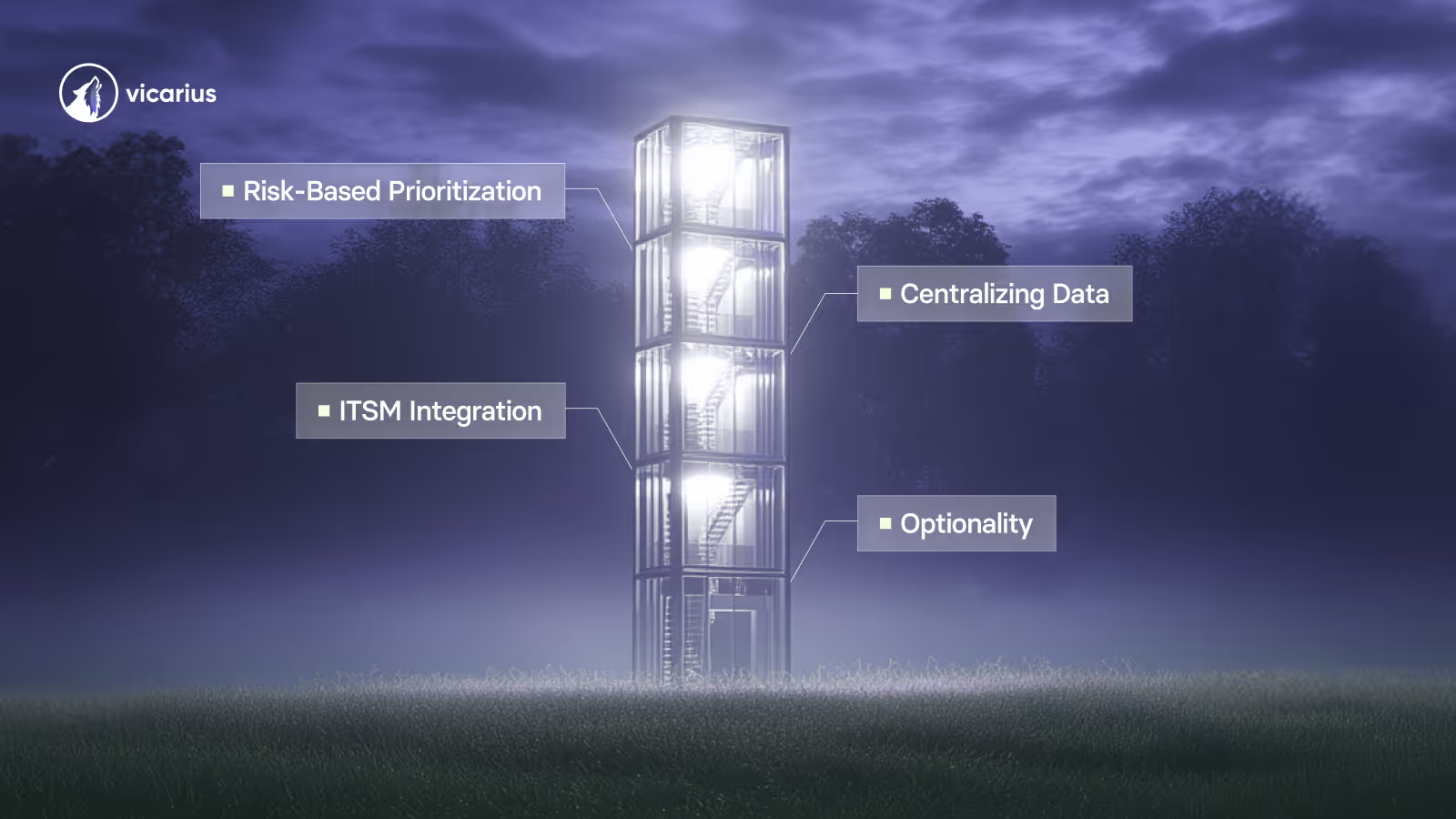


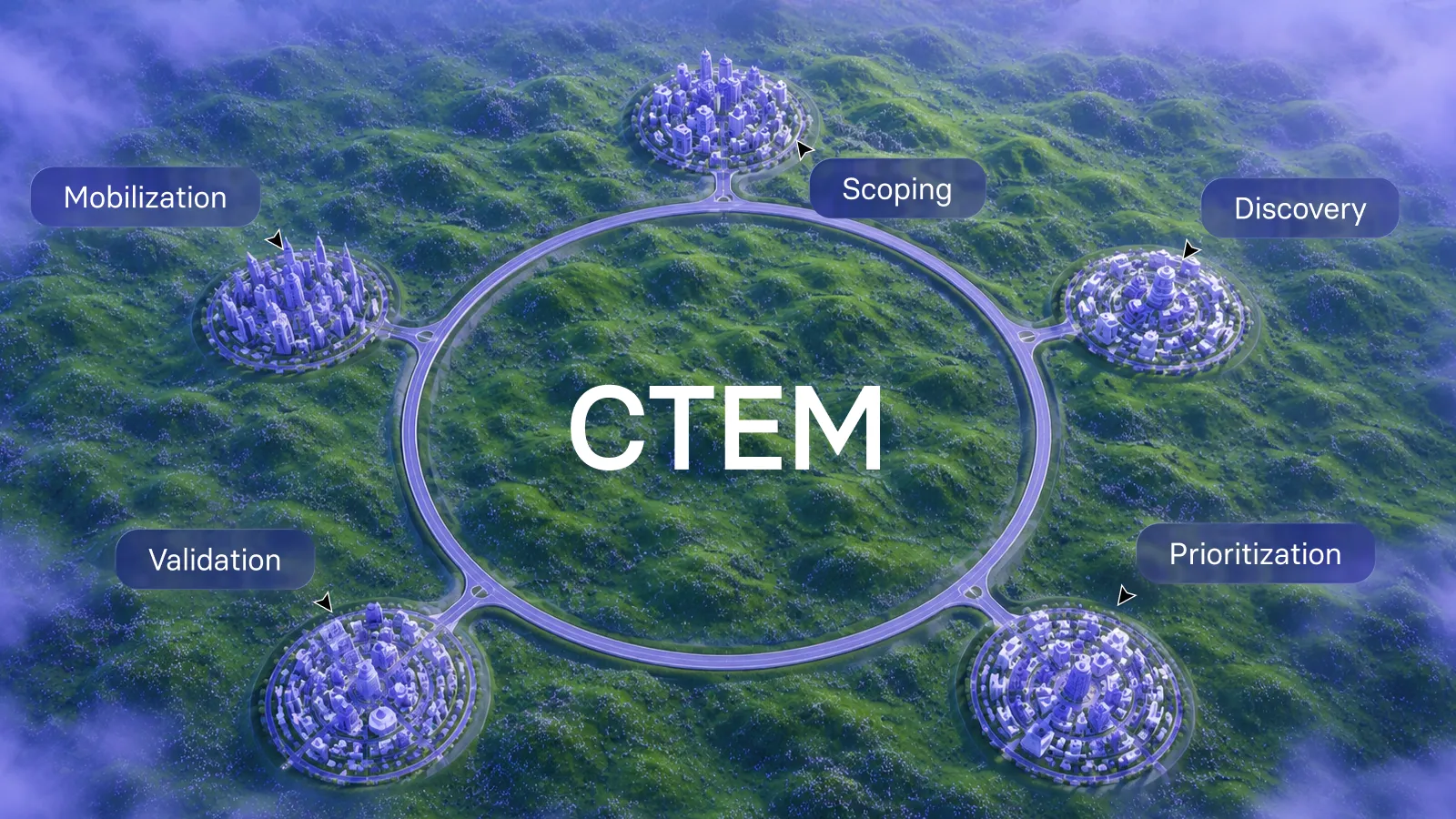
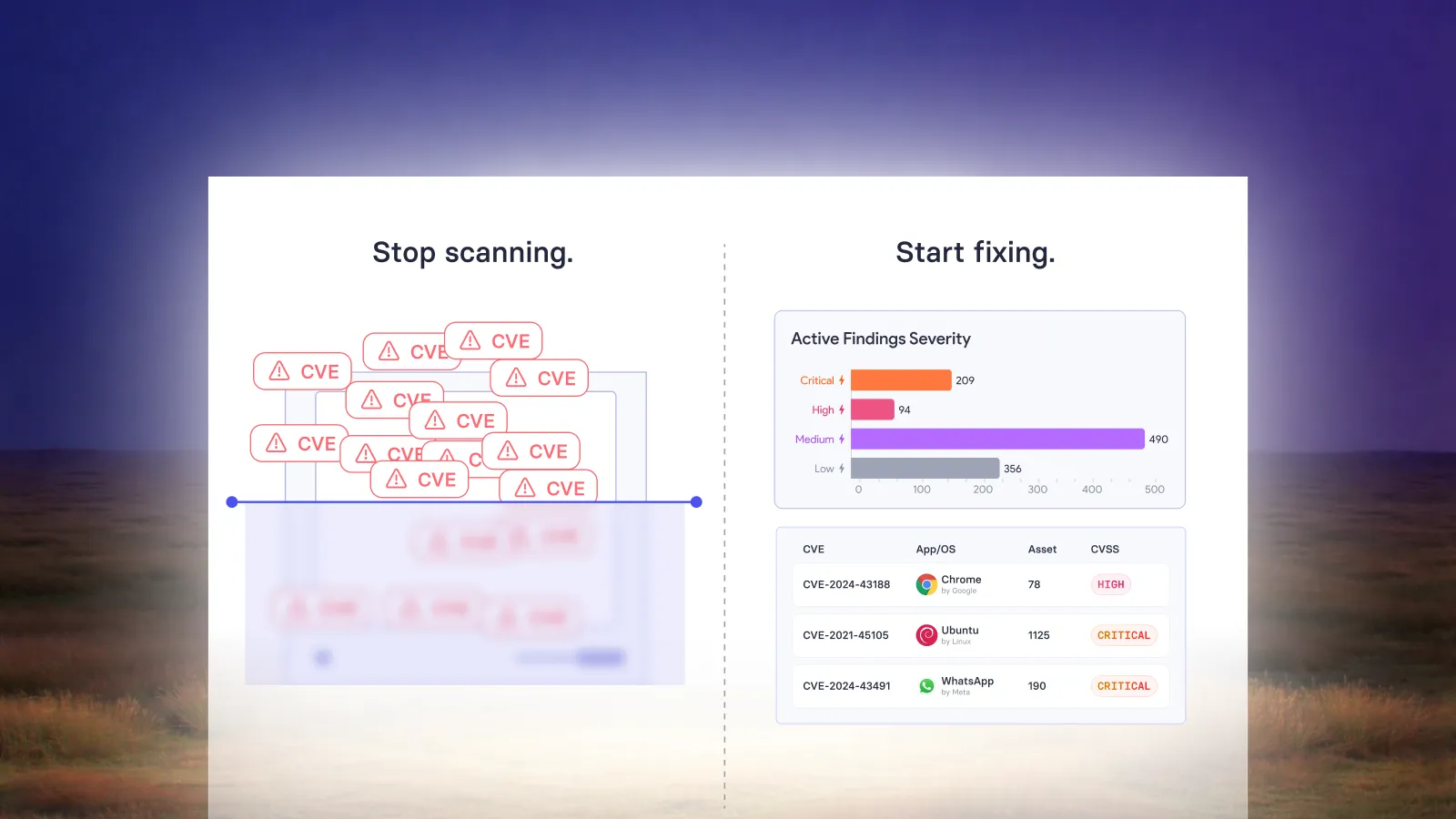
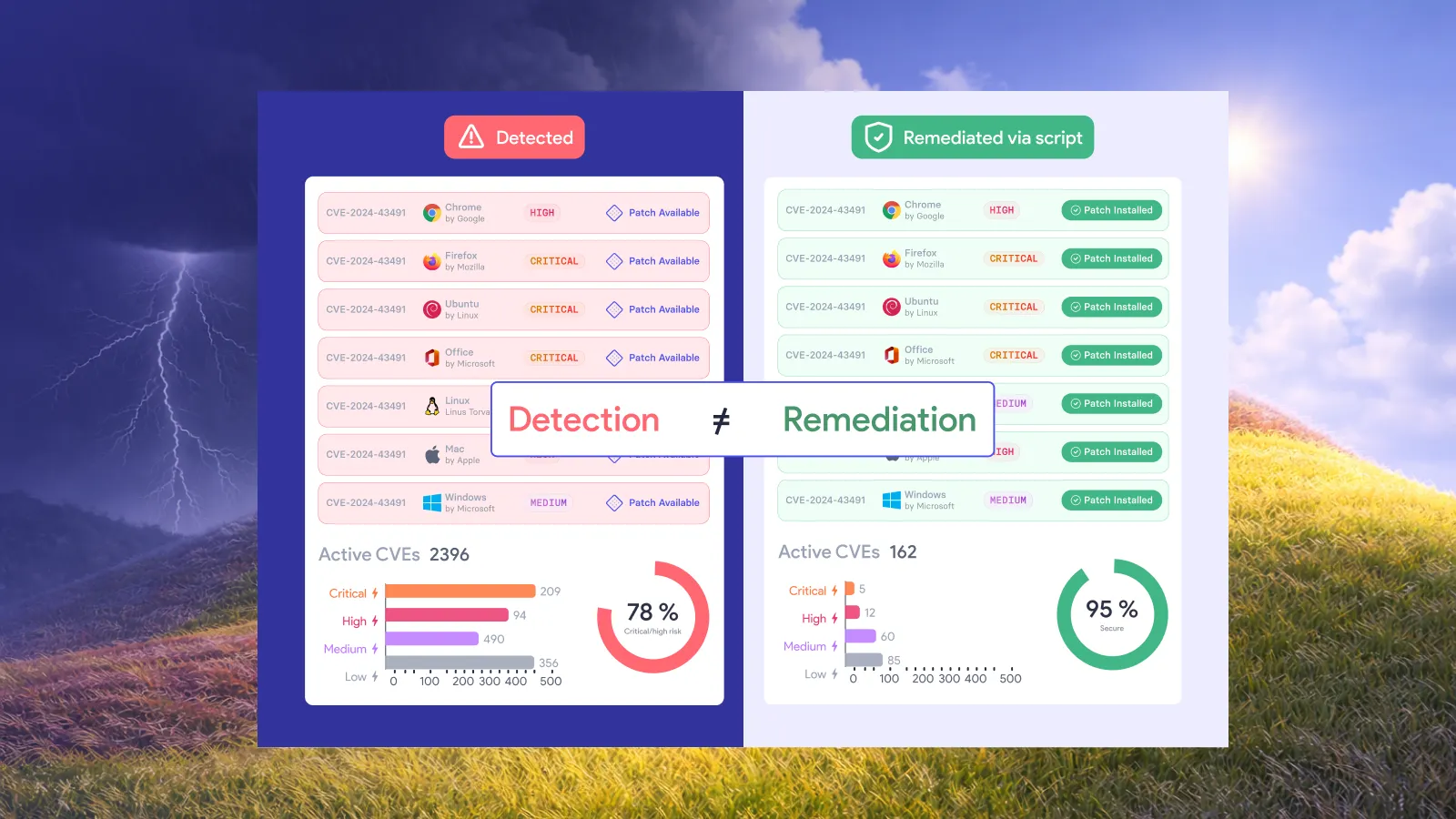
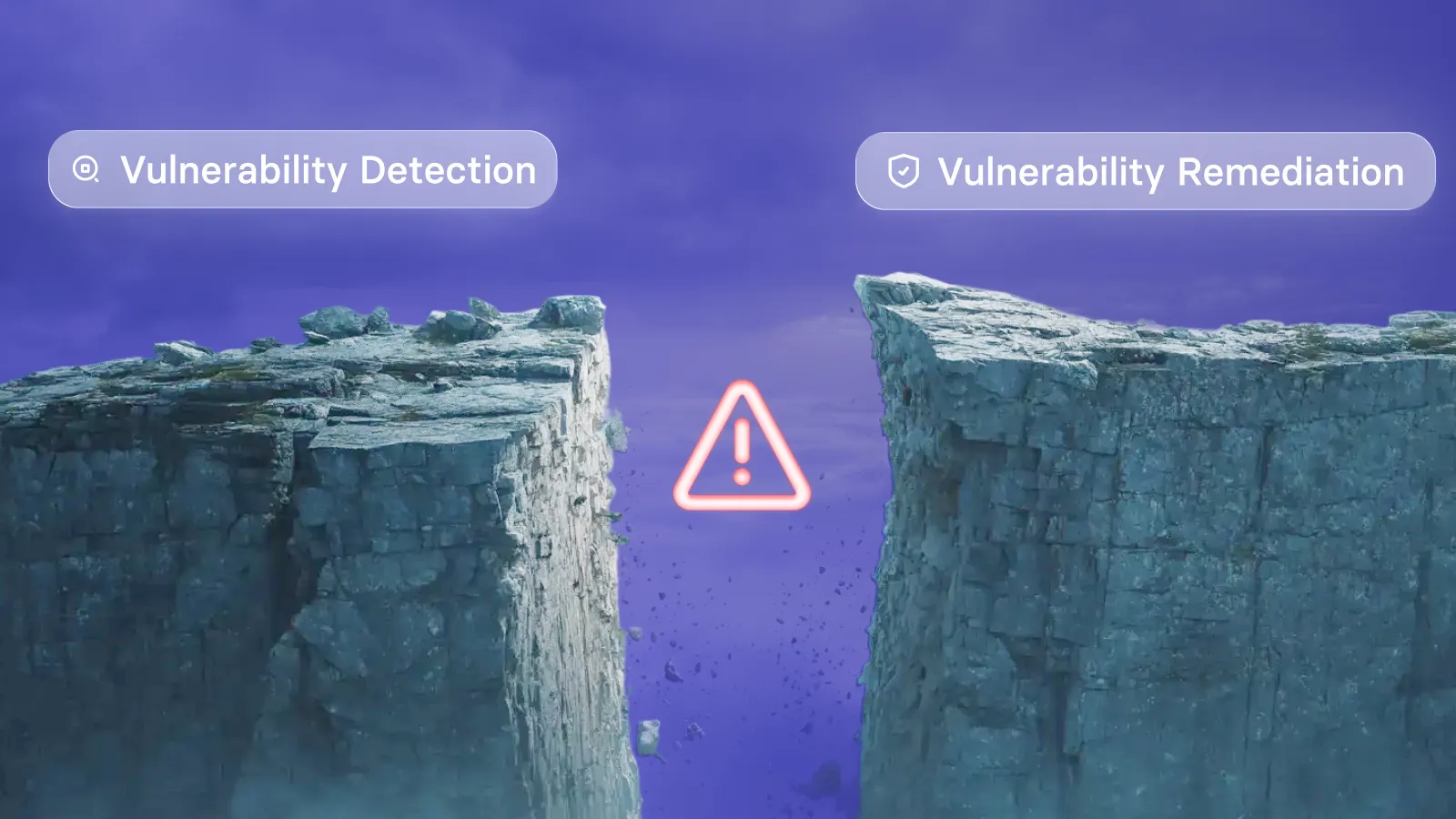
Your security scanner finds thousands of vulnerabilities every week. Your team flags them, logs them, and adds them to an ever-growing backlog. Meanwhile, attackers only need one exploitable flaw to breach your environment. This gap between detection and remediation is where most security programs fall short.
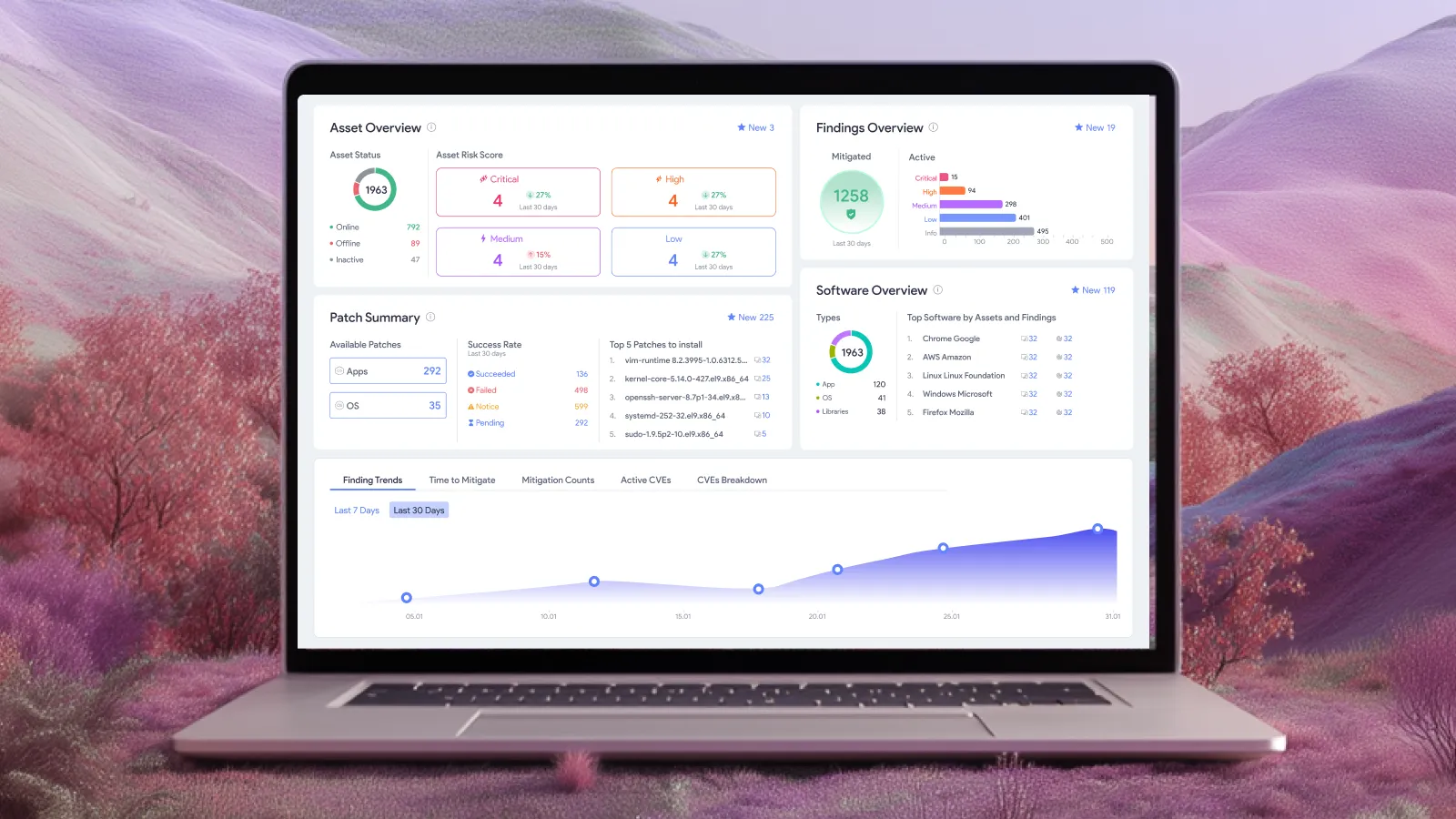
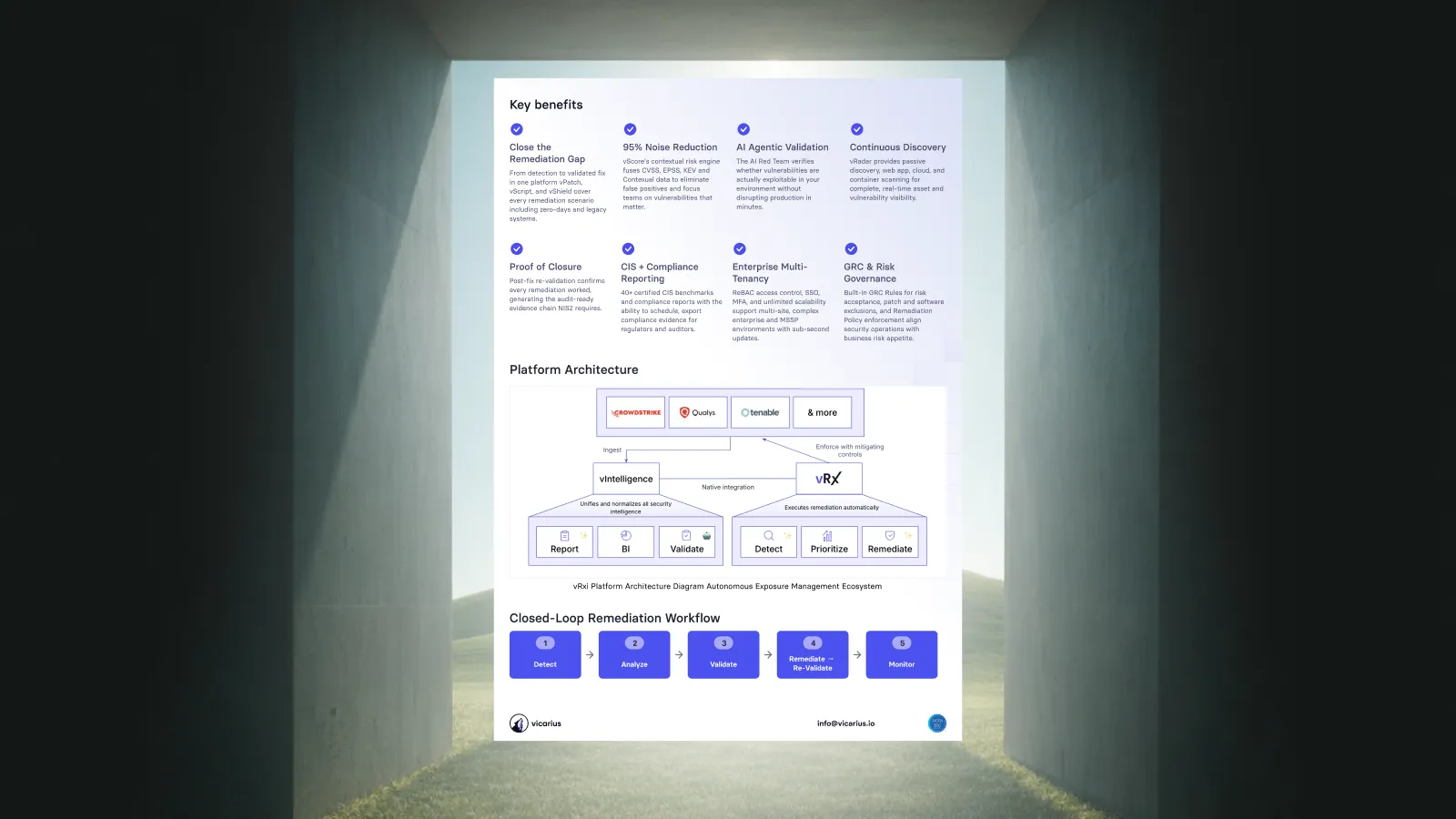
A vulnerability management platform closes this gap by connecting discovery, prioritization, and remediation into a single workflow. Vicarius vRx takes this further by adding patchless protection and script-based fixes, giving your team options when standard patches aren't available or practical.
This article explains how unified platforms work, why they outperform fragmented tool stacks, and what to look for when evaluating your options.
Key takeaways: How vulnerability management platforms improve remediation
- Unified vulnerability management platforms reduce tool sprawl by combining discovery, prioritization, and remediation in one interface.
- Risk-based prioritization uses EPSS, KEV data, and asset context to surface vulnerabilities attackers will target first.
- Automated remediation cuts mean time to fix by deploying patches, scripts, or patchless protection without ticket handoffs.
- Vicarius vRx enables patchless protection for zero-day and legacy systems, closing exposure windows before patches exist.
- Built-in compliance mapping generates audit-ready reports tied directly to remediation actions and control frameworks.
What is a vulnerability management platform?
A vulnerability management platform is software that discovers, assesses, prioritizes, and remediates security weaknesses across your environment. Unlike standalone scanners that only detect issues, these platforms connect findings to fix paths so your team can act on what matters.
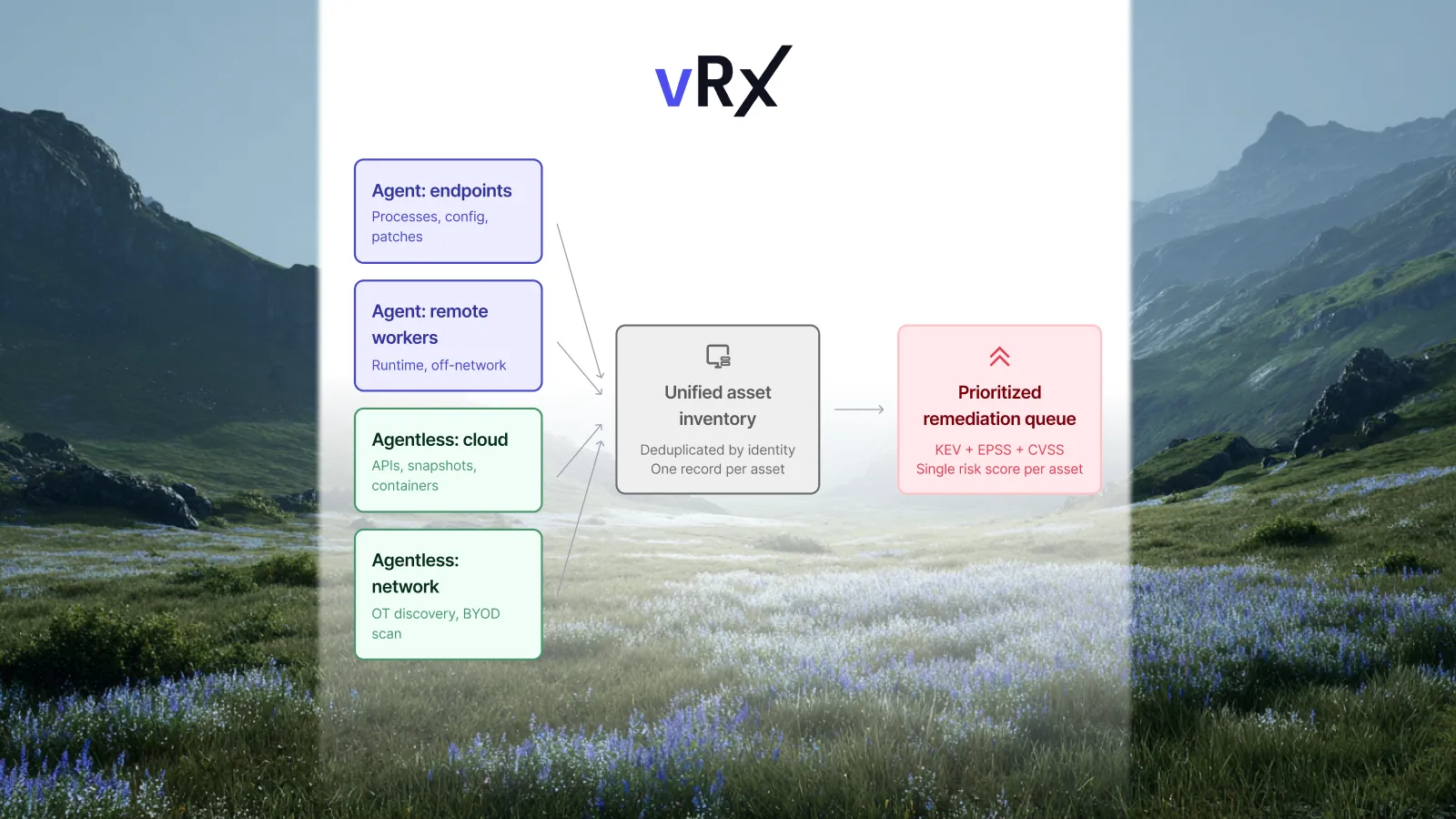
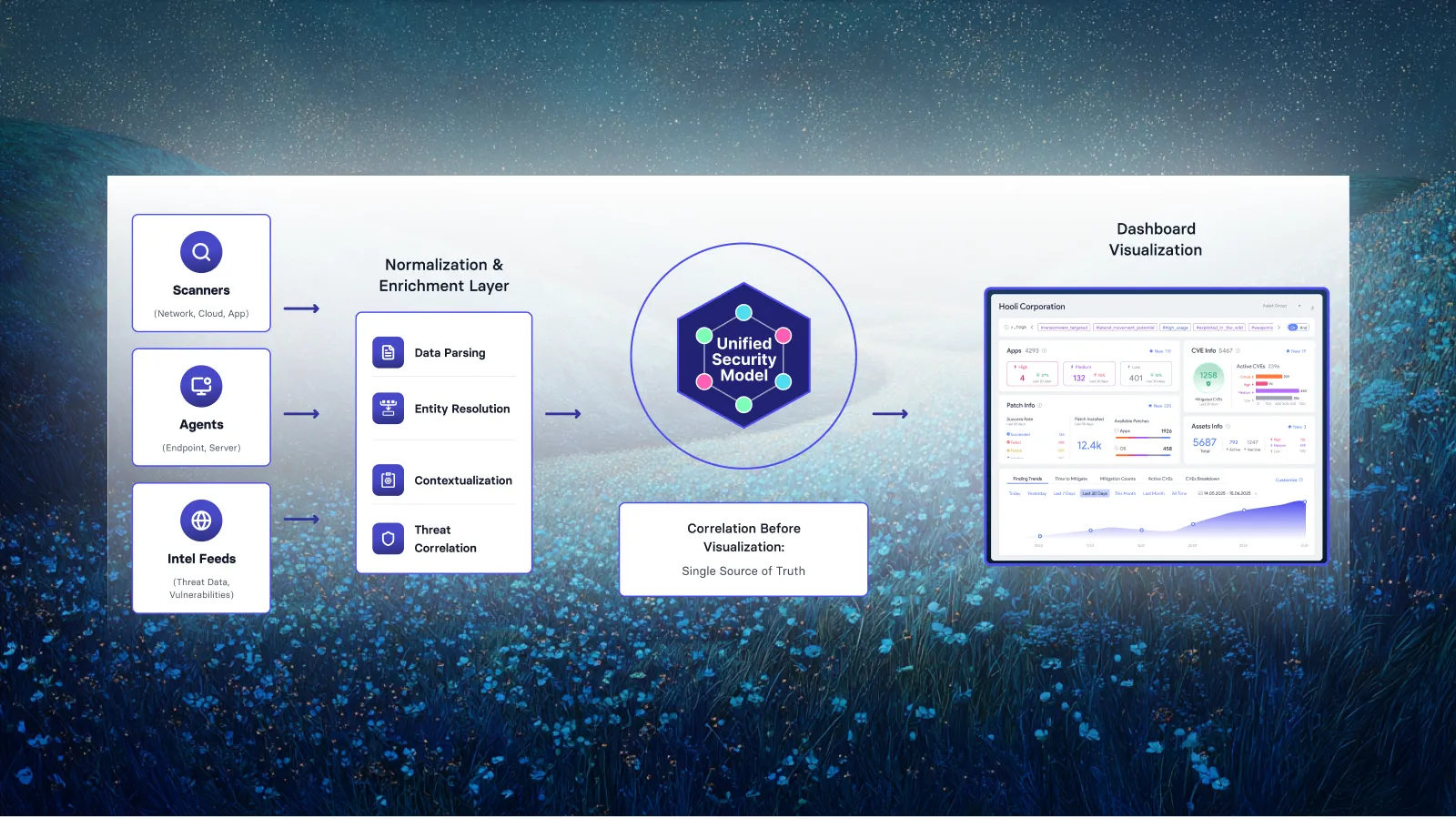
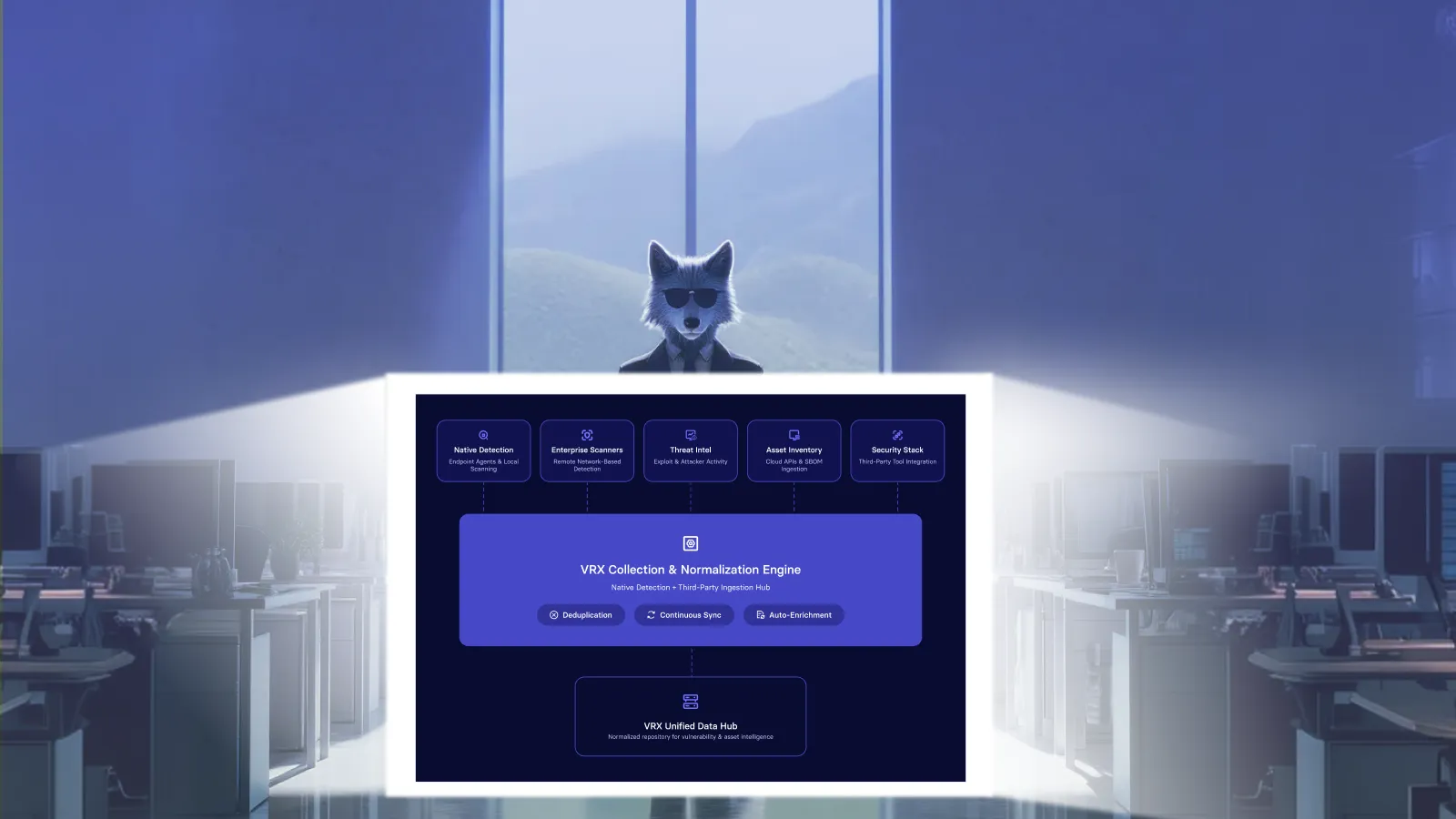
The platform approach matters because modern environments span on-premises servers, cloud workloads, containers, and third-party applications. Each layer introduces different vulnerability types. A unified platform normalizes findings across sources and gives your team one place to track remediation progress.
Traditional vulnerability scanners create reports. Platforms create outcomes. The difference shows up in your mean time to remediate and your ability to prove closure to auditors.
Why fragmented security tools slow down remediation
According to research published by Security Magazine, 78% of security leaders say tool sprawl challenges their threat mitigation capabilities. When your scanner, patch manager, and compliance tool don't communicate, you spend more time correlating data than fixing vulnerabilities.
Fragmentation creates three problems. First, inconsistent risk scoring across tools makes prioritization unreliable. Second, limited visibility means vulnerabilities slip through gaps between systems. Third, siloed workflows force your team to manually coordinate between security and IT operations.
A unified platform eliminates these friction points. Findings flow directly to remediation workflows. Risk scores apply consistently. Compliance evidence generates automatically from the same data.
How risk-based prioritization works
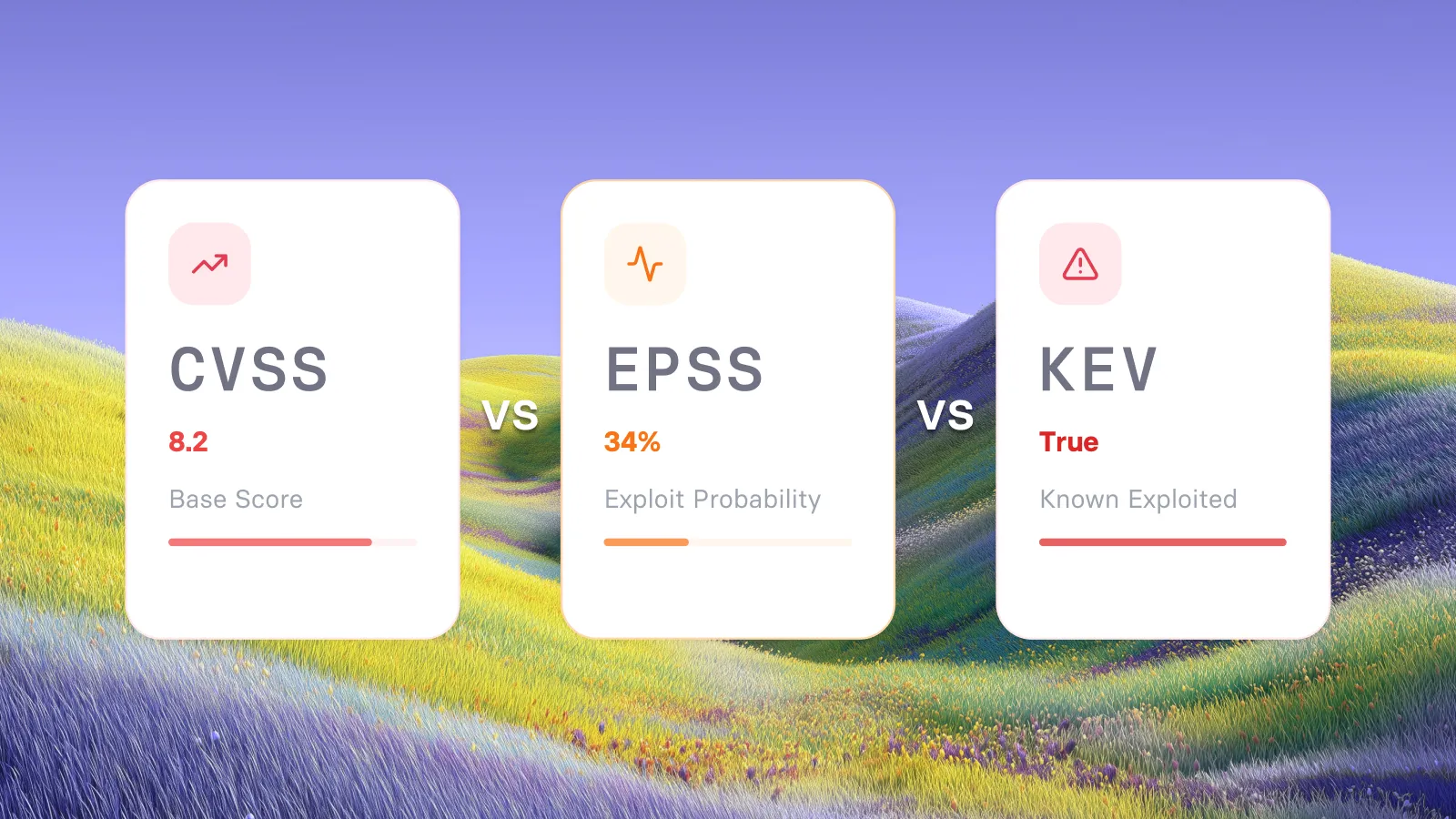
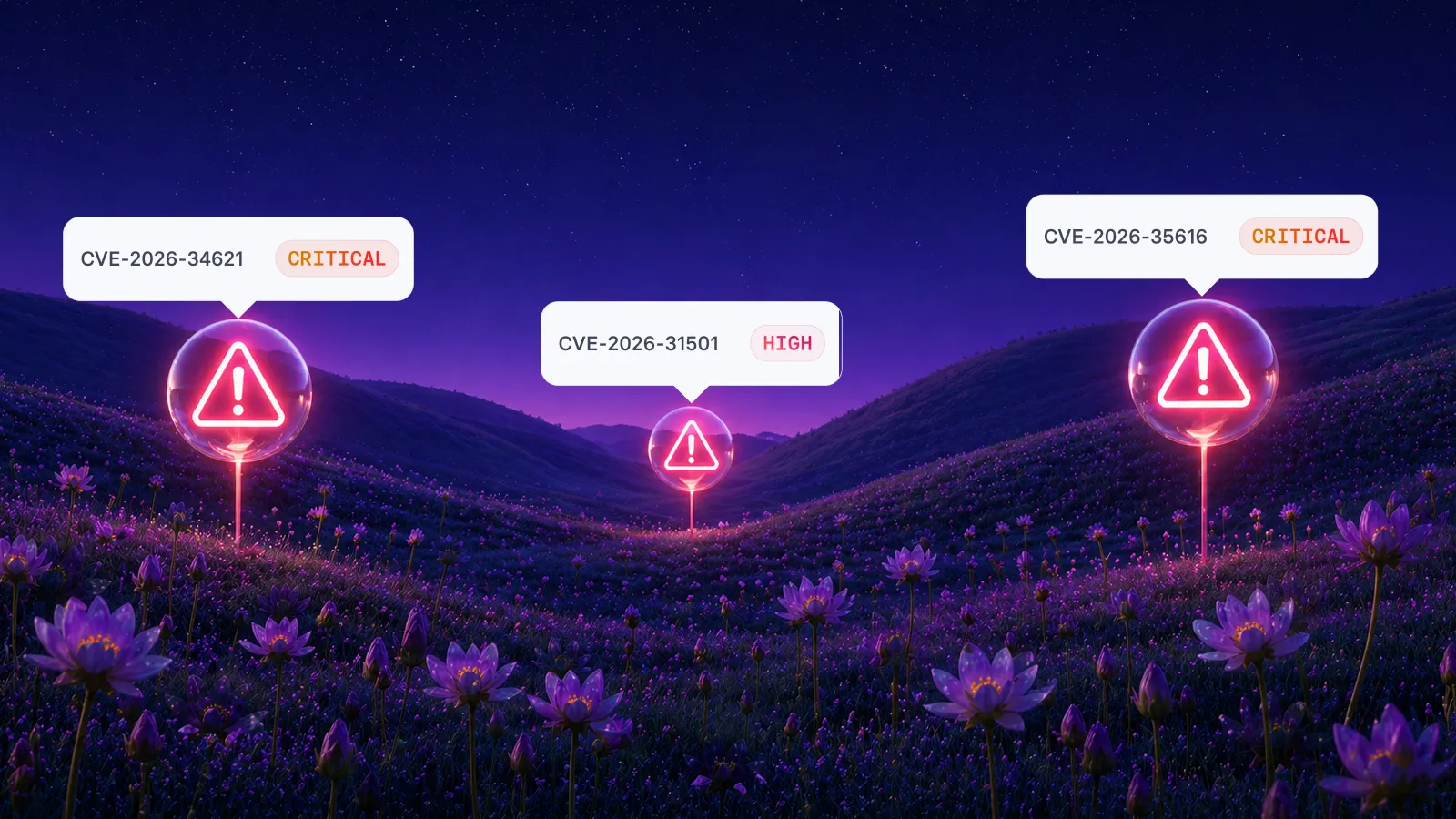
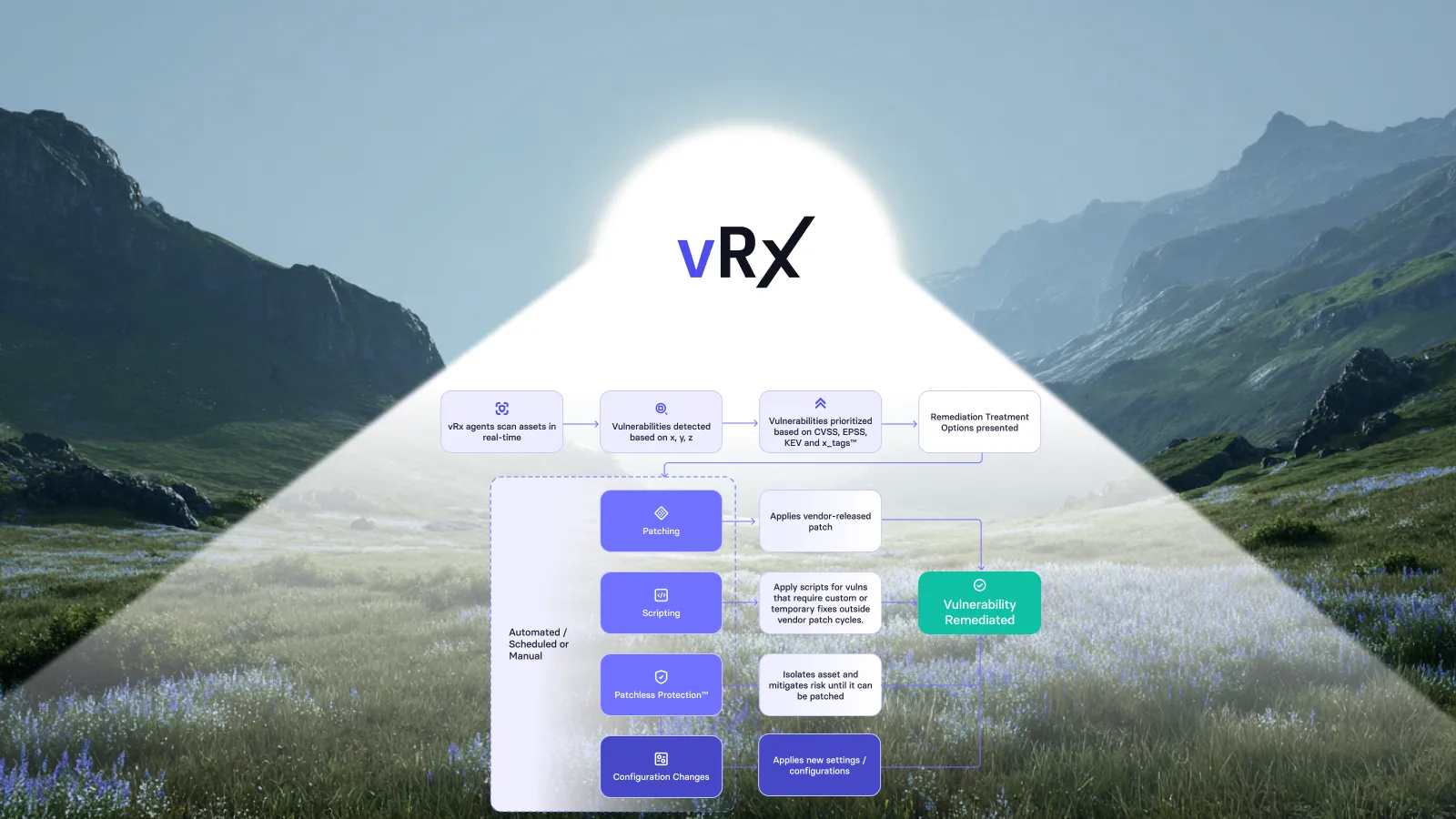
Not every vulnerability deserves immediate attention. A critical CVSS score means little if the flaw sits on an isolated system with no network exposure. Risk-based prioritization combines severity data with contextual factors to surface what attackers will target first.
Modern platforms factor in several signals. EPSS scores estimate exploitation probability based on real-world threat intelligence. Known Exploited Vulnerabilities (KEV) catalogs identify flaws already weaponized in active campaigns. Asset criticality and network exposure round out the picture.
Vicarius vRx applies AI-driven scoring that goes beyond CVSS. The platform evaluates each vulnerability against your specific environment, considering asset criticality, business impact, and exploitation likelihood. This approach means your team fixes the vulnerabilities that represent genuine risk, not just the ones with high severity labels.
Automated remediation options beyond patching
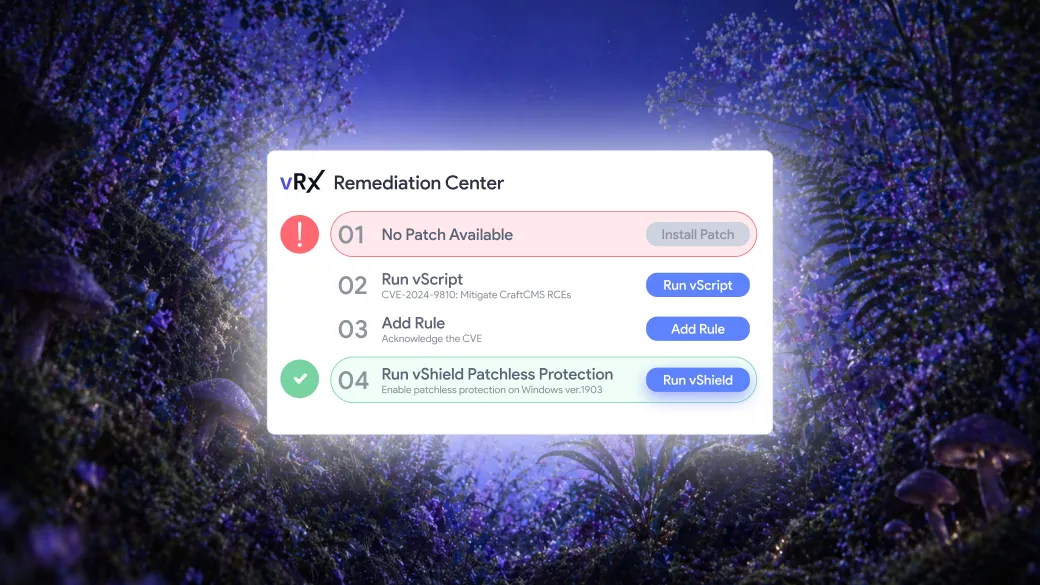
Patching solves most vulnerabilities, but not all. Some flaws have no available patch. Others affect systems that can't tolerate downtime. A complete remediation strategy needs multiple fix paths.
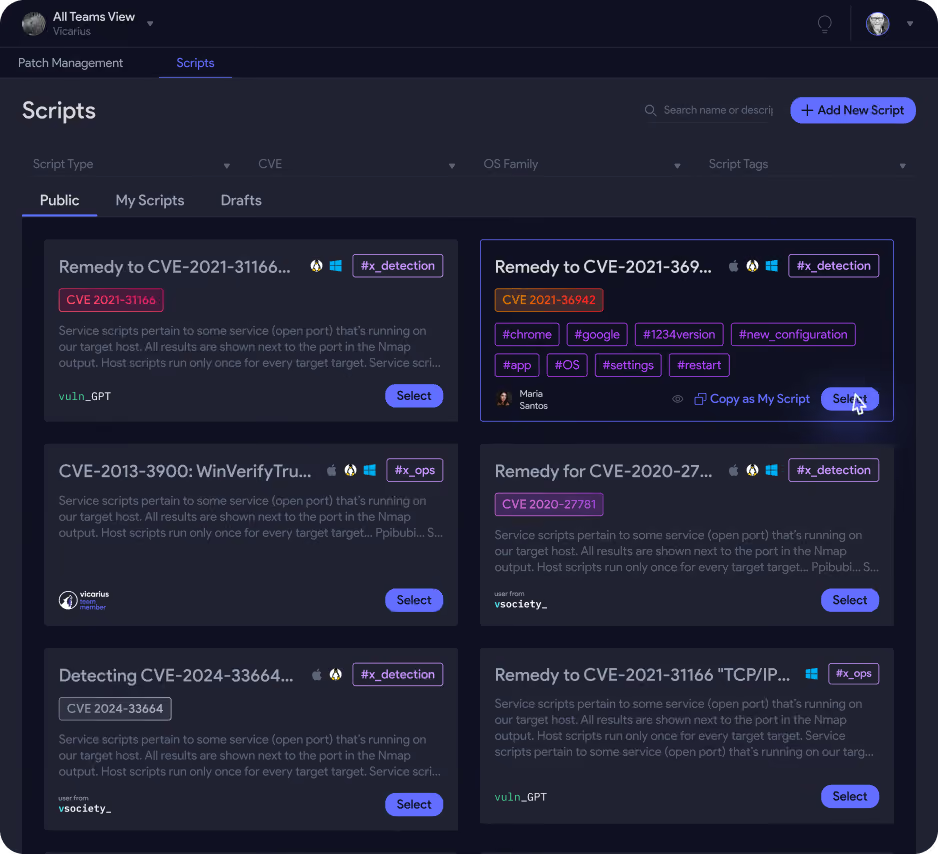
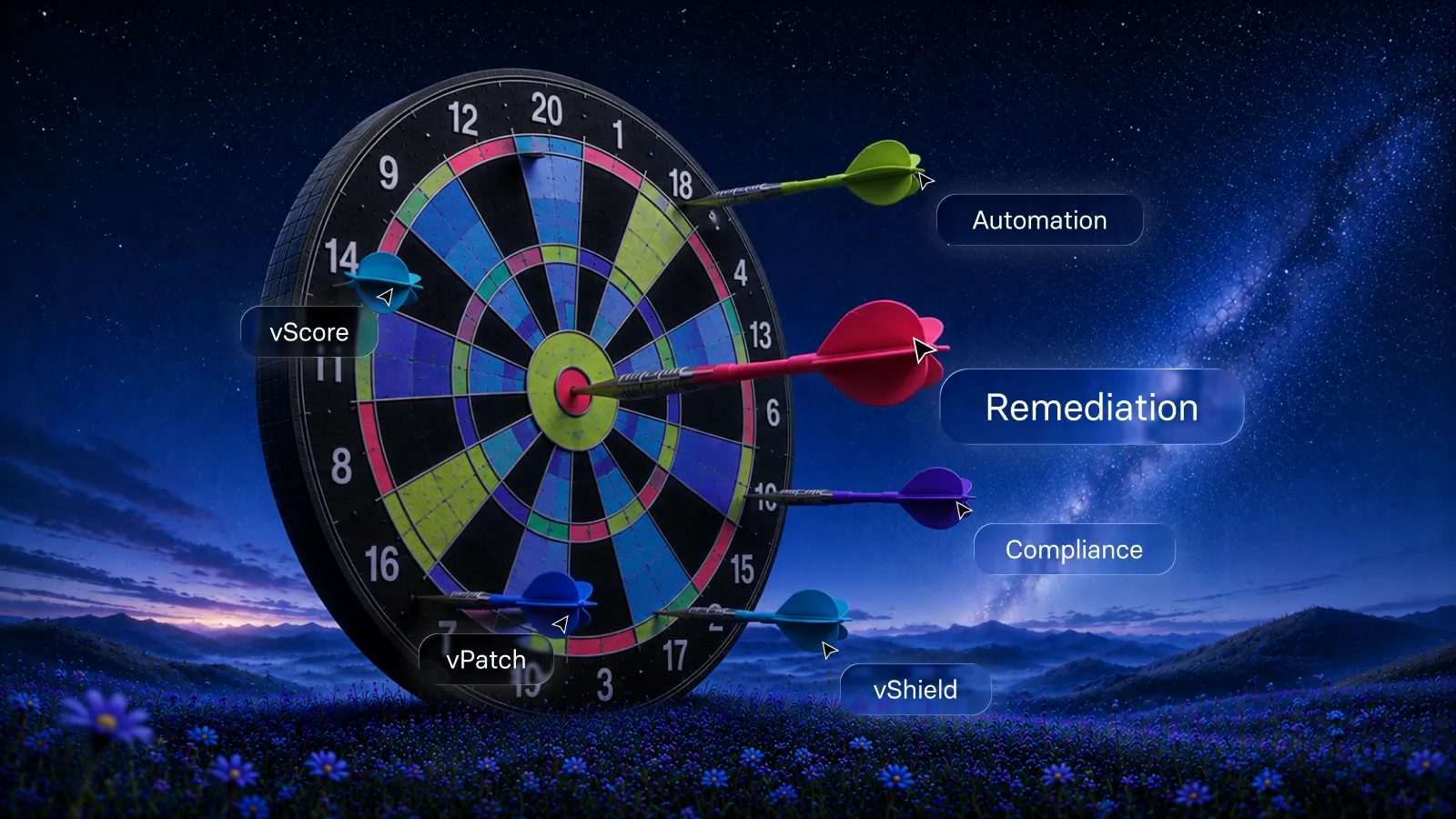
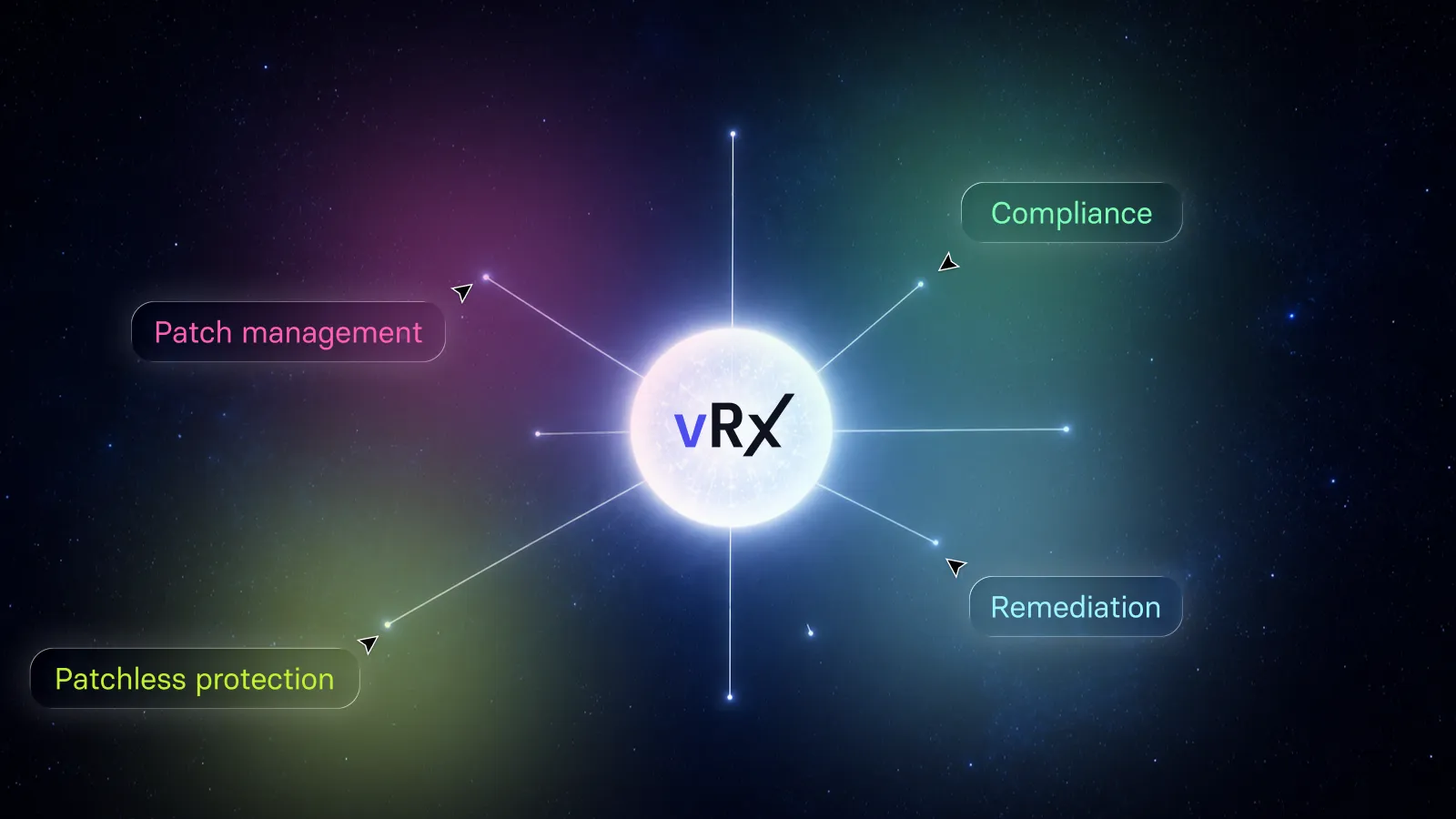
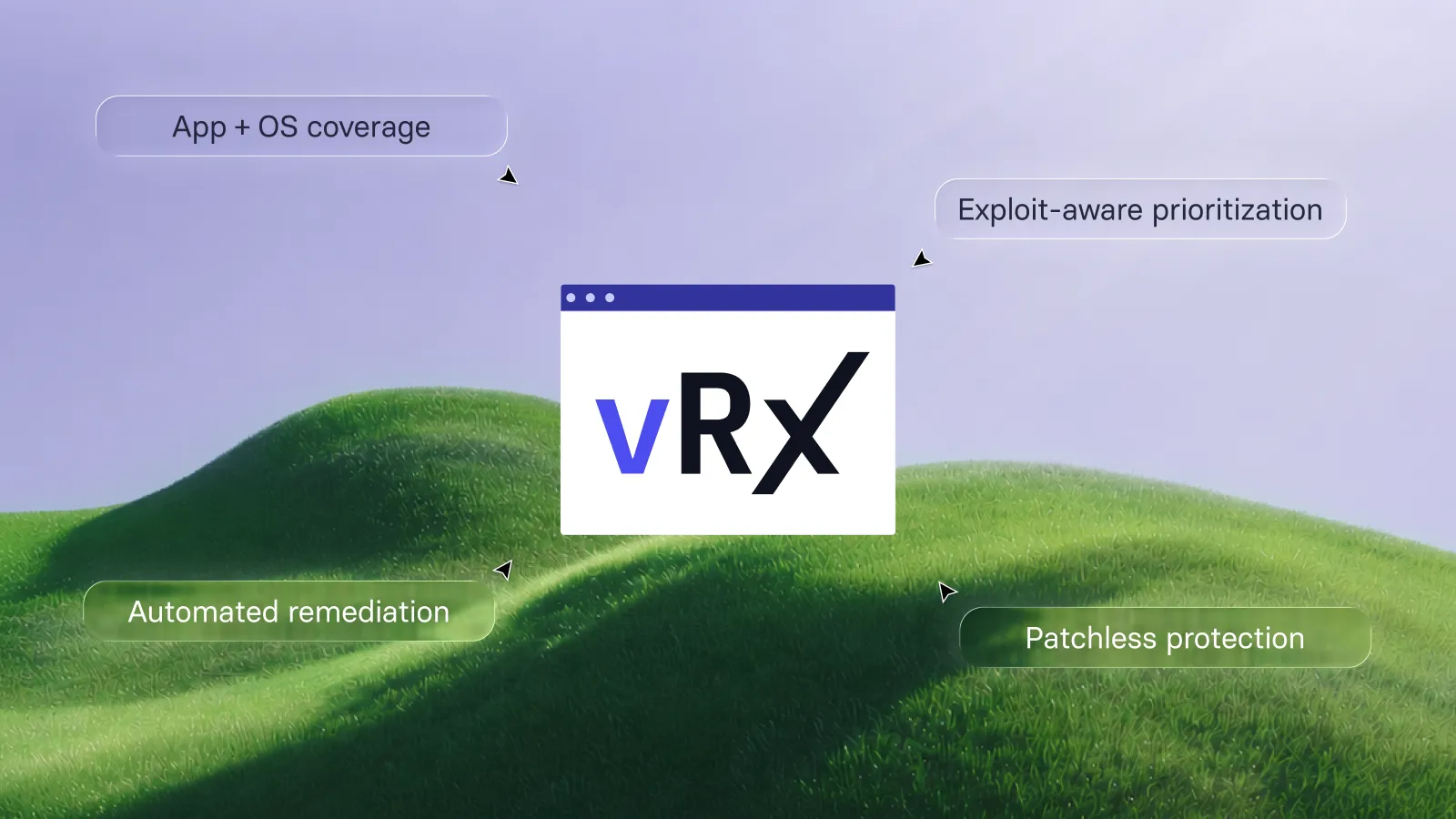
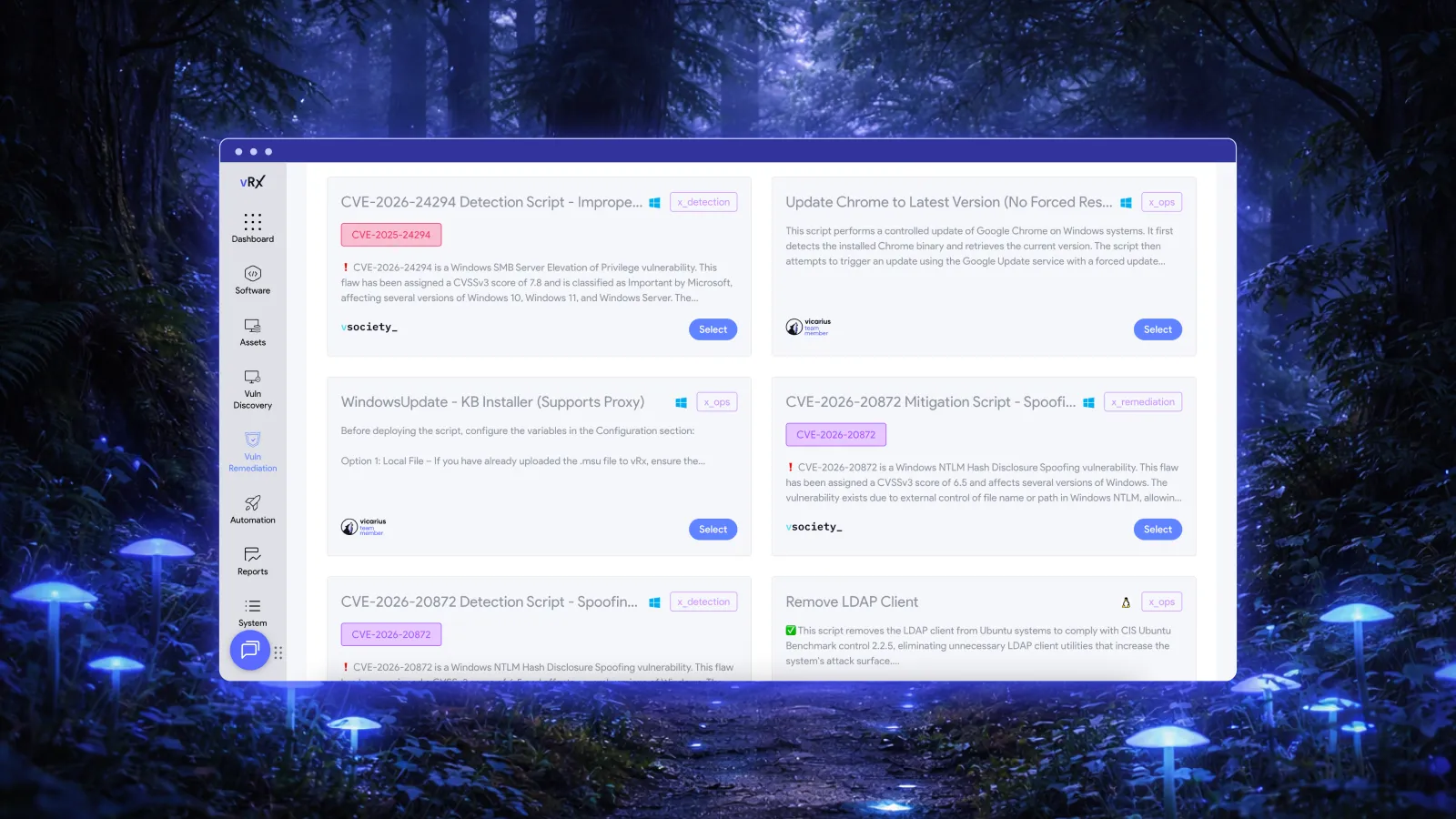
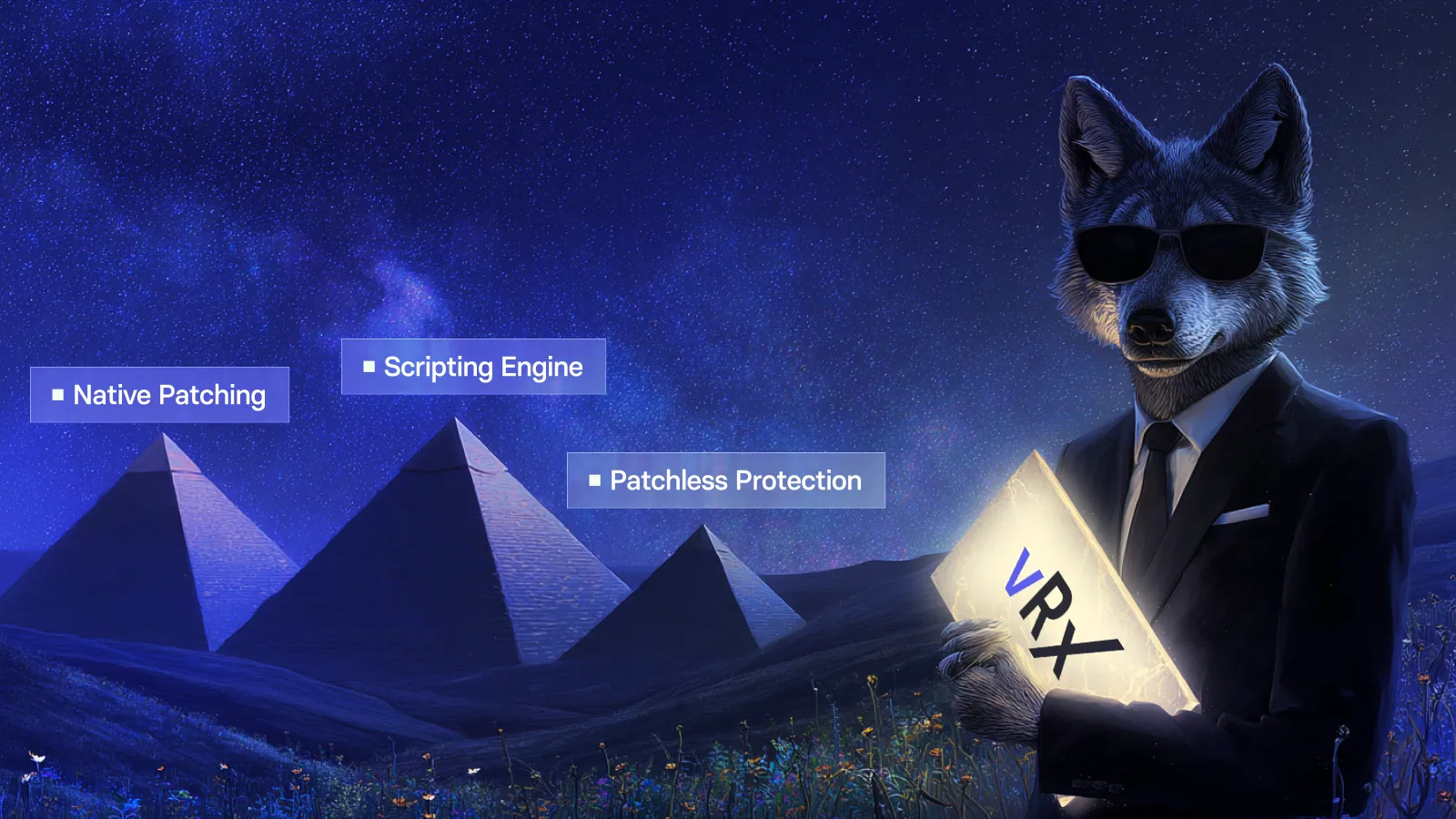
Vicarius vRx offers three remediation methods. vPatch deploys patches automatically across Windows, macOS, and Linux, covering over 20,000 third-party applications. The scripting engine handles misconfigurations and vulnerabilities that fall outside standard patch workflows. And patchless protection shields vulnerable applications at the memory level when no fix exists.
This multi-path approach matters for enterprise teams managing diverse environments. Legacy systems, end-of-life software, and production-critical applications all present unique remediation challenges. Having options means your team can close vulnerabilities regardless of constraints.
What Is Patchless Protection and When Do You Need It?
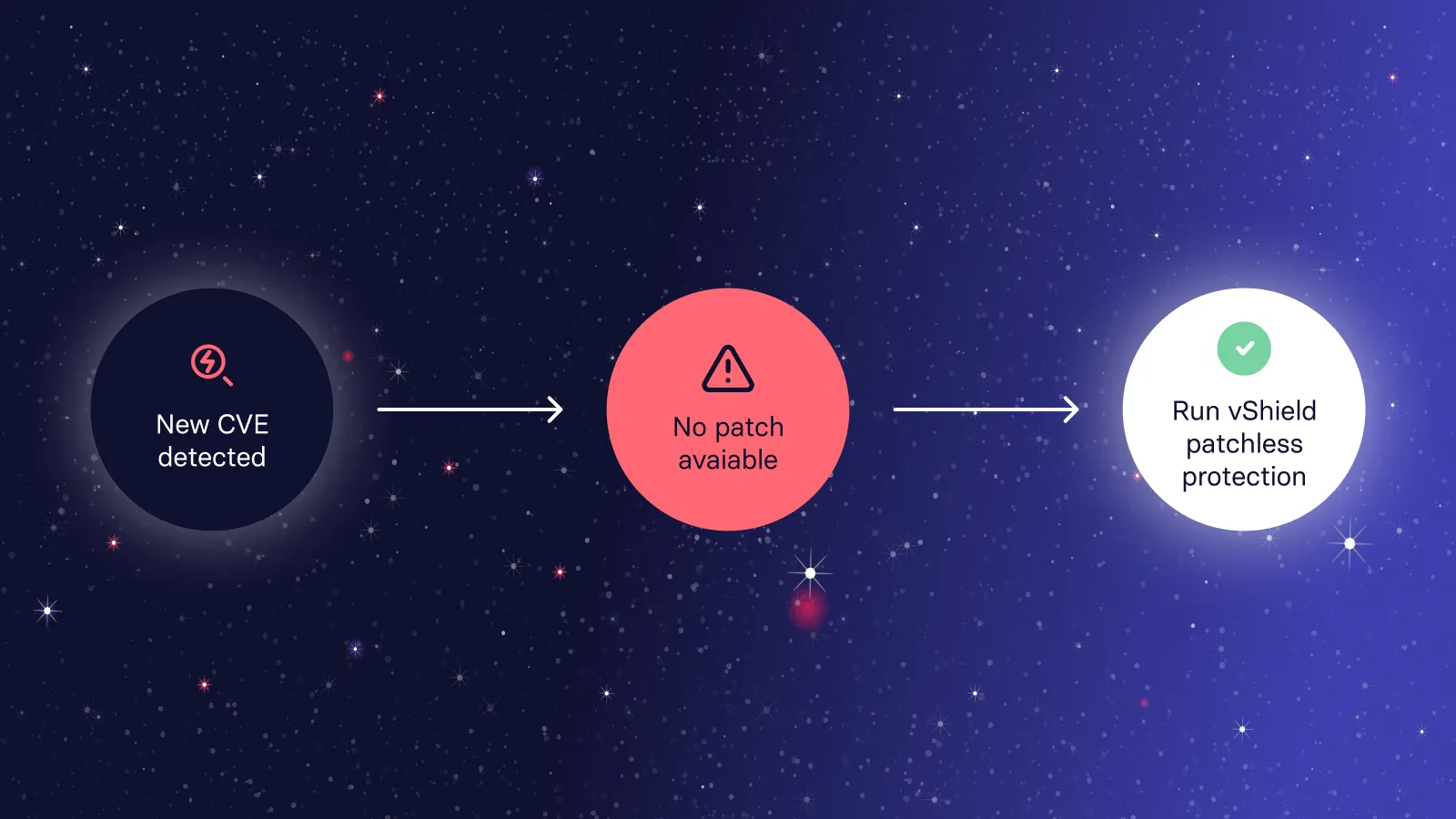
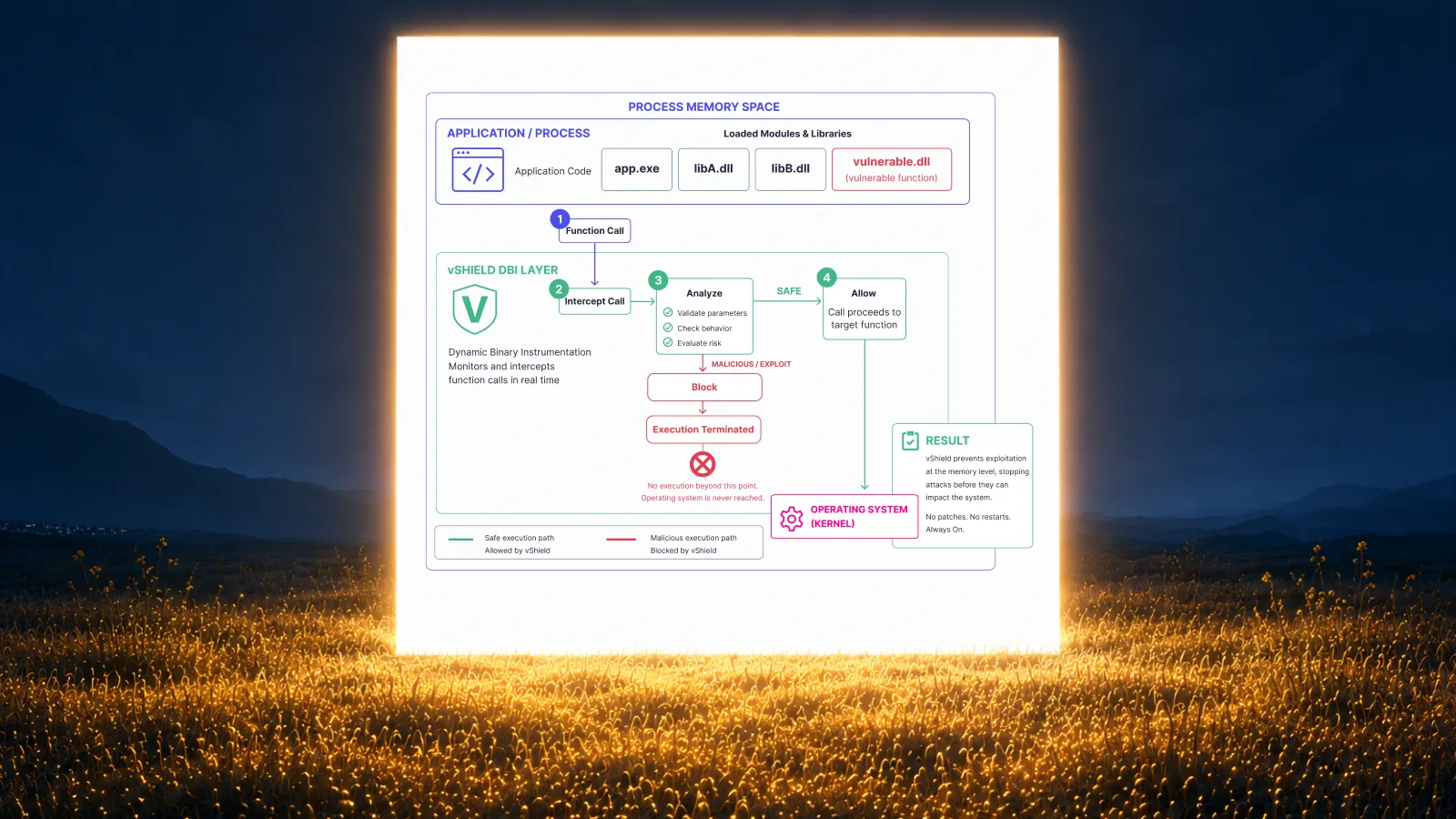
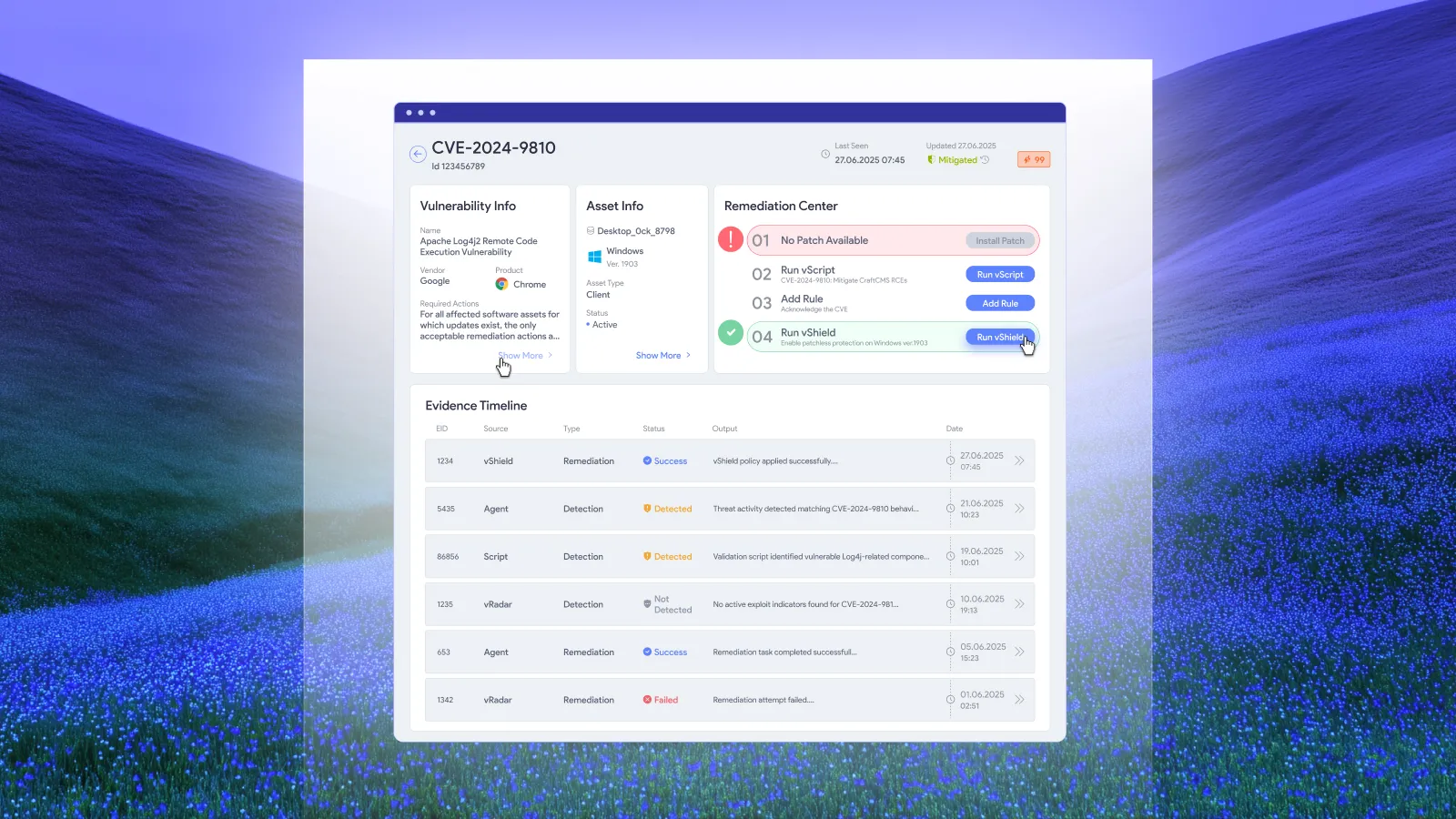
Patchless protection shields vulnerable applications without applying a traditional software update. The technology works at the memory level, blocking exploitation attempts against known flaws while you wait for a vendor patch or manage systems that can't be updated.
This capability addresses three common scenarios. Zero-day vulnerabilities create exposure windows between disclosure and patch availability. End-of-life systems no longer receive security updates from vendors. And production-critical applications may require extended testing before patch deployment.
Vicarius developed vShield as a proprietary in-memory protection technology. When activated, it secures the memory space and executables of vulnerable applications from attack attempts. Your systems stay protected even when traditional remediation isn't an option.
How Unified Platforms Simplify Compliance Reporting
Compliance audits require evidence that vulnerabilities were identified and remediated. When scanning and patching happen in separate tools, building that evidence chain requires manual correlation and spreadsheet work.
A unified platform generates compliance evidence automatically. Every remediation action maps to the relevant control framework. Every fix includes a timestamp and verification that the vulnerability closed. When auditors ask for documentation, your team exports a report rather than assembling one from scratch.
Vicarius vRx supports HIPAA, PCI DSS, Cyber Essentials, and over 100 CIS Benchmarks. The compliance engine scans for misconfigurations against your selected frameworks and links findings directly to remediation workflows. Closed-loop verification confirms each fix, creating an audit trail that proves you addressed the issue, not just logged it.
How automated remediation reduces mean time to remediate
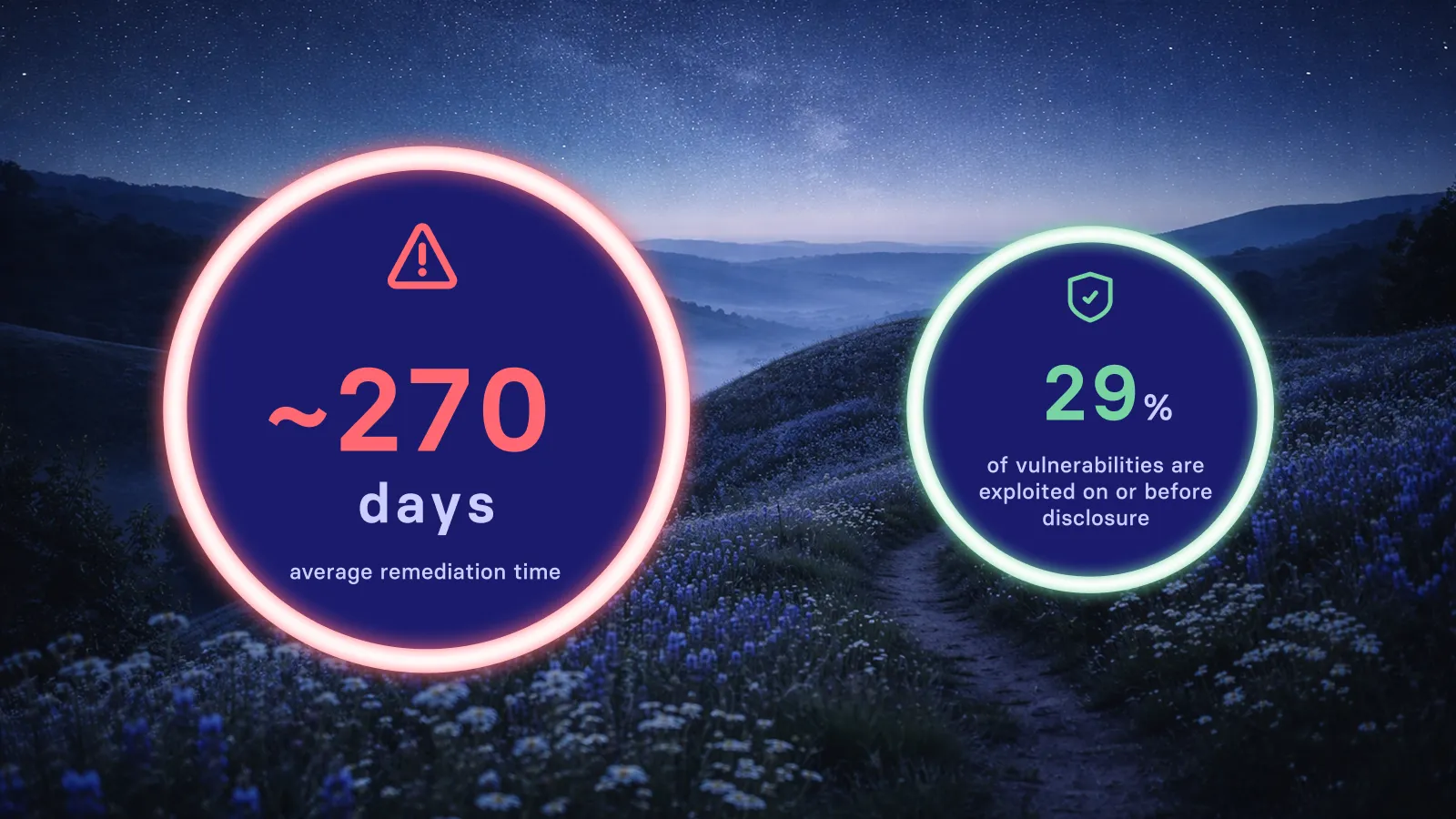
Mean time to remediate (MTTR) measures how long vulnerabilities stay open after detection. Industry averages stretch to 60 days or longer, leaving extended windows for exploitation.
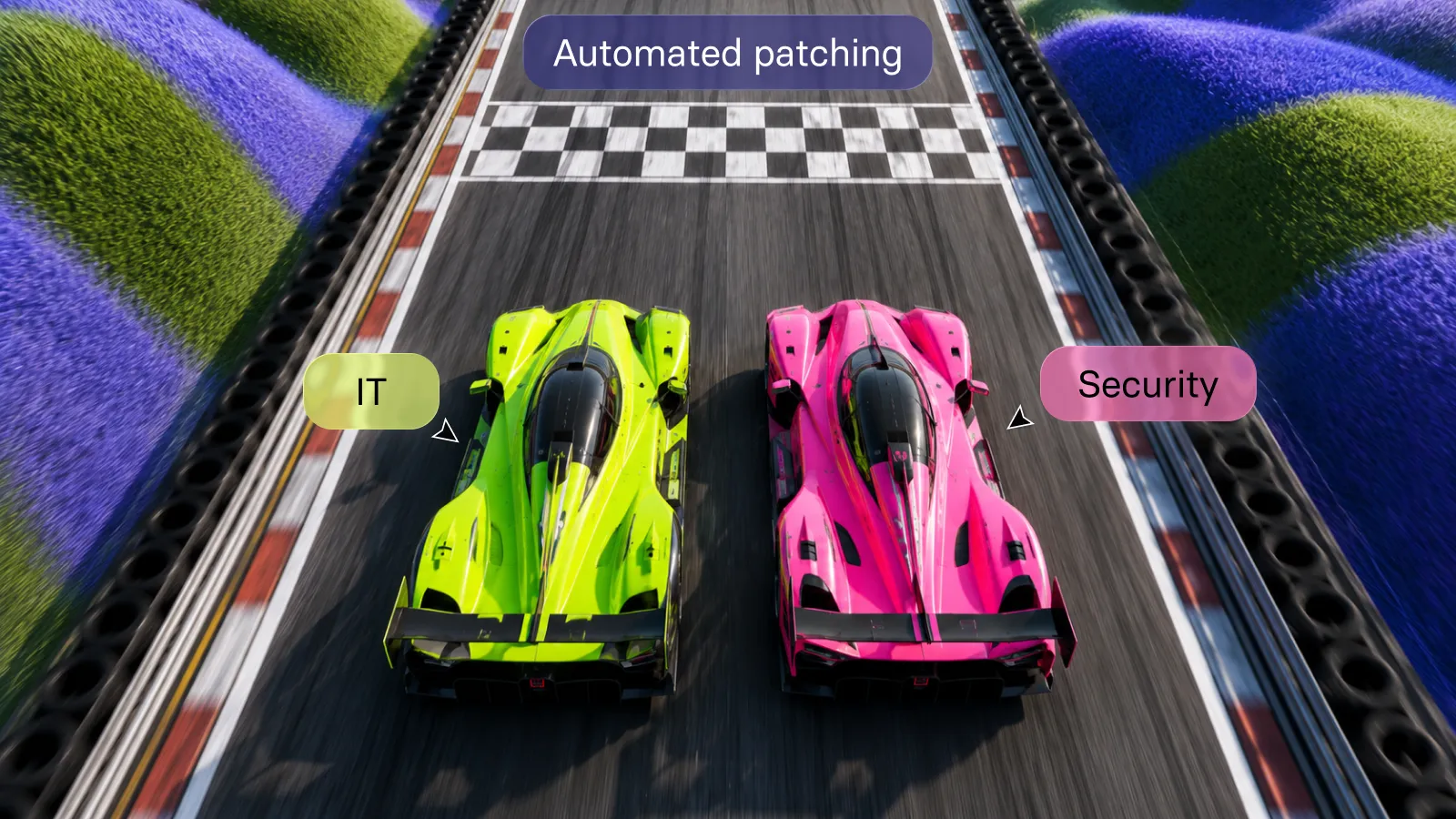
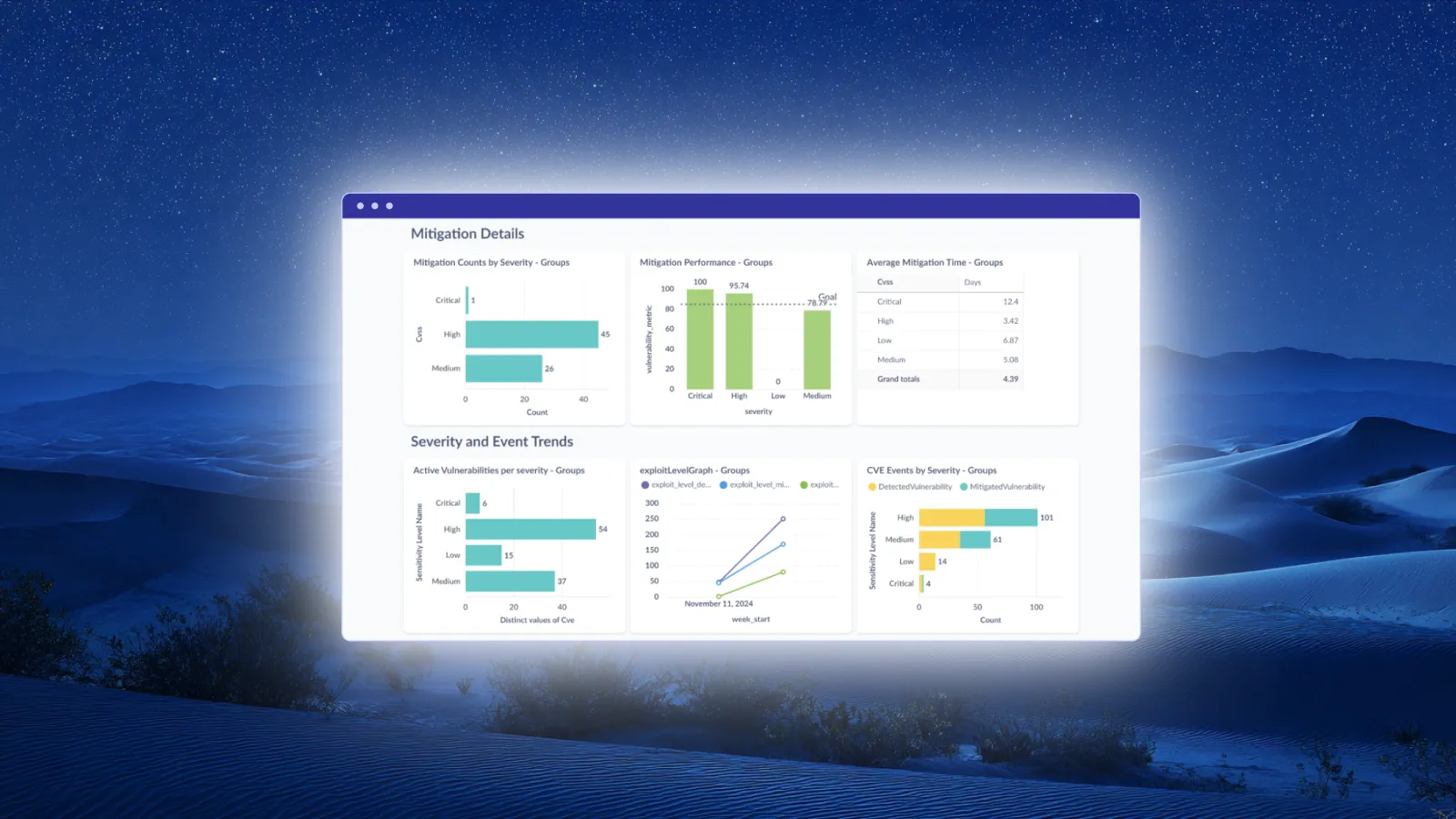
Automation shrinks MTTR by removing the coordination delays that slow most remediation programs. Instead of creating tickets, assigning owners, and following up on progress, the platform deploys fixes based on policies your team defines. Critical vulnerabilities can trigger immediate patching. Lower-priority issues can queue for scheduled maintenance windows.
Customers using Vicarius vRx report MTTR reductions of up to 80%. One IT manager noted that patch scheduling became a one-day task instead of a full-time job. The time savings come from eliminating handoffs between security and IT operations.
What to look for in a vulnerability management platform
Not all platforms deliver the same capabilities. When evaluating options, focus on features that directly impact your team's ability to close vulnerabilities quickly.
Discovery coverage matters. Can the platform scan applications, operating systems, and third-party dependencies across your environment? Does it support both agent-based and agentless scanning for flexibility?
Remediation depth matters more than discovery alone. Can the platform deploy patches, execute scripts, and apply alternative protections when patches aren't available? Does it verify that fixes worked, or just record that they ran?
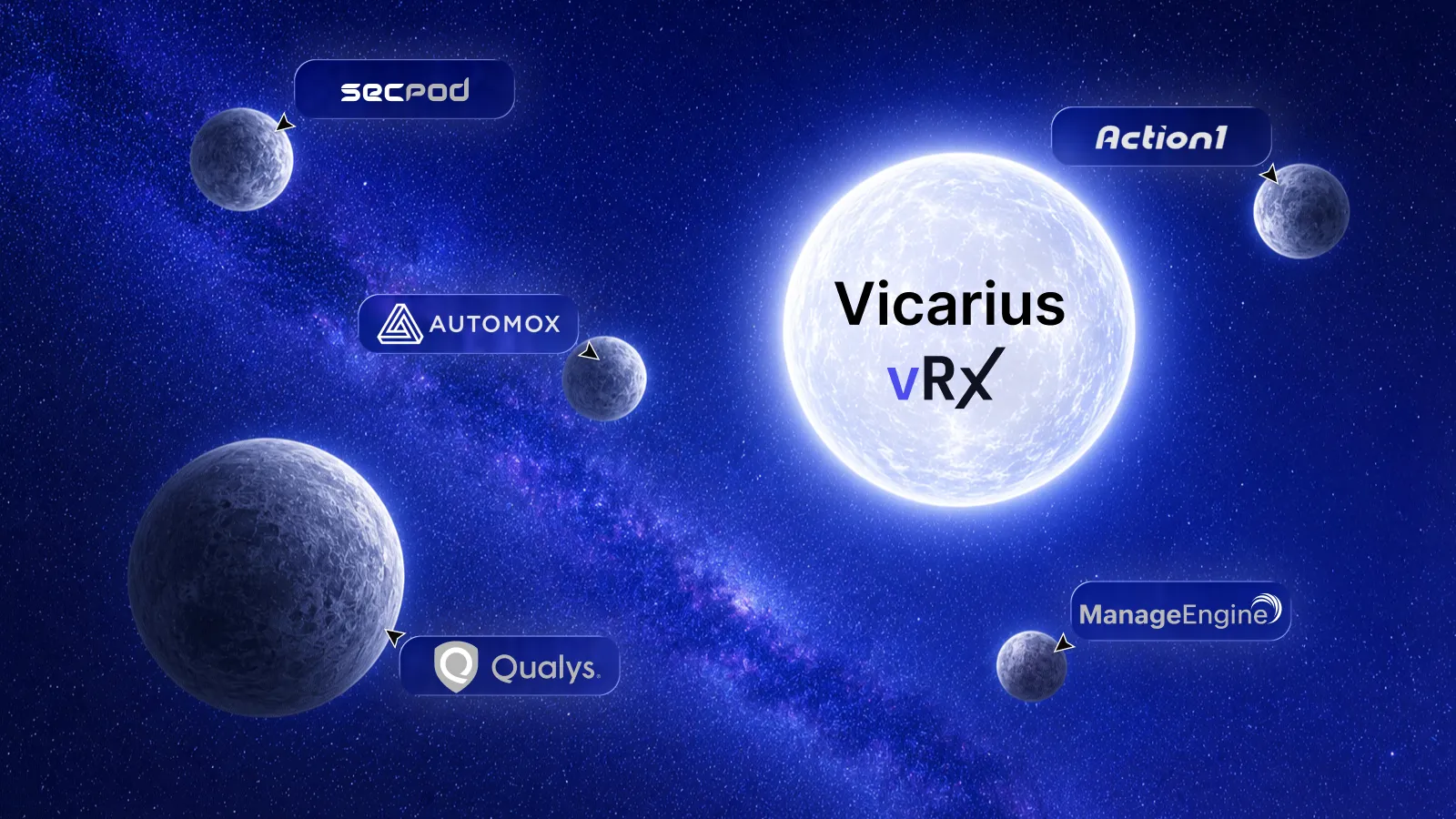
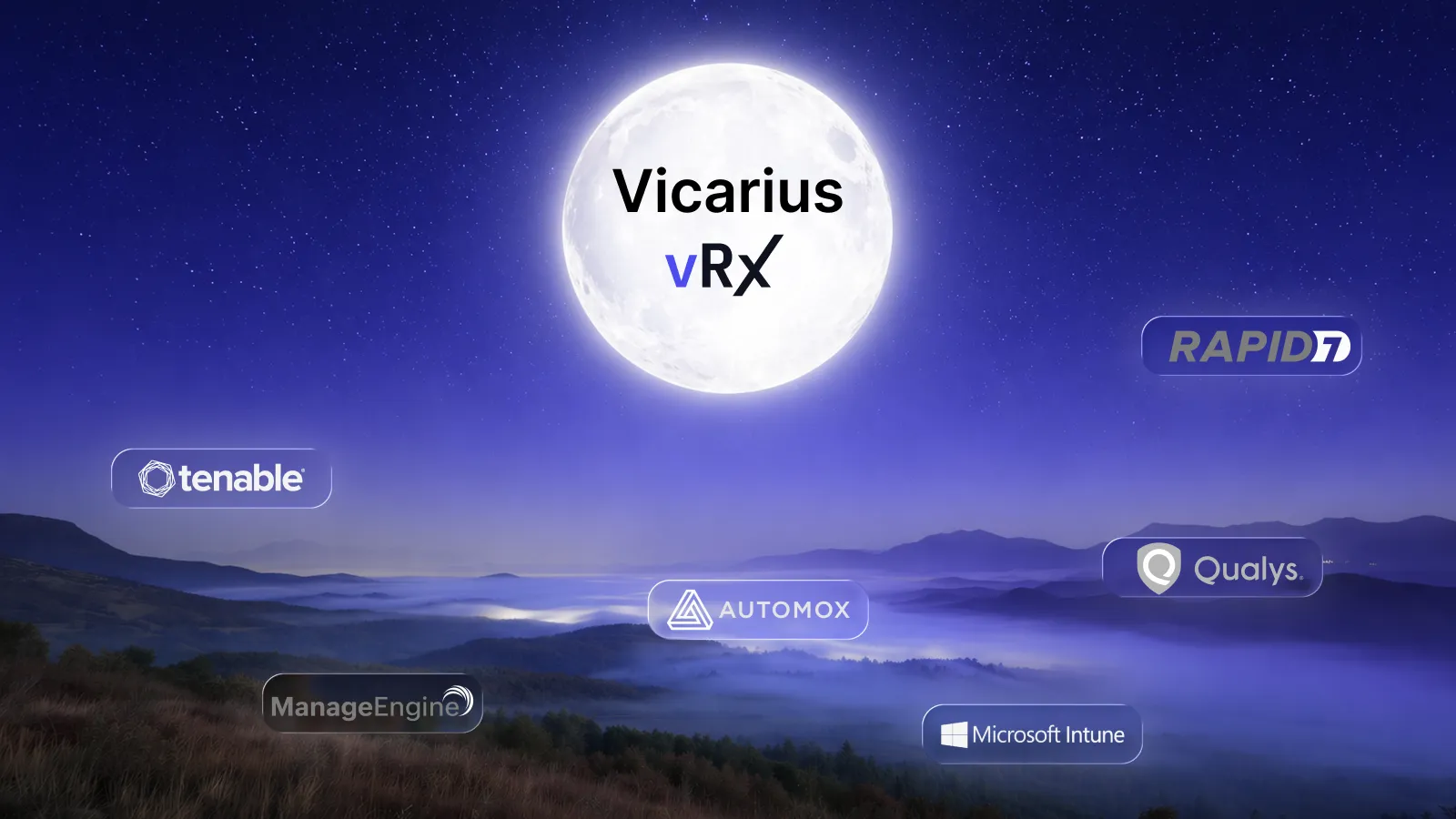
Integration points affect workflow efficiency. Does the platform connect to your SIEM, SSO, and existing ticketing systems? Can it share data through APIs for custom automation?
How enterprise security teams benefit from platform consolidation
Enterprise security teams typically manage diverse environments with mixed operating systems, legacy applications, and cloud workloads. Fragmented tooling forces these teams to maintain expertise across multiple interfaces while manually correlating data between systems.
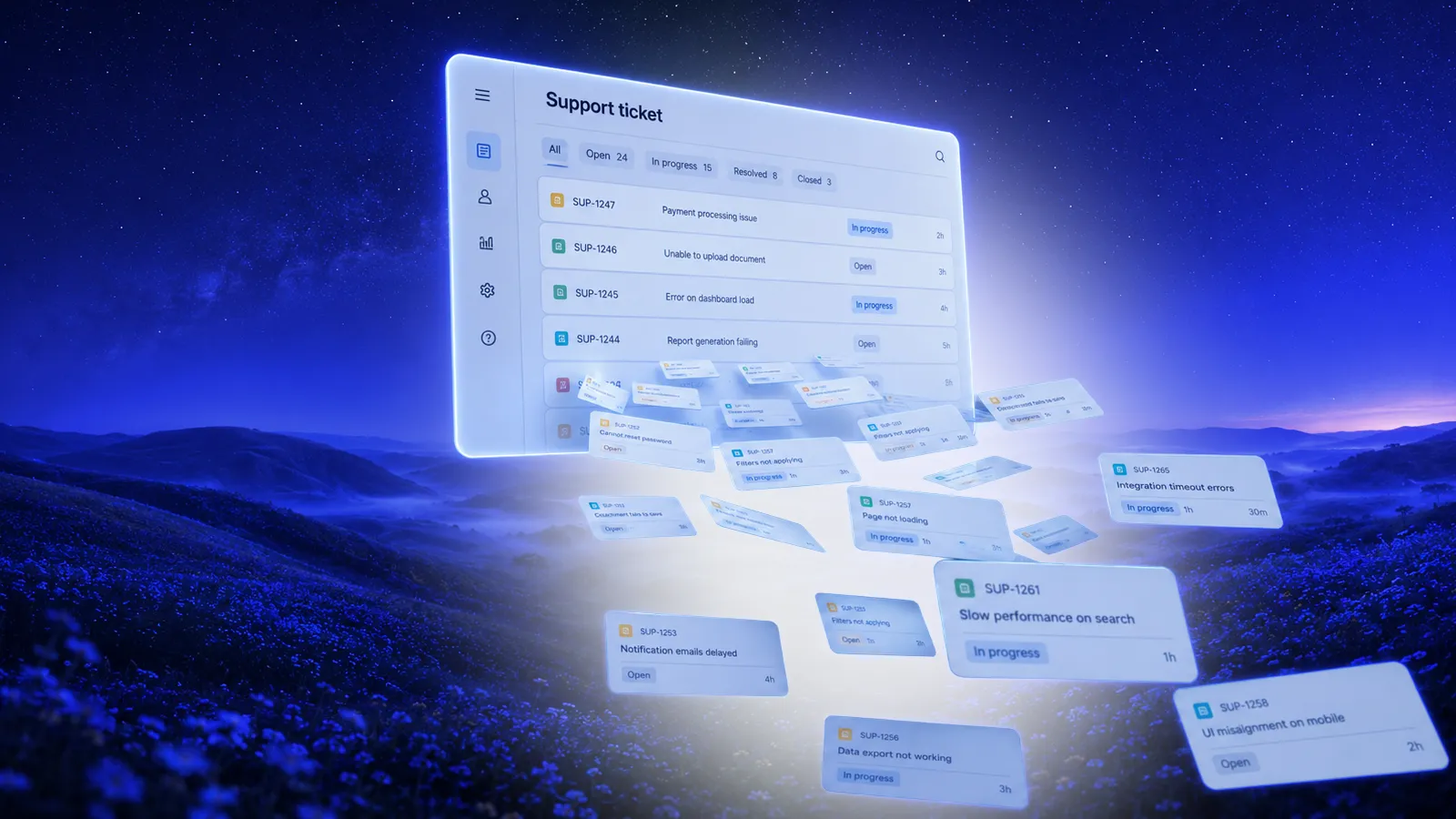
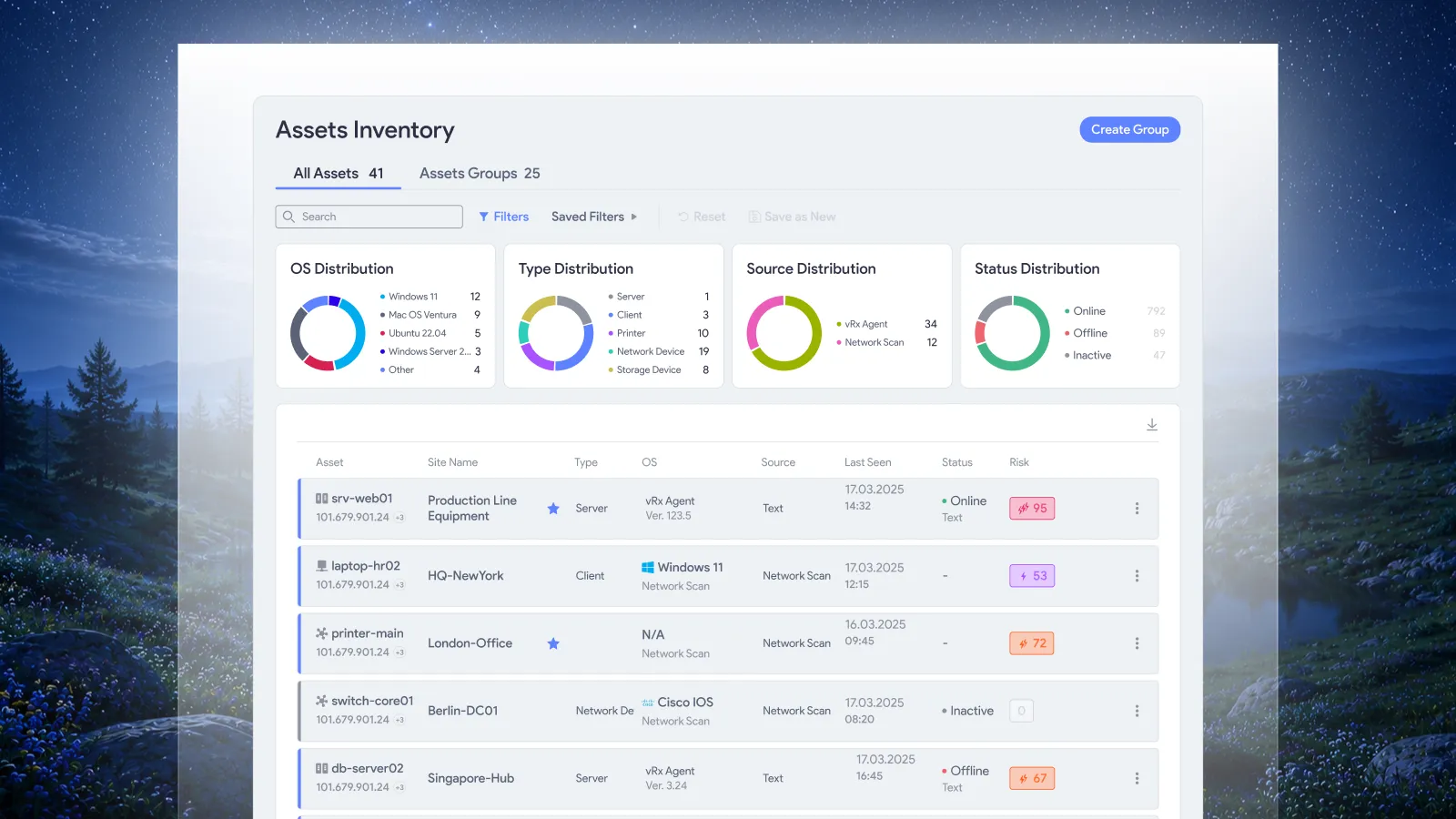
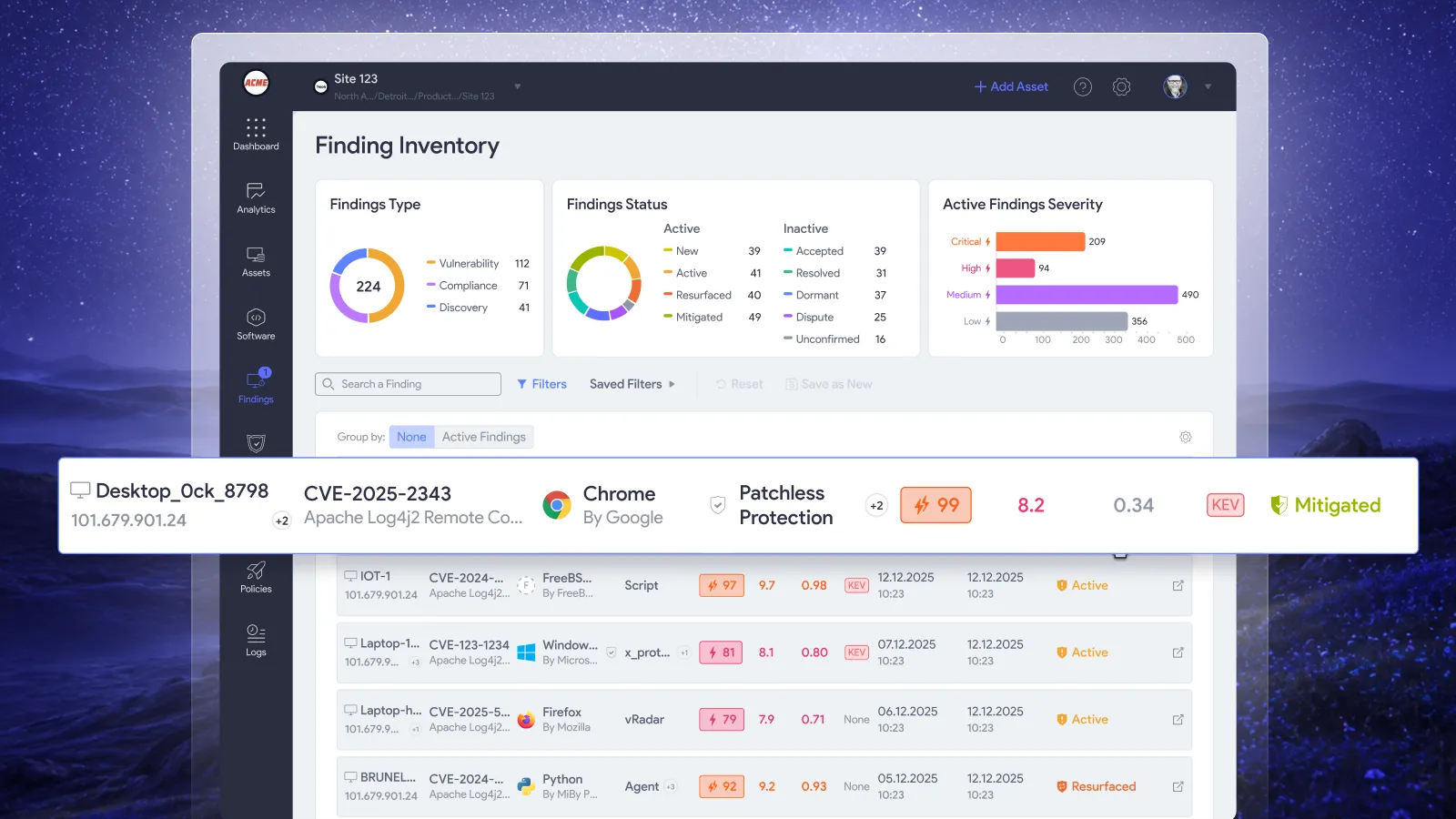
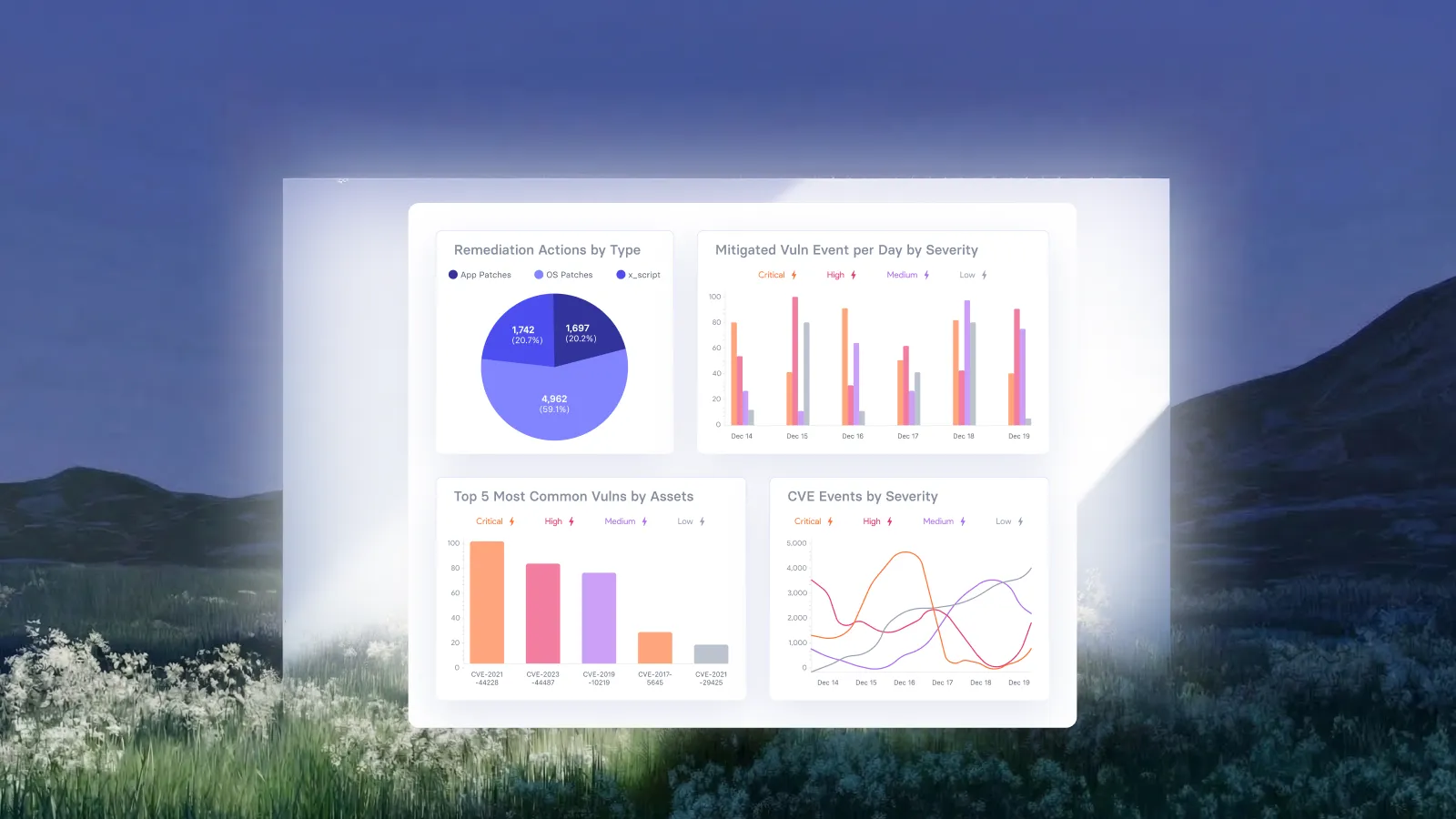
Platform consolidation gives your team one interface for vulnerability data across the environment. Security analysts see findings from every source in a single dashboard. IT operations receive remediation tasks through integrated workflows rather than separate ticket queues.
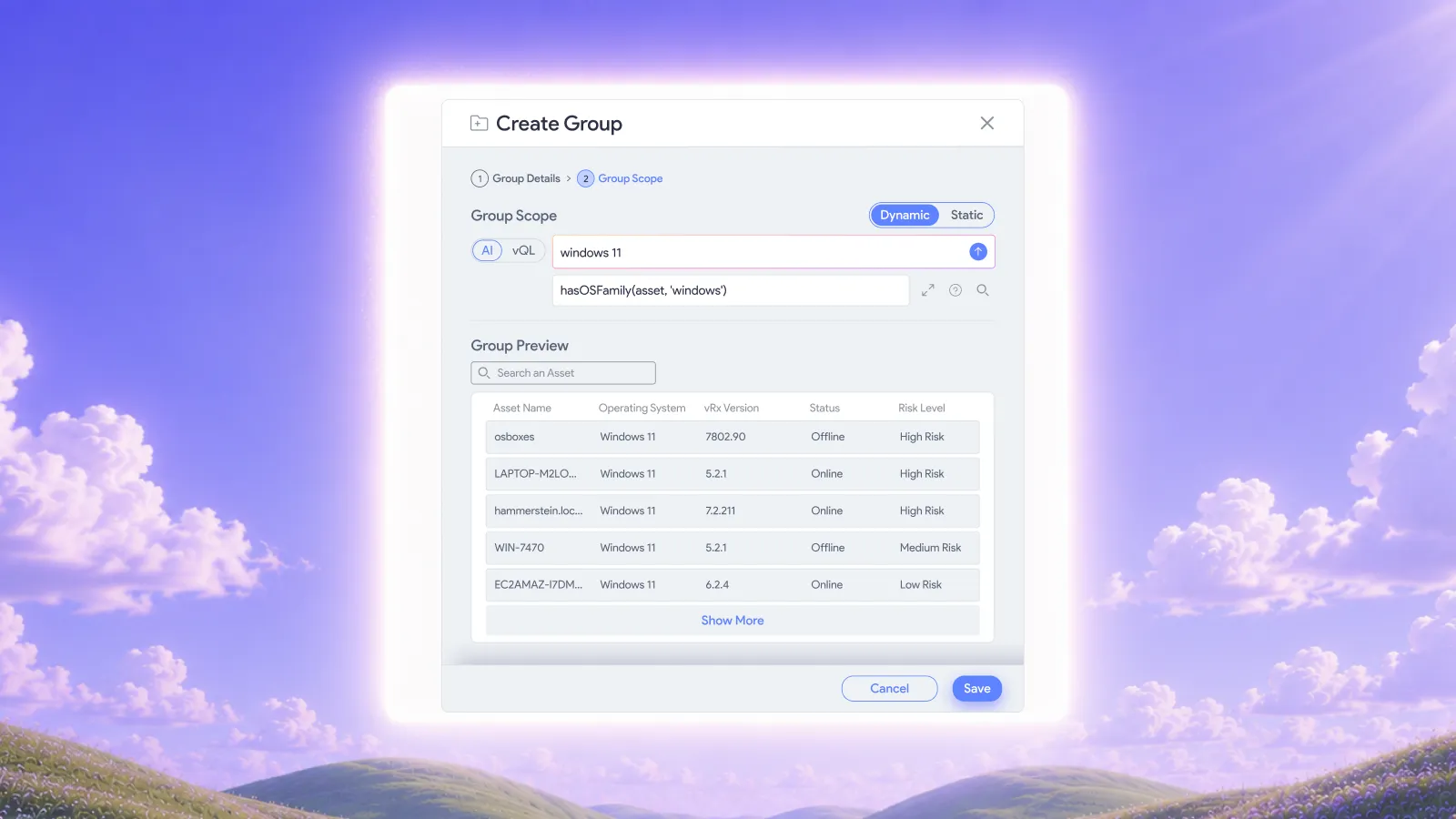
Vicarius vRx supports this consolidation with multi-tenant architecture for organizations managing multiple environments or business units. The platform maintains centralized visibility while allowing tailored policies for different asset groups.
FAQs about vulnerability management platforms and remediation
How does a vulnerability management platform differ from a vulnerability scanner?
A vulnerability scanner detects and reports security weaknesses. A vulnerability management platform connects detection to prioritization and remediation, giving your team a complete workflow from finding to fix. Vicarius vRx adds patchless protection and scripting capabilities that extend remediation options beyond traditional patching.
What vulnerabilities can be fixed without a patch?
Configuration errors, permission issues, and certain application flaws can be remediated through scripts or policy changes. For zero-day vulnerabilities without available patches, Vicarius vRx uses patchless protection to shield the vulnerable application at the memory level until a fix becomes available.
How does risk-based prioritization improve remediation efficiency?
Risk-based prioritization surfaces vulnerabilities that attackers will target first, based on exploitation probability, asset criticality, and business impact. Vicarius vRx uses AI-driven scoring that factors in your specific environment, so your team fixes what matters rather than chasing every high-severity finding.
Can vulnerability management platforms help with compliance audits?
Unified platforms map remediation actions to compliance frameworks automatically. Vicarius vRx tracks every fix against HIPAA, PCI DSS, CIS Benchmarks, and other frameworks, generating audit-ready reports that prove vulnerabilities were identified and closed.
What does mean time to remediate measure and why does it matter?
Mean time to remediate (MTTR) measures the average time between vulnerability detection and confirmed fix. Lower MTTR reduces the window attackers have to exploit known flaws. Vicarius customers have reduced MTTR by 60% to 70% through automated remediation workflows.
How do vulnerability management platforms reduce tool sprawl?
By combining discovery, prioritization, remediation, and compliance in one interface, unified platforms eliminate the need for separate scanners, patch managers, and reporting tools. Vicarius vRx consolidates these functions while supporting integration with existing SIEM and SSO infrastructure.
Related resources:

















.webp)














%20Signals%20a%20New%20Era%20of%20Supply%20Chain%20Risk.webp)






.webp)