

Enterprises rely on automated patch management tools to keep their fleets of workstations and mobile devices – as well as the servers, cloud assets, and the network infrastructure that keeps it all connected – secure against patchable critical vulnerabilities.
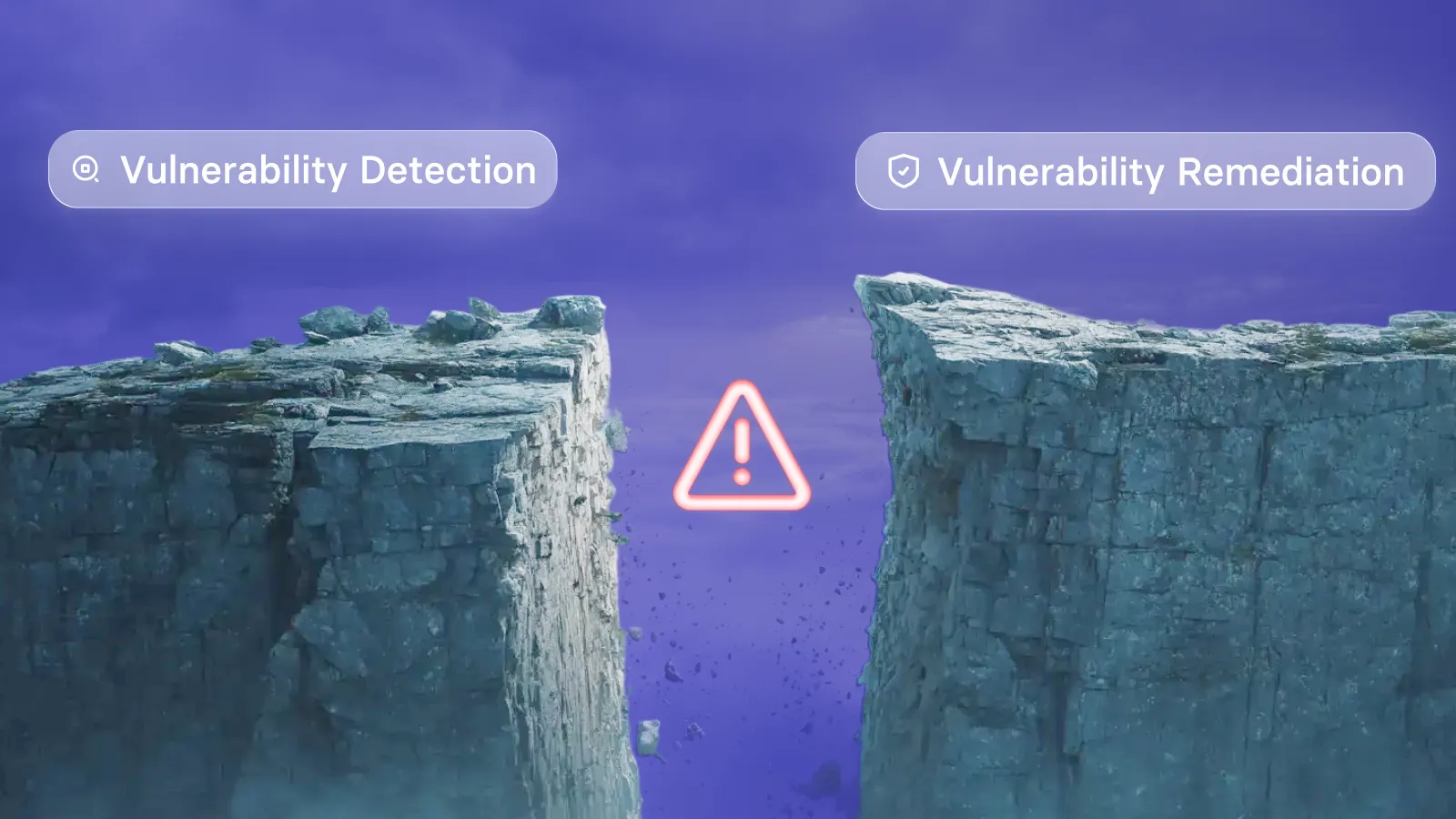
Patch management is only one of many ways cybersecurity risk can be reduced, and not every vulnerability has a software patch. Like vulnerability management, which typically only focuses on detection, patch management tools generally focus on only one aspect of remediation, requiring additional tools and leaving gaps in coverage that lead to delayed fixes.
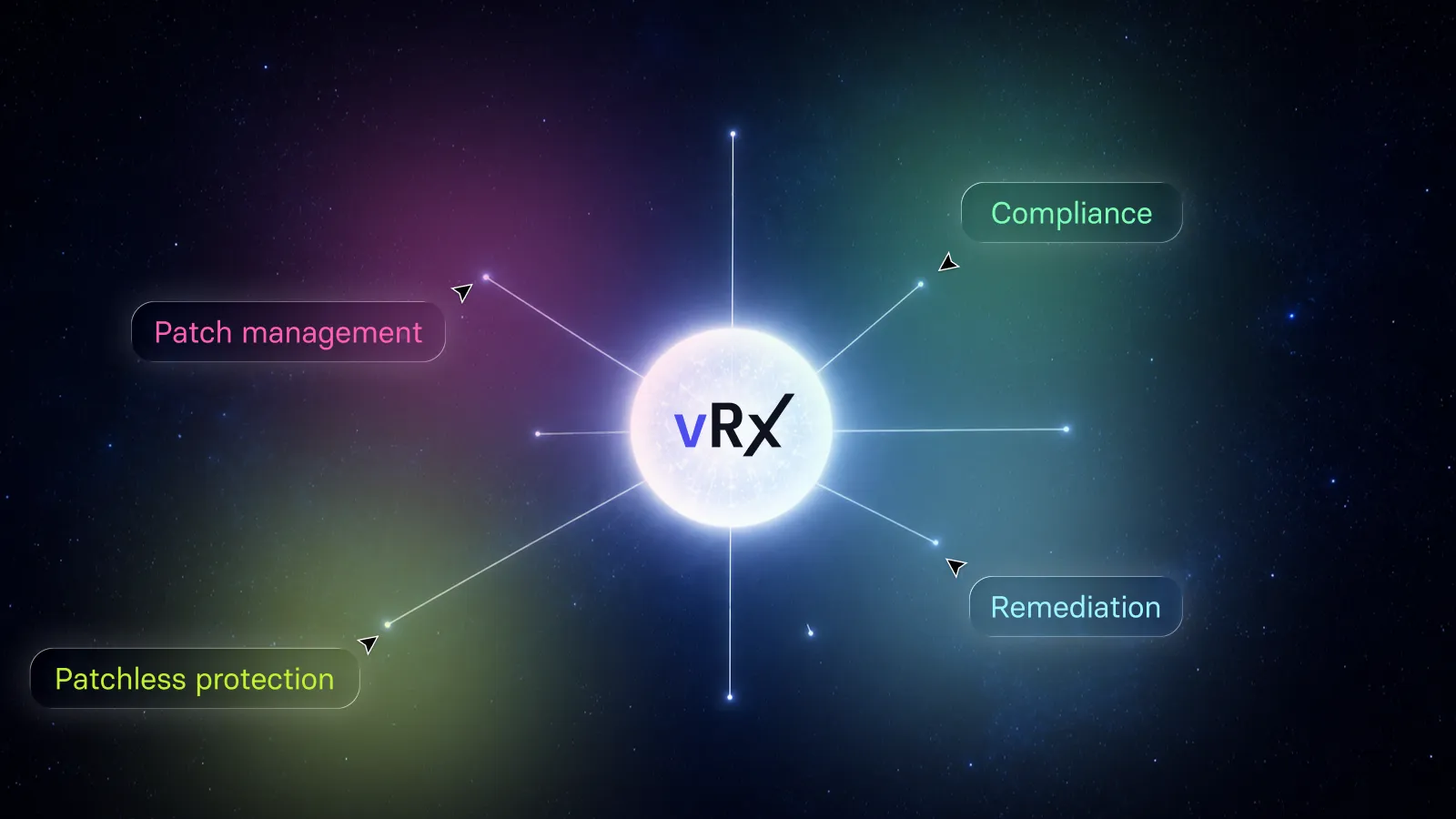
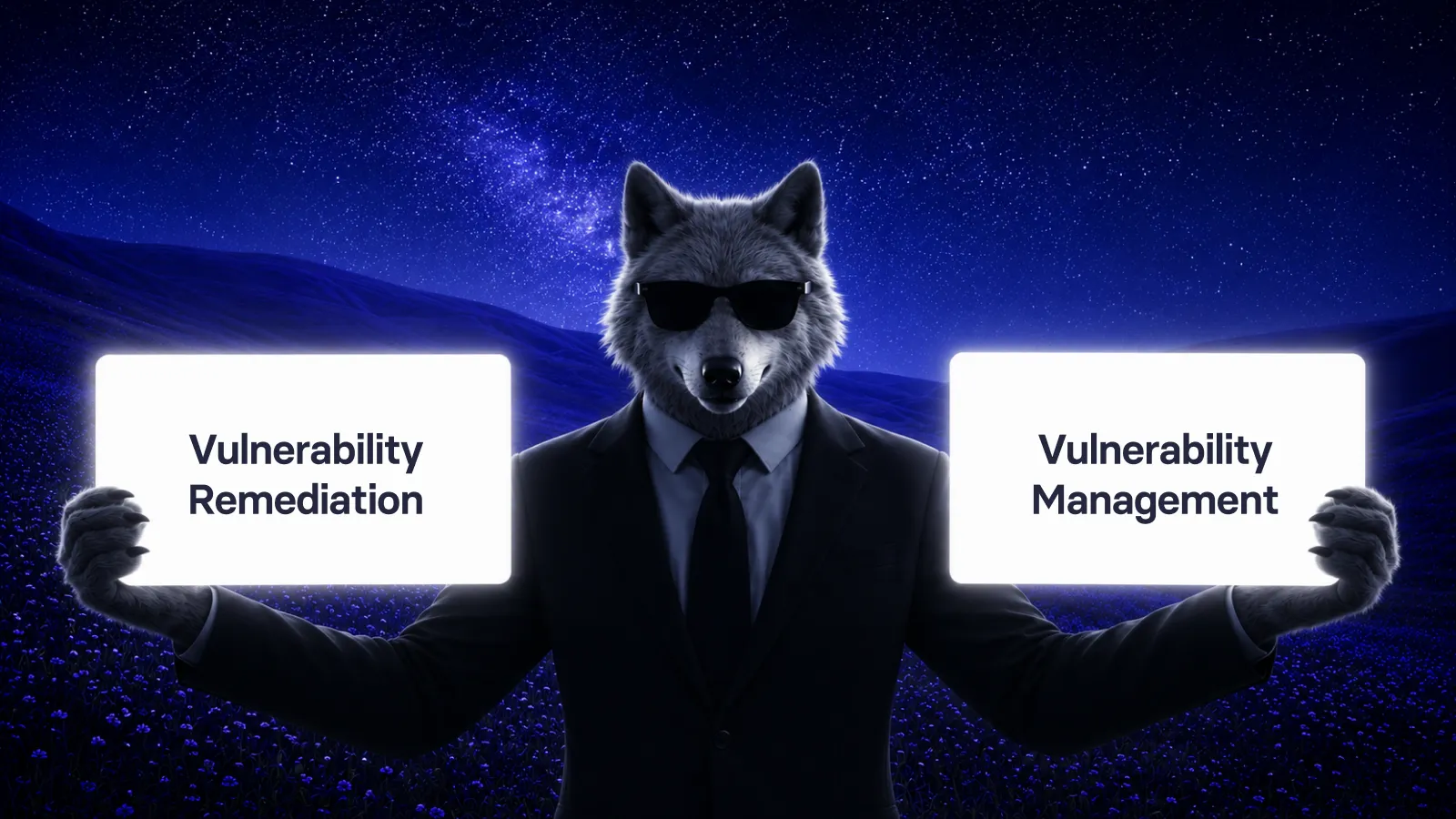
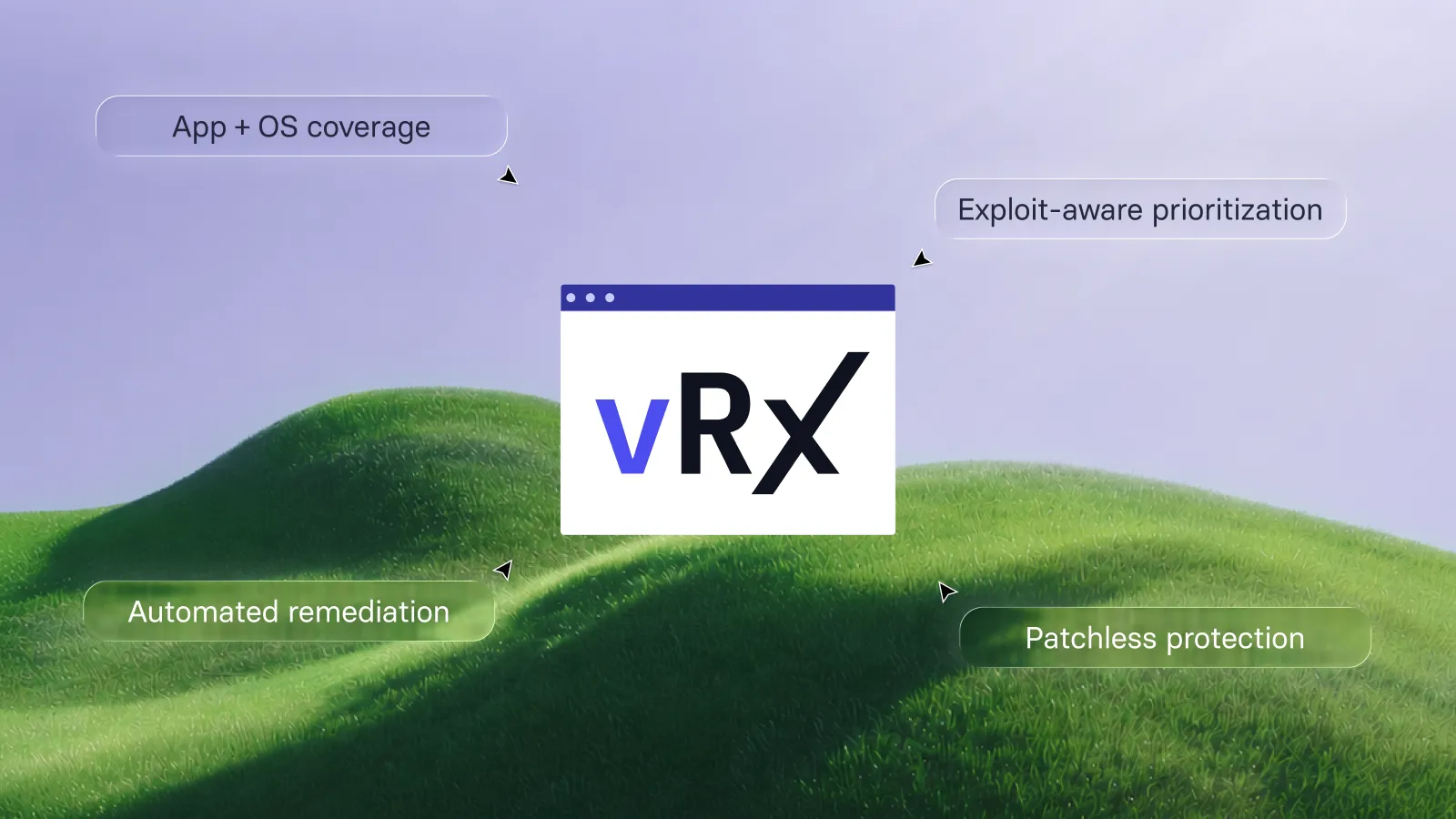
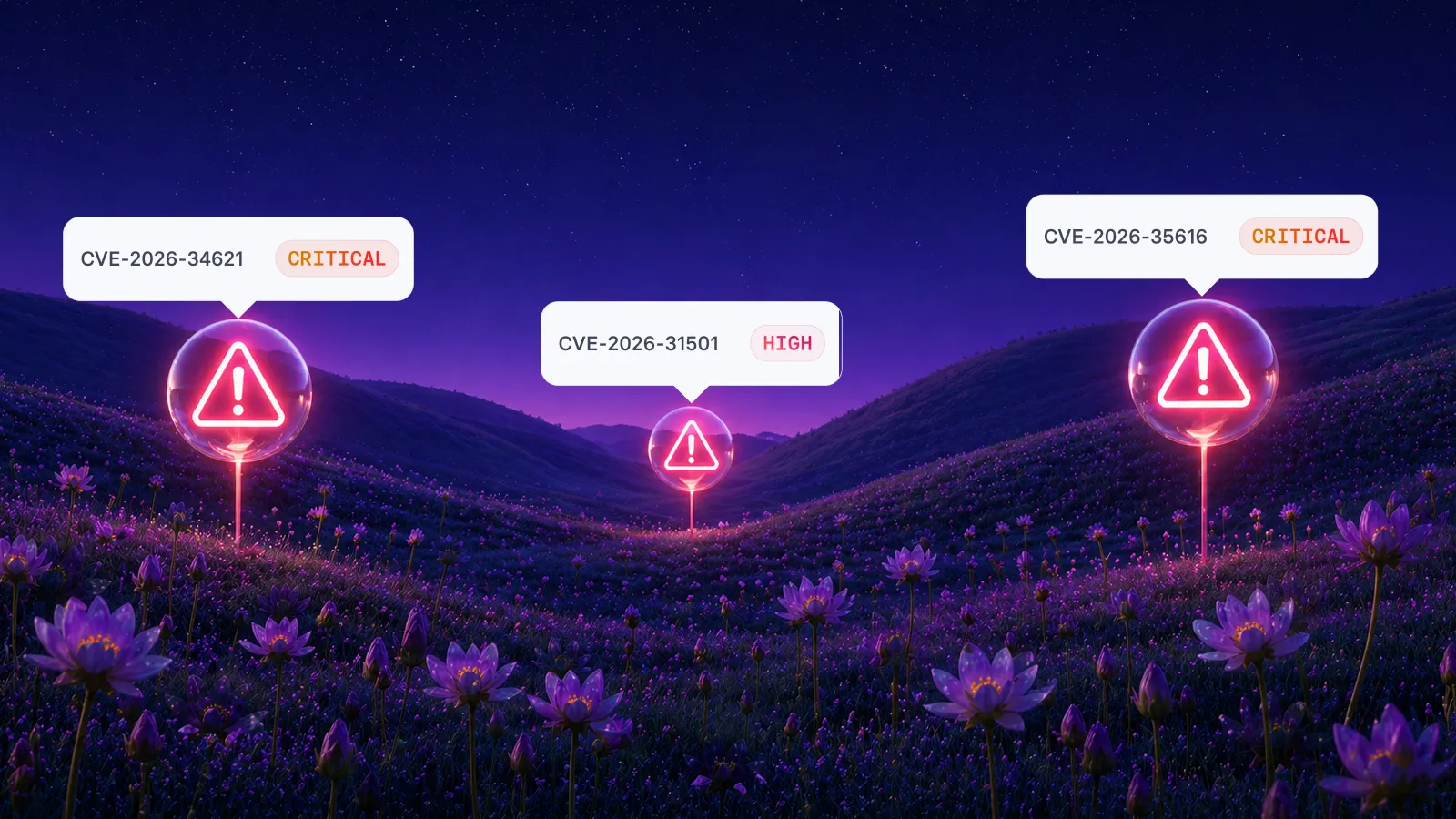
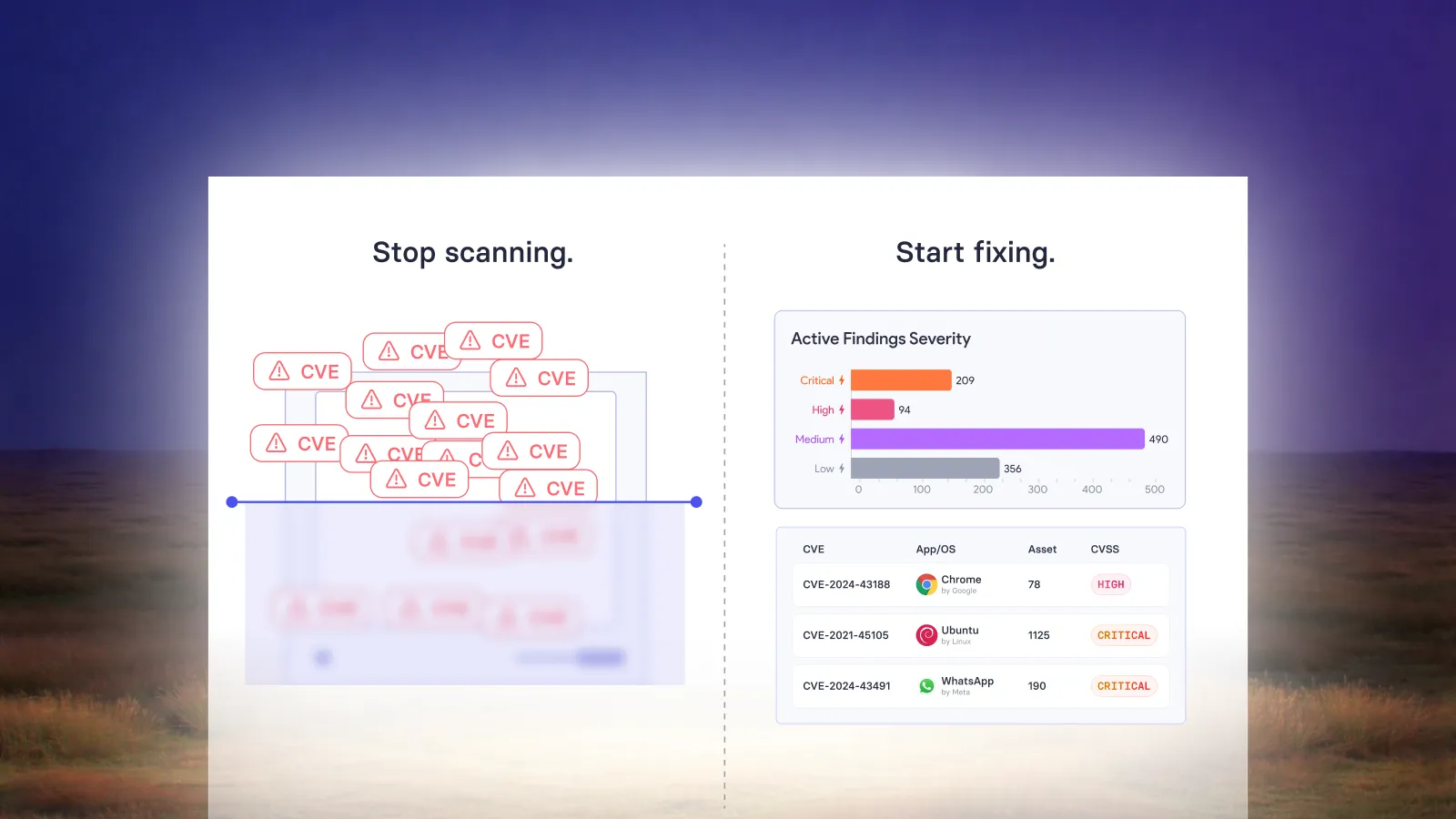
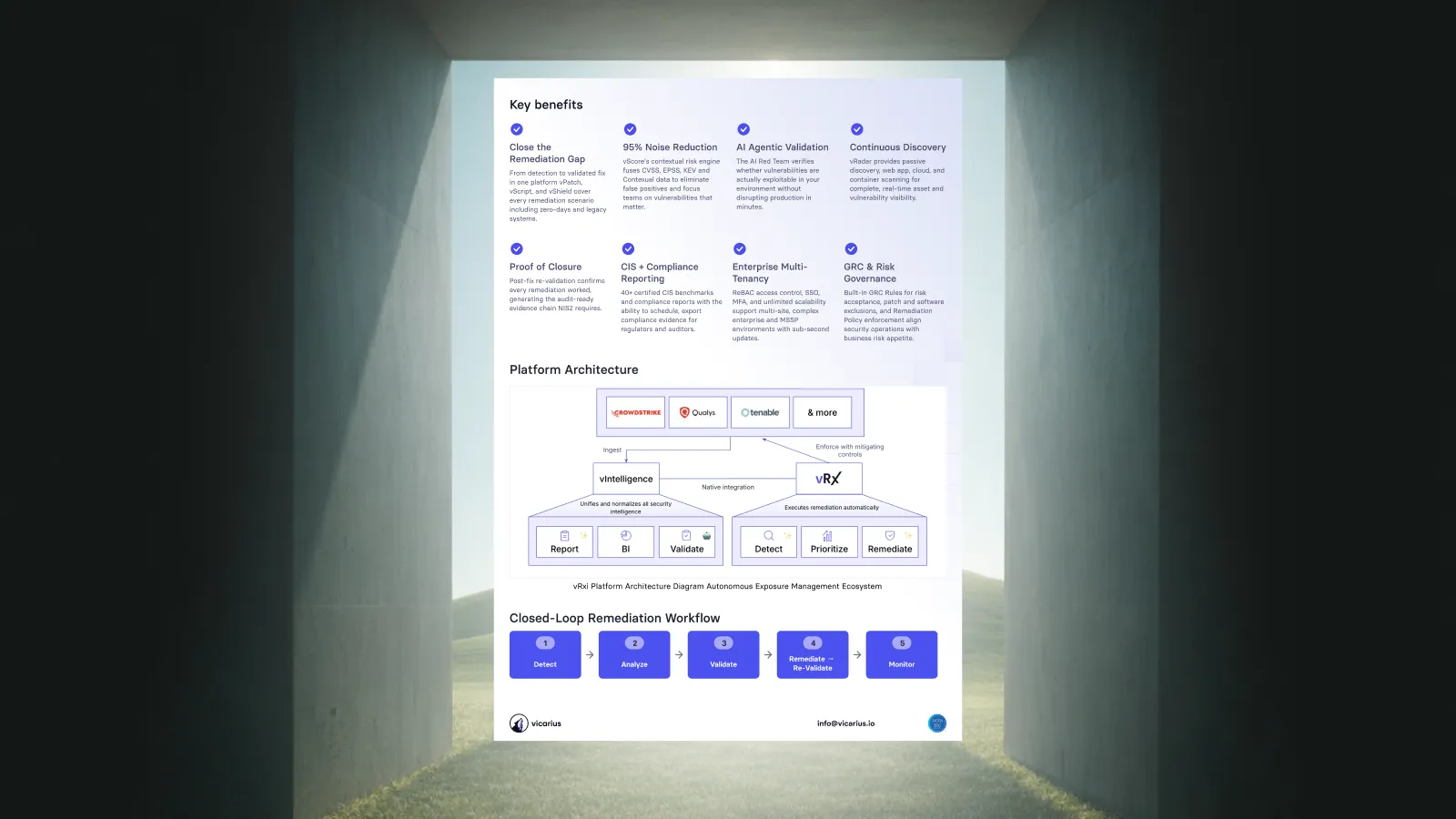
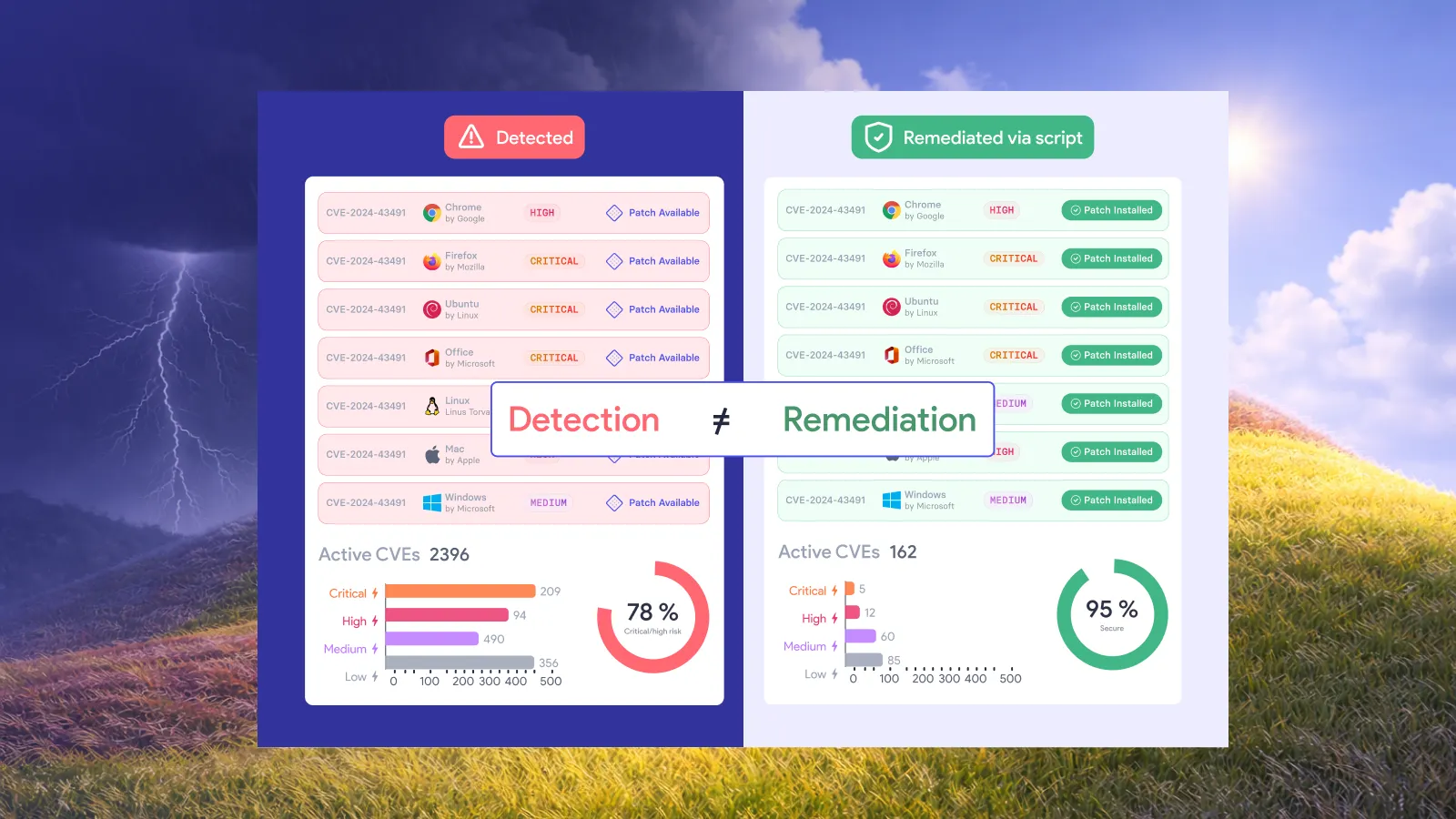
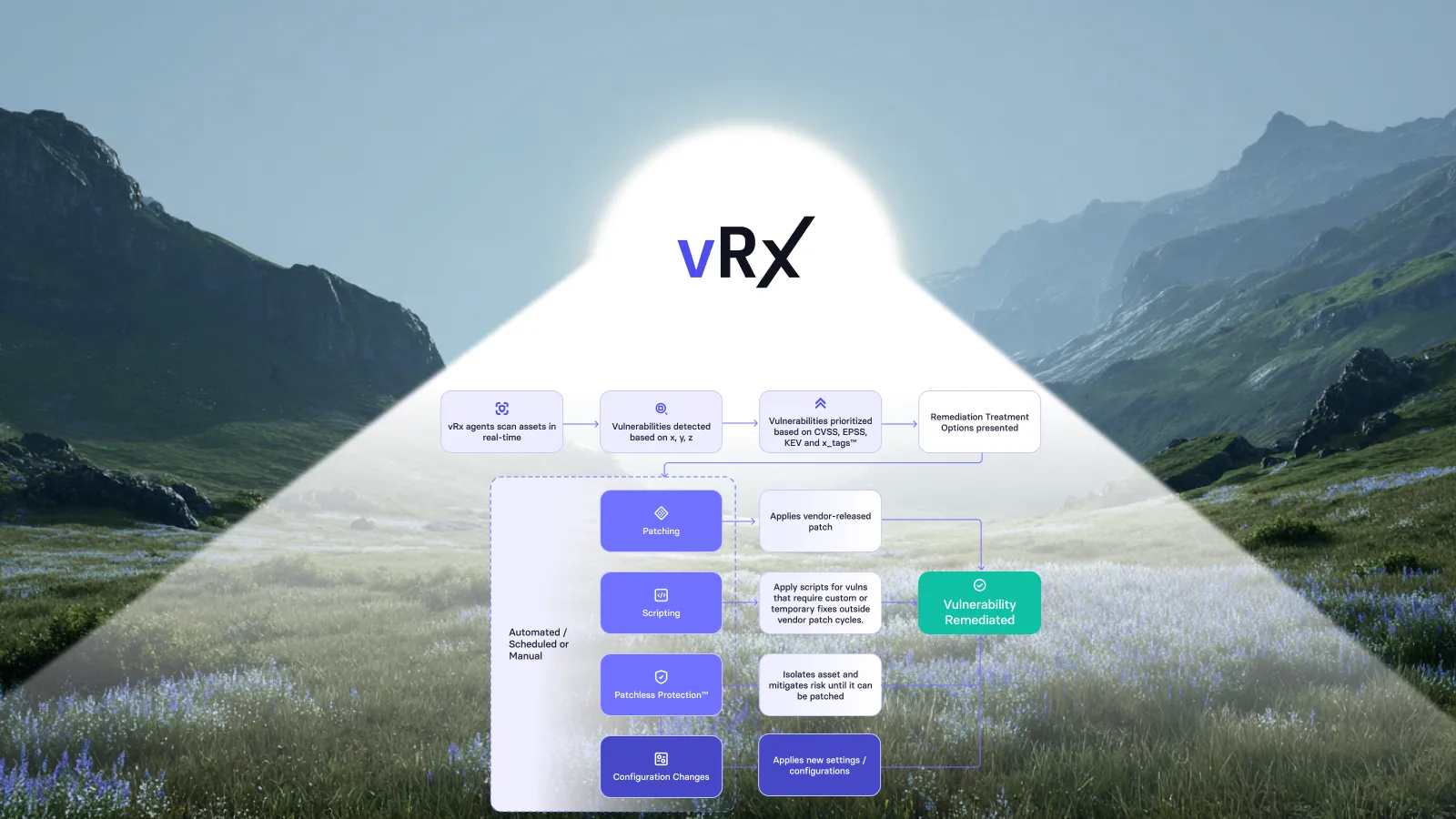
This is why vRx unifies vulnerability management and patch management in a remediation-focused solution. This allows it to identify, prioritize, and fix critical vulnerabilities, rather than just telling you about them.
Why mixed environments present a patch management challenge – and why yours is unique
Mixed-OS environments compound the inherent challenges of patch management. Visibility is compromised with fragmented vulnerability management and patch management for each OS, and the number of software assets to secure multiplies rapidly with each separate platform. Additionally, not every patch management tool may be compatible with every operating system and third-party software combination.
Your business is also different from every other business, and so is the IT infrastructure that supports it. Many enterprises rely on end-of-life (EOL), unpatchable, and legacy internal tools. These often cannot be patched: either there is no vendor support, a specific software version is required for compatibility (common when dealing with specialized medical, industrial, and point-of-sale hardware), or your organization no longer has the resources or expertise to upgrade stable (yet insecure) dependencies.
Enterprise patch management tools must address this uniqueness. Unfortunately, most solutions are rigid and can only patch specifically supported operating systems and third-party software.
You can't just ignore the problem with traditional patch management solutions
Industry and legal compliance auditors won't care whether your patch management tools support your OS and third-party software stacks – only that the required measures were taken, and that you have evidence of that. If your patching tools don't protect the software in your IT environment, you're using the wrong tools, and you'll probably need to implement manual stopgaps that cover the exceptions.
Manual patching is practically impossible at scale. Even tens of endpoints present a moving target for IT teams, with each additional software package requiring identification, deployment, and validation. Any gap between disclosure, and detection and remediation increases risk.
What you need to close critical vulnerability gaps
Patch management can't operate in a vacuum. It relies on vulnerability management to identify vulnerabilities, and then takes the remediation role for vulnerabilities that vendors have addressed with a software update.
Beyond basic patch deployment, patch management should reduce the labor required to verify the patch status and security of systems, by providing centralized oversight and management that reaches every endpoint, and helping you resolve edge cases, failures, and track exceptions. This entire process should continuously generate audit-ready evidence of ongoing compliance that links activities directly to requirements.
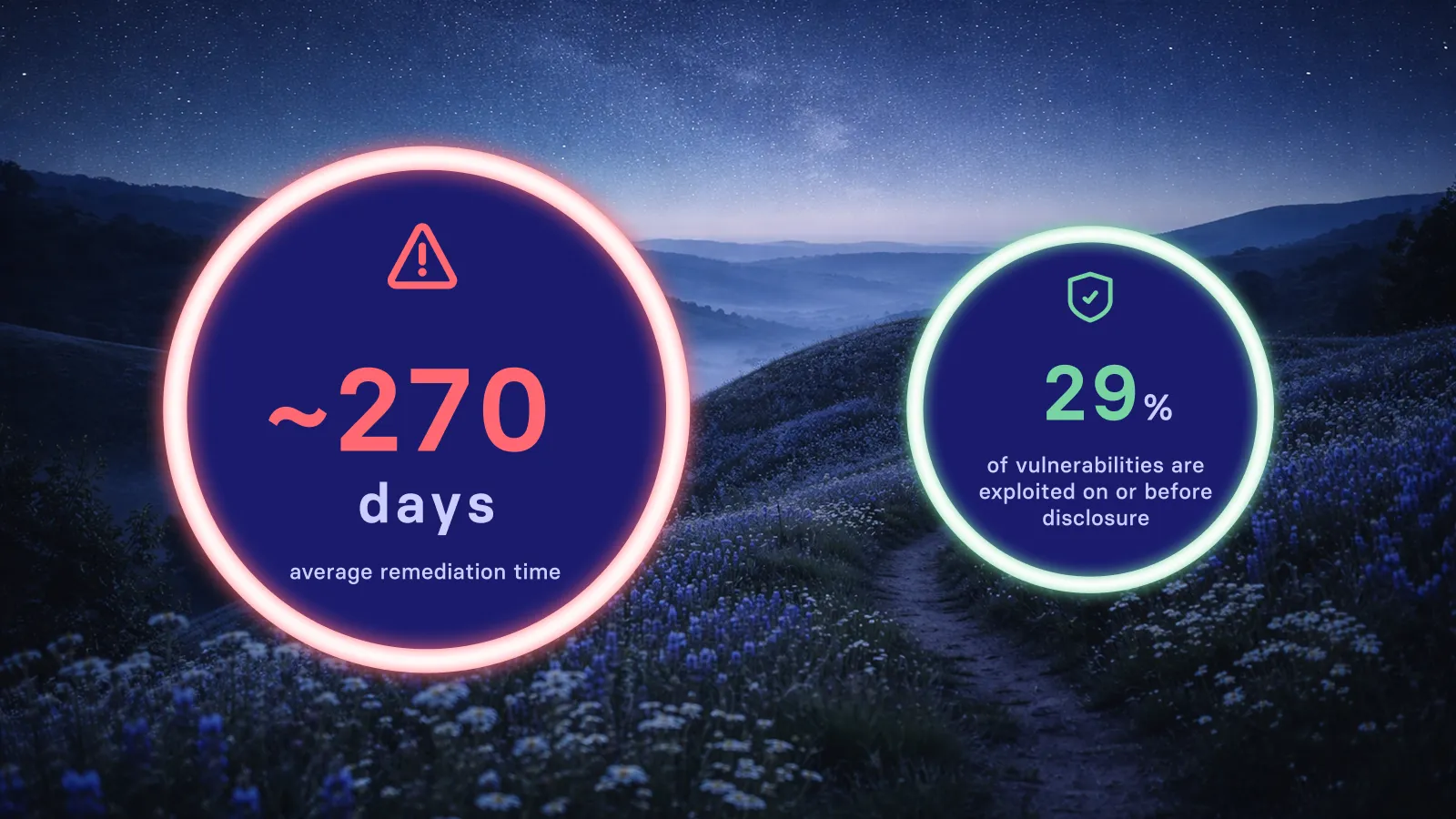
Delays at any stage should not be tolerated, and will accumulate, especially in disjointed workflows. Fragmented tools and workflow gaps are likely contributors to the alarming statistic that the average time to remediate a critical CVE is 32 days – more than enough time for a vulnerability to be exploited.
Native automatic vulnerability patching
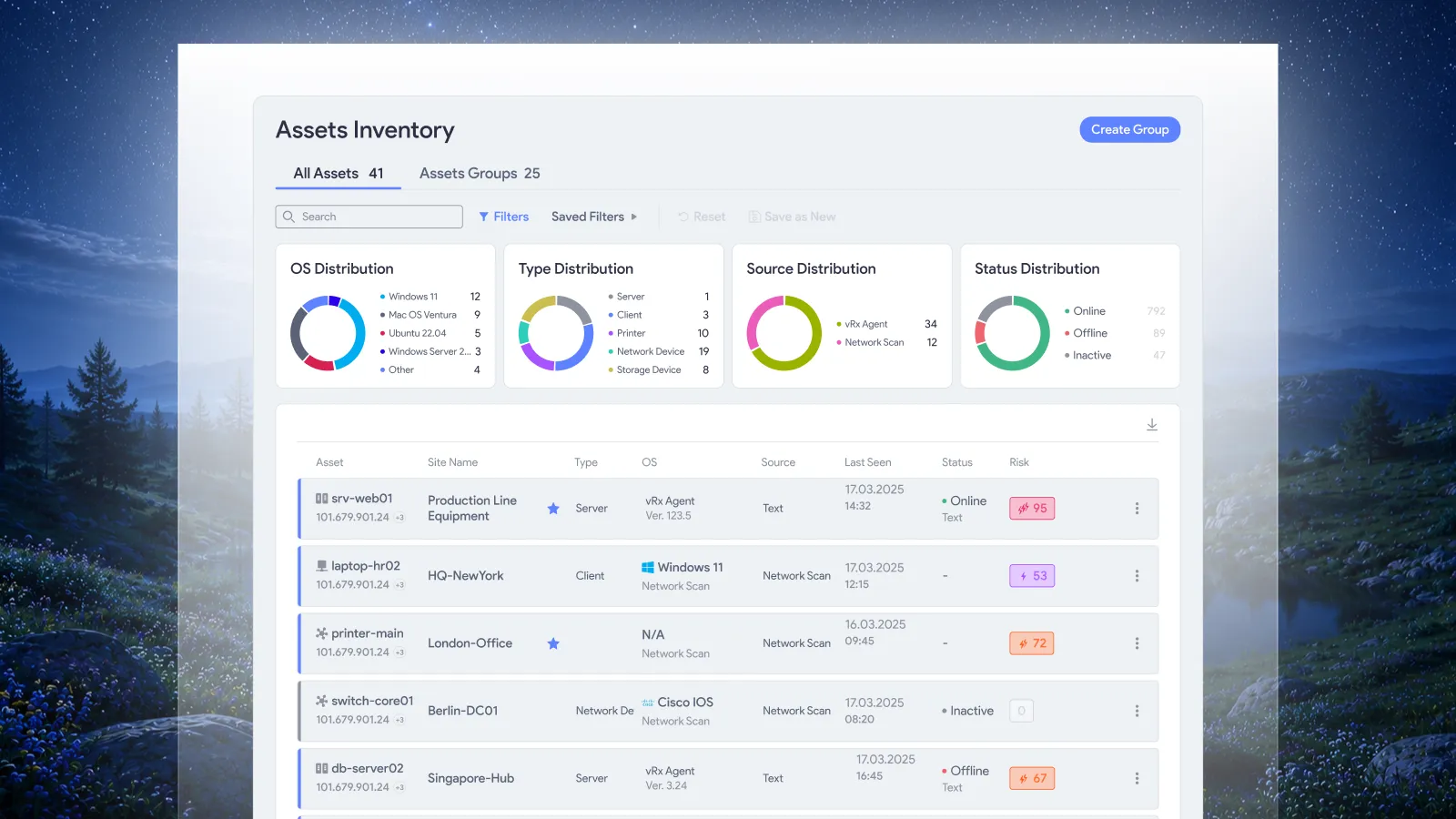
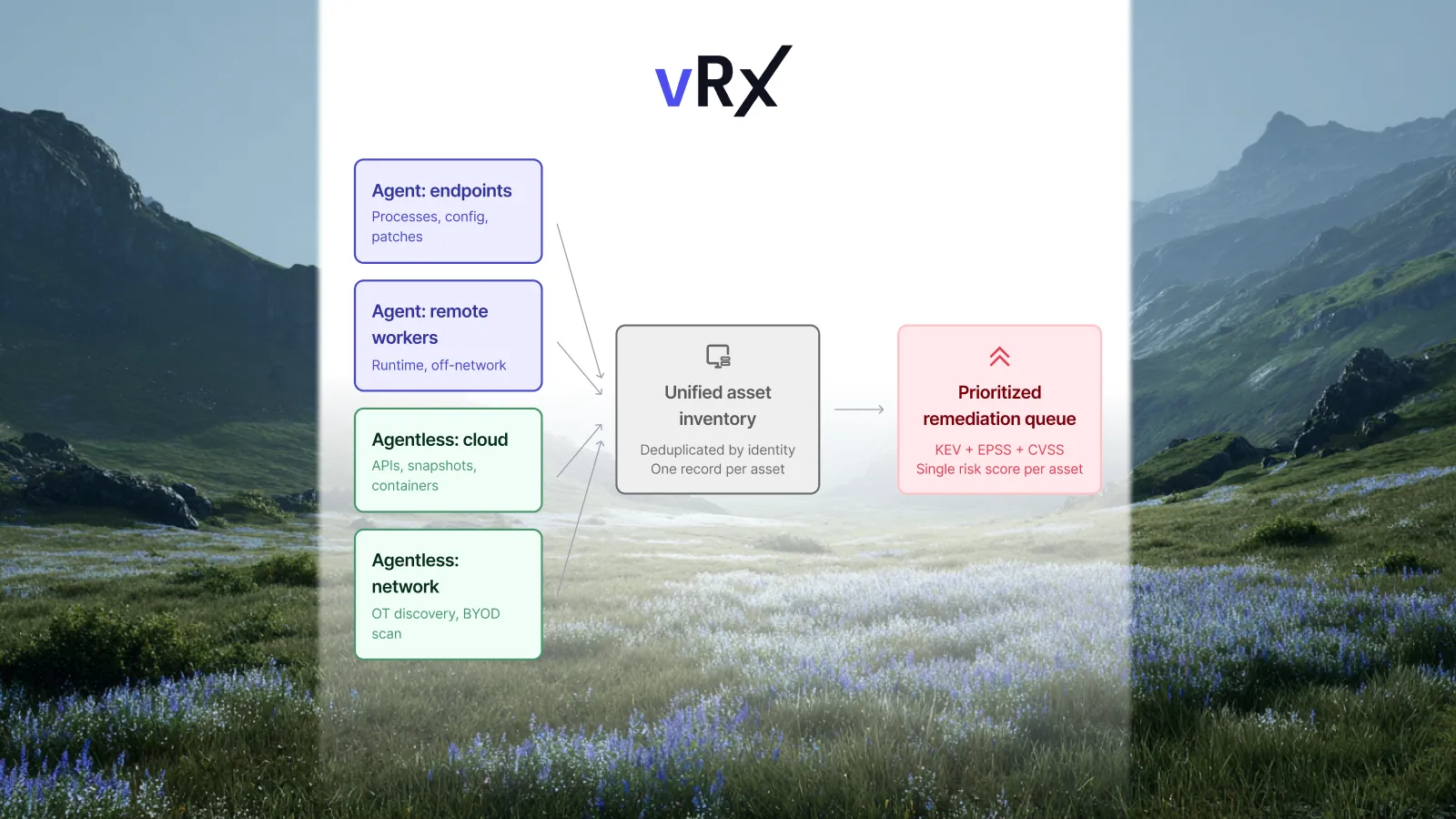
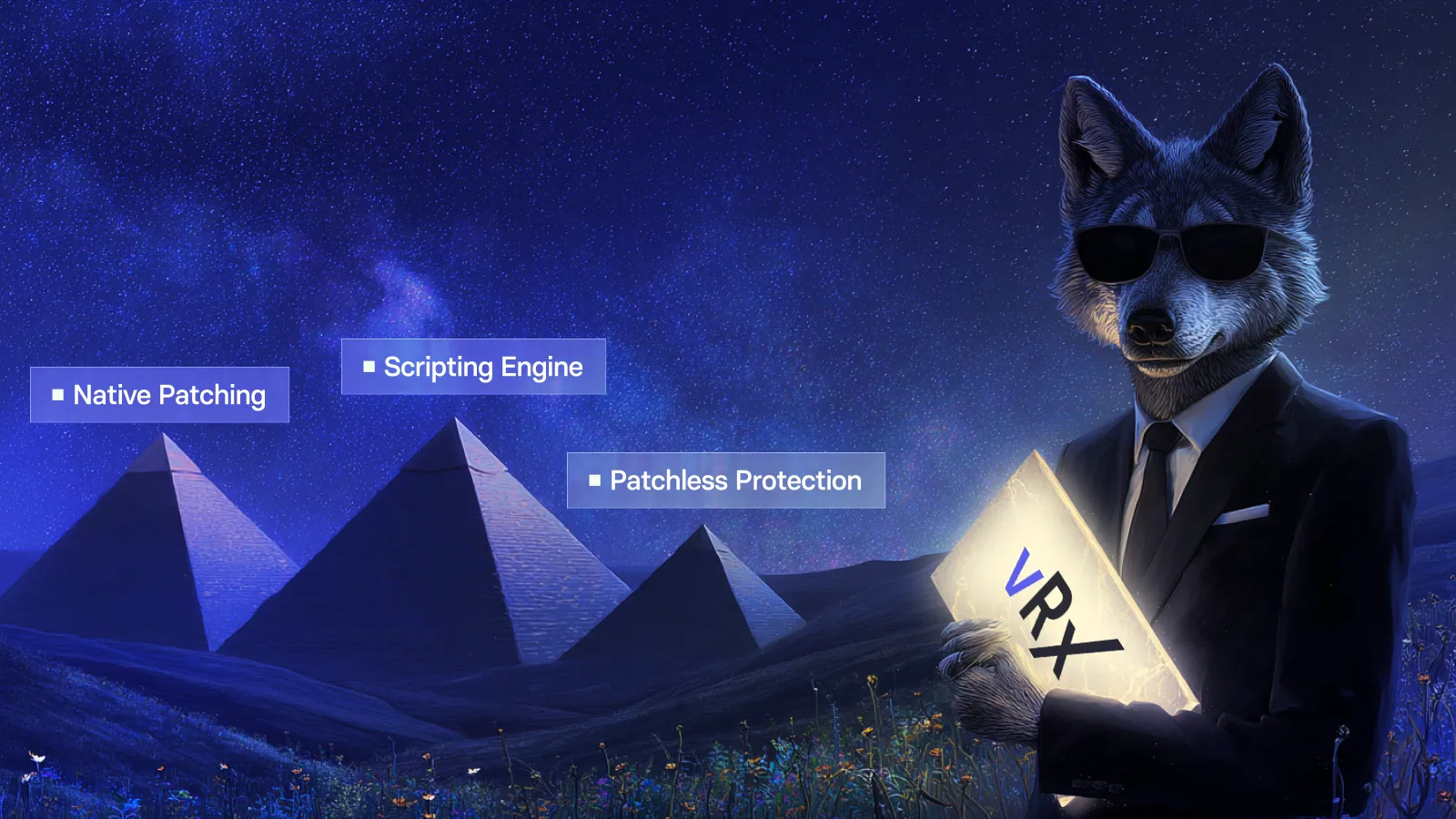
vRx by Vicarus provides native patching for Windows, macOS, and Linux using agents. Agentless scanning brings further visibility to network switches and embedded devices that do not support agents.
Protection for unpatchable apps
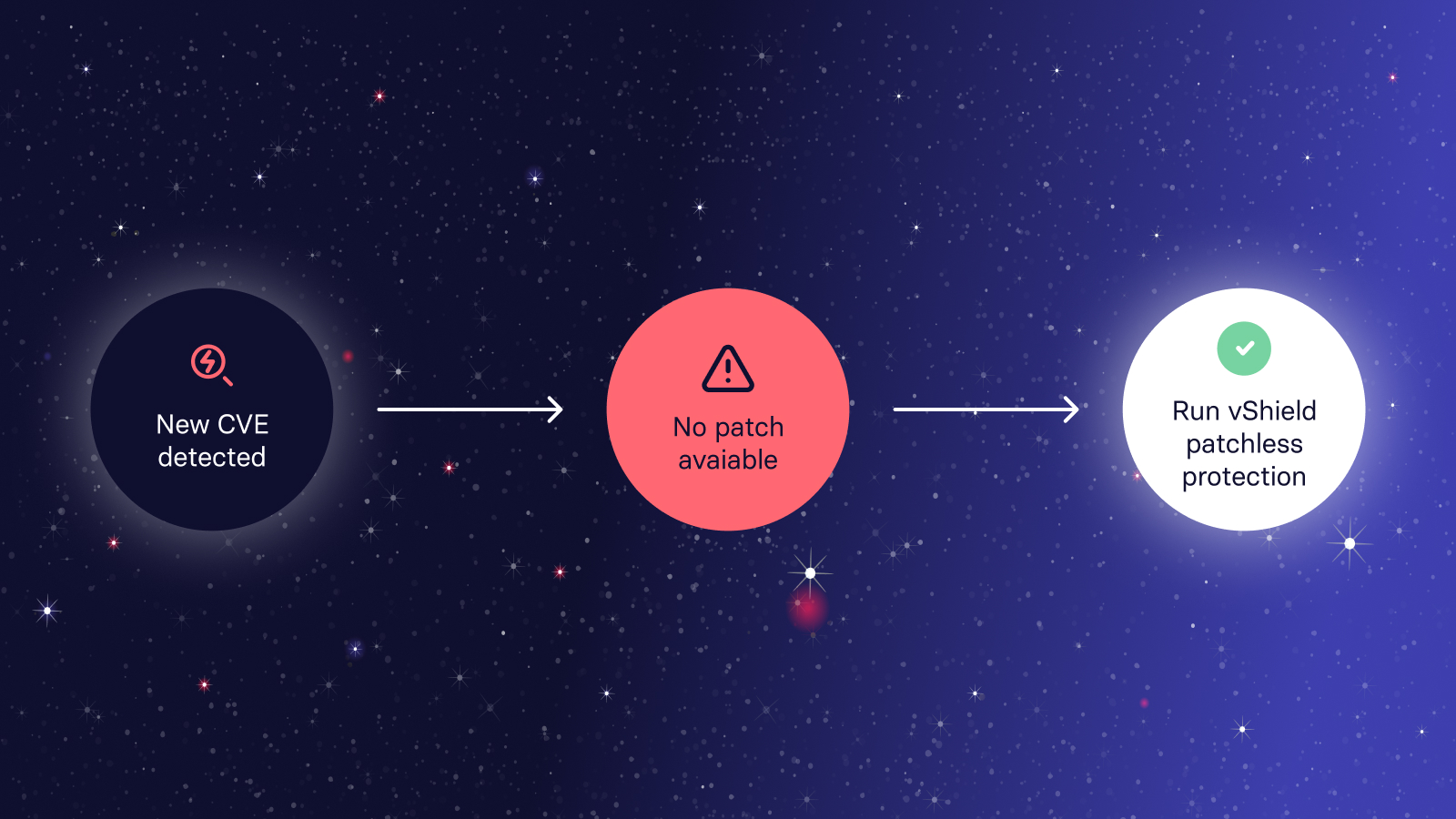
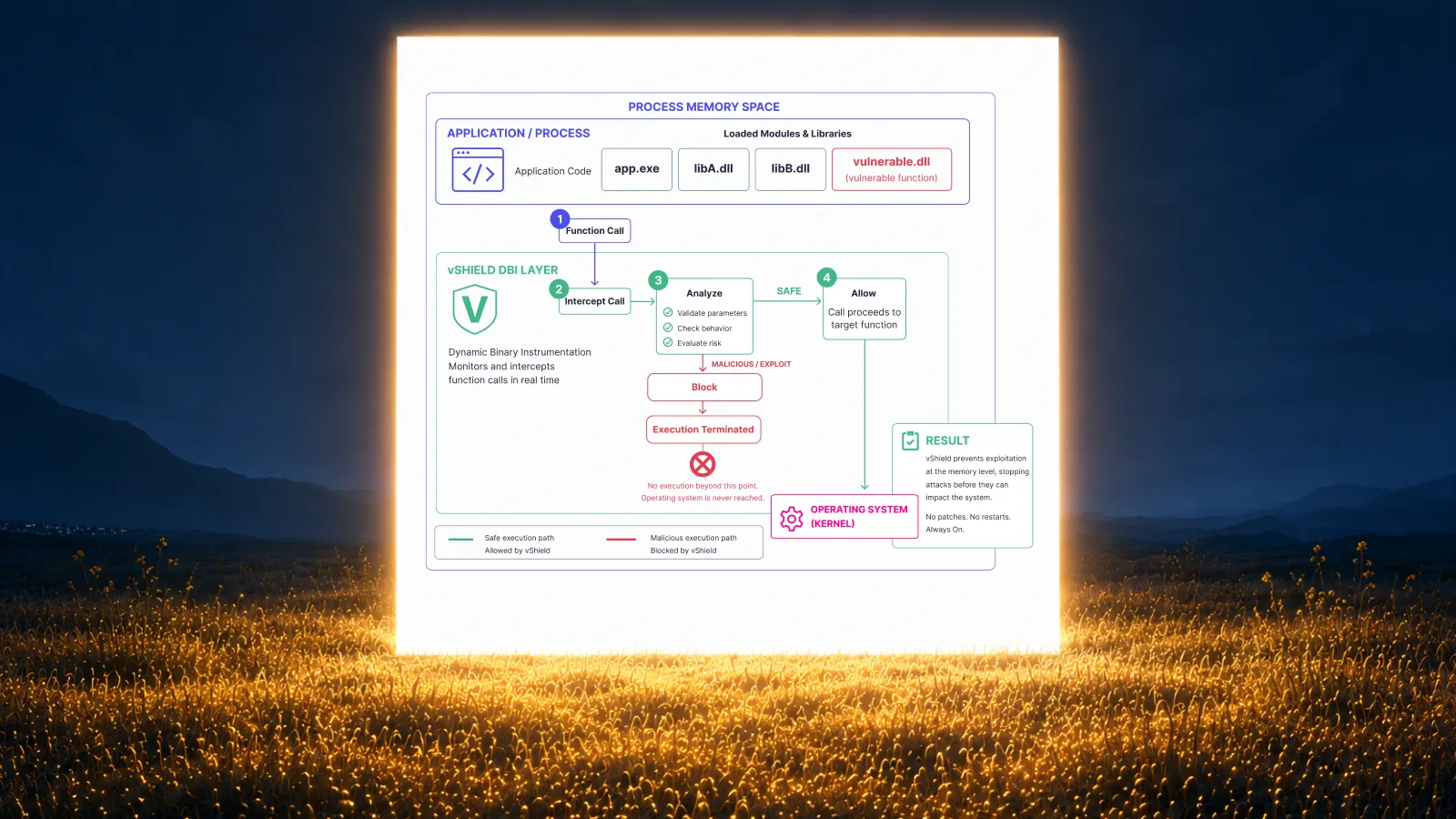
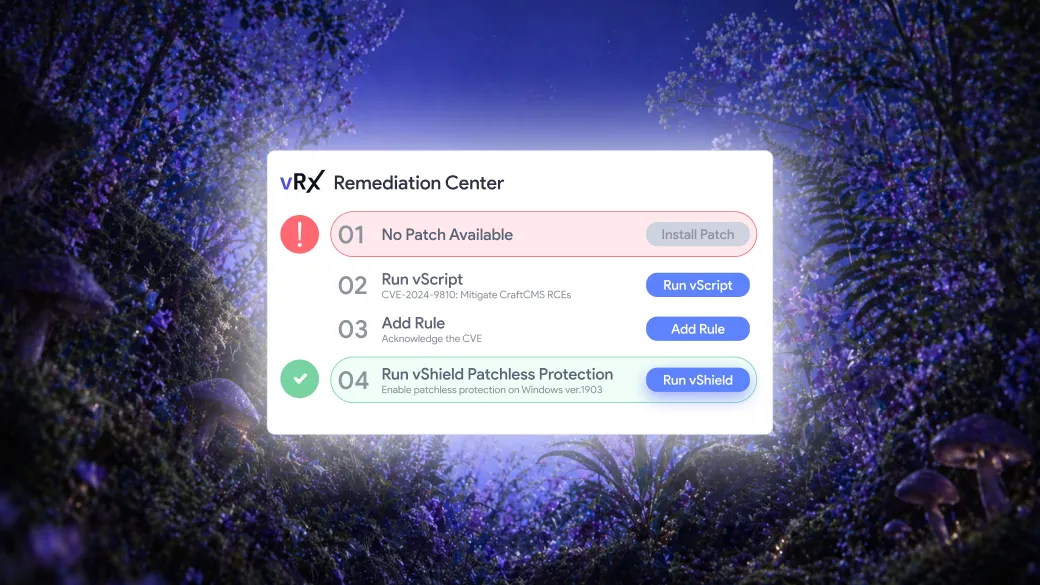
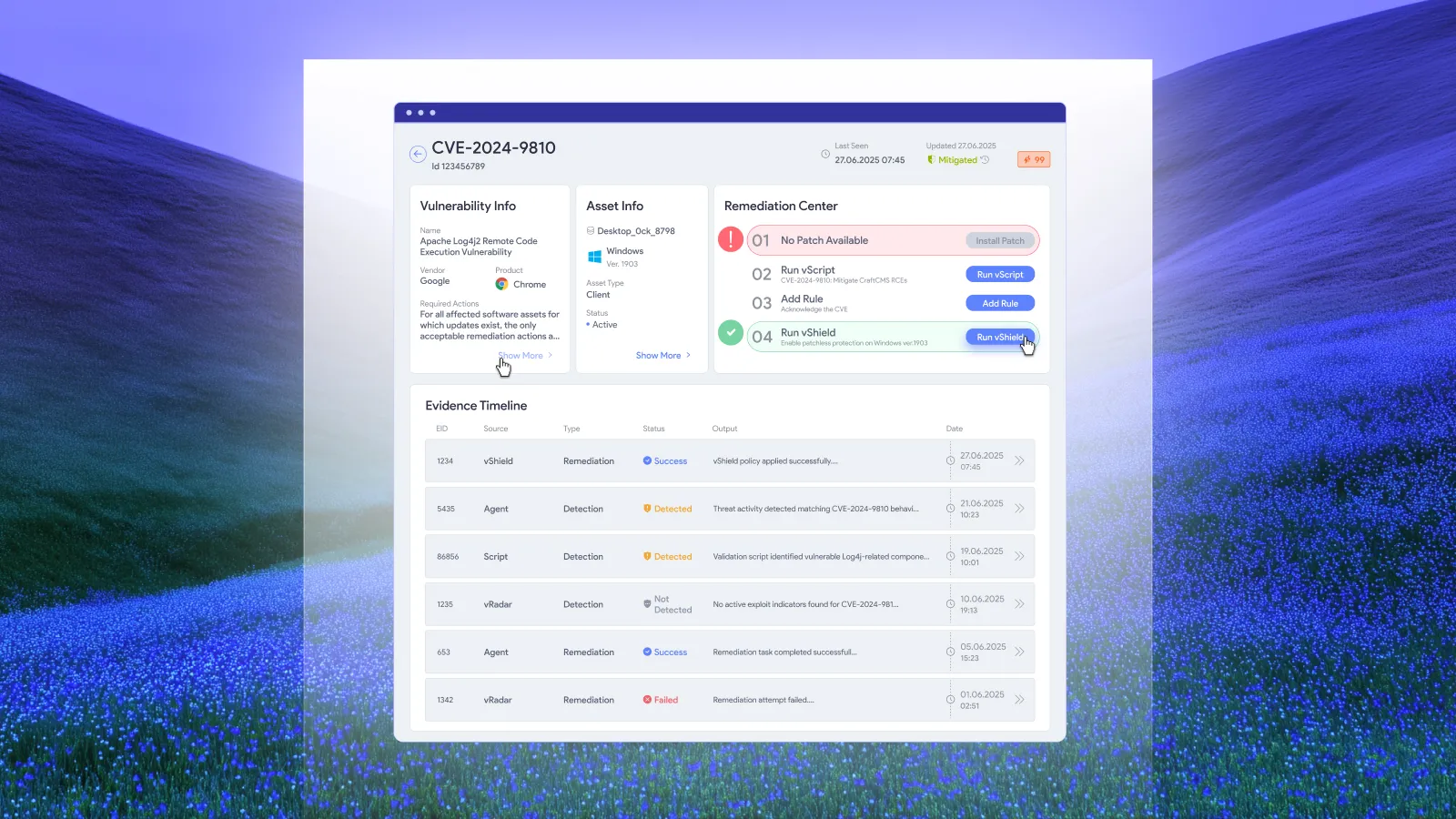
vRx includes Patchless Protection that guards unpatchable apps with in-memory protections. This can secure legacy and EOL apps for the long-term, or provide temporary protection to zero-day exploits until a vendor-provided patch is released.
Built-in custom remediation scripting
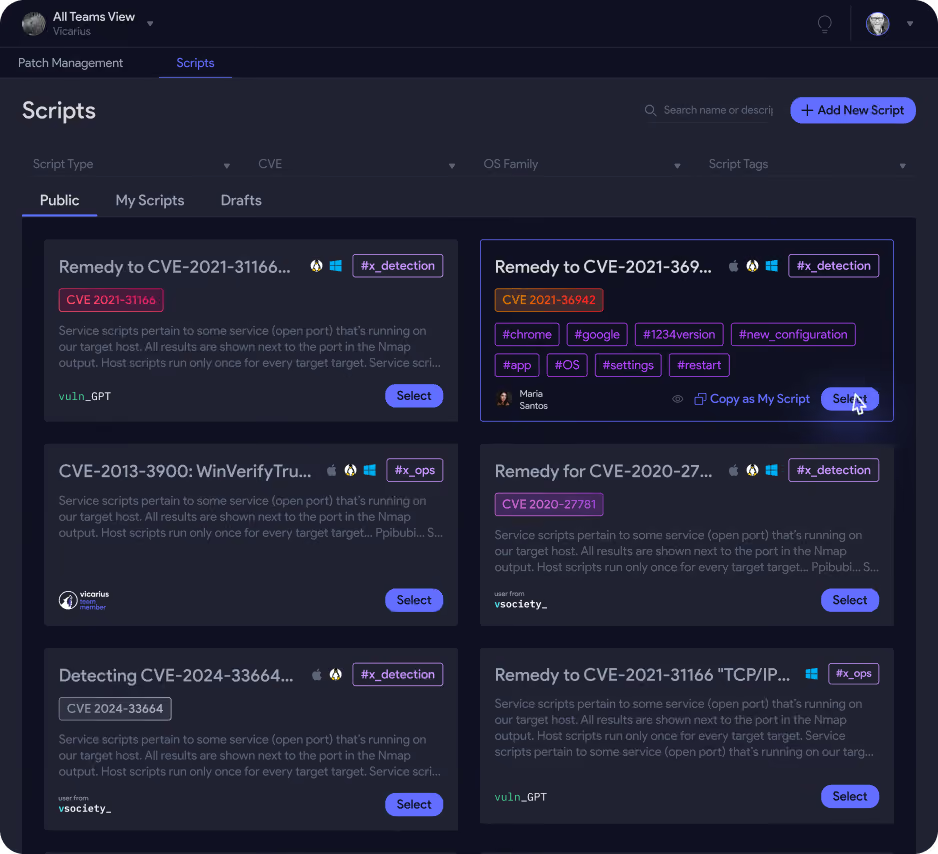
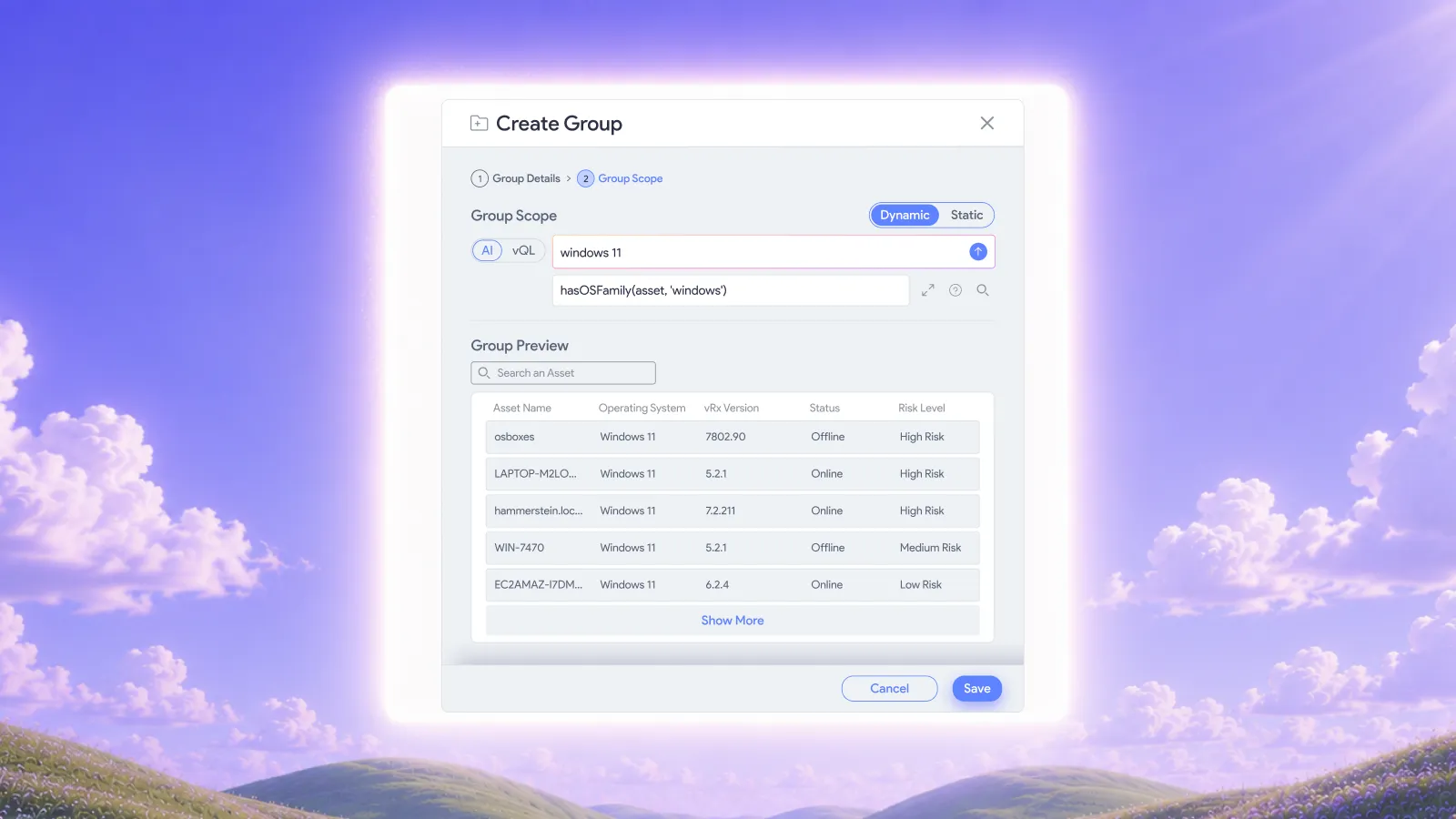
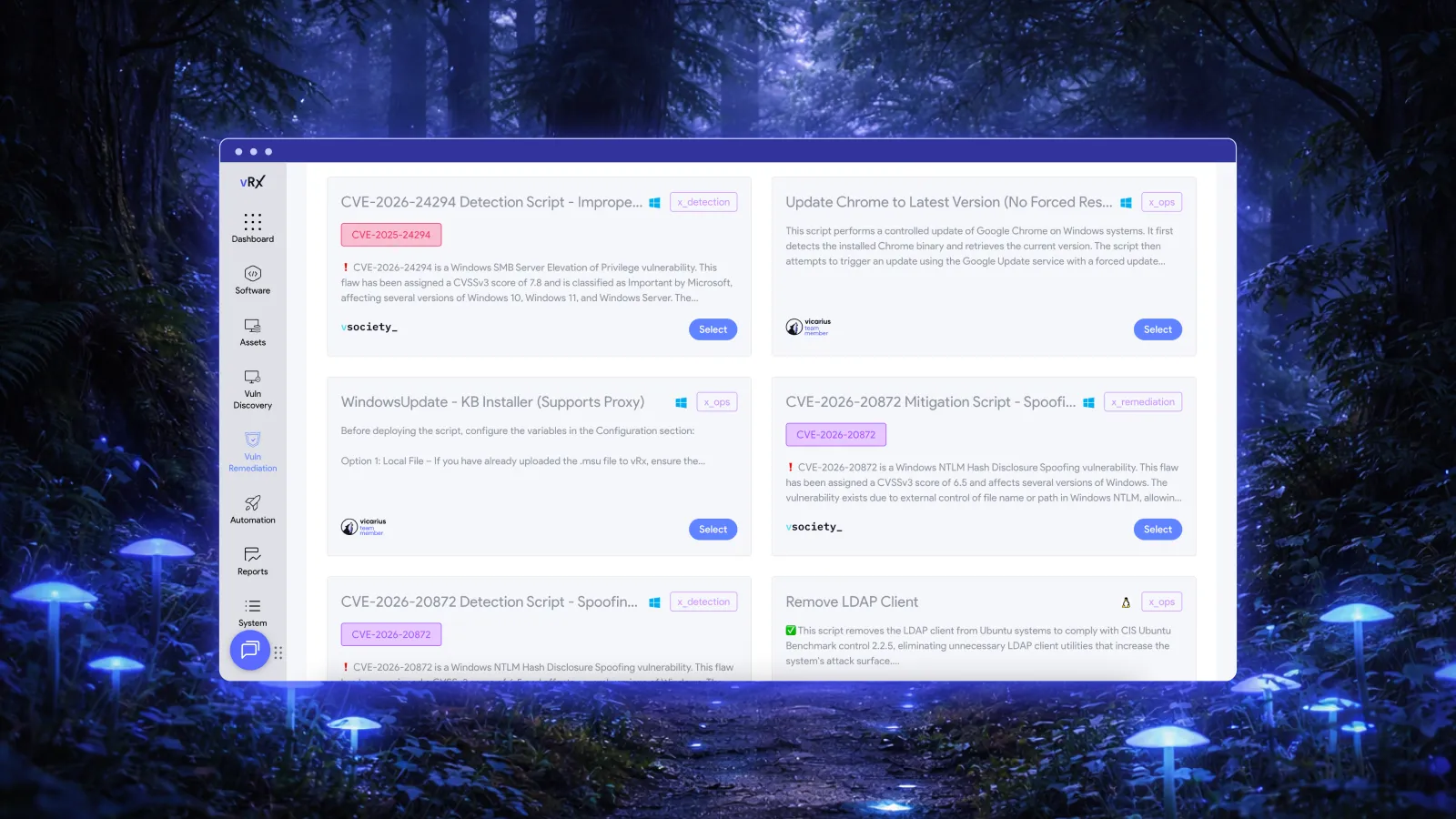
When deeper customization is required, vRx lets you write your own scripts to detect and remediate issues. This isn't limited to patching, but can also update configurations and close vulnerabilities that are not addressed by patches.
You can also leverage the vRx scripting library – an ever-growing collection of community-provided scripts to detect, harden, and mitigate cybersecurity vulnerabilities.
Resolving patch deployment failures and remediation bottlenecks
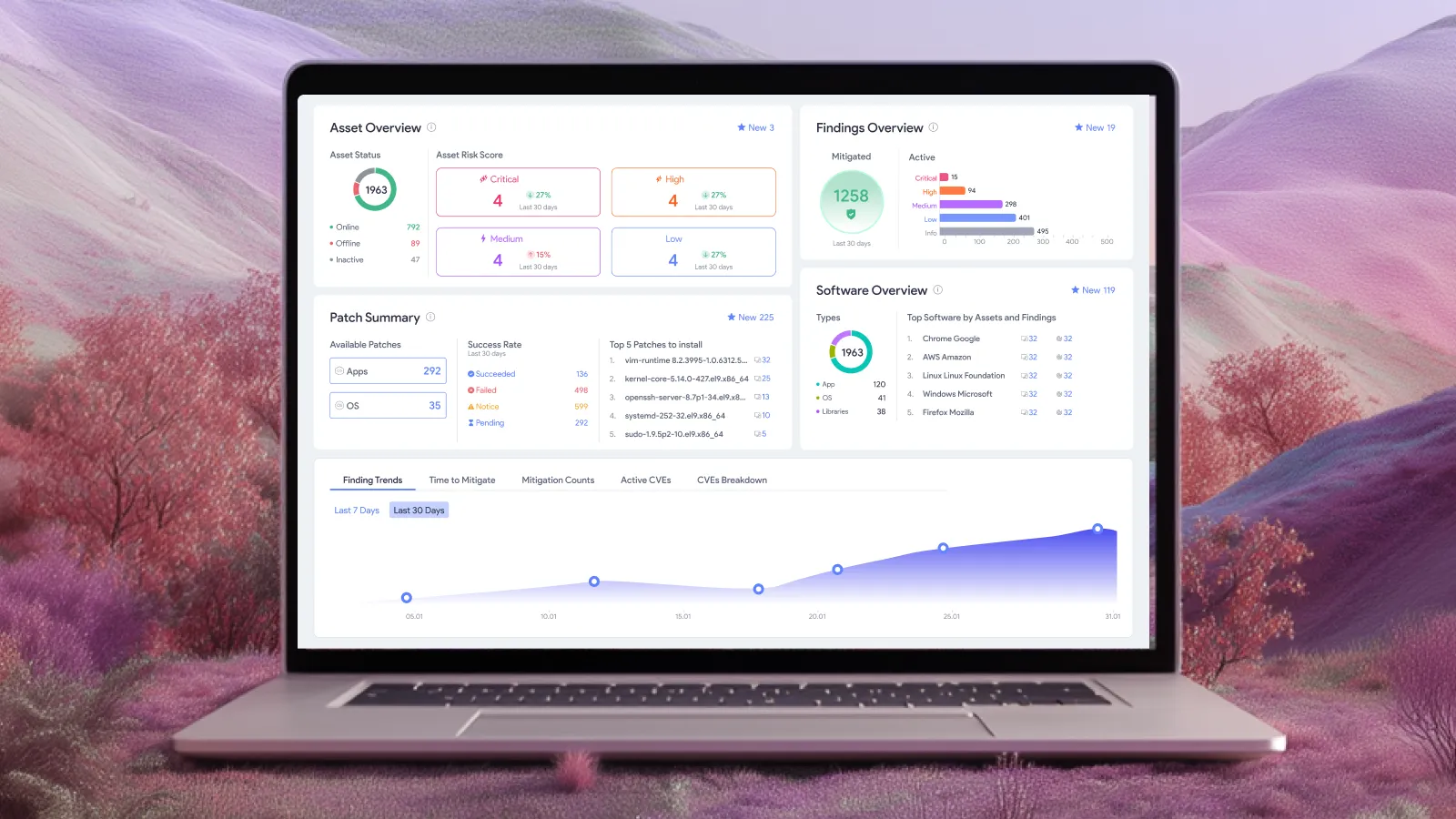
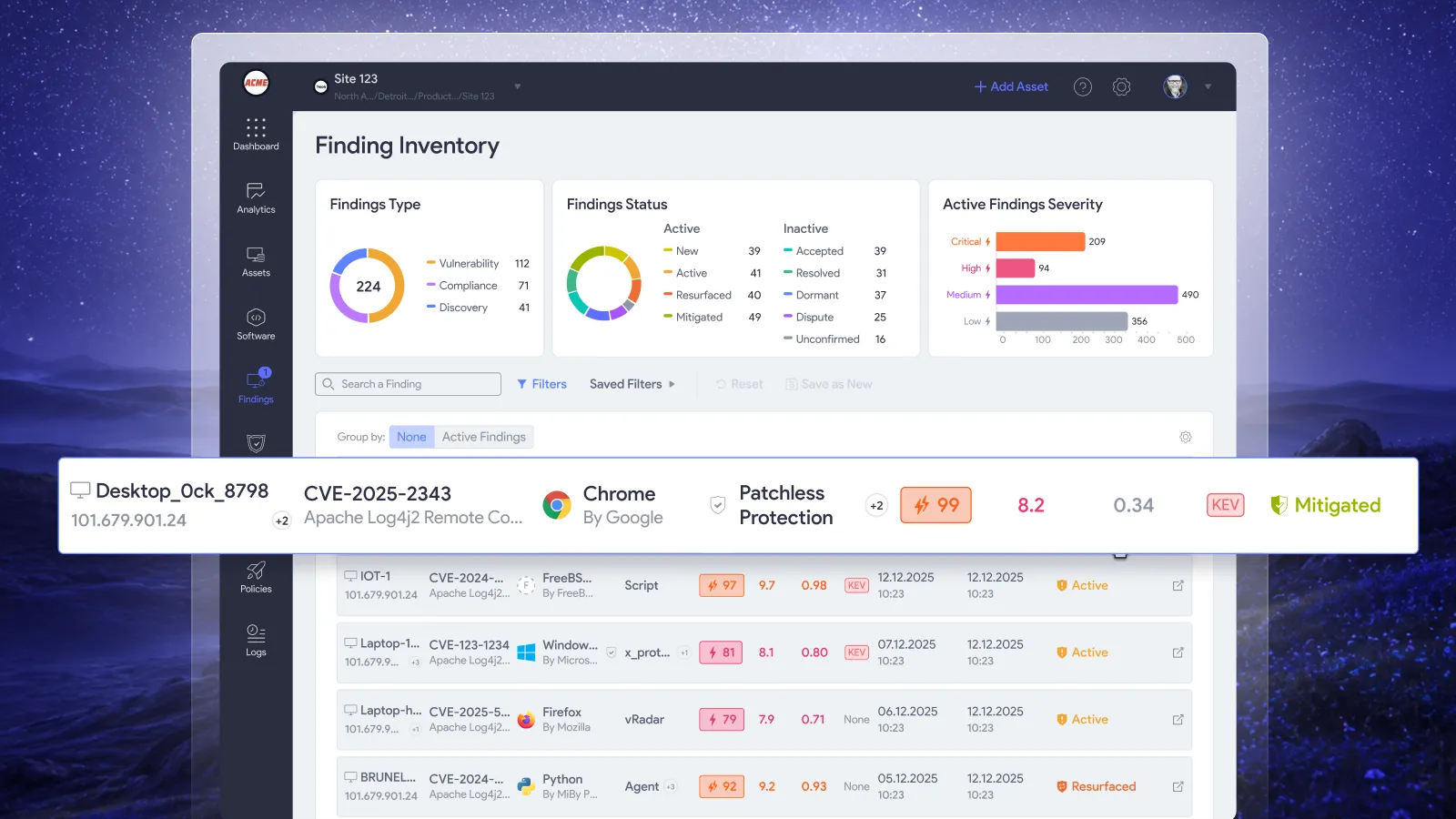
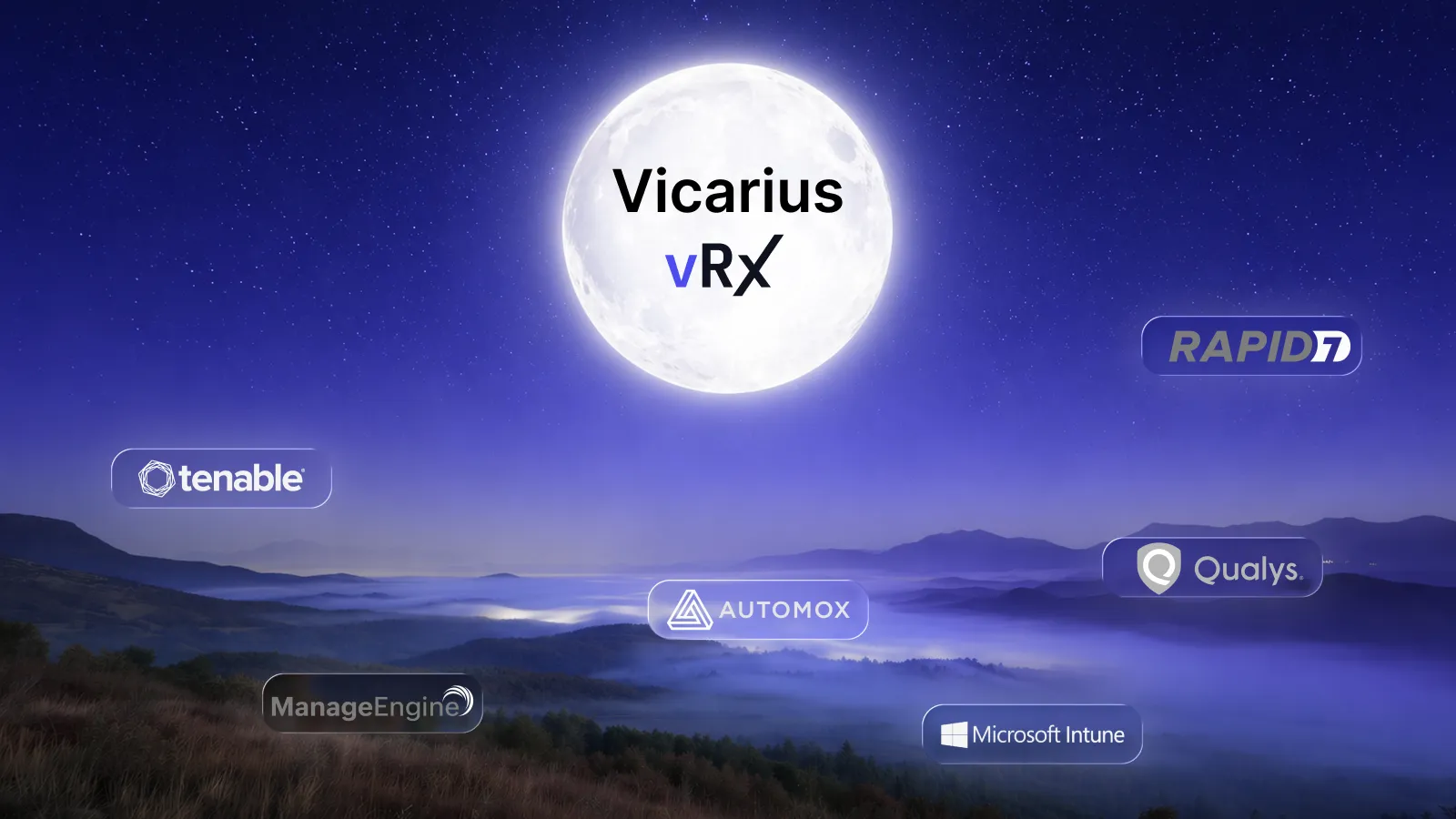
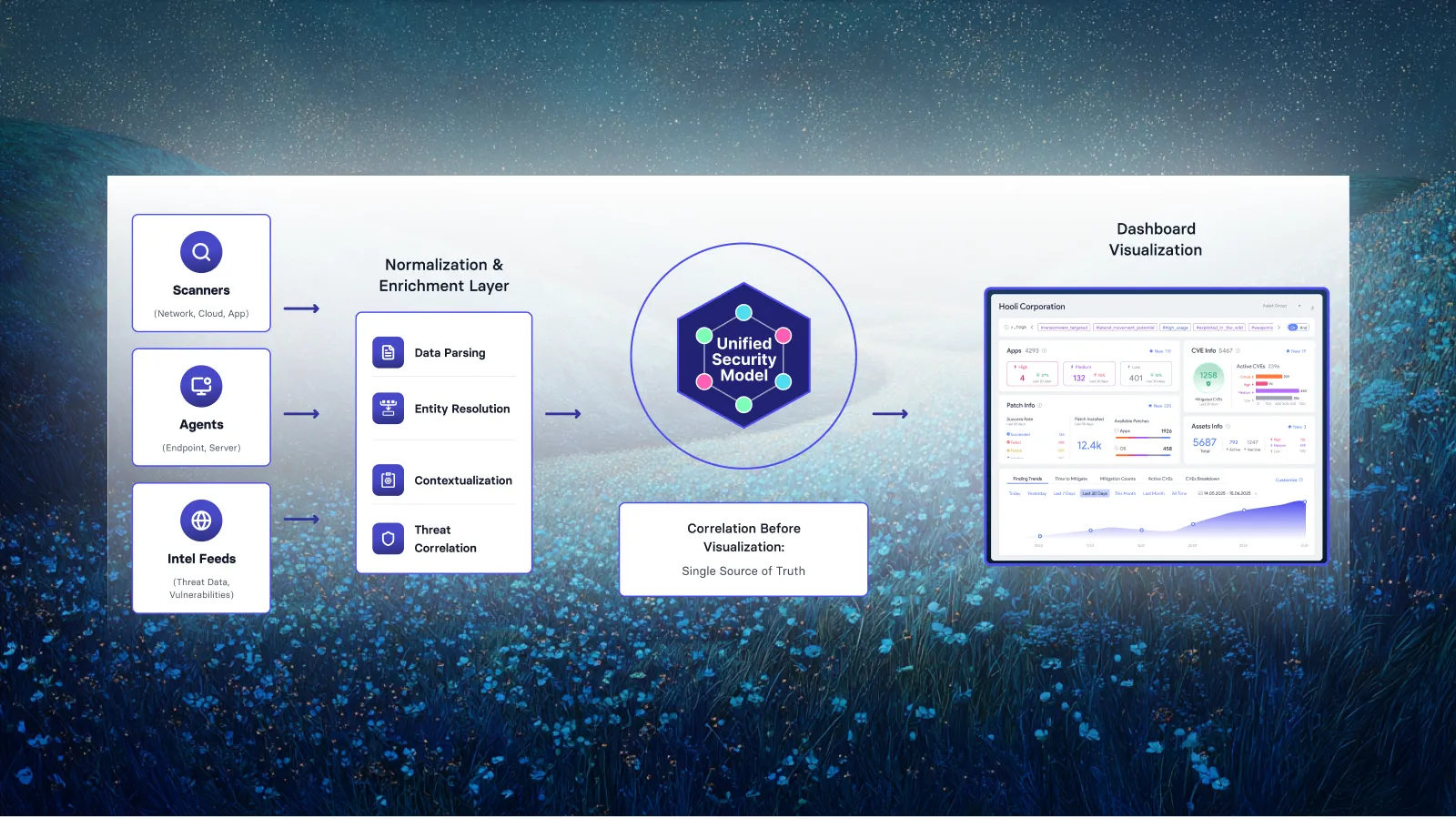
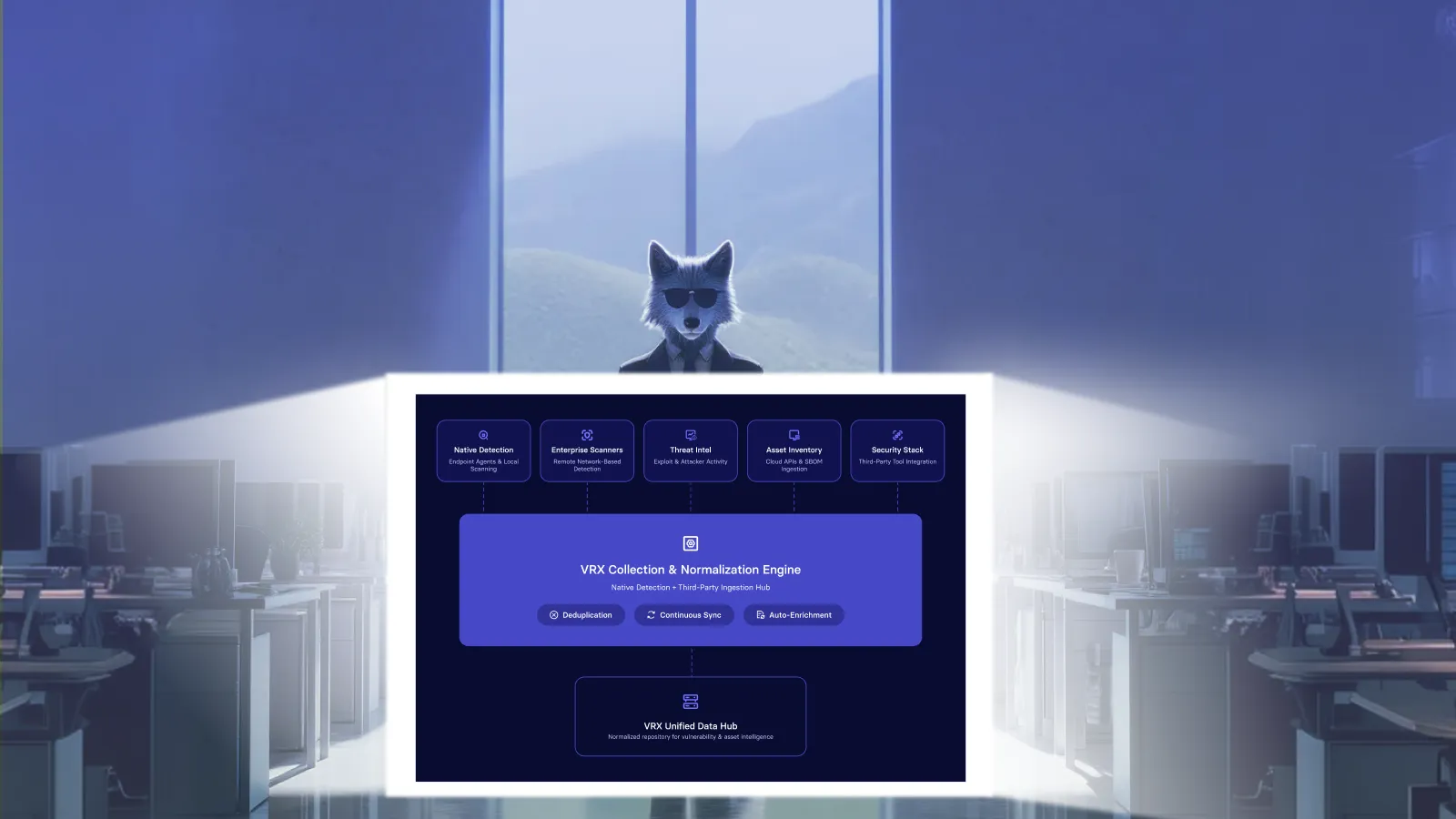
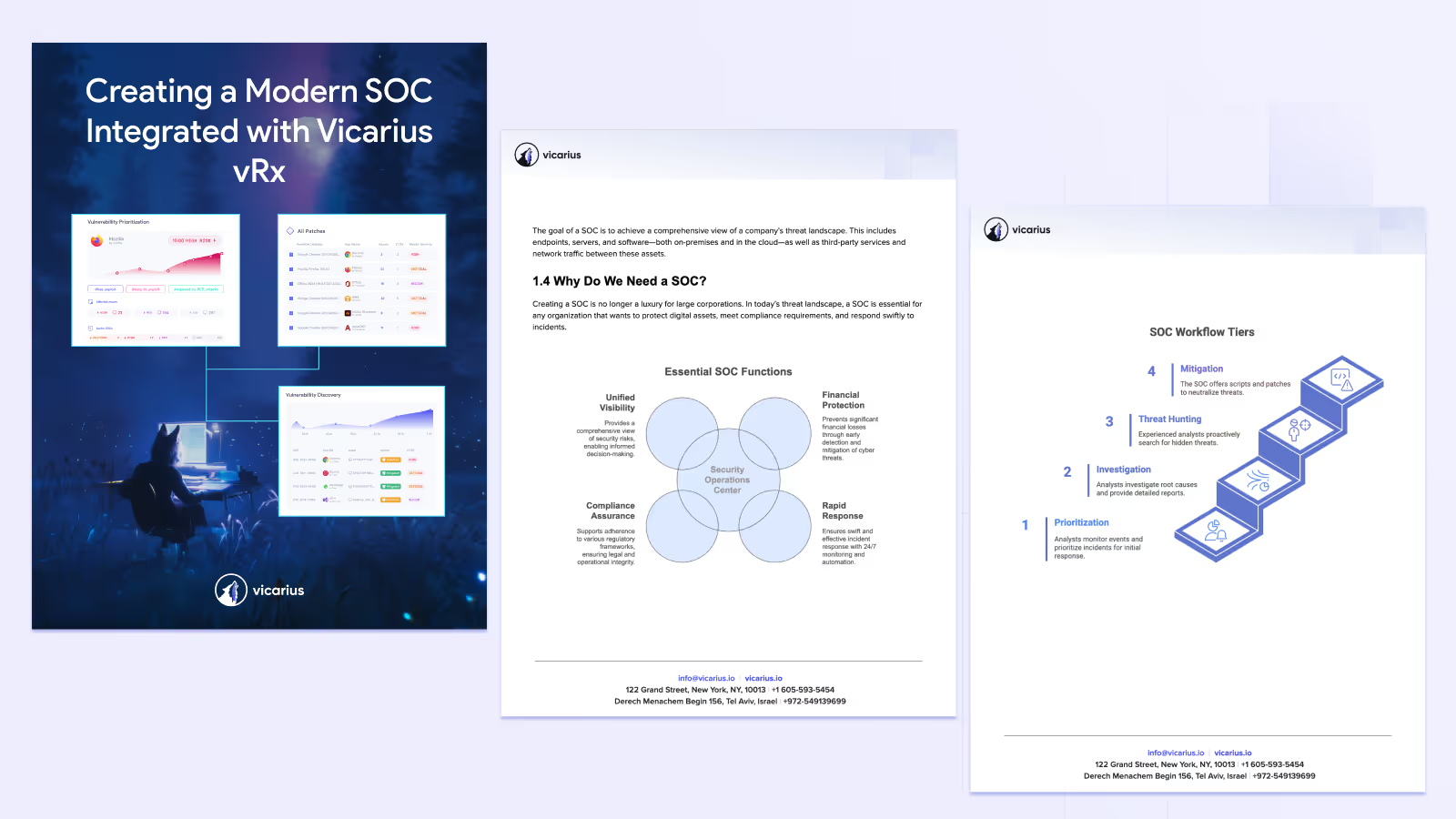
Even the best patch management tools will lose effectiveness if they do not enable your team and integrate with your proven workflows. vRx provides a consolidated view into your infrastructure, helping you streamline workflows and providing ready access to pertinent vulnerability and patching information. vRx integrates with your existing SIEM, ITSM, and SOAR tools, and you can also leverage its API to share data across tools and allow for further custom automation.
For MSPs with multiple clients, vRx provides strong multi-tenancy features. This includes full tenant isolation, while still allowing multiple tenants to be managed from the same unified interface, secured by role-based access control for your team.
Exposure management for mixed OS environments that span on-premises and the cloud
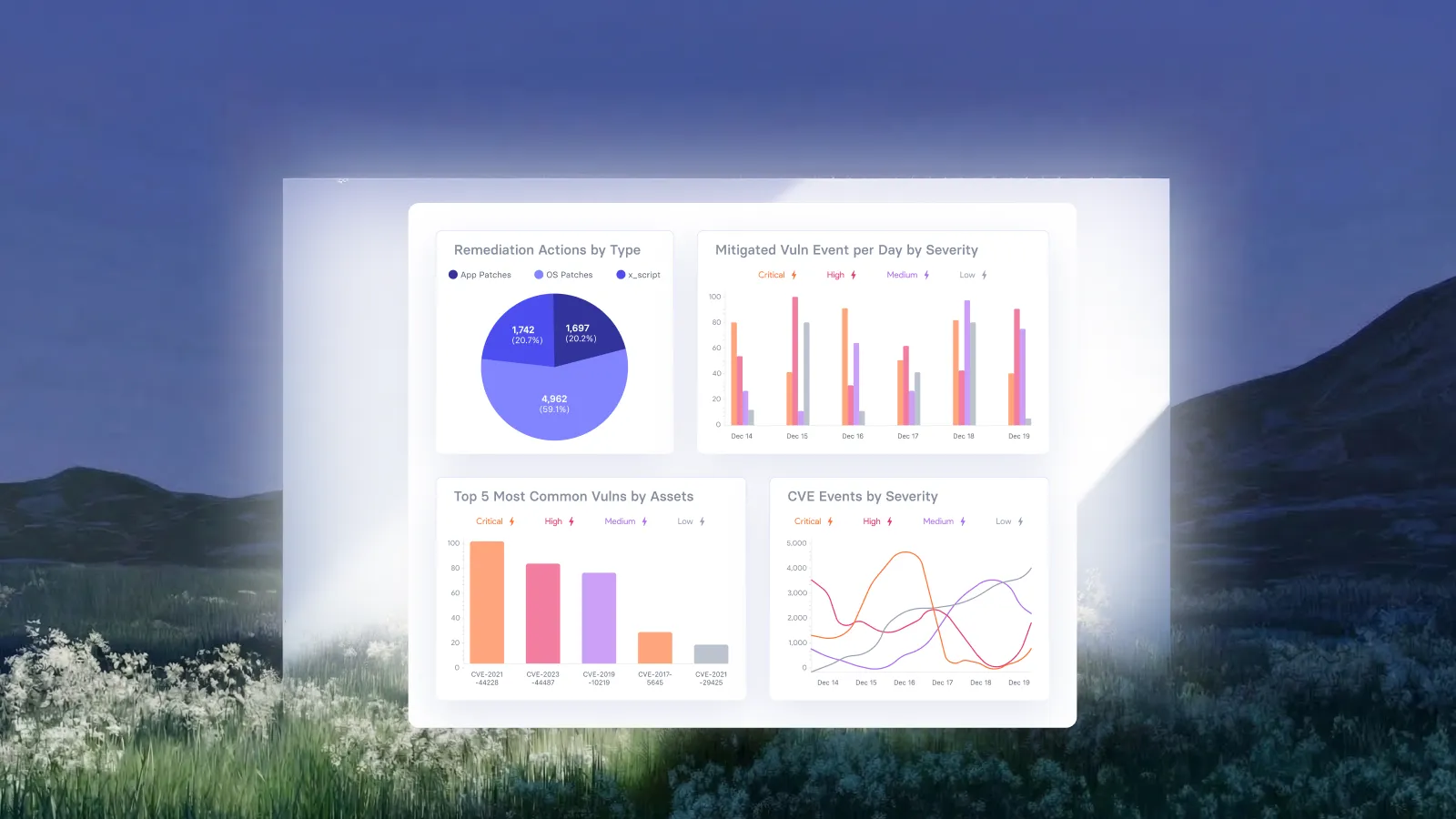
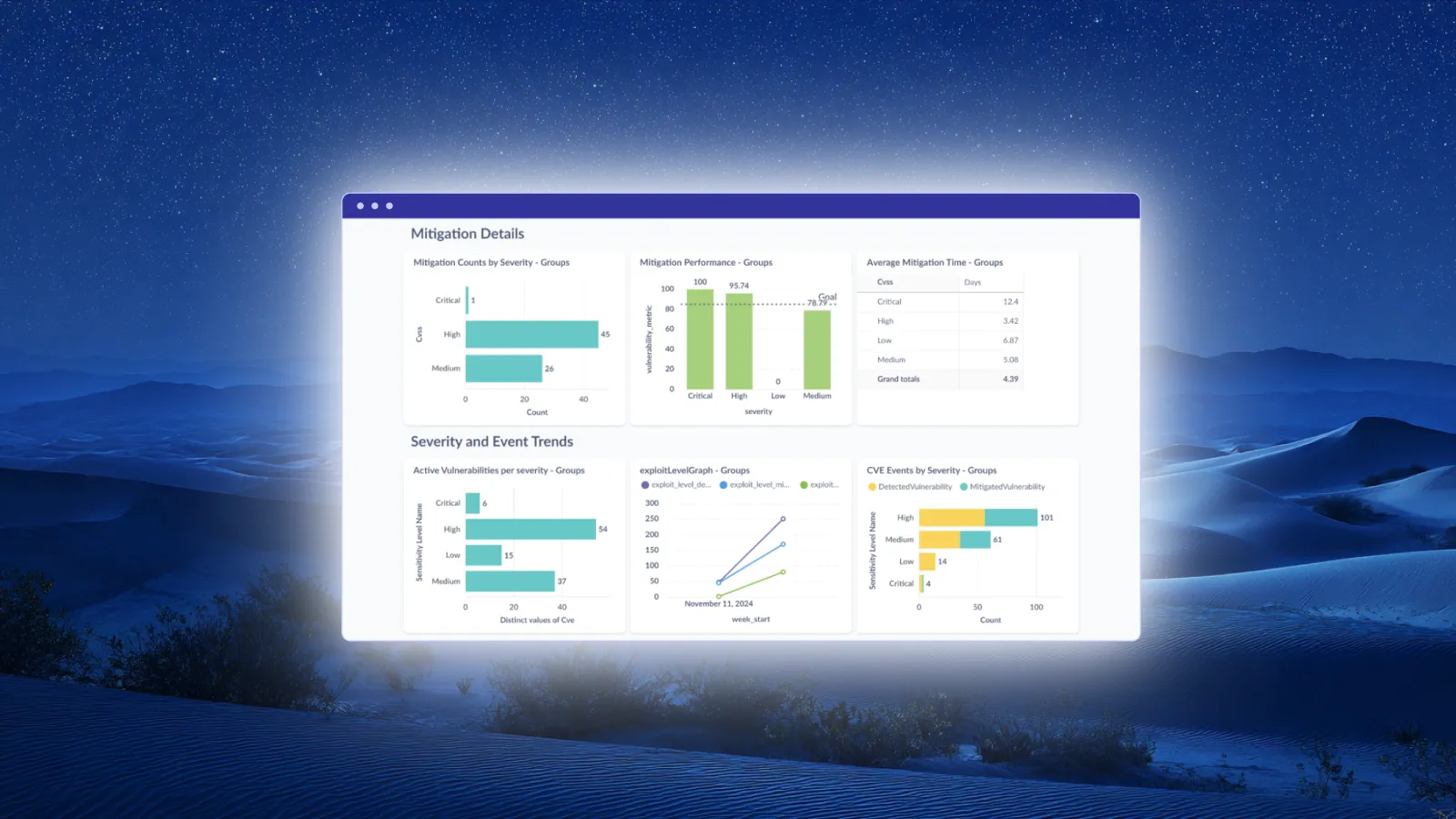
Patch management is not a one-off task. It's part of an ongoing vulnerability management and remediation process. This is best achieved in real-time, rather than on a schedule that can add to the gap between detection and remediation. To reflect this, dashboards should also display your current live vulnerability and patch status, and reports should be able to be readily generated.
Cloud environments are especially vulnerable to threats, and due to their always-connected nature and integration with the rest of the on-premises and mobile infrastructure (providing scalable storage and services), they must be patched as soon as possible.
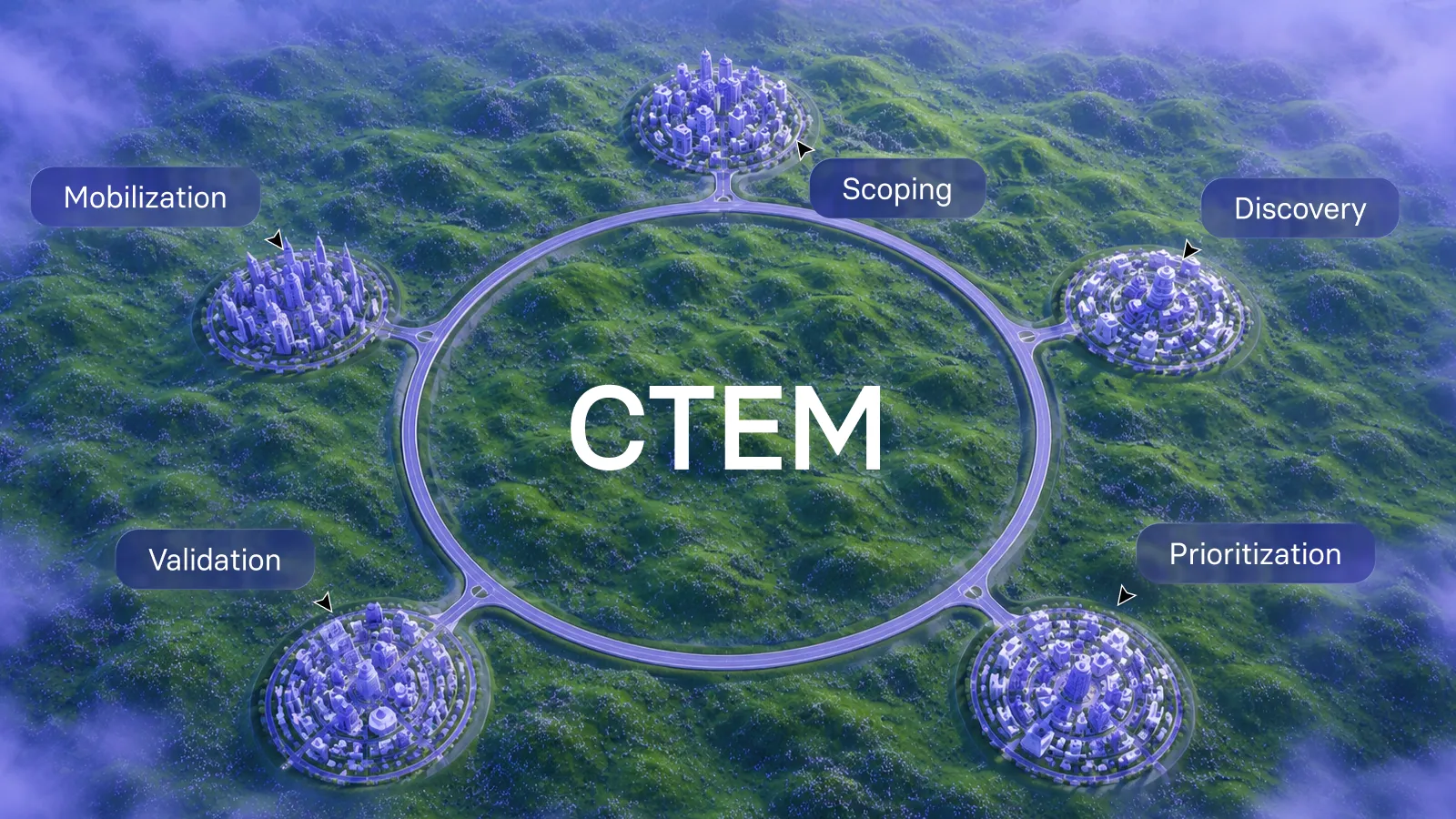
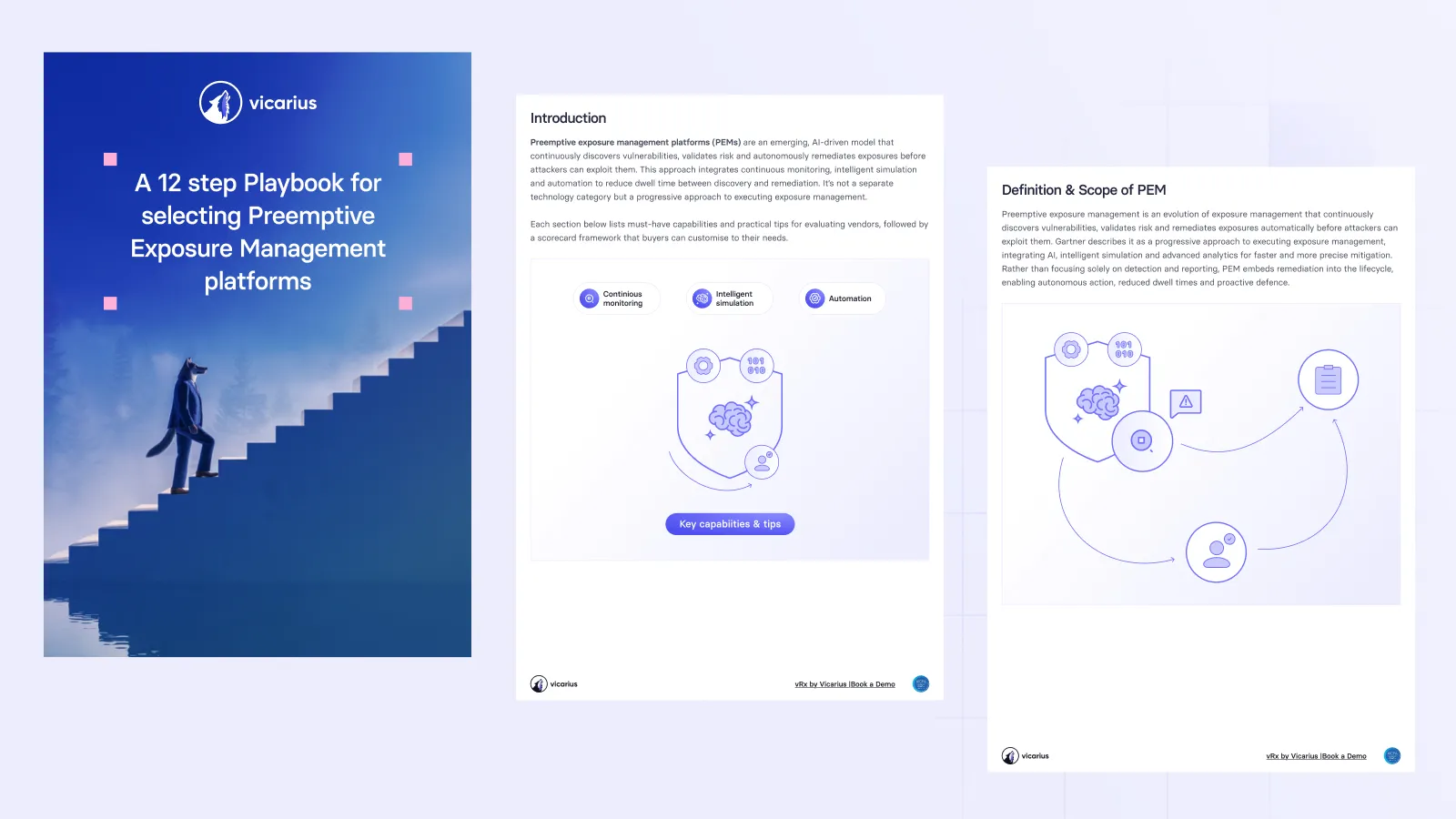
Pre-emptive exposure management is the next step in vulnerability and patch management for complex enterprise environments, acting as the nexus of detection, remediation, automation, and real-time intelligence, focusing on fixing issues before they can become a threat.
Securing enterprise IT environments with vRx
Relying on security tools built on outdated models is technical debt that many enterprises overlook. After confirming that core patch management functionality is present and robust, and then assessing advanced features, you should assess how your short list of tools directly addresses the challenges in your unique, mixed-OS environment.
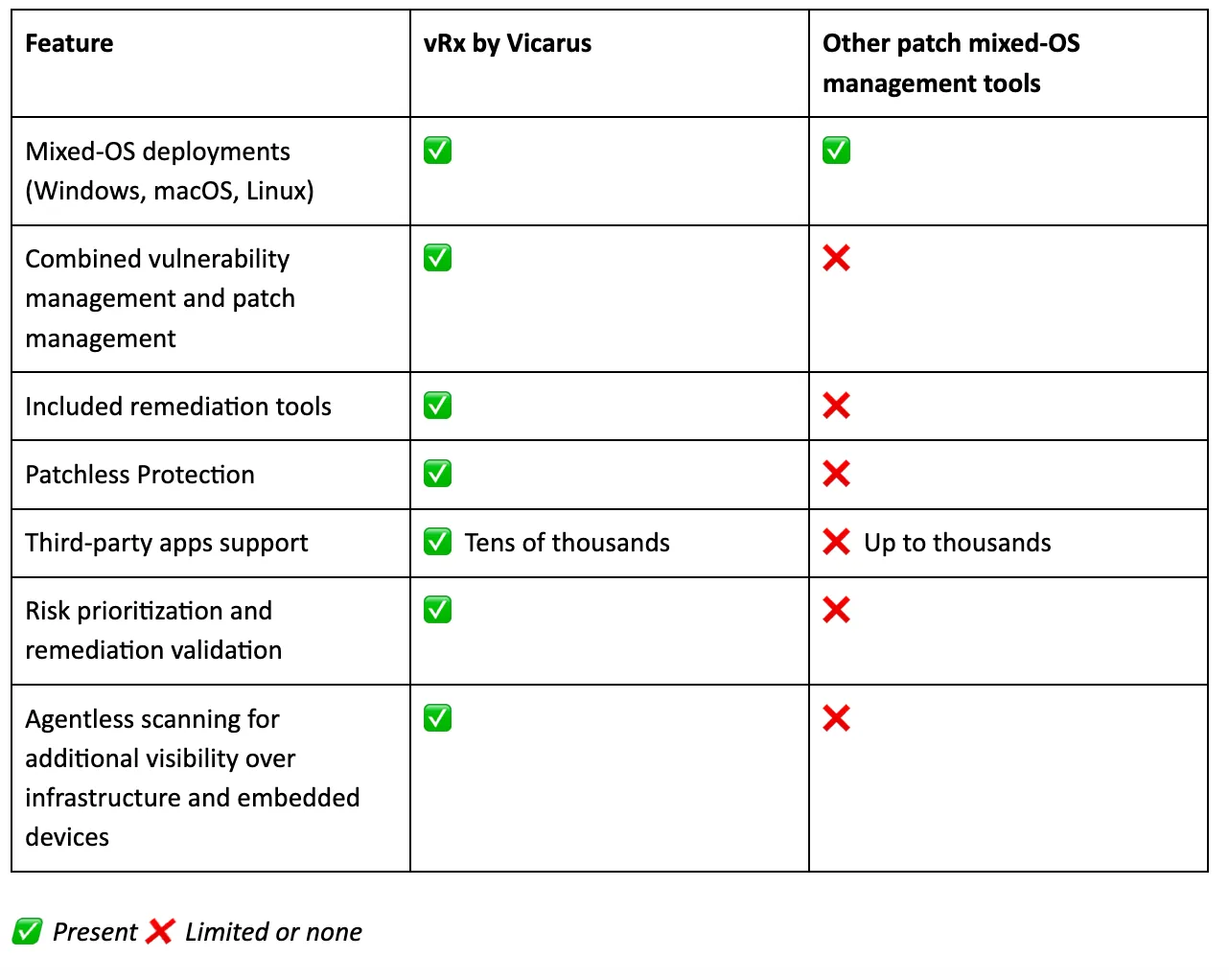
While leading patch management tools are effective at their given task for the software they explicitly support, they do not address the critical benefits of visibility and timely deployment that a unified exposure management platform like vRx provides.
Schedule a vRx demo to learn how automated vulnerability and patch management tools have evolved to address the growing challenges mixed-OS and hybrid on-premises deployments present to IT governance and cybersecurity.
FAQ
How can the gap between vulnerability detection and remediation be solved in patch management?
Vulnerability management keeps inventory and scans for and prioritizes vulnerabilities, then passes the task of remediation on to other automated tools, including automated patch management. This gap presents its own threat: remediation tasks can be lost or delayed, leaving the window open for exploits. Combining vulnerability management and patch management in an exposure management platform like vRx by Vicarius directly addresses this.
How do enterprise security teams reduce noise and alert fatigue in crowded, mixed enterprise IT environments?
One of the primary challenges engineers face in mixed environment patching is the constant deluge of alerts. Even with consistent app stacks, different SKUs on different platforms can mean a constant stream of vulnerabilities and patches. This is multiplied further for MSPs with multiple clients. Customizable notifications help solve this, ensuring that the right technician is alerted when needed, rather than raising your whole team.
Is AI actually effective in improving vulnerability and patch management?
Critical vulnerability coverage increasingly relies on AI assessment to provide actionable remediation steps that address unpatchable assets and unique vulnerabilities, and to prioritize patch deployment, including holding back potentially risky patches.
How do automated patch management tools help enterprises reach compliance goals and strict regulatory requirements?
Patch compliance and reporting rely on auditable evidence provided by the technical controls in place. An example of this is the Re-Validation engine used by vIntelligence by Vicarius that generates an audit-ready chain of evidence that confirms fixes are effective.
Does patch management address misconfigurations and other vulnerabilities?
No. Patch management is part of the remediation stage that targets only software vulnerabilities that have been specifically addressed by vendor patches. Vulnerability management identifies vulnerabilities across environments, including misconfiguration, but does not include remediation. An exposure management platform combines both and should also include proactive patchless protection for as-yet unpatched exploitable vulnerabilities.


















.webp)
















%20Signals%20a%20New%20Era%20of%20Supply%20Chain%20Risk.webp)







.webp)





















%20to%20Reduce%20Attack%20Surface.avif)