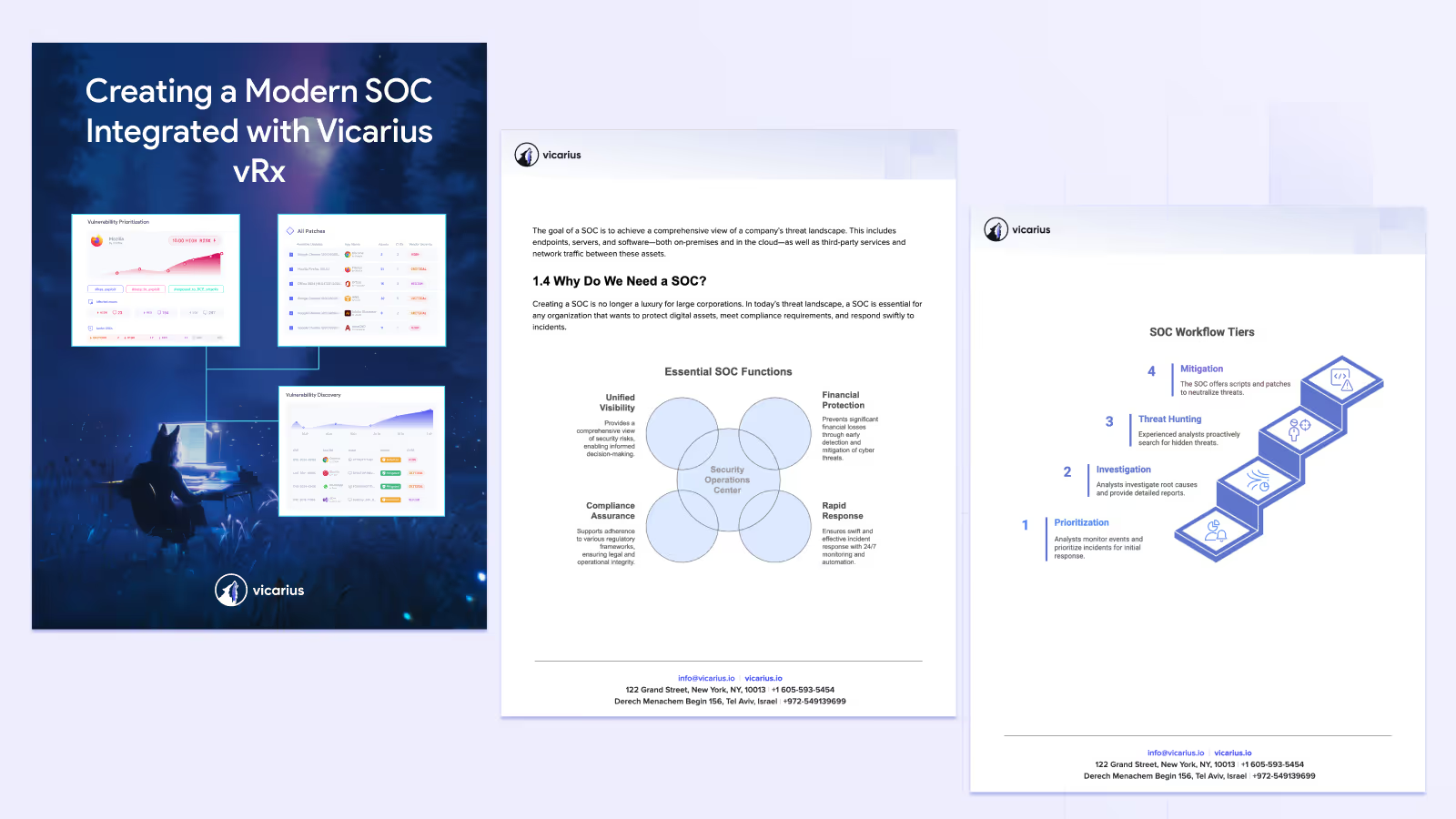


When your vulnerability scanner delivers another list of 5,000 findings, you probably ask the same question: now what? Scanning tells you what's wrong, but vulnerability remediation tells you how to fix it. This article explains the difference between simply identifying security weaknesses and closing them for good.
You'll learn how remediation fits into the vulnerability management lifecycle, what separates modern remediation platforms from tools that only scan, and how to reduce your mean time to remediate without adding headcount.
Key takeaways: what is vulnerability remediation in 2026
- Vulnerability remediation is the process of fixing security flaws through patching, configuration changes, or protective controls.
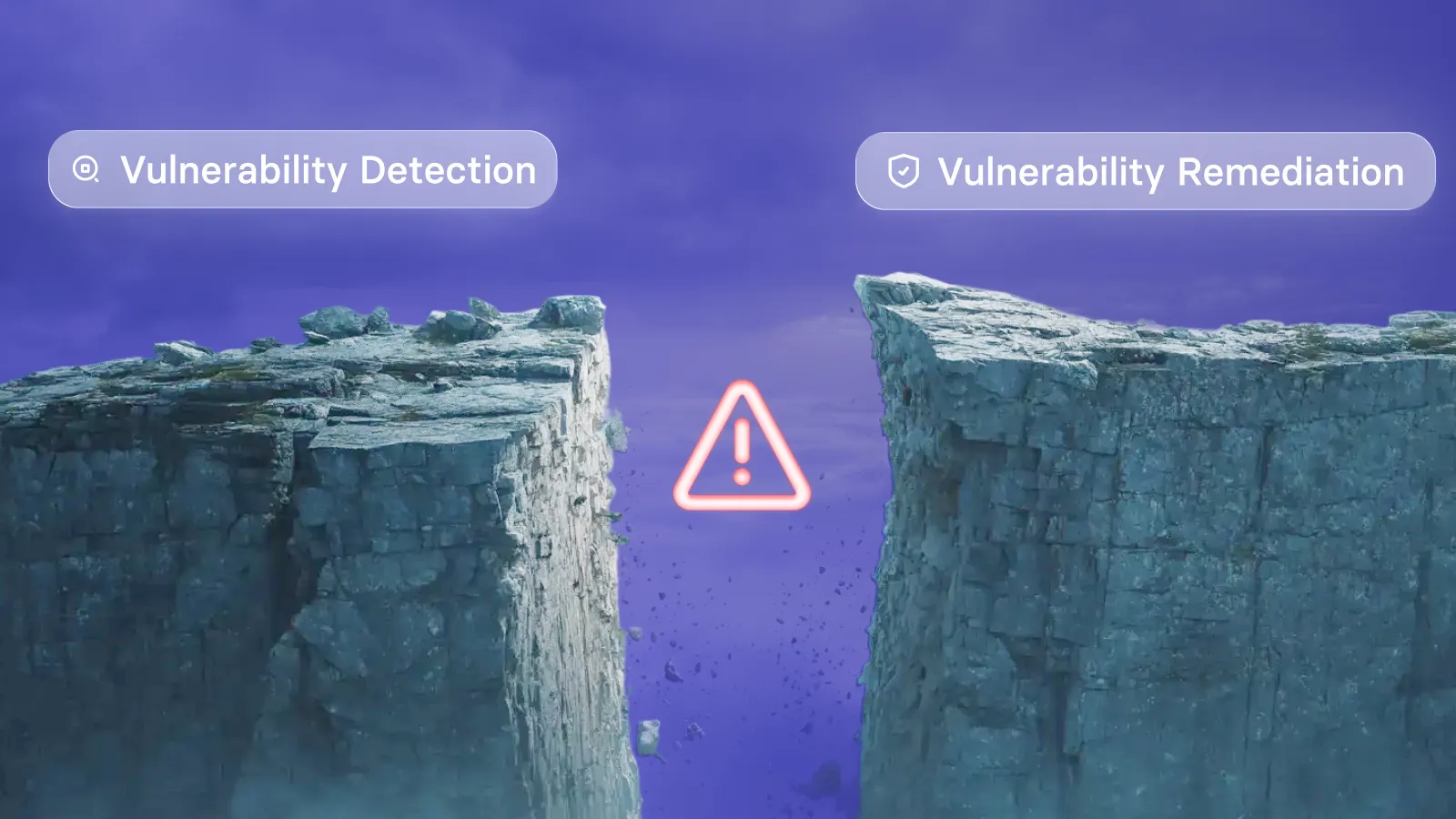
- Scanning identifies vulnerabilities, but remediation closes them; most tools stop at identification and leave fixing to you.
- Risk-based prioritization ensures you address the exposures attackers are most likely to exploit first.
- Vicarius vRx unifies discovery, prioritization, and automated remediation into a single closed-loop platform.
- Patchless protection shields zero-day and legacy system vulnerabilities when no patch exists.
What is vulnerability remediation?
Vulnerability remediation is the process of eliminating security weaknesses in your IT environment. It goes beyond identifying problems to actively resolving them through patches, configuration changes, or compensating controls.
The goal is straightforward: close the gap between "we found it" and "we fixed it." Your remediation actions might include applying a software patch, updating a misconfigured firewall rule, or deploying in-memory protection for an application that has no available fix.
Remediation is the final, critical step in the vulnerability management lifecycle. Without it, your scanning reports become little more than expensive paperwork.
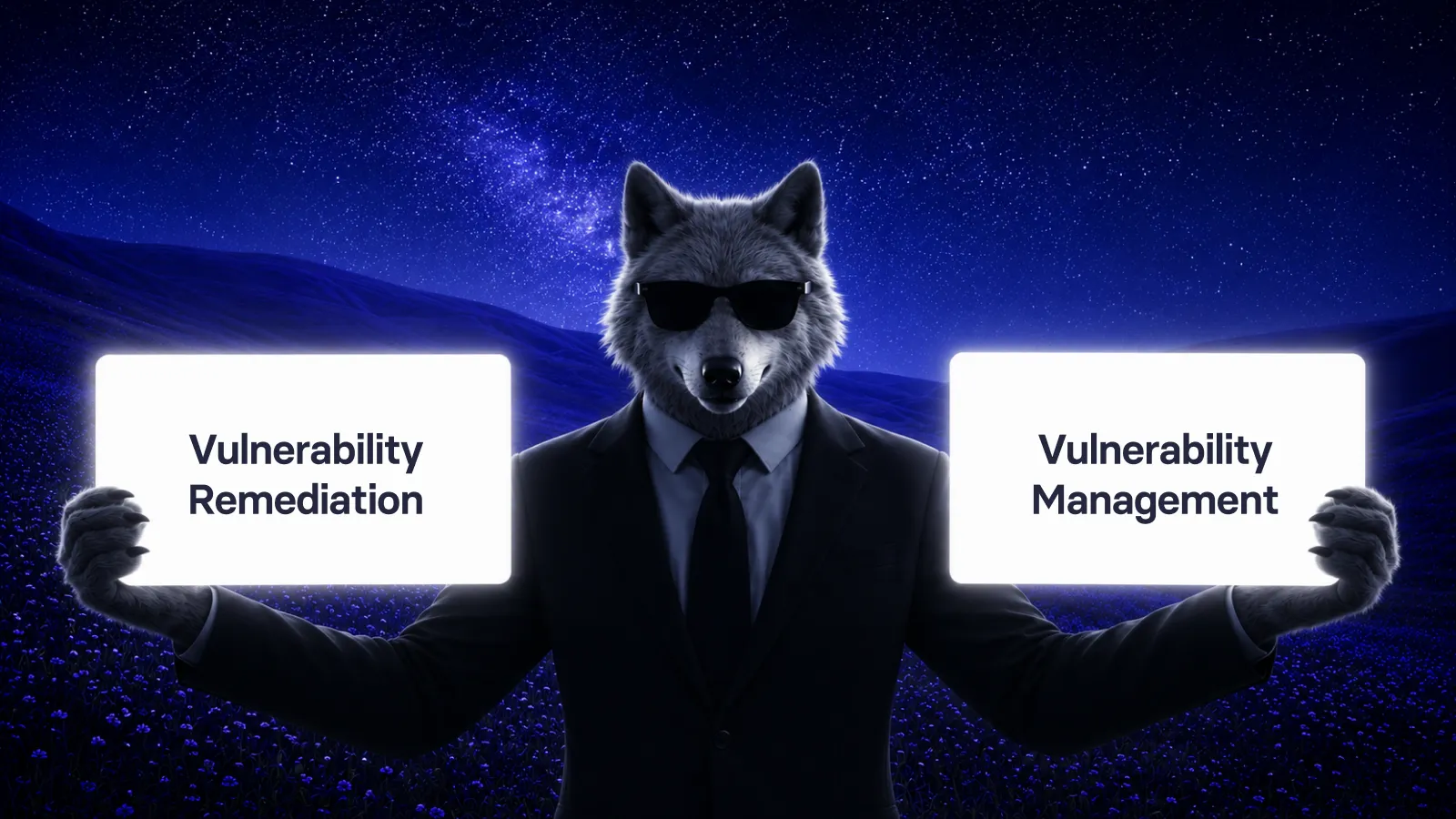
How does vulnerability remediation differ from vulnerability scanning?
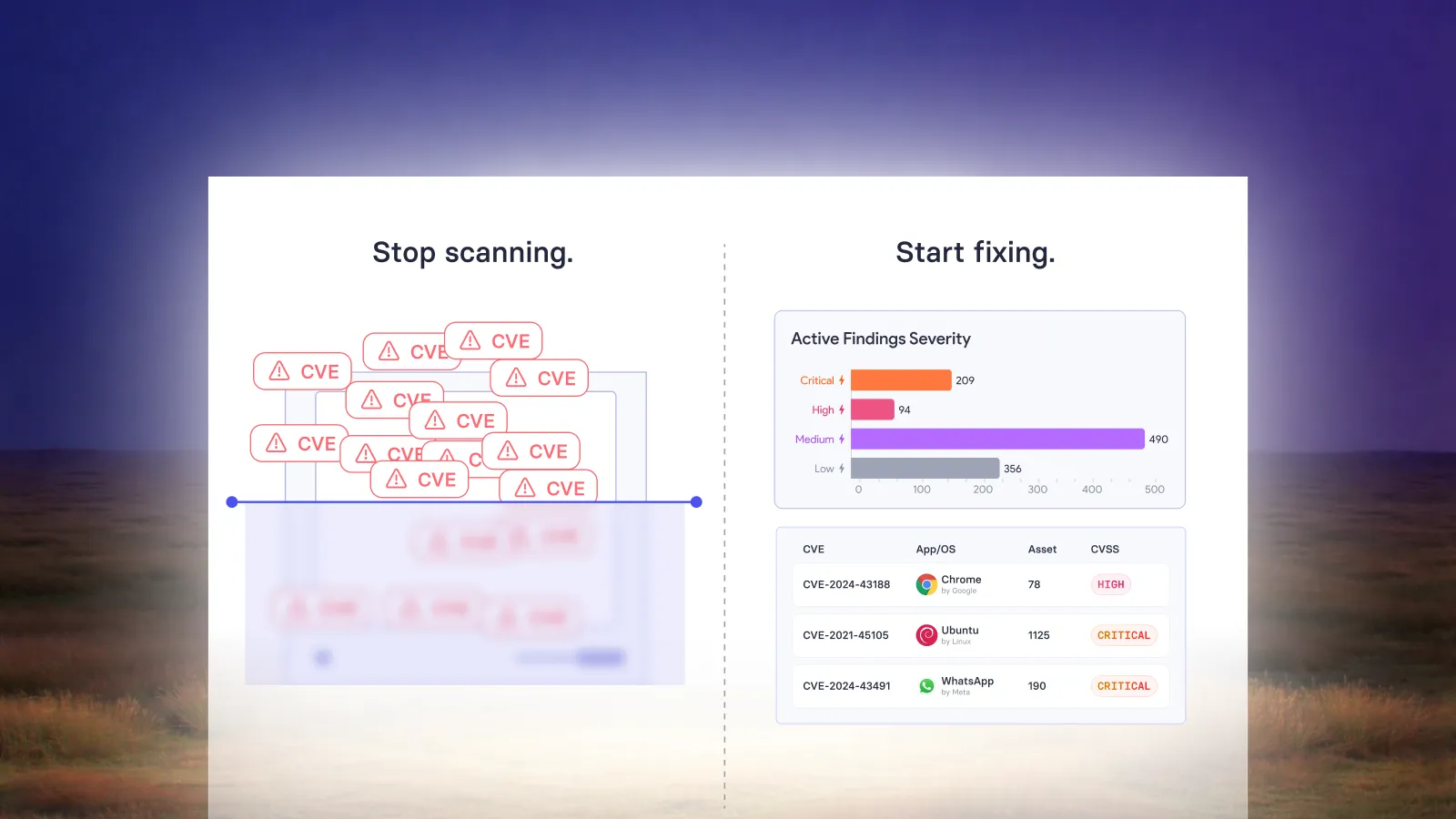
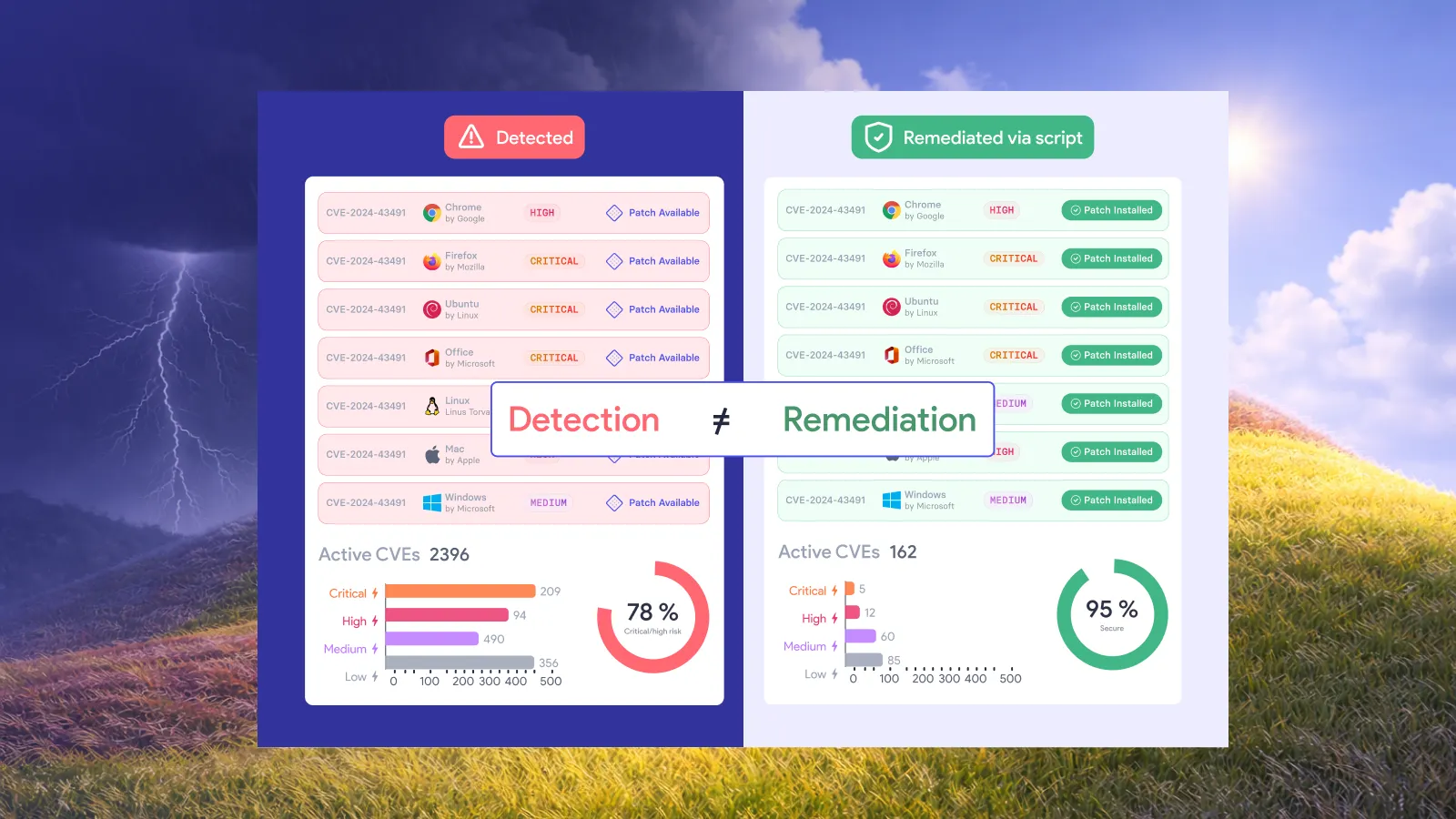
Vulnerability scanning is the process of identifying weaknesses in your systems. Scanners probe networks, endpoints, and applications to detect misconfigurations, outdated software, and known CVEs. They create lists of problems.
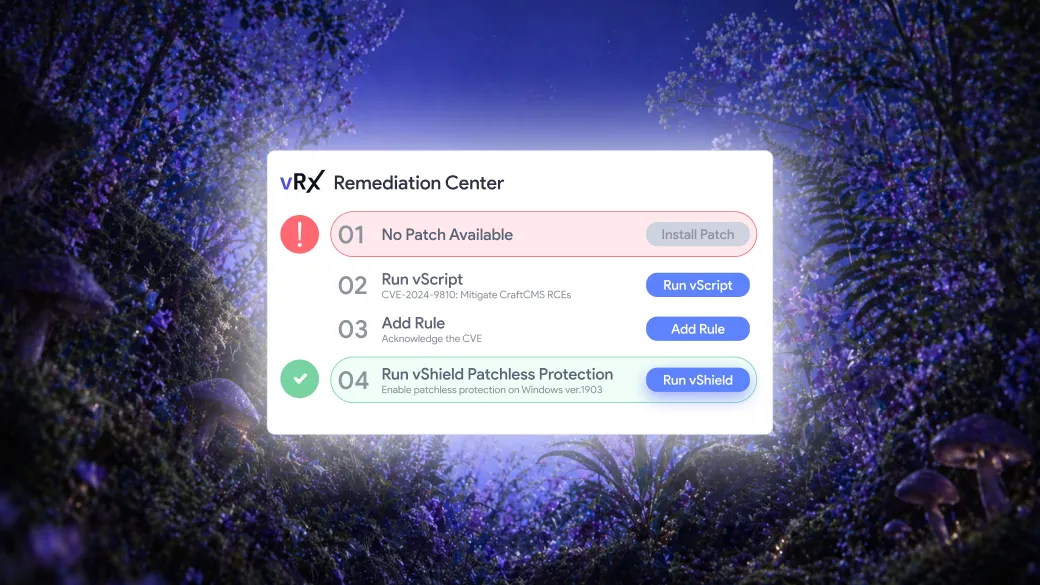
Remediation is what happens next. It involves taking action to eliminate those weaknesses, whether by deploying a patch, running a remediation script, or applying a protective control. Many organizations use scanning tools that stop at identification.
This creates a common pain point: security teams receive thousands of findings with no clear path to resolution. According to IBM, vulnerability management should be a "continuous, proactive process," yet many teams treat it as periodic scanning followed by ad-hoc patching.
What are the core components of vulnerability remediation?
Risk-based prioritization
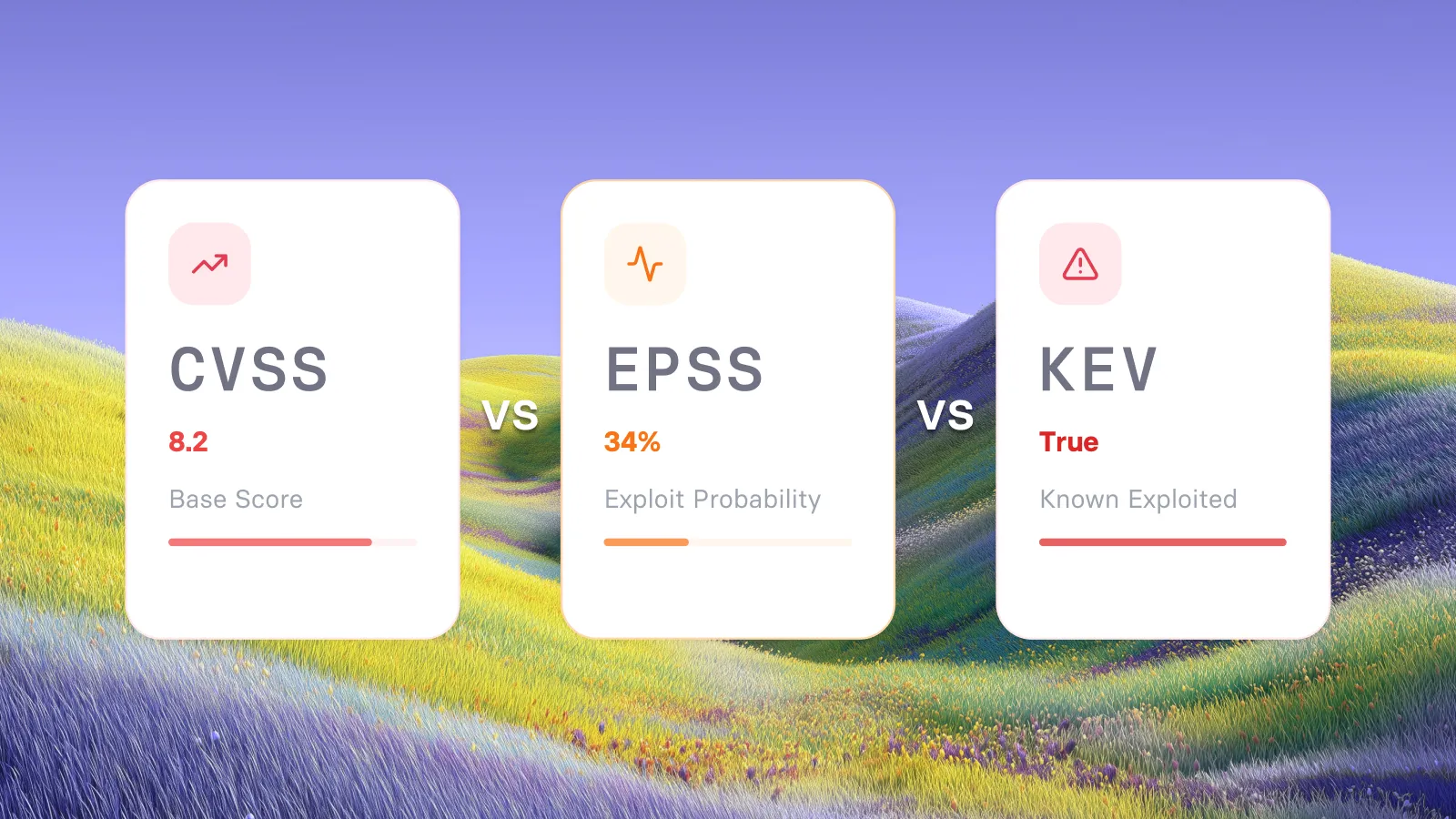
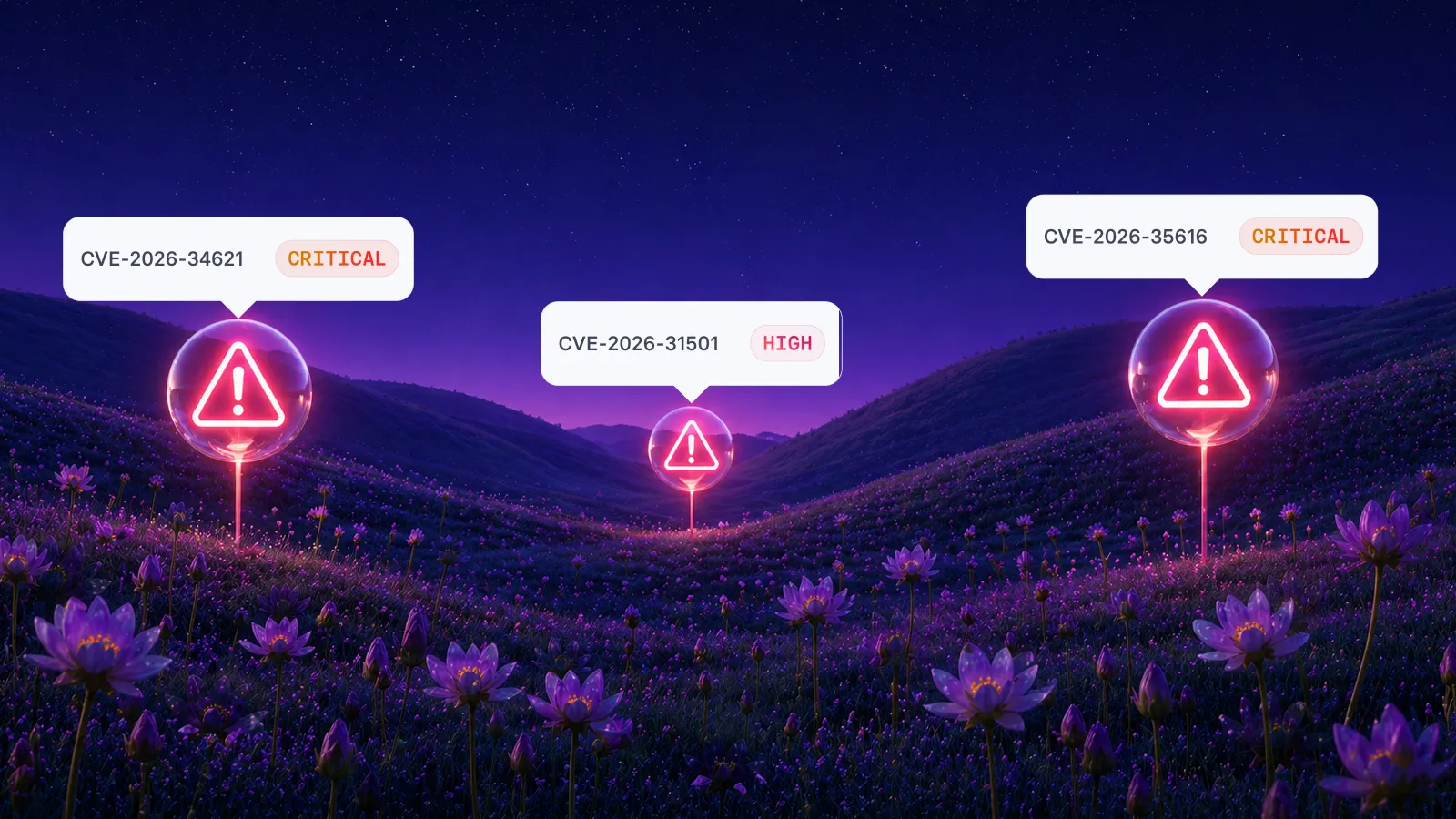
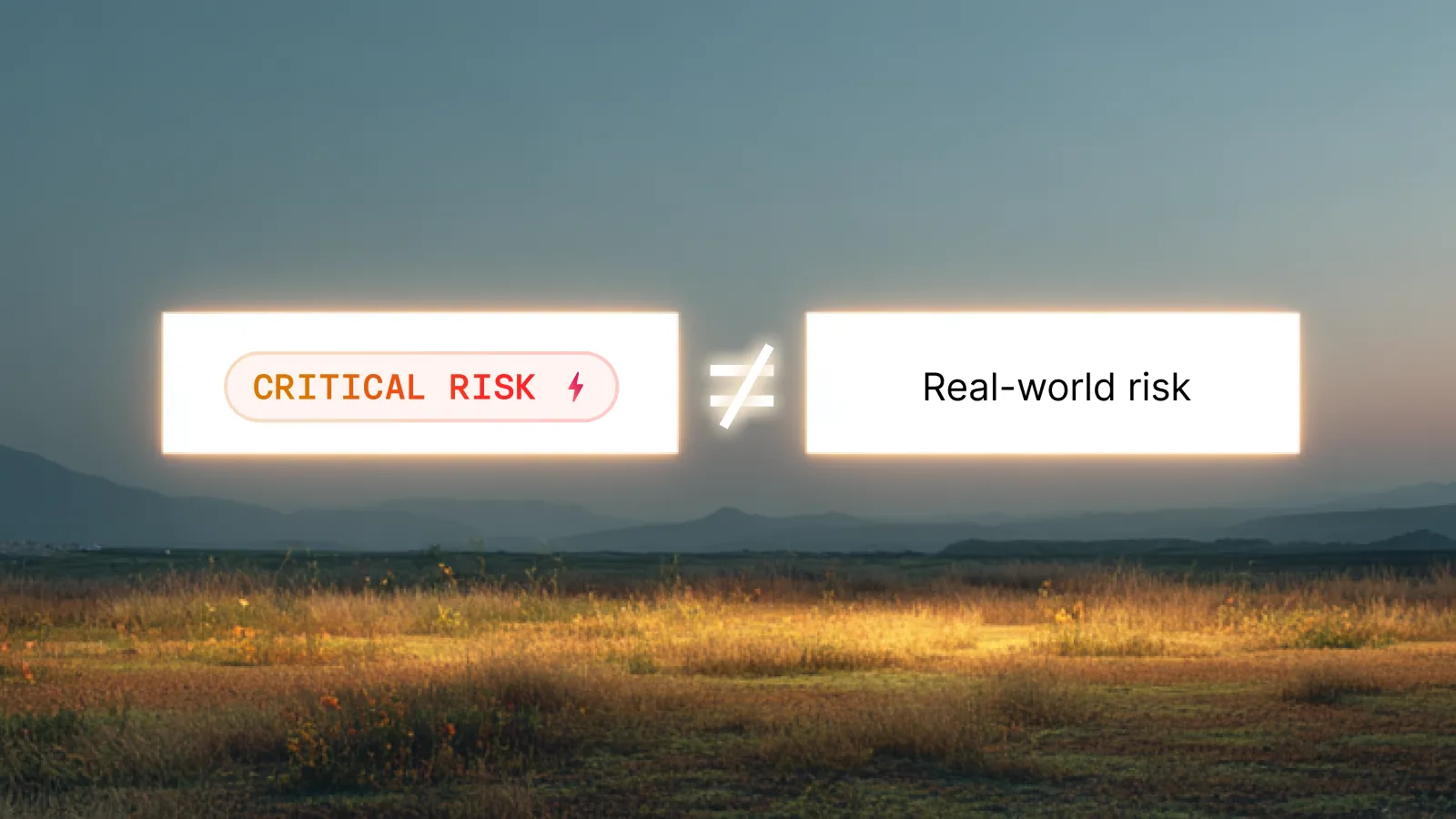
Not every vulnerability deserves immediate attention. Risk-based prioritization helps you focus on exposures that attackers are most likely to exploit. This means looking beyond CVSS scores to consider factors like exploit availability, asset criticality, and real-world threat intelligence.
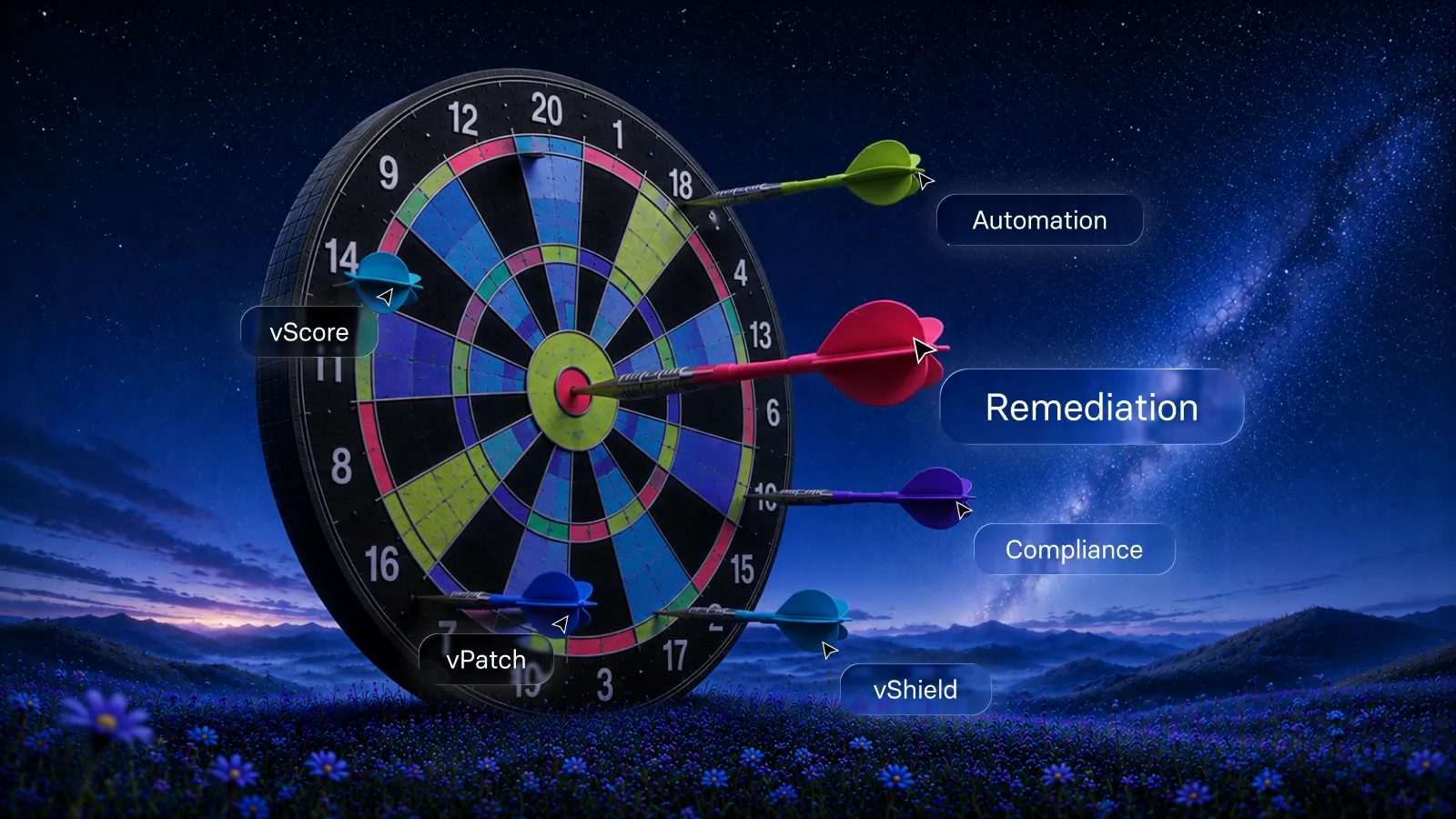
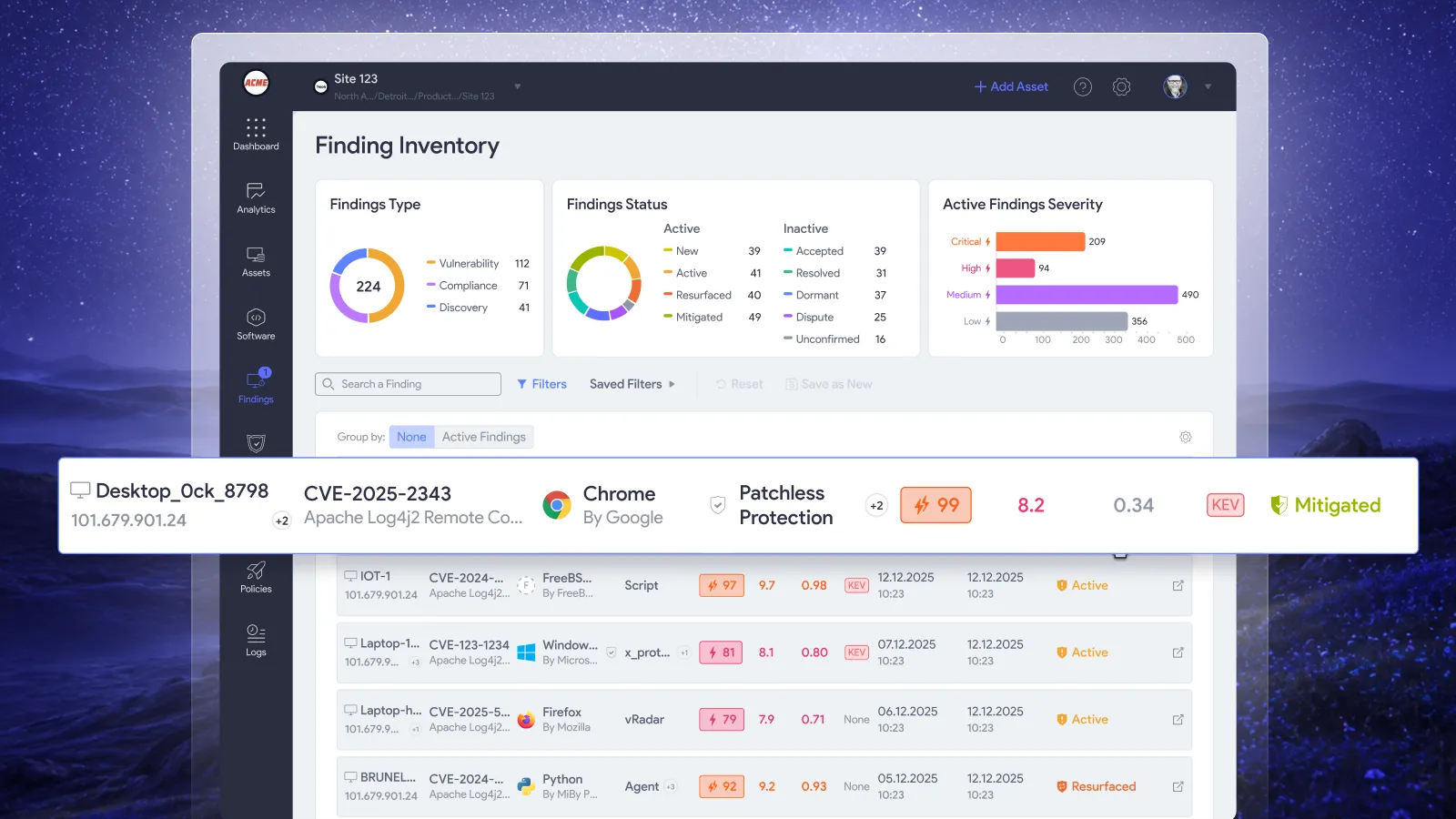
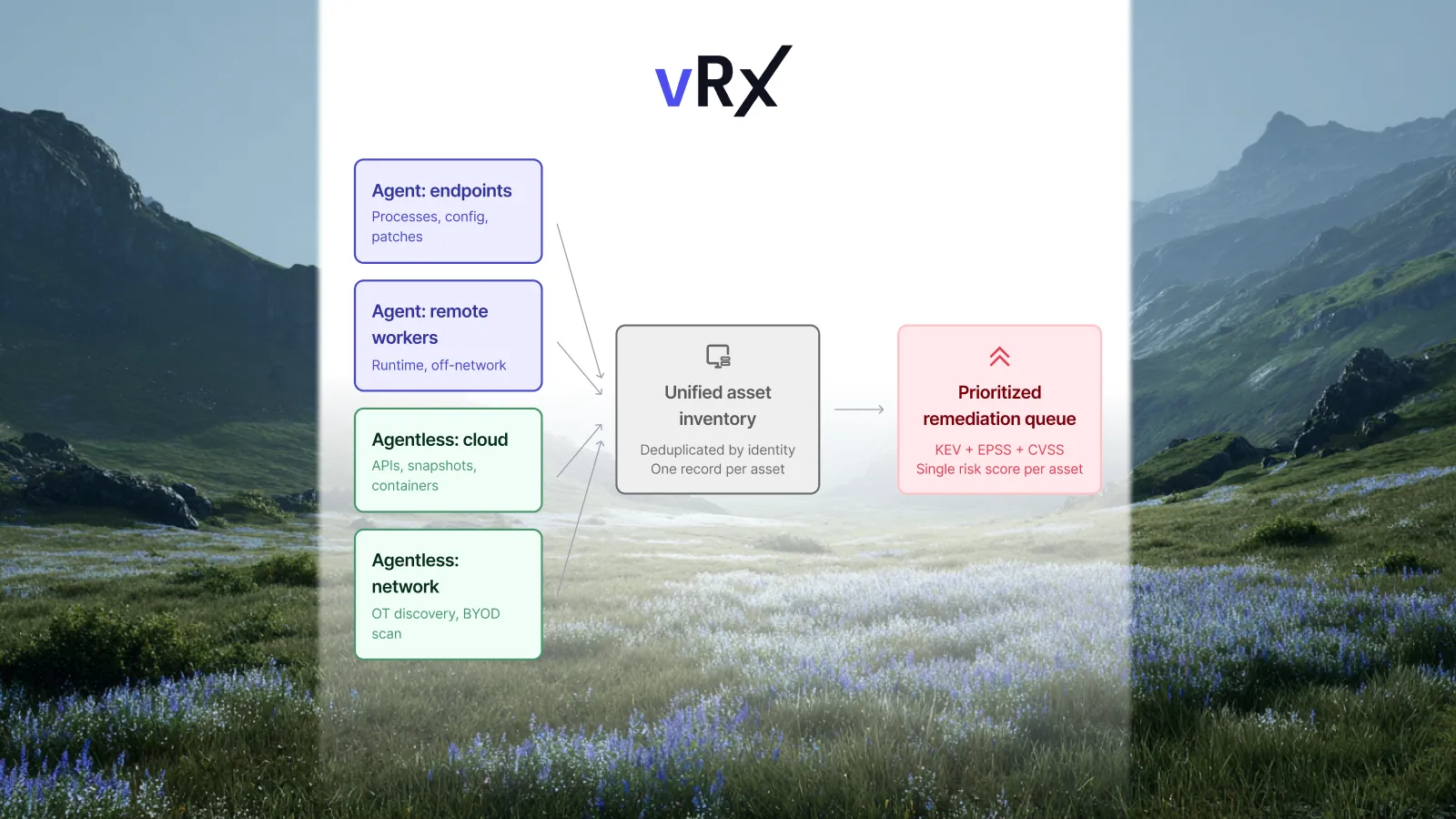
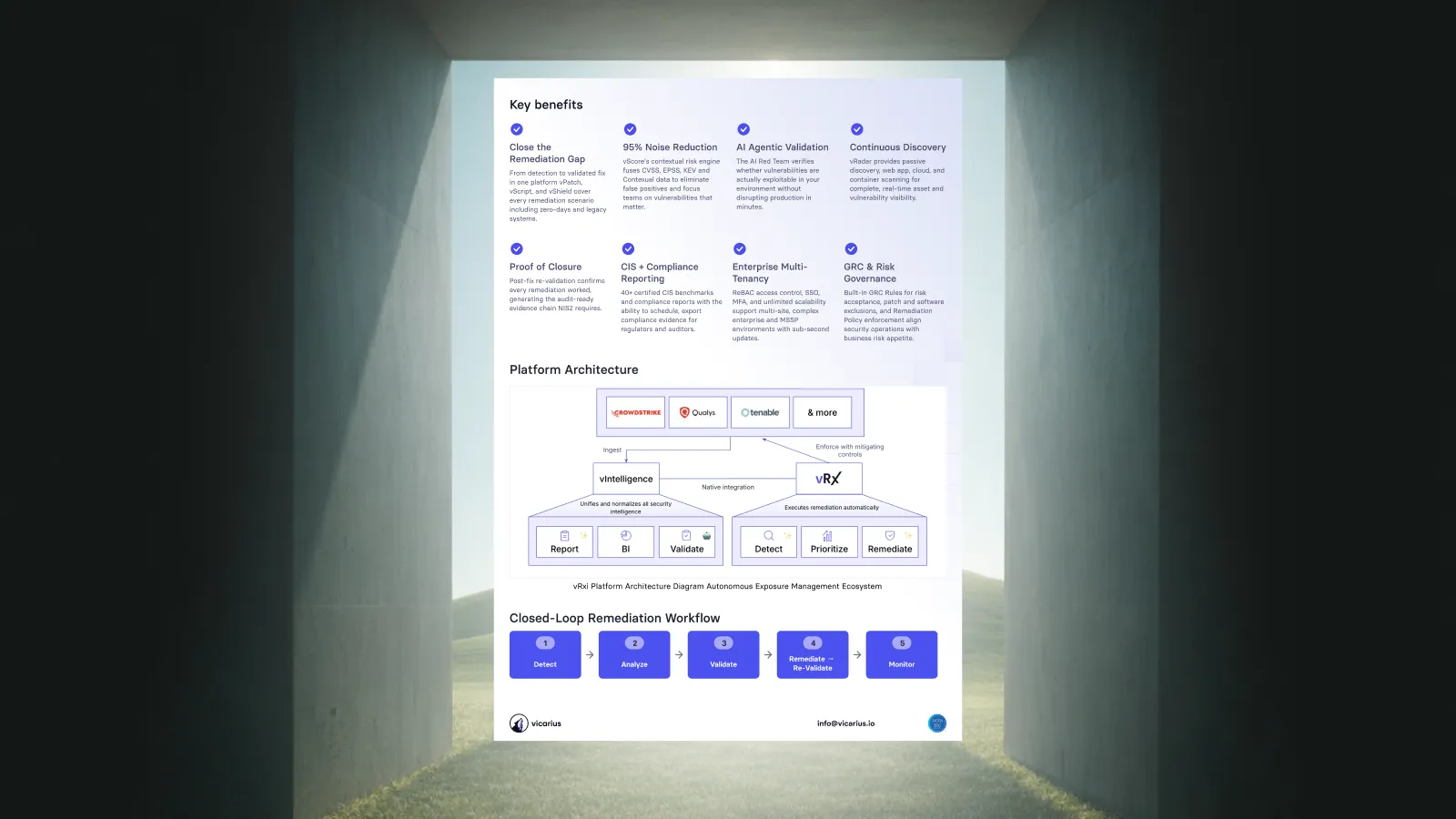
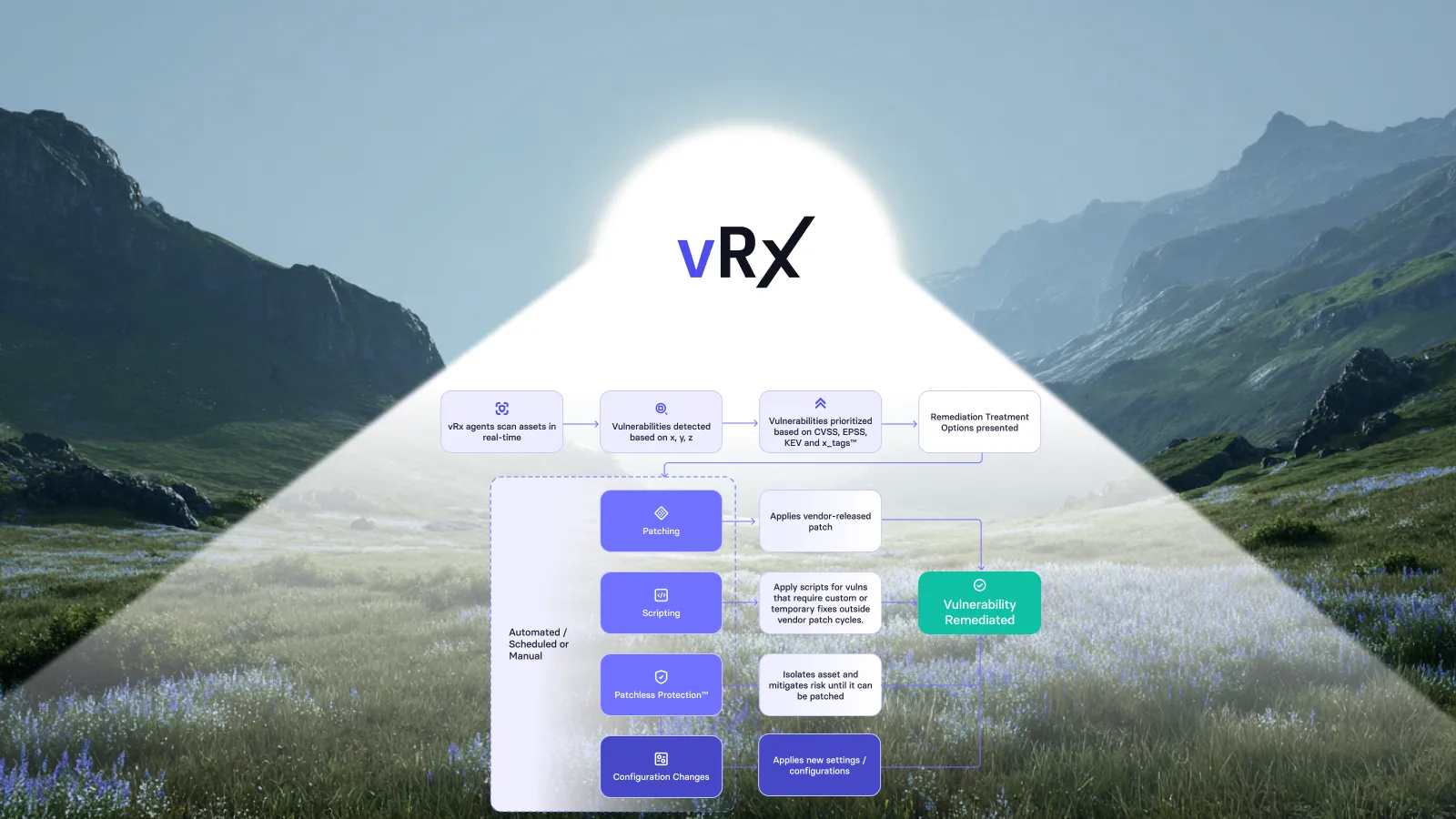
The Vicarius vRx platform uses vScore to rank vulnerabilities by combining CVSS, EPSS (Exploit Prediction Scoring System), and KEV (Known Exploited Vulnerabilities) data with contextual factors specific to your environment.
Automated patch deployment
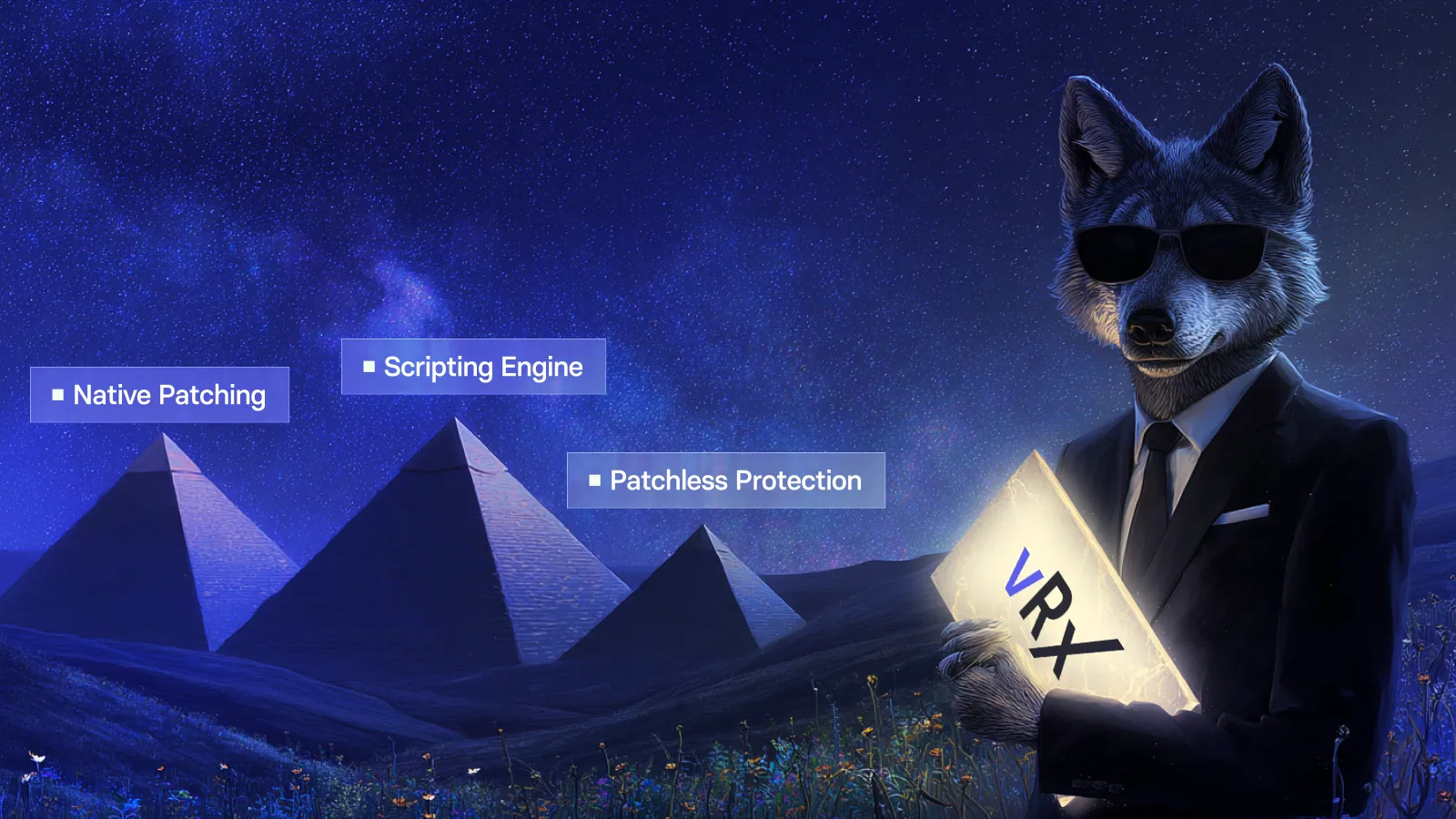
Patching is the most common remediation method. Modern patch management solutions automate the entire process, from downloading patches to deploying them across Windows, macOS, and Linux endpoints.
Vicarius vPatch deploys patches on demand, by schedule, or triggered by policy rules across 20,000+ third-party applications without forcing unplanned reboots. This automation cuts remediation time from weeks to minutes.
Script-based remediation
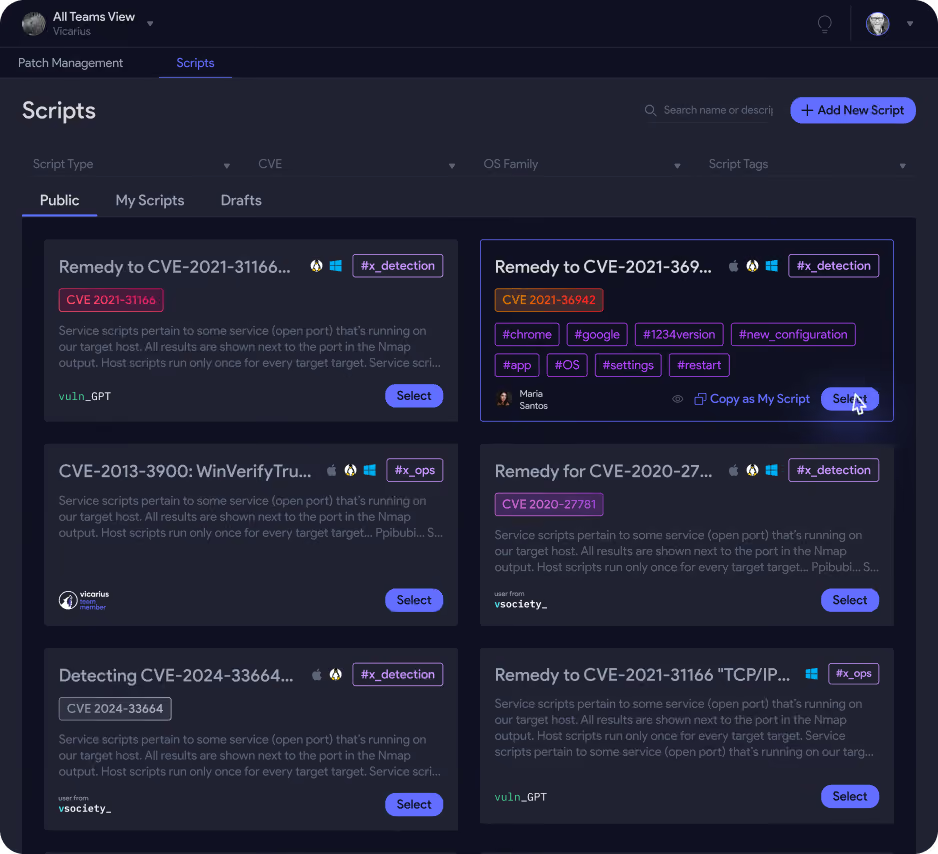
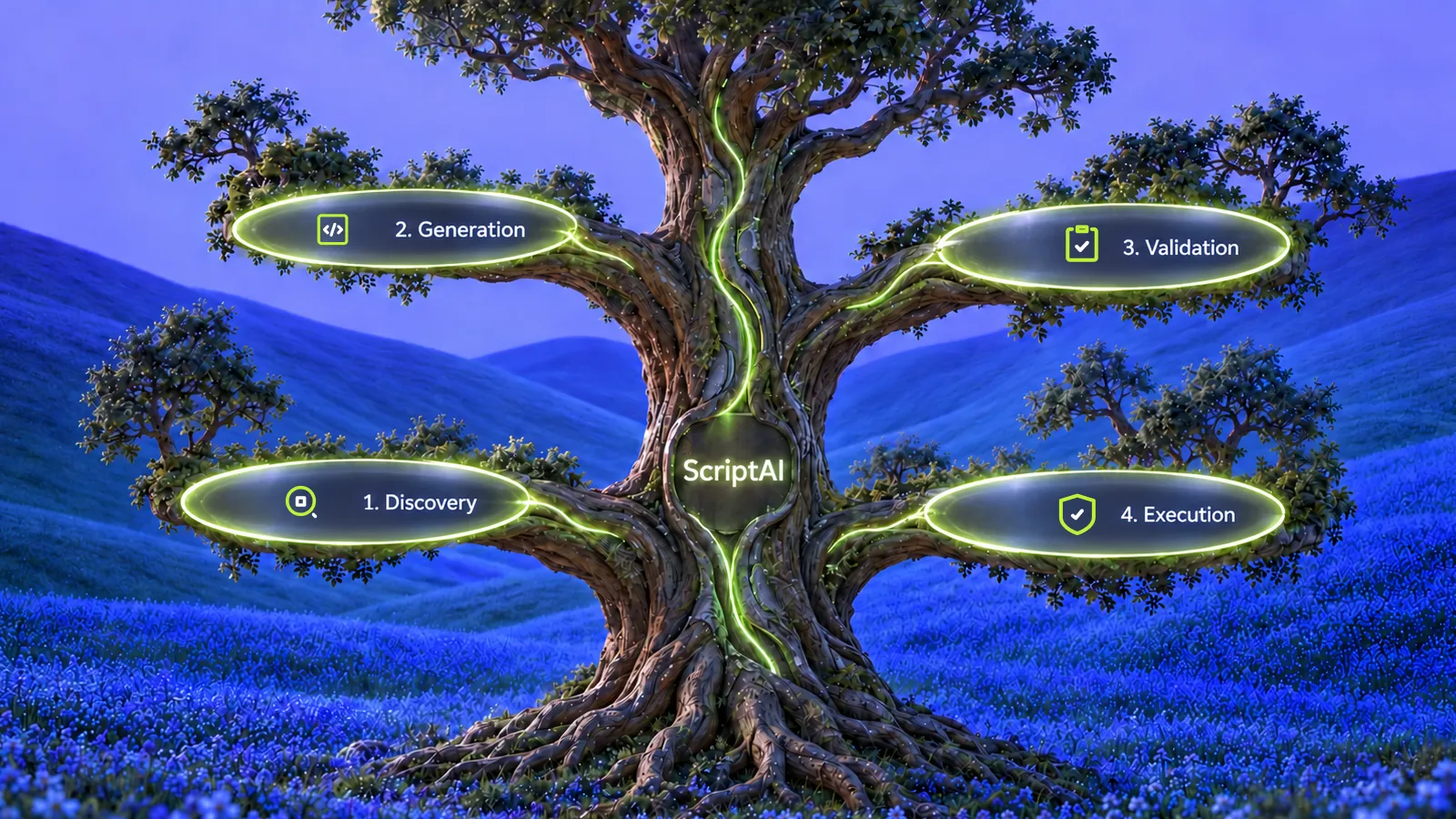
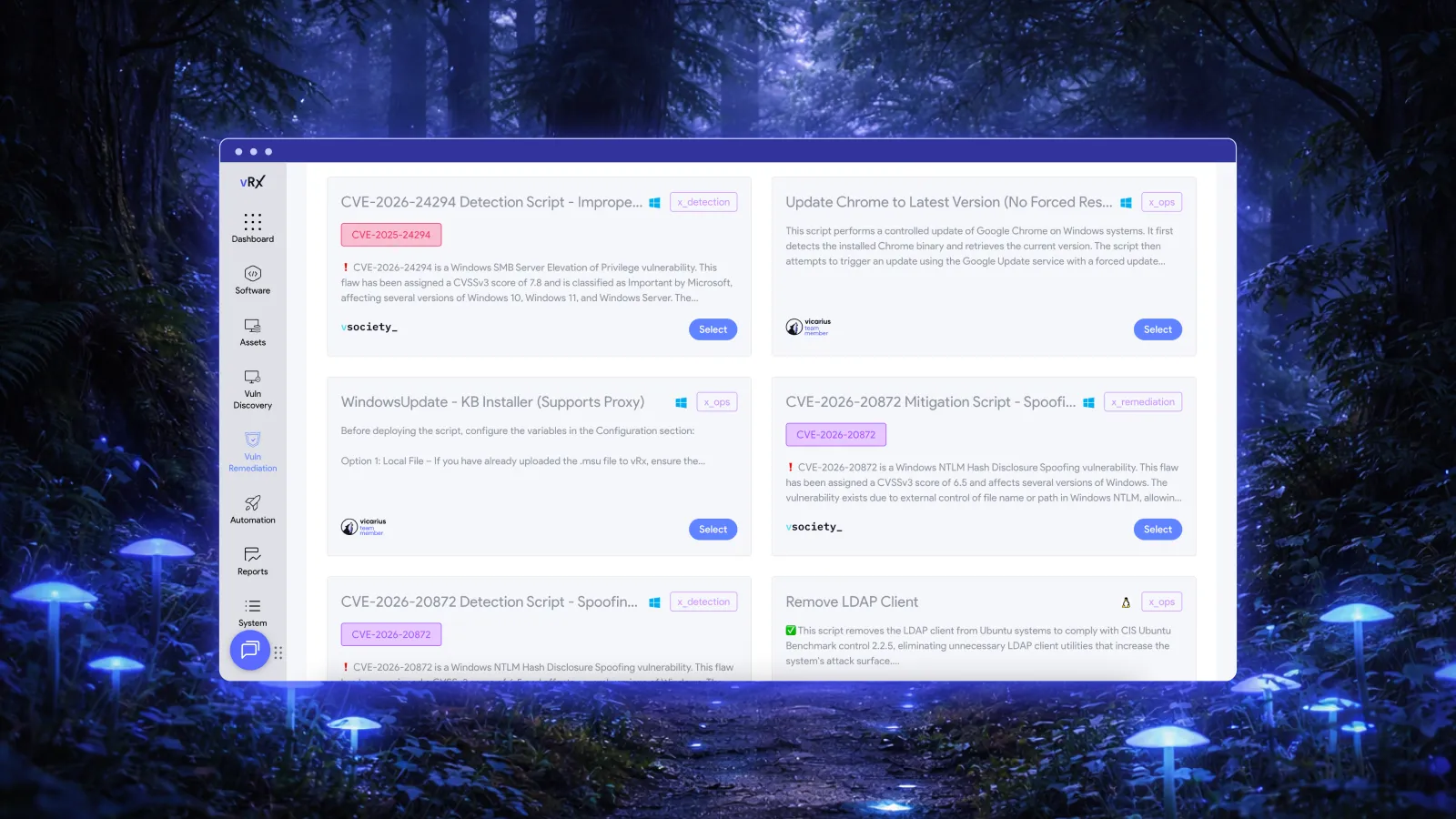
Some vulnerabilities fall outside standard patch workflows. Configuration issues, registry changes, and custom application fixes require a different approach. Script-based remediation allows security teams to write, test, and deploy custom fixes.
With vRx's Scripting Engine, practitioners can address vulnerabilities that traditional patching tools cannot handle. The scriptAI feature generates script logic automatically, reducing the time needed to create and validate remediation scripts.
Patchless protection for zero-days
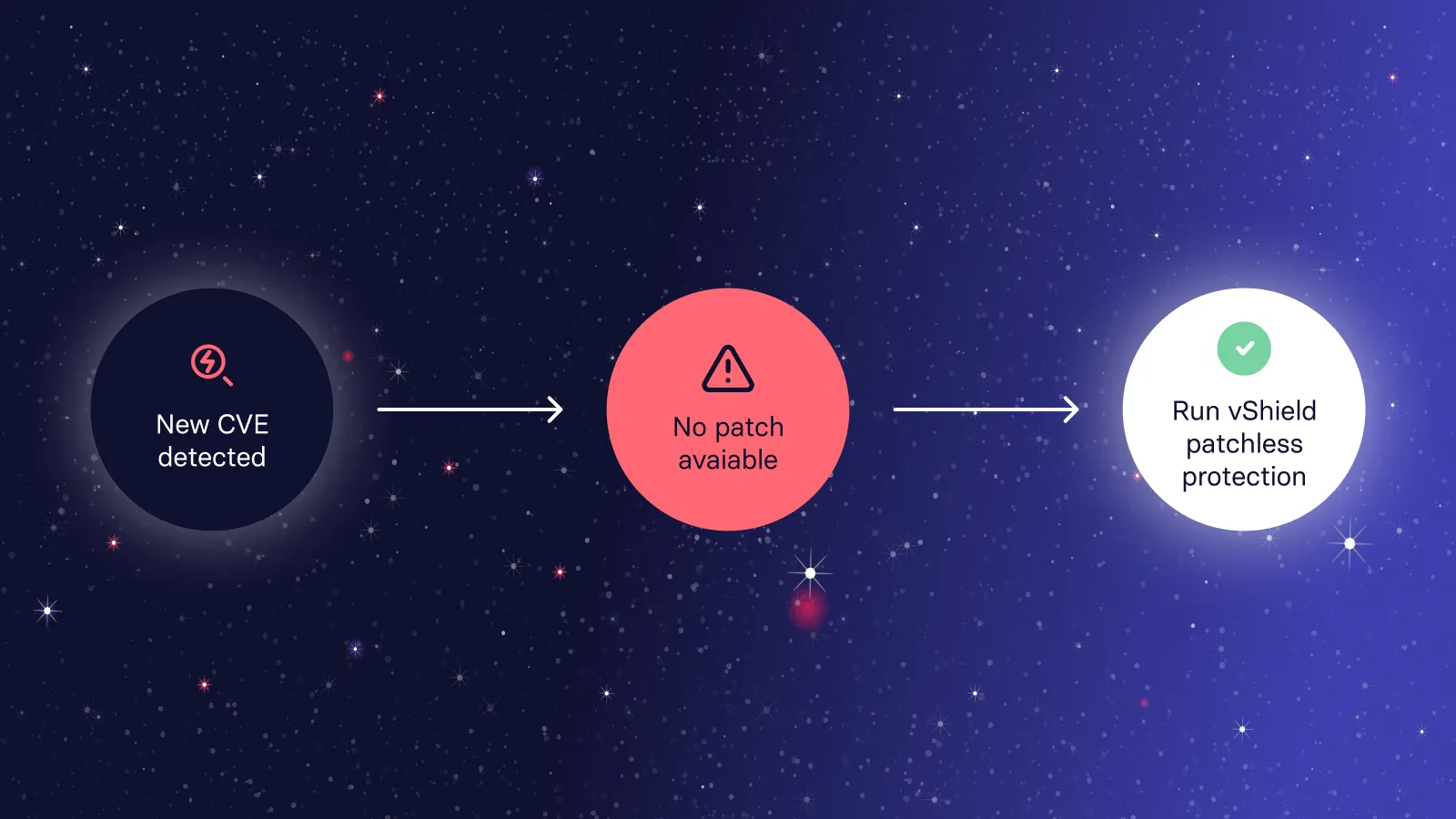
What happens when no patch exists? Legacy systems, end-of-life software, and zero-day vulnerabilities often leave security teams without options. Patchless protection addresses this gap.
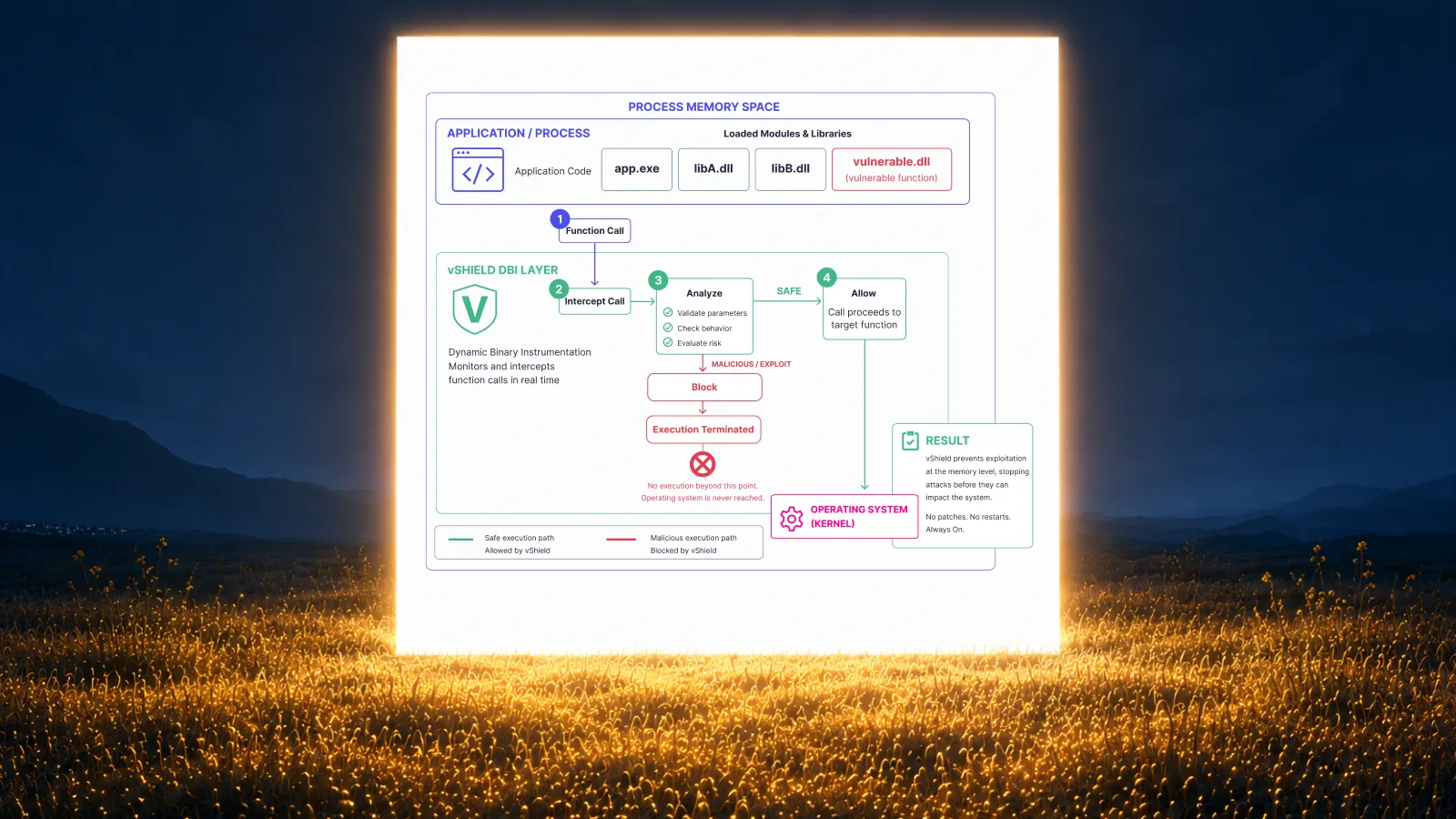
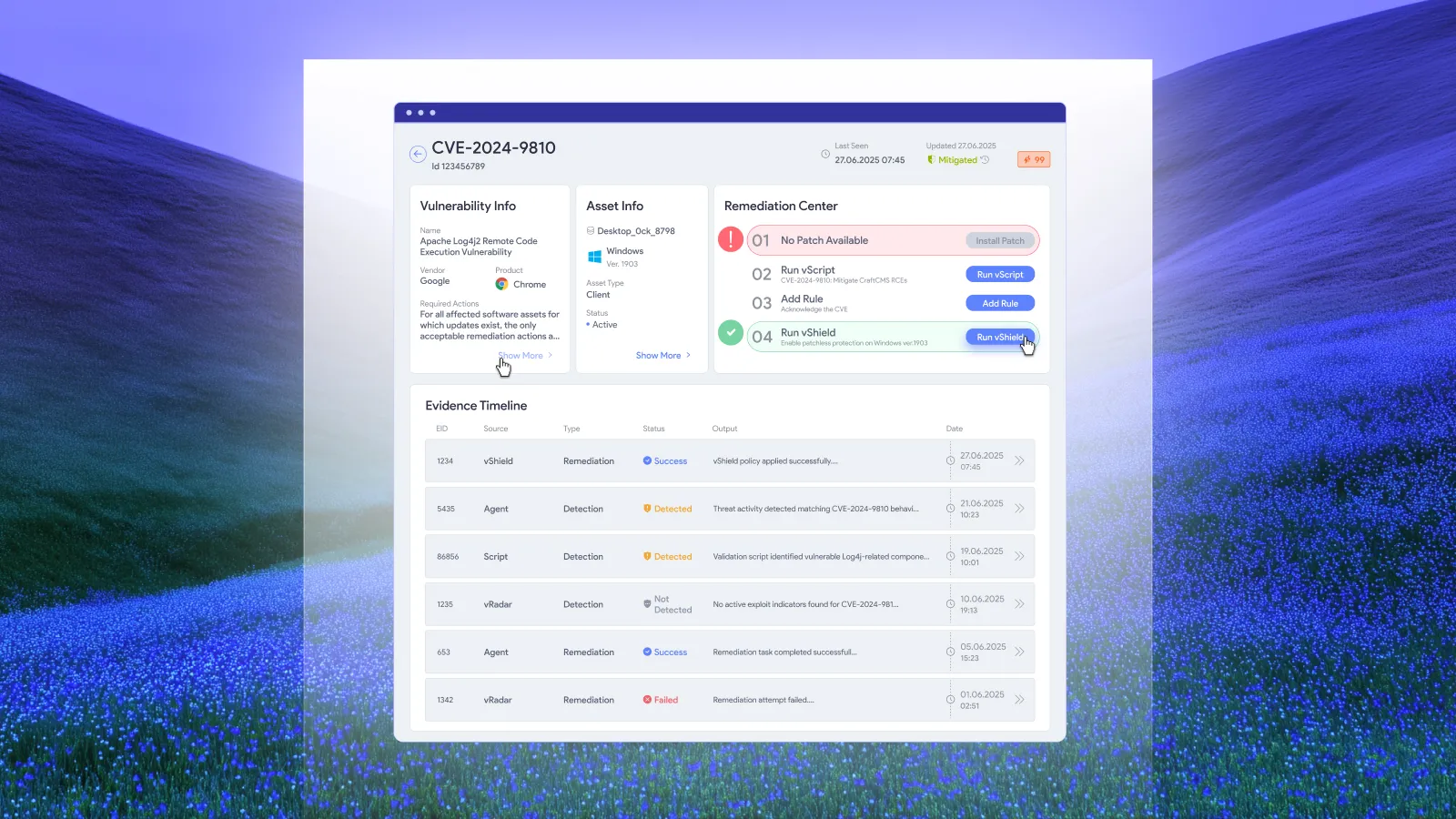
Vicarius vShield shields vulnerable applications at the memory level using dynamic binary instrumentation. This provides instant, no-reboot protection for systems that cannot be patched traditionally.
Why do platforms that only scan fall short?
Traditional vulnerability management platforms identify findings and stop there. They generate reports, assign CVSS scores, and create tickets. The actual work of fixing vulnerabilities falls entirely on security and IT teams.
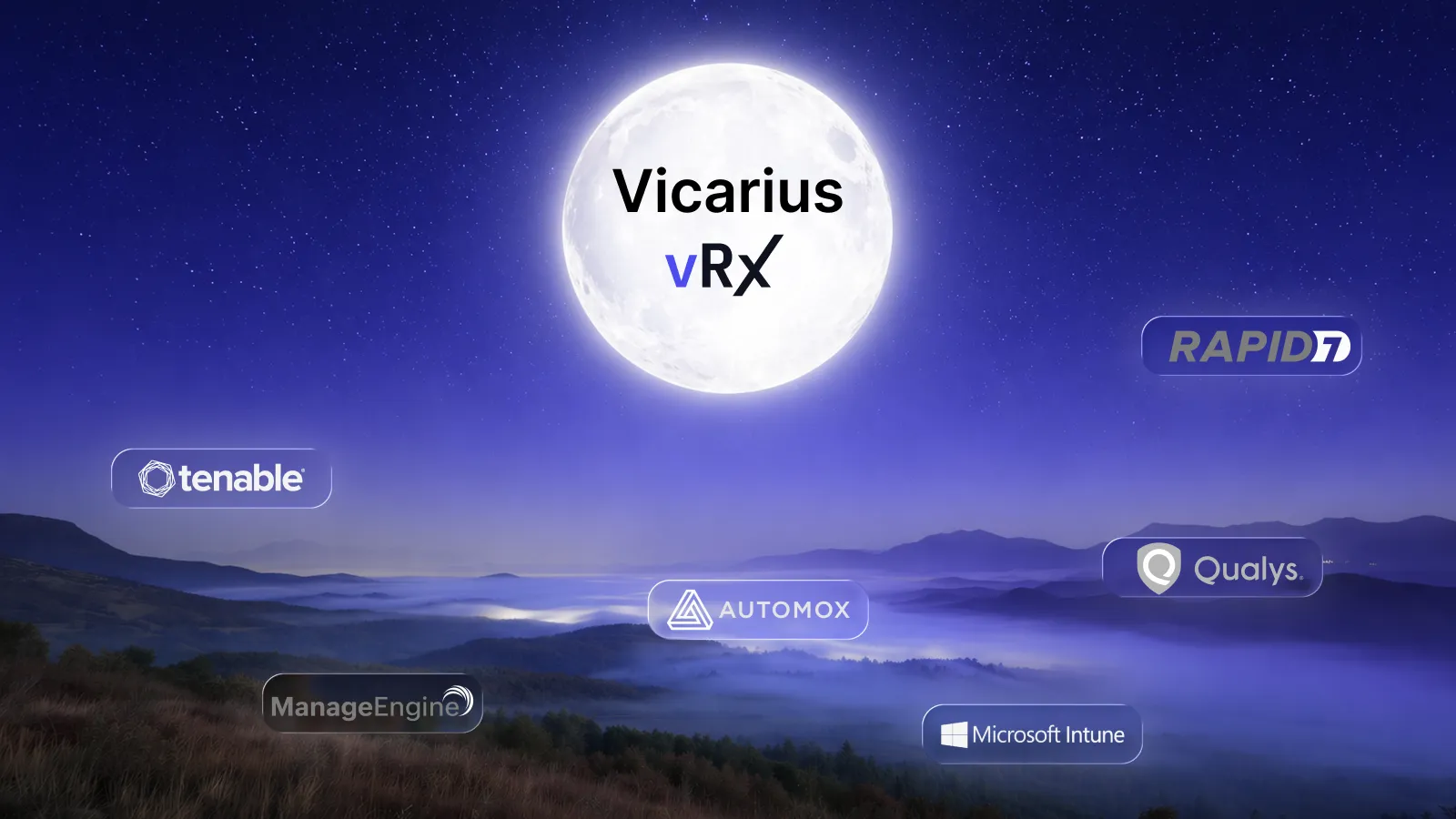
This approach creates several problems. First, remediation coordination across multiple teams stretches mean time to fix to weeks or months. Second, scanners often lack integration with patching tools, forcing teams to reconcile findings across disconnected systems.
Third, there's no verification that fixes worked. Vicarius vRx addresses this with closed-loop remediation, re-validating every fix after execution to confirm the vulnerability is gone, not just ticketed.
What does a modern vulnerability remediation prlatform look like?
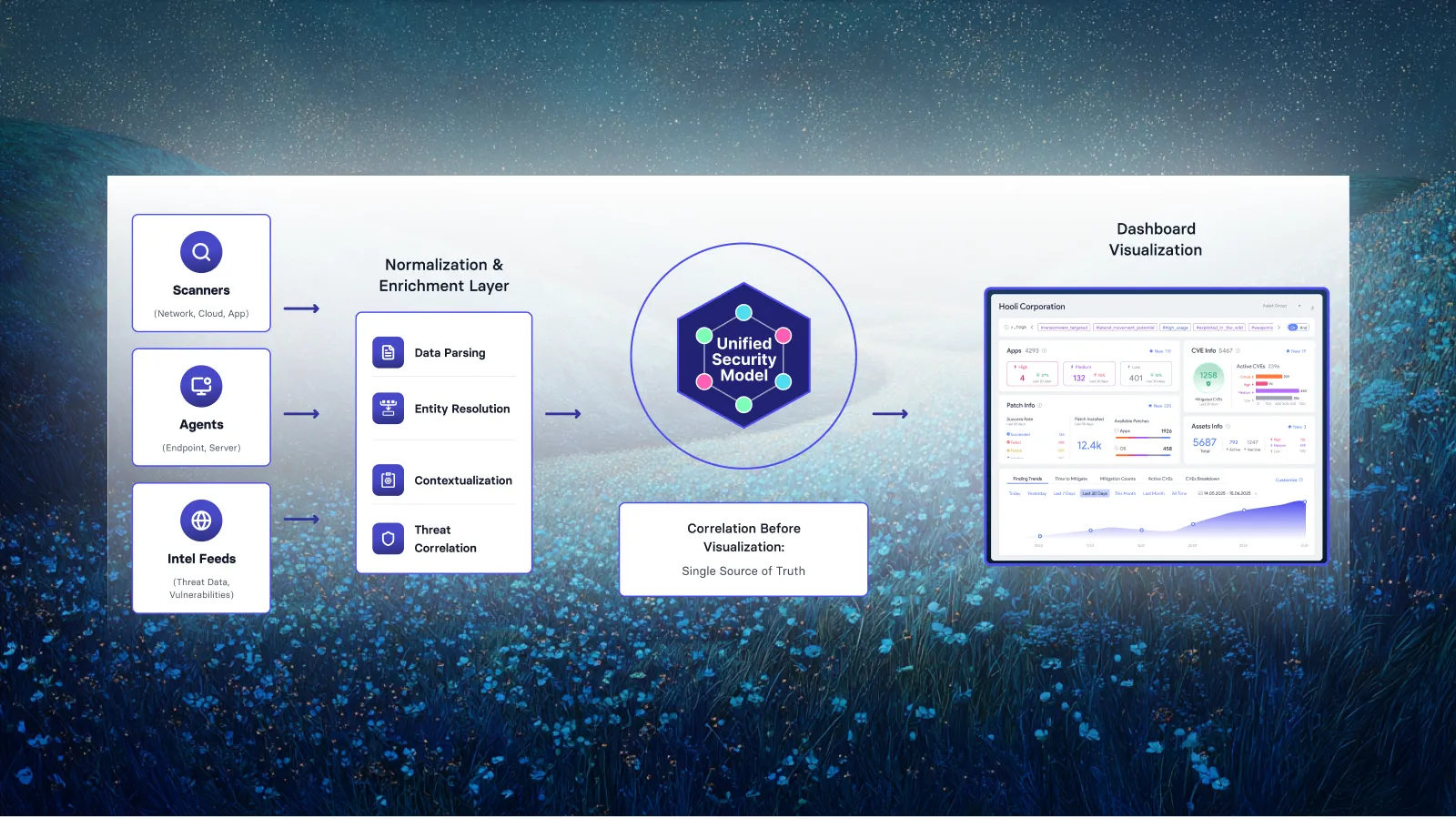
A modern remediation platform unifies discovery, prioritization, and fix deployment in a single console. It doesn't just tell you what's wrong; it gives you the tools to fix it and proves the fix worked.
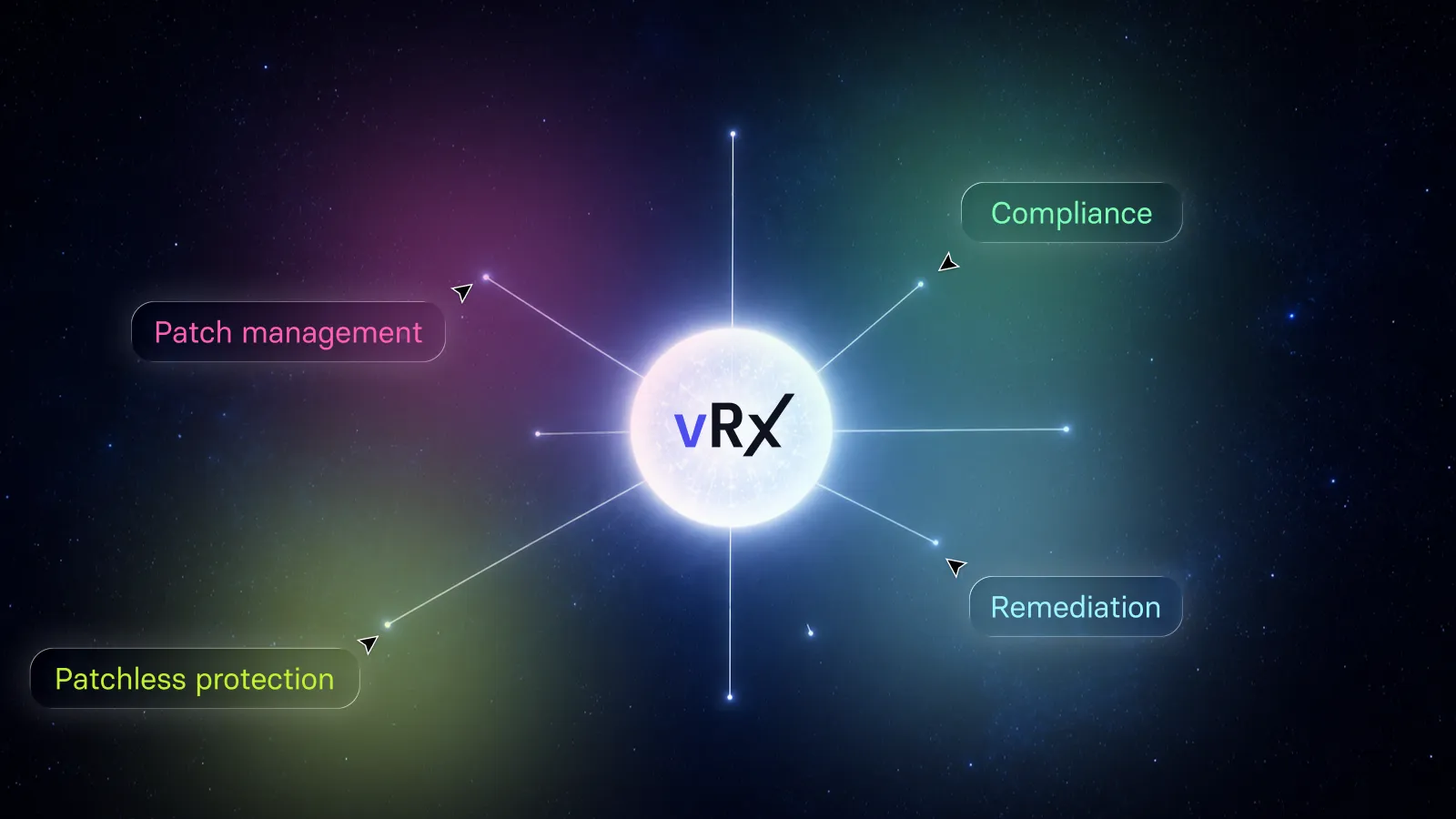
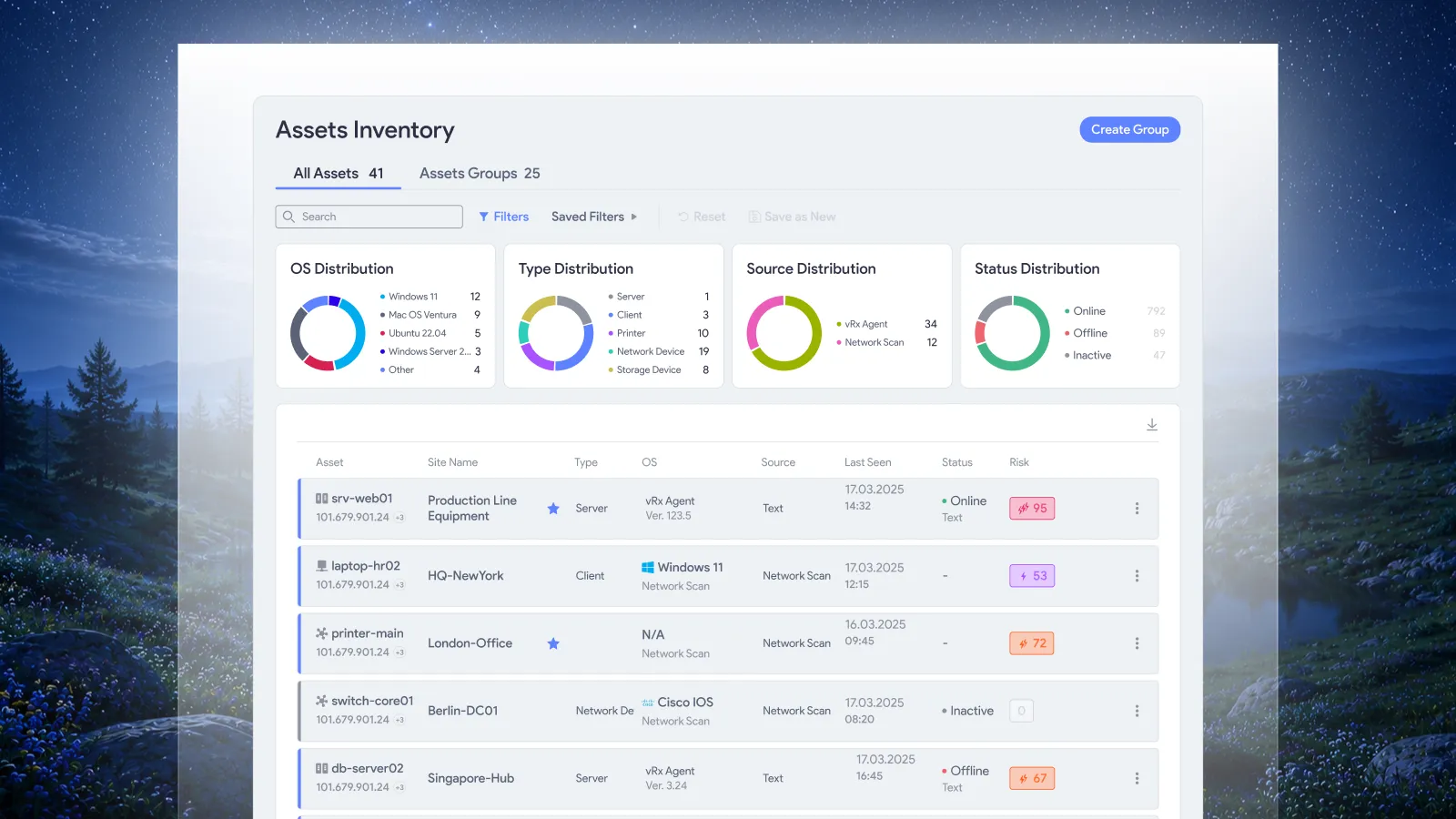
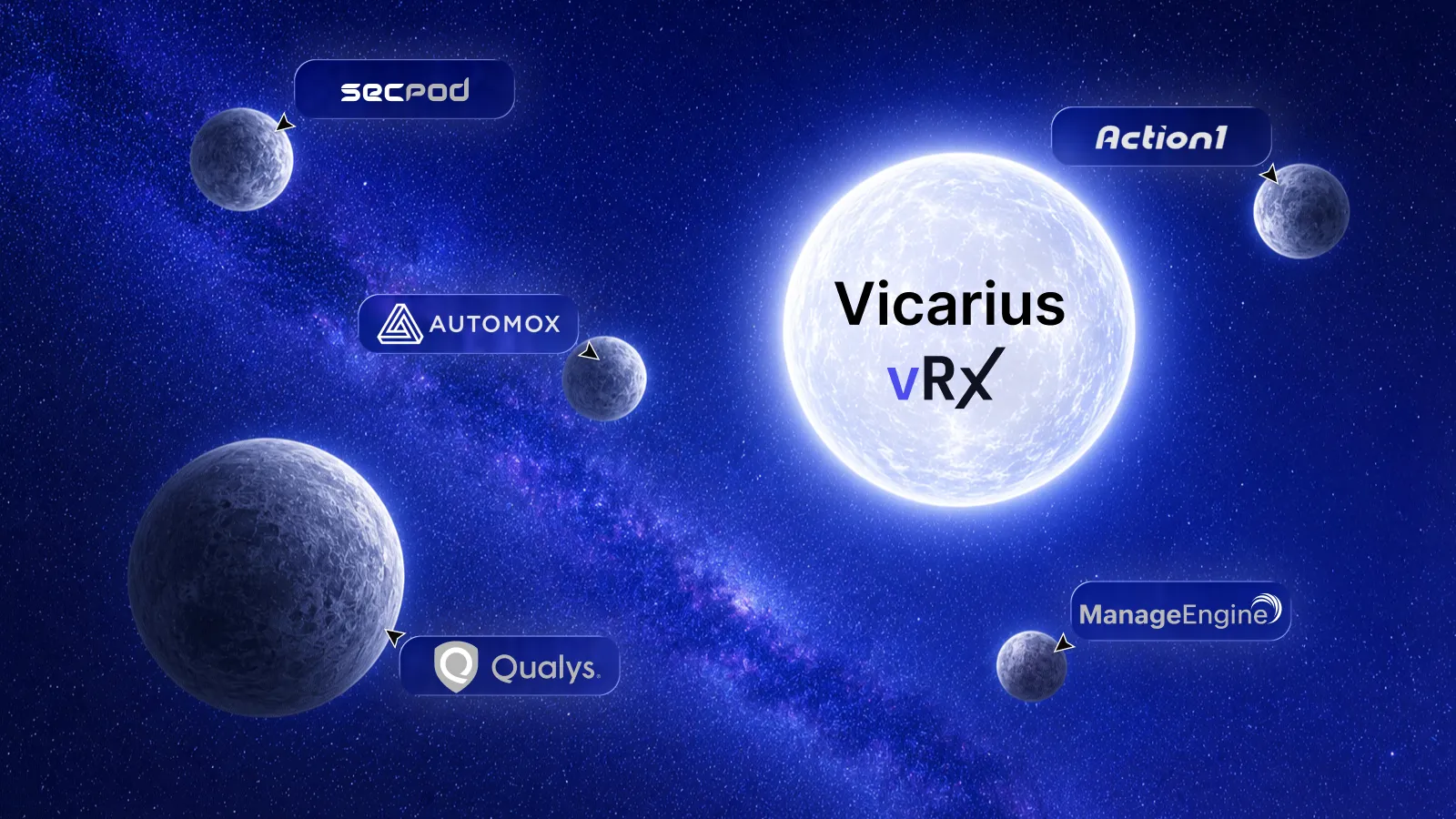
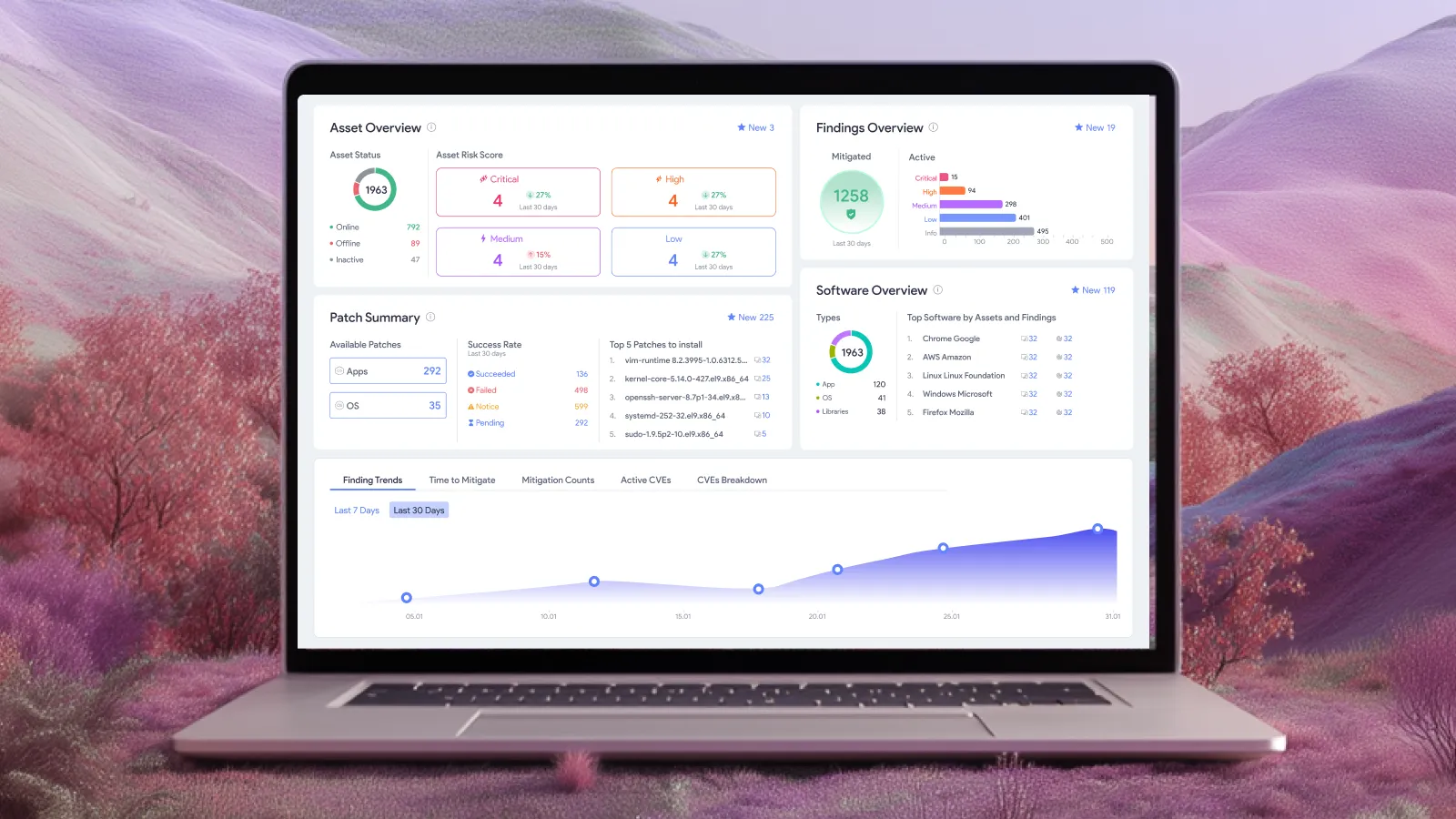
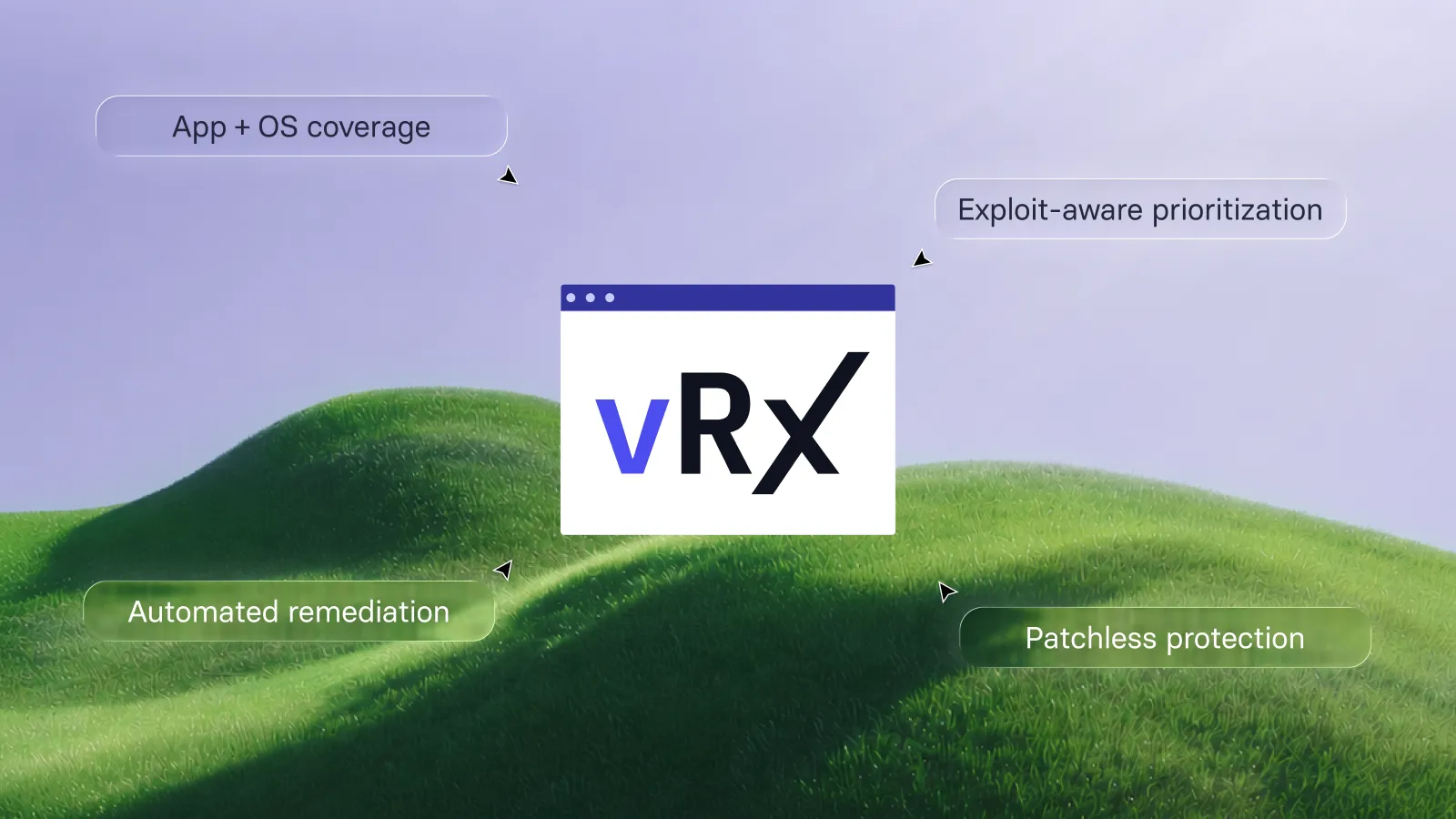
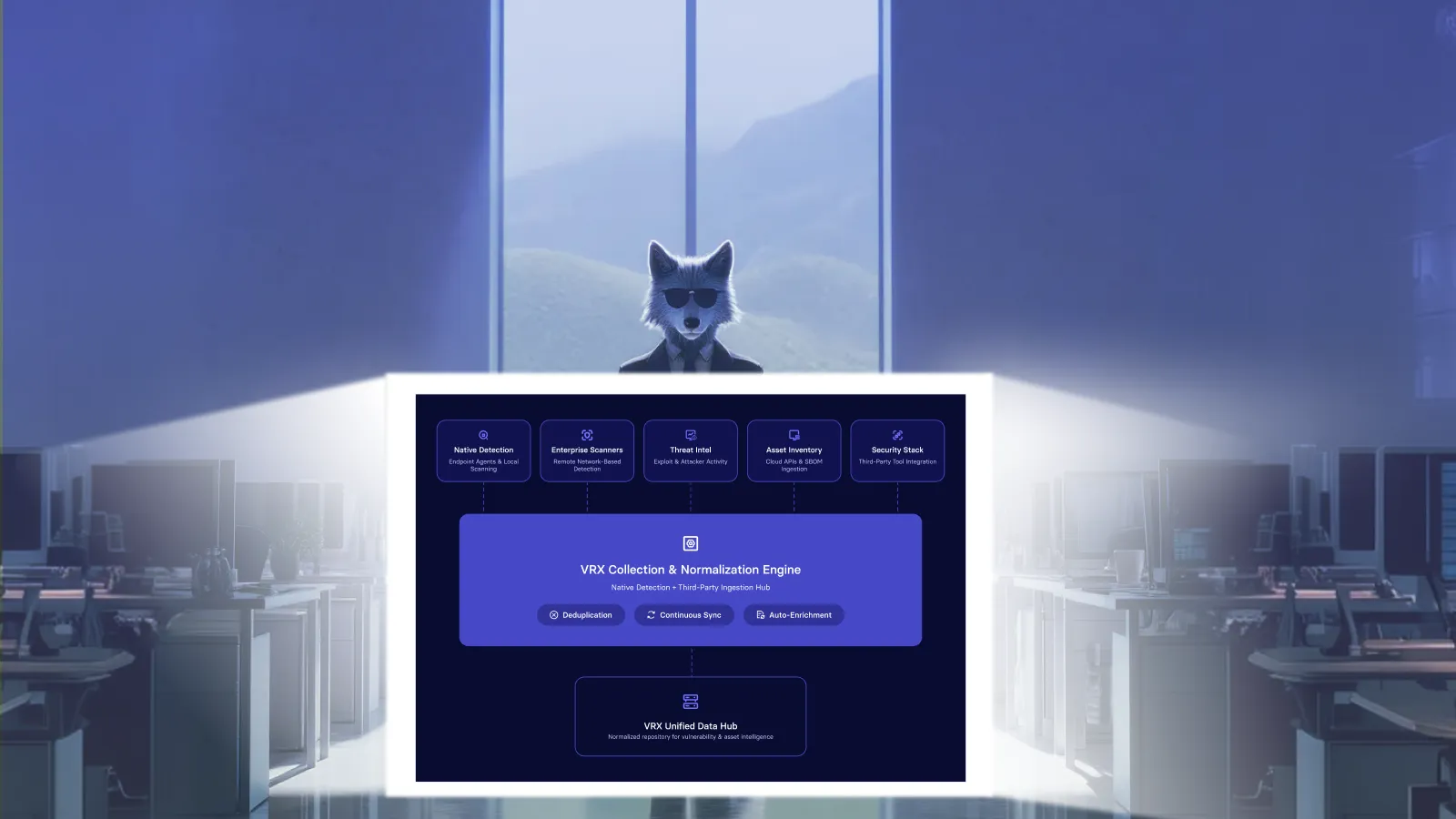
Vicarius vRx exemplifies this approach. The platform combines automated vulnerability discovery with risk-based prioritization and multiple remediation options: patching, scripting, and patchless protection. Everything runs from a single agent across Windows, macOS, and Linux.
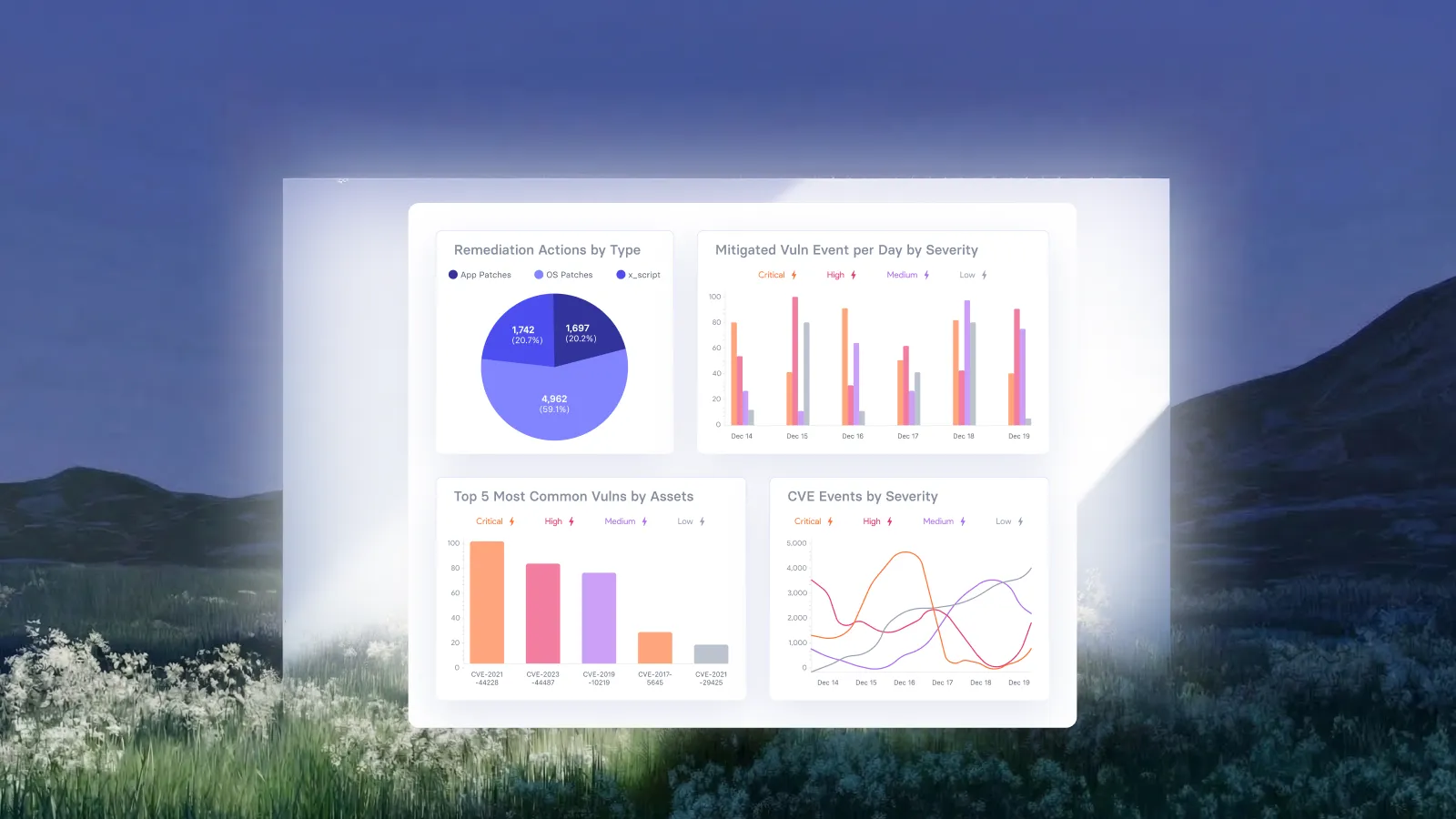
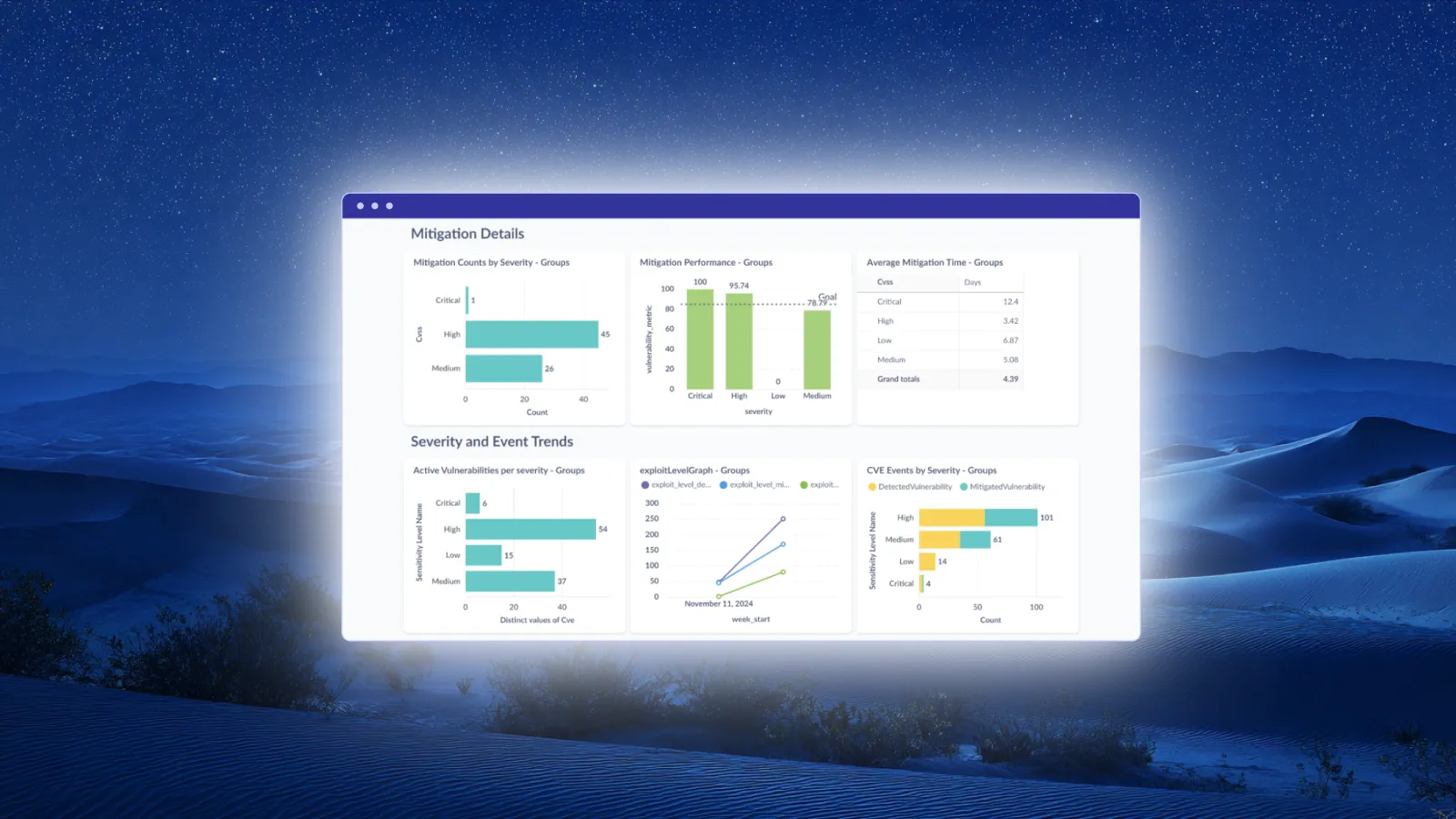
This consolidation matters. Security teams can reduce tool sprawl while gaining complete visibility into their remediation progress. The platform maps every action to compliance frameworks like HIPAA, PCI DSS, and more, and over 100 CIS benchmarks.
How can you reduce mean time to remediate?
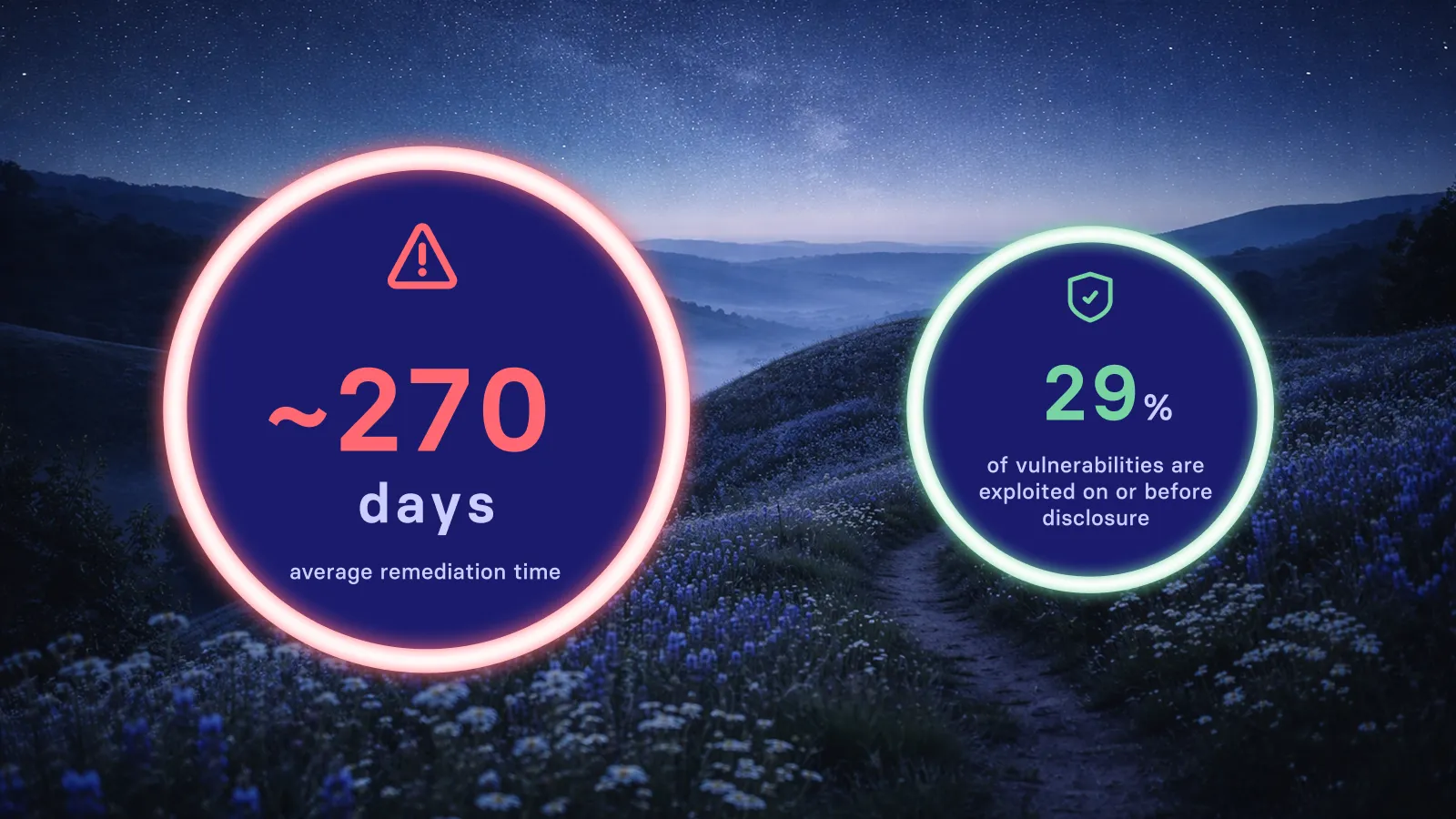
Mean time to remediate (MTTR) measures how quickly your team closes vulnerabilities after discovery. The industry average exceeds 60 days. Vicarius customers report reducing this to minutes for critical exposures.
Three strategies accelerate remediation. First, automate triage by using risk-based scoring that surfaces the most critical vulnerabilities automatically. Second, automate deployment by scheduling patches and scripts to run without technician intervention.
Third, protect while you wait. When patches aren't available immediately, patchless protection shields vulnerable applications until a permanent fix arrives. This buys time without leaving systems exposed.
How does vulnerability remediation support compliance?
Regulatory frameworks like HIPAA, PCI DSS, and more require organizations to demonstrate active vulnerability management. Auditors want evidence that you found vulnerabilities, prioritized them, fixed them, and verified the fixes worked.
A remediation platform that tracks every action provides this evidence automatically. With Vicarius vRx, security teams generate audit-ready reports showing verified remediation confirmation at the asset level, not just records of patch deployment.
This closed-loop verification eliminates the manual reconciliation that typically consumes hours before audits.
So why remediation matters more than scanning
Vulnerability scanning shows you the problem. Vulnerability remediation solves it. In 2026, the difference between organizations that get breached and those that don't often comes down to how quickly they close the gap between discovery and fix.
Platforms that unify discovery, prioritization, and automated remediation give security teams the ability to act on findings immediately. With Vicarius vRx, you can reduce your attack surface without adding headcount, prove compliance to auditors, and protect systems that can't be patched.
The question isn't whether you need vulnerability management. It's whether your current tools help you fix what they find. Request a demo
FAQs about what is vulnerability remediation and how it differs from vulnerability management platforms that only scan
What is vulnerability remediation in simple terms?
Vulnerability remediation is the process of fixing security weaknesses in your systems. This includes applying patches, changing configurations, or deploying protective controls. Vicarius vRx automates this entire workflow, reducing remediation time from weeks to minutes while verifying that each fix worked.
What is the difference between vulnerability scanning and remediation?
Scanning identifies vulnerabilities; remediation eliminates them. Many tools stop at identification, leaving your team to coordinate fixes manually. Vicarius vRx closes the loop by combining discovery with automated patching, scripting, and patchless protection in one platform.
Why can't I just use a vulnerability scanner?
Scanners create lists of problems without solving them. This leaves remediation coordination to your team, often stretching mean time to fix to weeks or months. A remediation platform like Vicarius vRx deploys fixes directly and confirms vulnerabilities are closed.
What is patchless protection?
Patchless protection shields vulnerable applications when no patch exists. Vicarius vShield uses in-memory protection to block exploit paths for zero-day vulnerabilities and legacy systems without requiring a reboot or application downtime.
How does risk-based prioritization work?
Risk-based prioritization ranks vulnerabilities by real-world exploitability, not just CVSS scores. Vicarius vScore combines CVSS, EPSS, and KEV data with asset criticality to surface the exposures attackers are most likely to target first.
Can automated remediation work across different operating systems?
Vicarius vRx supports automated remediation across Windows, macOS, and Linux from a single agent. The platform covers 20,000+ third-party applications alongside OS patches, giving security teams a unified workflow across heterogeneous environments.























.webp)














%20Signals%20a%20New%20Era%20of%20Supply%20Chain%20Risk.webp)





.webp)