

CIS compliance work should produce corrected systems and evidence of the change. A failed check is useful because it identifies a condition to address. Its value depends on what happens next: an appropriate fix, a verified result and a record tied to the affected asset.
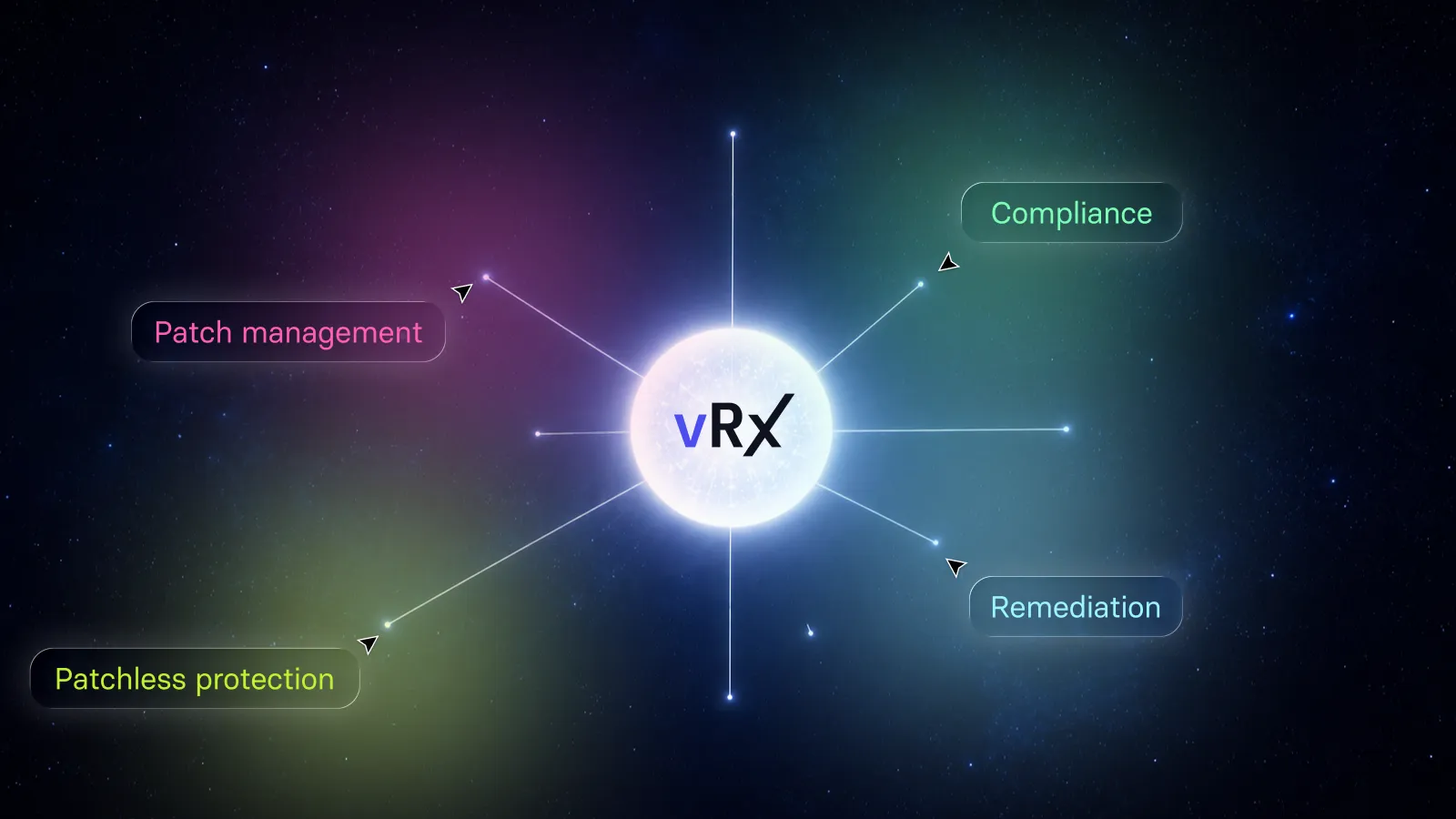
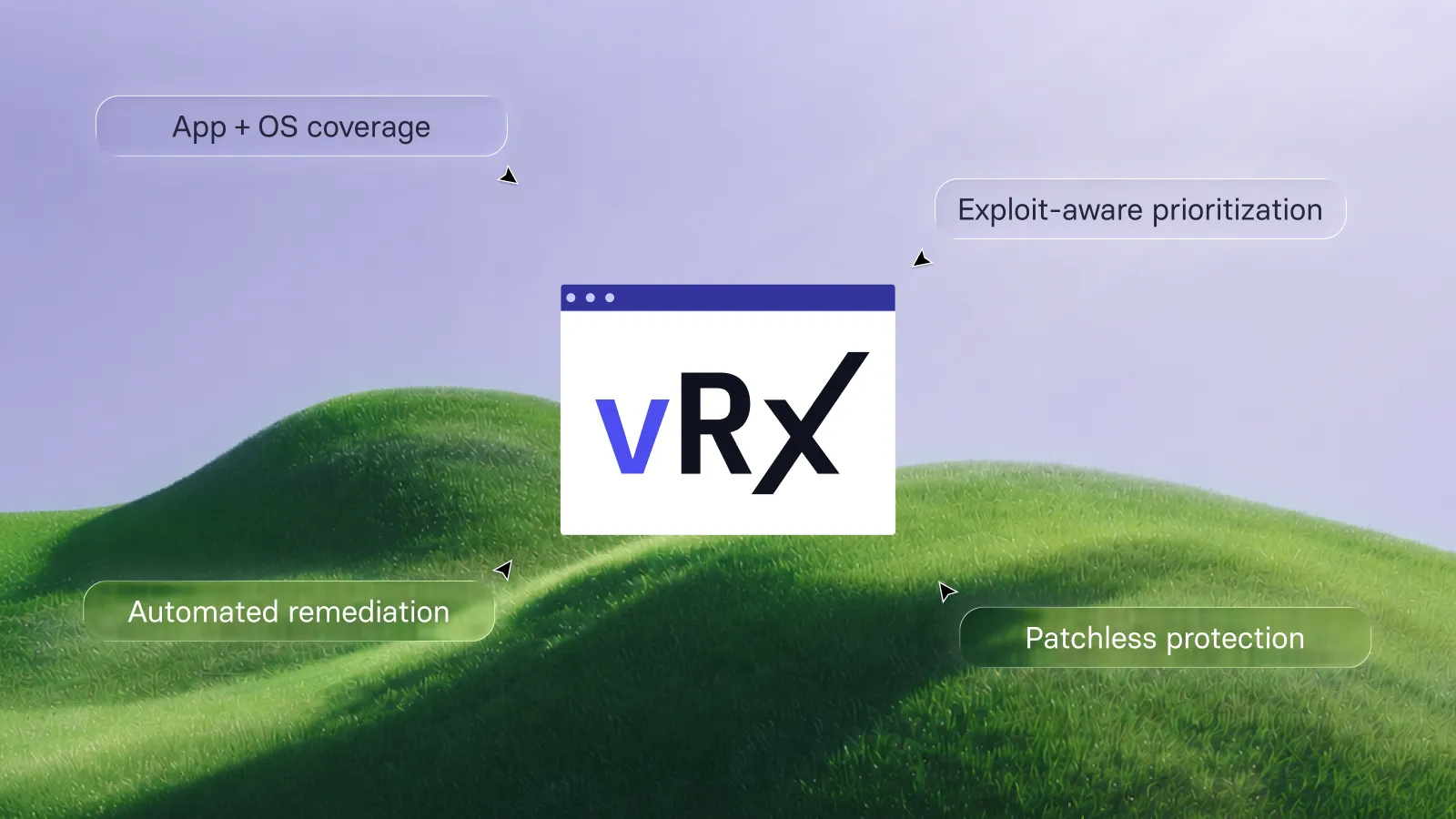
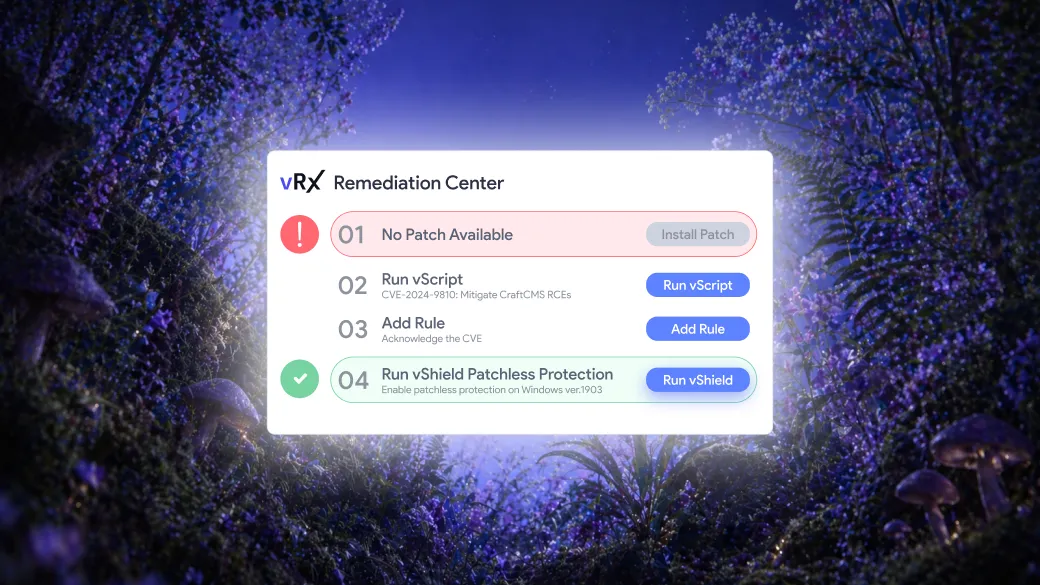
Vicarius vRx connects those activities through its compliance engine, vComply, and its remediation capabilities. The goal is to make repeatable fixes part of normal operations, with people setting the scope and handling exceptions instead of rebuilding the same response for every finding.
What does CIS compliance mean for an individual asset?
For technical assessment, make the claim specific: the asset was evaluated against a named CIS Benchmark, version and applicable profile. That is more useful than saying an entire environment is simply “CIS compliant.”
The Center for Internet Security publishes CIS Benchmarks as configuration recommendations for specific technologies. Its library separates operating systems, applications and other product families, with multiple benchmark versions available. Selecting the right reference matters before a pass rate means anything. CIS Benchmarks
For example, a server baseline should reflect the server's actual technology and intended role. A finding on one class of assets should not automatically become an instruction to change every machine.
Our recommendation is to retain the assessment context alongside the result. Record the benchmark used, the assets assessed and any approved exclusions. Otherwise, a later comparison can look like improvement when the assessed population has merely changed.
For broader background, see Vicarius's CIS benchmarking best practices. Here, the focus is what happens after a check identifies something that needs fixing.
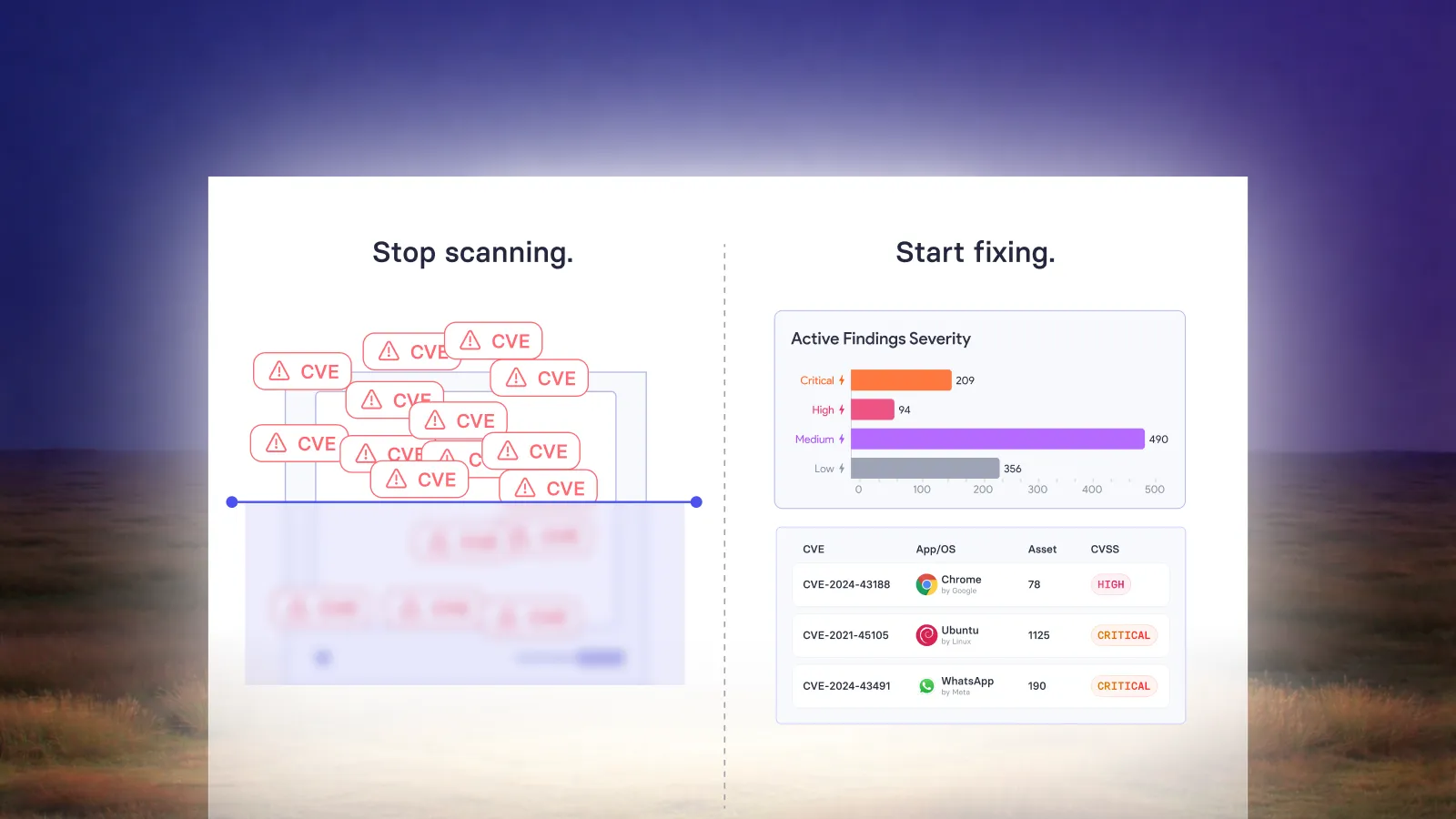
How does vRx connect compliance findings to remediation?
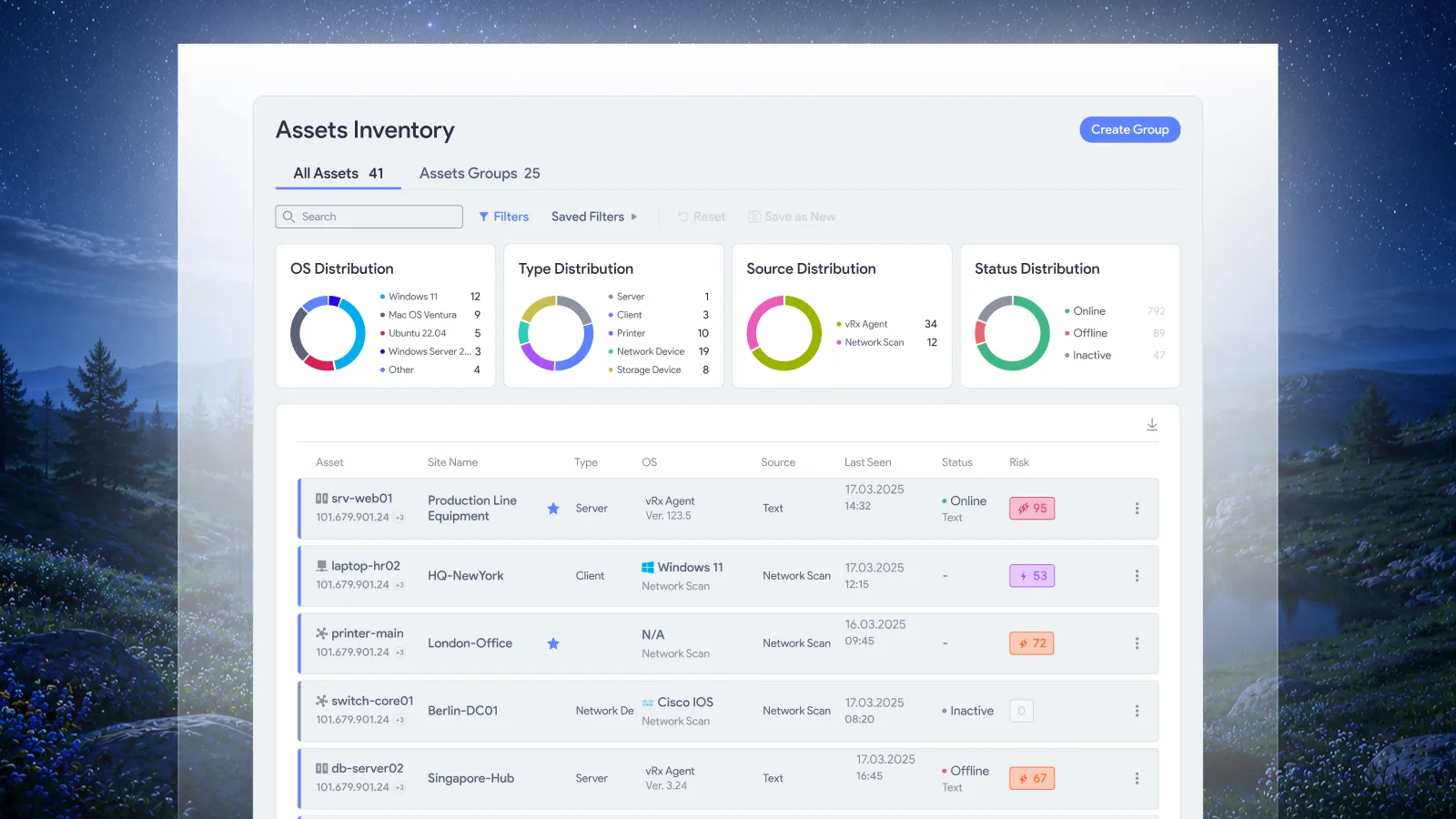
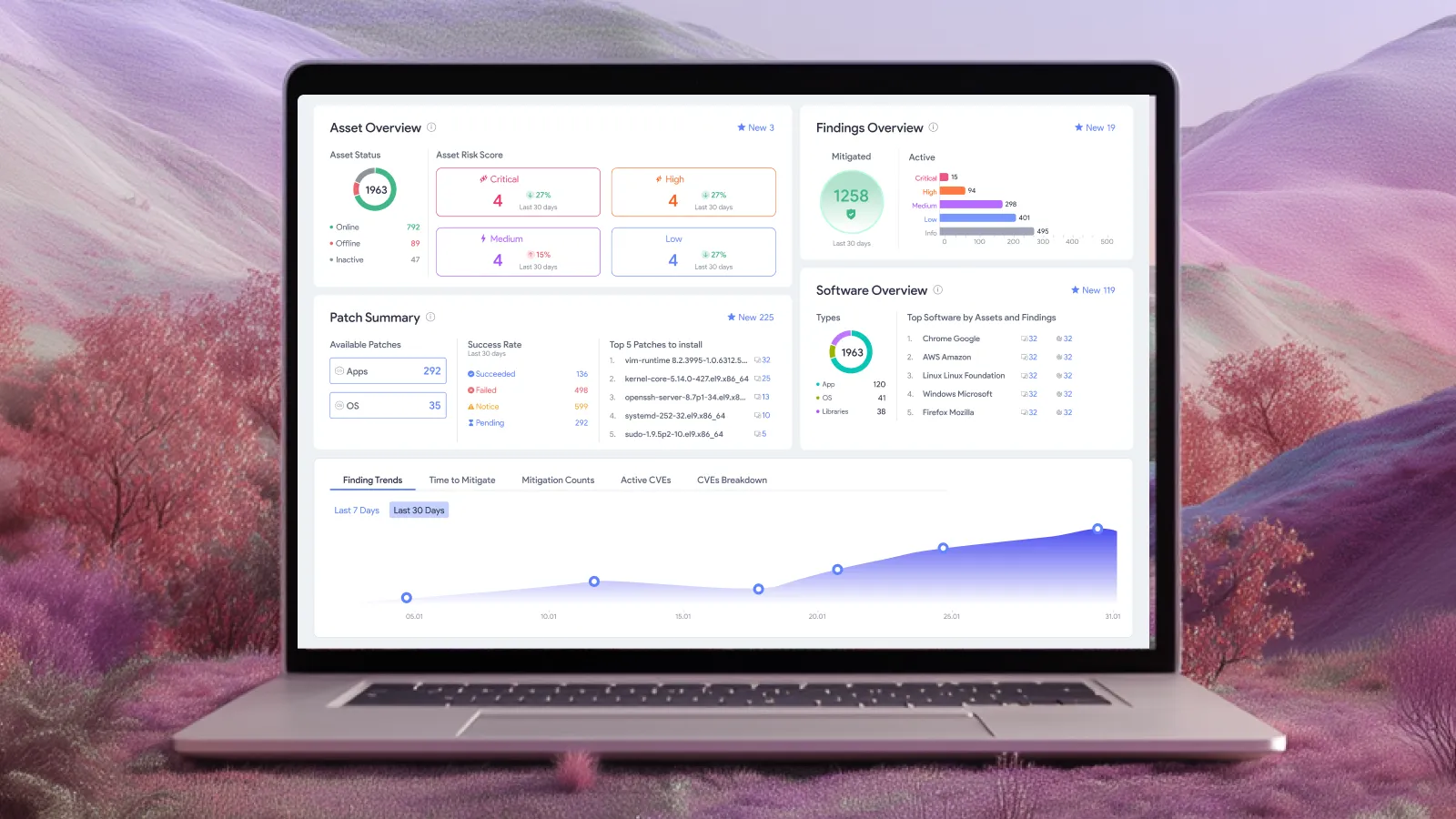
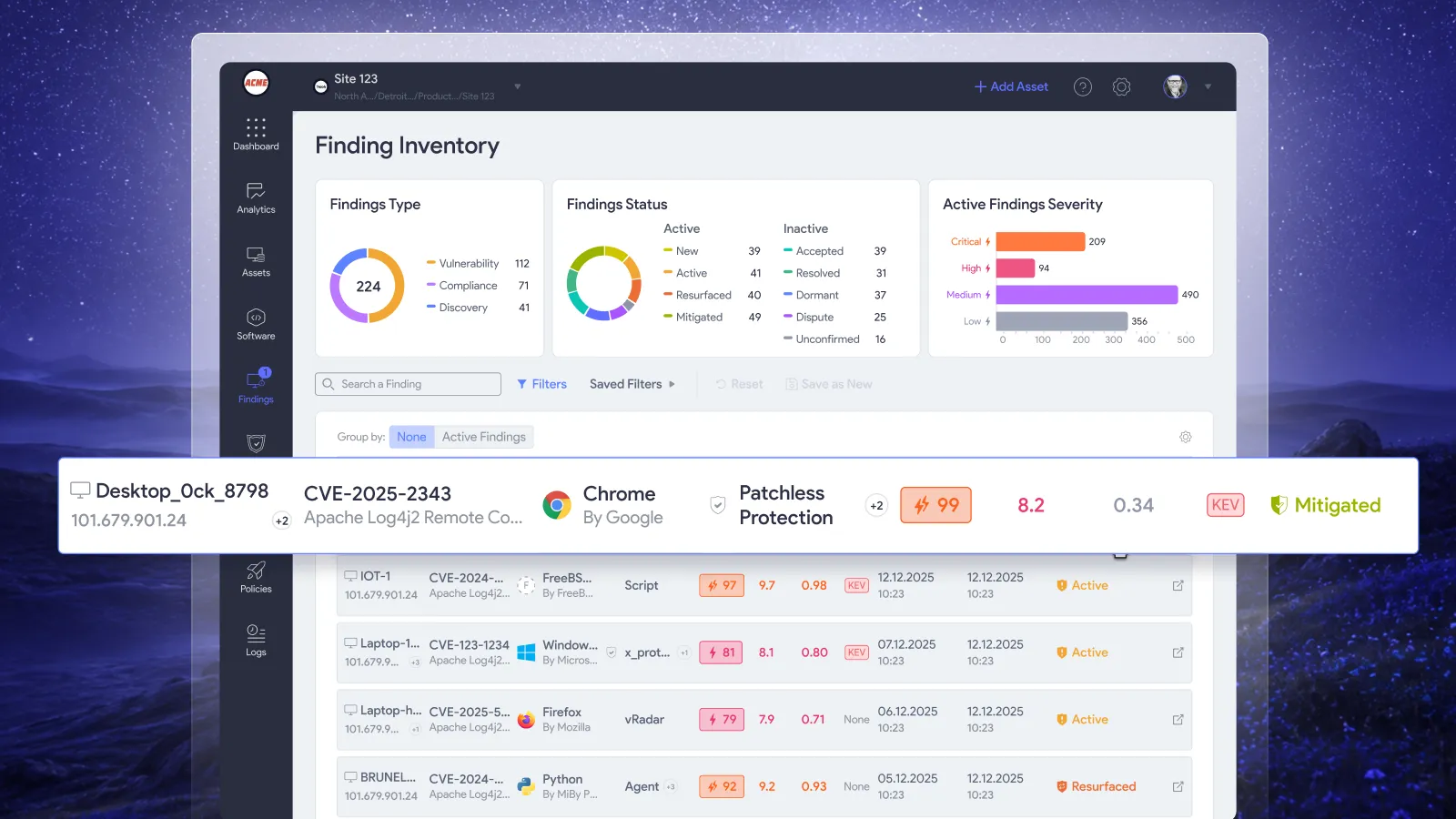
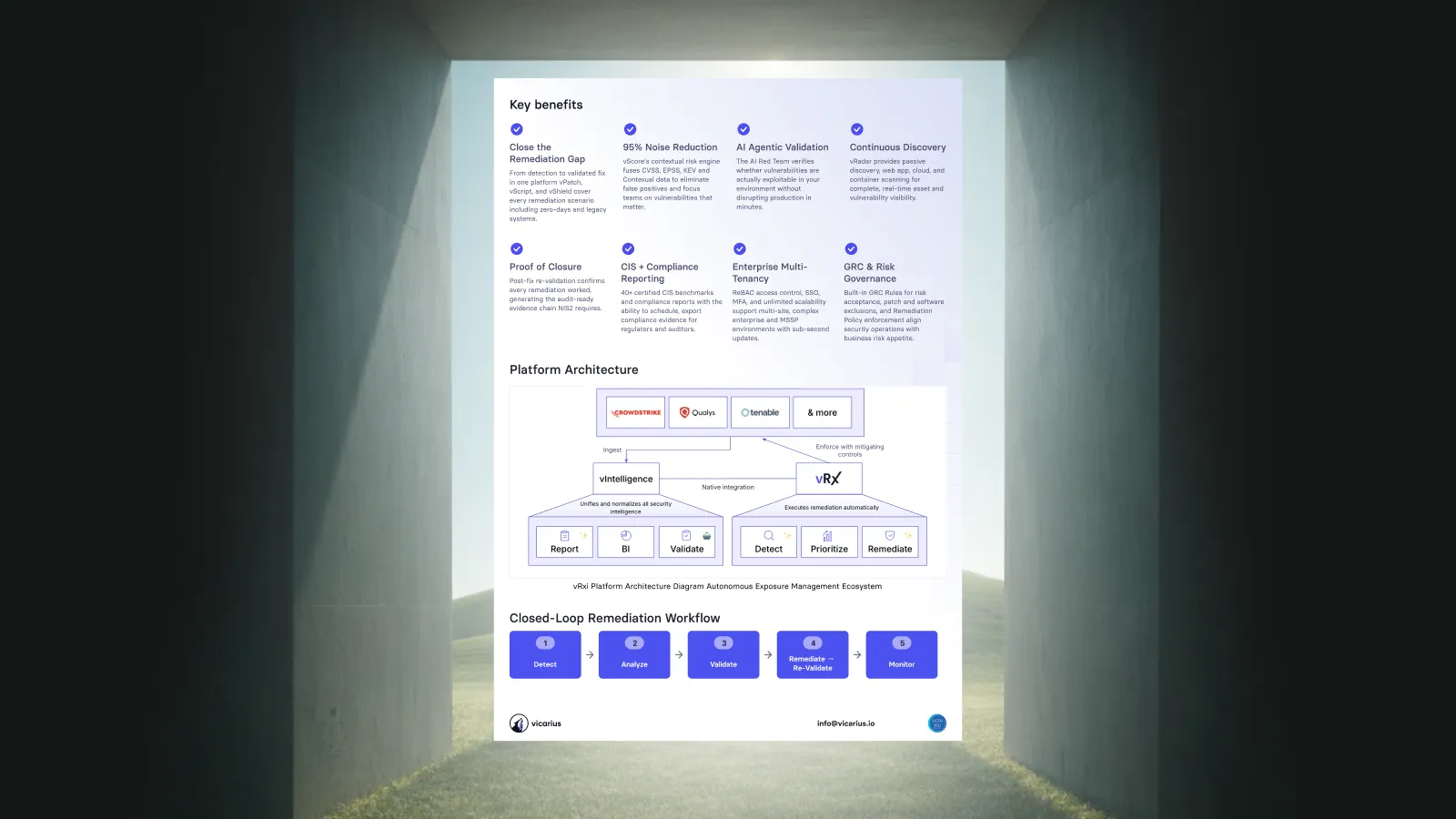
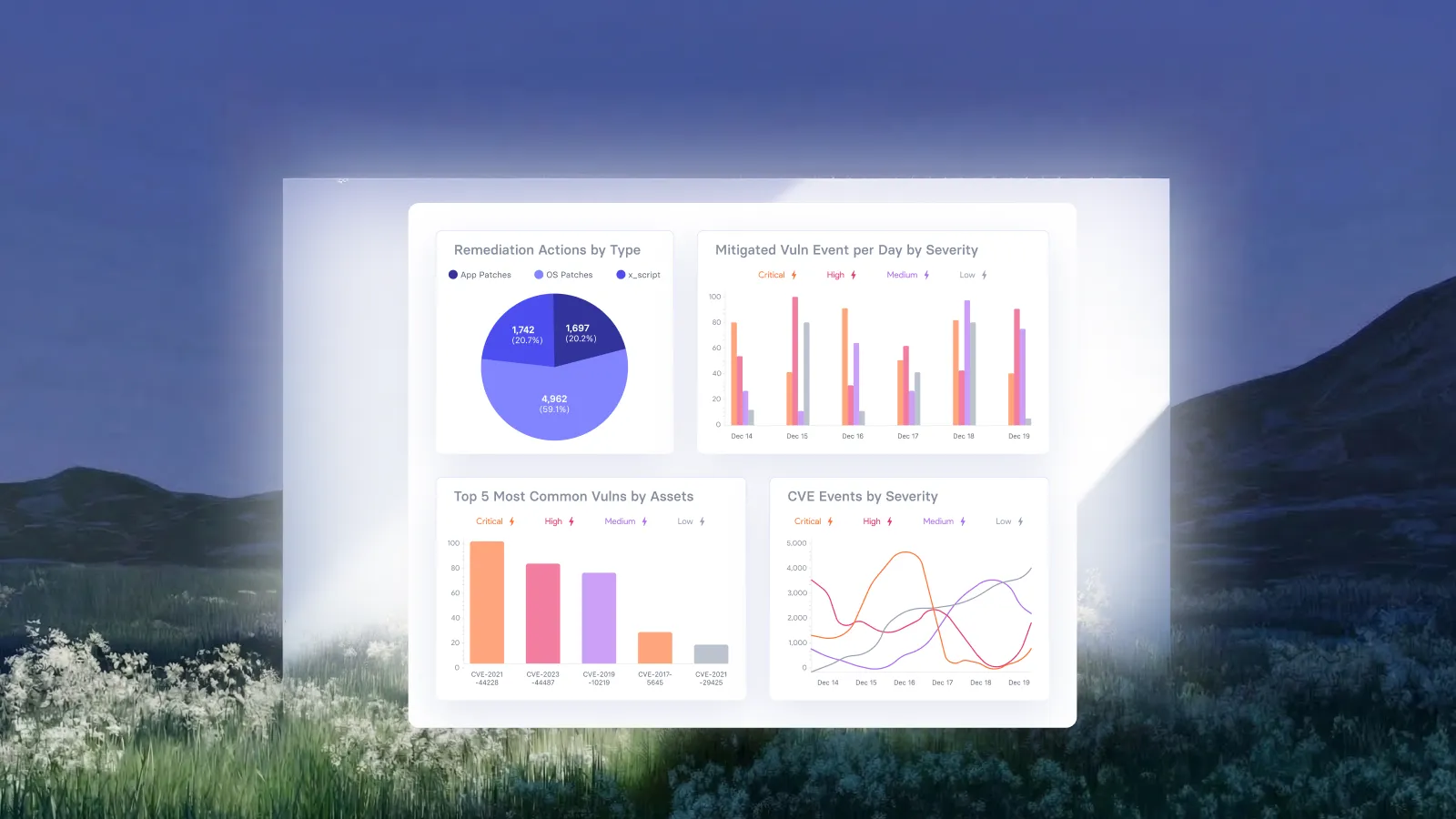
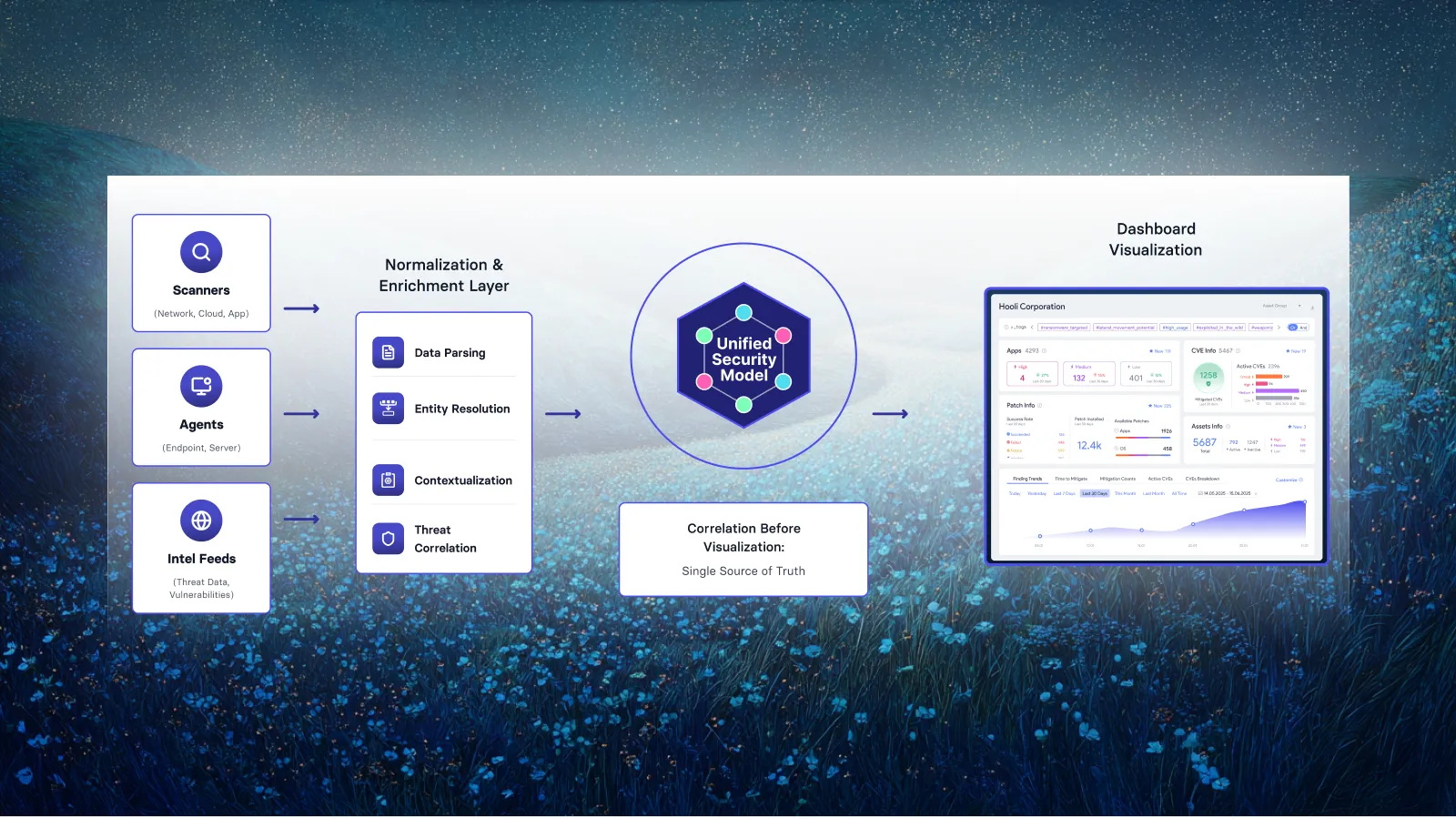
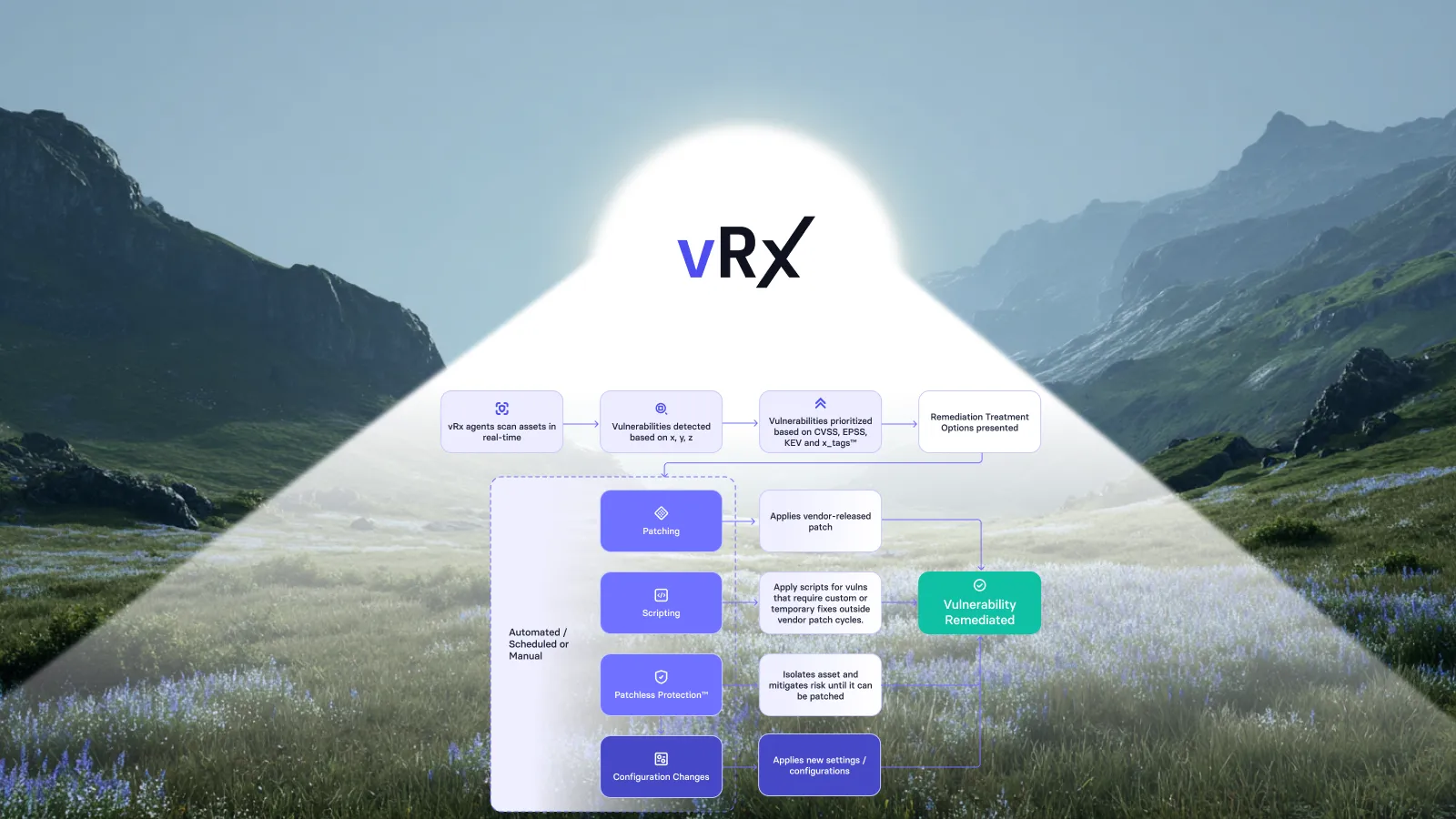
vComply scans systems and applications against configured frameworks, including more than 100 CIS Benchmarks. Vicarius documents control mapping, per-asset compliance tracking and remediation through patching, scripting or configuration changes. Its compliance reporting connects remediation records to controls. Vicarius compliance capabilities
That connection gives security and operations a shared unit of work: a particular condition on an identified asset. Security can explain why the condition matters; operations can address it using the relevant remediation method.
Consider a hypothetical application server with two findings: an outdated software component and an overly permissive setting. Treating both as “patching work” would obscure the difference. One calls for a software update. The other needs a change to configuration.
The useful question is which action corrects the condition being assessed. That keeps the response tied to the finding rather than forcing every issue through the same treatment.
Remediation needs more than one execution path
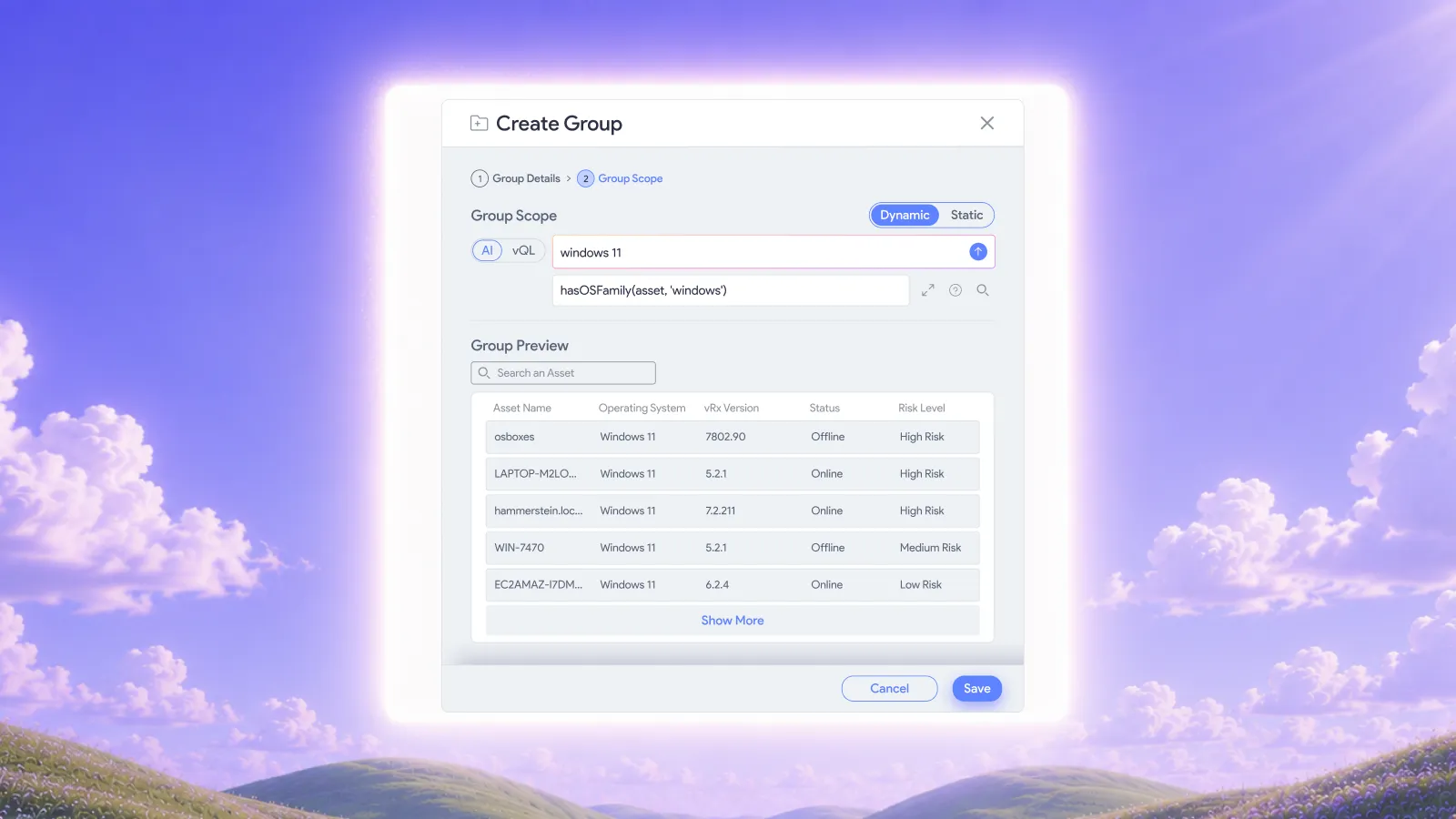
For supported software updates, vPatch provides on-demand, scheduled and rule-based deployment. Asset and software groups help scope that work, while static and dynamic patch groups organize the updates. Deployment records provide evidence of the action taken. Vicarius patch management
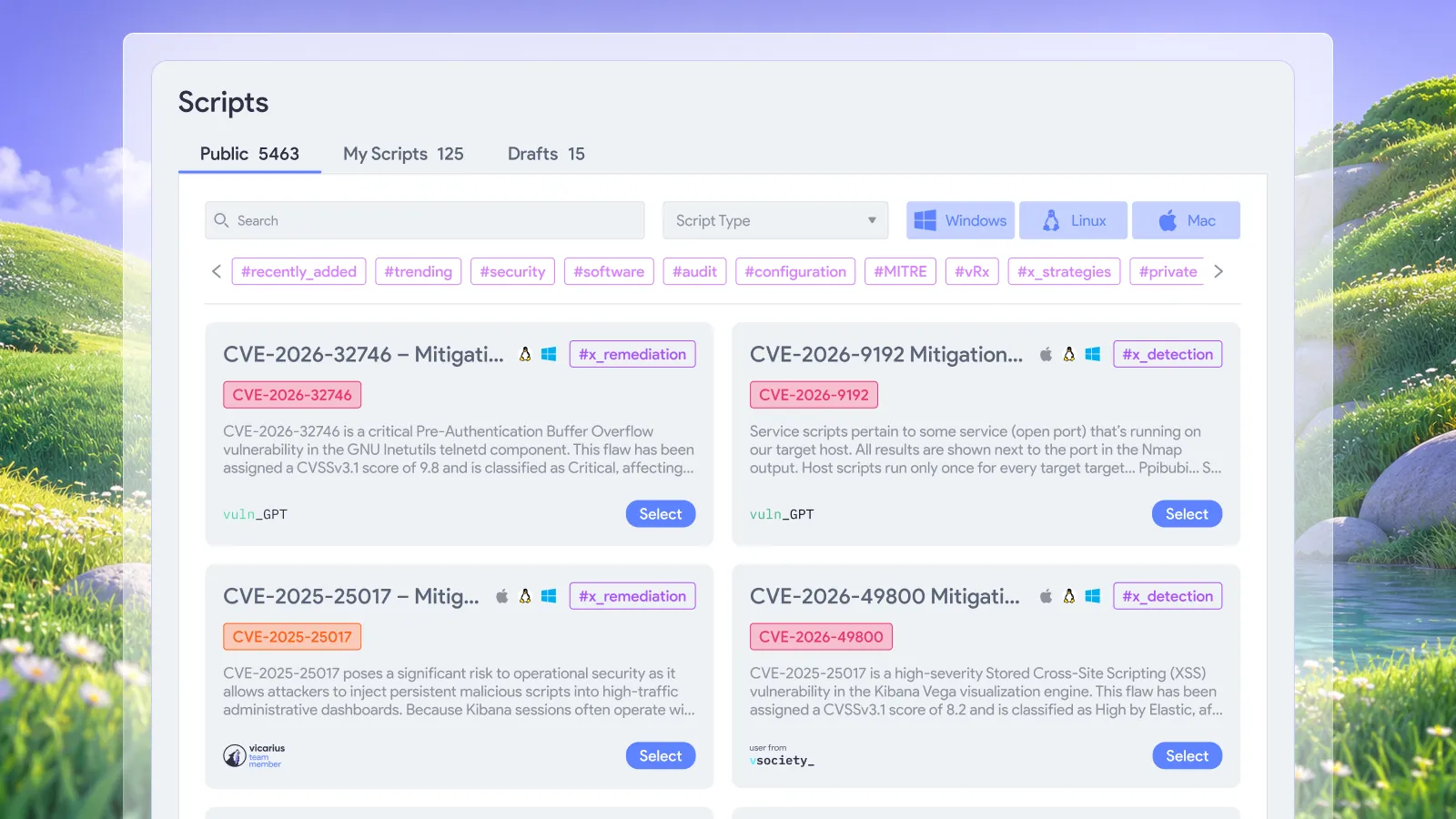
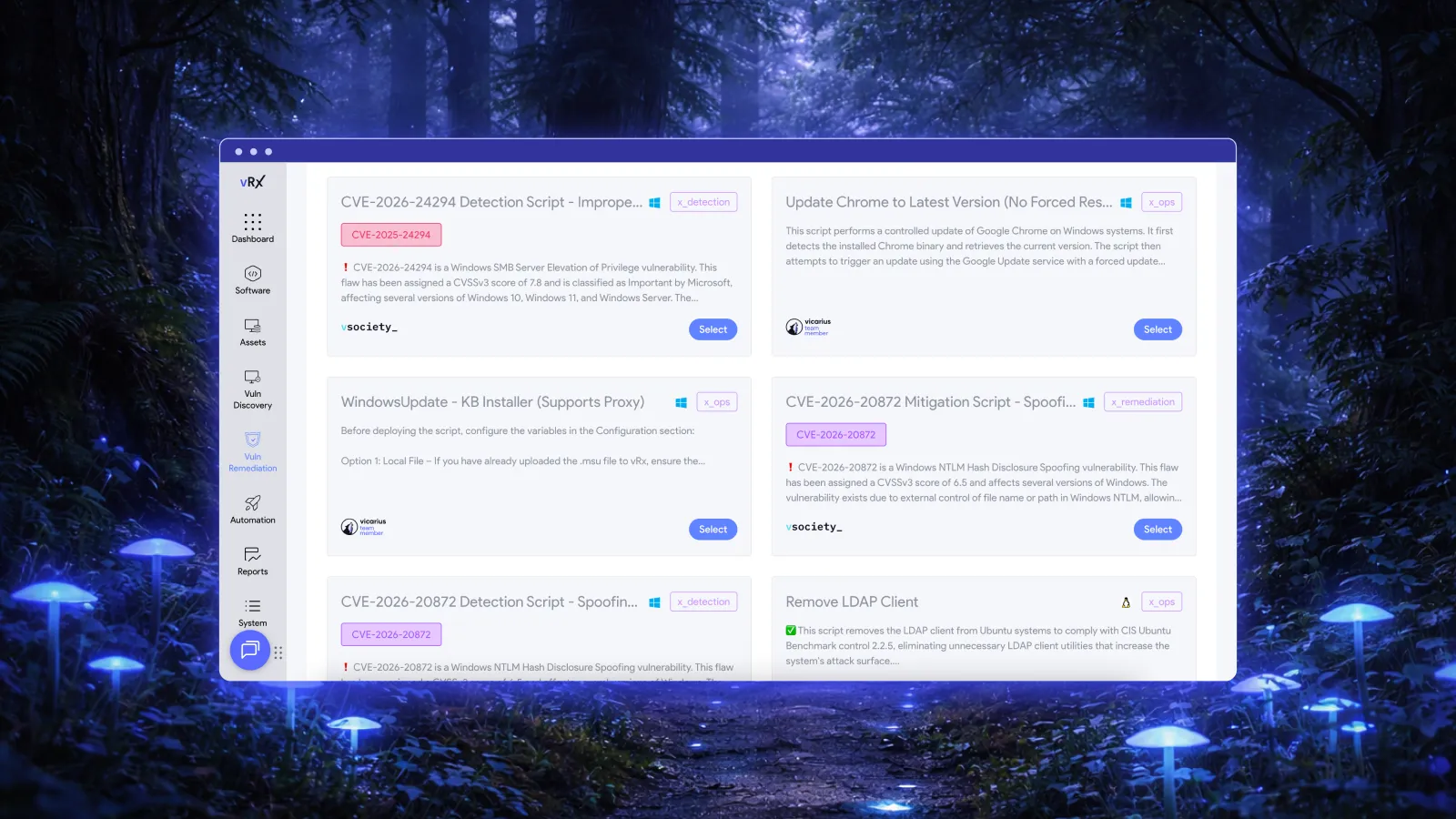
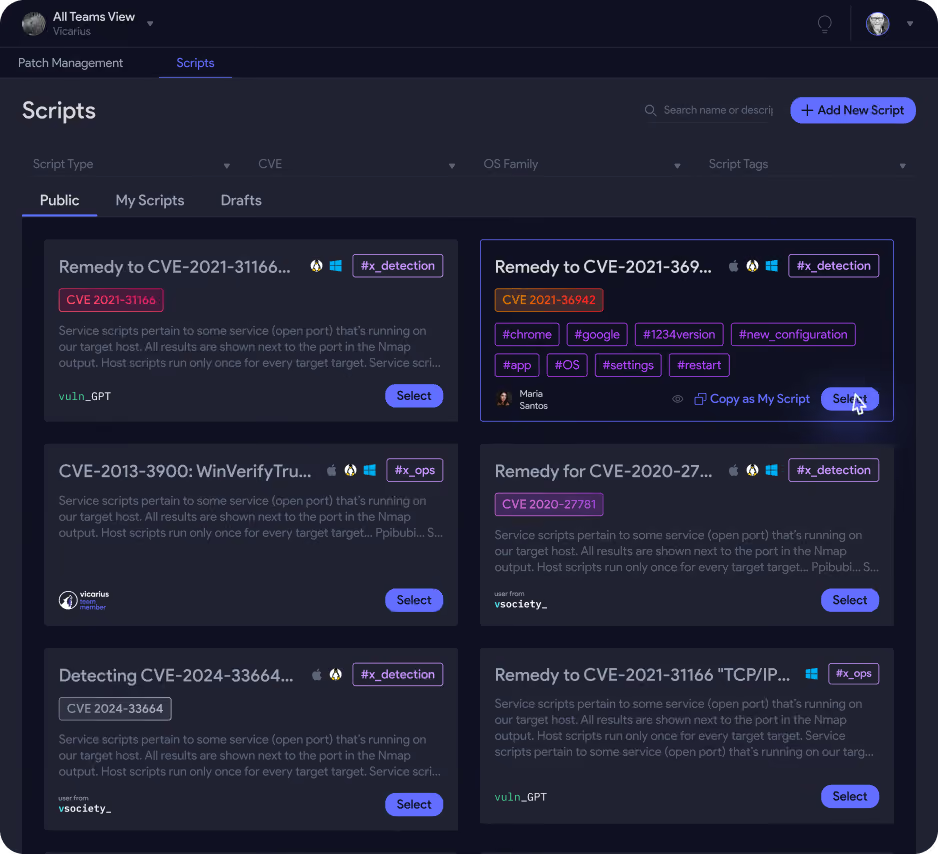
Configuration work has a different route. vScript supports custom, community and AI-generated scripts, including PowerShell, Bash and Batch. Scripts can target individual assets or groups, and execution records identify the script, affected assets and outcome. Vicarius scripting
For compliance work, use these options according to the condition that must change. The following distinctions are a practical evaluation aid, not a claim that every benchmark check has the same treatment.
| Finding or outcome | Remediation consideration | Evidence to examine |
|---|---|---|
| An outdated component needs an available update | Deploy the applicable update within the approved scope | Deployment result and the resulting installed version |
| A configuration value differs from the required baseline | Apply a tested configuration correction or suitable script | Execution outcome and a fresh assessment of the setting |
| A change would disrupt an essential dependency | Review the affected scope and decide on an exception or alternative treatment | Named owner, rationale and a review date |
| A previously corrected setting fails again | Investigate what restored the unwanted state | Change history and the next assessment result |
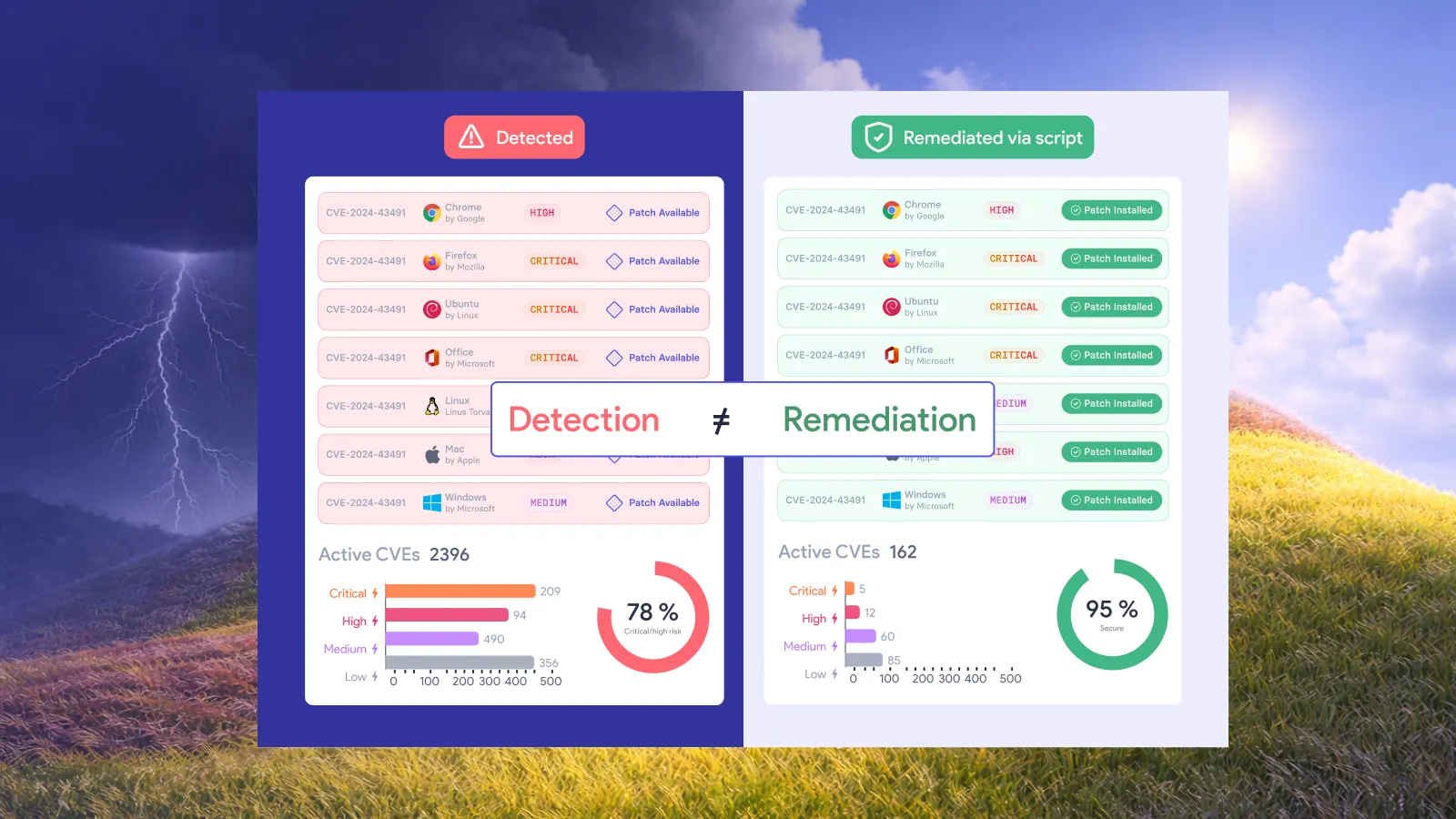
A completed action and a satisfied requirement answer different questions. Keep both visible. An execution record explains what ran; an assessment explains whether the required condition now holds.
Put repeatable work under policy
Automation is most useful when the same approved action applies repeatedly to a defined group. The team should not need to reconstruct the reasoning every time that condition appears.
For patching, vRx's documented rule-based deployment and group targeting provide a foundation for that model. A policy can govern recurring deployment work within its defined scope, while the team concentrates on failed actions and cases that need a different decision. Policy-driven patching
We recommend treating scope as part of the approval, not an administrative detail. A change proven on ordinary workstations may need separate evaluation on systems with specialized dependencies. Define the intended population before expanding an automated action.
The same discipline applies when preparing a reusable configuration fix. Establish the expected starting condition, the intended result and the circumstances that require review. This lets the organization reuse a tested decision without assuming that superficially similar assets are interchangeable.
NIST's security-focused configuration management guidance frames the objective as managing configurations to reduce risk while supporting required business functionality. That is a useful standard for automation: the corrected system still needs to do its job. NIST SP 800-128
What evidence should demonstrate that a finding is closed?
For this purpose, we recommend a simple closure test: can another reviewer identify the original condition, the corrective action and the assessed result on the same asset?
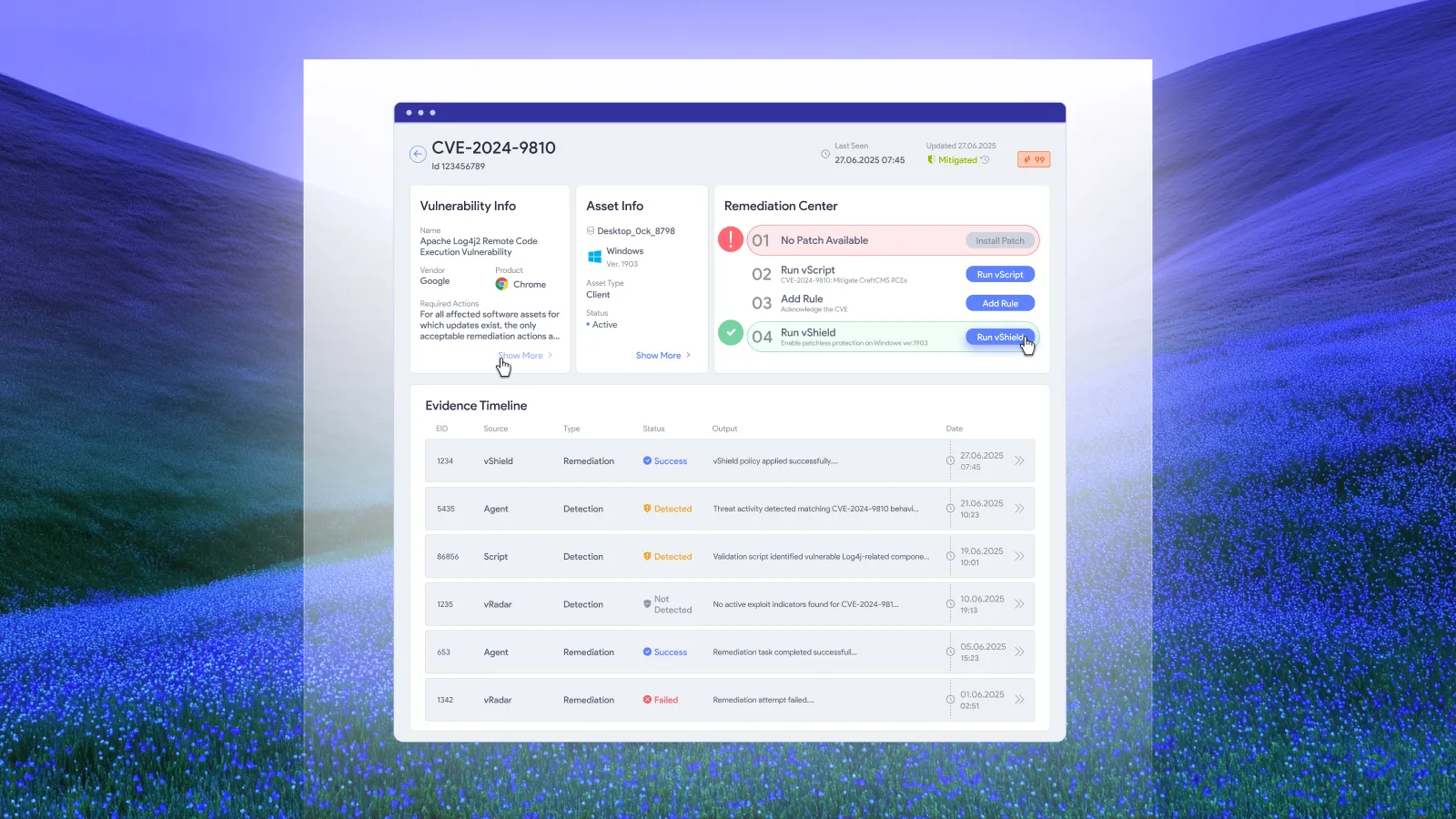
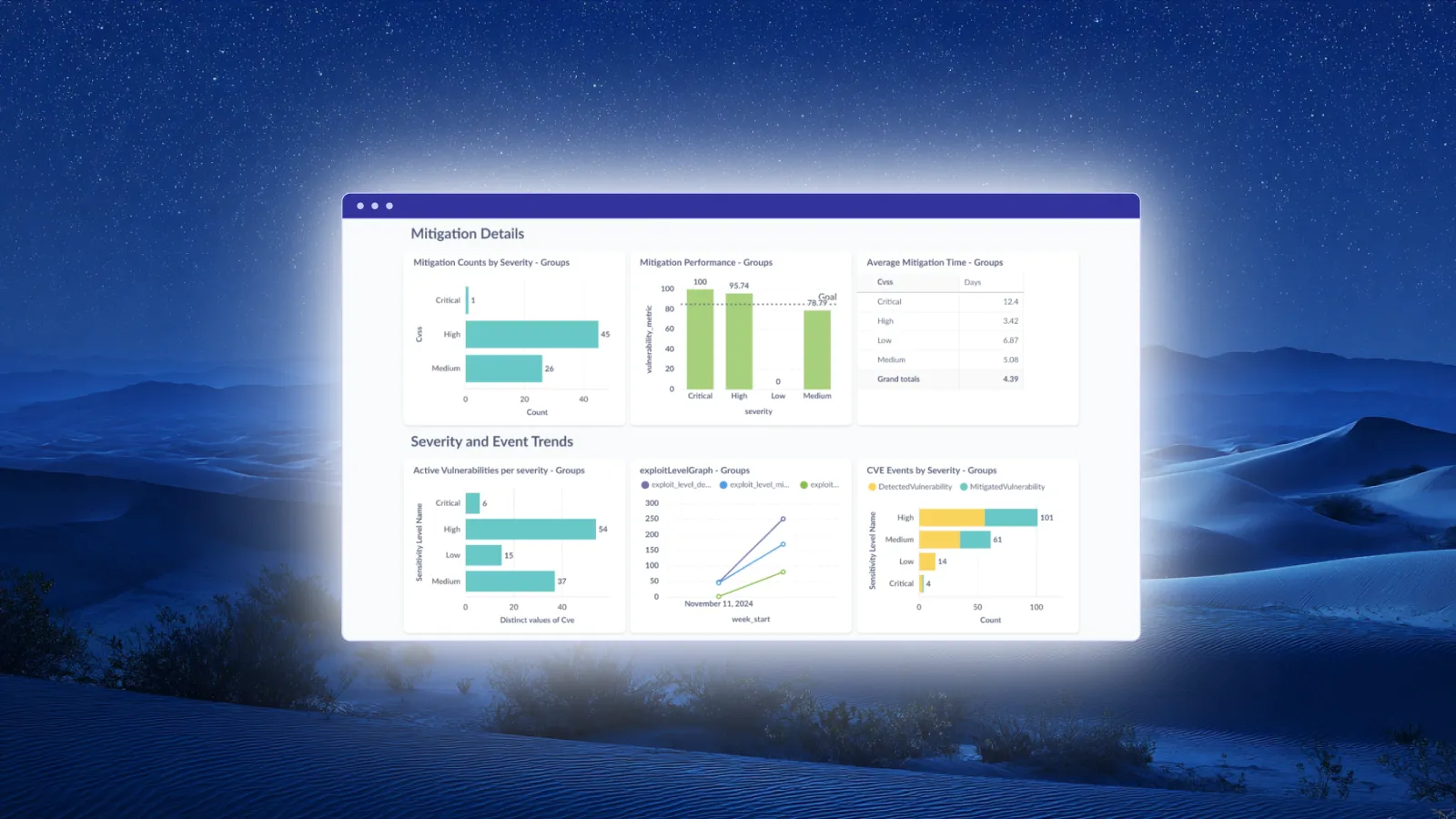
vRx documents timestamped compliance reporting, per-asset status and remediation-linked records. Those capabilities support a traceable account of what changed. Remediation-linked compliance evidence
An illustrative record might show that a server failed a configuration check, received a targeted correction and subsequently passed the same check. The value lies in the connection between those events. A screenshot of an overall score does not explain the individual change.
Keep the assessment criteria consistent when comparing results. If the benchmark version, scope or exclusions changed, explain that alongside the numbers. A reviewer should not have to guess whether a better score represents remediation or a different measurement.
For internal reporting, separate corrected findings from approved exceptions and unresolved work. All three deserve visibility, but only the first demonstrates that the assessed condition was corrected.
Keep exceptions from becoming recurring manual work
Some findings require a business decision before the standard treatment can proceed. Our recommendation is to isolate those decisions rather than make the whole asset population wait for them.
Return to the hypothetical server group. If one application depends on a setting being reviewed, that dependency belongs to a defined exception. The remaining assets can continue through their approved remediation process when the change is suitable for them.
The exception should identify who owns the remaining work and when the decision will be reviewed. Avoid treating an accepted deviation as evidence that the underlying condition has disappeared.
This is also where recurring findings become useful feedback. If the same setting repeatedly returns, investigate the process restoring it before expanding corrective automation. Otherwise, two competing configurations may keep undoing each other's work.
Frequently asked questions
Does a passing CIS assessment prove that an entire organization is compliant?
A passing result concerns the checks, assets and benchmark scope assessed. State those boundaries explicitly. CIS publishes technology-specific configuration recommendations; an asset-level result should not be expanded into an unsupported organization-wide claim. CIS Benchmarks
Can CIS remediation involve more than installing patches?
Yes. The required action depends on the failed condition. Vicarius documents patching, scripting and configuration changes as remediation routes. A software update and a configuration correction address different kinds of work. Vicarius compliance capabilities
What should teams automate first?
Start with repeatable actions whose scope and expected outcomes are understood. Our recommendation is to establish the appropriate asset group, test the change and define exception handling before extending automation. Prioritize work that can be repeated safely without a new decision for every asset.
What is the difference between execution evidence and compliance evidence?
Execution evidence records the action and its outcome. Compliance evidence relates the assessed asset state to a specified requirement. For closure, we recommend retaining both so reviewers can distinguish “the action ran” from “the condition was corrected.”
See the compliance-to-remediation connection in vRx
Bring a representative asset group and a benchmark requirement to a vRx demonstration. Examine how findings connect to remediation and how the resulting evidence supports review.
For commercial evaluation, you can also request pricing.