A virtual patch is useful only where it can interrupt the relevant exploit path. For a security architect, the first question is where protection acts: on a request before it reaches an application, or within the application’s runtime.
WAF virtual patching applies protection to web traffic passing through a web application firewall. Memory-level protection acts within the protected application’s execution environment. Choose according to the affected application, reachable paths and verified coverage, then connect protection to the permanent remediation workflow.
That distinction helps teams automate the right response. A control that blocks one route should not silently become evidence that every affected asset is fixed.
What changes when the enforcement point changes?
OWASP describes virtual patching as a protective enforcement layer that can prevent exploitation without changing the vulnerable application’s source code. Its framework uses a WAF to demonstrate interception of malicious transactions before they reach a web application. The framework dates to 2011; it is useful for the architecture distinction, not as a source of current patching statistics. OWASP’s virtual-patching framework.
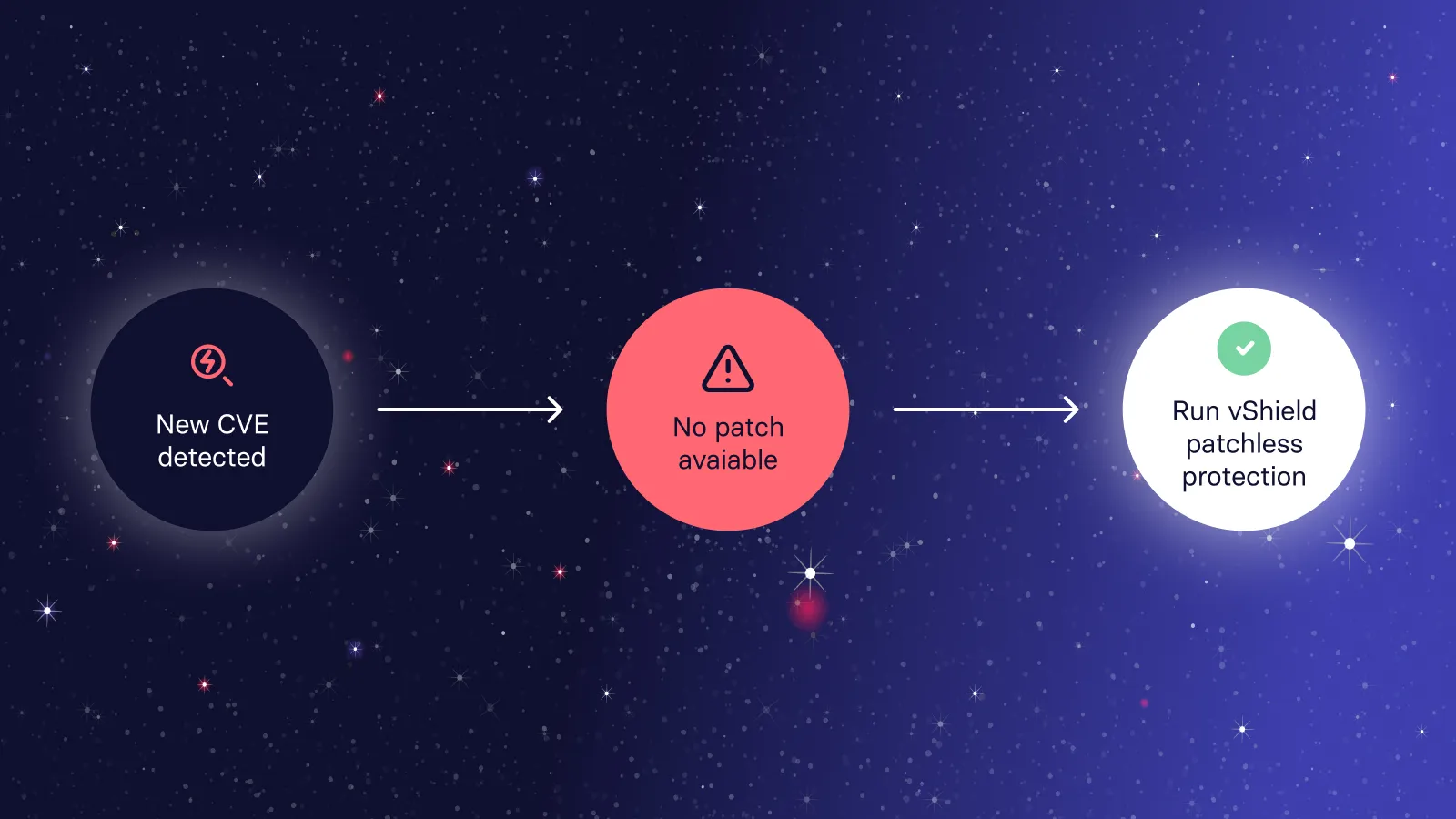
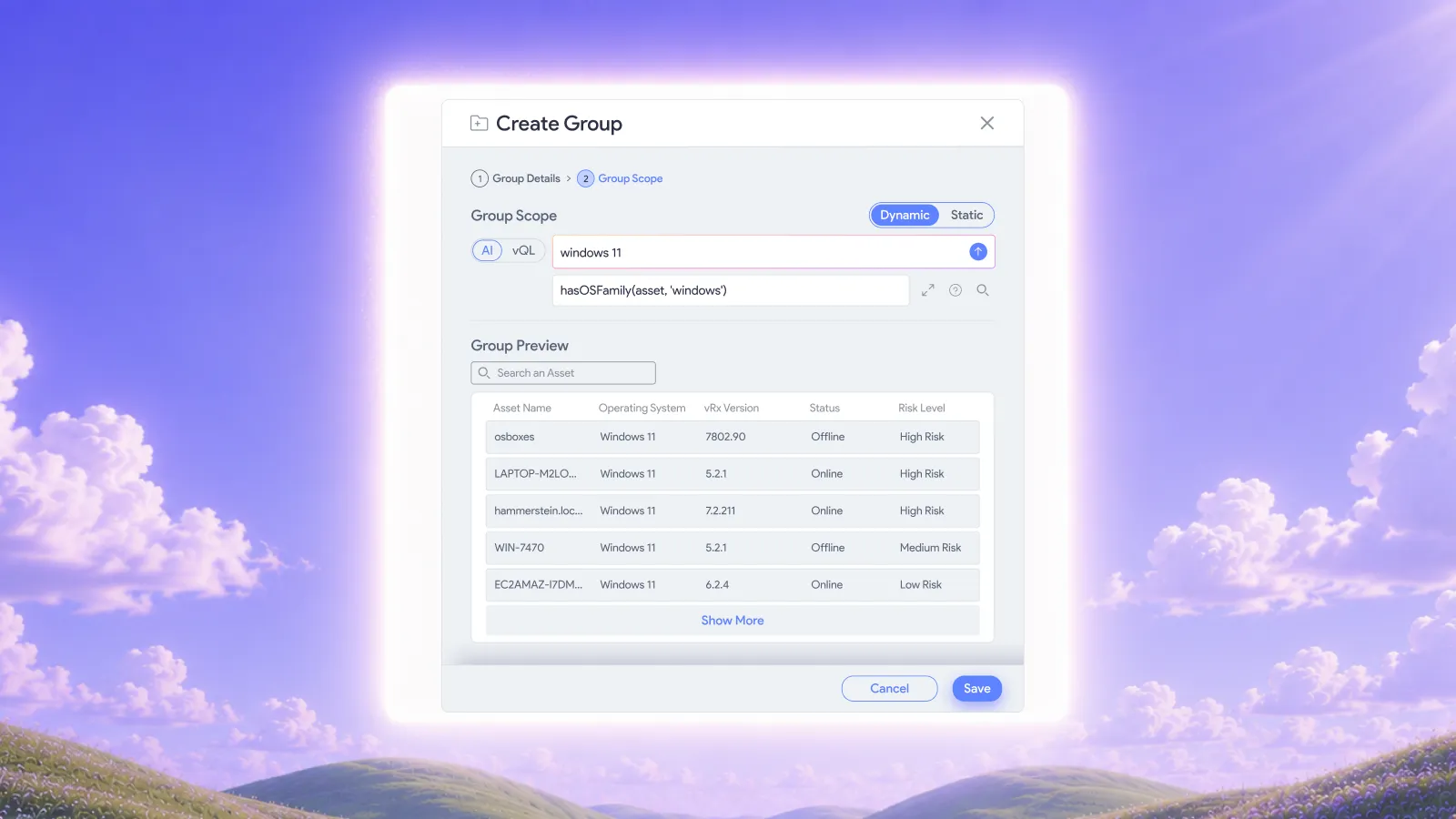
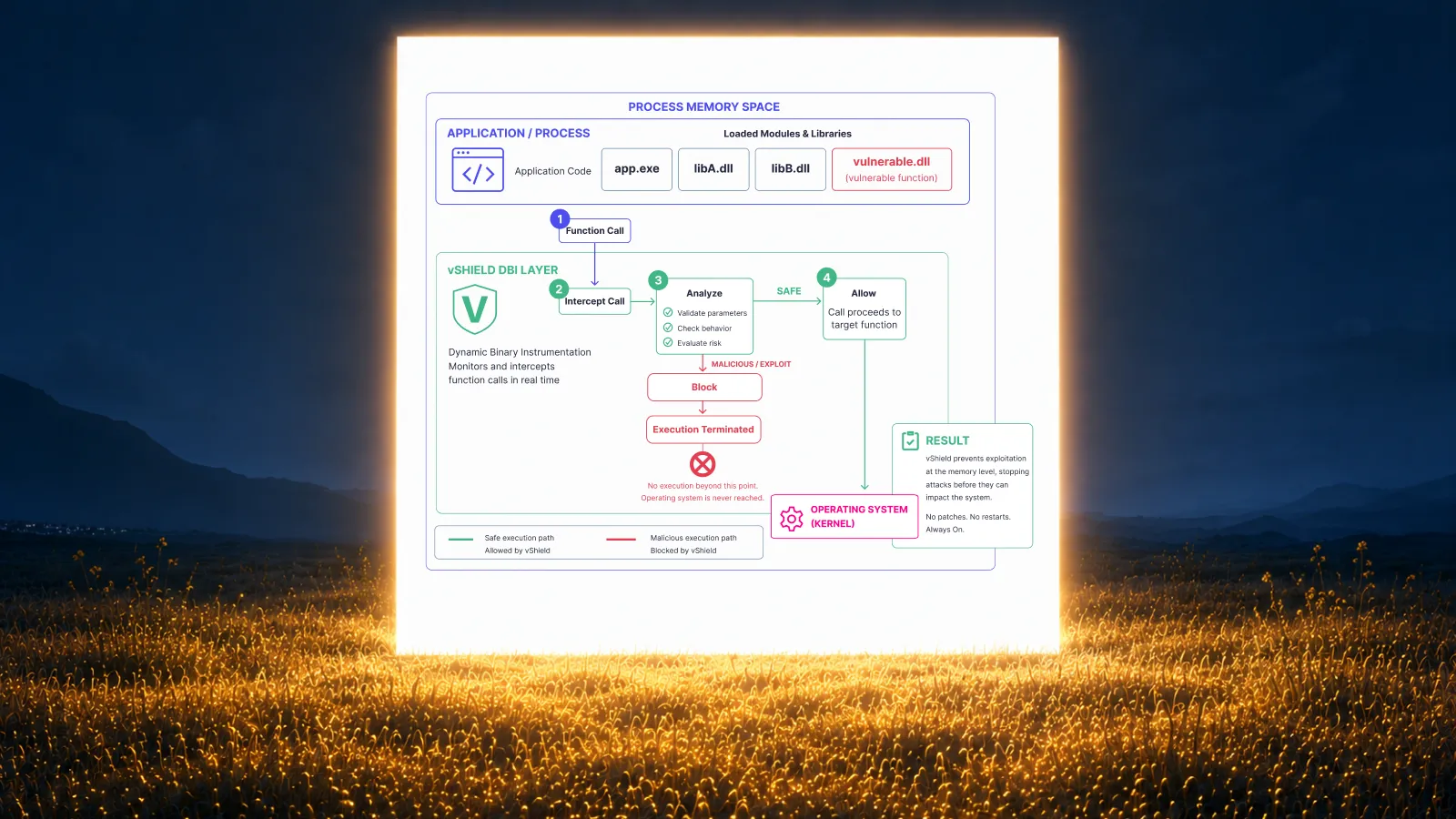
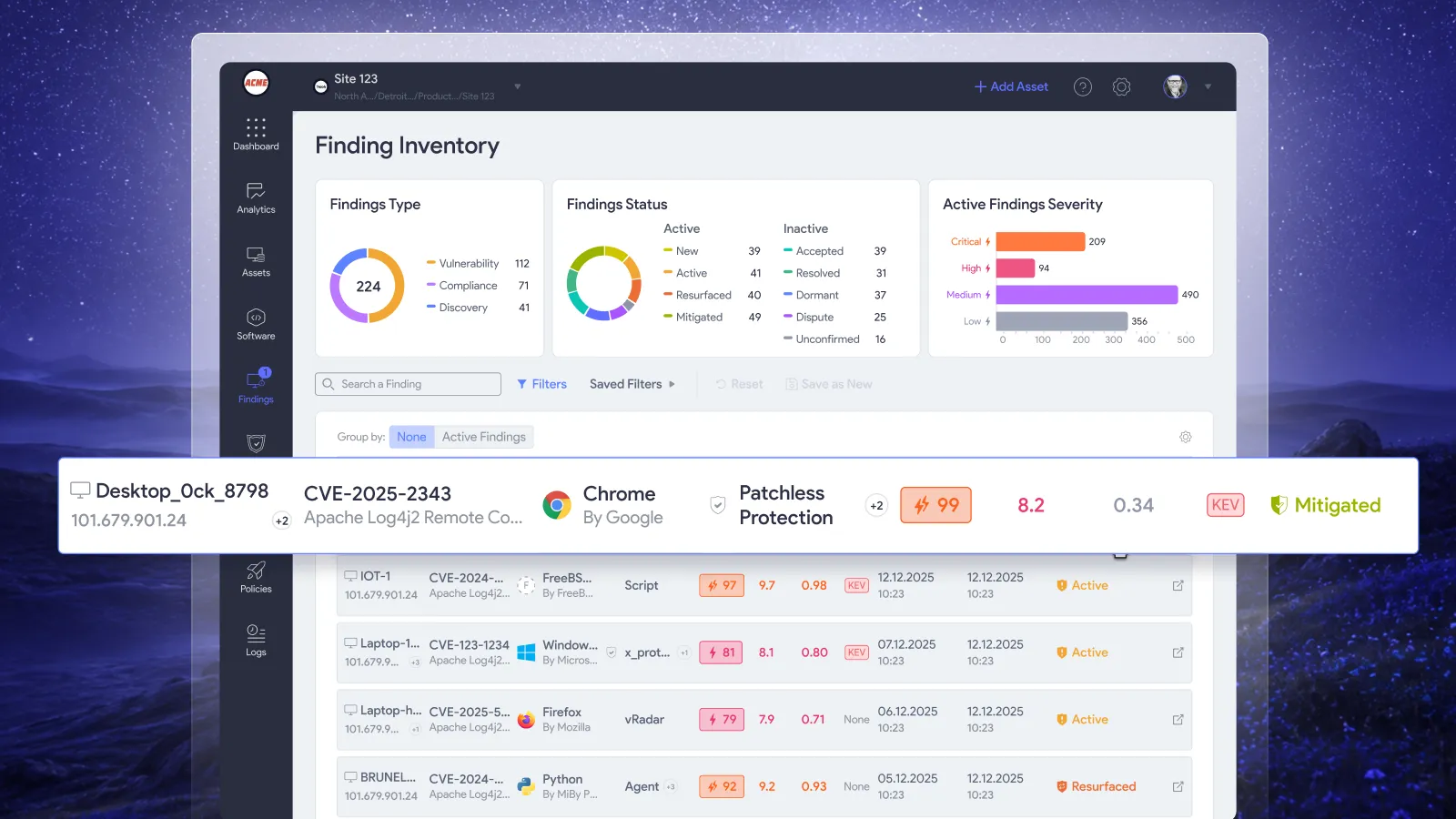
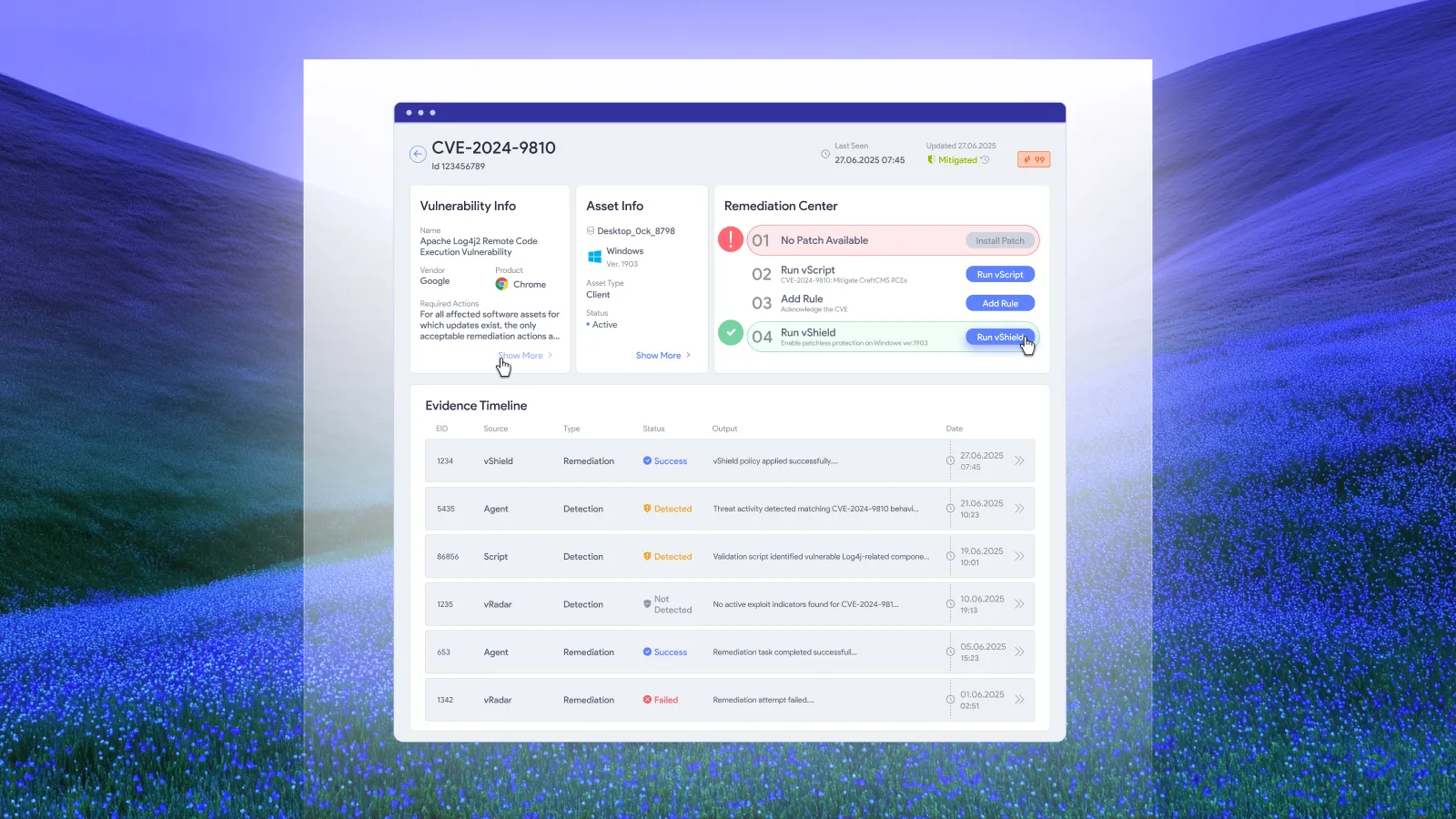
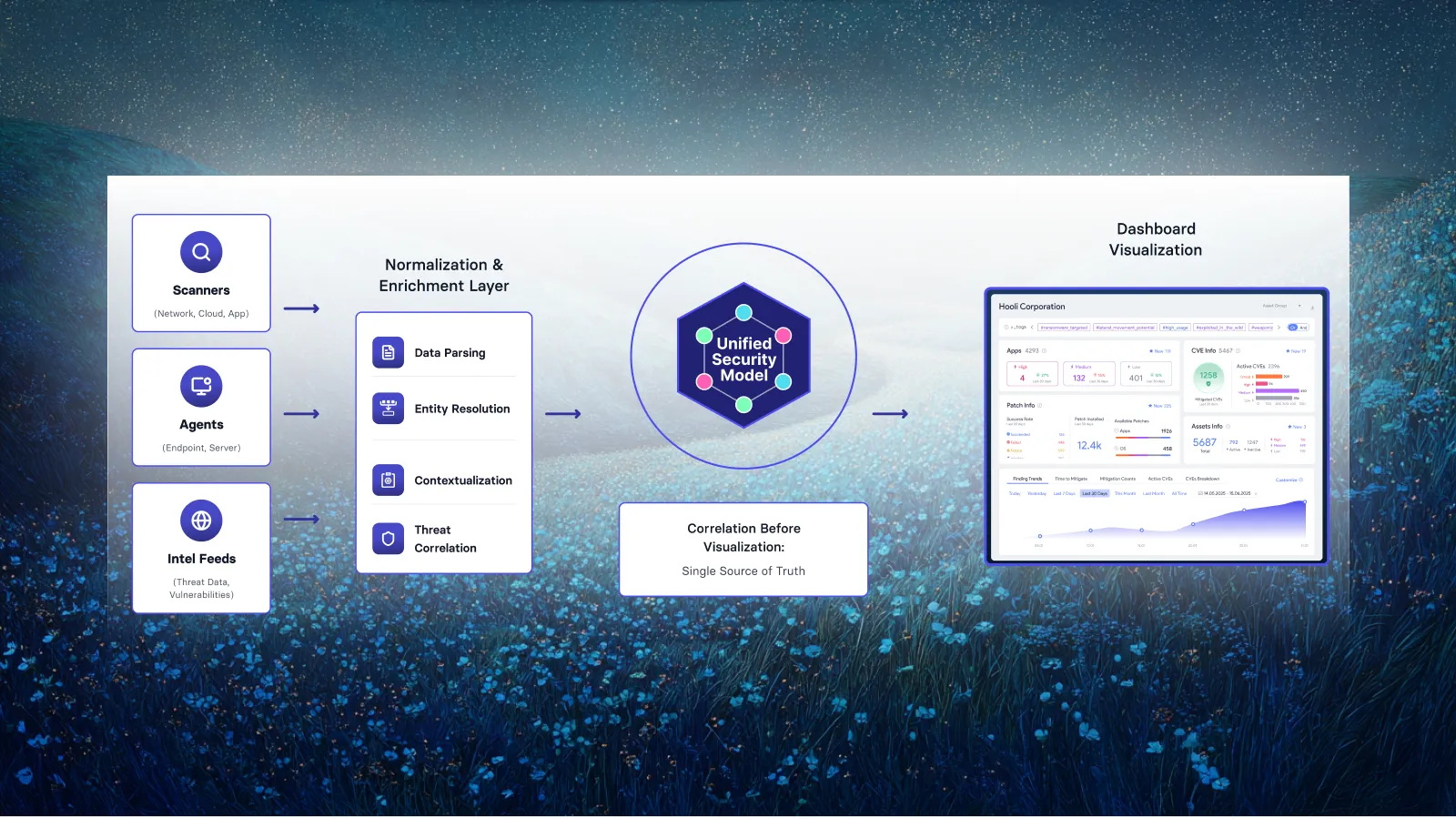
vShield Patchless Protection is Vicarius’s approach to virtual patching. It operates at the memory level rather than using a web-traffic inspection point. Vicarius documents protection without modifying the application or requiring a reboot. vShield Patchless Protection.
The evaluation therefore starts with a boundary: which requests or execution paths fall within the proposed control? A product category alone cannot answer that question for a particular deployment.
| Architecture question | WAF virtual patching | Memory-level protection |
|---|---|---|
| Where does enforcement happen? | At the web-traffic inspection point used by the WAF. | Within the protected application’s runtime. |
| What should the evaluation map? | Relevant traffic routes, inspection and rule scope. | Supported application, version and applicable exploit paths. |
| What evidence should support acceptance? | Applicable traffic reaches enforcement and the intended rule works without unacceptable business impact. | The intended application is protected and evidence supports the specific mitigation scope. |
| What remains in the remediation plan? | The affected software and its permanent fix. | The affected software and its permanent fix. |
The evaluation questions are our recommended assessment method. They are not a statement that every product in either category provides the same coverage, tests or workflow.
Start with the application path, not the product label
Consider a hypothetical customer portal. Public requests enter through a WAF, while an internal integration accesses a separate application endpoint. The operations team is evaluating protection during a delayed software upgrade.
For the WAF route, the useful question is whether the relevant request actually crosses the enforcement point with the required inspection active. The internal route needs its own assessment. A successful test through the public address does not establish what happens on a route the test never exercised.
For memory-level protection, the useful question is whether the affected application and exploit path are within the protection’s supported scope. Confirming that scope changes the decision from “we have a security control” to “this control applies to this application under these conditions.”
This example does not describe a tested CVE or a customer deployment. Its purpose is to show why architecture belongs in the remediation decision before a team treats mitigation as accepted.
A short application map can make that decision easier. Record the affected software, the service it supports, the routes being assessed and the evidence needed for each route. Keep that map close to the remediation record so a later service change does not invalidate an assumption unnoticed.
Use protection to keep remediation moving
The operational goal is a repeatable route from exposure to an accepted outcome. Protection provides an option when immediate patch deployment is unsuitable; the patch workflow should continue alongside it.
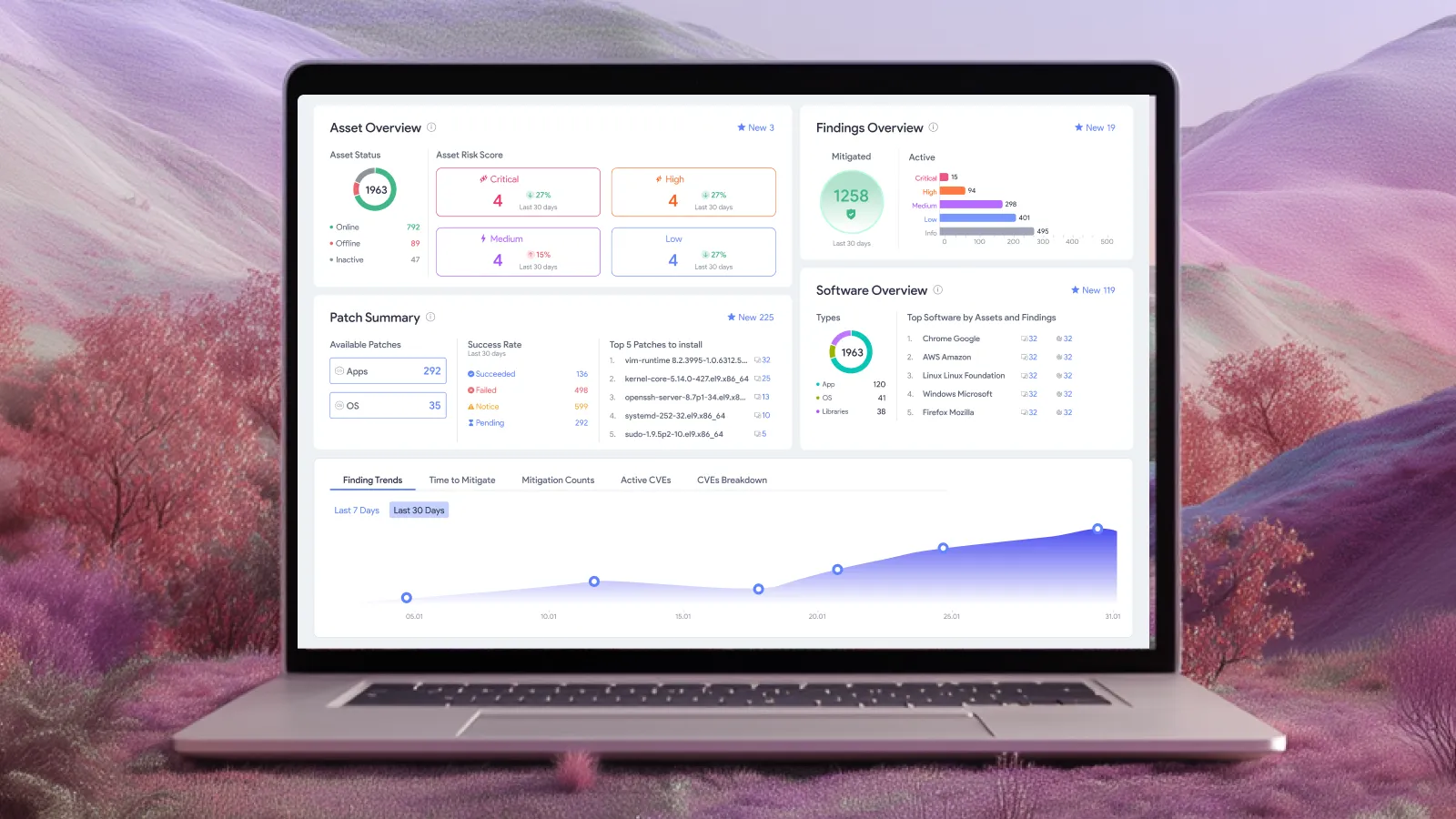
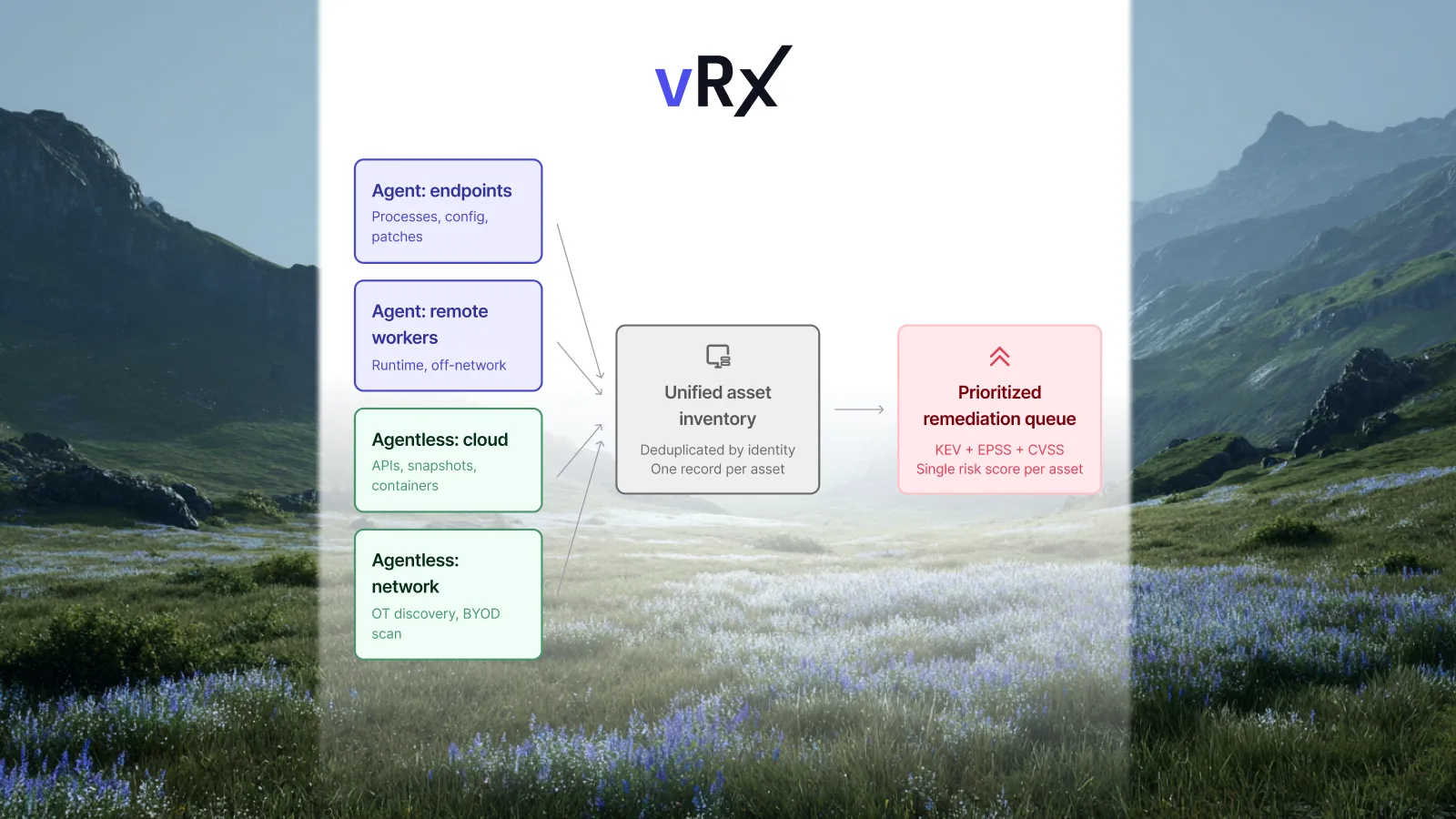
vRx supports on-demand, scheduled and rule-based patch deployment. It also supports reusable groups, allowing deployment policies to apply to the intended scope. Those capabilities let teams establish recurring patch behavior rather than authorize the same routine action for every finding. Automated patch management in vRx.
Vicarius also documents vScore-triggered vShield activation, timestamped mitigation records and a transition away from patchless mitigation after vRx applies and validates a patch. These are documented lifecycle capabilities; application and vulnerability applicability still need to be established for the deployment being evaluated. vShield activation and remediation integration.
For a remediation team, the policy decision should define which assets follow an established deployment rule and which exceptions need review. The routine path can then execute consistently. People focus on cases where the proposed action, business constraints or evidence do not fit the approved path.
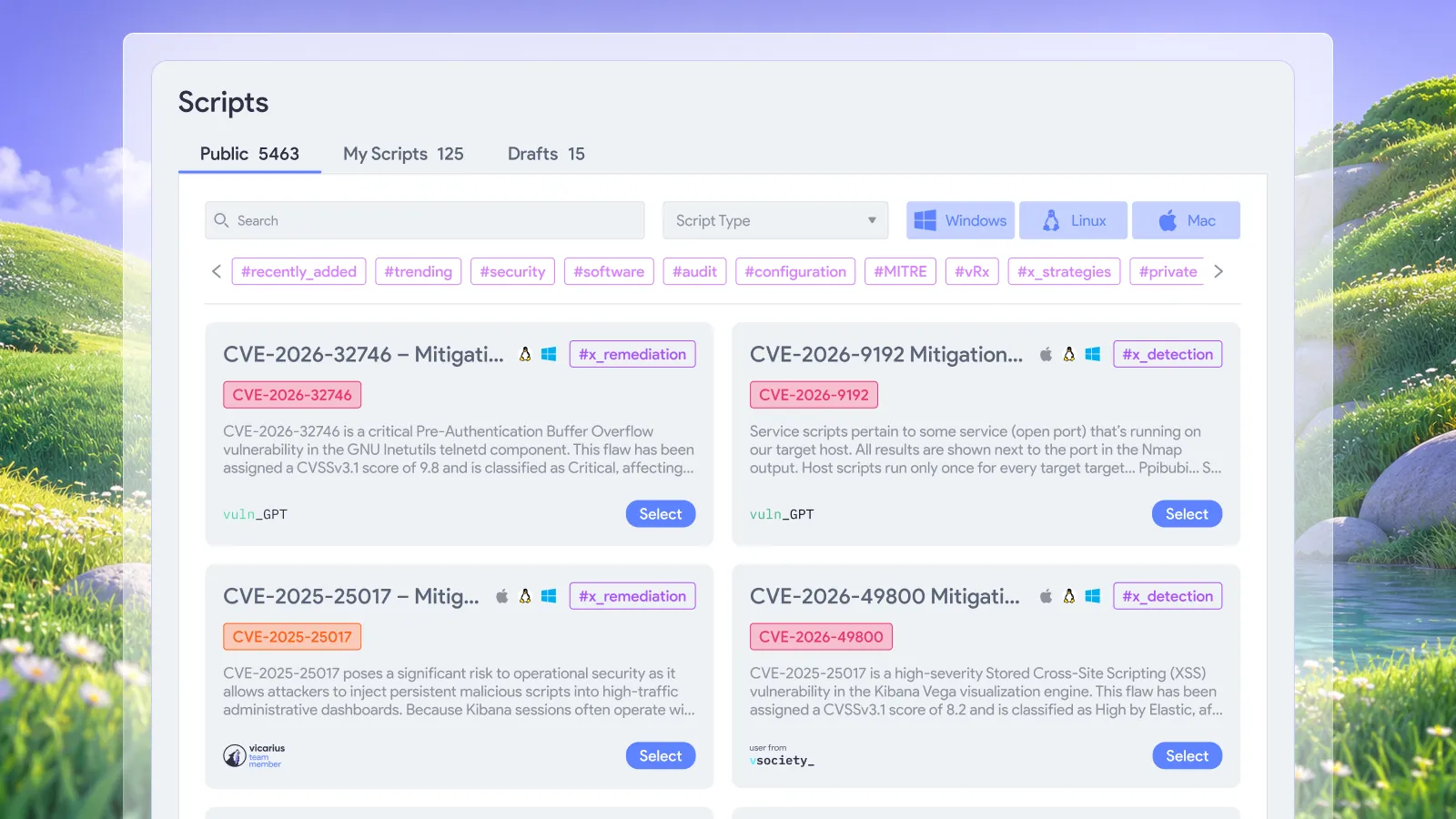
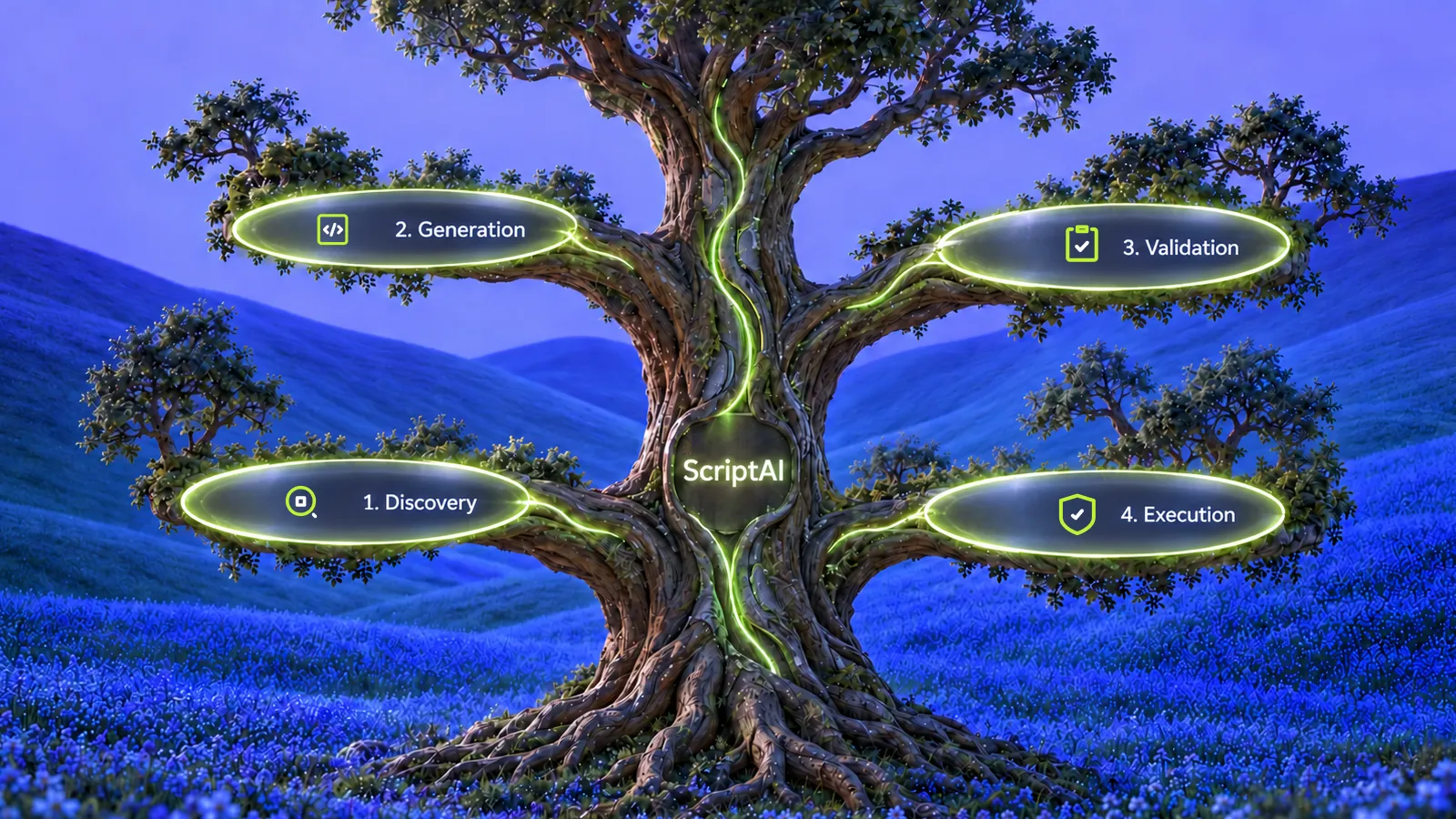
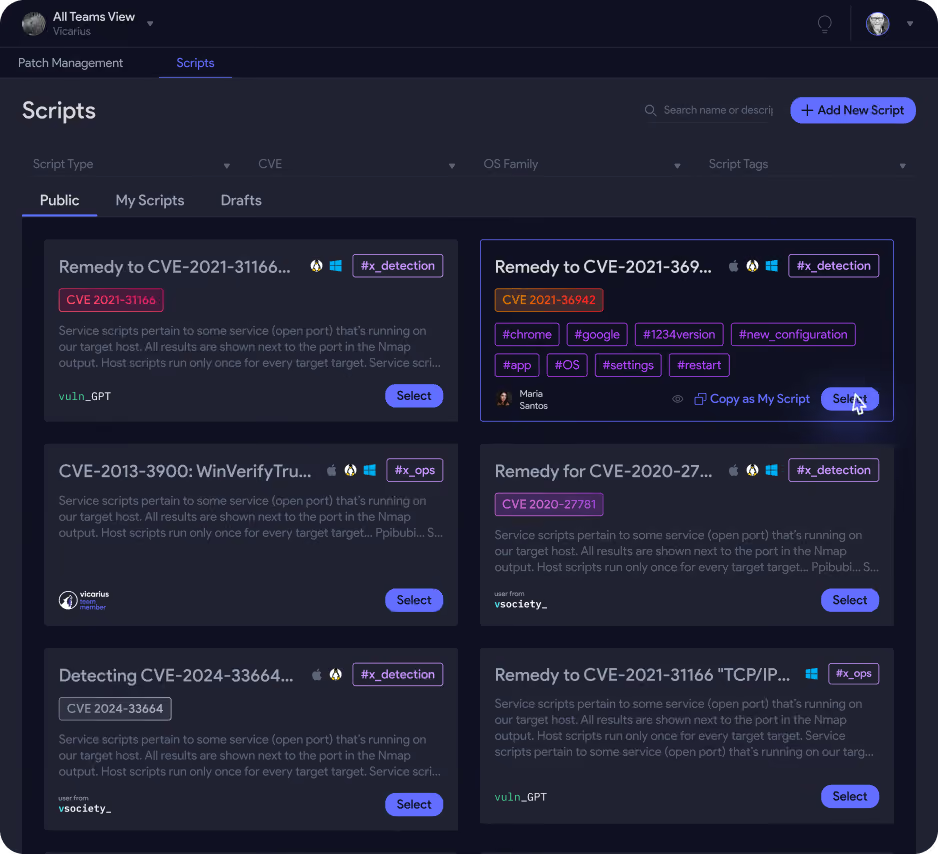
Scripts provide another remediation route. vScript supports custom, community and AI-generated scripts for detection, remediation and operational work. A validated configuration fix may be appropriate for a particular exposure; that decision should follow the relevant vendor guidance and the team’s testing process. vScript scripting capabilities.
What evidence makes the protection decision usable?
We recommend recording a bounded protection statement. Instead of “the portal is safe,” write which application is protected, the tested or documented scope, the evidence date and the event that requires reassessment.
For example: “Protection accepted for the documented application scope while upgrade validation proceeds; reassess if routing or application version changes.” This is a record structure, not a suggested security conclusion for an untested system.
The statement should make the next action obvious. If applicability remains uncertain, resolve that uncertainty or choose another suitable response. If the control is operating within its accepted scope, keep the permanent remediation work scheduled and track its completion separately.
Evidence also needs an owner. The person accepting the protection scope may differ from the person deploying the patch. Naming both responsibilities prevents an approved mitigation from becoming an indefinite waiting state.
| Decision | Evidence to retain | Next action |
|---|---|---|
| Protection applies | Application scope, relevant control state and acceptance evidence. | Continue the agreed remediation path. |
| A route is outside the assessed scope | The route and the unresolved protection question. | Assess that route or select another suitable control. |
| A patch is ready for deployment | Target scope and applicable deployment policy. | Deploy through the approved workflow. |
| Remediation is validated | Evidence of the changed software state and acceptance checks. | Reconcile temporary protection and close the relevant work. |
Evaluate the handoff as well as the control
A useful evaluation should follow one application through the full sequence. Begin with the affected state, identify the applicable protection, then show how the remediation action reaches the same asset population.
Ask the evaluator to distinguish three outcomes: an action was requested, protection is active within an accepted scope, and permanent remediation has been validated. Each outcome answers a different operational question.
Include an exception in the evaluation. A realistic exception might be an application outside the proposed scope or a deployment that requires a separate change window. The objective is to see whether the unresolved work remains visible and assigned, rather than disappearing into a general completion percentage.
This approach gives the architecture comparison a practical endpoint: fewer ambiguous handoffs between security and operations, and a clearer route to a verified fix. It also keeps the discussion focused on remediation instead of treating control installation as the final deliverable.
Frequently asked questions
Is WAF virtual patching the same as patchless protection?
Virtual patching is the broader concept. A WAF implements it at a web-traffic enforcement point. vShield Patchless Protection is Vicarius’s memory-level approach. The shared goal does not make the enforcement mechanisms interchangeable. OWASP; Vicarius.
Can protection replace the permanent patch?
Keep the permanent remediation decision open. A protective control can reduce exposure within its applicable scope while vulnerable software remains present. Record that state accurately and continue toward the appropriate software fix or replacement.
How should we compare the two approaches?
Use the same application and exposure scenario. Compare enforcement location, applicability evidence, operational acceptance and the transition to permanent remediation. Avoid comparing a tested result for one approach with a broad category claim for the other.
Where does automation belong?
Automate the approved, repeatable remediation path. Keep scope exceptions and acceptance judgments explicit. vRx’s scheduled and rule-based patching gives that path a documented execution mechanism. vRx patch deployment options.
See the remediation path in vRx
Bring an application that cannot be patched immediately. Request a Vicarius demo to explore applicable patchless protection, automated patch deployment and the evidence connecting protection to remediation.