

A cloud security finding marked “high” still leaves the operator with several questions. Is the affected workload running? Who can reach it? What could an attacker access? Which change would address the problem without interrupting the service?
Cloud vulnerability management needs to connect those answers to action. A useful workflow identifies affected resources, checks exposure and business impact, assigns a response, and verifies the result. Severity helps inform that process. It cannot complete it.
The practical standard should be straightforward: another engineer should be able to read the finding, inspect the evidence, and understand why the team chose to fix it now, mitigate it temporarily, or investigate further.
What is cloud vulnerability management?
Cloud vulnerability management is the ongoing work of identifying, assessing, prioritizing, and addressing vulnerabilities in cloud-hosted systems.
For operational purposes, the workflow also needs to consider configuration and identity weaknesses that affect whether a software vulnerability can be exploited. These are different finding types. Keep that distinction in the record rather than treating every cloud alert as a Common Vulnerabilities and Exposures entry, or CVE.
Start by establishing responsibility for the affected layer. AWS’s shared responsibility model, for example, distinguishes the infrastructure AWS operates from customer responsibilities that vary with the service. For Amazon EC2, customers manage the guest operating system, installed applications, and security-group configuration. Managed services divide responsibilities differently. AWS shared responsibility model.
An effective operating process should therefore answer:
• Which resource and component does the finding concern?
• Who owns the relevant configuration or software?
• What evidence establishes its exposure?
• What response is appropriate?
• How will the team confirm that response worked?
Without those answers, a ranked list remains a list of work to investigate.
Why severity alone cannot set the remediation order
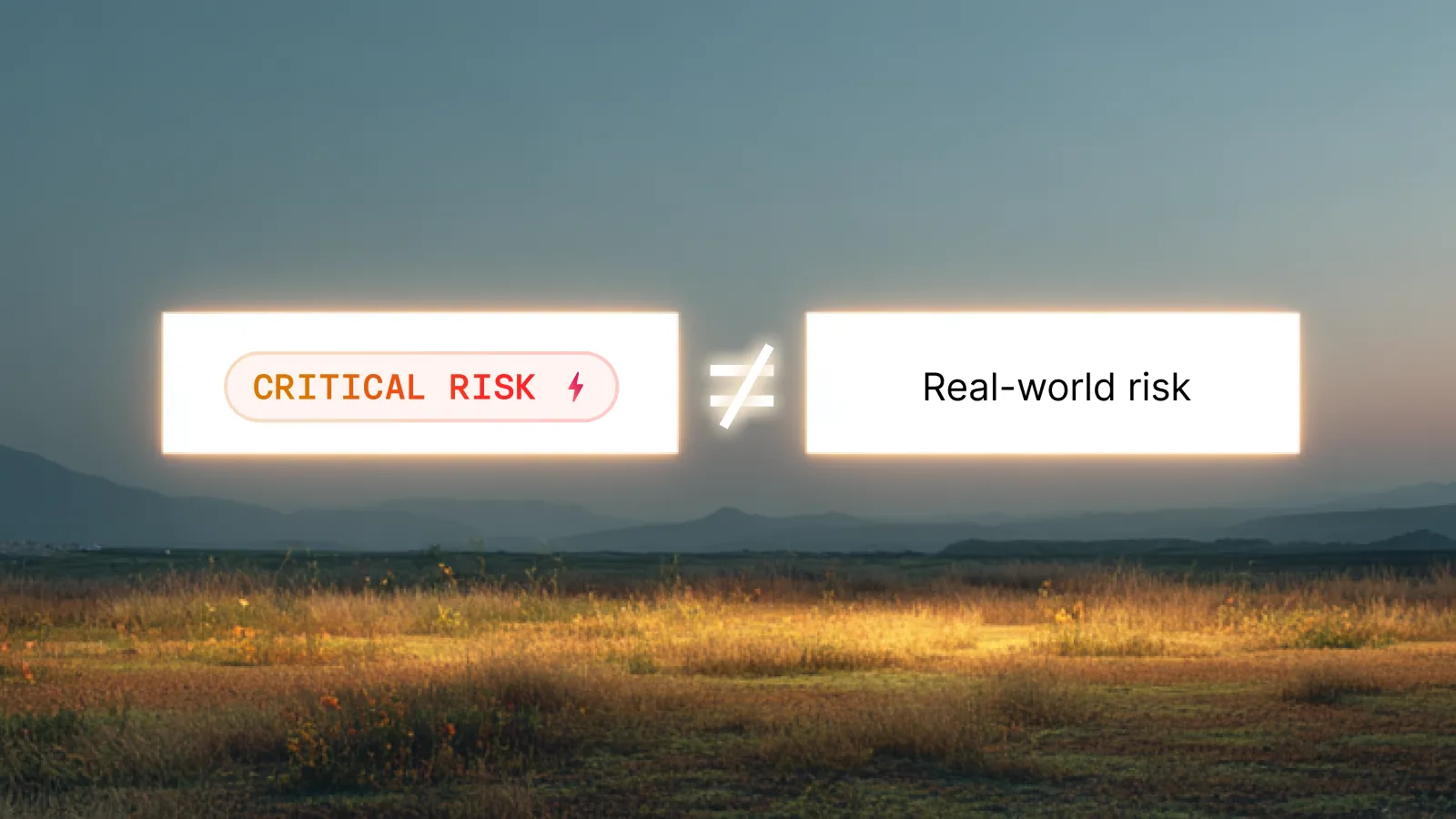
Severity describes the technical seriousness of a vulnerability under stated assumptions. Local priority also depends on the environment and the consequences for the organization.
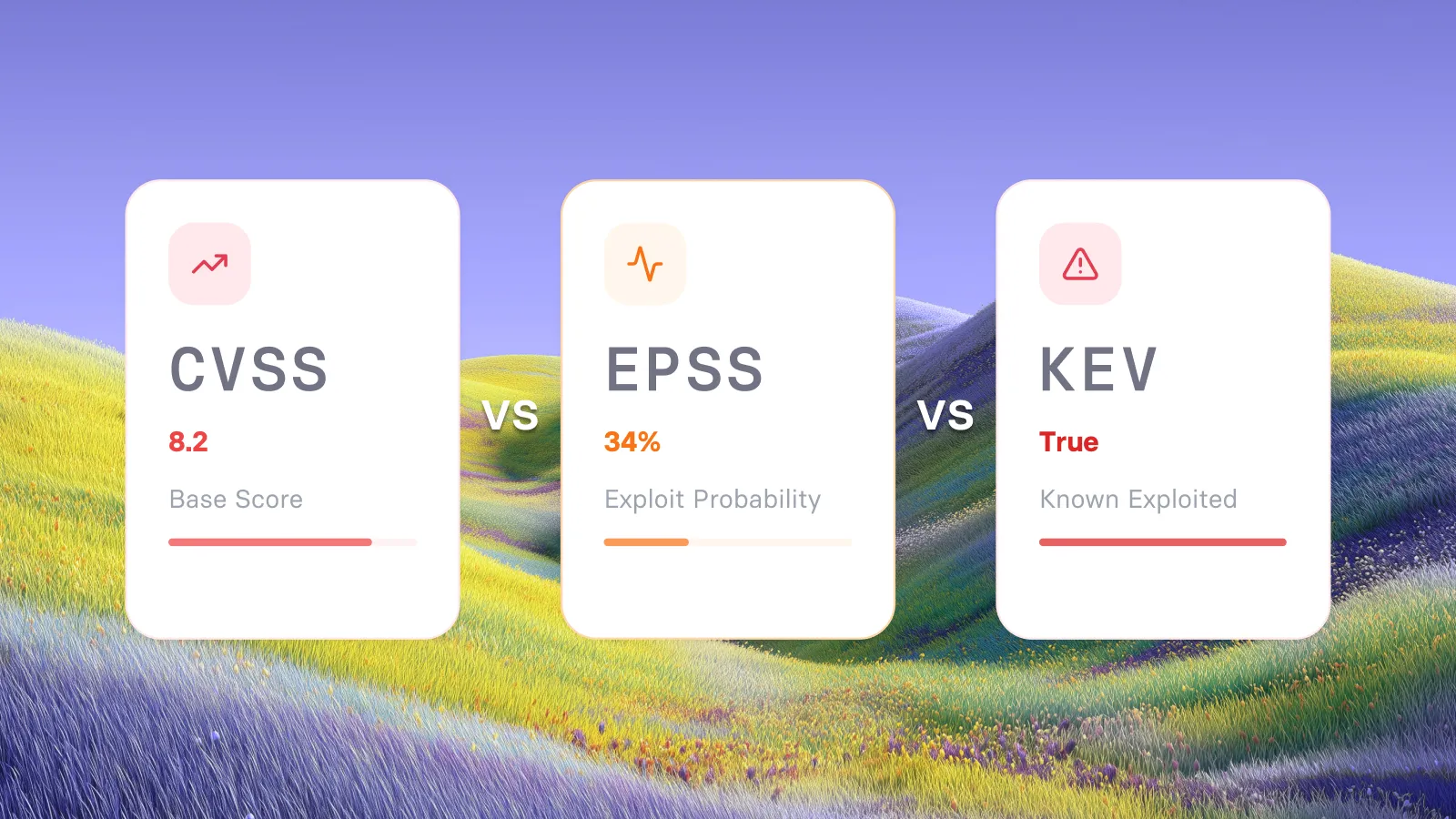
The Common Vulnerability Scoring System, or CVSS, explicitly supports this distinction. Its Base metrics describe intrinsic characteristics, while Threat and Environmental metrics allow additional context. A Base score should not be presented as a complete organizational risk assessment. FIRST CVSS v4.0 specification.
Consider two deployments of the same vulnerable application. One supports a customer-facing service with access to sensitive records. The other is an isolated test instance containing synthetic data.
The software flaw may be identical. The response decision should consider the different access paths, privileges, business consequences, and available changes.
Isolation also needs a precise meaning. “Not reachable from the internet” answers one exposure question. An assessment may still need to consider access from connected workloads, administrative systems, or compromised identities.
Record the boundary you checked. Avoid turning a limited observation into a claim that the entire resource is safe.
What new research adds, and what it does not prove
An October 6, 2026 preprint by Leon Goldberg and Gal Engelberg, affiliated with Sola Security, examined 9,967 findings rated HIGH by two cloud-security platforms across eight production environments.
Their contextualization agent changed 75.1% of the ratings: 58.5% downward and 16.6% upward. The study was predominantly AWS-based.
The authors also reported 99.4% confirmation of decisive environmental facts among findings that their live checks could assess. That result concerns factual support, not proof that the revised severity grades were correct. The validation covered one platform and selected resource types.
The study did not measure remediation outcomes or establish whether upgraded findings were subsequently exploited more often. It is vendor-affiliated preprint research, not an independently established performance benchmark. Read the study and its limitations.
The operational question worth pursuing is narrower: what evidence should a team require before changing a finding’s priority?
An evidence checklist for cloud vulnerability prioritization
The following checklist is a recommended operating method, not a scoring model validated by the study.
Use it to make decisions inspectable. A team should be able to explain both an urgent escalation and a decision to defer work.
| Decision question | Evidence to retain | What should stop the decision |
|---|---|---|
| Is this the affected resource? | Account, region, resource identifier, component, and finding reference | Evidence belongs to another instance or an outdated resource |
| Does the vulnerable condition apply? | Relevant advisory, package or configuration state, and assessment time | Applicability is unresolved or the check lacked access |
| Who can reach the affected function? | Relevant network paths, identity permissions, and service exposure | “Private” or “internal” is asserted without checking the relevant path |
| What would compromise affect? | Service owner, data sensitivity, privileges, and dependencies | Business impact is guessed from a resource name |
| Does a compensating control address this scenario? | Control configuration, scope, and an appropriate validation result | The control exists, but its relevance or effectiveness is unverified |
| What action will change the condition? | Selected fix or mitigation, owner, acceptance criteria, and review date | The ticket requests investigation but records the issue as resolved |
Keep uncertainty visible. If a check cannot establish whether a service is exposed, record that as an unresolved question. Do not convert missing access into evidence of low risk.
A lower priority also needs a reason with a limited scope. “The relevant external path is blocked by this verified control” is reviewable. “Low risk because internal” leaves too much unstated.
A practical cloud vulnerability management workflow
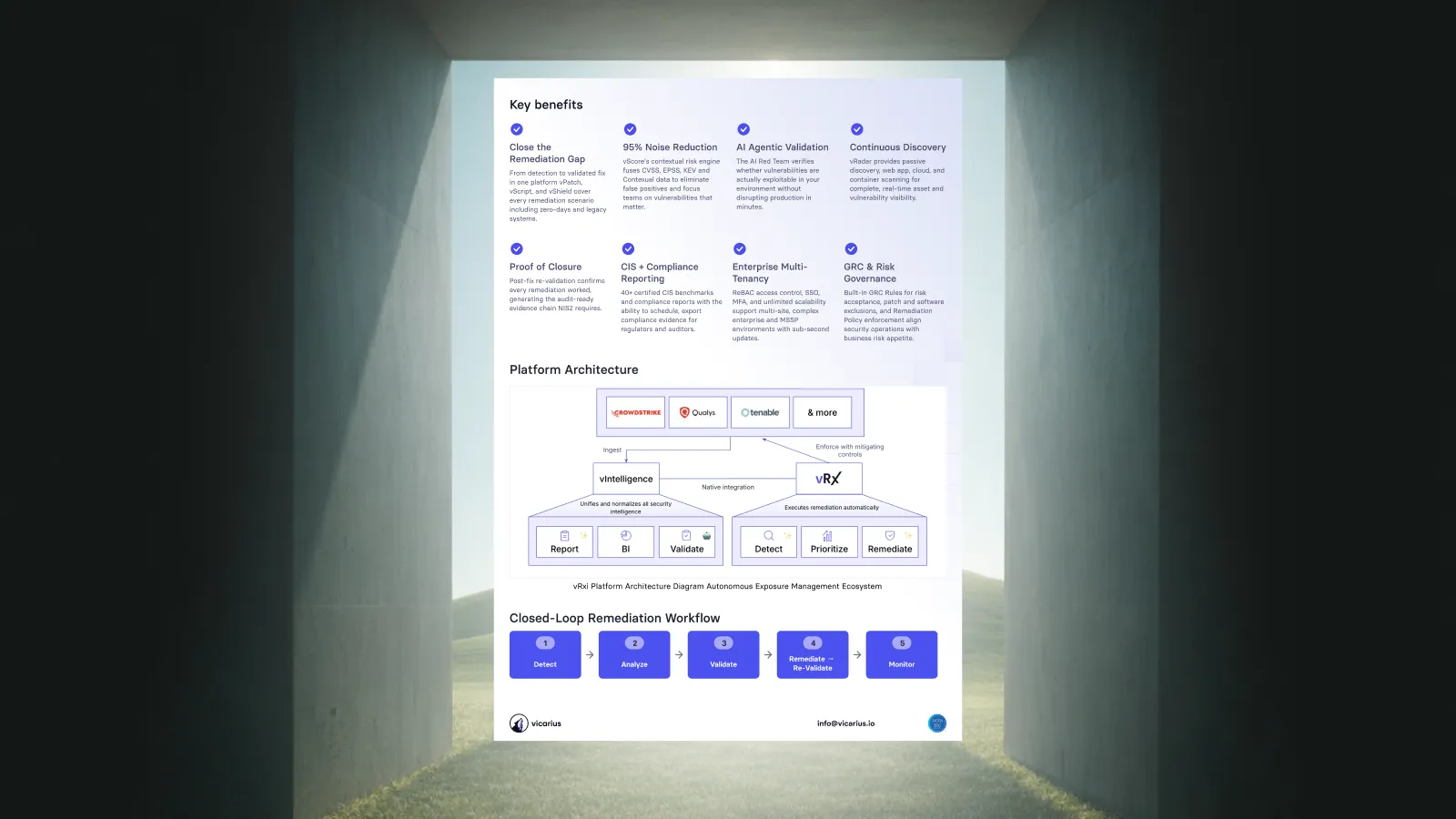
1. Establish the asset and finding
Record the stable resource identifier, account, region, owner, and affected component. For a containerized workload, include the deployed image identity where relevant.
Separate the original finding from the team’s interpretation. Preserve the vendor severity and assessment evidence alongside the local priority. This lets a reviewer understand what changed without reconstructing an earlier dashboard.
Check whether the finding concerns a software vulnerability, a configuration weakness, an identity permission, or a combination. That determines which team can address it and what evidence will support closure.
2. Investigate the relevant exposure
Write the scenario being assessed before collecting more data.
For example: “Could an unauthenticated external client reach the affected administrative function?”
Then gather evidence that answers that question. A security-group rule alone may not establish the complete path. The investigation should account for the relevant service, routes, intermediaries, and access requirements.
Keep investigations bounded. The goal is to resolve the decision, not accumulate every available field about the asset.
3. Choose a response and assign ownership
Use explicit response states. A practical set is:
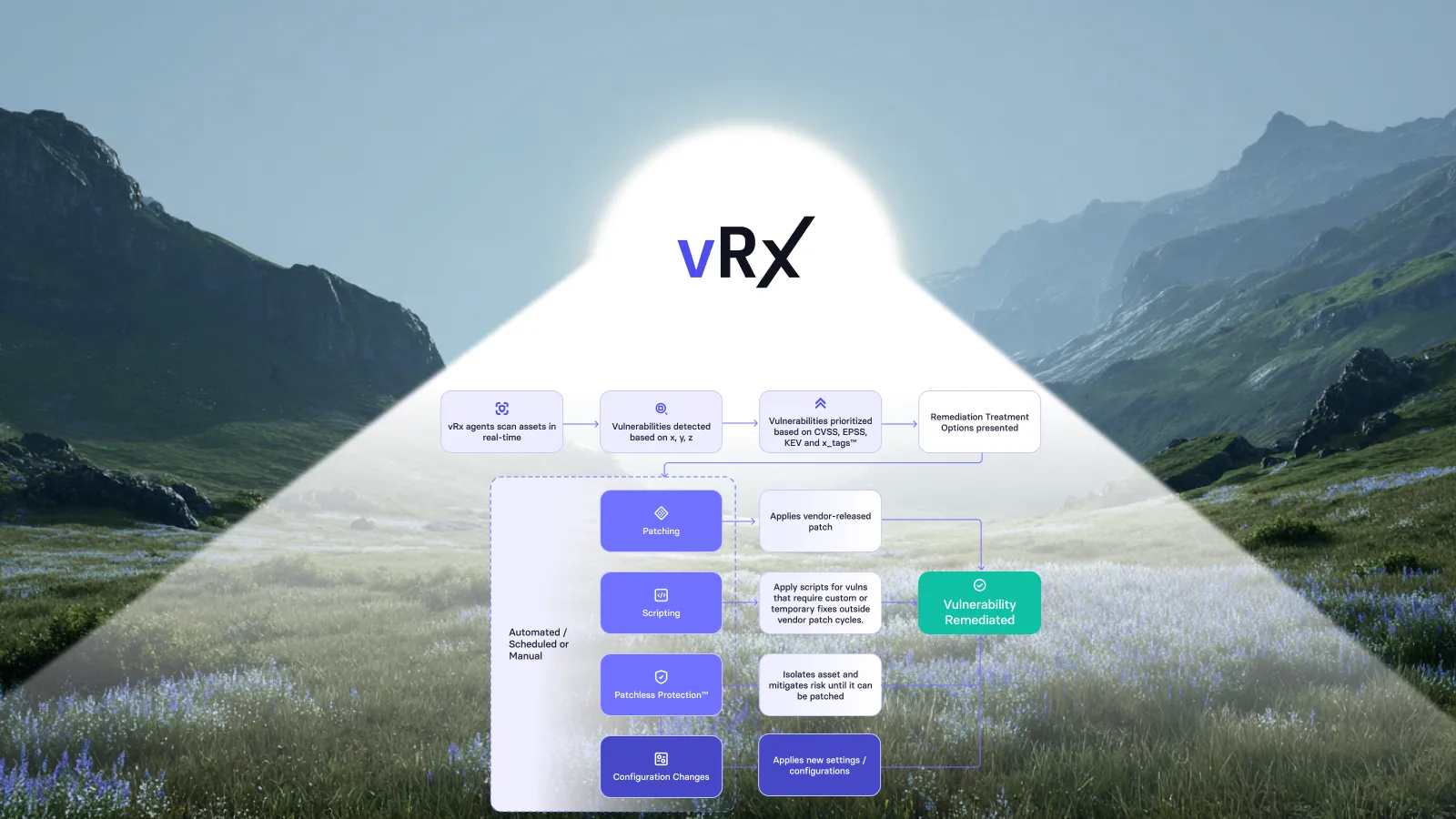
• Fix: remove the vulnerable software condition or correct the underlying configuration.
• Mitigate: apply a relevant temporary control while a permanent fix remains outstanding.
• Investigate: resolve missing or conflicting evidence.
• Accept temporarily: document an authorized exception, its scope, and its expiry.
These are recommended workflow labels, not universal industry categories.
A change in priority should not silently change the finding to “fixed.” Likewise, an exception should identify the person authorized to accept the risk rather than leaving that responsibility with whoever edited the ticket.
4. Verify the selected action
Define the acceptance criteria before making the change.
For a software update, determine what will demonstrate that the corrected component is active. For an access restriction, specify which path should be blocked and which legitimate functions must still work.
Keep security validation and service-health checks separate. Both may be necessary, but they answer different questions.
A patch verification checklist can support the software-update portion of this process. Configuration and identity changes need checks suited to their own failure conditions.
5. Revisit decisions when their assumptions change
Give temporary decisions a review date and an explicit trigger for reassessment.
Examples include a new public endpoint, a changed service role, removal of a compensating control, or deployment of a different workload image.
A record should say what would invalidate its conclusion. That makes future review more useful than a recurring reminder to “check risk.”
Two worked examples: the same label, different actions
These examples are hypothetical. They illustrate the recommended method, not measured customer outcomes.
Example one: an unused permissive security group
A cloud rule reports a security group that permits administrative access from any address.
The reviewer confirms that it has no current attachments in the relevant account and region. The infrastructure owner also checks whether deployment definitions could attach it to a future resource.
Those observations may support lower immediate urgency than an equivalent rule protecting a running, exposed service. They do not make the permissive configuration desirable.
The recommended action is to remove or correct the unused configuration through the normal change process. Record the attachment check and investigate references that could recreate the problem.
Example two: a vulnerable service behind a private endpoint
A second finding concerns vulnerable software on a service with no direct public endpoint.
The investigation establishes that an application workload can reach it and that the service identity has access to sensitive production data.
The lack of direct internet exposure does not resolve that scenario. The team should assess the reachable path and consequences, then select a supported software fix or relevant temporary restriction.
The decision record should explain which path remains possible, what the change addresses, and how the team will verify it. “Private endpoint” is context, not a closure reason.
Measure completed action separately from reclassification
For this workflow, track three different outcomes:
• Findings whose priority changed after review.
• Findings whose exposure was reduced by a verified mitigation.
• Findings closed after the underlying condition was addressed and checked.
Reporting them separately prevents administrative progress from being mistaken for remediation.
Useful supporting measures include the age of unresolved investigations, overdue exceptions, and the proportion of closure records with adequate evidence. Define the scope and denominator for each measure.
Avoid setting “percentage downgraded” as a success target. The purpose of review is to make a defensible decision, including escalation when the evidence warrants it.
Frequently asked questions
Is cloud vulnerability management the same as cloud security posture management?
They overlap, but the work is not identical. Vulnerability management focuses on identifying and addressing vulnerabilities. Posture management examines configurations against security requirements. A practical cloud workflow should connect relevant findings while preserving their type, owner, and remediation criteria.
Should a high CVSS score always mean emergency remediation?
A high score is an important input, not a complete local response decision. Assess the affected deployment, threat information, exposure, and business consequences. CVSS provides Threat and Environmental metrics to supplement its Base assessment. Apply your organization’s response requirements rather than inventing a universal deadline. FIRST CVSS specification.
When is lowering a finding’s priority defensible?
Under the method proposed here, lowering priority requires current evidence that changes the relevant scenario, a documented rationale, and a review trigger. The decision should identify what remains unresolved. Lower priority does not mean the vulnerability was fixed.
What if the team cannot patch immediately?
Evaluate a supported mitigation that addresses the specific exposure, such as restricting the relevant access path or disabling an affected function where appropriate. Test the change safely, retain the permanent fix as outstanding work, and assign an expiry or review date. Do not assume a generic control covers every vulnerability.
Can AI decide which cloud findings to remediate?
AI-assisted analysis can be evaluated as part of triage, but recommendations should retain inspectable evidence and uncertainty. Before authorizing changes, define which actions require human approval, what permissions are available, and how failures will be detected and reversed. Assess the quality of the decision separately from the fluency of its explanation.
Put one high-severity finding through the checklist
Choose one open cloud finding at your next triage review. Record its affected resource, relevant exposure, business consequence, selected action, and acceptance criteria.
Ask a colleague who did not investigate it to review the record. If they cannot explain why the action follows from the evidence, identify the missing fact before changing the finding’s status.

























.webp)















%20Signals%20a%20New%20Era%20of%20Supply%20Chain%20Risk.webp)






.webp)