

A recurring fix needs a defined second run. After the first execution corrects a setting, the next execution should recognize that state and leave it intact. If the first run stops halfway through, the next must determine what remains before making another change.
Design remediation scripts around the state they must establish: inspect the current condition, confirm that the asset is eligible, change only what is necessary, and verify the result. Repeated execution should converge on the approved state without adding duplicate changes or repeating disruptive side effects.
That design supports automated remediation. Engineers review the logic and its permitted scope; routine executions handle known conditions. Unexpected states deserve investigation rather than another blind attempt.
What makes a remediation script safe to repeat?
Idempotent behavior means repeating an operation produces the same intended state as completing it once. For a configuration correction, setting an approved value is different from appending another entry every time the script runs.
Microsoft's PowerShell Desired State Configuration documentation illustrates a useful separation: Get retrieves state, Test evaluates whether it matches the desired configuration, and Set applies the configuration. That is a design reference for this discussion, not a claim that every remediation script uses DSC. Microsoft's Get-Test-Set model.
Our recommendation is to review the full operation, including its side effects. A script can leave the same final setting while restarting a service unnecessarily on every run. The configuration may be repeatable while the operational behavior remains unsuitable for frequent execution.
Define success accordingly. A successful second run can mean that the desired state was already present and no change was needed. Treating every no-change result as a failure creates unnecessary investigations and encourages repeated writes.
Where vScript fits in automated remediation
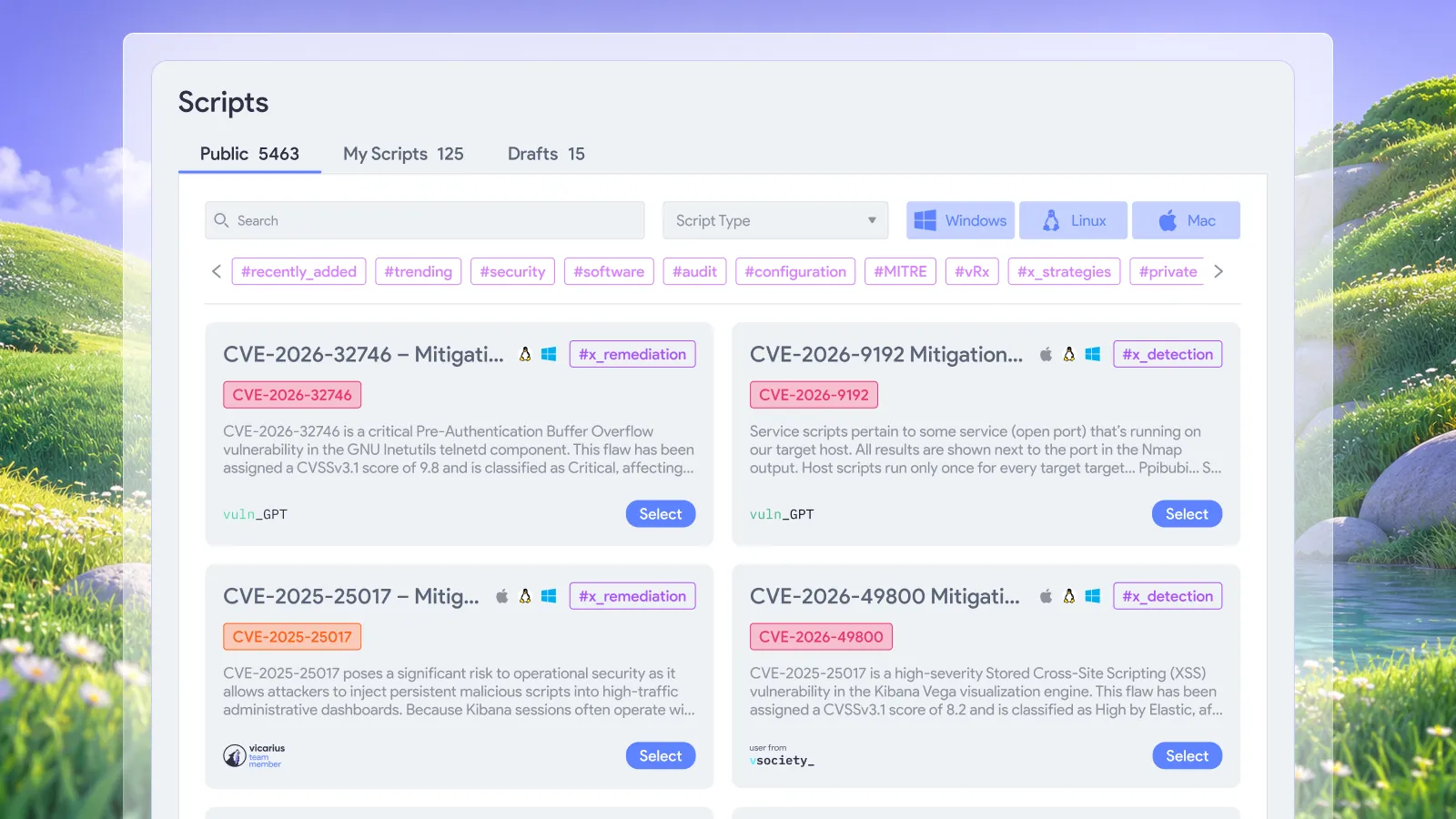
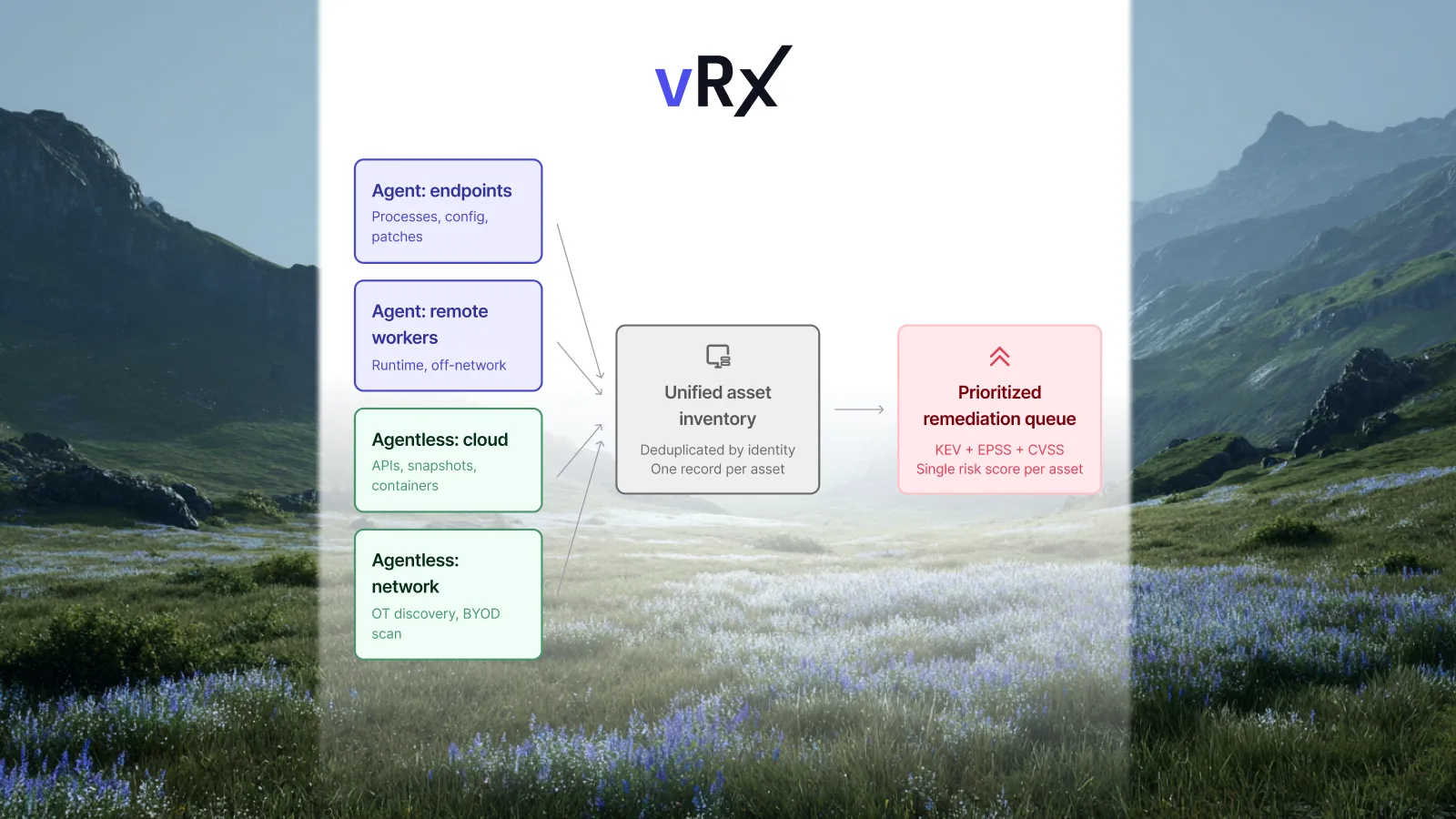
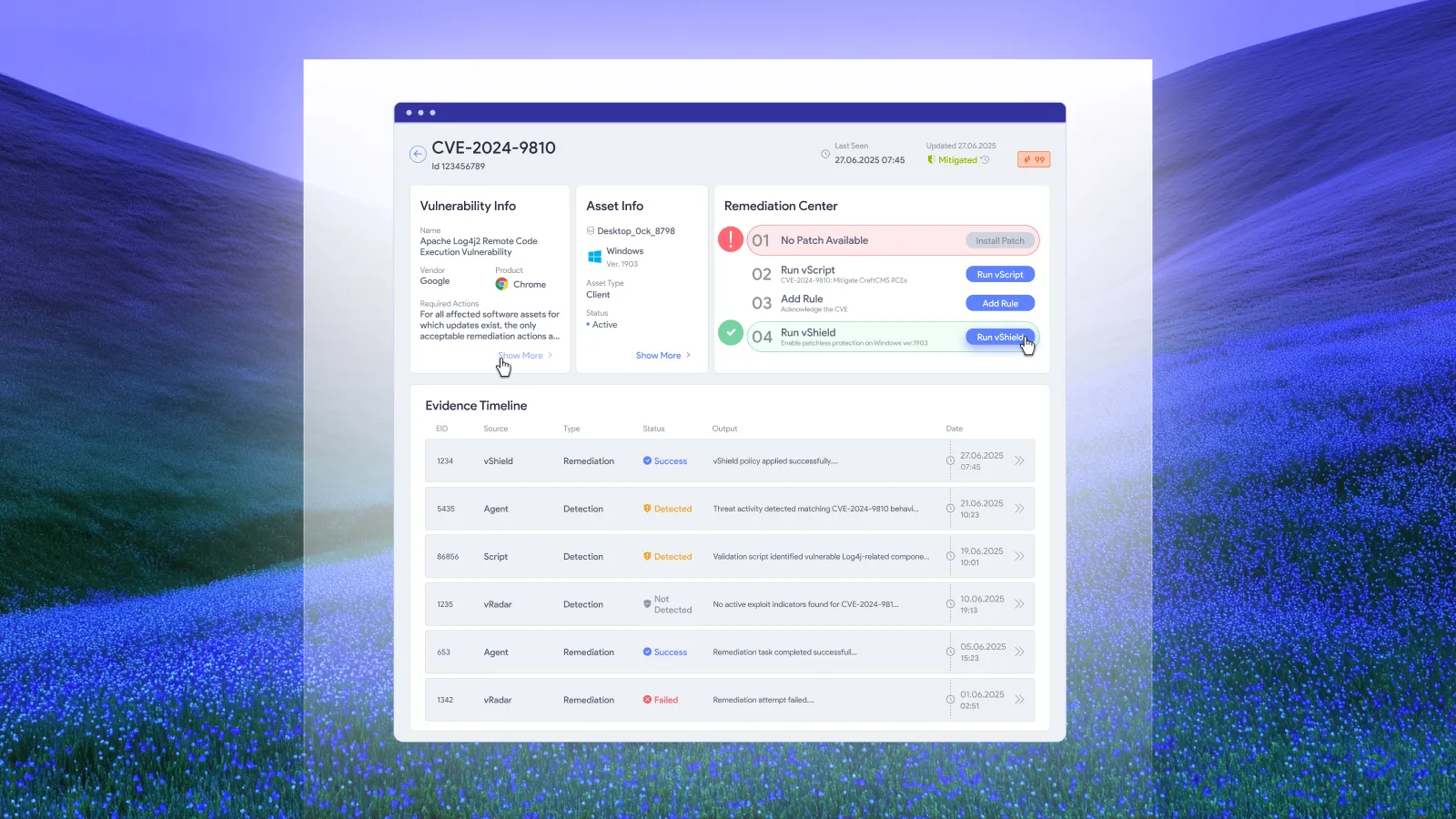
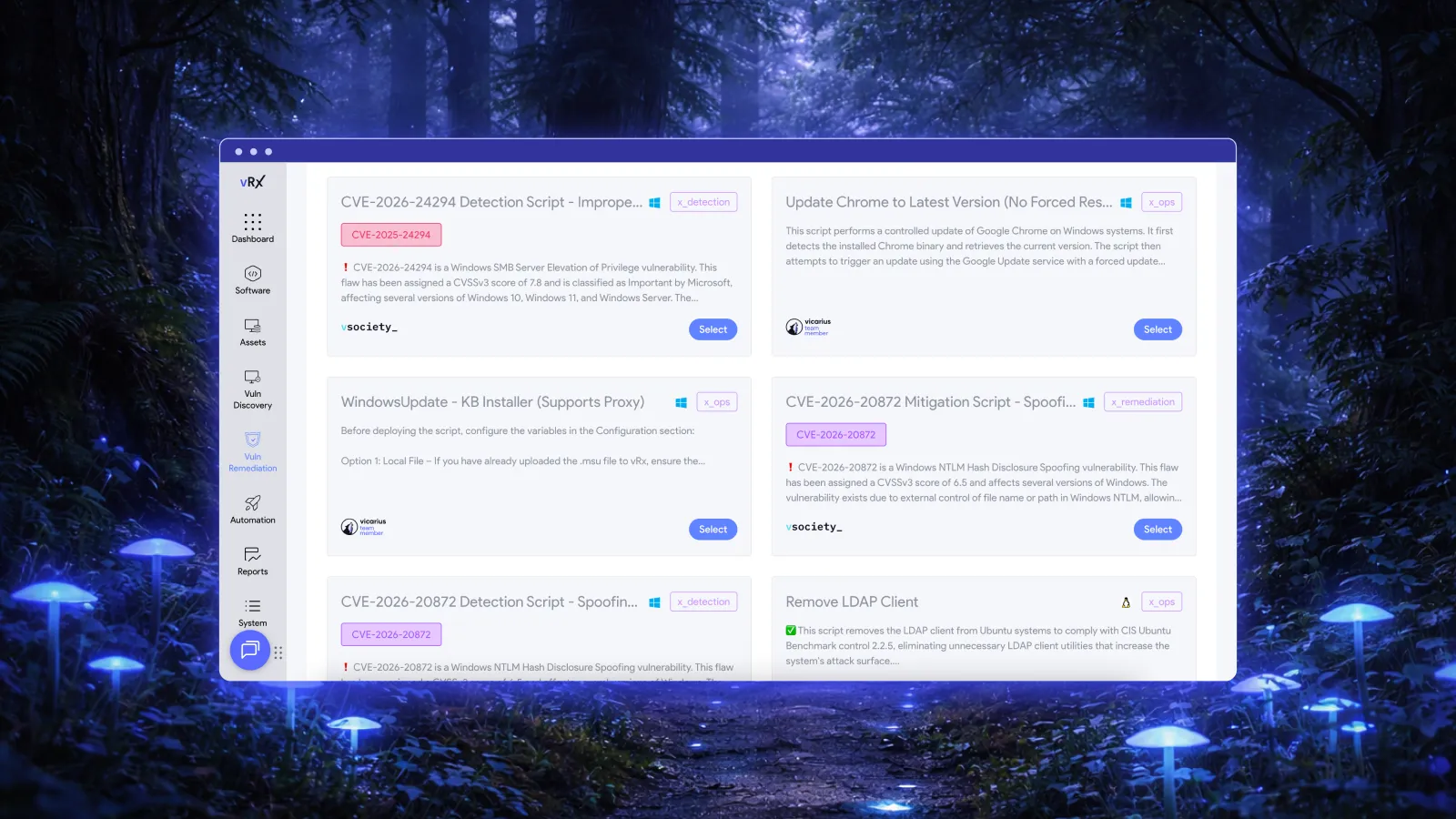
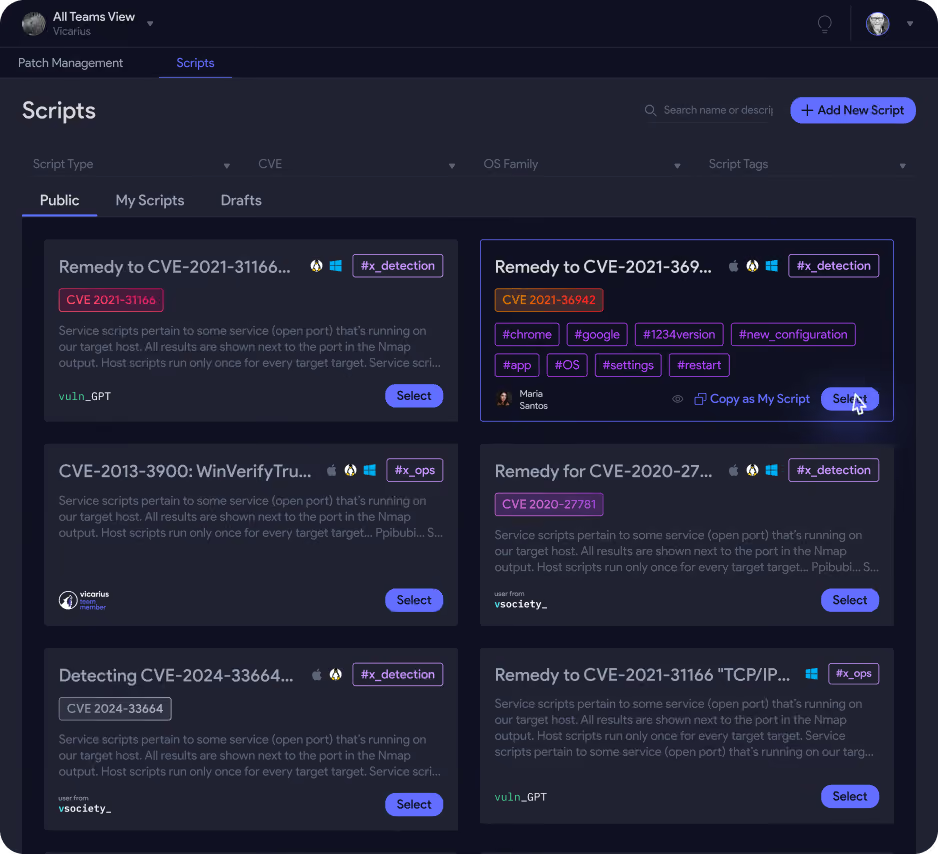
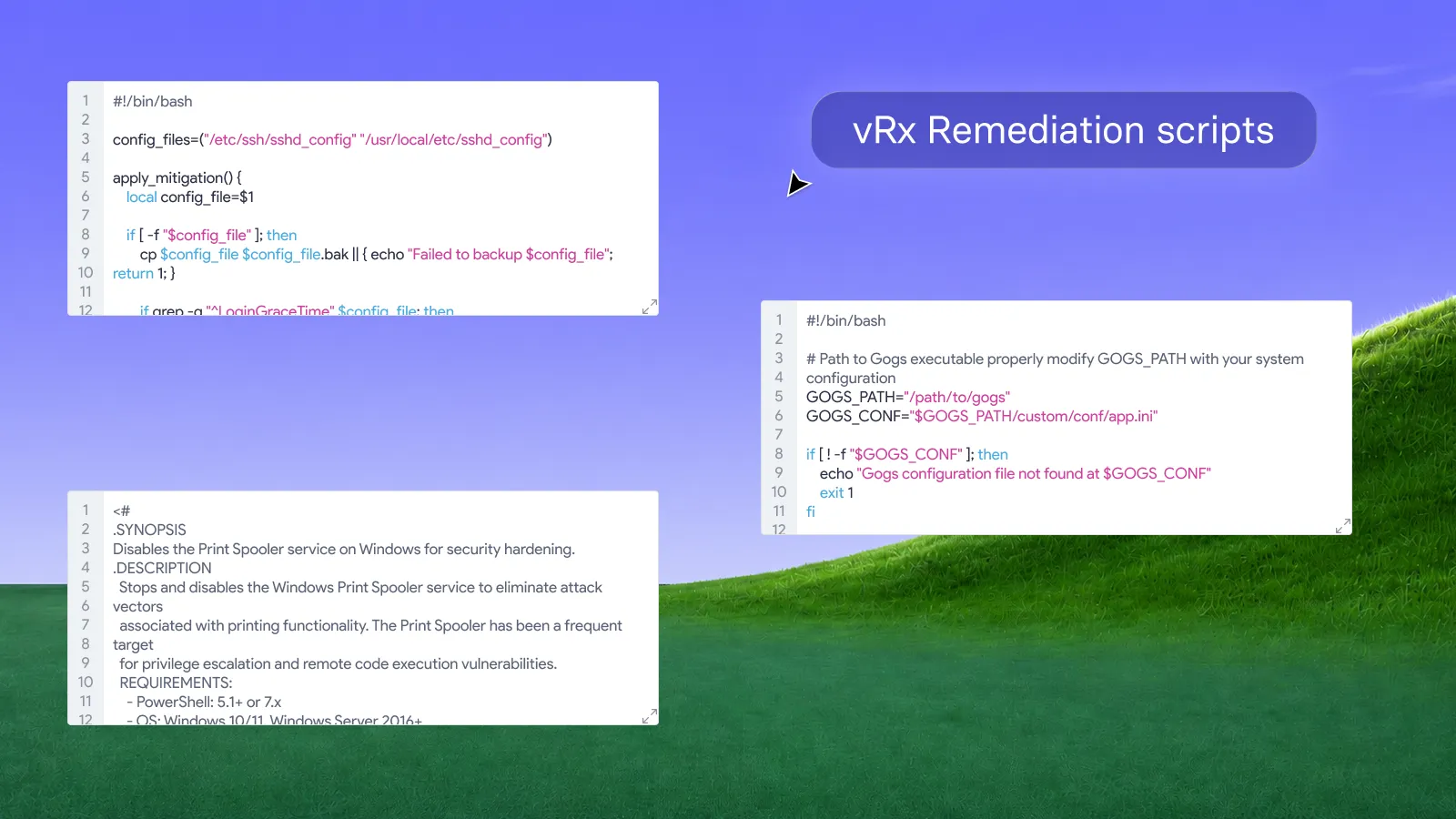
vScript supports custom, community and AI-generated scripts for detection, remediation and hardening. Vicarius documents PowerShell, Bash and Batch support across applicable Windows, macOS and Linux environments. Execution records identify the script, assets, time and outcome. vScript scripting engine.
Vicarius documents attaching generated scripts to scheduled, on-demand or event-driven vScript policies, with human review before publishing generated code. Once approved and configured, the policy can carry recurring execution. ScriptAI review and policy integration.
Those capabilities provide an execution and evidence path for reviewed corrections. The script's own state checks should explain whether the target needed a change and whether the intended result was observed afterward. That makes an execution result useful to the remediation decision.
For choosing how recurring work is initiated, see remediation script execution policies. Here, the narrower engineering question is what the correction does when it runs again. Keep the operational policy and the script's repeatability tests aligned before expanding their scope.
Write the state table before the change logic
Consider a hypothetical application with a configuration setting that must equal an approved value. The change is appropriate only for a defined application version and asset role. The example below is a design exercise, not a tested production script or a product interface.
| Observed state | Recommended behavior | Result to preserve |
|---|---|---|
| Eligible asset, desired value already present | Do not rewrite the setting or restart the service | Already compliant, no change |
| Eligible asset, known incorrect value | Apply the approved correction, then read the effective state | Changed and verified, or verification failed |
| Different version or asset role | Skip this correction | Not applicable, with the reason |
| Current state cannot be read | Stop before writing | State unknown, investigation required |
| Earlier execution partially completed | Re-read each relevant condition before continuing | Completed steps and unresolved conditions |
| Another authorized operation is changing the same setting | Follow the defined coordination rule | Deferred or conflict requiring review |
Keep not applicable and unknown separate. An asset outside the intended version range does not need this correction. An asset whose version cannot be read has not passed that eligibility test. Record these outcomes separately so neither becomes false evidence of remediation.
Also define which state matters. A configuration file may contain the target value while a running process still uses an earlier value. Choose a verification method that matches the actual remediation claim and document any required activation step.
A small pattern for a repeatable correction
The following pseudocode describes the decision structure. It intentionally contains no platform commands, credentials or deployable changes. Adapt the design to the application's documented behavior and test environment.
observe asset identity, version and current effective state
if observation is incomplete:
    record UNKNOWN; stop
if asset does not meet approved applicability conditions:
    record NOT_APPLICABLE; stop
if current effective state equals desired state:
    record ALREADY_COMPLIANT; stop
if a conflicting operation is active:
    record DEFERRED; stop
apply the approved bounded correction
observe the effective state again
if desired state is confirmed:
    record CHANGED_AND_VERIFIED
else:
    record VERIFICATION_FAILED; preserve diagnostic evidence
The initial and final checks serve different purposes. The first prevents unnecessary or inappropriate work. The second establishes what happened after an attempted change. Neither should be replaced by a message that merely says the command finished.
Keep diagnostic output useful and limited. Record the conditions needed to explain the decision without including passwords, tokens or unnecessary application data. A repeatable correction should not create a growing collection of sensitive output.
Design the interrupted run deliberately
Suppose a correction requires two approved changes. The first succeeds, but the second cannot complete because a dependency is unavailable. Repeating both operations blindly may repeat a service interruption or duplicate a resource.
We recommend making each step inspectable. On the next run, check whether the first change is still present and whether the second is now applicable. Resume only when the observed state matches a supported starting condition. A saved marker can assist diagnosis, but it should not replace checking the system itself.
Some operations cannot be made safe by a simple check-before-write pattern. A concurrent change can invalidate the observation between the check and the write. Define how competing operations are coordinated, and use the application's supported mechanisms where available. If the design cannot resolve a conflict, report it rather than silently overwriting another approved change.
Recovery is a separate design decision. Do not assume reversing the last command restores the original service state. Identify the supported recovery procedure, the evidence it requires, and who may authorize it before the correction is used broadly.
Test the second run as carefully as the first
Microsoft's DSC resource testing guidance recommends repeated execution when checking idempotence. It is a useful reminder to test the behavior that automation will repeat, not only the first successful correction. Microsoft's resource design and testing checklist.
For the hypothetical correction, start with an eligible noncompliant asset. Confirm that the first run establishes the desired effective state. Run it again and check that the setting remains correct without another unnecessary activation action. Then test an already compliant asset, an inapplicable version, an unreadable state and an interruption between steps.
These cases should have explicit expected results. A test that accepts any nonzero outcome as equivalent misses the difference between a permissions problem, an applicability decision and a failed postcondition. Preserve those distinctions in the script's output and in the review evidence.
After changes to the script, repeat the relevant tests. A small edit to the applicability condition can change which assets receive a correction even if the change command itself is untouched. Version the reviewed logic so an execution can be tied to the behavior that was evaluated.
Measure verified corrections, including no-change outcomes
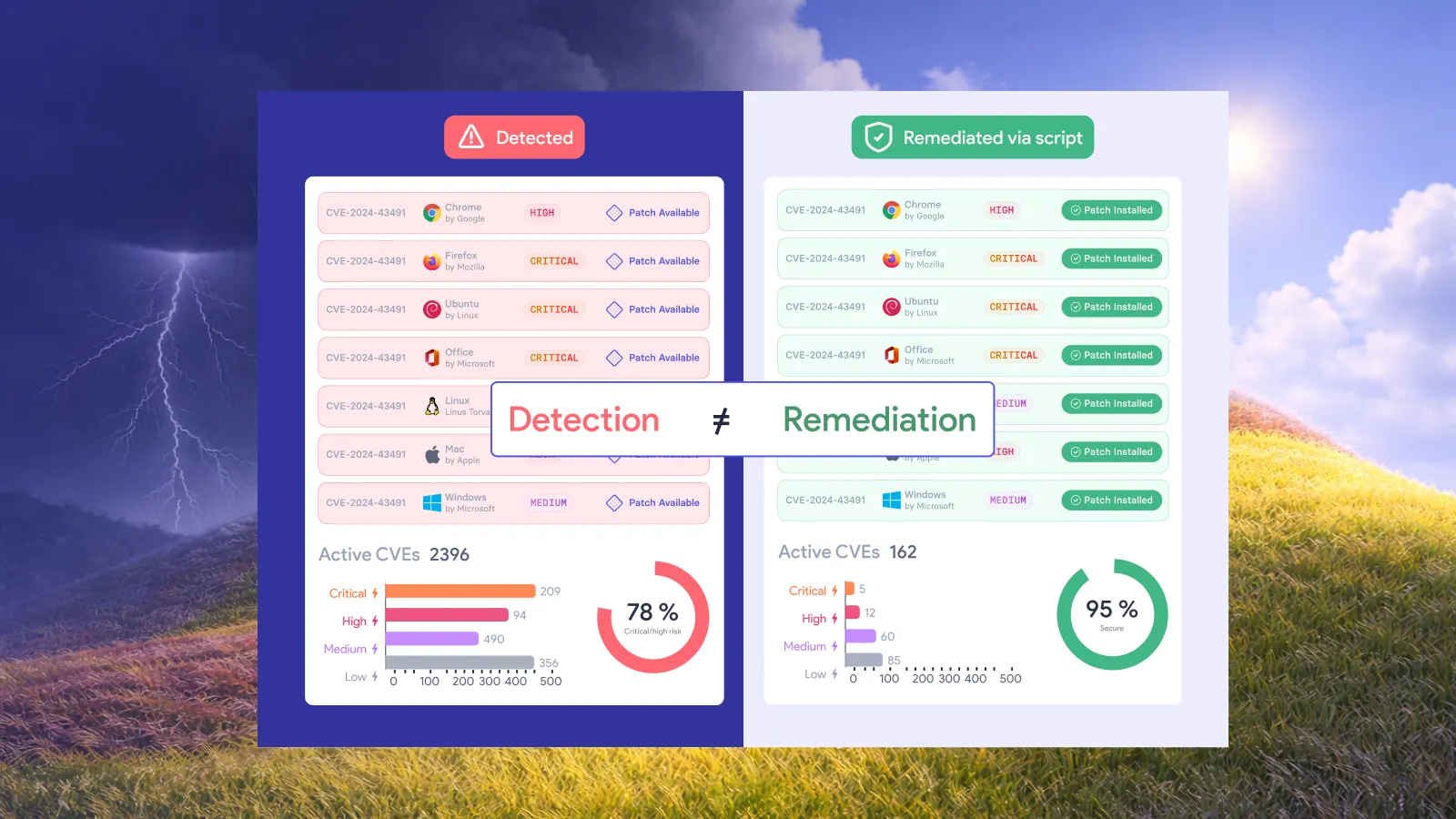
A run count answers how often work started. For remediation, also distinguish assets corrected and verified, assets already compliant, assets outside scope, and unresolved results. Keep the target population and observation time with those counts.
This reporting design helps operators concentrate on exceptions while established logic handles recurring work. It also makes repeated drift visible: an asset corrected on every run may need investigation into the process that keeps changing it. The immediate correction and the underlying cause are different pieces of work.
Frequently asked questions
Should a remediation script change something every time it runs?
No. For a desired-state correction, finding the asset already compliant can be a successful result. Report that outcome explicitly instead of making an unnecessary change.
Does a successful exit code prove remediation?
Only if the script's documented success condition includes the required verification. Define the postcondition and retain evidence of the observed state; completion alone is insufficient for that claim.
Can AI-generated scripts use this pattern?
Yes, the same design review can be applied to generated or human-written logic. Review applicability, repeated execution, partial failure and verification before using the correction. Script provenance does not replace those tests.
What should happen when the current state is unknown?
For this recommended pattern, stop before writing and record the uncertainty. An unreadable state should not be treated as either compliant or eligible for a guessed correction.
Put a recurring correction to work in vRx
Bring one recurring configuration fix and its desired outcome to a vRx demo. Explore how vScript can support its execution and evidence, with repeatability designed into the correction from the start.