Vulnerability management roles and responsibilities should define who sets remediation policy, who executes changes, who validates the result, and who can accept an exception. Routine remediation can then proceed under standing authority. Work outside that authority needs a named decision-maker and an explicit escalation path.
A finding can have an owner and still wait indefinitely. The security team has identified the exposure. IT knows how to deploy the fix. The service owner is concerned about disruption. Everyone has a legitimate responsibility, but nobody knows whether the existing policy authorizes the change.
The useful question is specific: who may decide that this class of remediation can run without another approval? A responsibility chart should answer that question before an urgent finding arrives. Otherwise, it documents a sequence of handoffs while leaving the decision unresolved.
Separate policy approval from routine execution
A standing authorization is permission to perform a defined class of changes within agreed conditions. For remediation, those conditions should identify the eligible systems, allowed actions, deployment constraints, validation requirements and stop conditions. This is a recommended operating model, not a universal compliance requirement.
Security establishes what evidence makes the exposure important and what would demonstrate its treatment. The service owner defines acceptable operating conditions. The team that runs the change translates those decisions into an executable process. The organization’s authorized change owner approves the scope of routine execution.
Once that scope is clear, each eligible finding should not need to repeat the same policy debate. A change in the assumptions should reopen the decision. Examples include a materially different asset population, a new remediation technique, or a failed service check.
NIST’s enterprise patch-management guidance describes collaboration across business, security and technology management as part of an enterprise strategy. It also includes verification in the patching process. That supports treating responsibility as an end-to-end operating issue. NIST SP 800-40 Rev. 4 does not prescribe the particular responsibility matrix proposed here.
Which responsibilities belong to which team?
Use job functions rather than assuming every organization has the same team structure. A small company might combine several functions in one person. A larger enterprise might divide execution across infrastructure, endpoint operations and application engineering. The decisions still need identifiable owners.
GitLab provides a useful published example. Its vulnerability-management handbook assigns distinct responsibilities to vulnerability management, compliance, development, infrastructure and security leadership. Those responsibilities reflect GitLab’s organization; they are evidence that a program can explicitly divide the work, not a template every company must copy. GitLab’s vulnerability-management handbook is the primary source.
The following recommended RACI separates six decisions. R means responsible for doing the work; A means accountable for the decision; C means consulted; I means informed. Each row has one accountable function. Name an actual role and deputy for that function before adopting the matrix.
| Decision or activity | Security / vulnerability management | IT or engineering | Service owner | Change authority | Risk owner |
|---|---|---|---|---|---|
| Define exposure and closure evidence | A/R | C | C | I | I |
| Define service-health acceptance | C | R | A | C | I |
| Authorize a routine change class | C | R | C | A | I |
| Execute and record an eligible change | I | A/R | I | I | I |
| Accept a time-bounded residual-risk exception | R | C | C | I | A |
| Confirm security closure from evidence | A/R | R | C | I | I |
The matrix deliberately separates service acceptance from security closure. An application can work normally while the original exposure remains unresolved. A security change can also address the exposure while breaking a business function. Decide in advance what evidence each owner needs and how disagreements are recorded.
Give automation a defined scope of authority
An automated process should inherit permission from an approved policy. It should not be treated as the accountable owner. A named person or function remains responsible for deciding which actions the policy permits and for reviewing changes to that permission.
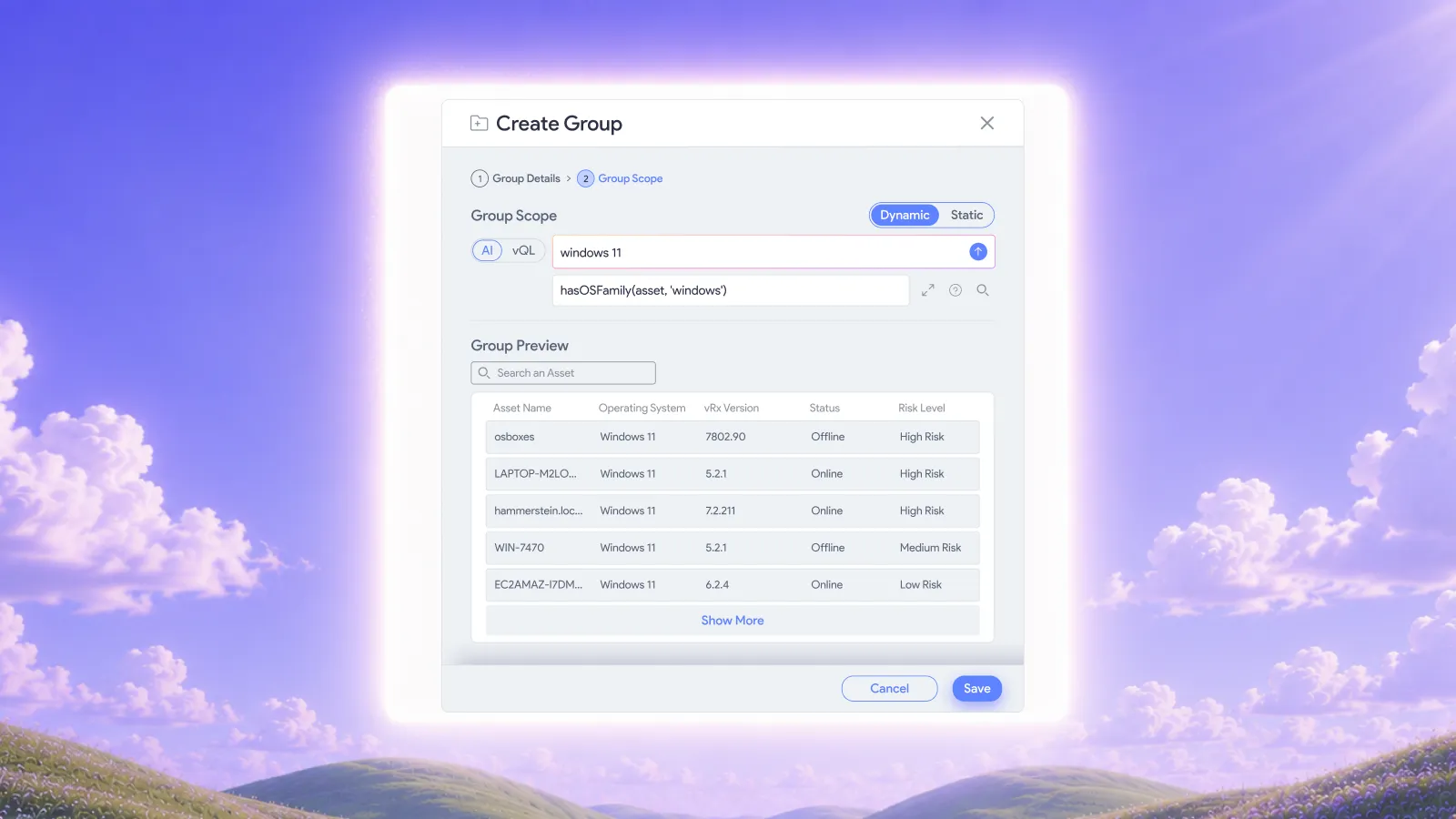
Write the authorization in terms an operator can test. “Patch approved employee endpoints during the agreed maintenance window, using the validated deployment method” is a starting point. It still needs precise group membership, release eligibility, restart behavior and failure handling before it becomes operationally useful.
Include a stop rule that leads somewhere. If a validation condition fails, the automation can stop further rollout, but the policy must also identify who investigates and who may resume it. A pause without an owner simply changes the location of the queue.
Keep execution evidence even when nobody reviews each successful action individually. The record should connect the action to the policy revision that authorized it. That makes delegated execution reviewable without requiring a human to approve every repetition.
Resolve a disagreement before it becomes an indefinite exception
Consider a hypothetical payroll service with an urgent software vulnerability. Security requests remediation. The application owner reports that the proposed update failed a compatibility check. Operations has a maintenance window available tonight. No actual organization or incident is represented by this example.
The existing routine-change policy authorizes only targets that pass the agreed compatibility check. Operations therefore cannot treat the update as an eligible routine deployment. That does not give the service owner indefinite authority to postpone treatment. It means the decision has moved outside the standing policy.
Security documents the exposure and available treatment options. Engineering explains the failed check and what a corrected deployment would require. The service owner describes the business consequence of interruption. The named risk owner decides whether a temporary exception is acceptable, with a deadline and conditions that require reconsideration.
If a temporary control is proposed, assign someone to validate its effect on the specific exposure. Do not label the vulnerability permanently fixed merely because the control was deployed. Preserve the remaining remediation obligation and the person accountable for resolving it.
The organization’s emergency-change process may provide a different authorization route. If so, use its named authority and evidence requirements. A remediation deadline is a reason to invoke the appropriate process, not a substitute for knowing who is allowed to decide.
Connect responsibilities to deadlines and evidence
A vulnerability remediation SLA defines timing expectations. The responsibility model should define the decisions needed to meet them. Keep those functions connected without turning this matrix into a second set of severity deadlines.
For each exception, record the affected scope, the unresolved decision, the accountable role, the next review date and the evidence needed to close it. If the same exception recurs, review the policy rather than repeatedly extending the same unresolved condition.
Use a patch verification checklist as supporting evidence where patching is the chosen treatment. For other treatments, define an equivalent result appropriate to the action. The person who ran the job should be able to provide evidence; the accountable function should be able to explain why that evidence satisfies closure.
Delegated authority also needs continuity. Record a deputy or escalation role for absence, ownership changes and cross-team disputes. A workflow that depends on one unavailable approver cannot reliably carry out its own policy.
Test the responsibility model with a real decision
Before rolling out the matrix, use one completed remediation as a tabletop test. Ask participants which policy authorized execution, who could have stopped it, and who had authority to accept unresolved exposure. Compare their answers with the recorded evidence.
Then test one failed change. If two teams both believe the other owned recovery, revise the responsibility boundary. If everyone knows the owner but cannot name the evidence needed to resume, improve the stop-and-resume rule. These are different problems and require different repairs.
Measure decision delays separately from deployment duration. Time awaiting an exception decision tells you something different from time spent installing an update. Use that distinction to decide whether to change the authorization model, the deployment process or the supporting evidence.
Frequently asked questions
Who should own vulnerability management?
Name a program owner for the overall process, then assign decision ownership across security, operations, service owners and risk authorities. Owning the program does not automatically grant authority to change every system or accept every business risk.
Does automated remediation need approval for every action?
Not under the recommended model when an action falls within a valid standing authorization. Actions outside its scope need the appropriate decision path. Define that boundary explicitly rather than relying on an assumption that all automation is preapproved.
Who can accept a vulnerability exception?
The person or function authorized by the organization to accept that category of residual risk. The team that cannot deploy a fix should provide evidence, but inability to deploy does not itself grant risk-acceptance authority.
Is a RACI enough to govern remediation?
No. A RACI identifies responsibility, but it also needs executable policies, evidence requirements, named deputies and escalation rules. Test it against both a routine success and a failed change to expose ambiguous decisions.
Apply the matrix to one remediation policy
Choose one recurring remediation action. Assign the accountable roles above, define the conditions for automatic execution, and agree on who decides when those conditions fail. Have security, operations and the service owner test the same scenario before adopting the policy.