

A vulnerability is found on a production system.
What should happen next?
“Install the patch” sounds like the obvious answer. In practice, it is often only one of several possible responses.
The patch may not exist yet. It may require downtime the business cannot accept today. A compensating control may reduce exposure faster. The asset may already show signs of compromise. Or the remediation itself may be custom or AI-generated and need to be tested before anyone trusts it in production.
That is where agentic remediation starts to matter.
Instead of triggering one fixed action, an agentic vulnerability remediation system has to answer a harder question:
What is the safest action that meaningfully reduces this exposure on this asset right now?
Sometimes the answer is patch.
Sometimes it is mitigate.
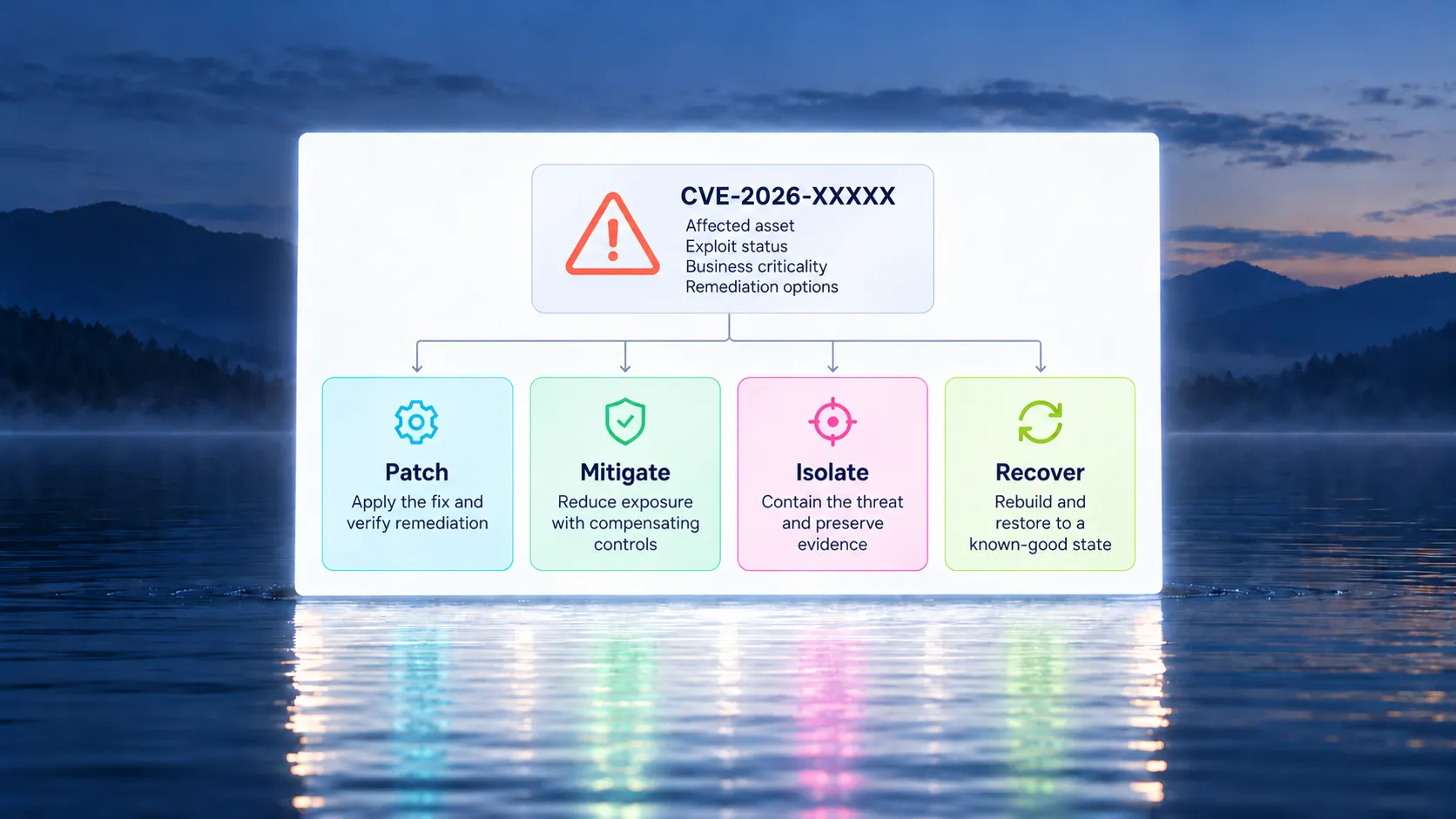
Sometimes it is preserve evidence, isolate the system, and recover it.
And sometimes the correct action is to stop and ask for approval.
What is agentic remediation?
Agentic remediation uses AI agents to help interpret vulnerability context, select a remediation path, coordinate actions, and adapt based on what happens next.
That is different from conventional automation.
Traditional automation usually follows a known rule:
If condition X exists, execute action Y.
Agentic remediation can reason across more context:
- Is the vulnerability actually applicable?
- Is exploitation occurring in the wild?
- Is this asset exposed to the relevant attack path?
- Is there evidence that exploitation already happened?
- Does a supported patch exist?
- Can it be deployed safely now?
- Is a temporary mitigation available?
- Is this a routine change or one that needs human approval?
- What proves the exposure is gone afterward?
The goal is not to replace deterministic controls with AI.
It is to let AI help with the reasoning while policy, validation, and execution controls remain independent of the model.
For the broader mechanics, see Vicarius's overview of automated vulnerability remediation.
Vulnerability remediation is already a decision tree
Security teams already make these decisions manually.
CISA's vulnerability-response playbook separates systems into three states:
- Not affected: the vulnerability is not present.
- Susceptible: the system is vulnerable, but there are no signs of exploitation.
- Compromised: the system is vulnerable and evidence of exploitation exists.
CISA says that when exploitation is found, incident-response activities should begin alongside vulnerability remediation. CISA vulnerability response playbook.
That immediately changes the workflow.
A susceptible server may need a patch.
A compromised server may need evidence preservation, containment, credential rotation, rebuild, and only then permanent remediation.
CISA also distinguishes between remediation, which fully corrects the vulnerability, and mitigation, which reduces the likelihood or impact of exploitation while the underlying flaw remains. It recommends verification after either action. CISA mitigation guidance.
That gives us a useful starting model:
Agentic remediation is about making those branches faster and more consistent without losing control.
Decision 1: should the system patch?
When a supported patch is available, applicable, and safe to deploy, patching is usually the cleanest answer.
NIST defines enterprise patch management as identifying, prioritizing, acquiring, installing, and verifying patches, updates, and upgrades. Verification is part of the process, not an optional final step. NIST enterprise patch management.
Before an agent patches a system, it should know:
- Is the vulnerable version actually installed?
- Does this patch apply to the current branch?
- Are prerequisite updates required?
- Will the change require a reboot?
- Are known compatibility issues relevant to this asset?
- Is the system inside an approved maintenance window?
- Can the rollout start with a smaller group?
- What health checks should run afterward?
That last point is easy to underestimate.
A patch job returning “success” proves the installer completed. It does not automatically prove the vulnerable condition is gone or the application is healthy.
Vicarius already covers this operational layer in Patch deployment in vRx and Risk-based patch management in vRx.
The agentic question is narrower:
Is patching the right action for this asset now?
Decision 2: should the system mitigate instead?
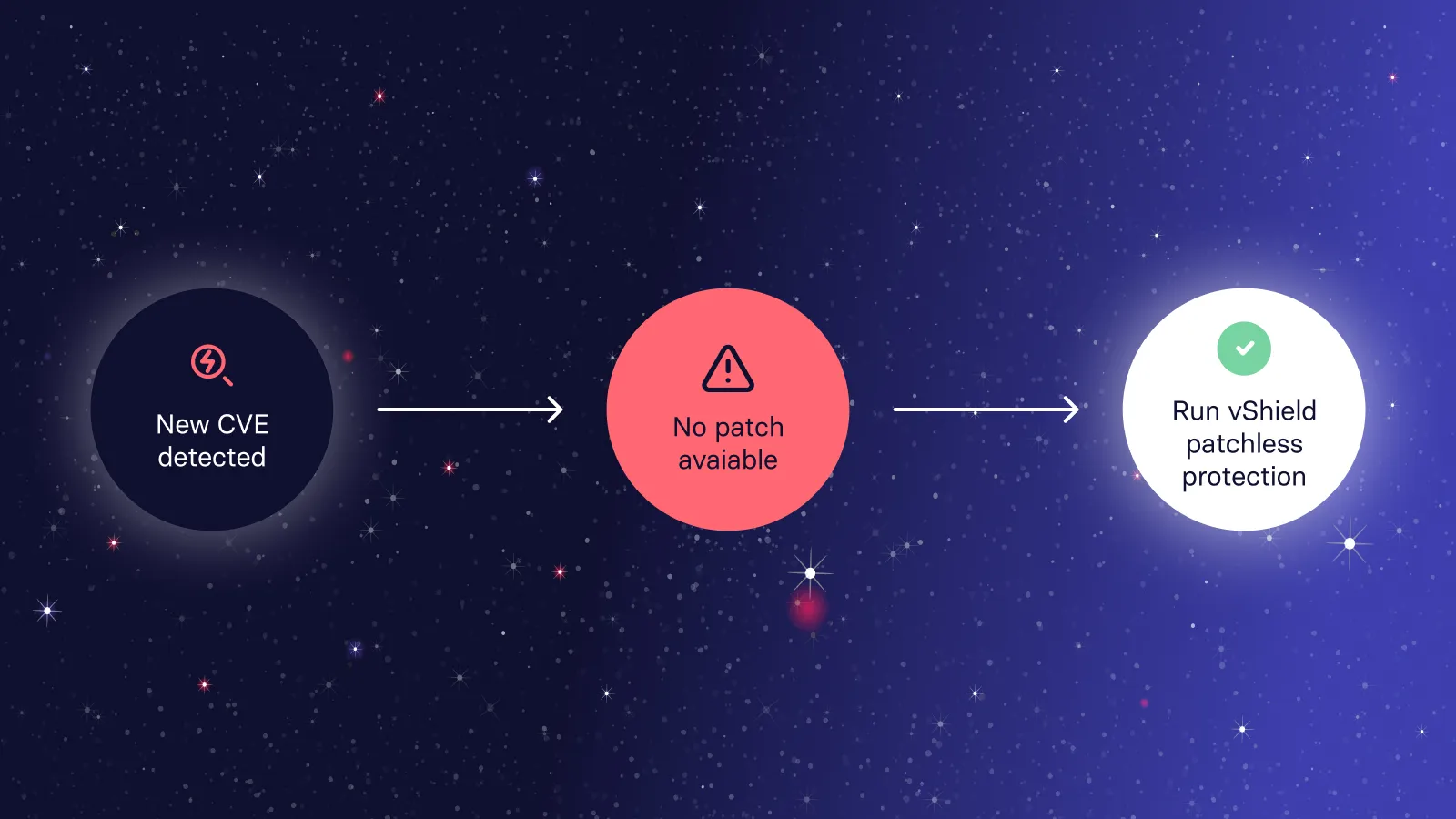
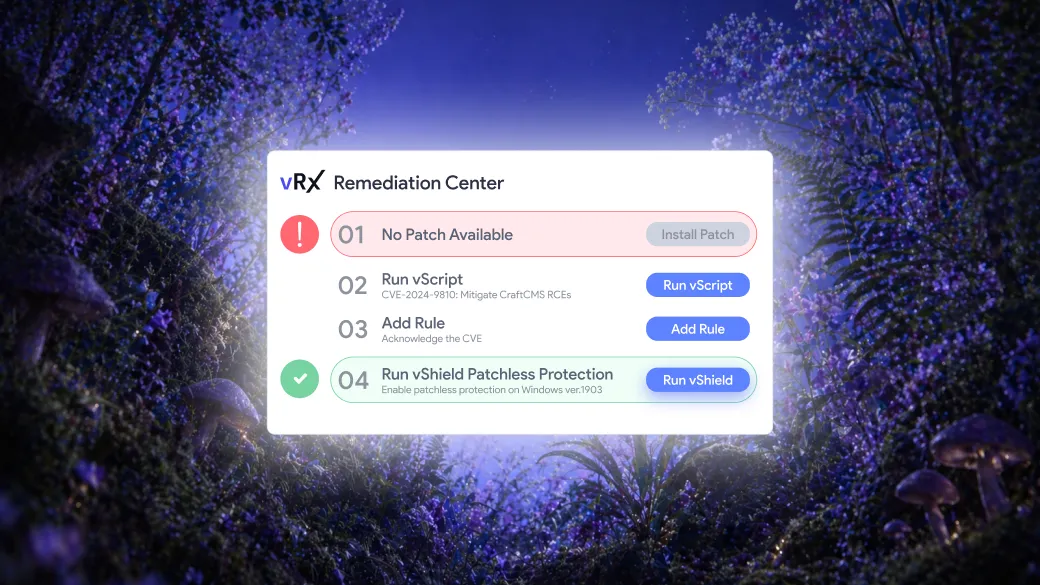
“No patch” should not mean “no action.”
CISA's vulnerability-management guidance explicitly recognizes mitigation as a valid response when a complete fix cannot yet be applied. The point is to reduce the likelihood or impact of exploitation until permanent remediation is possible. CISA mitigation guidance.
A mitigation might mean:
- disabling the vulnerable feature
- restricting a management interface
- changing a configuration
- limiting network exposure
- applying a WAF rule
- isolating a service
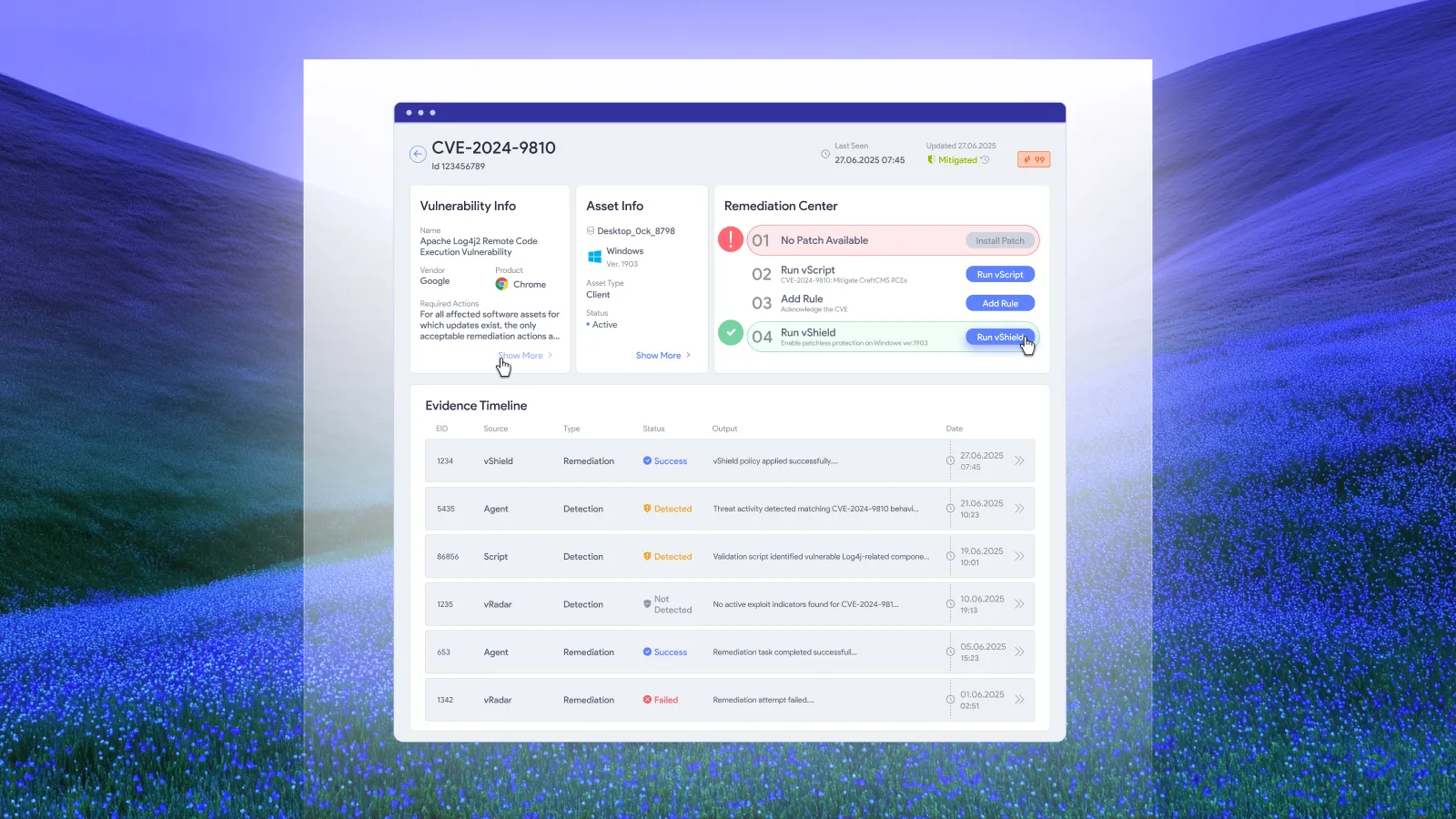
- deploying patchless protection
This is an important state distinction.
Mitigated does not mean fixed.
The system should retain that difference:
Vulnerability present → mitigation active → exposure reduced → permanent remediation still required
When a vendor patch becomes available, the workflow should reopen automatically.
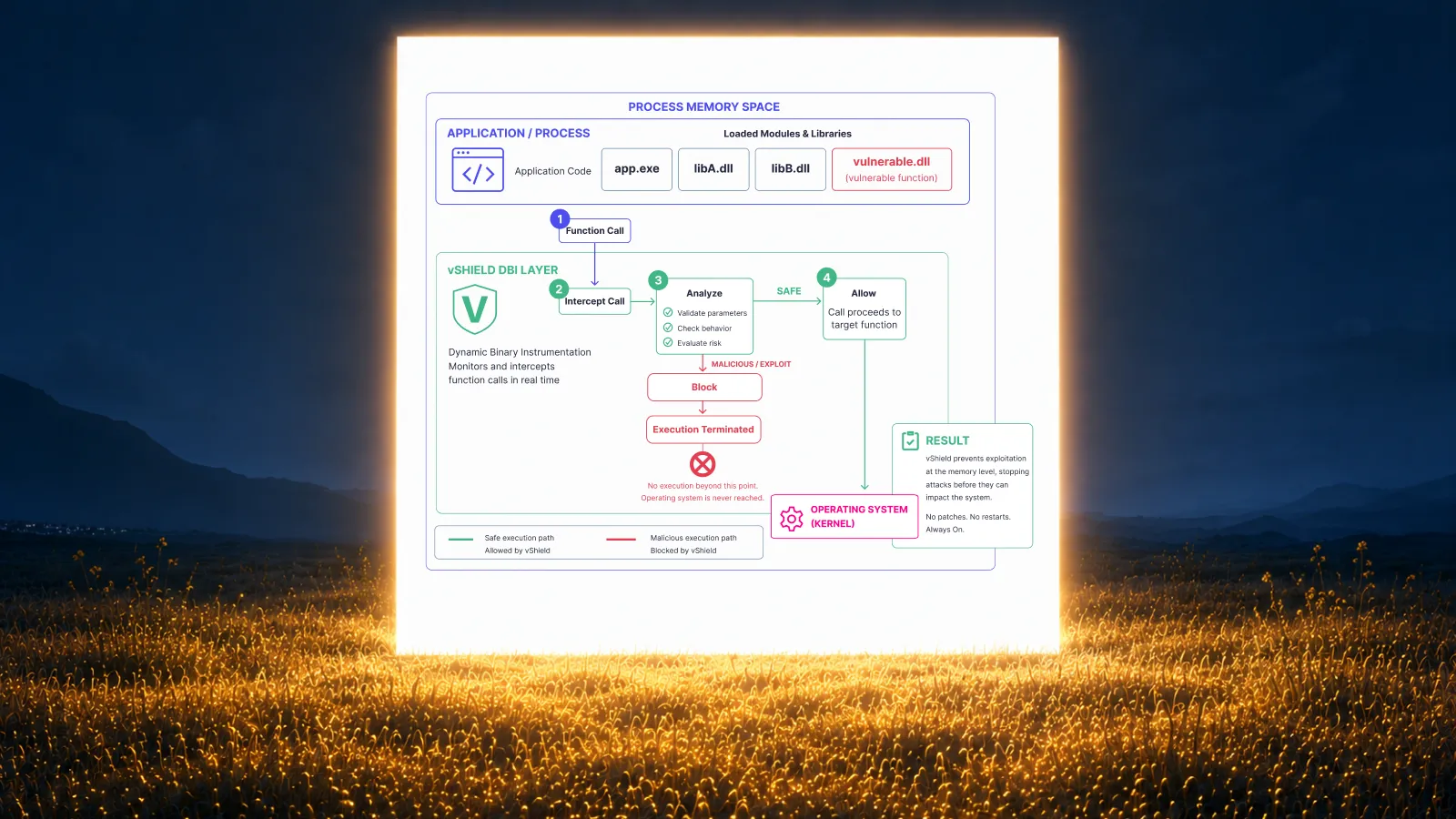
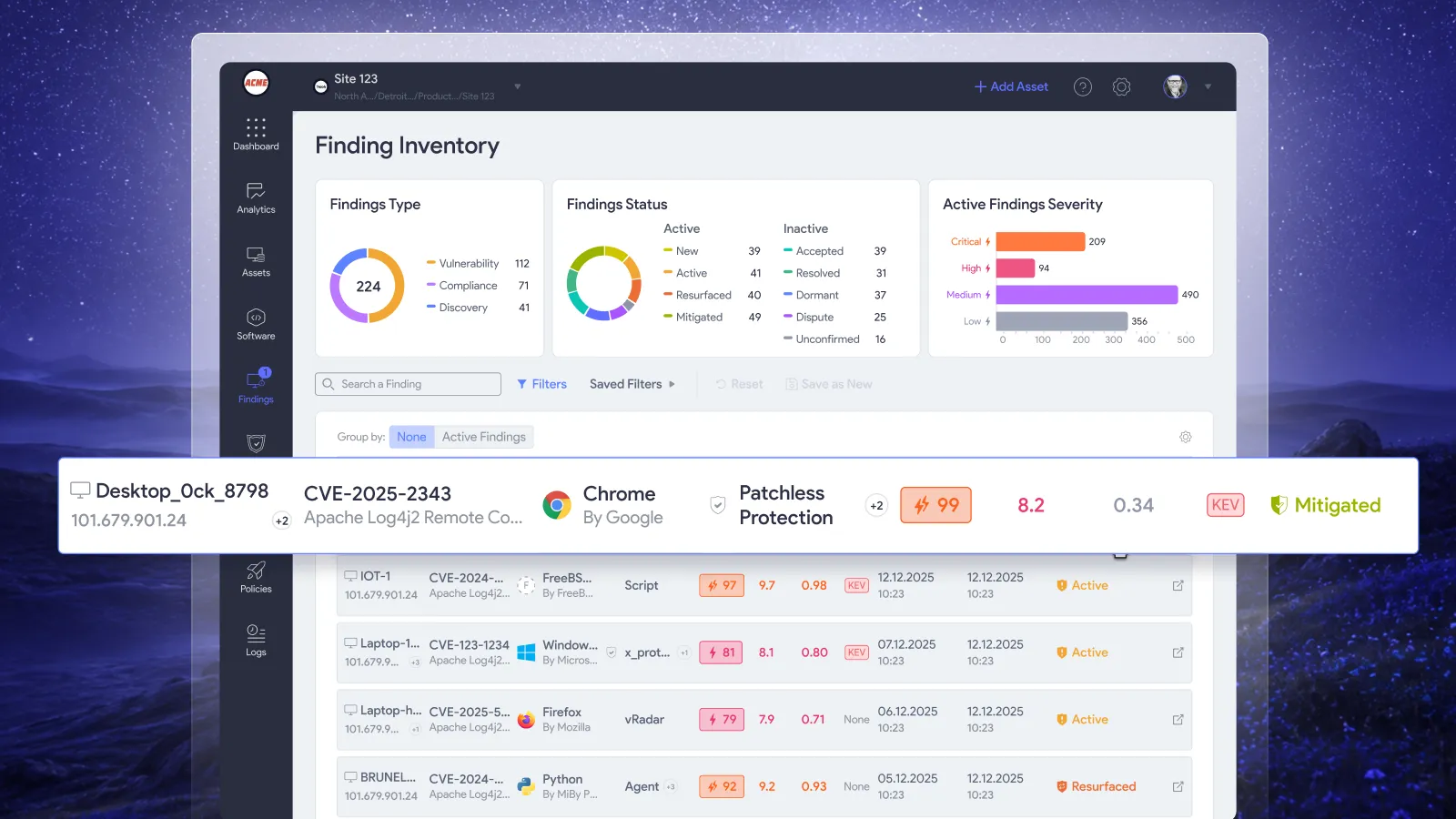
Vicarius's vShield patchless protection is one example of this model.
For a deeper treatment of the use case, see How Vicarius Patchless Protection brings unpatchable assets to acceptable risk levels.
Decision 3: should evidence be preserved before anything changes?
Sometimes the order of operations matters as much as the remediation itself.
Cisco's response to CVE-2026-76504, an actively exploited authentication bypass in Catalyst SD-WAN Manager, is a good example.
Cisco instructs administrators to:
- collect diagnostic data from every affected Manager
- upgrade immediately to a fixed release
- submit the preserved data for compromise analysis
- perform further recovery if indicators of compromise are found
Crucially, Cisco says not to wait for the forensic analysis before upgrading. Cisco remediation guidance.
That sequence exists for a reason.
If you patch first without preserving evidence, you may lose data needed to determine whether compromise occurred.
If you wait for a full investigation before fixing an actively exploited vulnerability, you leave the system exposed longer.
The safe workflow is:
Preserve evidence → close the vulnerability → analyze compromise → recover further if needed
Cisco also offers a temporary Live Protect shield for this CVE, but explicitly describes it as partial protection. The permanent remediation is still the fixed software release. Cisco advisory.
This is exactly the kind of branch an agentic remediation system should understand.
The AI can help determine the path.
The control plane should enforce the sequence.
Decision 4: should the system recover instead of simply patch?
Once a system has been compromised, updating the vulnerable software may no longer be enough.
The attacker may already have:
- added persistence
- created accounts
- changed configuration
- stolen credentials
- altered scheduled tasks
- planted binaries
- modified startup behavior
CISA's playbook treats a compromised system differently from a merely susceptible one for precisely this reason.
Ahsay's October 2026 incident makes the distinction concrete.
Ahsay disclosed that earlier patches for CVE-2026-105133 and CVE-2026-105134 did not fully address the vulnerabilities and released revised hotfixes. Ahsay patch update.
For systems showing signs of compromise, the vendor went further. It provided recovery guidance in addition to patching, including rebuilding affected systems where appropriate and restoring from known-clean configuration. Ahsay vulnerability status update.
That creates two very different paths:
Vulnerable but no compromise evidence
→ patch
→ reboot if required
→ validate
Compromise suspected or confirmed
→ preserve evidence
→ isolate
→ recover or rebuild
→ rotate relevant credentials
→ patch
→ validate
An automated vulnerability remediation system that cannot distinguish those states risks marking a compromised machine as “fixed” because its package version changed.
Decision 5: should AI generate the remediation?
Sometimes no standard fix exists.
The issue may be a configuration problem, a missing vendor patch, a recurring operational weakness, or a condition that needs a custom detection or remediation script.
This is where AI-generated remediation becomes useful.
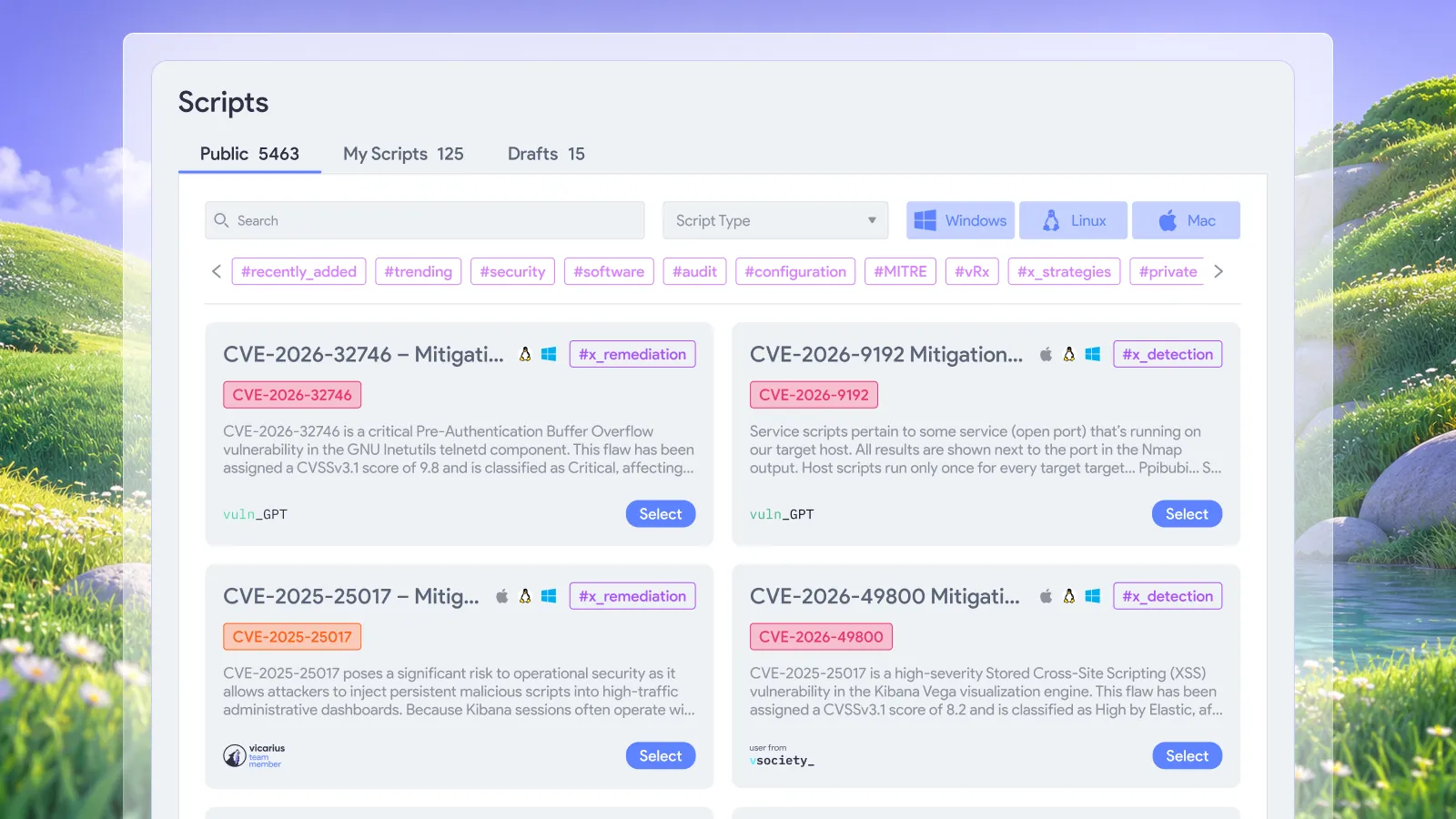
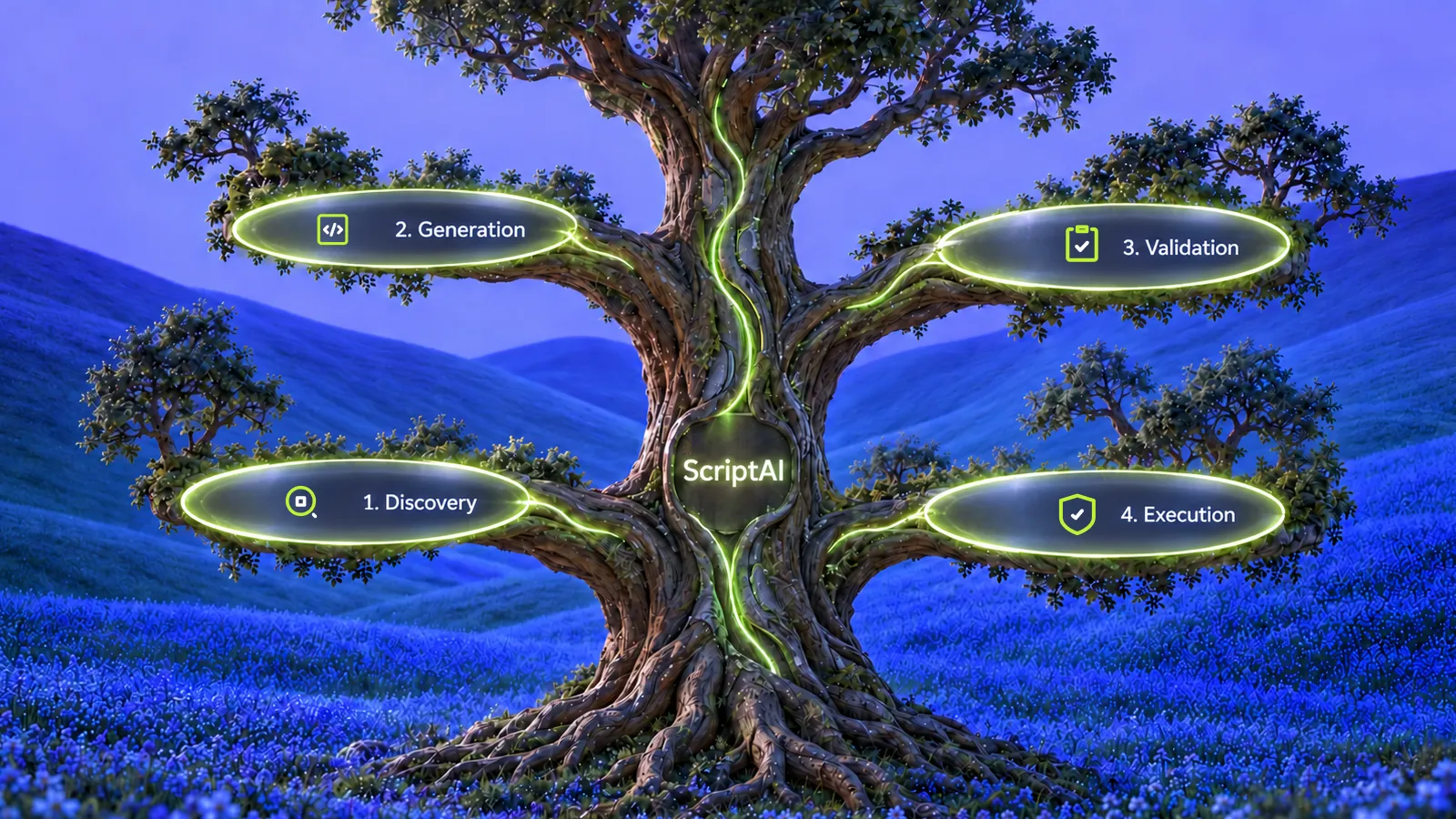
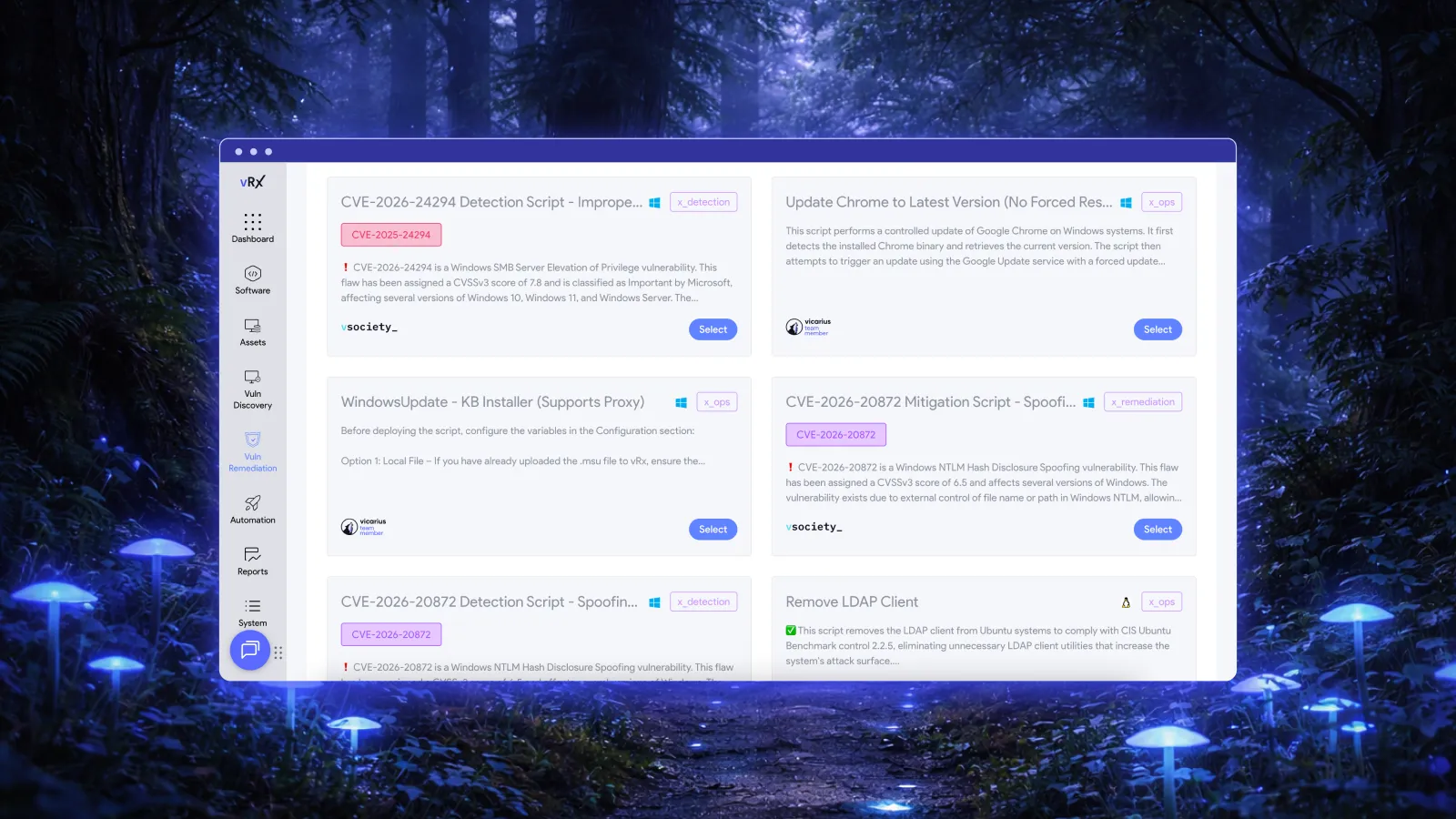
Vicarius's ScriptAI is designed for this gap. It generates detection and remediation scripts, while a deterministic validation layer checks the result before human review and deployment.
For known recurring fixes, vRx also supports policy-based script execution. See Remediation scripts in vRx.
The agentic decision is not simply:
Can AI write a script?
It is:
Should this vulnerability use an existing trusted action, a generated remediation, a temporary mitigation, or a different response entirely?
That is a much more useful question.
Decision 6: did the generated fix actually solve the vulnerability?
This is where independent validation becomes essential.
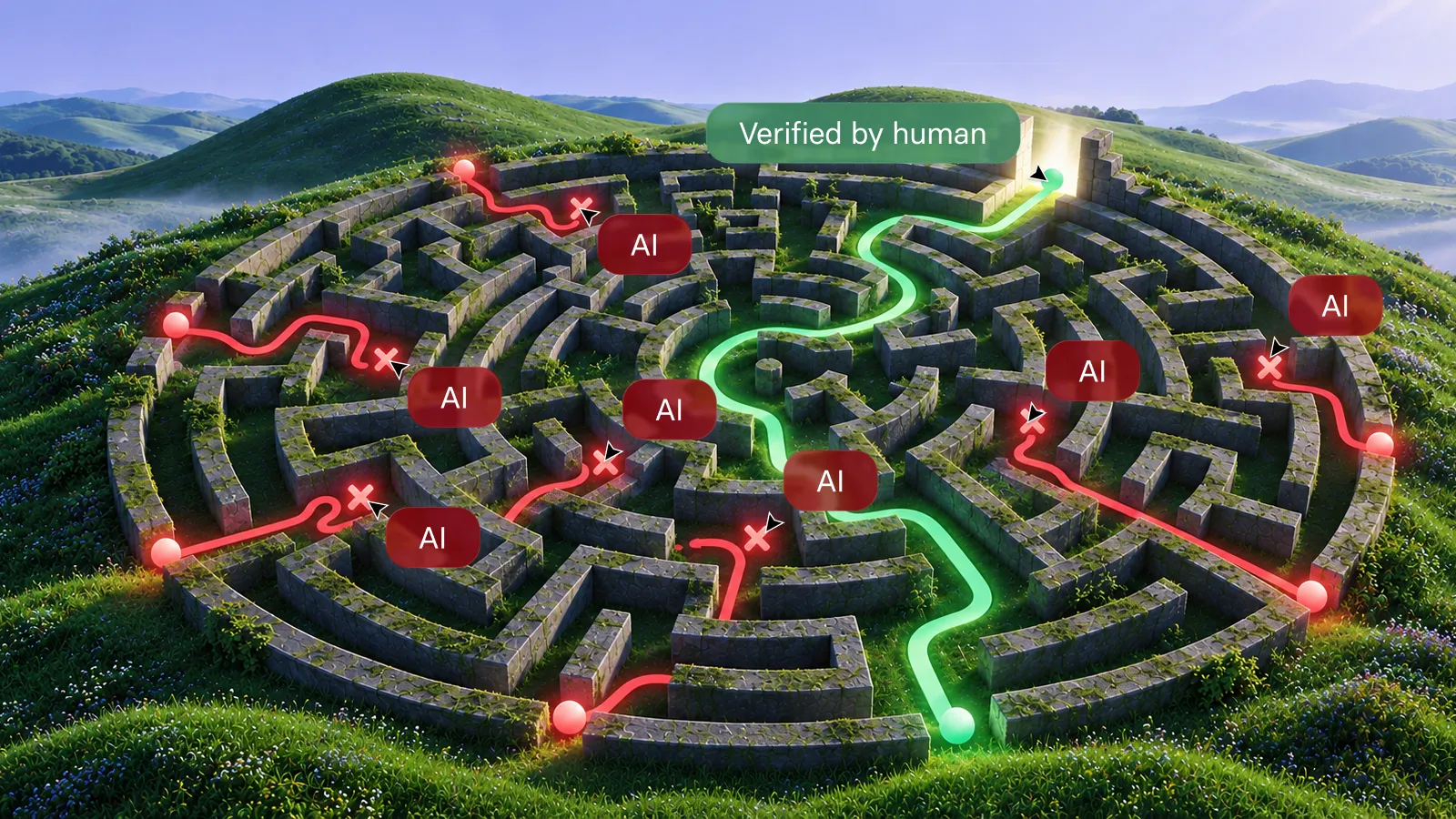
The 2026 P2Patch research tested an adversarial approach to AI-generated vulnerability repair.
One agent generates a patch.
Another agent then attacks the patched software again.
Across 101 C/C++ and Java CVE subjects, the researchers found a distinct confirmed exploit path in 41% of repair runs after the generated patch had already blocked the original exploit used to create the fix. P2Patch research.
That does not mean 41% of enterprise patches are bad.
It means something more specific and more useful:
A fix can pass the test that created it and still leave another path to the same vulnerability.
That is why AI-generated remediation needs an independent success condition.
The stronger model is:
Generate → challenge → validate → deploy
not:
Generate → run → assume success
Vicarius has already explored this topic in Adversarial testing for AI-generated fixes: passing once is not enough.
For an agentic remediation system, the lesson is simple:
The agent proposing the fix should not be the only system deciding that the fix worked.
Decision 7: is the action authorized?
There is another problem with autonomous remediation: permission.
An AI agent that can remediate vulnerabilities may need access to endpoints, servers, package managers, configuration files, credentials, management APIs, deployment systems, and cloud resources.
That is useful. It is also dangerous.
Microsoft's recent guidance on enterprise agents makes a useful distinction: the model should not be its own security boundary.
Microsoft recommends giving agents their own identities, limiting them to task-scoped permissions, enforcing controls outside the model, and requiring verified human approval for higher-impact actions when appropriate. Microsoft Security.
That maps directly to agentic remediation.
An agent may conclude:
Restart this service.
That does not mean it should automatically have permission to restart every service on every production server.
The control layer should decide:
- which assets the agent can modify
- which actions it can perform
- which tenant the asset belongs to
- whether the maintenance window is open
- whether approval is required
- how many assets can change at once
- what triggers rollback
- what forces execution to stop
The AI provides intelligence.
The platform provides authority.
Those should not be the same thing.
Decision 8: what makes a remediation urgent?
Not every CVE deserves the same response speed.
CISA's Stakeholder-Specific Vulnerability Categorization model, SSVC, explicitly uses a decision tree rather than severity alone.
Its outcomes include:
- Track
- Track*
- Attend
- Act
The decision incorporates factors such as exploitation status and the impact of exploitation on the organization. CISA SSVC guide.
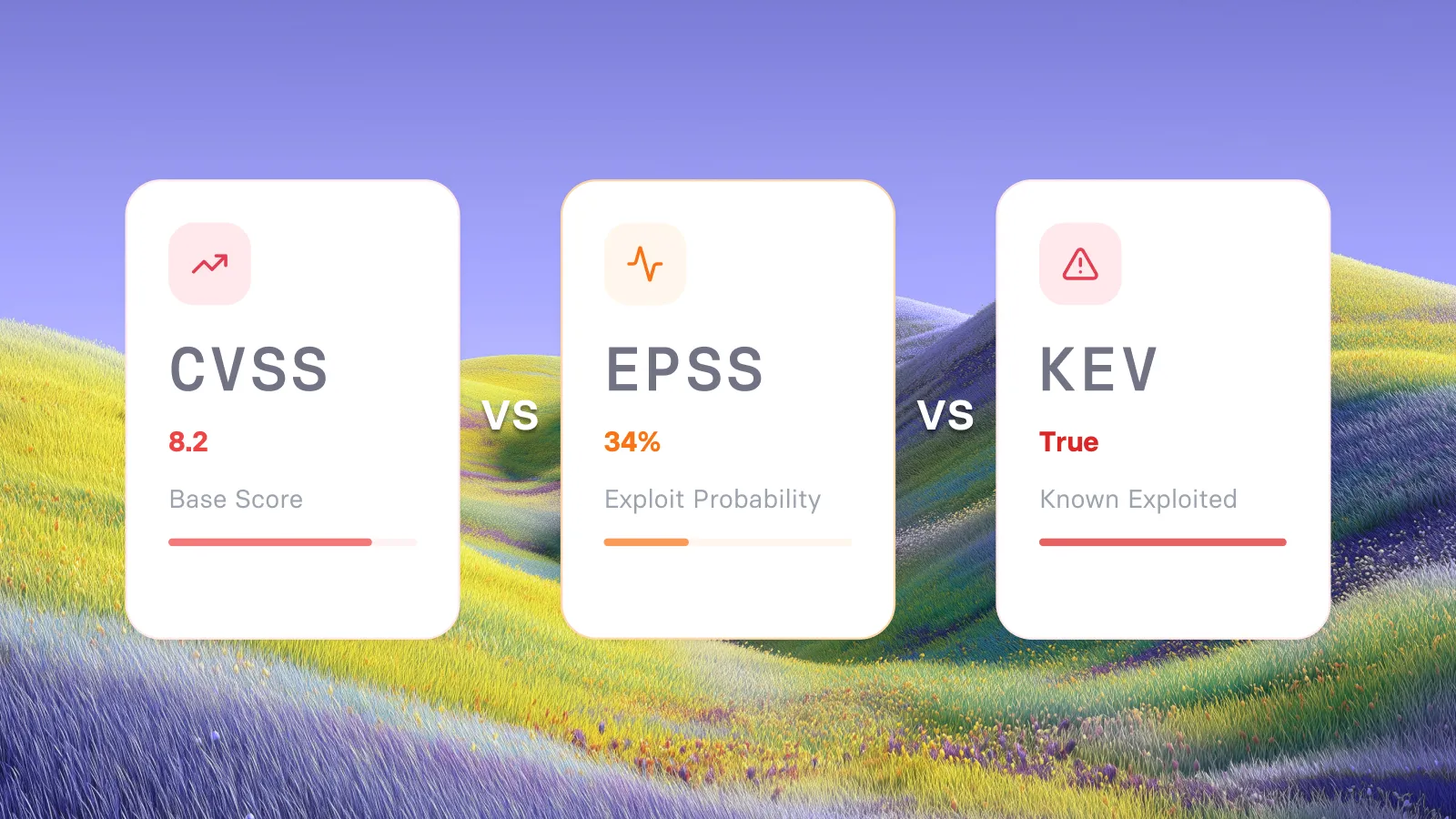
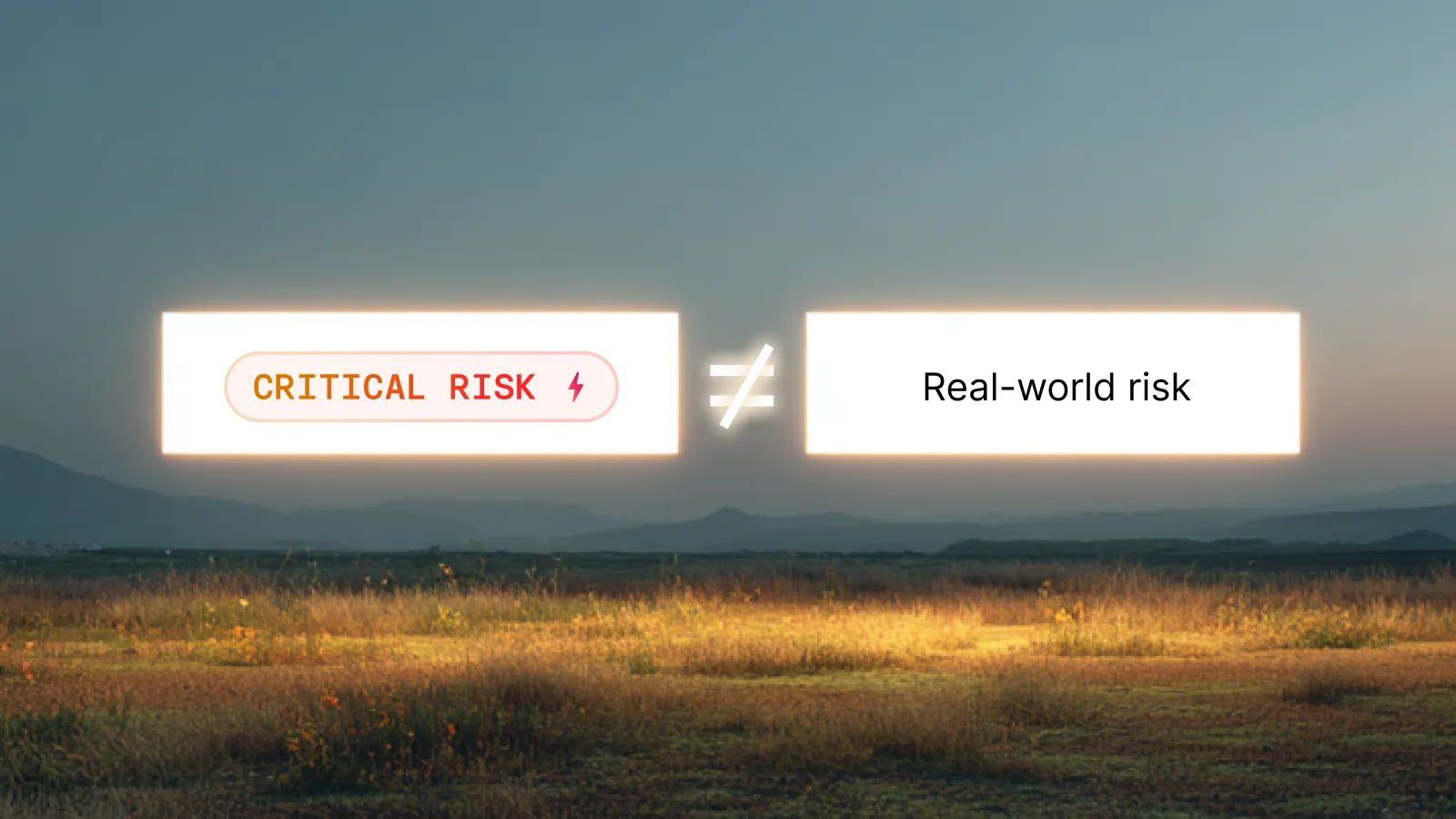
That matters because CVSS tells you about technical severity.
It does not tell you, by itself, whether attackers are exploiting the CVE today, whether the vulnerable component is reachable, whether the asset supports a critical business process, whether the vulnerable feature is enabled, or whether a mitigation is already in place.
An agentic remediation system should use these signals to decide urgency and response path, not simply sort vulnerabilities by one score.
This is where prioritization becomes operational.
Risk decides what needs attention. The remediation engine decides what to do about it.
A practical agentic remediation decision framework
Put the decisions together and the workflow becomes much clearer.
1. Establish applicability
Confirm that the vulnerable software, component, configuration, or exploit prerequisite exists.
If it does not apply, document why.
2. Establish urgency
Use evidence such as:
- CISA KEV
- current exploitation
- public exploit availability
- EPSS
- asset exposure
- business criticality
- vulnerable feature state
3. Determine compromise state
Ask:
Is this asset only vulnerable, or is there evidence that exploitation has already happened?
That decision changes the rest of the workflow.
4. Select the remediation path
5. Validate the proposed action
Check prerequisites, dependencies, operating-system state, permissions, side effects, reboot requirements, and rollback availability.
For AI-generated actions, add independent deterministic validation.
6. Authorize
Policy decides whether execution can proceed automatically or requires review.
7. Deploy within limits
Do not assume every valid remediation should hit the whole environment at once.
Use bounded scope, approved groups, maintenance windows, and stop conditions.
8. Verify the outcome
The final question should not be:
Did the job finish?
It should be:
Is the exposure actually gone, or is it now acceptably controlled?
What verified remediation should prove
A useful remediation record should tell the story from start to finish.
Before the action
- What was vulnerable?
- Why did it matter?
- Was exploitation known?
- What environmental conditions applied?
- Was compromise suspected?
Why this action was chosen
- Why patch instead of mitigate?
- Why mitigate instead of patch?
- Why isolate instead of change the system?
- What authoritative guidance supported the choice?
- What policy allowed execution?
What happened
- What action ran?
- Which assets received it?
- Did any fail?
- Was a reboot required?
- Was evidence preserved first?
What changed
- Is the fixed version installed?
- Is the vulnerable configuration gone?
- Is the service healthy?
- Does the vulnerability-specific check pass?
- Is a temporary mitigation still active?
- Is follow-up recovery required?
That is the difference between logging activity and proving remediation.
How this maps to Vicarius
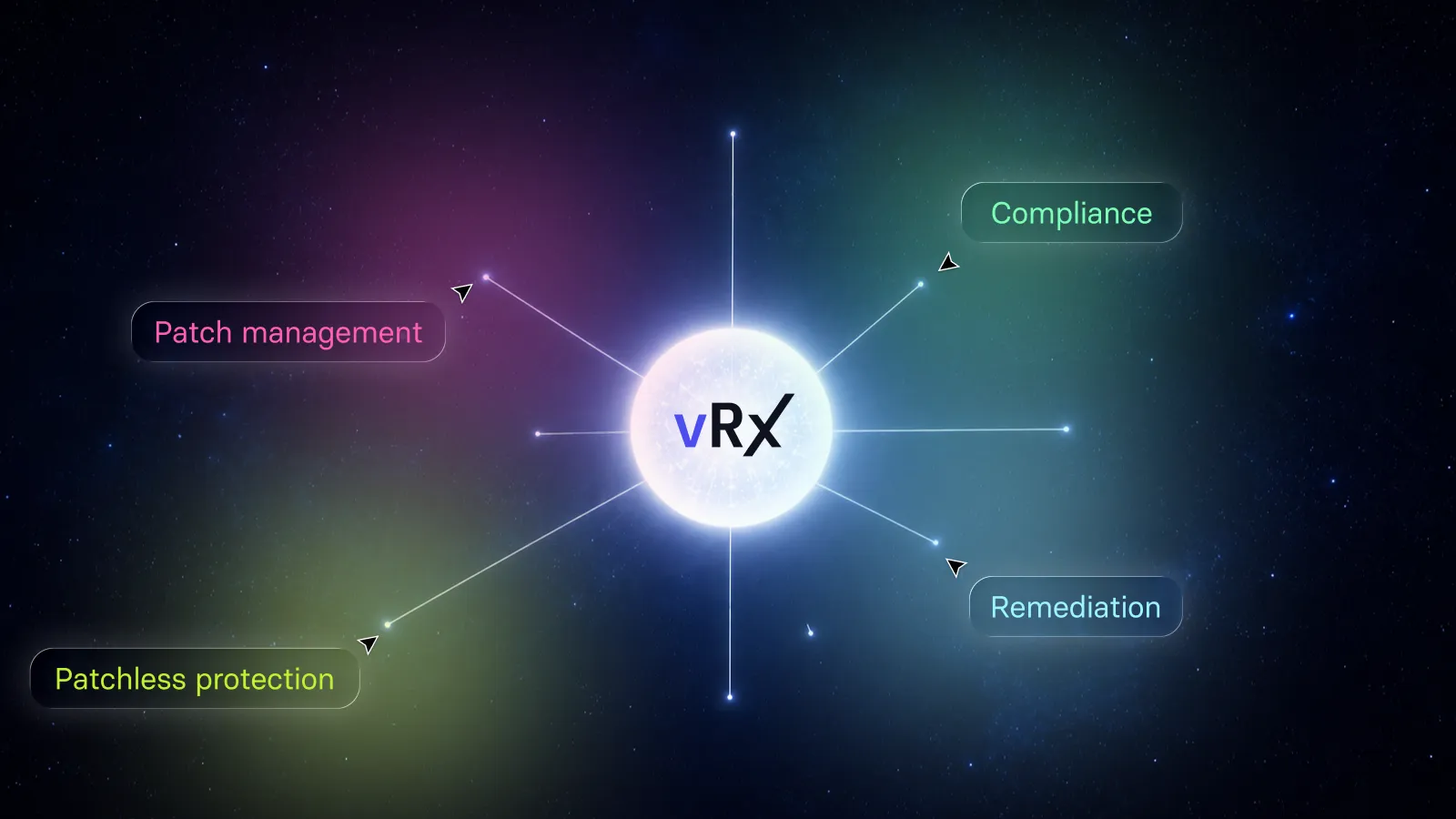
Vicarius already supports several different remediation paths.
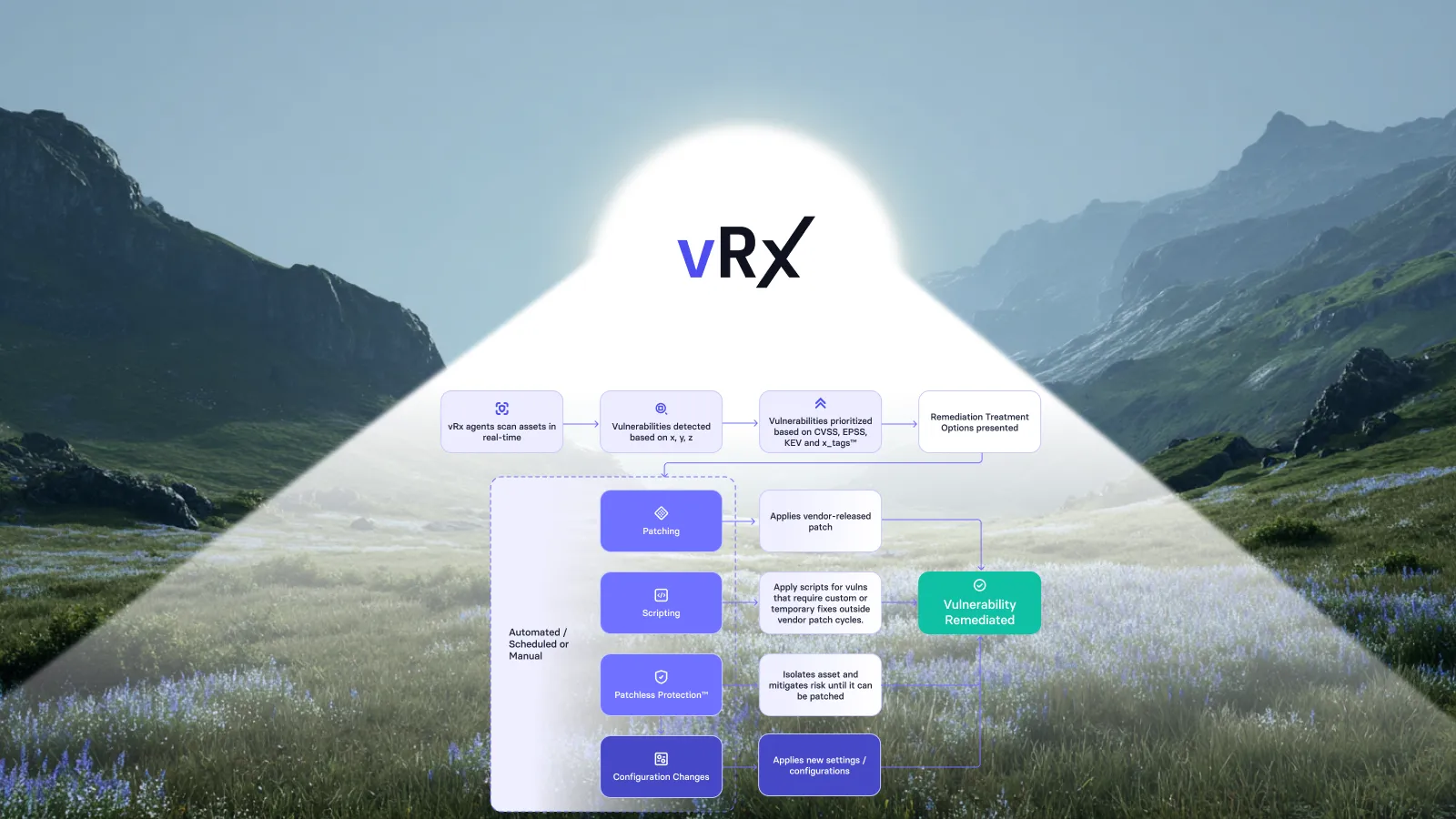
Automated vulnerability remediation in vRx connects findings with patching, scripting, compensating controls, and verification.
Patch deployment in vRx handles supported software updates and per-asset remediation coverage.
Remediation scripts in vRx cover custom and recurring corrective actions.
ScriptAI covers situations where new detection or remediation logic needs to be generated.
vShield patchless protection provides another path when permanent patching is not yet possible for an applicable vulnerability.
The larger opportunity is to connect those options through one decision layer:
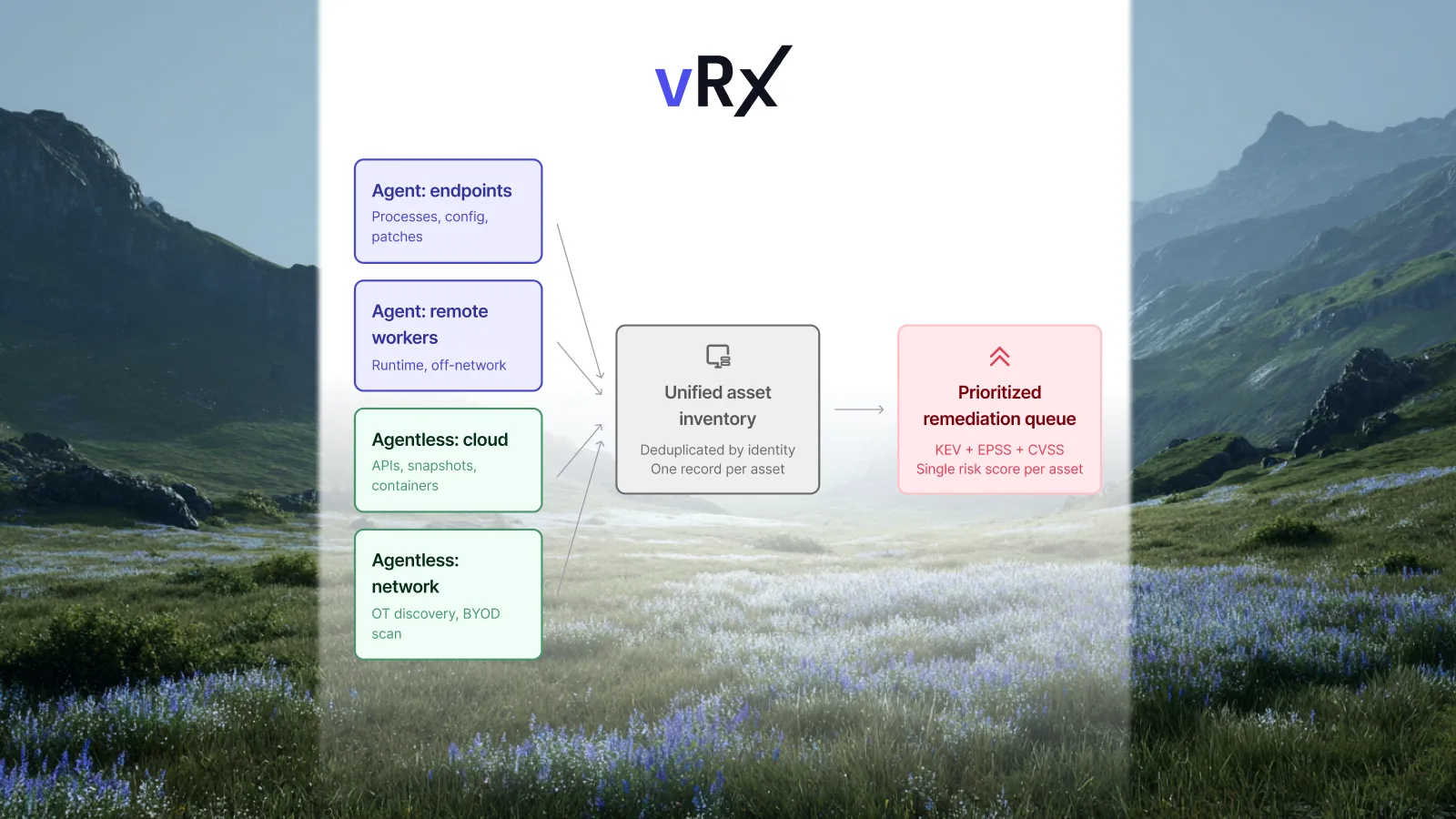
Exposure evidence → applicability → compromise state → remediation selection → validation → authorization → execution → verification
That is what makes the system agentic.
Not the presence of an LLM.
Agentic remediation should optimize for the right decision, not maximum autonomy
It is tempting to judge an autonomous remediation system by how many changes it can execute without a person.
That is the wrong metric.
Some actions are perfect candidates for full automation.
Others are not.
A routine application patch on standard workstations may be low risk enough for policy-driven execution.
Rebuilding a compromised identity server is different.
The goal should not be to remove people from every decision.
The goal should be to put human judgment where it changes the outcome.
AI handles context.
Automation handles repetition.
Policy controls authority.
Verification proves the result.
That gives us a more useful definition:
Agentic vulnerability remediation is the controlled use of AI to interpret exposure evidence, select the appropriate response, coordinate remediation actions, and adapt to results while independent policies govern execution and evidence verifies the outcome.
The future is not an AI agent that patches everything it sees.
It is a remediation system that knows when to patch, when to mitigate, when to isolate, when to recover, and when to stop.
And it can prove what happened afterward.
Frequently asked questions
What is agentic remediation?
Agentic remediation uses AI agents to interpret security context, choose a remediation path, coordinate actions, and react to the outcome. The response may include patching, mitigation, isolation, scripting, or recovery.
How is agentic remediation different from automated vulnerability remediation?
Automated vulnerability remediation executes known remediation workflows. Agentic remediation adds contextual decision-making so the system can decide which workflow is appropriate based on exploit evidence, asset state, operational constraints, and previous results.
When should an AI agent patch a vulnerability?
Patching is appropriate when a supported fix exists, applies to the affected system, and can be deployed within approved operational constraints. Sensitive changes may still require testing or approval.
When should a vulnerability be mitigated instead of patched?
Mitigation makes sense when no patch exists, when patching cannot happen quickly enough, or when a compensating control can reduce exposure while permanent remediation is prepared.
When is patching not enough?
Patching may be insufficient when exploitation happened before the patch was installed. That can require evidence preservation, containment, credential rotation, persistence removal, or system recovery in addition to the software update.
Can AI-generated remediation be trusted automatically?
No. AI-generated actions should be checked independently. Validation may include prerequisites, deterministic tests, service-health checks, vulnerability-specific checks, and rollback criteria.
What does verified remediation mean?
Verified remediation means confirming the security outcome after the action. Evidence can include software version, configuration state, service health, exploit-path validation, or proof that a compensating control is working.
From finding the CVE to choosing the right response
Finding a vulnerability is only the first decision.
The harder part is deciding what to do next, safely and quickly.
A modern remediation system needs exploit intelligence, asset context, multiple remediation options, controlled automation, and independent verification working together.
That is the direction behind Vicarius vRx automated vulnerability remediation: move from identifying exposure to selecting, executing, and verifying the response that fits the asset and the situation.