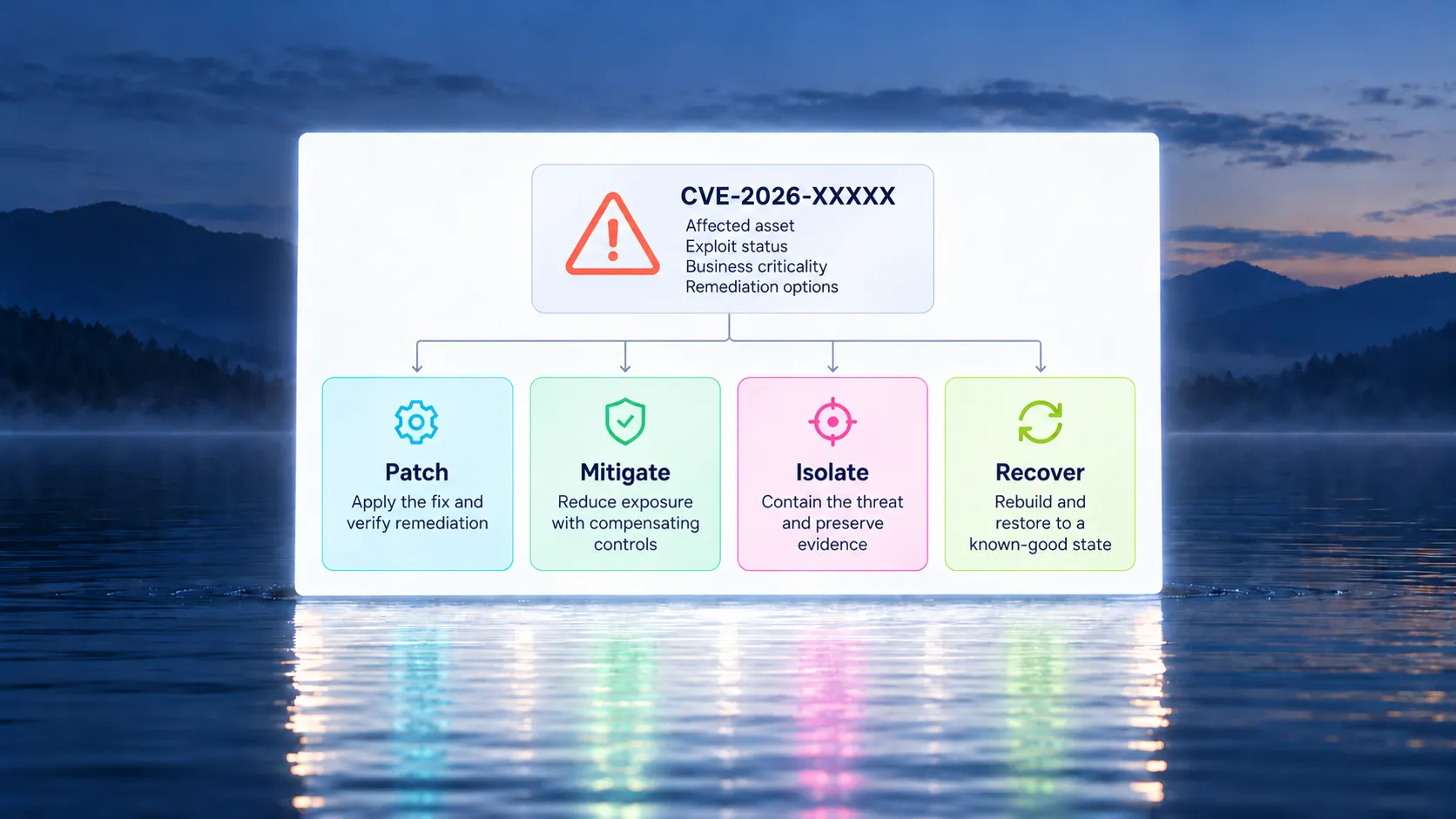


In cybersecurity, security debt is the accumulated exposure and future work created when security weaknesses or the conditions behind them remain unresolved. For investment decisions, the useful question is which change will prevent the next round of avoidable remediation while addressing the risk that exists today.
A falling finding count can conceal a recurring problem. An outdated deployment image reintroduces vulnerable software. An application remains difficult to maintain because its recovery procedure has never been tested. A configuration gets corrected, then the provisioning process restores the unsafe value.
These situations call for two connected decisions: how to address the current exposure, and whether to fund a change to the process that keeps recreating it. Combining them into a single backlog count conceals the investment choice.
When does a backlog become security debt?
A backlog is a queue of work. Security debt describes an unresolved condition and the burden of carrying it forward. Some backlog items are ordinary maintenance awaiting their planned execution. Others persist because a technical or organizational constraint makes remediation unusually costly, slow or repeatable.
For this article, use a practical test: can you name the unresolved condition, the exposure it sustains and the additional work it causes? If the answer is only “the finding is old,” investigate further before assigning a debt label.
A server with a delayed update may need an imminent deployment. A server that repeatedly misses updates because no one can restore its application may need investment in recovery engineering as well. The second decision concerns the maintenance capability of the service, not merely the age of its current findings.
NIST frames enterprise patching as preventive maintenance and recommends an enterprise strategy for making it operational. This gives leaders a useful basis for funding the ability to maintain systems, alongside the immediate work of applying corrections. NIST SP 800-40 Rev. 4.
Separate urgent exposure from recurring cost
Do not postpone an urgent fix while preparing a business case for a larger improvement. If a current exposure requires immediate action, take the appropriate response through the established risk process. The structural investment can proceed alongside it.
Keep the two decisions visible in the record. One might authorize a correction on affected systems now. The other might fund a change to the deployment template that keeps creating those systems in the same vulnerable state.
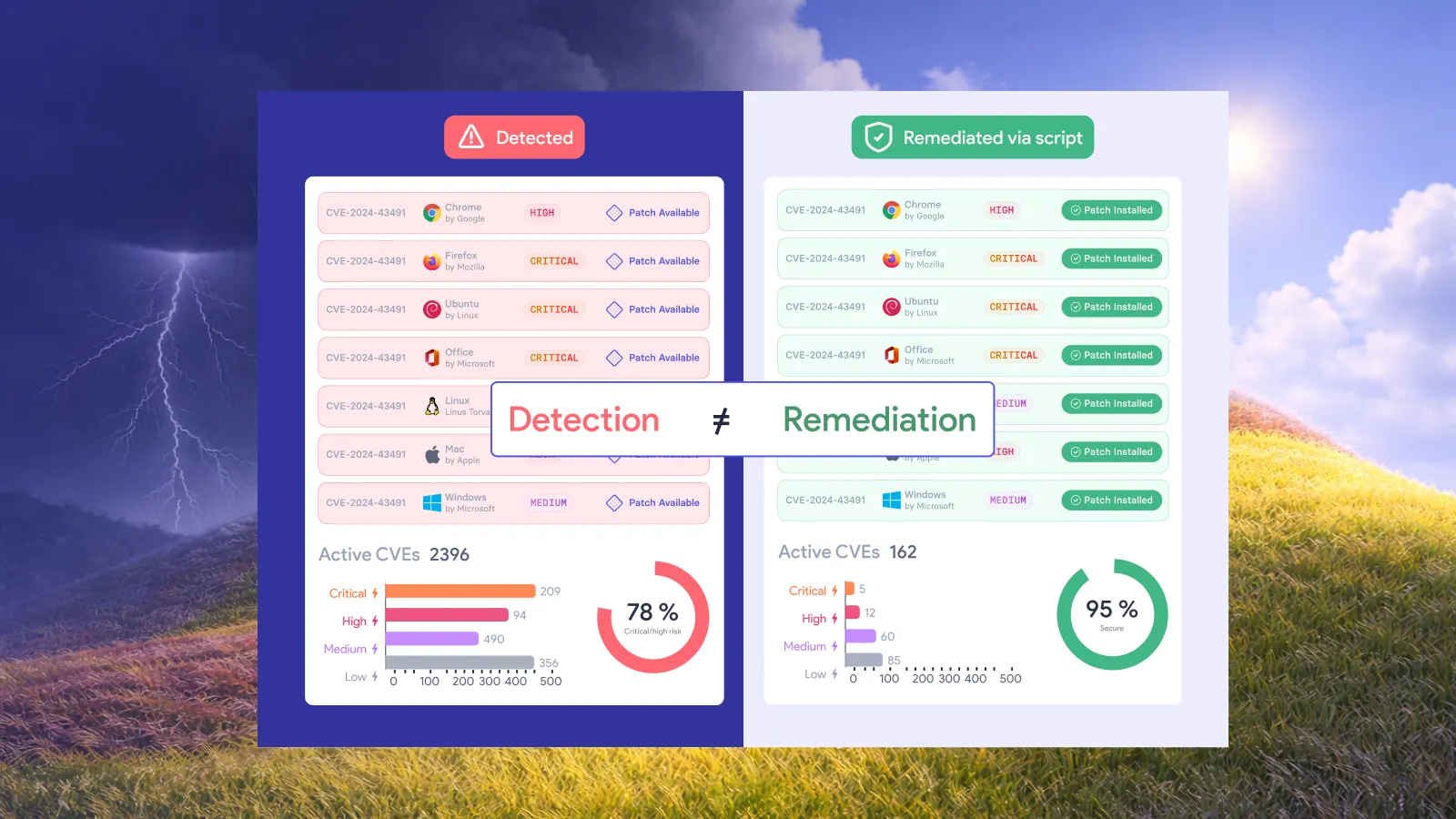
That distinction also prevents a misleading claim about success. Removing a weak default from a template does not establish that every existing instance has been corrected. Conversely, cleaning up current instances does not establish that new ones will be safe.
Require evidence for both populations. Check the existing affected estate for the immediate remediation result. Then inspect newly created or changed systems to see whether the recurring cause has been removed.
Choose an investment unit that an owner can change
A debt entry should identify a concrete cause rather than a broad category such as “legacy infrastructure.” Broad labels are difficult to fund and almost impossible to close.
Prefer a statement such as: the approved build image contains an obsolete component, and newly provisioned systems need the same corrective deployment. The proposed investment can then name the image owner, the engineering change, the rollout scope and the test that would demonstrate success.
Use this proposed comparison to connect recurring work with an investment and a testable result.
| Observed recurring work | Investment to evaluate | Evidence that the cause changed |
|---|---|---|
| New instances require the same software correction. | Repair and govern the source image or deployment template. | Representative new instances contain the intended supported component. |
| Updates wait because recovery is uncertain. | Develop and test the service's recovery procedure. | A representative exercise restores the agreed service function within its required limits. |
| A corrected setting returns after provisioning. | Correct the provisioning source and its validation checks. | Newly provisioned systems retain the required setting. |
| Each change needs the same ownership investigation. | Establish maintained service ownership and an escalation route. | Sample remediation requests reach a responsible owner without repeating that investigation. |
These are hypotheses to test against local evidence. A recurring symptom may have several causes. Replacing a template will not solve exceptions created through an independent deployment path, so specify which path the investment addresses.
Keep operational backlog reduction as a related workstream. The existing guide to reducing patch backlogs covers execution practices. The investment decision here asks why a particular class of that work keeps returning.
Compare the cost of carrying the condition with changing it
Use a defined horizon and a transparent calculation. Separate implementation effort, continuing effort and residual risk. NIST's guidance on prioritizing cybersecurity risk connects response selection and projected response cost with enterprise risk decisions. NIST IR 8286B.
Here is a hypothetical six-month comparison for repairing a deployment template. Every input below is invented for illustration, not an industry benchmark or a customer result.
| Effort component | Continue current process | Repair the template |
|---|---|---|
| Initial engineering and validation | 0 hours | 60 hours |
| Recurring corrective work | 18 hours per month | 4 hours per month |
| Total over six months | 108 hours | 84 hours |
The proposed change saves 14 hours of recurring work per month. Its 60-hour initial effort is recovered after approximately 4.3 months on an effort basis: 60 divided by 14. Across six months, the difference is 24 hours.
That is a capacity estimate, not a claim of cash savings. The team may use the recovered hours for other security work while payroll remains unchanged. A financial comparison would also need applicable labor costs, licenses, support, testing and any other relevant expenses.
Test the assumptions before approving the work. If recurring effort falls only from 18 to 10 hours per month, the six-month total becomes 120 hours, greater than continuing the current process. The effort break-even moves to 7.5 months. The investment might still be justified by exposure reduction or a longer planning horizon, but the original labor argument would no longer hold.
Support the risk argument separately
Hours saved do not measure security risk removed. A cheap change could address a severe exposure; an expensive project could eliminate repetitive work without materially changing a serious risk.
Put the risk argument next to the effort calculation. State the service affected, the adverse event of concern, the existing controls and what the proposed response would change. Identify uncertainty rather than filling it with an unsupported probability or an impressive breach-cost average.
For example, a template repair might reduce the time newly created systems spend exposed to a known weakness. Demonstrate that with representative provisioning and follow-up assessment. Do not convert the result into a financial loss avoided unless a defensible risk analysis supports that step.
Compare alternatives that address the same cause. A small correction to a maintained template may be preferable to a broad platform project. In another case, the supposedly small fix may depend on an unsupported application that requires a larger decision. The scope should follow the evidence.
Set a test for completion before funding
The completion test should describe an observable result. “Improve patching” leaves too much room for interpretation. “New instances from the approved template no longer need this corrective deployment” gives the team a condition it can inspect.
Choose the observation period and sample to fit the process. A rarely used provisioning path may need longer observation than a daily deployment process. If the path was never exercised, an absence of new findings is weak evidence.
Track any work transferred to another team. A change that saves security analysts time but adds a larger recurring burden to application owners has shifted effort rather than eliminated it. Include that burden in the next review.
Keep unresolved exposures visible after the investment closes. Existing assets may still require remediation, and temporary controls may still need monitoring. The broader discussion of remediation effectiveness provides context for distinguishing completed activity from a demonstrated result.
Frequently asked questions
Is security debt the same as technical debt?
They overlap. Technical debt concerns the future cost of earlier technical decisions; security debt focuses on unresolved security exposure and the work needed to address it. Use the distinction to clarify ownership and consequences, rather than to create competing inventories.
Does every old vulnerability count as security debt?
No. Age alone does not explain why work persists. Identify the unresolved condition, its exposure and its continuing burden. A finding awaiting normal execution and a recurring maintenance constraint may need different decisions.
How should leaders prioritize security debt?
Address urgent exposures through the established risk process, then compare investments using their expected risk effect, implementation effort, continuing cost and evidence of recurrence. Do not let a convenient labor calculation replace a material security decision.
Can automation remove security debt?
Automation can address recurring work when it corrects or prevents the relevant condition. Automating repeated cleanup may reduce effort while leaving the source of the problem intact. Verify what changes in the originating process and in the affected systems.
What proves that a security debt investment worked?
Evidence that the targeted cause changed, the expected improvement persists under representative use, and unresolved exposure remains accounted for. A completed project or a temporary drop in findings is insufficient on its own.
Take one recurring cause to the next investment review
Select a recurring remediation pattern and name its cause, owner and affected service. Compare continuing the current response with one targeted change over a defined horizon. Bring the assumptions, a sensitivity check and a test for completion. That gives leadership a decision it can fund and later verify.