

Last updated: October 2026
NinjaOne vs BigFix: which should you pick?
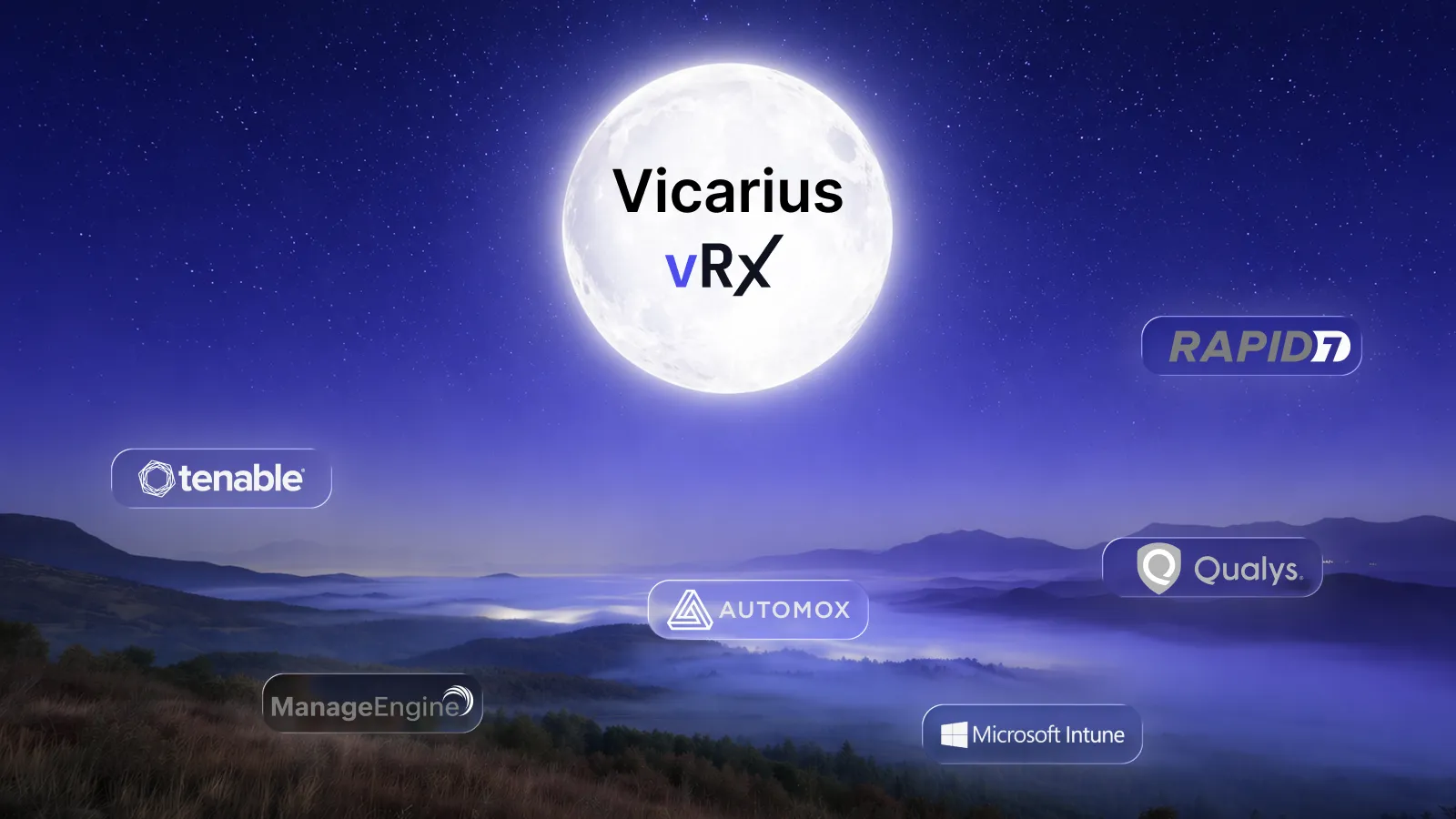
Pick NinjaOne if you're an MSP or a mid-sized IT team that wants endpoint management and patching running in days, from the cloud, at a predictable per-device price. Pick HCL BigFix if you're a large enterprise with tens of thousands of endpoints, mixed operating systems including UNIX, strict compliance requirements, or a need to run on-prem or air-gapped. For vulnerability management specifically, both rely on a separate scanner (such as Tenable, Qualys or Rapid7) for full detection.
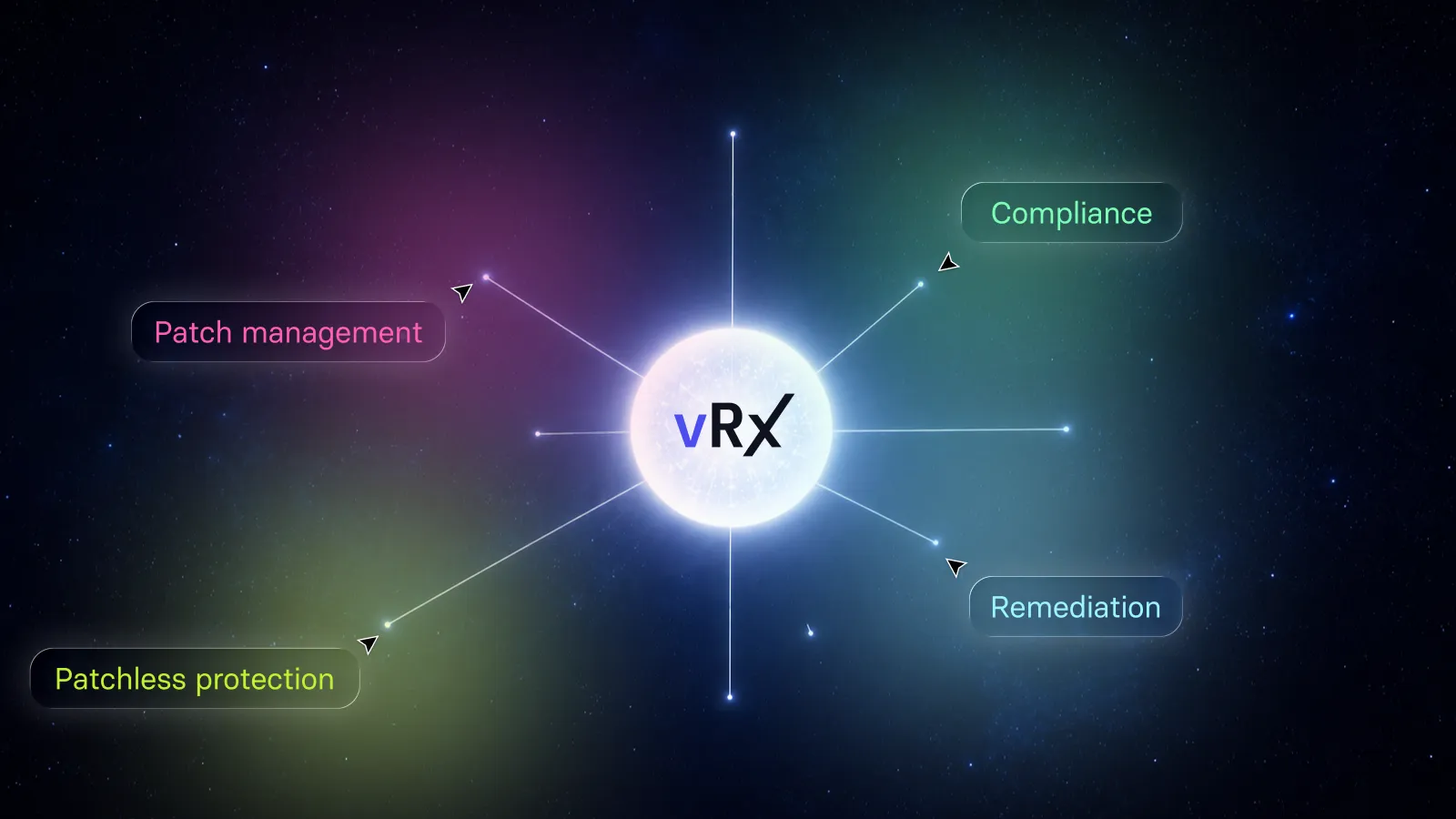
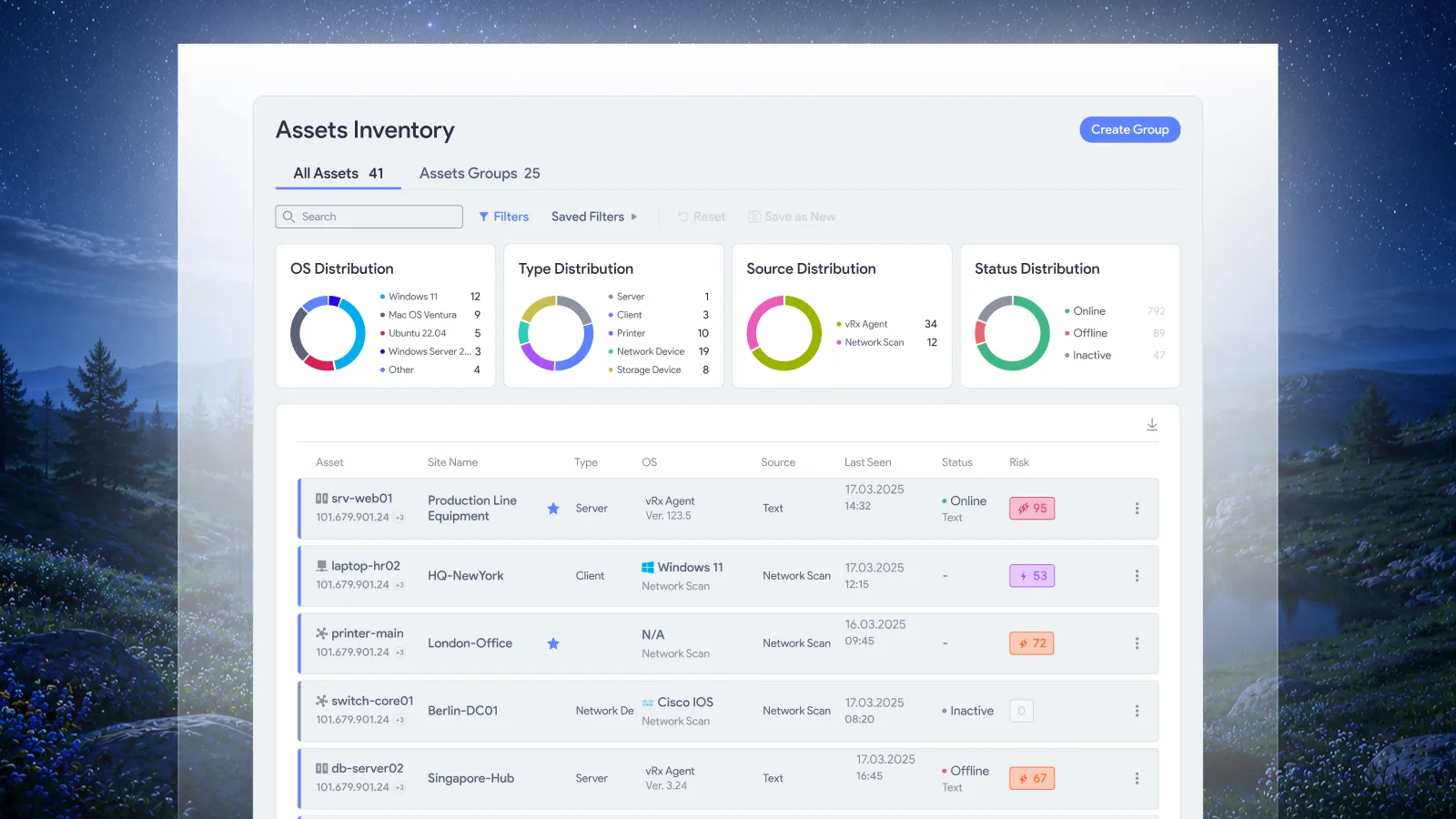
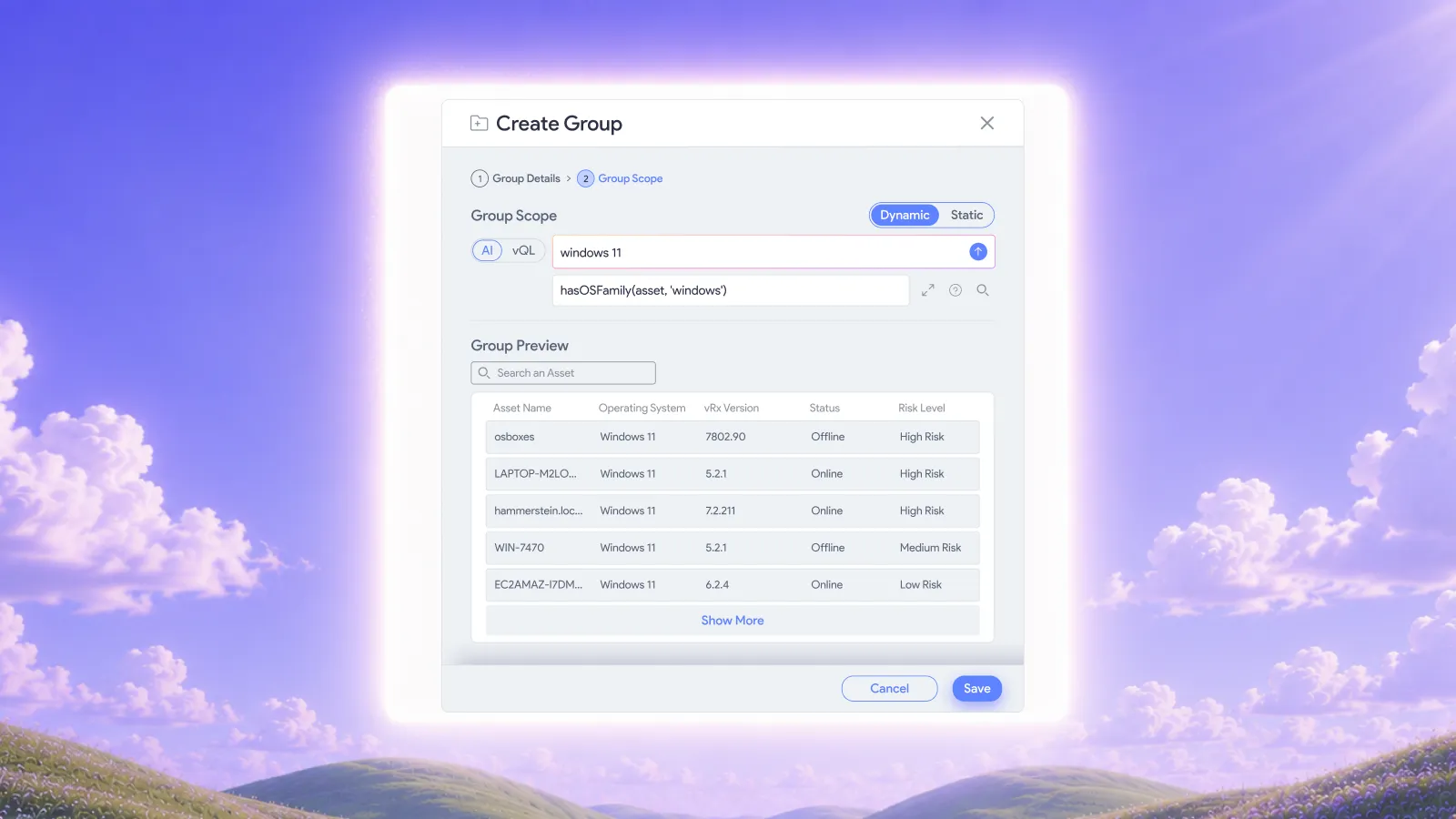
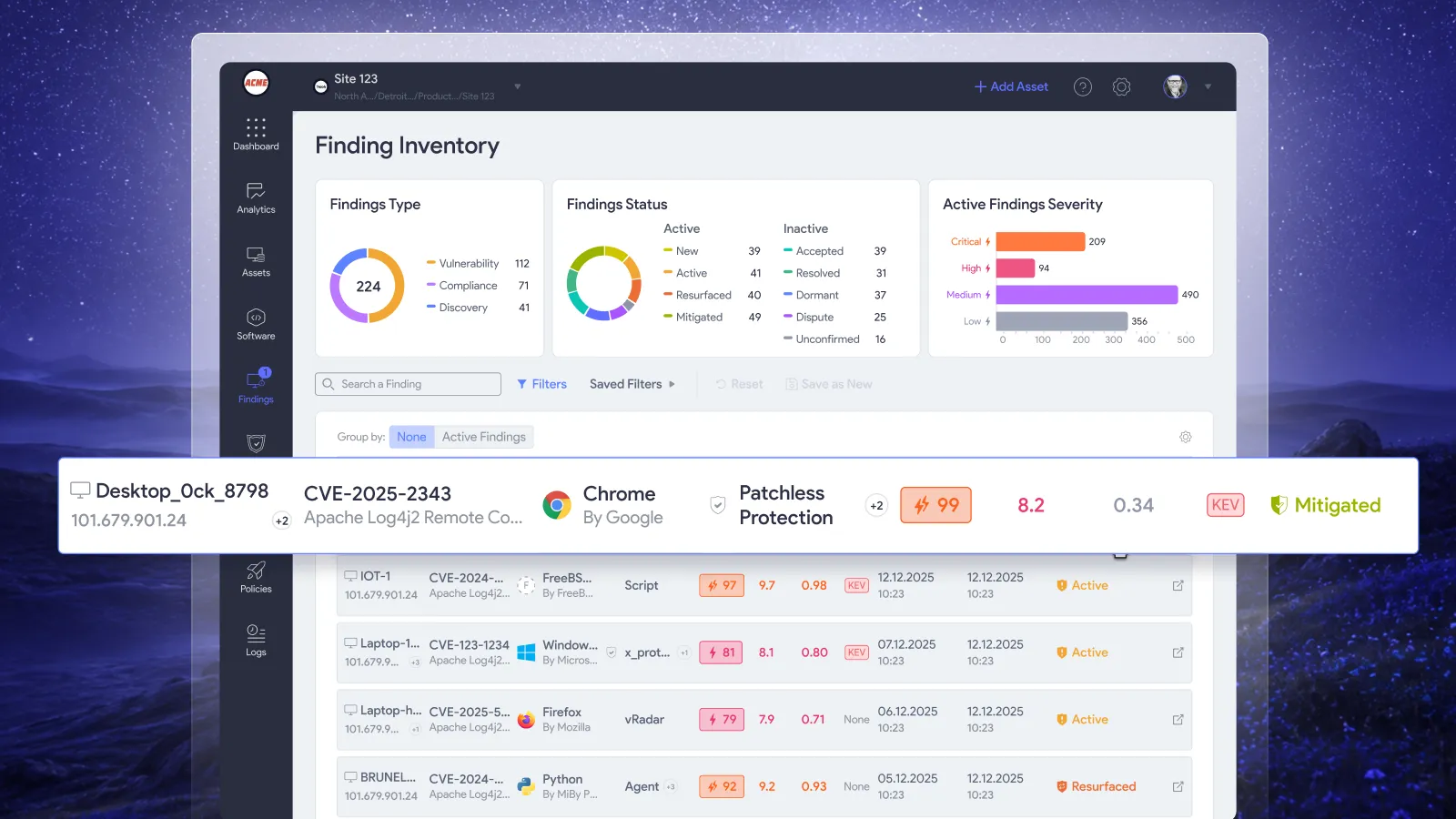
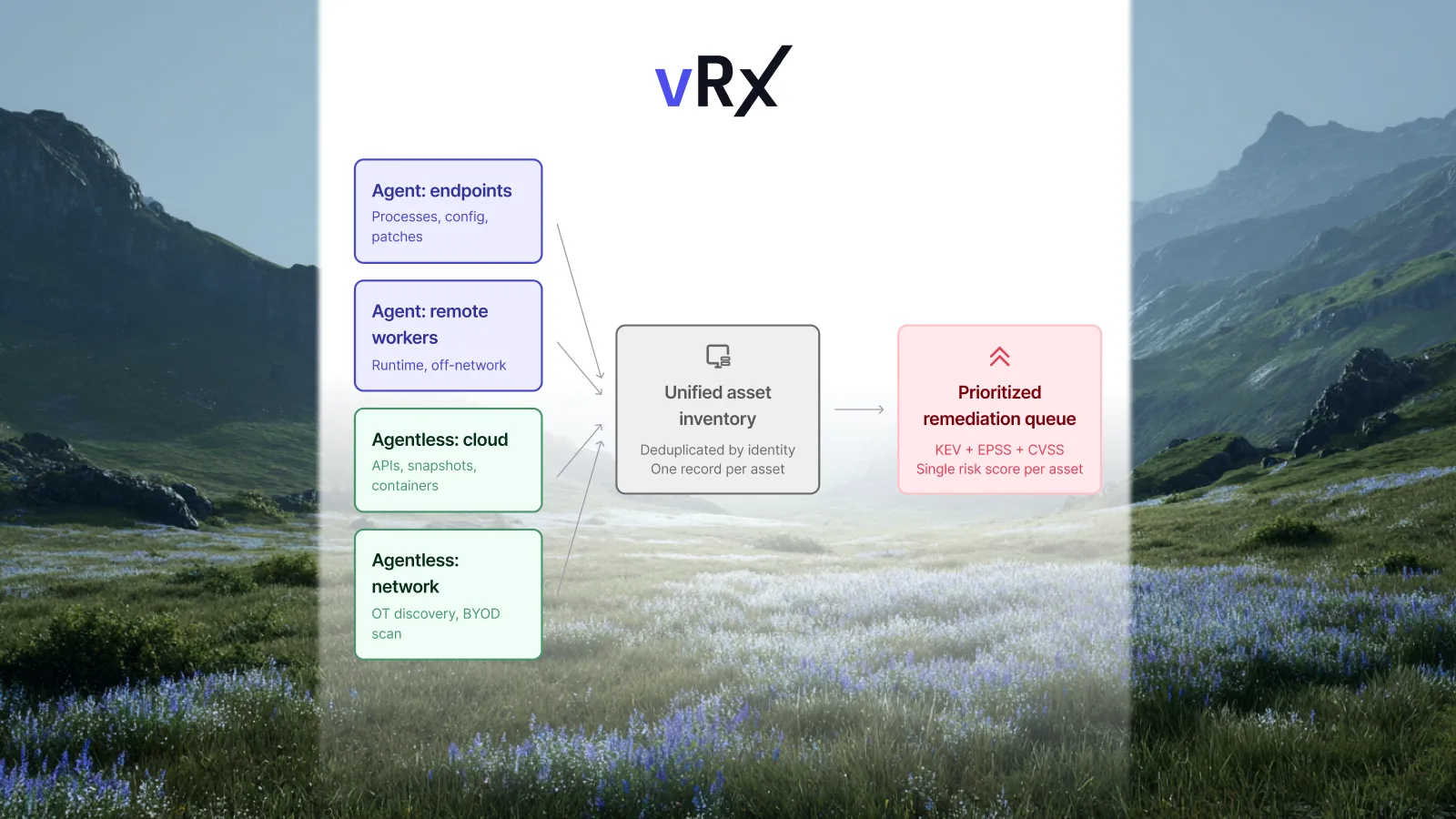
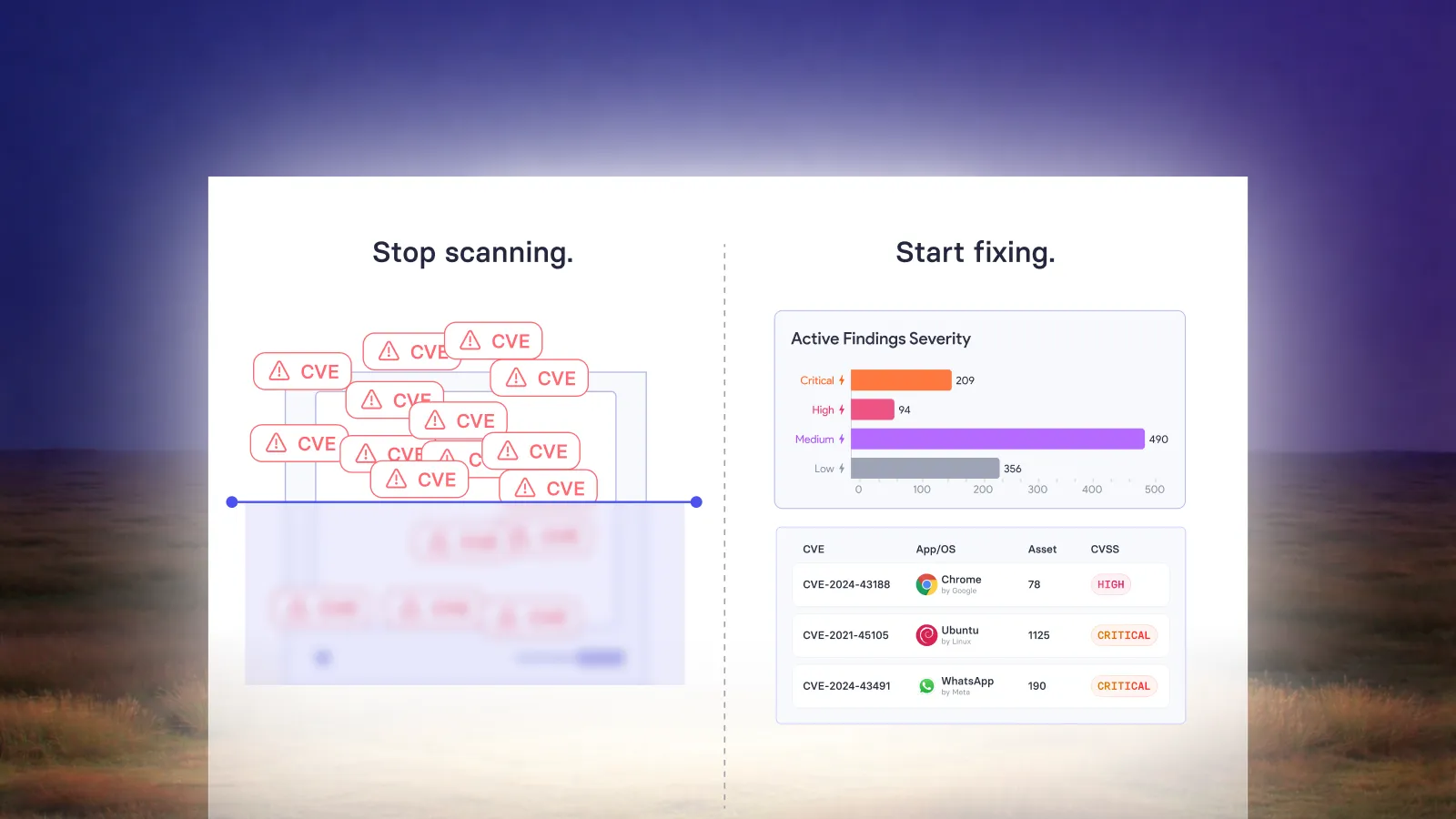
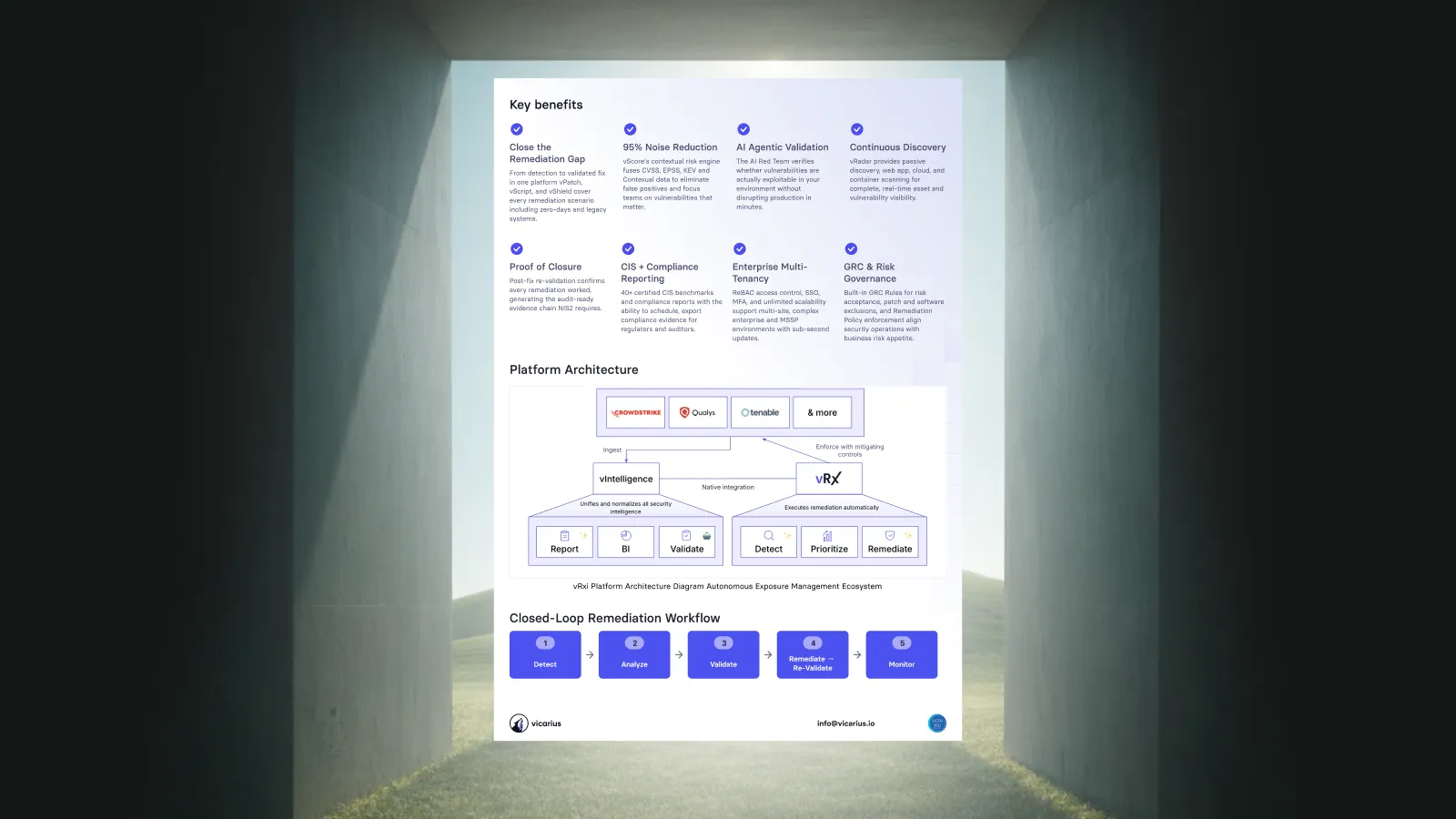
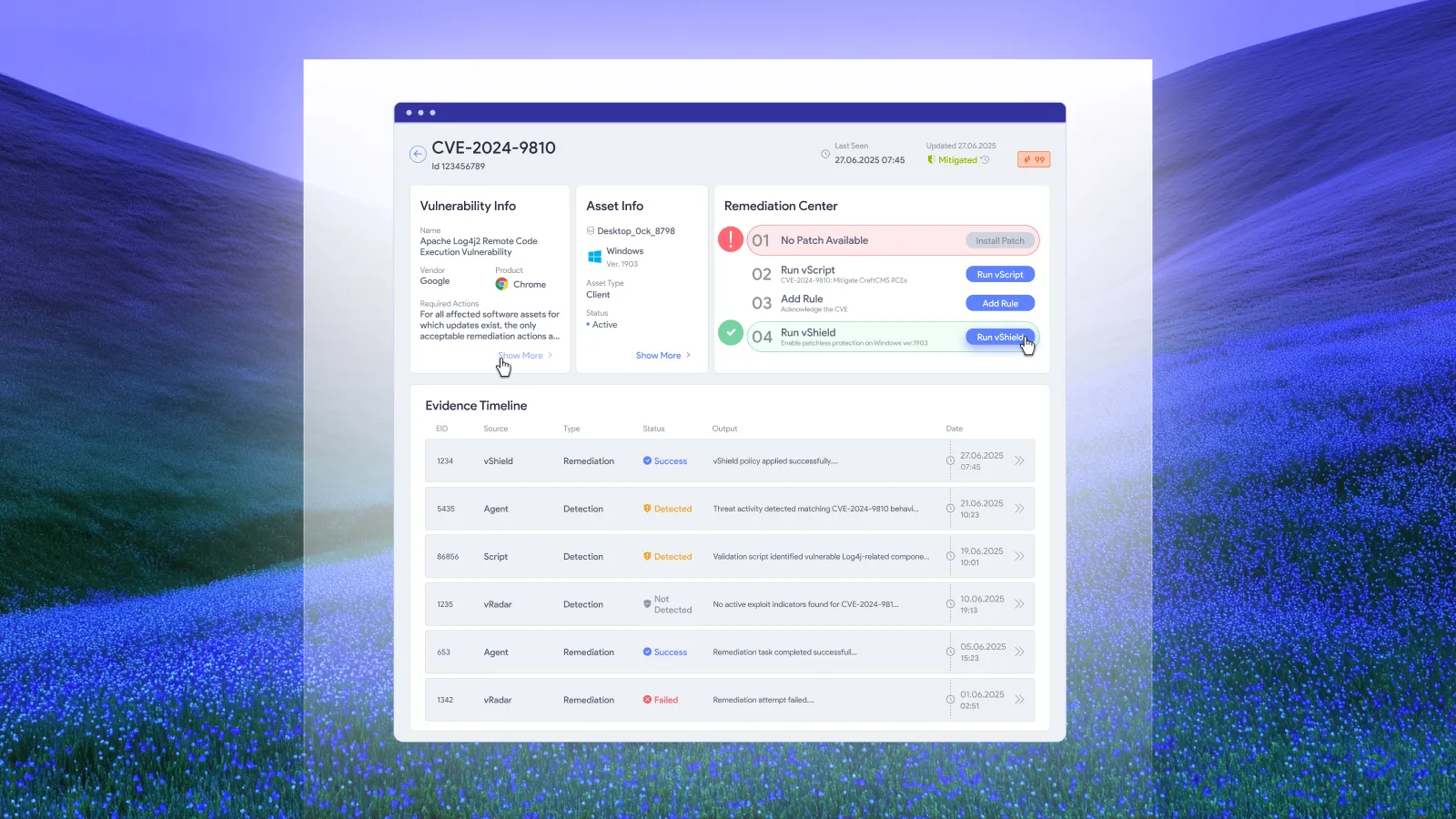
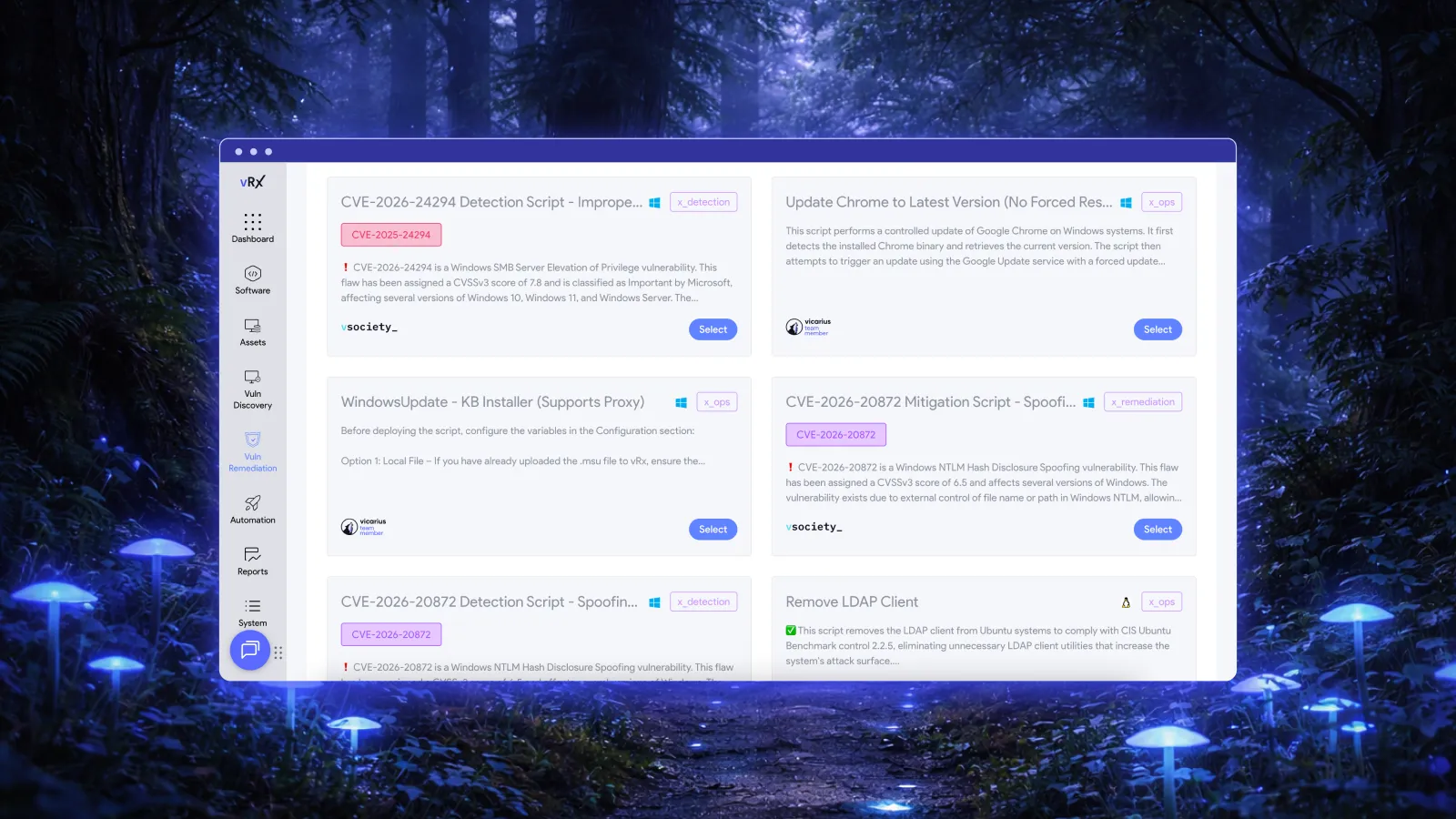
If your real problem is the vulnerability backlog, neither is a vulnerability management platform first. Vicarius vRx finds vulnerabilities itself, with an agent and the agentless vRadar scanner. It fixes them natively with patching, scripted fixes and patchless protection.
Disclosure: Vicarius makes vRx, a vulnerability remediation platform. We've aimed to be fair to both NinjaOne and BigFix.
What BigFix and NinjaOne are in 2026
HCL BigFix is an enterprise endpoint management platform, originally from IBM and owned by HCLSoftware since 2019. One lightweight agent and a relay architecture let a single deployment manage very large, mixed estates. It's sold as several offerings:
- BigFix Workspace and Workspace+: endpoint management for laptops and desktops. Workspace+ adds digital employee experience (DEX) tooling and AEX, an AI assistant that answers employees' IT questions and runs automated fixes.
- BigFix Lifecycle and Remediate: server and endpoint lifecycle management and patching.
- BigFix Compliance: continuous configuration checks against CIS and DISA STIG baselines.
- BigFix Insights for Vulnerability Remediation (IVR) and CyberFOCUS Analytics: take findings from Tenable, Qualys or Rapid7 and match each vulnerability to the BigFix fix (a "Fixlet") that closes it.
NinjaOne is a cloud-native endpoint management and RMM platform, popular with MSPs and mid-sized IT teams. Alongside remote monitoring and management, it offers:
- Autonomous Patch Management: Windows, macOS, Linux and more than 6,000 third-party apps, with Patch Intelligence AI to hold back risky updates.
- Vulnerability Management: matches installed software against CVE data on Windows endpoints, and imports Qualys, Rapid7 and Tenable findings.
- DEX features (since March 2025): a self-service portal, user-centred dashboards and proactive monitoring with automated remediation.
BigFix vs NinjaOne: features compared
Vulnerability detection
Neither is a vulnerability scanner first.
- NinjaOne: detects vulnerabilities by matching installed software against CVE data. Native detection covers Windows only, and you import scanner results for anything else.
- BigFix: IVR takes Tenable, Qualys or Rapid7 findings and correlates them with available Fixlets. BigFix Compliance adds its own configuration checks, but there's no native vulnerability scanner.
Edge: tie. Budget for a scanner with either. BigFix's correlation is the more mature workflow for large teams that already run one.
Patching
Both patch natively, with their own content and engines.
- NinjaOne: Windows, macOS, Linux and 6,000+ third-party apps, CVE-to-patch mapping, risk-based rules, and Patch Intelligence AI to pause problem updates.
- BigFix: pre-built Fixlets for OS and third-party patches across Windows, macOS, Linux and UNIX. Its supersedence engine skips patches that newer ones have replaced, and it's built for large, staged rollouts.
Edge: tie. NinjaOne is simpler to run. BigFix covers more operating systems and larger estates.
Fixing vulnerabilities when no patch exists
- NinjaOne: no packaged zero-day mitigations; you use its general scripting to push configuration changes.
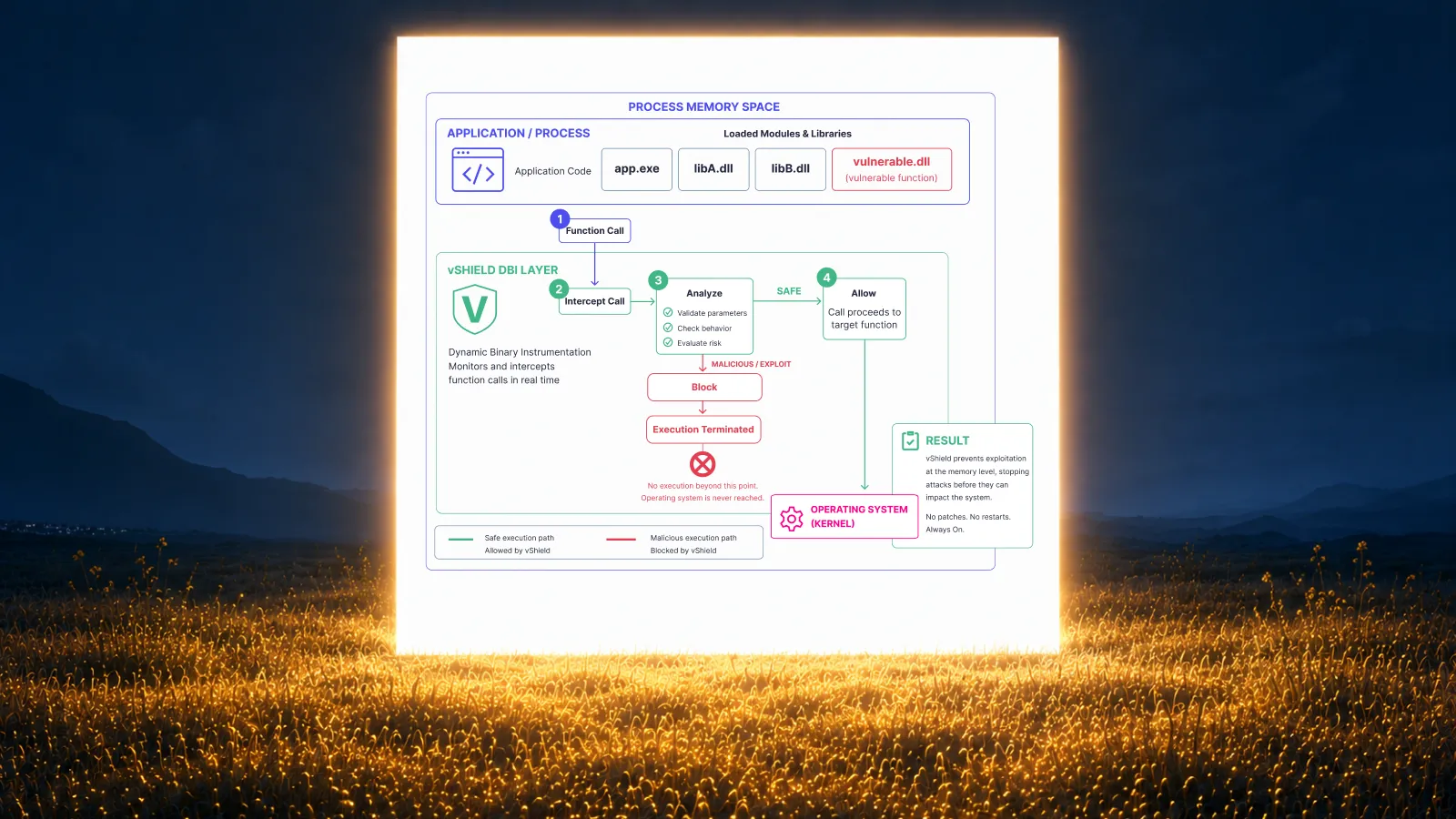
- BigFix: Fixlets and compliance policies can apply configuration changes and remove or disable vulnerable software at scale, but there's no exploit-level protection.
Edge: BigFix, narrowly, for its larger library of ready-made configuration content.
Compliance
- NinjaOne: reports on patch and device status, but doesn't audit against security benchmarks.
- BigFix: BigFix Compliance continuously checks and remediates against CIS and DISA STIG baselines, a common requirement in government, finance and healthcare.
Edge: BigFix.
Scale and operating systems
- NinjaOne: comfortable from a handful to tens of thousands of endpoints on Windows, macOS and Linux.
- BigFix: designed for very large estates, in the hundreds of thousands of endpoints. It also manages UNIX systems such as AIX, Solaris and HP-UX, which most modern tools don't.
Edge: BigFix, for large or mixed enterprises.
Digital employee experience: BigFix Workspace+ vs NinjaOne DEX
- BigFix Workspace+: adds AEX, an AI assistant that answers employees' IT questions in natural language and runs automated fixes from BigFix's automation library.
- NinjaOne: its DEX features (March 2025) add a self-service portal for tasks such as software installs and file recovery, user-centred dashboards, and proactive monitoring with automated fixes.
Edge: tie. BigFix leans on AI self-help; NinjaOne on self-service and IT-side visibility.
Deployment and ease of use
- NinjaOne: cloud only, quick to deploy, and widely praised for an easy console.
- BigFix: runs on-prem, including air-gapped networks, or as SaaS. It's powerful but has a steeper learning curve, and on-prem deployments need server and relay infrastructure.
Edge: NinjaOne for speed and ease; BigFix if you need on-prem or air-gapped.
An honest take on BigFix
BigFix is one of the most capable endpoint management platforms for large, complex and regulated environments. Its scale, UNIX support, compliance content and patch reliability are hard to match. The trade-offs are complexity, a learning curve, and infrastructure to run if you deploy on-prem. For a cloud-first team of a few hundred or a few thousand endpoints, that power is usually more than you need. That's where NinjaOne, or a remediation-first platform, tends to fit better.
BigFix vs NinjaOne pricing in 2026
Neither vendor publishes a full price list.
What this means in practice
- For a few hundred devices, NinjaOne is usually the simpler and more predictable buy.
- For very large estates, BigFix's enterprise agreements and per-device rates at volume can be competitive. Factor in the people and infrastructure needed to run it, though.
- Neither includes a vulnerability scanner, so add the cost of Tenable, Qualys or Rapid7 if you need full detection.
Prices change often. Confirm current pricing with each vendor before you buy.
Where each falls short
NinjaOne
- Detection is limited. Native vulnerability detection is Windows-only and inventory-based, so you need a scanner for broader coverage.
- No packaged zero-day mitigations, and no compliance benchmark auditing.
- Cloud only, which rules it out for air-gapped or on-prem-only environments.
- Built for the mid-market. It's less proven than BigFix at the very largest enterprise scale.
HCL BigFix
- Complex to run. On-prem deployments need servers and relays, and teams typically need dedicated BigFix expertise.
- No native vulnerability scanner. IVR depends on Tenable, Qualys or Rapid7 data.
- Modular licensing. Workspace, Lifecycle, Compliance, Remediate and IVR are separate offerings.
- No published pricing.
Alternatives to BigFix and NinjaOne
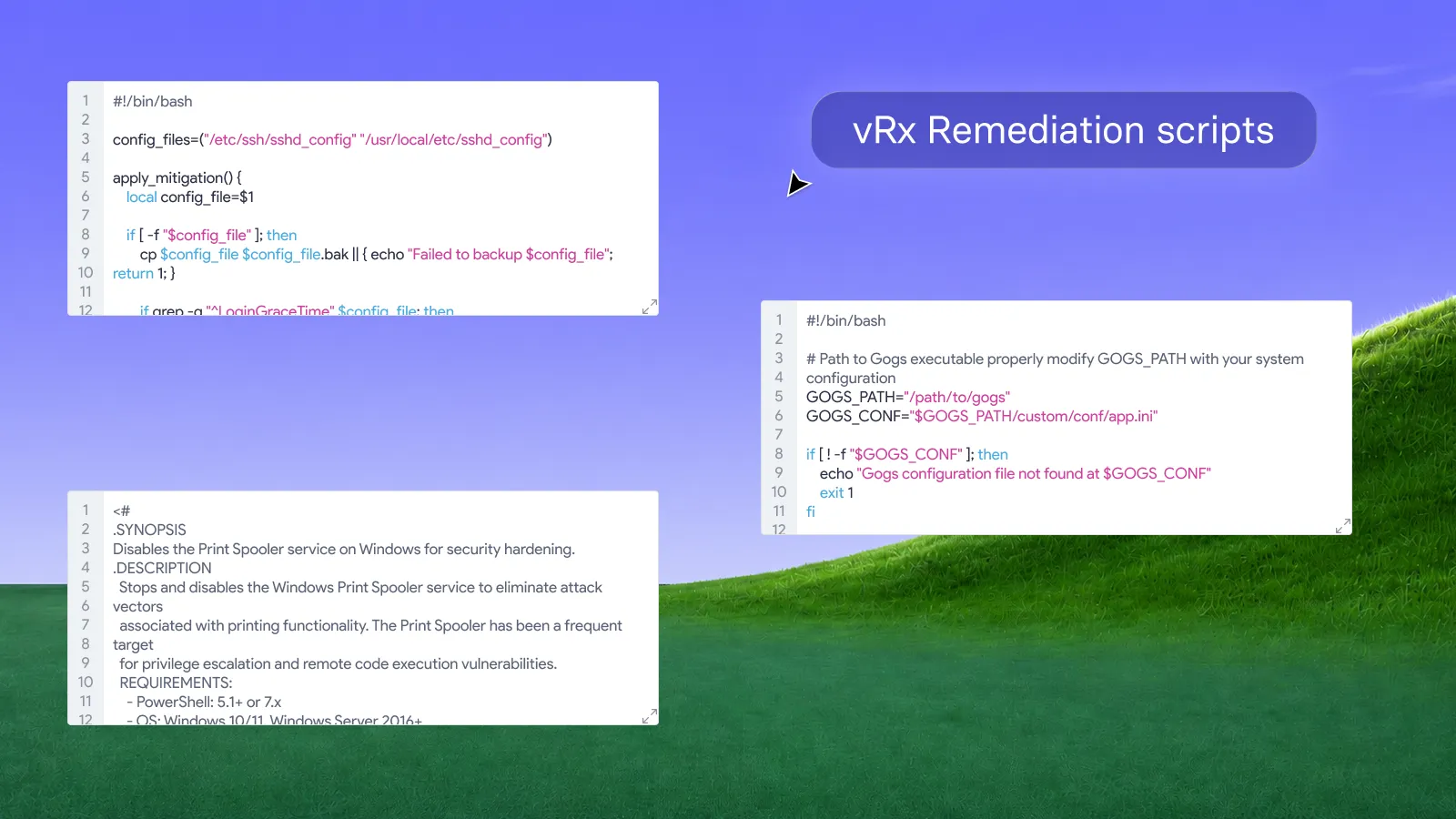
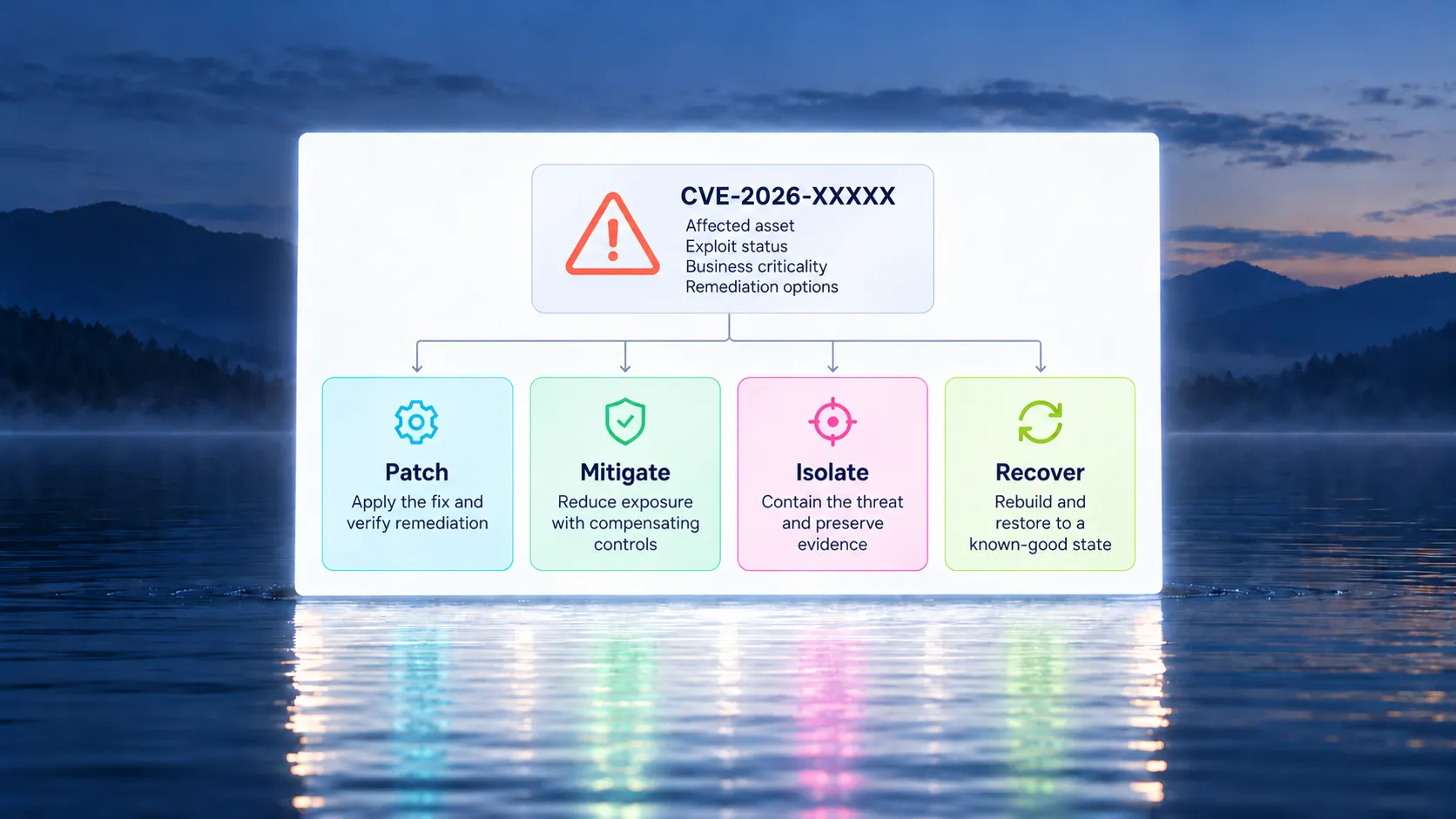
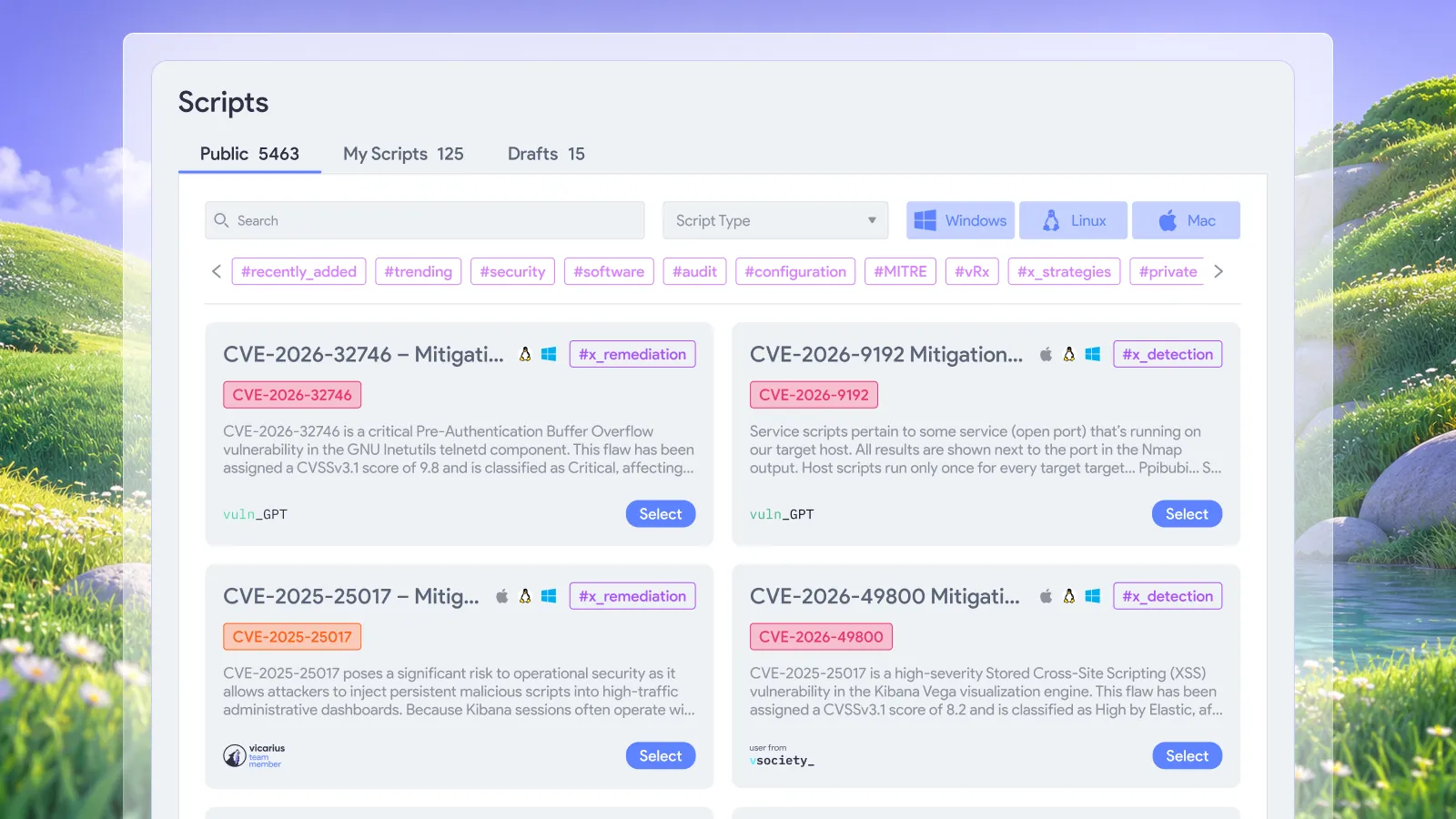
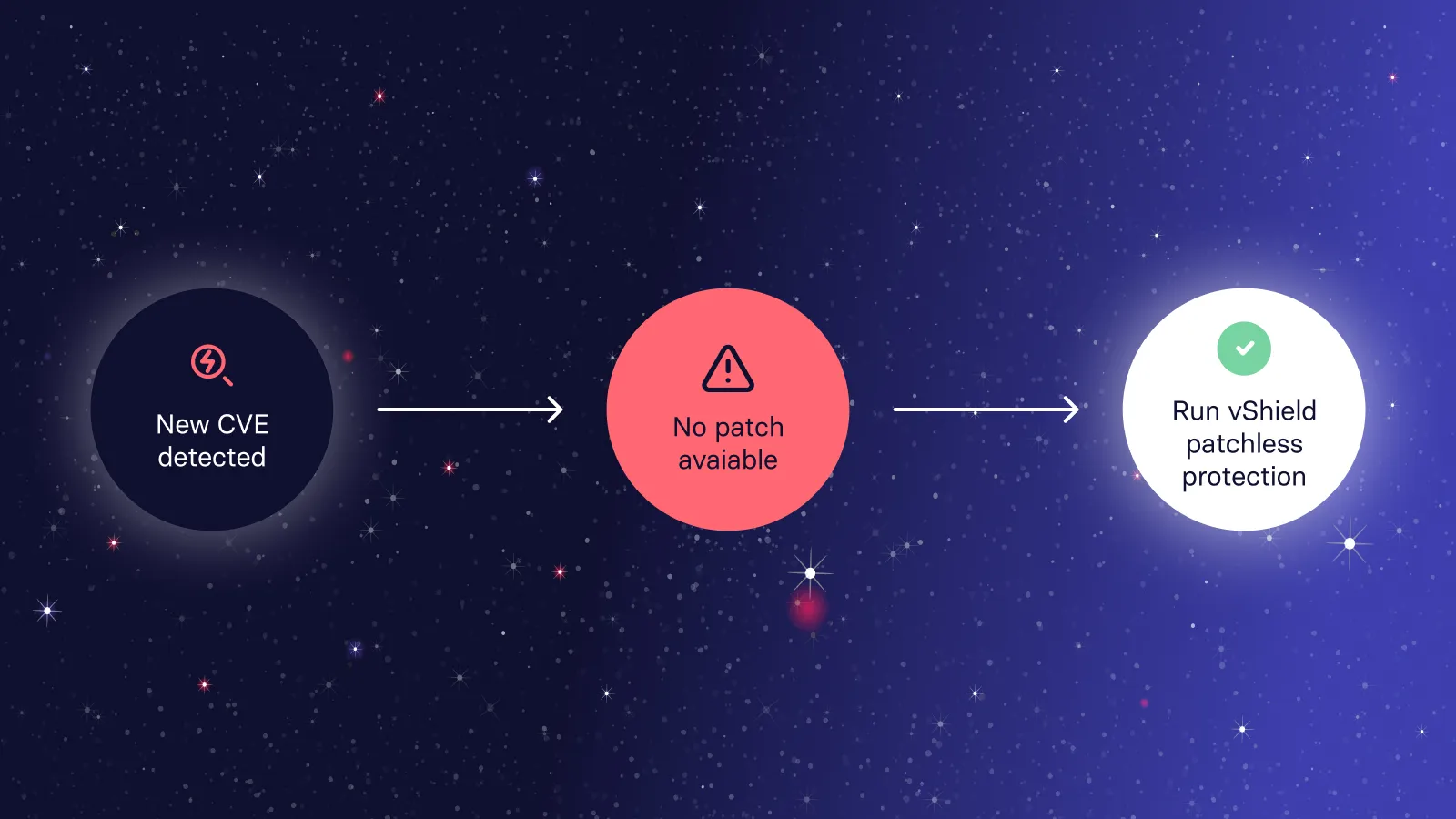
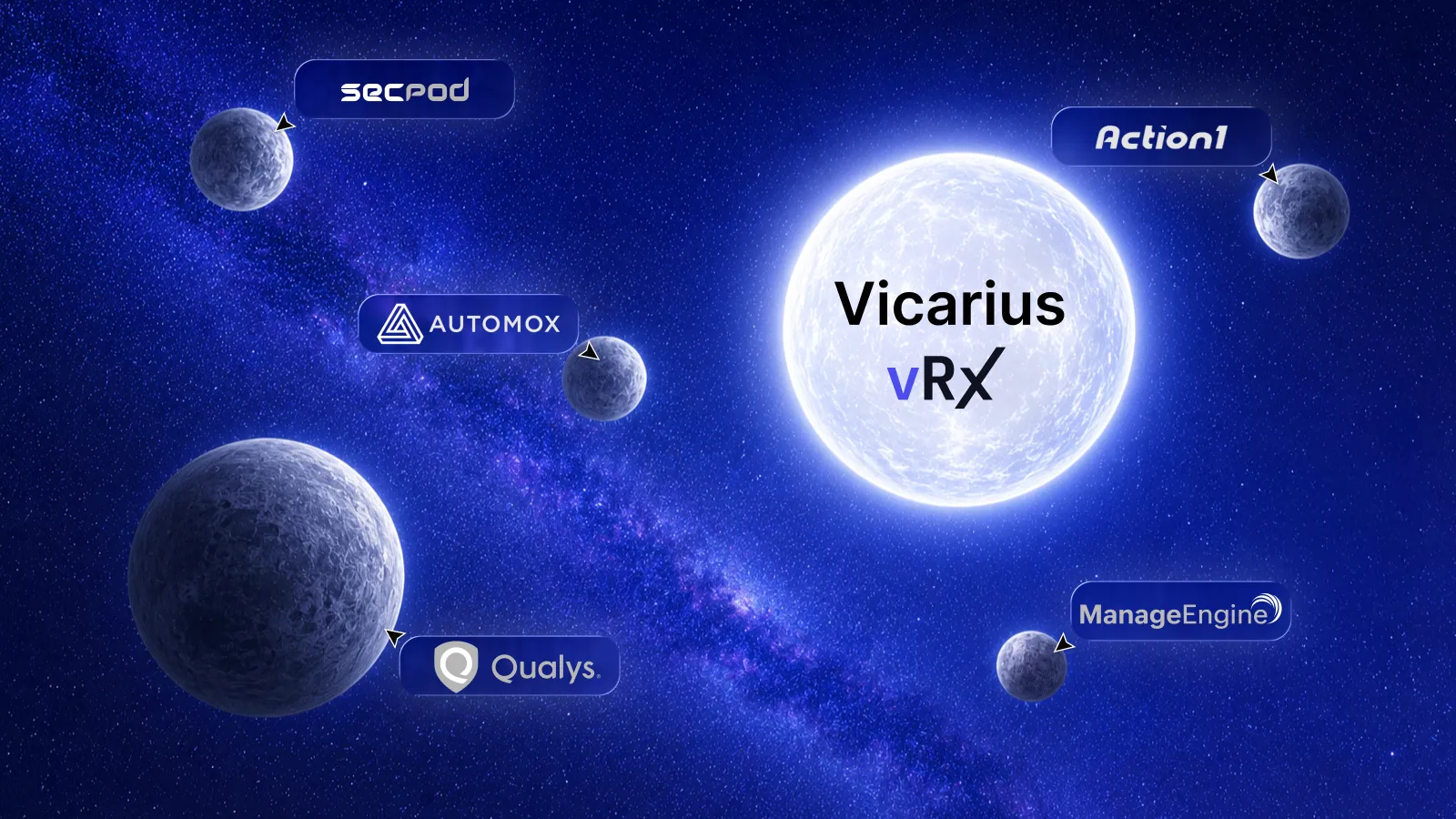
- Vicarius vRx: a SaaS platform built for vulnerability remediation. It finds vulnerabilities itself, with an agent on Windows, macOS and Linux and the agentless vRadar scanner, including web apps for the OWASP Top 10. It fixes them natively with patching for 20,000+ third-party apps, vScript and ScriptAI scripted fixes, and vShield patchless protection. See Vicarius vRx vs BigFix and Vicarius vRx vs NinjaOne.
- ManageEngine: Vulnerability Manager Plus combines scanning, patching and compliance, on-prem or cloud. See ManageEngine vs BigFix and NinjaOne vs ManageEngine.
- Automox: cloud-native patching with Worklets for scripted fixes. See Automox vs BigFix and Automox vs NinjaOne.
- Microsoft Intune and Defender Vulnerability Management: for organisations standardised on Microsoft 365.
Frequently asked questions
BigFix vs NinjaOne: which should I pick?
Pick NinjaOne if you're an MSP or a cloud-first IT team managing up to a few thousand endpoints and want fast setup, easy patching and RMM in one console. Pick HCL BigFix if you're a large enterprise with tens of thousands of endpoints, UNIX systems, strict compliance needs, or on-prem and air-gapped requirements.
Is HCL BigFix or NinjaOne better for IT operations teams?
NinjaOne is usually better for small and mid-sized IT operations teams that value speed and simplicity. BigFix is better for large IT operations teams that need to manage very large, mixed estates and enforce compliance baselines, and that have the expertise to run it.
Which scales better for large enterprises, HCL BigFix or NinjaOne?
BigFix. It's designed for estates in the hundreds of thousands of endpoints, supports UNIX as well as Windows, macOS and Linux, and can run on-prem or air-gapped. NinjaOne handles tens of thousands of endpoints well, but it's cloud only and built mainly for the mid-market.
Is BigFix any good? An honest review
BigFix is one of the most capable endpoint management platforms for large, regulated environments. It's strong on scale, OS coverage, patch reliability and compliance. Its downsides are complexity, a learning curve, infrastructure to run on-prem, and quote-only, modular licensing. It's often more than a cloud-first team of a few hundred endpoints needs.
Does BigFix do vulnerability management?
Partly. BigFix Insights for Vulnerability Remediation takes findings from Tenable, Qualys or Rapid7 and maps each vulnerability to the BigFix fix that closes it, so you can patch at scale. BigFix doesn't include its own vulnerability scanner.
BigFix Workspace+ vs NinjaOne DEX: what's the difference?
BigFix Workspace+ adds AEX, an AI assistant employees can ask IT questions in natural language, backed by BigFix's automation library. NinjaOne's DEX features, launched in 2025, focus on a self-service portal for common IT tasks, user-centred dashboards and proactive monitoring with automated fixes.
How much do BigFix and NinjaOne cost?
NinjaOne charges per device, from about $3.75 per device per month for small fleets down to about $1.50 at 10,000 endpoints, with exact pricing on quote. HCL BigFix is quote-only, licensed per device or per user depending on the offering.
Sources
- HCLSoftware: BigFix Insights for Vulnerability Remediation
- HCLSoftware: BigFix Workspace+
- HCLSoftware: CyberFOCUS Analytics
- BigFix Forum: Insights for Vulnerability Remediation 3.1 and CyberFOCUS Analytics 1.1.2 release
- NinjaOne: Vulnerability Management
- NinjaOne: Patch Smarter with Autonomous Patch Management (updated September 2025)
- NinjaOne: New Capabilities to Improve Digital Employee Experience (March 2025)
- NinjaOne: Pricing (checked October 2026)